Check-in looks like the dullest part of any park trip: a key, a signature, a smile. Behind the desk of a park lodge on opening evening, though, it’s closer to a quiet audition replayed dozens of times in a few hours. How guests park, what they ask, and what they forgot to bring all say something.
Some of these first impressions are charming. Some are painful to watch. A few are so predictable that staff can spot them from across the parking lot. Here are 23, counted down from the guest who arrives before the lodge is ready to the one desk teams quietly hope to meet.
#23 – The Guest Who Shows Up Hours Before the Room Is Ready
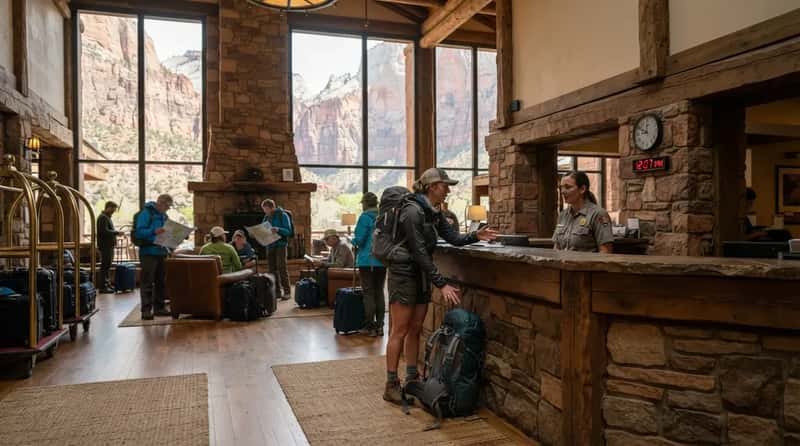
Arriving long before check-in is the loudest impression of the night. Zion Lodge lists check-in at 4:00 pm and check-out at 11:00 am. National Park Inn in Washington also lists a 4:00 PM check-in.
A noon arrival means rooms are still being turned over behind the scenes. Some travelers swear early arrival is the smartest move you can make, and others call it a gamble that burns a morning. Either way, the desk usually remembers who asked politely instead of insisting. But the next impression starts before anyone reaches the lobby…
#22 – The Car With No Park Pass Anywhere
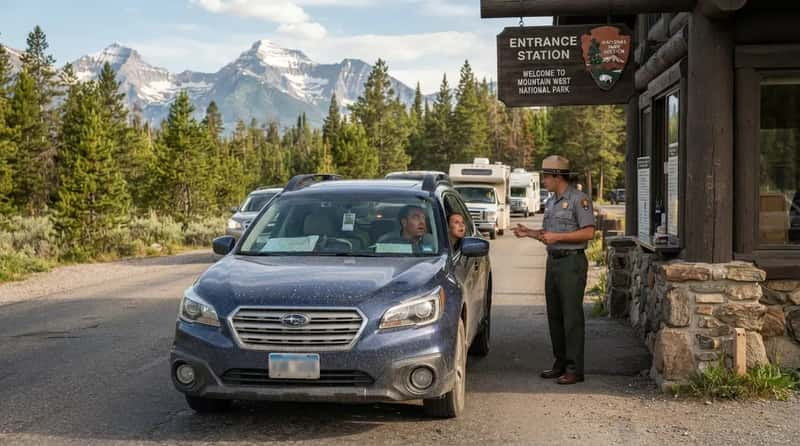
For some guests, the first surprise is a fee they never budgeted. Glacier’s lodges point out that every visitor, lodge guests included, must buy a park pass from the National Park Service, and it isn’t part of a lodging reservation. Yellowstone’s lodges say the same: entrance fees aren’t included in your reservation and are paid at the park entrance.
Fast Facts
- Zion Lodge: check-in at 4:00 pm, check-out at 11:00 am.
- National Park Inn: check-in at 4:00 PM.
- Glacier’s lodges: the park pass is separate from your lodging reservation.
- Yellowstone’s lodges: entrance fees are paid at the park entrance, not at booking.
By the time guests reach the desk, this has usually been settled at the gate. Staff still hear the confusion in the questions. A lodge reservation is not a park ticket, and guests who learn that at the entrance station tend to arrive a little rattled. Next, the people who have been planning for a very long time.
#21 – The Reservation Held Like a Passport
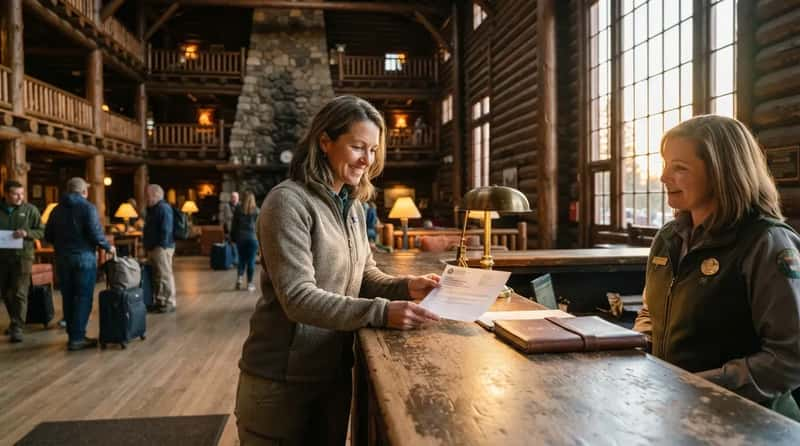
Some guests clutch their confirmation like a treasured document, and the reason is easy to see. Yellowstone’s lodges begin accepting reservations on the 5th of each month for the entire same month of the following year. Many arrivals have been planning for the better part of a year.
Those guests show up with detailed plans and big hopes. The stakes feel enormous to them, even if the desk sees it as routine. The next group has a different problem, and it involves a clock at the gate.
#20 – The Timed-Entry Scramble
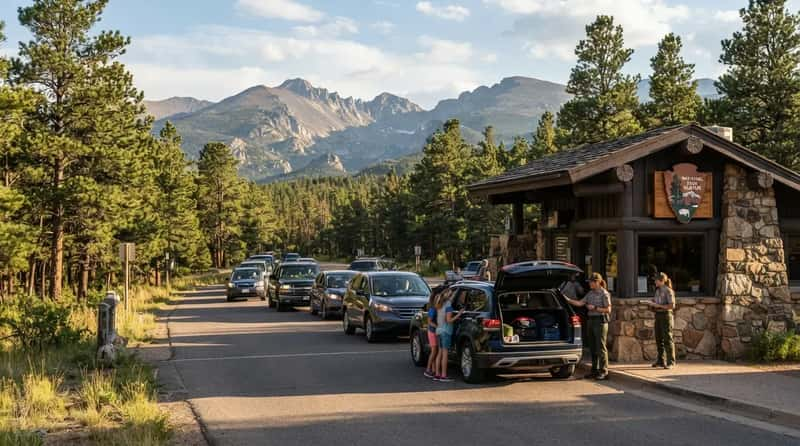
Some arrivals are really about beating a gate schedule. Rocky Mountain National Park runs a timed-entry permit system from late May through mid-October in 2026. Reservations are needed to enter between 9 a.m. and 2 p.m.
That’s why an evening arrival can feel calmer for some guests. Entering before the morning cutoff or after the afternoon restriction is a common workaround in parks with these systems. A guest who says “we planned around the gate” has just told the desk they did their homework. Then comes the luggage.
#19 – The Luggage Cart Instinct
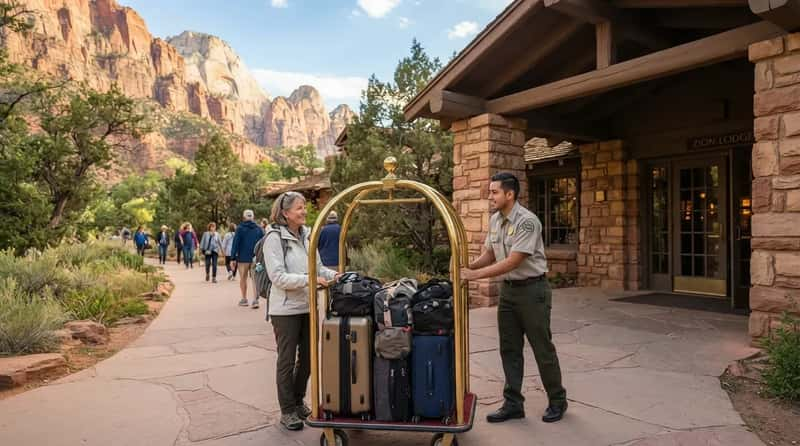
You can learn a lot from the first thing a guest does with their bags. Some stack everything onto one wobbly cart and push it up the walkway themselves. Others ask for help, which some lodges happily offer.
At Zion Lodge, guests can dial 0 to request a porter, who can help with luggage, extra pillows, or housekeeping needs. Staff generally read the ask as the sign of a relaxed guest. Using the services a lodge offers is not a sign of weakness. The next detail looks like a souvenir but is really a key.
#18 – The Key That Looks Like a Relic
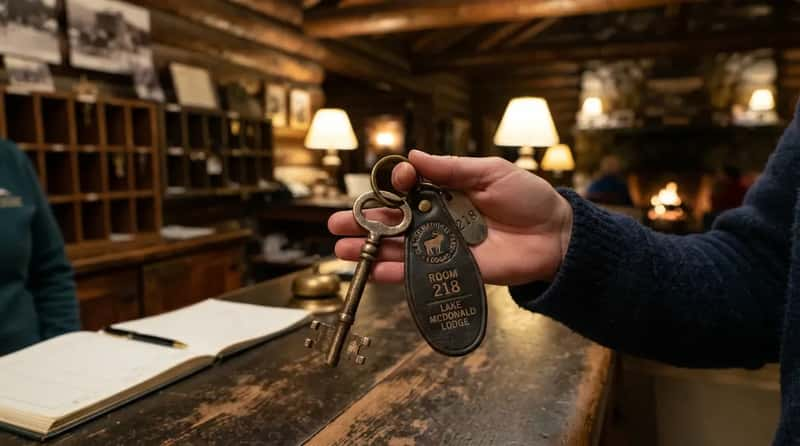
Some guests hold their room key like an antique, and in a way it is. Glacier’s lodges note that, because some buildings are historic, guests may get physical room keys at check-in. Key cards and phone unlocks aren’t always part of the picture.
Staff notice who treats the key as part of the experience and who treats it as an annoyance. The charm of an old building comes with old-building hardware. And that charm has a downside some guests discover after dark.
#17 – The Phone Glance and the Sinking Feeling
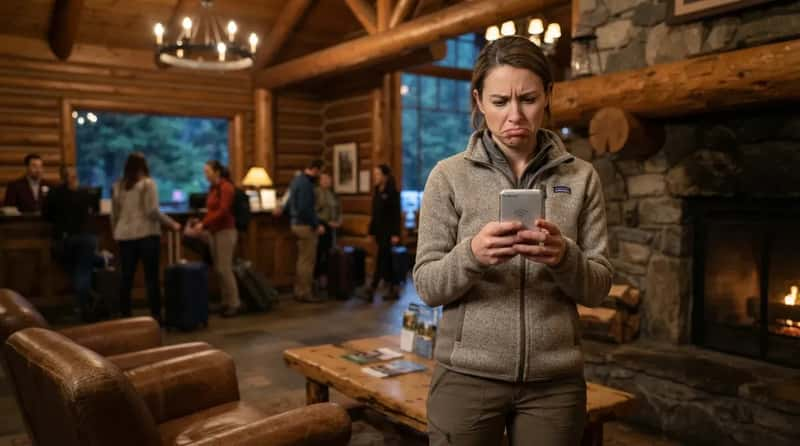
Within minutes of arriving, a lot of guests check their phones and frown. Signal and Wi-Fi in remote park areas can be limited, and lodge teams have heard every version of the question. Where’s the Wi-Fi? Is there coverage on the trail?
The answer varies a lot by park and building, so it’s worth asking the desk directly. The reaction says plenty about the trip ahead. Guests who treat the missing signal as part of the escape tend to settle in fastest. The rest often spend the first evening hunting for bars. Speaking of surprises, here’s a request that rarely goes well at the last minute.
#16 – The 9 p.m. Rollaway Request
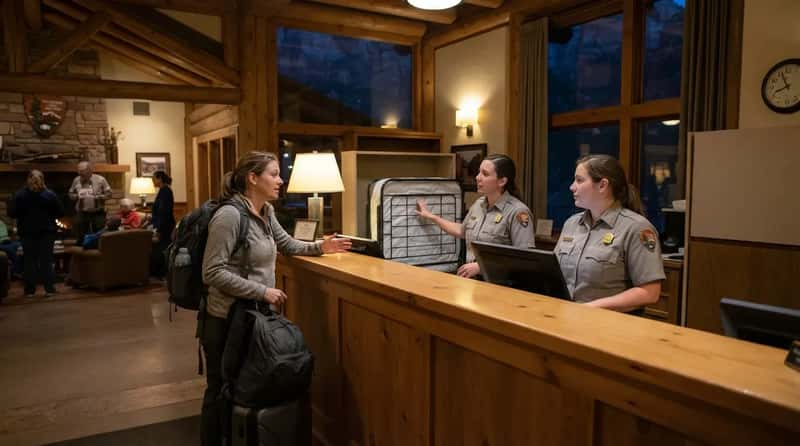
Few asks reveal a missed detail like the late extra-bed request. Zion Lodge offers rollaway beds for an additional $15 per night, first come, first served. It asks guests to request them at booking or at the front desk upon arrival.
At other lodges the answer is completely different. National Park Inn says rollaway beds aren’t available, and fire regulations prohibit sleeping bags in guest rooms. The same request gets a yes at one lodge and a hard no at another. The next arrival is the one who made a smarter stop first.
#15 – The Visitor Center Detour Before Unpacking
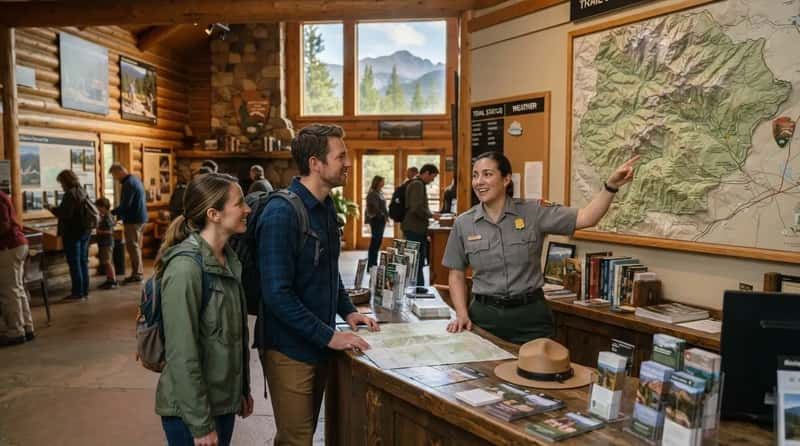
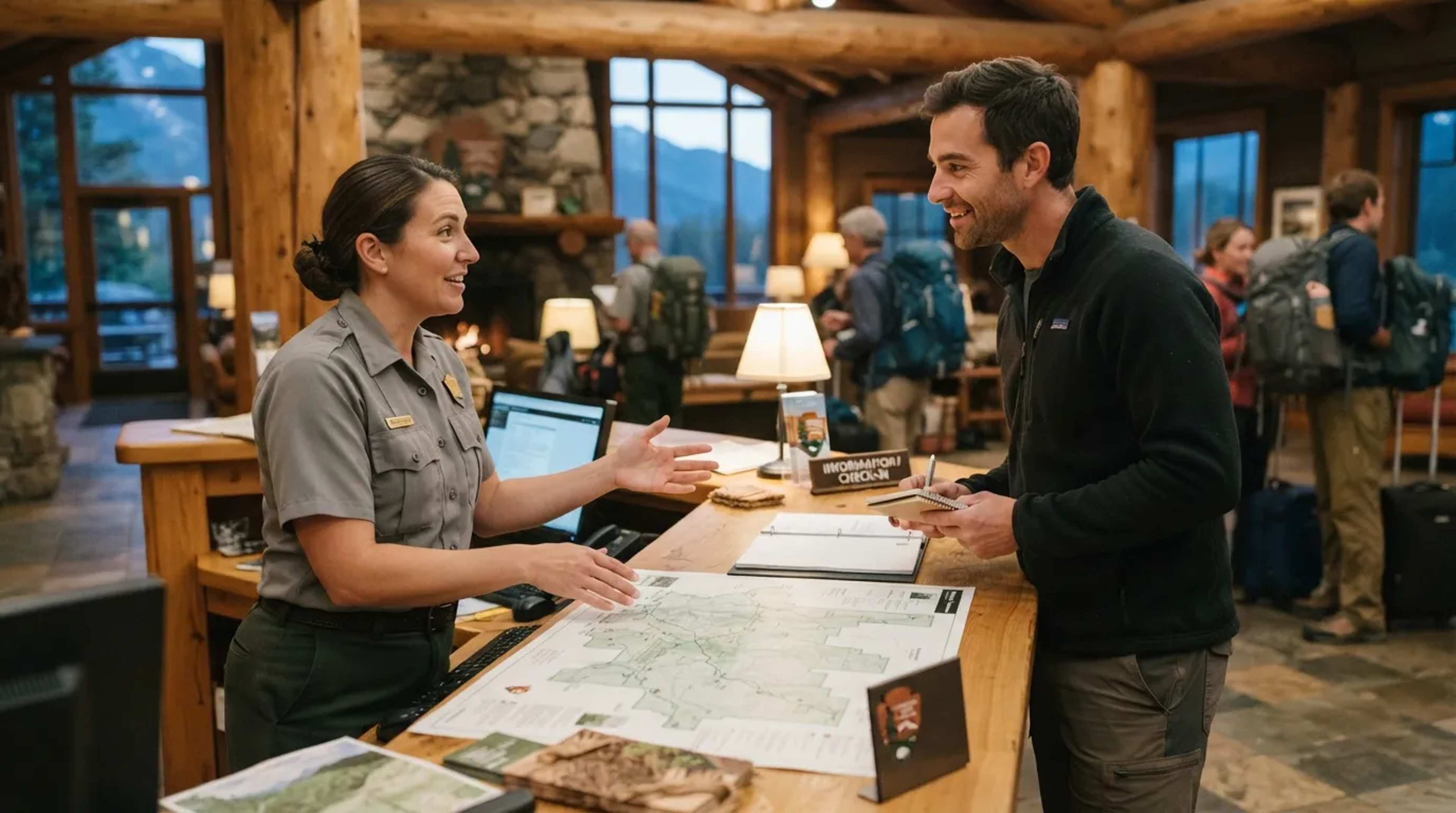
The savviest guests make a stop before they even open a suitcase. Park rangers recommend it, and for good reason. Rangers at the visitor center have current information on closed trails, closed roads, and special ranger programs during your stay.
They can also help with the fun stuff, like lesser-known trails and good sunset spots. Lodge teams often see this guest as the one who will have the best trip. Not everyone gets the wildlife part right, though.
#14 – The “Where Can We See a Bear?” Question
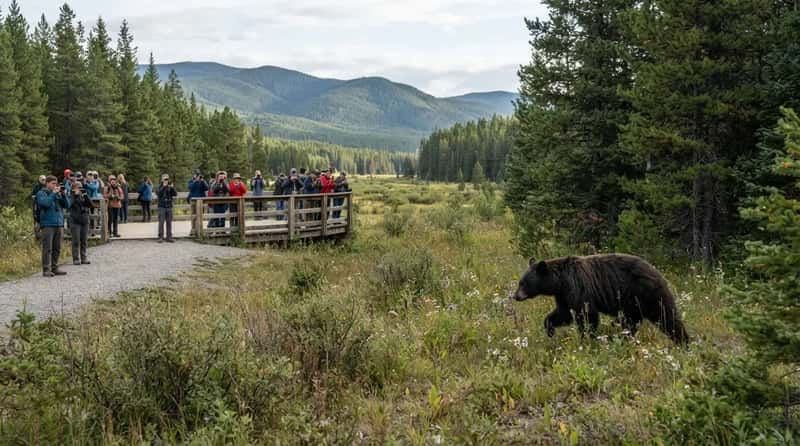
Few questions make a desk team exchange glances like asking where to see a particular animal on cue. Wildlife doesn’t keep appointments, and honest staff say so. The National Park Service advises staying at least 100 yards from bears and wolves, and at least 25 yards from most other wildlife.
The best guests nod and ask where the designated viewing areas are instead. Treating a wild animal like a scheduled attraction is the impression nobody wants to leave. Dinner has its own version of this problem.
#13 – The Dinner Plan That Doesn’t Exist
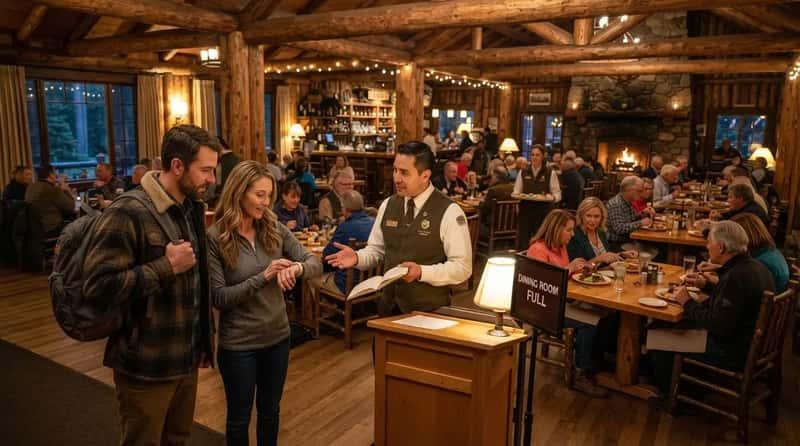
At many remote lodges, the dining room is the only game in town. That puts real pressure on the first evening, especially in peak season. Guests who arrive hungry and without a plan often learn that a busy dining room can’t seat everyone at once.
Staff don’t judge the hunger, only the surprise. The guest who asks about dining while checking in is already ahead of the crowd. Hours vary by lodge, so it’s worth asking at the desk. Next comes the clock that rules every lodge at night.
#12 – The Quiet Hours Reality Check
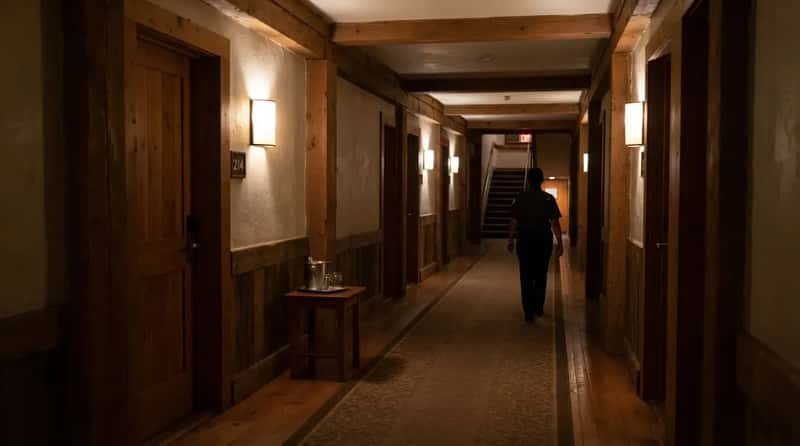
Lodges run on a surprisingly tight evening schedule. Zion Lodge lists quiet hours beginning at 10:00 pm. That catches guests off guard when they assume vacation means a late-night porch party.
Teams tend to notice which groups settle in early and which linger loudly in the hall. The impression you make at 9:55 pm can last the whole stay. Not everyone arrives that early, though.
#11 – The Headlights After Dark
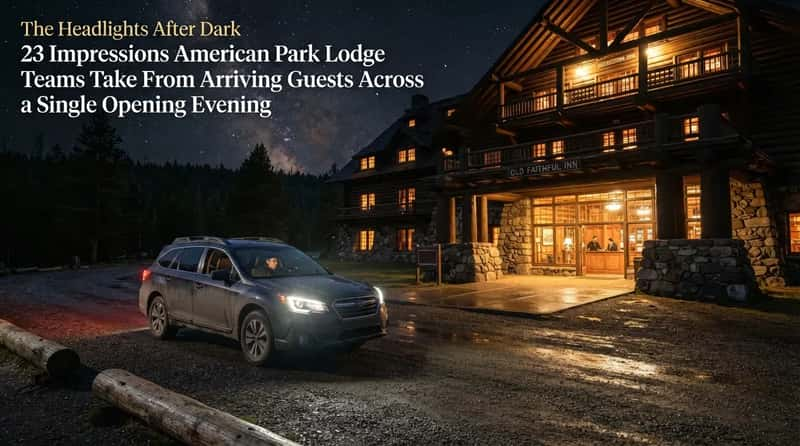
Some guests roll in late, tired, and slightly worried. Many lodges plan for it, though not all in the same way.
Quick Compare
- Yellowstone 24/7 desks: Old Faithful Inn, Lake Yellowstone Hotel, Canyon Lodge and others.
- Glacier 24-hour desks: Lake McDonald Lodge and Many Glacier Hotel.
- Yellowstone cabins: Roosevelt, Lake and Old Faithful Lodge guests should contact onsite security when arriving after 10 p.m.
But it isn’t universal. The same park can have a full desk at one property and a security call at the next. And some lodges are stricter still.
#10 – The Guest Ringing the Bell
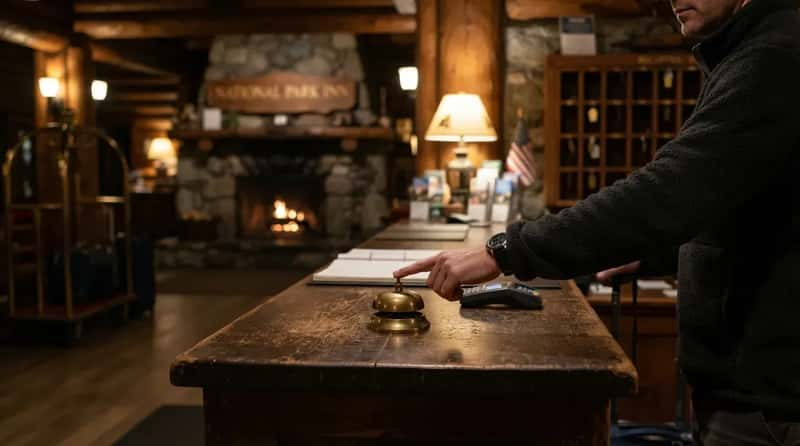
The late-night bell ring is an old tradition, and it’s still around. National Park Inn’s front desk is open from 7 a.m. to 10 p.m. Guests arriving later are asked to ring the bell for service.
Staff appreciate guests who warn them in advance. A two-minute phone call can turn a stressful midnight arrival into a smooth one. Not showing up at all carries a different price.
#9 – The No-Show Who Loses More Than a Night
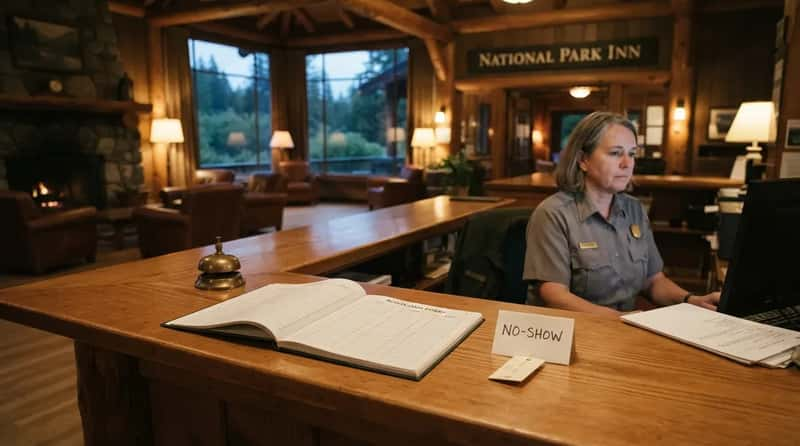
Some guests never arrive, and the desk feels that too. At National Park Inn, the rules for a missed night are strict.
Worth Knowing
- Canceling within seven days of arrival forfeits a deposit of one night’s room plus tax.
- Failing to check in on the reserved date counts as a no-show.
- A no-show forfeits the deposit and cancels the remainder of the booking.
That’s a harsh surprise for guests delayed by a flat tire or a closed road. One missed evening can wipe out the rest of the stay. If you’re running late, calling ahead matters. Campers face their own version of this puzzle.
#8 – The Envelope Taped to the Window
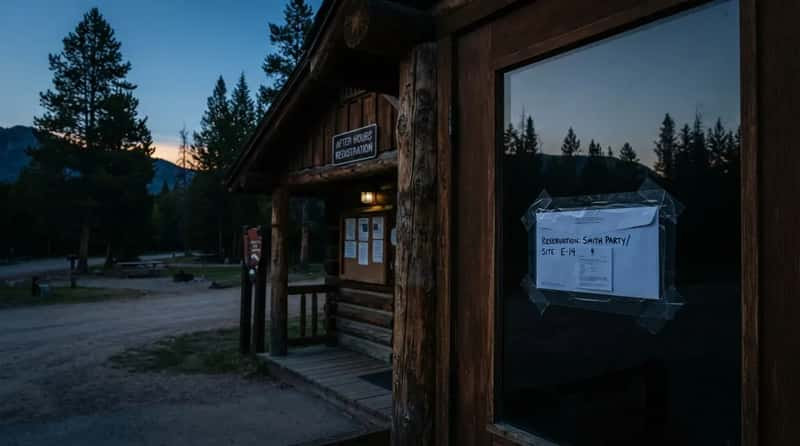
Campground arrivals have a different kind of opening evening. At Yellowstone campgrounds, late arrivals find their site information in an envelope on the registration building window. They then complete check-in the next morning.
It’s a tidy system, but it rewards guests who read the rules. Yellowstone assigns campsites at check-in and can’t reserve specific sites in advance. Guests who expect to choose their spot are often the most surprised. The next one is about weather.
#7 – The Light Jacket Gamble
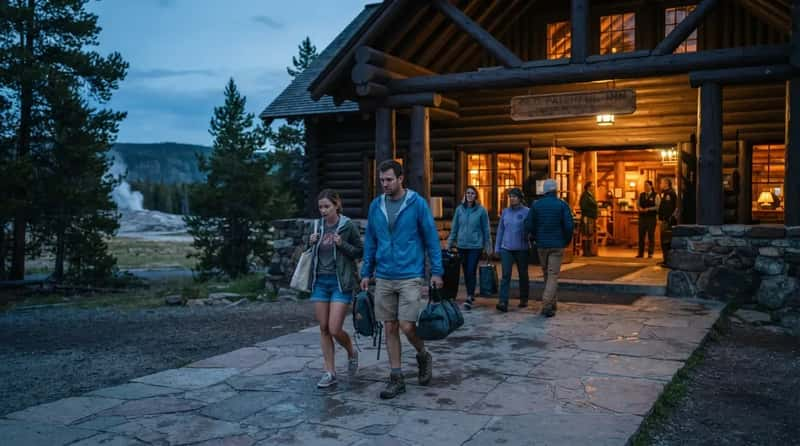
Few mistakes are as visible as dressing for the wrong weather. Park lodges sit in places where conditions change quickly. Yellowstone’s lodges ask guests to be prepared for changing weather conditions.
Staff can read a lot from what people are wearing at the door. Shorts at dusk and no layers paint a very specific picture. Evening temperatures in the mountains can differ sharply from the afternoon. The gamble gets costlier when there’s a scheduled activity.
#6 – The Tour That Left Without Them
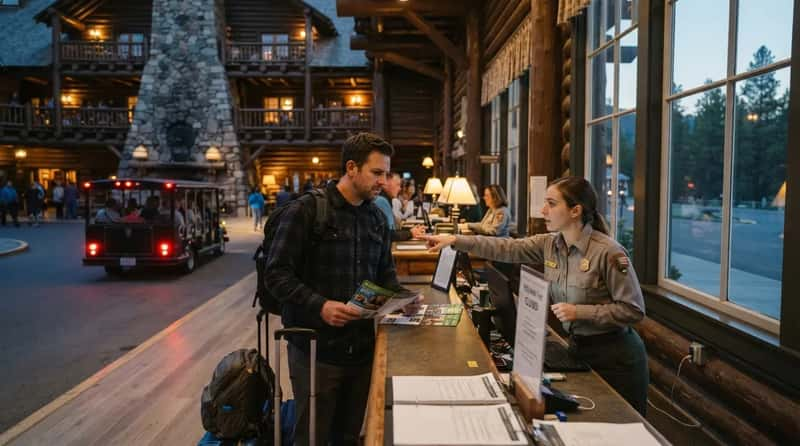
Some guests lose a paid activity on their very first night. Yellowstone’s lodges say guests arriving after the scheduled activity check-in time won’t be allowed to participate. Activity reservations also require full payment at booking.
The guidance elsewhere is just as blunt: allow adequate in-park travel time. A lodge in the park is not the same as a lodge next to the trailhead. Some guests try to dodge all of this by being relentless.
#5 – The Cancellation Hunter Who Finally Got In
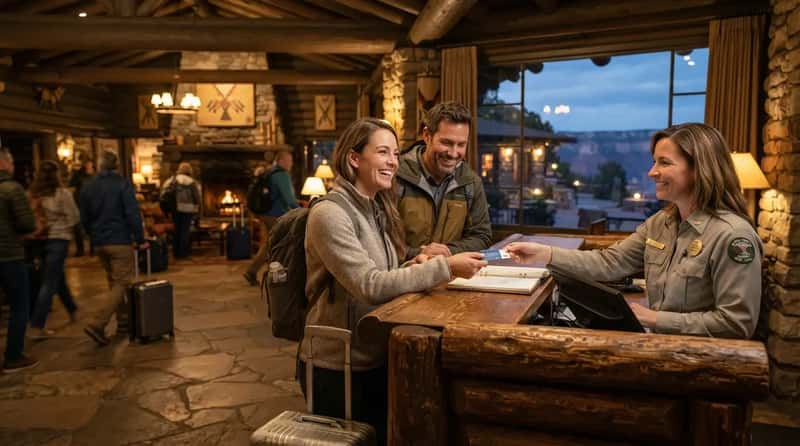
This guest spent weeks refreshing a booking page. It sounds desperate, but it’s actually common advice. If a lodge is full, check back every day or call about cancellations. Many park lodges fill up quickly, which is why booking early matters.
These guests often arrive the most grateful, because they know exactly how lucky they got. Persistence, not planning, is sometimes what puts someone in the room. And the best timing trick may be a simple one.
#4 – The Midweek Arrival Who Gets the Calm Lobby
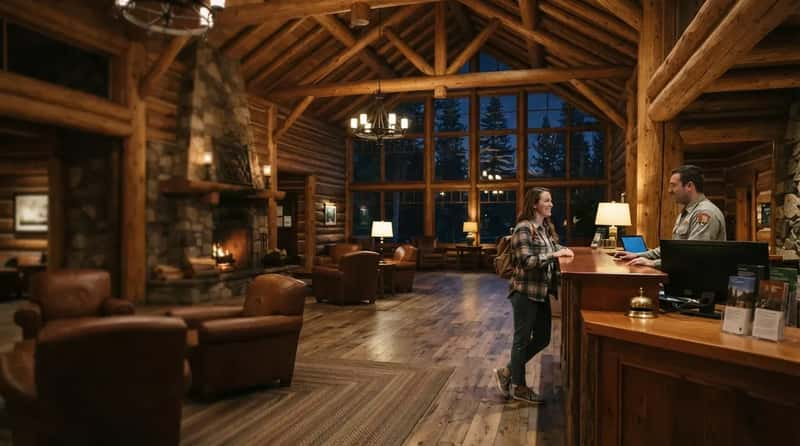
Some of the most relaxed guests of the night are the ones who picked a quiet day. The advice is to aim for midweek, and one camping guide suggests a Tuesday or Wednesday arrival. A Friday-to-Sunday window means competing with local weekenders.
Those guests tend to get more personal attention. The calmest evening of the week is also usually the most helpful. The big payoff comes from looking up.
#3 – The Lobby Look-Up That Says Everything
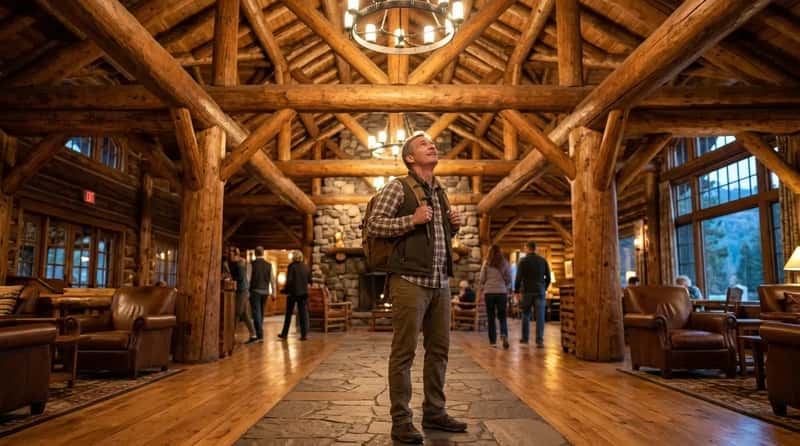
Every lodge has a moment when a guest stops mid-step and stares at the ceiling. It’s a beloved ritual in historic buildings. One travel writer argues that staying in a grand old lodge surrounds you with park history.
Staff often read that upward stare as the start of a great stay. The guests who pause in the lobby are usually the ones who forgive the creaky floors. But the best impression happens outside.
#2 – The Guest Who Walks Back Outside Before Unpacking
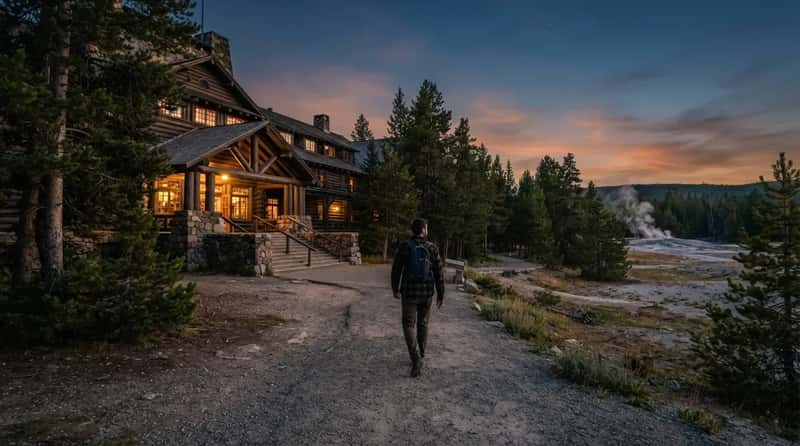
Some arrivals drop their bags and go straight back out the door. There’s a good reason. One benefit of staying in the park is having the early mornings and late evenings there.
Why It Stands Out
- It turns the evening into part of the trip instead of dead time before bed.
- It uses the quiet stretch of the day that day-trippers usually miss.
- It shows the guest came for the place, not just the room.
It’s the habit that separates a lodge stay from a drive-through visit. Staff say little, but they notice who treats the evening as part of the trip. And one question tops them all.
#1 – The Guest Who Asks, “What Should I Know Tonight?”
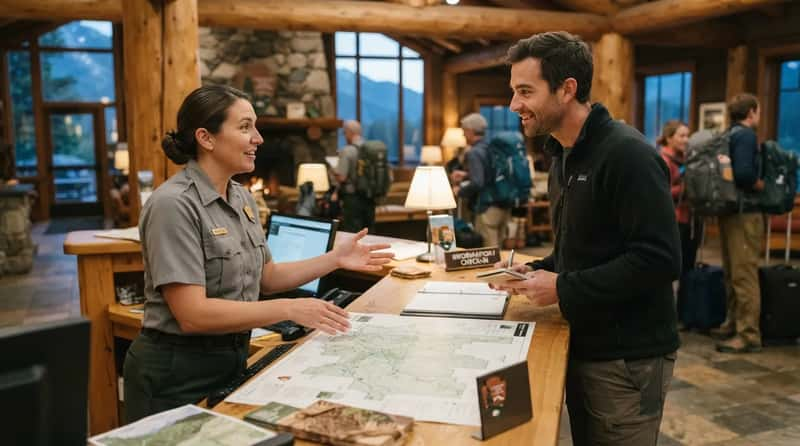
The strongest impression has nothing to do with gear or planning. It’s curiosity. A guest who asks about closures, weather, and the best sunset spot gets answers no website can match, since rangers at the visitor center have the current information on trails, roads and programs.
Staff remember that kind of guest because they get to help. The best evening of the trip often starts with one honest question at the front desk. That’s the guest everyone hopes to see walk in.
Run the whole evening back and the same few threads keep surfacing. Early arrivals, missing park passes, and late no-shows cause the friction, while good questions and a quick phone call earn the most goodwill. Policies change from lodge to lodge, from 24-hour desks to a bell after 10 p.m., so the details really do matter.
None of these impressions are final judgments. They’re snapshots, a few minutes long, taken at the tiredest and most hopeful moment of the trip. Which one would you most want to avoid on your own first night?