
The first evening of a cruise looks like the easy part. You’re on a floating resort, someone is handing out drinks, and the hard work of getting there is over. Behind the scenes, it’s the most chaotic few hours the ship has: thousands of new guests arrive at once, bags are still on carts, and a legal safety requirement has to be finished before the vacation can truly begin.
Most of the slip-ups below are small. A few can leave you without your medication, without a dinner table, or holding up a ship full of people. Stay to the last item. It’s the one rule international law attaches to every passenger, and it changes how the other 22 look.
23. Marching to a Cabin That Isn’t Ready Yet
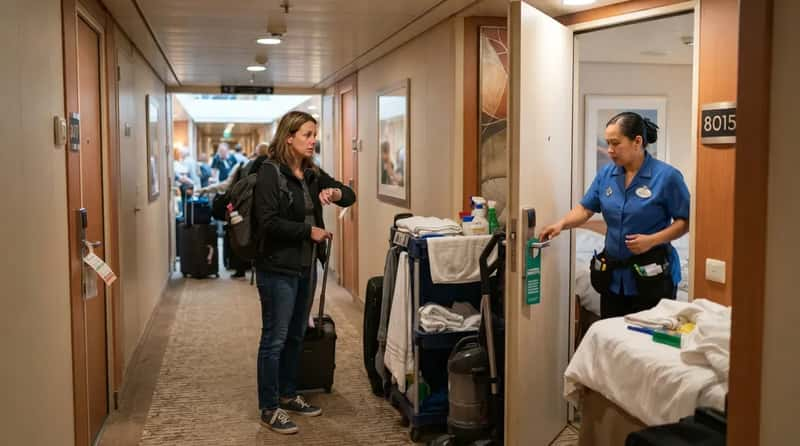
Step aboard at lunchtime and your room may still be mid-turnover. The crew is still cleaning and preparing cabins when you first board, so an unfinished room is normal, not a sign something went wrong. Heading straight there leaves you standing outside a door with a carry-on while the ship’s best hours roll on without you.
Use that gap the way you’d use an early hotel arrival. Find your muster station, walk a deck or two and learn where the elevators actually go. Treat the first hour as ship time, not cabin time. When you do get inside, the person who keeps that room running is worth meeting right away.
22. Walking Past the Cabin Attendant Without a Hello
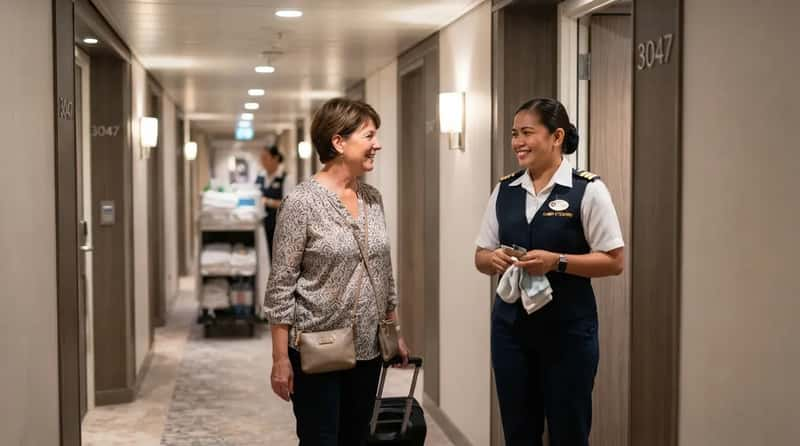
It takes five minutes, and it pays off all week. On a busy first day, find your cabin attendant and share any requests. The attendant sets up your bed and resets the room while you’re out, so a clear request now saves back-and-forth later.
Say what you need in plain terms: two single beds or one large one, extra towels, a clear path for a walker. Introduce yourself and share your requests in the first five minutes. Your next problem isn’t in the cabin at all. It’s in your pocket, and it can start hunting for a signal the moment the dock falls behind.
21. Leaving Your Phone On While the Ship Pulls Out

A phone left to its own devices can rack up roaming charges once the ship is at sea. The fix takes ten seconds. Switch to airplane mode before the ship sails, and use the ship’s Wi-Fi if you need to stay in touch.
There’s a second trap hiding in the clock. A phone showing the wrong time leads to missed dinner reservations, late returns from shore excursions and general confusion. Set your watch to ship time and keep the phone in airplane mode. Once that’s sorted, the best place for the phone is in your pocket on deck, because the ship is about to do something you only get to see once per cruise.
20. Unpacking While the Ship Sails Away

Your clothes will still be wrinkle-free at 8 p.m. The sail-away won’t repeat itself. Pick another time to unpack and join the crowd on deck as the ship slides out of port.
The deck is loud, a little emotional and alive in a way it won’t be again until the next port. Drink specials often mark the departure, too. A half-unpacked cabin has never ruined a vacation, but a skipped sail-away is a regret you can’t undo. Unpack after sail-away, not during it. Dinner is the other fixed appointment of the evening, and on some ships it’s the one that won’t wait for you.
19. Showing Up Late to Set-Seating Dinner

On some ships, you share a table and a time with the same people every night. Main dining rooms generally run two kinds of schedules, and set seating is the one where a late arrival has consequences. Your tablemates are left waiting for you, which is an awkward way to meet people you’ll sit beside all week.
Quick Compare
- Set seating: a fixed time and a fixed table, often with the same tablemates each night.
- Flexible dining: you pick your time, which suits late-afternoon excursions and unpredictable days.
- The catch: the late-arrival problem only exists on the first one, so check which you booked.
Flexible dining lets you choose your time, so check which one you booked before you wander off. Set seating means a fixed table and a fixed time. Look up your slot in the app or your booking papers and set a phone alarm. If you make it on time, the next question is what you’re wearing, and the answer is simpler than your suitcase suggests.
18. Packing a Tuxedo for a Ship That Doesn’t Ask
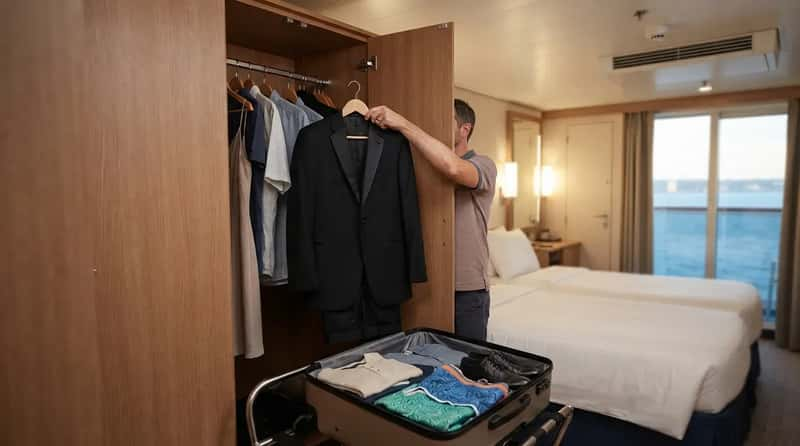
Dress codes are looser than most first-timers expect. The formal wardrobe that ate half a suitcase may never leave the closet. One dressier outfit for the elegant nights is usually plenty, and a tuxedo is only expected on a few traditional lines like Cunard.
The bigger comfort problem runs the other way. The air conditioning can feel arctic, decks can be wet and the walk to dinner can be long. One dressier outfit is enough, plus a light layer for the chill. Pack less, and the cabin gets easier to live in too.
17. Hauling a Hard-Shell Suitcase Into a Tiny Cabin
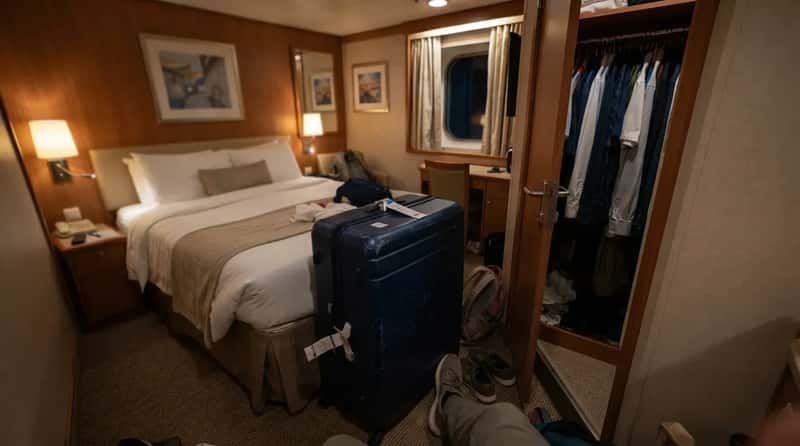
The closet won’t take it. Stateroom closets are generally too small for a full-size hard-shell suitcase, so the bag ends up parked in the middle of the floor. Most cabins expect luggage to be stored under the bed, and a rigid bag often can’t squeeze into that gap.
A soft-sided bag is worth buying if you plan to cruise more than once. It squashes into the space, and packing lighter than feels necessary makes the room far easier to live in. Pick a soft-sided bag that slides under the bed. Even a well-sized bag won’t help with the cost building in your onboard account, which starts counting before you’ve unpacked.
16. Assuming “Cruise” Means “All-Inclusive”

A cruise fare isn’t the whole bill. Daily service charges are typically billed per person for every night of the trip, and your line’s current rates are worth looking up before you pay. Specialty dining, drinks and excursions add to the total, and they’re easy to tap for on a ship where nothing feels like spending.
Check your onboard account daily through the cabin TV or the cruise app. A small overage on night one is easier to spot than a big one on night seven. One or two specialty nights usually beat paying extra for every dinner. Check your onboard account every day. The one thing you can’t buy back on night one is pool time, and your swimsuit may be in a bag that hasn’t left the terminal.
15. Packing Your Swimsuit in the Bag That Arrives Last

The pool is open, the sun is out, and your swimsuit is on a luggage cart somewhere below. Checked bags go to the porters at the terminal and reach your cabin on their own schedule. That schedule isn’t yours.
A small carry-on solves it. Pack travel documents, medication, phone chargers, a swimsuit, sunscreen and a change of clothes for dinner. Put a swimsuit and a dinner outfit in your carry-on. Even with the right bag, you’ll miss the best of the first hour if your phone doesn’t have the ship’s app yet, because that’s where your plans live.
14. Boarding Without the Cruise Line’s App
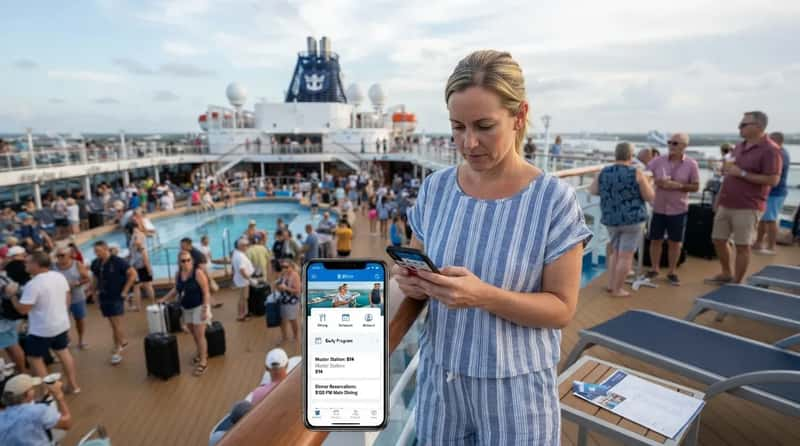
Your muster station is assigned by where your cabin is, and it’s shown on your cruise card and in the line’s app. Without the app, you’re relying on a card and a paper schedule, and both are easy to misplace in a crowded first-day shuffle.
The app also holds your dining reservations, the daily schedule and your onboard account. Skipping it means missed bookings, and it’s the easiest mistake on this list to fix from your couch. Download and sign in to the cruise line’s app before you leave home. Its busiest screen on boarding day is the dinner booking page, where the best tables disappear first.
13. Waiting Until You’re Aboard to Book Specialty Dinner

Popular specialty restaurants fill up fast. The most sought-after ones on big ships can sell out within the first hours of the cruise, sometimes before embarkation. A table you assumed would be waiting at 6 p.m. may be gone by 2.
The stakes go up for a celebration. If you’re marking an anniversary, birthday or retirement, a reservation made weeks early can be the difference between a perfect night and a disappointing one. Book specialty dinners before you sail, or in your first hour aboard. Dinner isn’t the only thing the whole ship is trying to book at the same moment.
12. Forgetting the Shows and Spa Until Day Two

Dinner gets all the attention, but shows and spa appointments fill up the same way. Some ships ask for reservations for their biggest productions. A guest who only booked dinner can find the best show times already taken.
At a Glance
- Specialty dining: the most popular tables tend to go first.
- Headline shows: some ships ask for reservations for their biggest productions.
- Spa treatments: prime slots vanish once the whole ship is looking at the same calendar.
- Best window: the first half hour aboard, with the app open in your hand.
Prime dining slots, popular performances and spa treatments all go quickly once the whole ship is staring at the same calendar. The first half hour aboard is the most reliable booking window, and the app makes it a few taps. Book the show and spa slot you care about on day one. Getting into any of those venues starts at the security line, where a few harmless-looking items from home can slow down everything, including your luggage.
11. Packing the Iron and the Power Strip
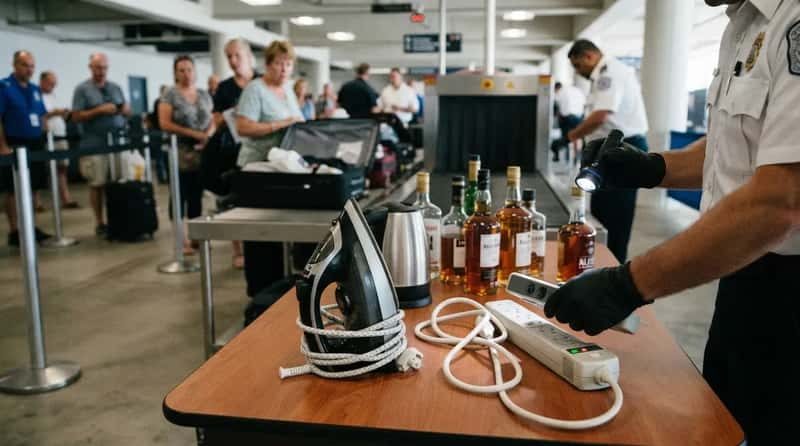
Security can confiscate it. Clothes irons, kettles, surge-protected power strips and alcohol beyond the small allowance some lines permit are commonly banned. Items like these get pulled at security and can delay your luggage delivery, turning a small packing choice into a late night.
Power strips are the surprise. Many cruise lines prohibit extension cords and surge-protected strips, so a charging hub for the whole family may not make it aboard. Check your line’s banned-items list before you pack the iron or the strip. Whatever gets through security, the papers that got you through it should never leave your hands.
10. Burying Your Passport in a Suitcase
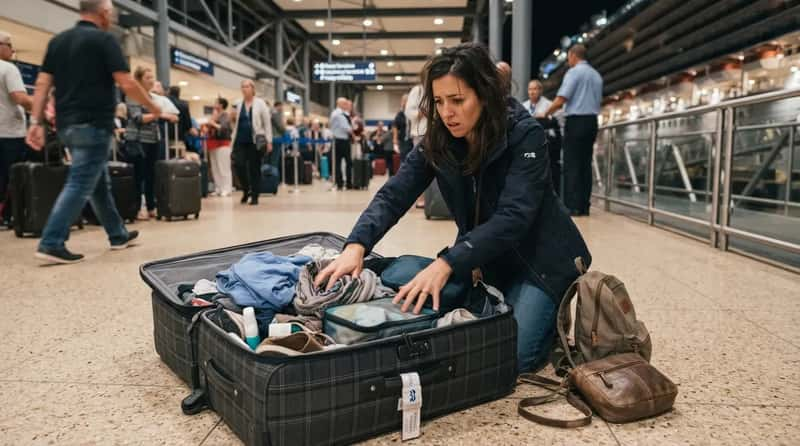
Your passport belongs in your day bag. Never put it in checked luggage. If you need it at the terminal, in port or after a delay, a suitcase that’s riding around on a cart is the last place you want it.
Fast Facts
- Passport and any other ID your itinerary requires stay on your person.
- Boarding papers or your app confirmation travel with you, not with the porters.
- A paper backup covers you if your phone dies or loses signal.
- Anything hard to replace at sea belongs in the bag you carry yourself.
Whatever documents your itinerary requires, keep them in the carry-on, not the bags the porters take. A paper copy also helps when a phone dies at the wrong moment. Keep your passport and boarding papers in the bag you carry yourself. A phone can fail at the worst time, and a paper copy can’t.
9. Checking the Medication Along With the Luggage

Your blood pressure pills don’t know the porter is running late. Checked luggage may reach your cabin hours after you board, but your doses follow a schedule that doesn’t wait. Packing medication in checked bags and then needing it before they show up is one of the most common day-one mistakes.
The same rule covers anything that’s hard to replace at sea. Keep valuables, medications, a dinner outfit and boarding documents with you when you hand bags to a porter. Medications travel in your carry-on, never with the porters. Another thing that belongs in your hands, not on the cart, is the bottle you were told you could bring.
8. Sending the Welcome Bottle Through With the Bags
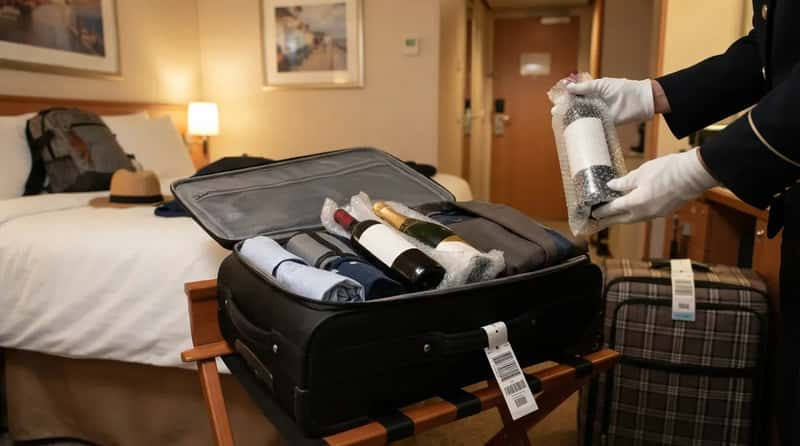
Many cruise lines let passengers bring a small amount of wine, champagne, beer or soft drinks aboard. The catch is how it travels. Lines that allow it generally want it carried on in your hand luggage, not tucked into a suitcase.
A bottle buried in checked luggage can get flagged at security, and a flagged bag can slow its own delivery. If your line allows wine, carry the bottles aboard yourself. Allowances differ from line to line, so read yours before you buy. Once the bags and bottles are sorted, the cabin’s best feature comes with rules the crew would rather you learn tonight.
7. Leaving the Balcony Door Open

An open balcony door does more than let the cool air escape. It throws off the cabin’s air conditioning, and it can turn the room into a wind tunnel the moment someone opens the main door. A door that slams in that draft can catch a hand.
Safety matters most with children. Always supervise kids on the balcony and make sure the door is closed and locked when it’s not in use. Close and lock the balcony door whenever you step away. The door isn’t the only thing that goes wrong out there. What you hang on the rail, or toss over it, can cost you more than a draft.
6. Hanging Towels and Tossing Things Over the Side

A wet swimsuit on a balcony rail looks harmless until the wind picks it up. Carnival’s website says clothing and towels shouldn’t be hung to dry on the balcony, and cabin attendants remove items they find. Whatever goes over becomes someone else’s problem, or the ocean’s.
Throwing anything overboard is a far bigger offense. It’s strictly prohibited, from food scraps to cigarette butts, and penalties can include heavy fines and removal from the ship. Nothing goes over the side, and nothing dries on the rail. Hanging a towel is a small breach. Standing on the rail for a sail-away selfie is the one lines take far more seriously.
5. Perching on the Railing for the Sail-Away Photo

The rail isn’t there for a pose. Royal Caribbean’s conduct policy says sitting, standing, lying or climbing on railings isn’t permitted.1 Other lines have similar rules, and crews act on them quickly.
Many overboard cases involve alcohol or reckless behavior like climbing on railings or leaning over edges, and balconies at night are a common setting. Keep both feet on the floor, especially after a drink. When someone does go over, the ship may have to stop and turn around for a full search and rescue effort, and the odds get worse with every minute.
4. Trusting the Hand Sanitizer Pump at the Gangway

The pump by the gangway isn’t the whole defense. For norovirus, the CDC’s main advice is soap and water, scrubbed for at least 20 seconds, before and after eating and after using the restroom. The agency says alcohol-based sanitizer can be used in addition to handwashing, but not as a substitute for it.2
Sanitizer is overrated as a first line of defense, though it makes a decent backup. That’s why you’ll often find handwashing stations at the entrance to the ship’s buffet. Wash with soap and water for 20 seconds before you eat. Handwashing protects you from whoever’s already aboard. What about the person who walked aboard sick because the ticket felt too expensive to waste?
3. Boarding With a Stomach Bug and Hoping for the Best

If you have vomiting or diarrhea before a cruise, the advice is blunt: do not board. On ships, norovirus typically spreads through contact with ill people or with surfaces and objects they’ve touched. Someone who boards sick can start making others ill within a day or two.
A lost fare is the cheaper loss compared with a week in a cabin, or a ship full of people getting sick. Call your cruise line and your insurer before you decide, since refund terms vary by line and policy. Vomiting or diarrhea before boarding means you should stay home. Illness isn’t the only reason to talk to the crew before sail-away. Some guests need the safety drill itself arranged differently.
2. Staying Silent About Limits That Affect the Drill
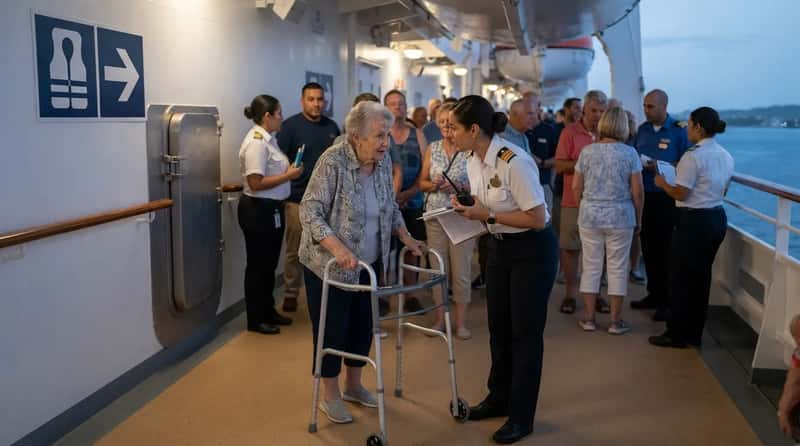
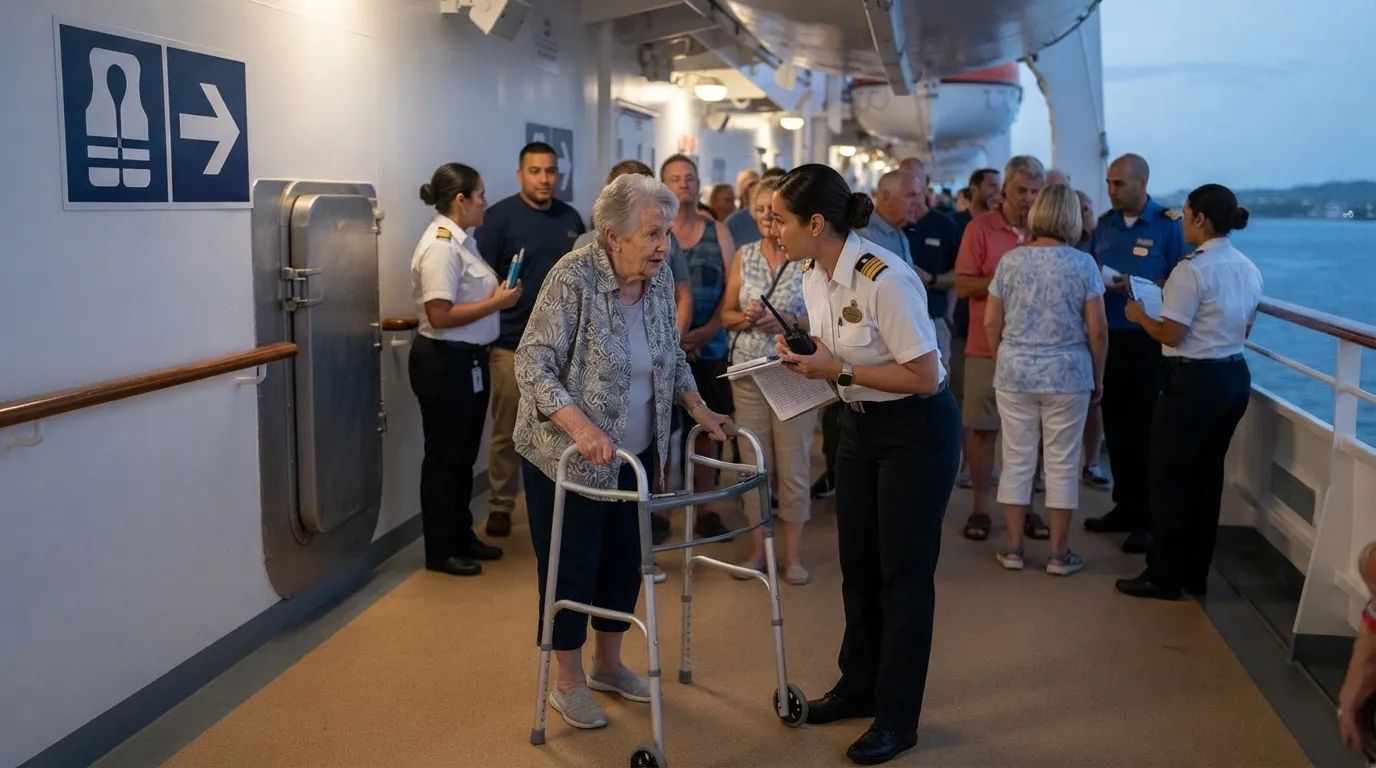
The standard drill assumes you can walk to a station, stand through a briefing and manage stairs. If you use a walker, have a hearing problem or can’t stand for long, the crew can’t adjust the plan unless they know. Royal Caribbean says that if you have a medical or other condition that affects your ability to complete the safety drill, you should let crew members know.
Worth Knowing
- Your cabin attendant is an easy first person to tell on day one.
- The muster desk or guest services can also pass the message along.
- Mobility, hearing, vision and stamina limits all count.
- The earlier you speak up, the more time the crew has to plan around you.
The line says crew will arrange for you to take part in the best possible way. A quick conversation at the muster desk or with your cabin attendant on day one is all it takes. Tell the crew about any condition that affects the drill. The final item is the one rule here with international law behind it, and it explains why the ship cares more than you’d expect.3 4
1. Treating the Muster Drill as Optional

The muster drill isn’t a cruise-line courtesy. It’s required for every passenger, repeat cruisers included. Royal Caribbean runs it for all embarking passengers, even those who have sailed before, ahead of departure.3 On lines that use the modern e-muster, you complete part of it on your own time after boarding, and the ship doesn’t sail until everyone has finished.5
The rule was tightened after the Costa Concordia disaster.4 If you skip it, crews typically chase down no-shows, and you may hear your name over the ship’s speakers. A passenger who keeps refusing can face being removed from the ship. The drill is required for every passenger, even repeat cruisers. Learn your station and the alarm, and you’ve bought the cheapest safety insurance on the ship.
The first evening is when a ship’s rules are least visible and easiest to meet. None of these 23 items takes more than a few minutes, and nearly all of them are cheapest to fix before the ship ever leaves the dock.
If you’ve cruised before, what’s the first thing you do in your cabin before the ship leaves port?
- Royal Caribbean Conduct Policy: https://www.royalcaribbean.com/guest-terms/guest-health-safety-and-conduct-policy/english/
- CDC Norovirus Prevention: https://www.cdc.gov/norovirus/prevention/index.html
- Royal Caribbean Muster Drill FAQ: https://www.royalcaribbean.com/faq/questions/muster-drill-onboard-safety
- IMO SOLAS Passenger Drills: https://www.imo.org/en/MediaCentre/PressBriefings/Pages/45-SOLAS-eif-.aspx
- Royal Caribbean Blog Safety Drill: https://www.royalcaribbeanblog.com/2026/04/20/what-happens-if-you-miss-the-cruise-ship-safety-drill