Most people assume the worst thing that happens at a hotel breakfast buffet is someone taking one too many bacon strips. The truth is far messier, and hotel staff have seen almost everything a human being can do to a chafing dish. Behind the smiles at the omelet station, managers are silently cataloging behavior that would make most guests cringe if they knew they were being watched.
Some of it is gross. Some of it is theft dressed up as “just grabbing a quick bite.” And some of it reveals something uncomfortable about how people treat spaces that don’t belong to them. Here’s what hospitality insiders actually say happens every single morning before the coffee even kicks in.
#23 – The Plate That Broke the Buffet
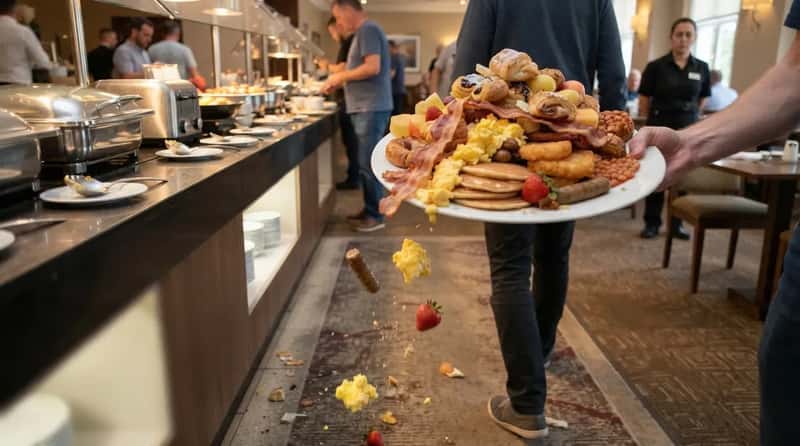
Staff have a name for this guest, and it isn’t flattering. Hospitality speaker Michele Goldberg says a runner-up to the check-in bully is a category of guest she calls “the last meal.” It happens almost every morning, and staff say they can spot the person from across the room.
The behavior itself is what makes managers wince. They stack their plates so high that food actually falls off onto the floor, then ignore it and act as if they never noticed. The dropped food just sits there until a staff member quietly sweeps it up, no apology offered. But food falling on the floor is tame compared to what happens near the chocolate fountain.
#22 – The Cast That Went for a Swim
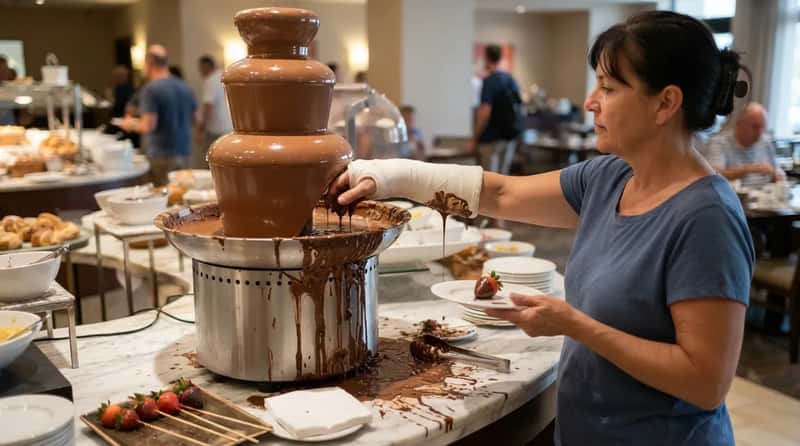
This one sounds impossible until a hotel employee actually described it happening in real time. A guest with a broken arm wanted chocolate-covered strawberries badly enough to risk her own cast.
According to the staffer’s own account, the guest stuck most of her cast under the chocolate fountain until it was basically coated, then walked back to her table and ate dessert instead of alerting anyone so the fountain could be sanitized. Nobody else at that fountain had any idea their chocolate had just touched a hospital cast. It’s the kind of story that makes an entire dessert station suddenly feel unappealing, and it’s not even the worst thing spotted near the serving line that week.
#21 – The Ladle Licker
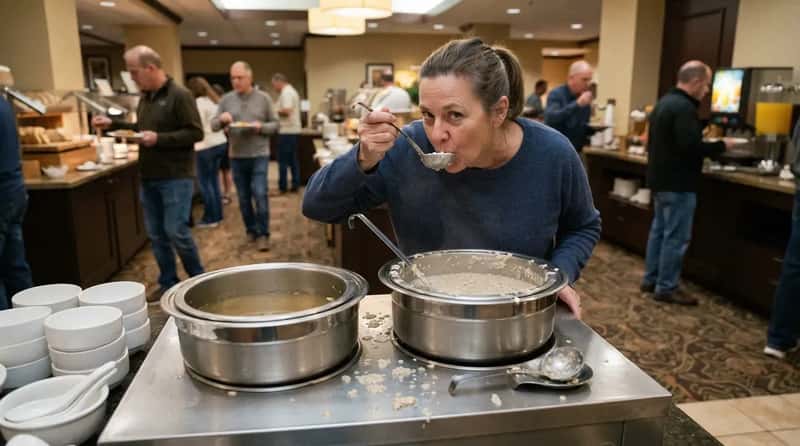
Soup and porridge stations look harmless, but they’re a magnet for one specific bad habit that staff dread. It happens often enough that hotel workers have practically stopped being shocked by it.
A hotel guest gets caught on camera slurping soup straight from the buffet ladle, then putting the ladle right back in the pot. Every other guest who scoops from that same pot afterward has no idea what just happened. Staff say the only real fix is constant supervision of shared serving stations, which most limited-service hotels simply don’t have the staffing to provide.
#20 – The Recycled Plate Trick

Reusing a dirty plate feels efficient at home, but it’s considered a serious breach at a hotel buffet. Guests do it constantly, thinking they’re being considerate of the dishwashing staff.
Etiquette guides are blunt about why this matters: reusing plates and bowls during a meal is poor buffet etiquette, and the only-use-it-once rule exists specifically to prevent foodborne illness and cross-contamination. Commercial kitchens post signs about this for a reason most guests never bother to read. Managers say the habit is so common they’ve had to train front-of-house staff to gently intercept people before they walk back to the buffet with a used plate.
#19 – The BYO Utensil Guest
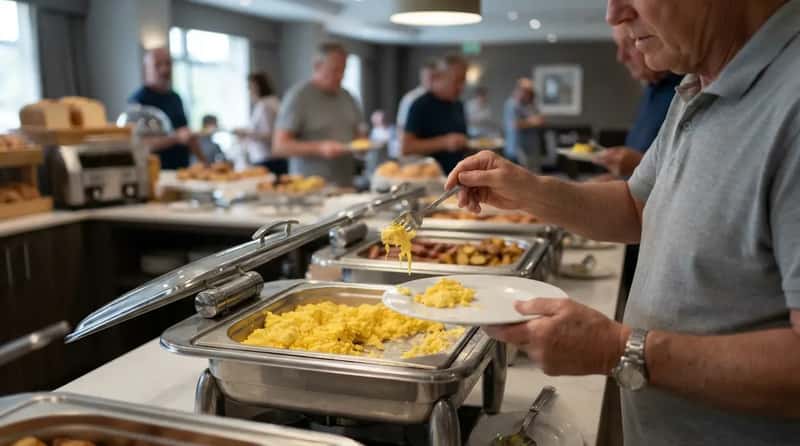
Some guests treat their personal fork like a universal tool, dipping it straight into the communal serving trays. Staff say this single habit causes more quiet panic in the kitchen than almost anything else on this list.
The rule is simple and constantly broken: never use your own utensils to take food out of the shared trays. Chefs also ask guests to avoid moving a serving spoon from one tray to another, since it spreads allergens and bacteria between dishes that were never meant to touch. One misplaced personal fork can contaminate an entire tray in seconds, and the guest usually has no idea they’ve done anything wrong.
Fast Facts
- Health guidance is direct on this point: Do not use one utensil to serve several food items, because if one food item happens to be contaminated and others are not and you use the same spoon for serving, then that cross-contaminates them all.
- Swapping tongs between trays isn’t just sloppy – cross-contact can easily occur if tongs move from shrimp to chicken, or if nut-topped desserts sit too close to allergen-free options.
- Hands transmit many kinds of bacteria and diseases, which is exactly why guests are told to use serving tongs or utensils instead.
- Known allergens like peanuts, wheat, fish, and eggs can cause life-threatening reactions in some people if a swapped spoon carries them into the wrong dish.
#18 – The Stationary Grazer

Every buffet has one person who turns the egg station into a debate stage. They plant themselves in front of the pan and simply stop moving.
This guest arrives at the egg station, starts assembling a plate, then stops moving entirely while weighing scrambled versus poached, seemingly unaware that the line has backed up all the way to the juice station behind them. Nobody behind them says a word out loud, but staff say the frustration is written all over their faces. It’s a small moment, but managers say it repeats itself at nearly every property, every single morning.
#17 – The Sunglasses Squatter

Table hoarding isn’t just a pool thing. It happens at breakfast too, and it drives other guests quietly insane.
The reserved table with the abandoned plate or sunglasses is its own category of behavior, usually orchestrated by one member of a travel group who claims a table and then vanishes for twenty minutes. Families circling the dining room with full trays and nowhere to sit are the direct result. Managers say they’ve started asking staff to politely clear tables that sit untouched for too long, which occasionally sparks an awkward confrontation when the squatter finally returns.
#16 – The Pastry Line Cutter

Most line-cutting at a breakfast buffet isn’t malicious. It’s just careless, which somehow makes it more irritating to everyone standing behind them.
Most people don’t realize they’ve cut the line at all; they spot an opening near the pastries, step in for a croissant, and don’t notice someone has been waiting for that exact spot for the past two minutes. The offender usually walks away completely unaware they’ve caused a mini traffic jam. Staff say treating the buffet queue like an actual line instead of a suggestion would solve most of this instantly.
#15 – The First-Station Rusher
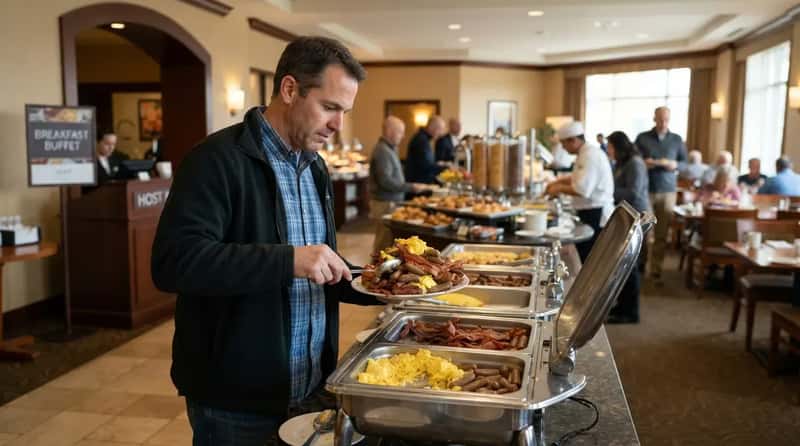
The guest who piles their plate the second they walk in almost always regrets it later. Chefs see this mistake play out daily, and it’s entirely avoidable.
Chef concierge Jeffrey Morgan puts it plainly: guests should scope the full spread before plating anything, because “the best item is rarely the first one you see.” An overloaded plate from the very first station almost always leads to food waste later, since there’s no room left for the good stuff two tables down. It’s a small habit, but it changes the entire experience.
#14 – The Half-Eaten Mountain
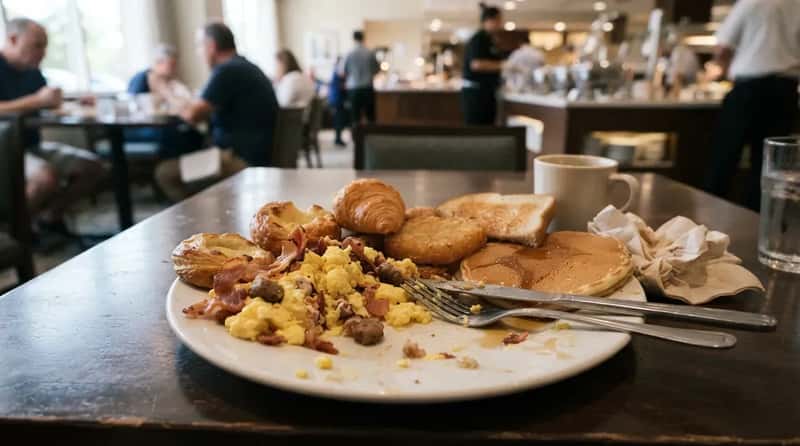
Piling a plate high feels satisfying in the moment. Watching half of it get scraped into the trash is what actually makes chefs wince.
Executive chef Anthony DiGregorio calls this his biggest pet peeve, explaining that filling a plate and eating only half of it means a team’s hard work goes in the trash, and if the food is eggs, “the chickens live a life… you don’t want it to be all for nothing.” That single sentence has stuck with hotel kitchen staff far longer than most guests realize. The waste isn’t just wasteful; to the people who prepared it, it feels personal.
Worth Knowing
- Breakfasts served buffet-style typically result in more than twice as much food waste per customer than those ordered from a menu.
- In one five-star hotel study, each patron left behind an average of 300 grams of food at breakfast and 400 grams at dinner, of which 92 percent was considered avoidable waste.
- Plate size matters more than most guests think: people eat 45% more and waste 135% more food at buffets with large plates than at those with smaller plates.
- Nearly 20% of restaurant patrons admit not eating up everything they served themselves.
#13 – The Napkin Smuggler
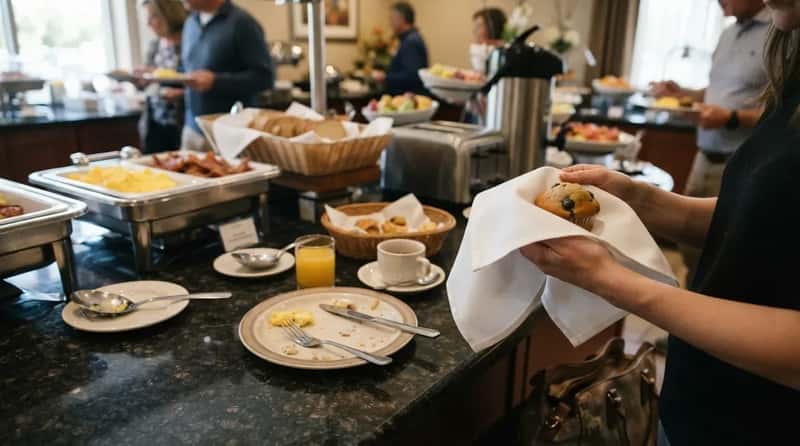
Wrapping a muffin in a napkin for later feels innocent enough. Even self-aware travel writers admit they’ve done it themselves.
One travel writer covering buffet etiquette openly confessed: “I’m a banana stealer.” Bananas, muffins, and granola bars are the most commonly smuggled items, according to hotel staff who say they mostly look the other way for small snacks. The real problem starts when smuggling turns into stockpiling an entire second meal for later, which is a very different situation for the property’s food budget.
#12 – The Bare-Hand Bacon Grabber

Tongs exist for a reason, and yet guests skip them constantly. Staff say this is one of the fastest ways to make an entire station unusable for everyone else.
Buffet etiquette experts stress that guests should always use the appropriate utensil for each dish, such as tongs for solid foods and a serving fork for meats, rather than reaching in by hand. Guests who bypass the utensils entirely tell staff a great deal about how they view shared spaces. One bare-handed grab can shut down an entire tray for sanitation reasons, and staff have to quietly swap it out while apologizing to everyone in line.
#11 – The Hallway Sprinters
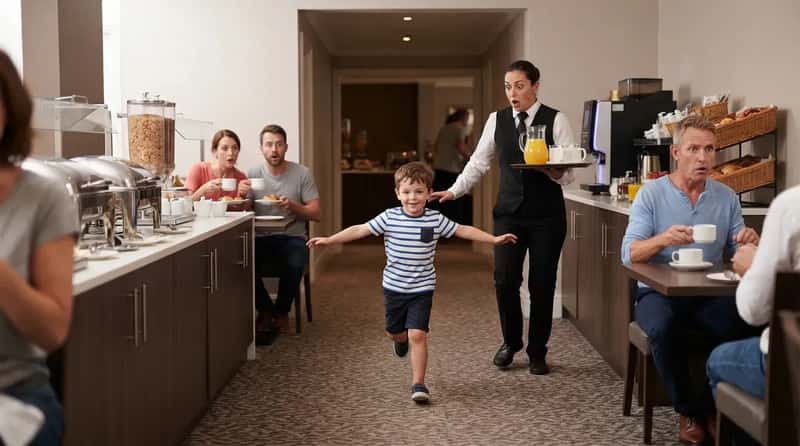
Unsupervised kids aren’t just a hallway problem. They turn buffet lines into obstacle courses, and parents are often nowhere in sight.
Frustrated travelers have openly complained about parents who let their kids race down hallways at 6 a.m., and staff say the same energy spills straight into the breakfast room the moment doors open. Hot coffee, glass carafes, and sprinting toddlers are a combination managers dread every single morning. It’s rarely malicious, but it’s consistently one of the top complaints staff hear from other guests trying to eat in peace.
#10 – The Unsupervised Toddler Server
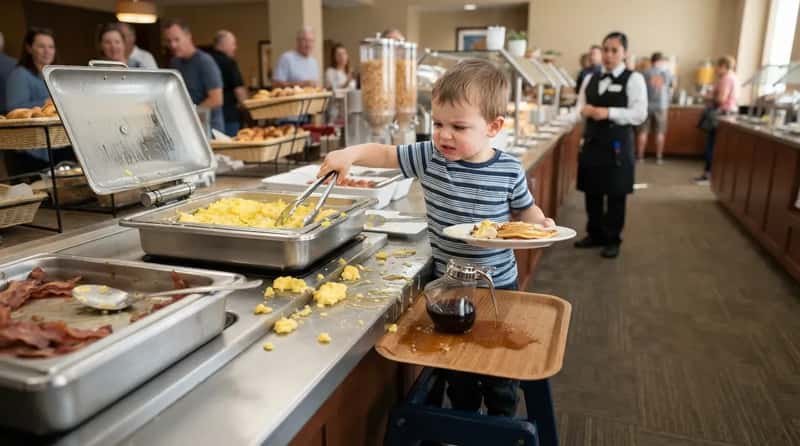
Letting a young child fill their own plate sounds harmless in theory. In practice, it usually ends with spilled juice, dropped tongs, and a small mess someone else has to clean up.
Staff say this pattern repeats itself constantly at family-heavy properties, where a parent is distracted at the table while a child navigates hot chafing dishes alone. The child rarely gets hurt, but the syrup dispenser almost never survives unscathed. Managers quietly note which families do this every morning of a multi-night stay, since the mess tends to become predictable by day two.
At a Glance
- Researchers studying buffet behavior found that the presence of children also leads to more plate waste.
- Children and first-time diners at a given buffet establishment tend to leave more food unconsumed.
- Etiquette writers are blunt about why: kids just don’t understand buffet rules and lack self control, which is exactly the gap parents end up filling – or don’t.
#9 – The “I Paid For This” Demand

Some guests treat the buffet like a personal service they’re entitled to control. It’s a mindset staff say has gotten noticeably worse in recent years.
Hotel readers themselves have described a post-pandemic wave of entitlement, with too many travelers believing that “paying for a room means they own the place for a night.” That attitude shows up loudest at breakfast, when guests demand fresh trays be brought out immediately or snap at staff over minor delays. Managers say the tone of these interactions has shifted, and not for the better, compared to a few years ago.
#8 – The Tupperware Raid

Some guests arrive at breakfast with more than an appetite. They bring containers, and they have a plan.
Research on hotel breakfast behavior notes that guests at hotel breakfast buffets often take more food than they actually consume, creating avoidable plate waste and unnecessary cost, and staff say the outside-container crowd takes this to another level entirely. Entire sandwiches and fruit cups disappear into bags meant for a lunch that was never included in the room rate. Managers rarely confront guests directly over this, but they do track how quickly certain items disappear each morning.
#7 – The Closing-Time Ambush
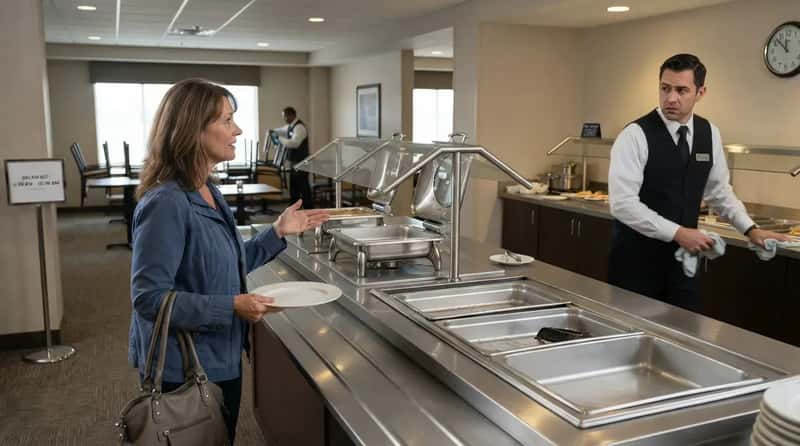
Nothing frustrates a breakfast team faster than a guest strolling in at the final minute demanding a fresh batch of everything. It happens almost every day, at almost every property.
Staff are already breaking down chafing dishes when a late arrival insists on hot eggs and fresh bacon, not the trays already sitting out. Kitchens are rarely staffed to cook a full fresh batch for one guest three minutes before close. It puts servers in an impossible position: disappoint the guest or delay the entire team’s teardown and next shift’s prep.
#6 – The No-Tip Standoff
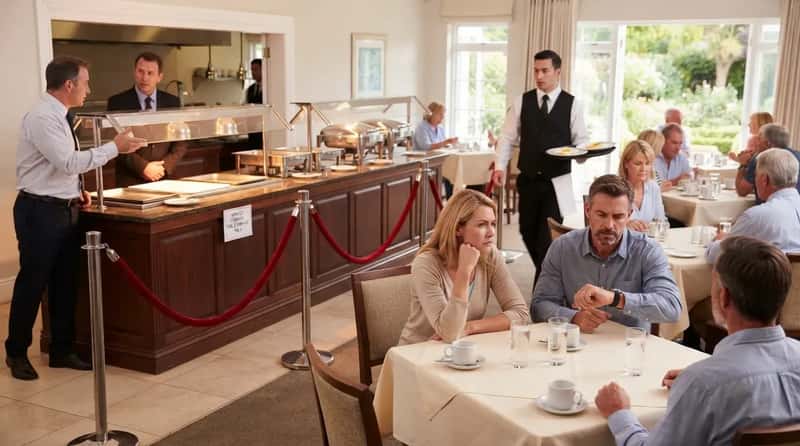
Not every breakfast conflict is about food quality. Sometimes it’s about who’s allowed to touch the buffet at all, and it can spiral fast.
One widely shared account describes a guest trying to serve themselves at a self-service buffet, only to have a server rush over insisting it wasn’t allowed, followed by staff claiming tipping at breakfast was “tradition.” After the guest complained, the hotel’s fix was switching the entire buffet to table service, forcing guests to wait more than an hour for eggs and pastries that used to take five minutes. One disagreement changed breakfast for every single guest at that property overnight.
#5 – The Extra Plate for the Room
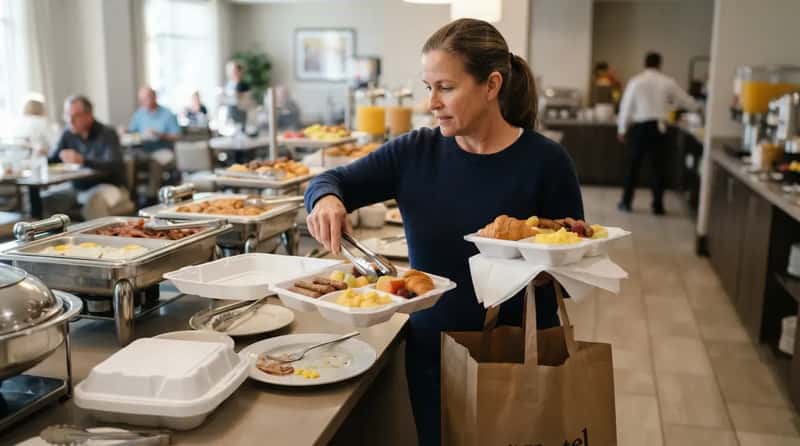
Loading a to-go plate “for my spouse upstairs” sounds like a small favor. Multiply it across a full hotel and it becomes a real line item.
Industry research breaking down hotel food waste found that 34% of hotel food waste comes directly from consumer plates, and staff say the room-service workaround is a major contributor nobody officially admits to allowing. Managers quietly track which room numbers request extra to-go containers most often. It rarely gets addressed directly, but it factors into how tightly some properties portion their next-day breakfast orders.
Quick Compare
- Menu-ordered breakfast: the lowest average plate waste per guest of any format.
- Standard breakfast buffet: more than twice as much food waste per customer than those ordered from a menu.
- High-end vs. budget buffets: high-end breakfast buffets are worse than budget buffets for plate waste.
- Breakfast vs. dinner buffets: dinner buffets are worse than breakfast buffets, making the extra to-go plate look small by comparison.
#4 – The Influencer Photo Blockade
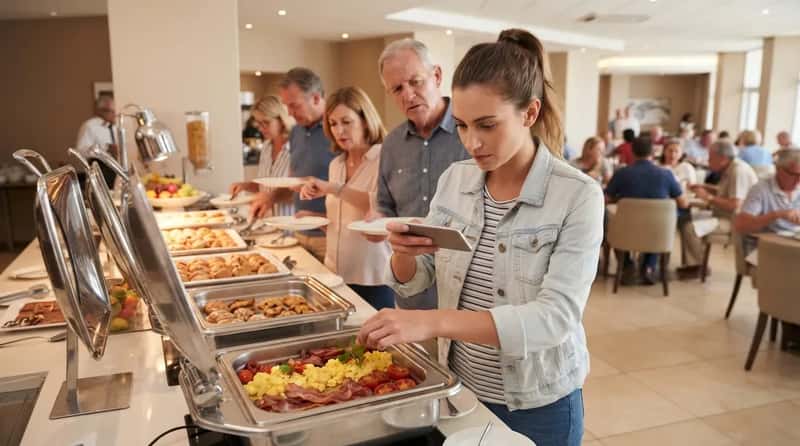
Some guests can’t eat a single bite before documenting it for social media. The problem is where they choose to do it.
Staff describe guests who stop directly in front of a serving station, phone out, rearranging garnishes for a photo while an entire line waits behind them. A ten-second photo can turn into a two-minute delay for everyone holding a plate. It’s a distinctly modern buffet complaint, but managers say it’s become one of the fastest-growing sources of quiet tension in the dining room.
#3 – The Walk-In Who Never Checked In

This is the one that costs hotels real money, and it’s happening more often than most travelers realize. Some guests at the buffet never actually booked a room.
Viral videos have shown buffet crashers strolling into hotel dining rooms, piling up plates with food, and heading out without any payment in sight. Hospitality expert Kenneth Free explains that when “breakfast shoplifters succeed in pilfering breakfasts… additional financial pressure is applied to the hotel, causing it to investigate cost-savings measures,” which often means smaller portions for everyone else. A stranger’s free plate today can mean a shrunken buffet spread for paying guests tomorrow.
#2 – The Meltdown Over Nothing
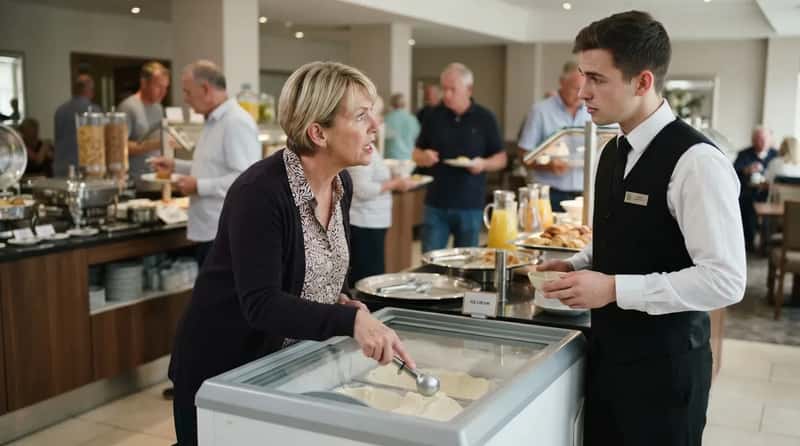
The strangest complaints staff receive aren’t about spoiled food or rude service. They’re about things that barely register as problems to anyone else.
Skyscanner’s survey of real hotel complaints once uncovered gems like a waiter being “too handsome” and, separately, ice cream being served too cold. Some guests will demand a manager over grievances that genuinely make staff question their morning. These outbursts rarely change anything operationally, but they do become the stories staff tell each other for years afterward.
#1 – The “It’s Not Mine, So I Don’t Care” Guest
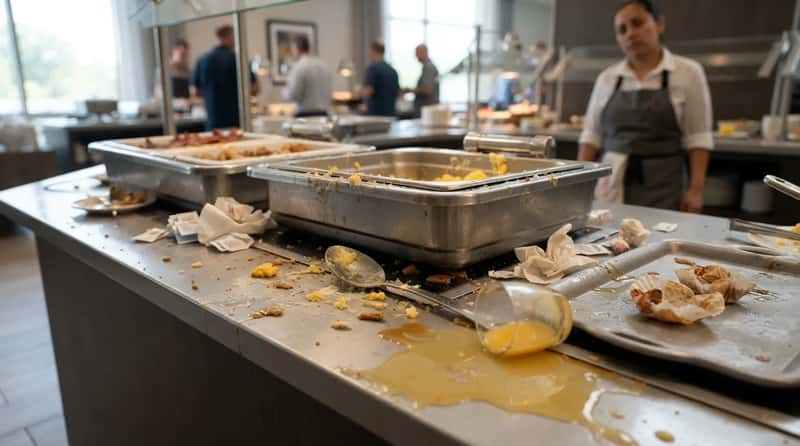
Every behavior on this list traces back to one underlying attitude, and it’s the one that bothers hotel staff the most. It isn’t about hunger. It’s about ownership, or the complete lack of it.
People just seem to have less respect for the property and well-being of others… it’s an attitude of, ‘it’s not mine, so I don’t care.’
Rachel Wagner, etiquette expert
That single sentence explains almost every dropped plate, hoarded muffin, and ignored spill on this entire list. Managers say they can forgive a messy toddler or a confused first-timer. What they can’t forgive is a guest who simply doesn’t care, because that guest usually comes back the next morning and does it all over again.
None of these guests think they’re the problem. That’s exactly why hotel managers keep quietly noting who does what, morning after morning, long after the checkout email goes out. The breakfast buffet was designed as a small act of hospitality, and for most travelers, it still works exactly that way. But for a small, consistent slice of guests, it becomes something else entirely: a stage for behavior they’d never try in their own kitchen.
Which one on this list has happened right in front of you? Drop it in the comments – the stories are always worse than the list.