Most people assume the worst thing you can do to a baggage handler is overstuff your suitcase. The truth is a lot more alarming. Every single day, ramp crews and screeners across the country pull bags containing things that can genuinely hurt someone – leaking chemicals, hidden blades, batteries that ignite in a sealed cargo hold at 35,000 feet.
Some of these items are obvious disasters waiting to happen. Others look completely harmless sitting in a suitcase at home, which is exactly why they keep slipping past packing lists and straight onto the belt. Here’s what actually turns up, according to real federal seizure records, airline safety data, and the injury reports of the people who deal with the fallout.
23. Self-Defense Spray Canisters Packed the Wrong Way
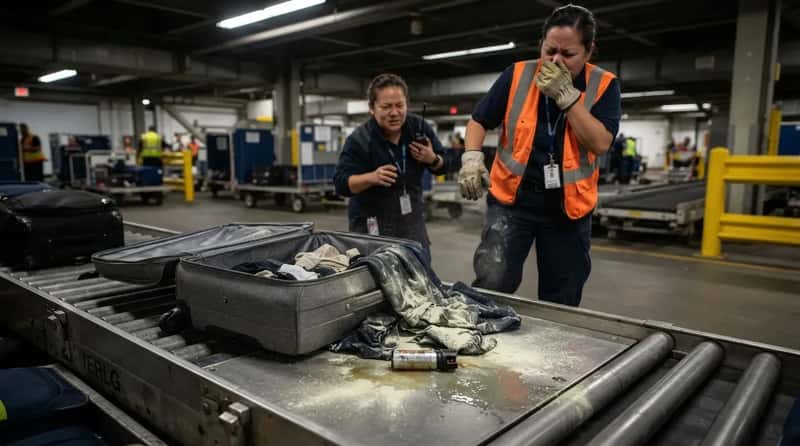
Travelers heading somewhere unfamiliar often toss in pepper spray or bear spray for peace of mind, assuming checked baggage is a safe workaround. Pepper spray is banned outright from carry-ons and only allowed in checked baggage in small quantities that meet strict specifications. A canister that doesn’t meet those specs isn’t a personal safety item anymore – it’s a pressurized chemical weapon with nowhere to vent.
If it ruptures during rough handling somewhere over the Midwest, the person dealing with the aftermath isn’t wearing a hazmat suit. They’re just unlucky. It’s a reckless gamble for a few ounces of “just in case.”
22. Cordless Curling Irons and Gas-Cartridge Styling Tools
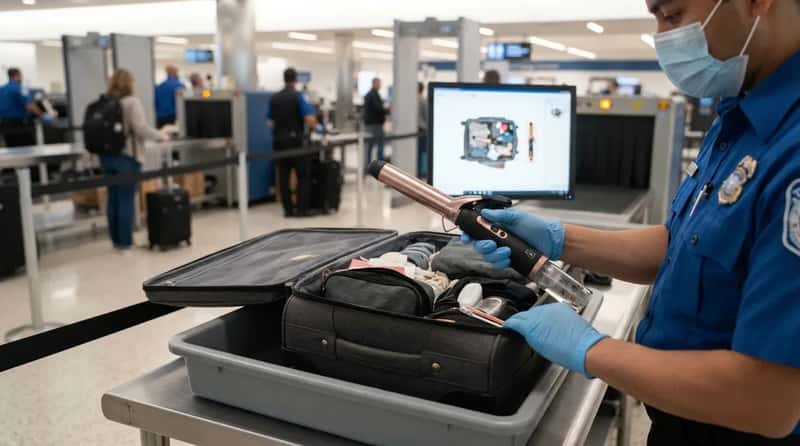
Nobody thinks of a curling iron as a fire hazard, but cordless heated styling tools get flagged constantly during screening. Many run on small butane cartridges or lithium cells that behave exactly like any other heat-generating device sealed inside a dark, pressurized hold.
The problem isn’t malice, it’s habit. Travelers pack beauty tools the same way every trip without checking whether a new cordless model has a battery or fuel cell hidden inside. Handlers can’t tell a hair tool from a heat source just by looking at the outside of a bag, which means every ambiguous device slows down an entire belt.
21. Loose Razor Blades Hidden in Clothing
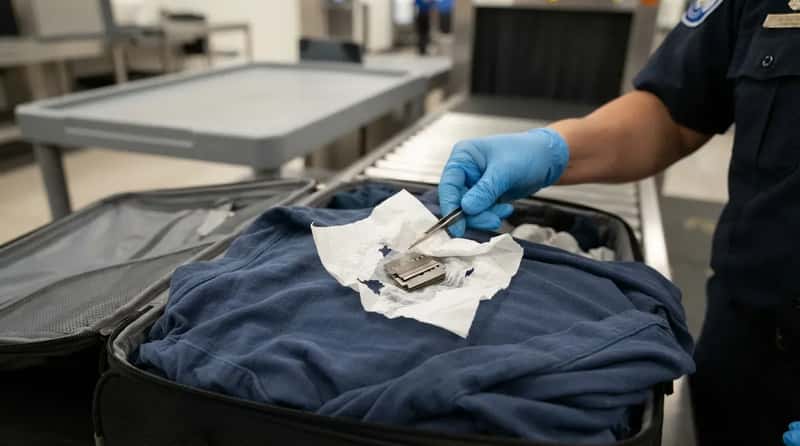
This one sounds like a plot twist, but it’s a documented real find. At Denver International Airport, TSA officers discovered 20 razor blades wrapped in paper towels and tucked inside a passenger’s clothing. Loose blades hidden in soft fabric are exactly the kind of thing a hand pats down and finds the hard way.
Whatever the traveler’s reasoning was, wrapping sharp metal in cloth instead of a proper case turns routine luggage handling into a lottery. Anyone patting down a folded shirt during a manual inspection has zero warning before the paper towel gives way.
20. Camping-Gas Canisters and Loose CO2 Cartridges
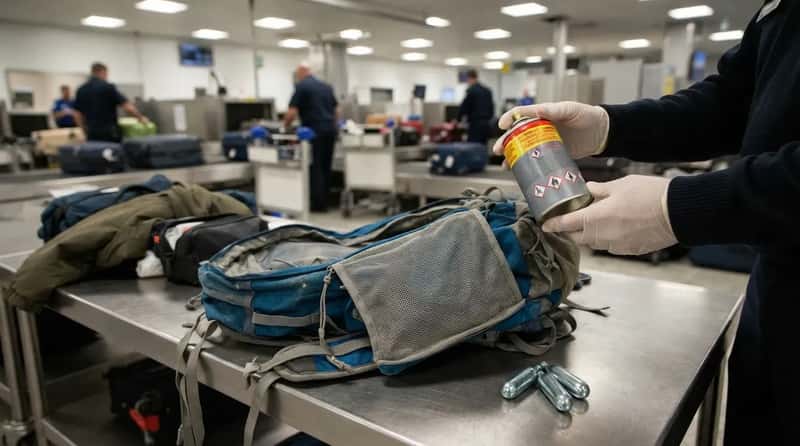
Hikers and campers love their portable stoves, but the small pressurized fuel canisters that power them are classified as hazardous material by design. Most dangerous goods are forbidden in both carry-on and checked baggage, and a flammable gas canister falls squarely into that category no matter how tiny it looks.
The frustrating part for handlers is that these canisters rarely look threatening. They’re the size of a soda can, which is exactly why so many outdoor enthusiasts assume it’s a non-issue and toss it into the outer pocket of a checked pack without a second thought.
Fast Facts
- Butane, propane, and isobutane canisters made for portable camping stoves are banned from both carry-on and checked bags, no exceptions.
- Loose CO2 cartridges sold for bike pumps, paintball markers, or countertop soda makers get the same checkpoint answer of “no” for both carry-on and checked bags.
- There’s one narrow exception: a life vest with up to two CO2 cartridges inside, plus two spare cartridges in a carry-on or checked bag, is allowed.
- Even then, screeners have the final say – an empty cylinder may be allowed if an officer can see it’s empty, but most used cartridges don’t qualify.
19. Dry Ice Packed Without Any Ventilation
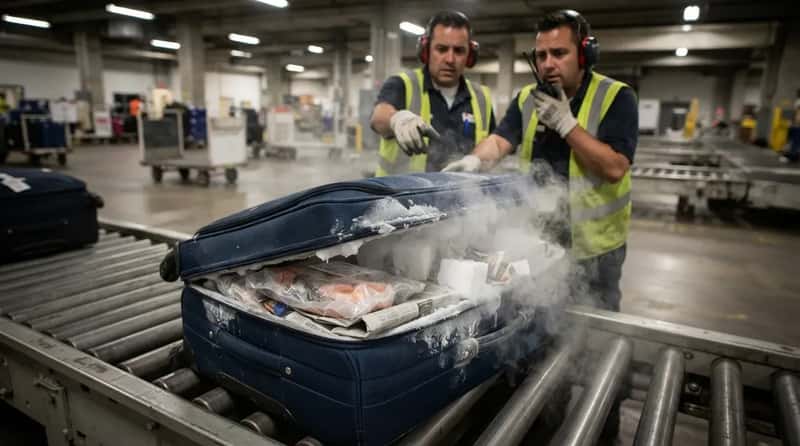
Travelers carrying frozen food, seafood, or medical samples often reach for dry ice without realizing it’s a regulated substance, not just “really cold ice.” Dry ice sublimates directly into carbon dioxide gas, and in a sealed container with no vents, that gas has nowhere to go.
In a cargo hold, that means a slow buildup of gas around other bags and cargo with no one watching. It isn’t dramatic like a fire, but it’s exactly the kind of quiet, overlooked risk that keeps hazmat teams busy long after the plane has already landed.
18. Oversized or Leaking Liquids and Toiletries
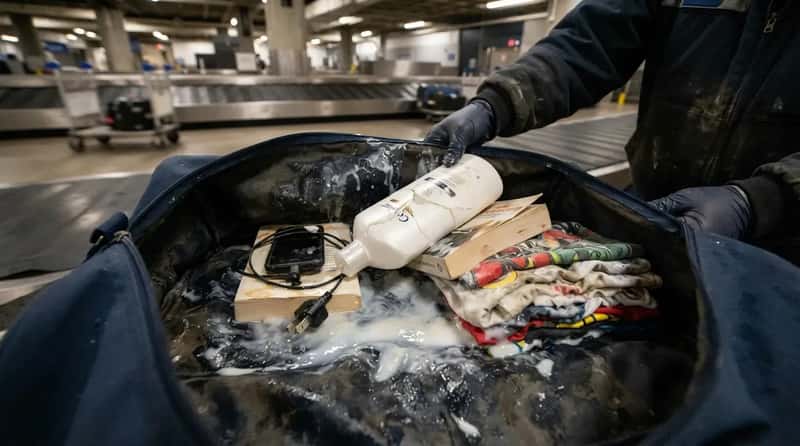
Full-size shampoo bottles, lotions, and liquids over the limit are still among the most common finds at checkpoints. But the bigger issue for handlers isn’t the rule violation – it’s what happens when one of those oversized bottles cracks mid-flight.
A cracked bottle of conditioner soaking into a canvas duffel is annoying for the traveler. It’s a genuinely unpleasant surprise for the person unloading that bag hours later, especially once the leak has mixed with a phone charger, a paperback, and a stack of souvenir T-shirts.
17. Loose Ammunition With No Firearm in Sight
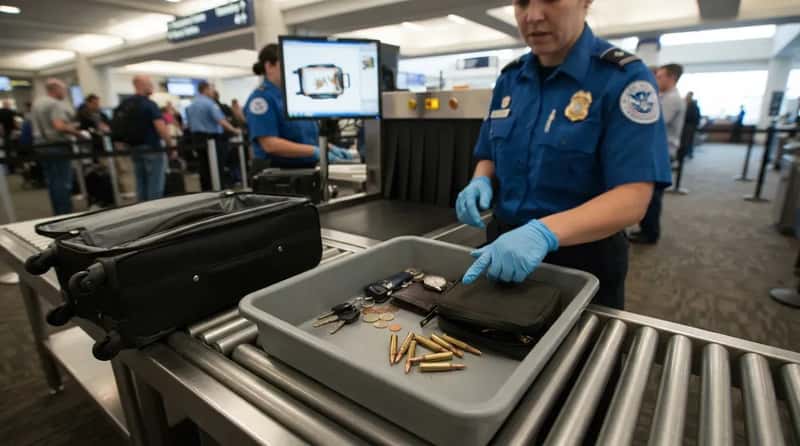
Stray bullets show up more often than most people would guess, usually because a traveler forgot a round was ever in a jacket pocket or range bag. Even a handful of loose rounds with no weapon attached triggers a full security response.
Here’s the unpopular opinion: most of these aren’t smugglers, they’re careless hunters and range regulars who never emptied their gear bag before a flight. That doesn’t make it less disruptive – it still shuts down a lane and burns everyone’s time.
16. Fireworks, Flares, and Gunpowder “Souvenirs”
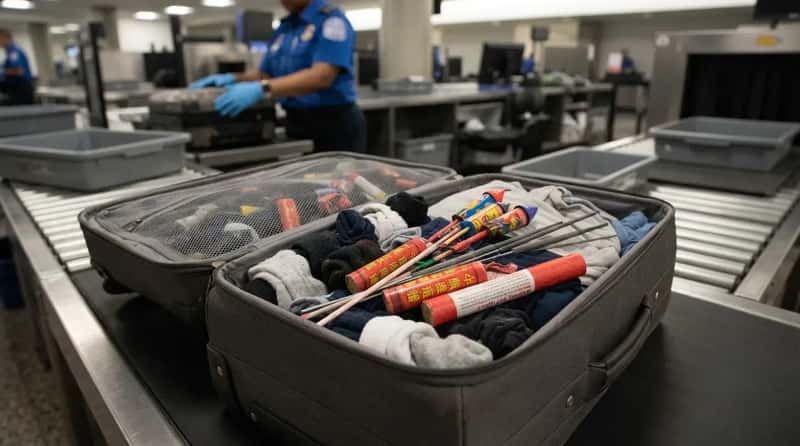
Travelers coming home from festivals or fireworks-friendly states sometimes pack a few as keepsakes, not realizing what category they fall into. Explosives like gunpowder, fireworks, and flares are banned from both carry-on and checked luggage, and they still turn up during security checks despite strict prohibitions.
These items don’t even need a spark to become a problem – friction, heat, or pressure changes inside a cargo hold can be enough. A sparkler tucked into a sock drawer at home is harmless. The same item crushed under forty other suitcases is an entirely different risk.
15. High-Proof Liquor Bought Duty-Free
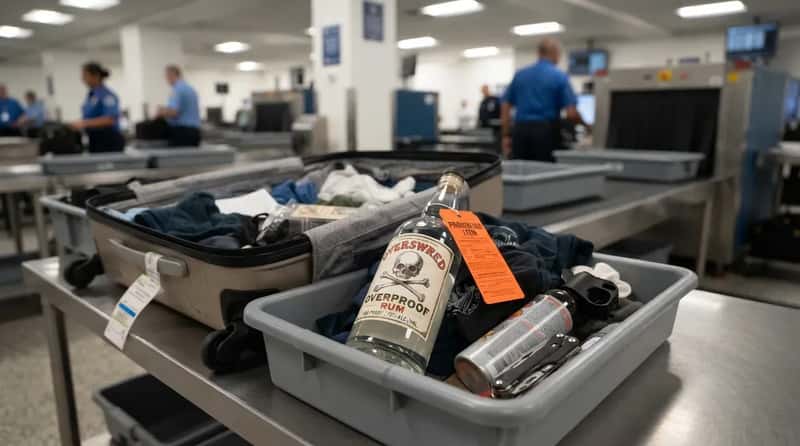
Duty-free shops sell some seriously strong spirits, and plenty of travelers don’t think twice before packing a bottle. Alcohol over 140 proof is prohibited from flights entirely because of its flammability – that’s 70% alcohol by volume, closer to a fuel source than a nightcap.
Most spirits sold for regular drinking fall well under that line, so this rarely trips up casual buyers. But the specialty overproof rums and moonshines some travelers hunt down as bragging-rights souvenirs are exactly the bottles that get pulled and left behind at the counter.
14. Hyper-Realistic Replica Guns and Toy Grenades
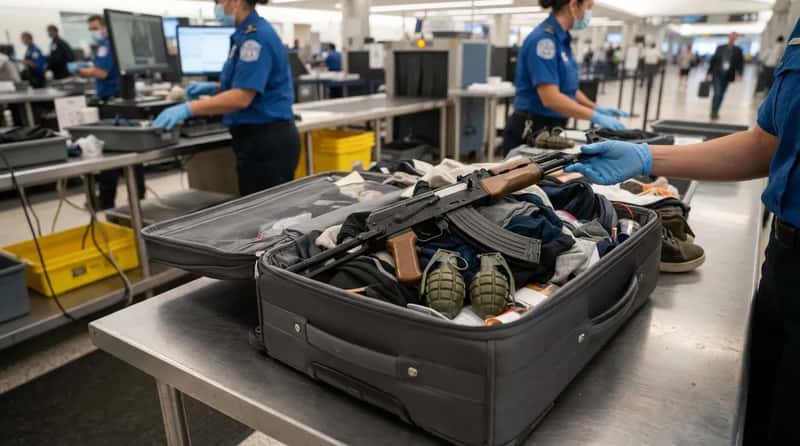
Novelty items and cosplay props cause more chaos than their owners expect. Replica weapons are prohibited because they can cause confusion or alarm during screening – and it doesn’t matter that the item is plastic, because an X-ray image doesn’t know the difference.
This isn’t rare, either. At Boise Airport, officers discovered a replica pipe bomb and imitation explosive materials inside a checked bag, and TSA emphasized that both real and fake explosive devices are strictly prohibited in any baggage. A costume prop can shut down an entire terminal for hours.
13. Illegal Drugs Hidden in Linings and Shoe Soles
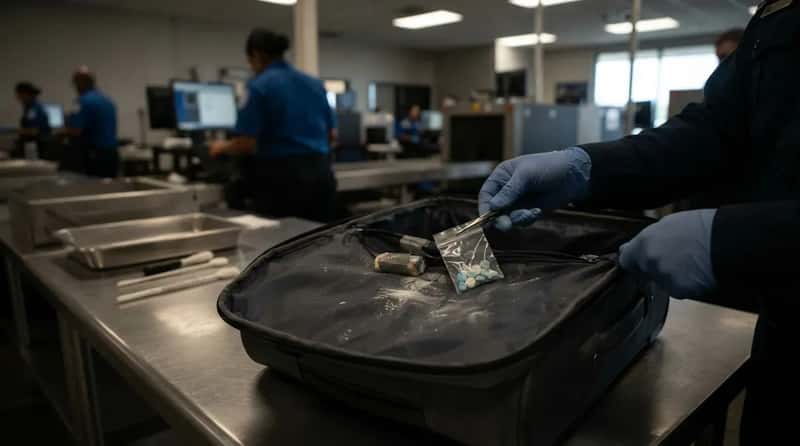
Not every dangerous find is accidental. At Ellison Onizuka Kona International Airport, TSA officers discovered a carry-on bag containing heroin, fentanyl pills, methamphetamine, and ketamine. Screeners and baggage handlers who physically search flagged bags are exposed first, often before anyone knows exactly what they’re touching.
Fentanyl in particular is a genuine occupational hazard, not just a legal problem. A few loose pills mixed into a bag’s lining put every person who searches that bag by hand at risk before law enforcement ever gets involved.
12. Live Animals Smuggled Inside Clothing
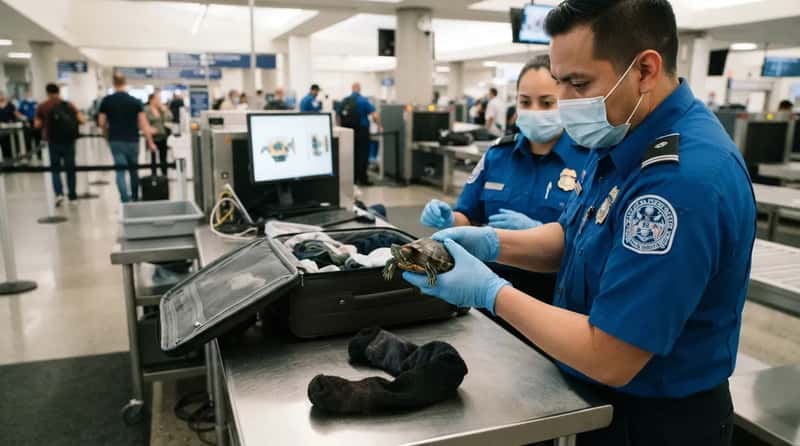
This is the strangest entry on the list, and it’s completely real. In two separate incidents, TSA officers discovered turtles hidden on passengers – one concealed inside a traveler’s pants at Newark Liberty, and two others hidden inside a bra at Miami. Neither handlers nor screeners are trained wildlife handlers, which turns a routine bag check into an improvised rescue mission.
Beyond the animal welfare problem, live creatures in luggage are unpredictable. A frightened, overheated animal in a sealed bag can bite, scratch, or simply die in transit – none of which anyone at the airport signed up for.
11. Unsheathed Knives, Hammers, and Loose Tools
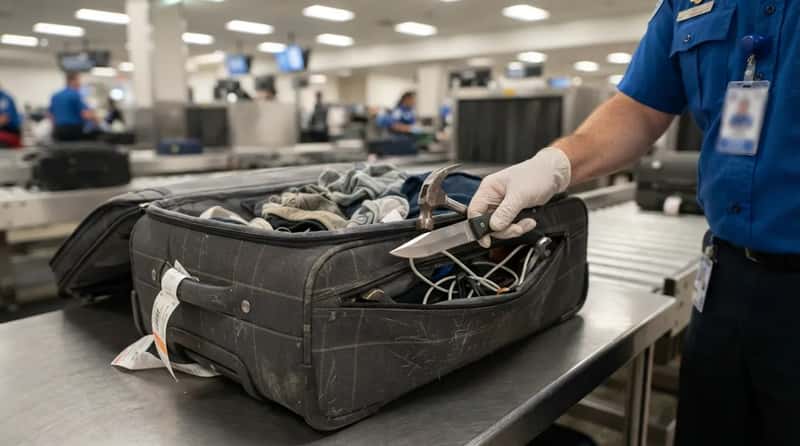
Knives and basic tools are allowed in checked baggage, but plenty of travelers skip the one step that actually matters. The rule itself is reasonable; the problem is how people pack around it.
Any metal object needs to be sheathed and secured to avoid injuring security agents or baggage handlers. A loose blade rattling around in an outer pocket doesn’t announce itself until someone’s hand finds it first – usually during a manual search, not a routine scan.
10. Overstuffed, Overweight Suitcases That Wreck Backs
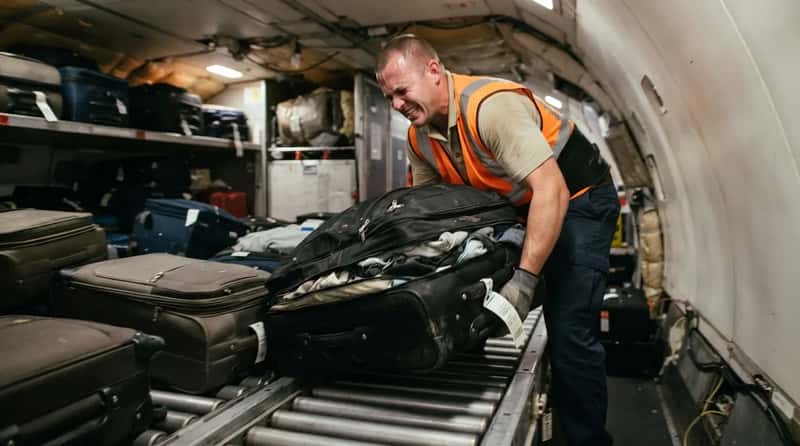
This is the one nobody thinks of as “reckless,” but the injury numbers say otherwise. Surveys of airline safety professionals found that one in 12 baggage handlers suffers a back injury each year, and overpacked bags stuffed past their limit are a direct contributor. The industry’s overall injury rate runs 3.5 times higher than private industry as a whole, with back injuries specifically four times higher.
The fix isn’t complicated. One study for British Airways found a 17 percent drop in injuries after weight limits were actually enforced, and OSHA recommends a 55-pound cap that much of the U.S. industry still hasn’t fully adopted. Every extra ten pounds crammed in for “just in case” is weight someone else’s spine absorbs, dozens of times a shift.
Quick Compare
- Standard economy checked bag: 50 lbs (23 kg) – the 50-pound limit for economy passengers is nearly universal among full-service U.S. carriers, with American, United, and Delta all setting it as the standard.
- Business or first class allowance: business and first class tickets typically bump the per-bag weight limit to 70 pounds (32 kilograms).
- Budget carriers go lower still – Frontier Airlines caps checked bags at 40 pounds, and anything over that triggers an immediate surcharge.
- OSHA’s own safe-lifting recommendation sits at just 55 lbs – a line plenty of overstuffed bags blow past before anyone weighs them.
9. Damaged or Recalled Batteries Left Inside Old Gadgets
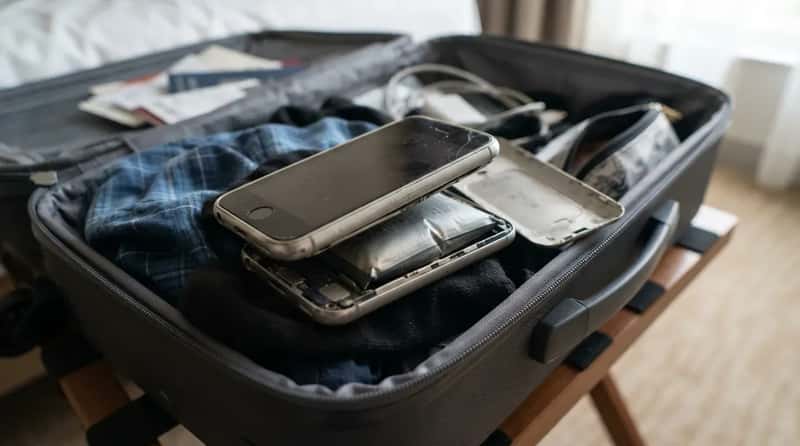
That drawer phone or old camera you’re bringing “just for backup” might be carrying a battery that’s already compromised. Damaged or recalled batteries likely to spark or overheat aren’t allowed on a plane at all unless the danger has been removed or neutralized first.
The trouble is, most travelers have no idea their old device has a swelling or damaged battery until it’s too hot to touch. Packing electronics that haven’t been used in months, without checking their condition first, is one of the quietest fire risks in any suitcase.
8. Hoverboards and Electric Skateboards
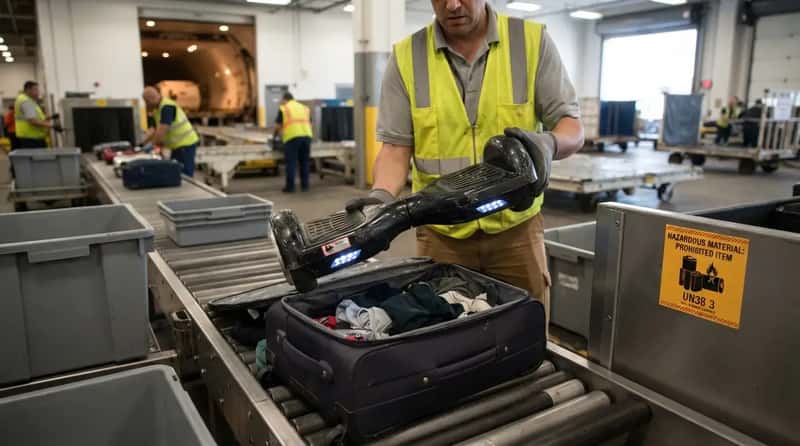
These are consistently among the most flatly banned travel items in modern aviation, yet people keep trying to check them anyway. United and most other U.S. carriers ban large lithium-battery-powered transport devices completely – the battery packs inside are simply too large and too unmonitored for a cargo hold.
That’s not an overreaction. Lithium batteries pose a danger in cargo because if smoke or fire breaks out down there, the crew has no way to reach it and put it out. A hoverboard battery igniting in the hold is a fire nobody can see or touch until it’s already a serious problem.
Why It Stands Out
- Almost every major U.S. and international airline banned hoverboards from both the cabin and cargo hold starting around 2015, after a wave of battery fires made headlines.
- Their self-balancing design packs a battery that’s usually far larger than what’s allowed for a checked lithium-ion device.
- The same ban typically extends to look-alike devices, including electric skateboards, self-balancing scooters, and some e-unicycles.
- Even a hoverboard that’s powered completely off gets turned away at check-in, because the battery can’t be removed or inspected on the spot.
7. Oversized Lithium Power Stations and Portable Generators
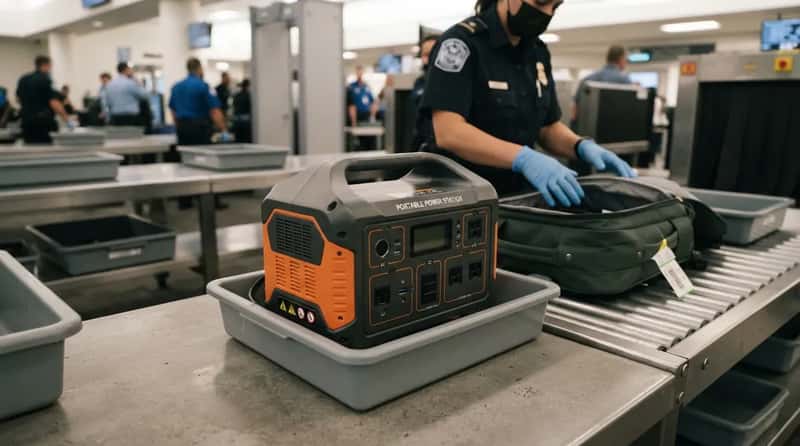
Van-lifers and campers increasingly travel with large portable power stations, and many don’t realize there’s a hard cutoff. Lithium devices over 160 watt-hours – large power banks, power stations, portable generators – simply aren’t allowed on passenger aircraft, full stop.
A device that size looks harmless sitting in a garage. But it’s essentially a large sealed battery with no active monitoring, exactly the kind of item regulators have specifically flagged as too risky for any part of a commercial aircraft, cabin or hold.
6. Aerosol Spray Paint and Other Flammable Sprays
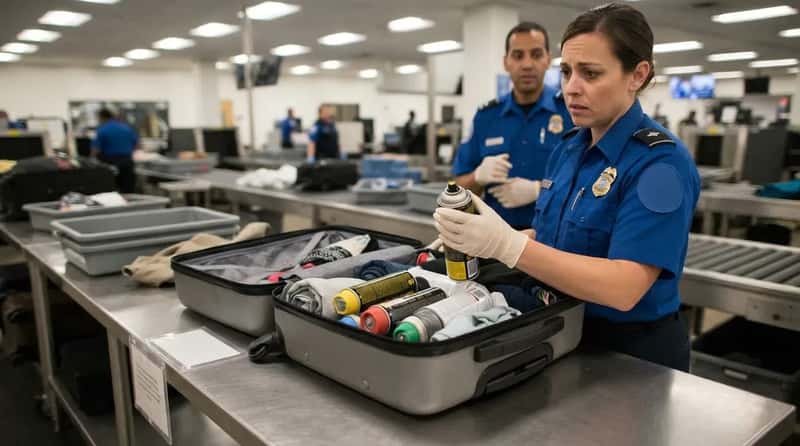
Artists, muralists, and hobbyists sometimes pack spray paint the same way they’d pack any other art supply, without registering that it’s a flammable gas under pressure. Spray paint sits right alongside fuel-based lighters and liquid bleach on TSA’s flammable items list.
The rule feels obvious once you say it out loud, but plenty of confiscations happen precisely because nobody thought of a spray can as “dangerous goods.” It’s a can designed to release its contents under pressure – not something you want jostled at altitude.
5. Strike-Anywhere Matches and Fuel-Filled Lighters
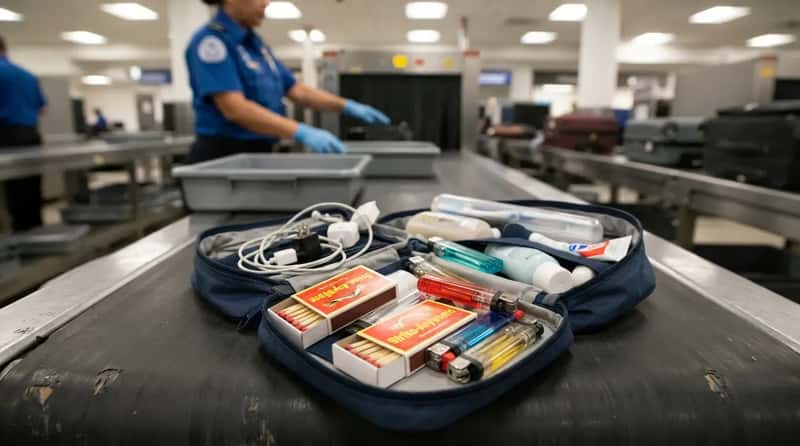
Small habits cause big problems here. Fuel-filled lighters and strike-anywhere matches are both banned from checked luggage, yet most travelers pack them the same automatic way they’d pack a phone charger.
It’s an easy mistake precisely because it’s so mundane. Nobody feels reckless tossing a lighter in a toiletry bag – but multiply that by a few hundred passengers on a full flight, and it stops being a small risk fast.
4. Spare Lithium Batteries Loose in a Suitcase
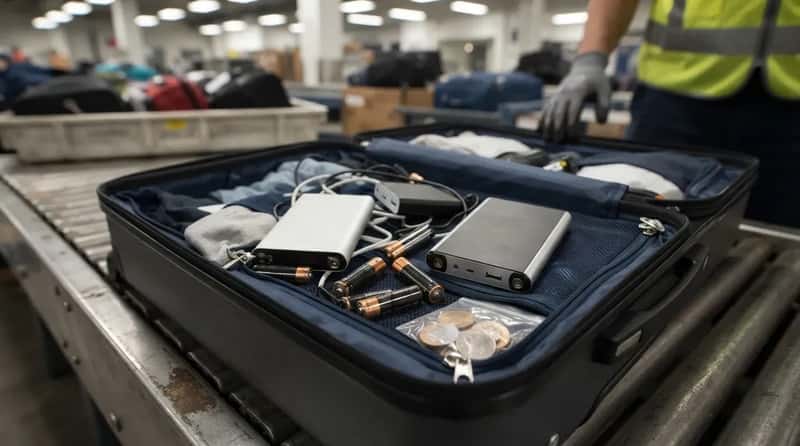
Loose batteries – not installed in any device – are treated far more seriously than most travelers expect. Only batteries properly installed inside an electronic device are allowed in checked luggage; loose spares aren’t. Southwest goes even further, refusing spare lithium batteries in checked bags entirely – any loose batteries or power banks have to travel in the cabin instead.
The danger here is mechanical, not electrical malice. Loose battery terminals bouncing against metal zippers or coins in a jostled suitcase can short-circuit, and once that starts, there’s no crew member nearby to stop it before it escalates.
At a Glance
- 0-100 Wh: rechargeable batteries with a capacity of 0-100 Wh are allowed on passenger aircraft – this covers nearly every phone and laptop battery on the market.
- 101-160 Wh: those batteries require approval from the air carrier, and there is a limit of two spare batteries per person for the larger lithium ion batteries in this range.
- Over 160 Wh: batteries exceeding 160 Wh are forbidden – no airline can override that ceiling.
- Spares of any size travel in the cabin only – never buried in a checked bag where no one can watch them.
3. Loaded Firearms Packed the Wrong Way
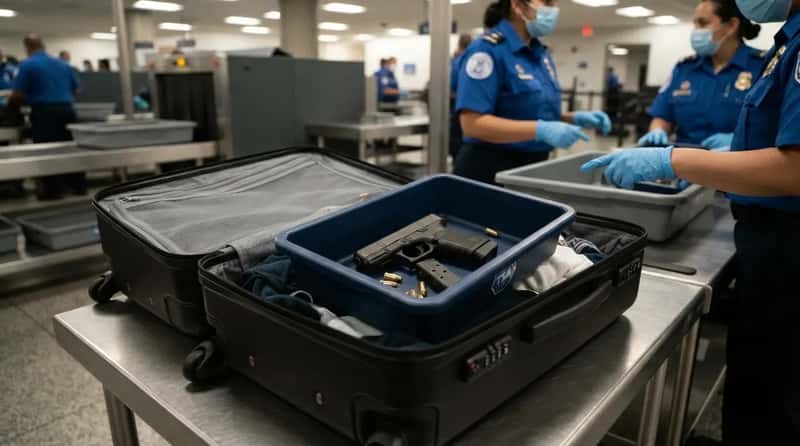
This is one of the most common – and most avoidable – dangerous finds in American aviation. In 2024 alone, TSA intercepted 6,678 firearms at checkpoints nationwide, and roughly 94% of them were loaded. The correct process isn’t complicated: unloaded, locked in a hard-sided case, declared at check-in, and stowed in checked baggage only.
Skipping those steps isn’t a minor slip. Firearms present a direct safety risk to employees and everyone else at the checkpoint, and travelers caught with one face a maximum civil penalty of $14,950. Almost all of those weapons weren’t smuggling attempts – they were simply forgotten.
2. Swollen or Damaged Phone and Laptop Batteries
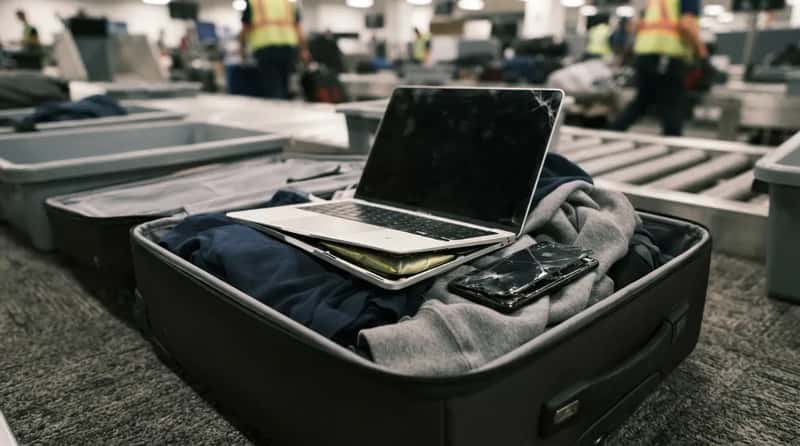
A phone or laptop that’s been dropped, overheated, or is visibly puffing at the seams is carrying a compromised battery – exactly the profile aviation regulators worry about most. Devices likely to spark or overheat aren’t allowed onboard at all unless the damaged battery has been removed or made safe first.
Most people don’t inspect their electronics before a trip – they just pack whatever’s already in the bag. That casual habit is precisely how an already-failing battery ends up sealed inside checked luggage with nobody watching it for hours.
1. Lithium-Ion Power Banks Buried in Checked Luggage
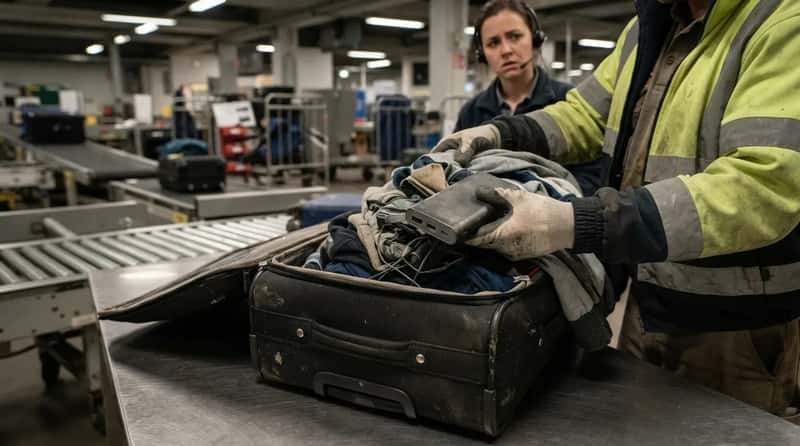
This is the single item causing the most disruption in aviation right now, and it isn’t close. Power banks and spare lithium batteries under 160 Wh must stay with passengers in the cabin – never in the hold. The reason is chillingly simple: if smoke or fire breaks out in the cargo hold, the crew can’t reach it or put it out, but a battery smoking in the cabin can at least be seen, grabbed, and contained.
If there’s smoke or fire in the cargo hold, the crew can’t take immediate action to identify and extinguish it.
Federal Aviation Administration guidance on lithium battery risk
This isn’t theoretical. In January 2025, a fire broke out on an Air Busan plane waiting to take off in South Korea, forcing the evacuation of all 176 people aboard. By mid-2025, the FAA had already logged 38 lithium battery incidents in the US alone. A power bank buried in a checked bag is the one packing mistake that has already grounded planes, evacuated passengers, and rewritten airline rules worldwide.
None of these are exotic threats dreamed up to scare travelers. They’re real finds, backed by federal data, airline incident reports, and the injury statistics of the people who move millions of bags a year without ever knowing what’s sealed inside them. The pattern is almost always the same – something that seemed completely harmless at home turns into a genuine hazard the moment it’s zipped shut in a cargo hold with no one watching.
The next time packing feels like an afterthought, remember that someone else has to lift, scan, and sometimes physically search whatever gets zipped inside. What’s the strangest or most reckless thing you’ve ever seen – or packed – in checked luggage? Tell us in the comments.