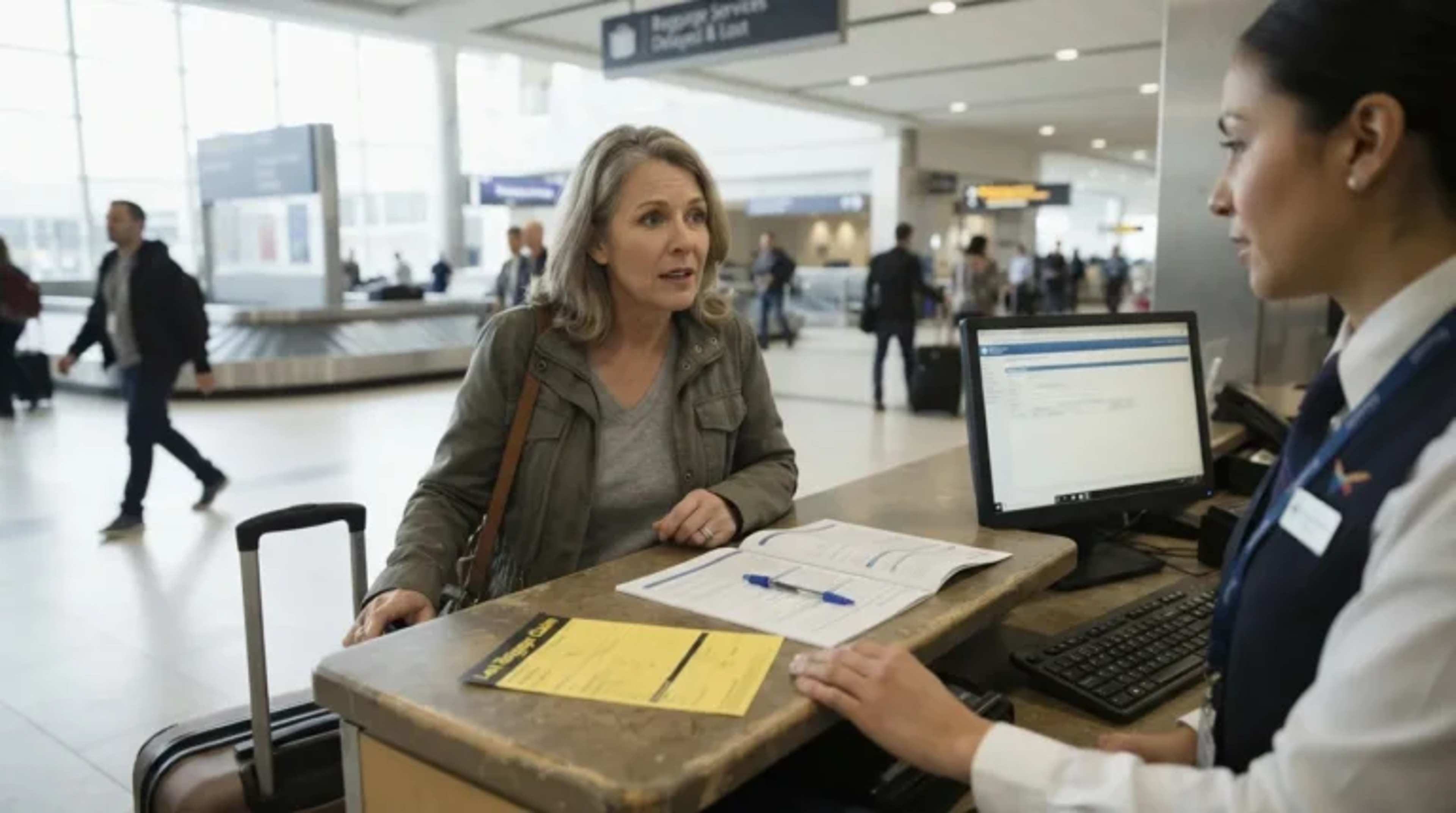
Most travelers assume gate agents and ramp workers spend their shifts saying no. In reality, ground crews operate on a quiet hierarchy of requests, and a surprising number get an automatic yes long before a supervisor is ever called. The stereotype of the impatient airline employee doesn’t match what actually happens at the jet bridge or the belt loader.
Some of these requests are baked into federal rules, others are just unwritten courtesies passed down between shifts, and a few will genuinely surprise you the next time you’re standing at the podium. Here’s what ground crews actually say yes to, almost every single time.
#23 – A Slower Walk Down the Jet Bridge Before the Door Closes
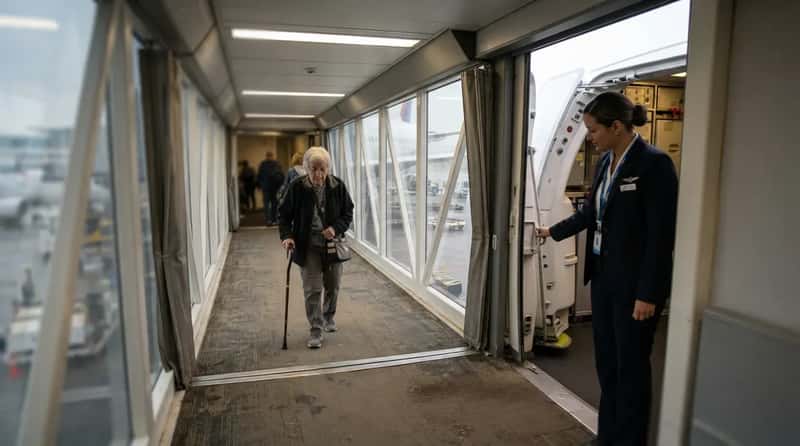
Ground crews will almost always buy a passenger a few extra minutes if they’re visibly struggling to make it down the ramp. Agents watch the clock, but they also watch the person walking toward them, and a slow, obvious effort usually earns patience instead of a rushed door closure.
This isn’t written into any manual passengers ever see. It’s a judgment call made dozens of times a day, and most crews would rather hold a door for ninety extra seconds than have someone feel abandoned on the bridge.
#22 – A Cart Ride Across a Terminal That Feels a Mile Long
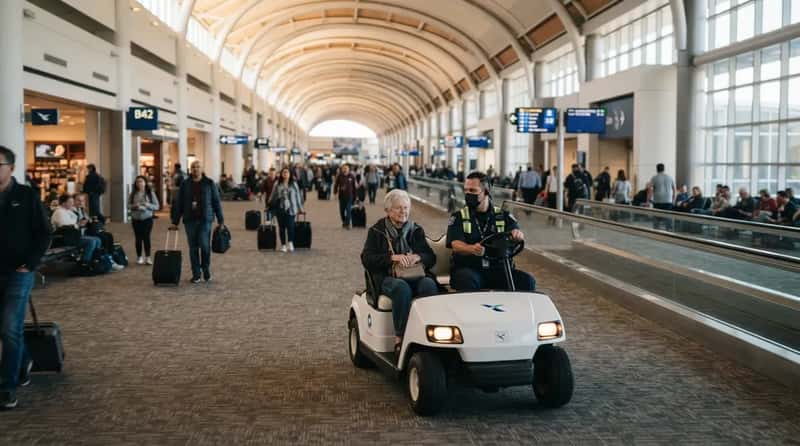
Airports like Denver, Atlanta, and Dallas-Fort Worth have concourses long enough to exhaust healthy adults, let alone someone with a bad knee or a heart condition. Requesting a cart isn’t treated as an inconvenience; it’s one of the most routinely honored asks in the entire building.
Ground staff will radio ahead for a cart before a passenger even finishes the sentence if the request sounds even slightly urgent. Crews would rather send an empty cart than risk someone missing a flight because the walk was simply too far.
#21 – Swapping a Wrong or Missing Special Meal
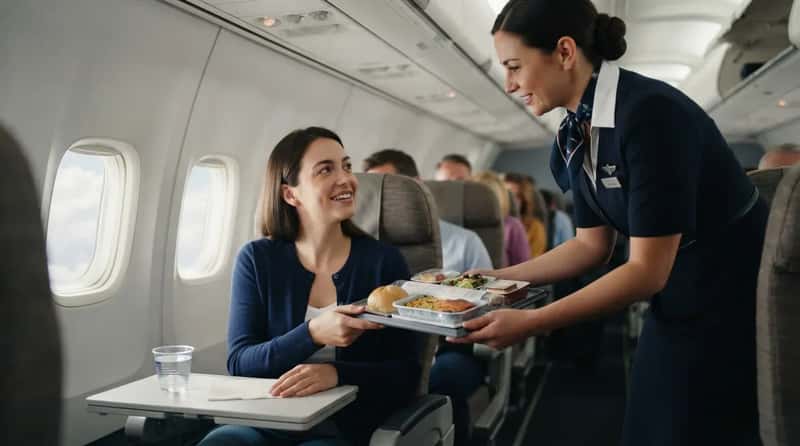
Special meals ordered for religious, medical, or dietary reasons carry more weight than most passengers realize. If the meal that shows up is wrong or missing entirely, crews rarely refuse a swap, since the request was already flagged and confirmed back at booking.
Crews generally treat this as a service obligation, not a favor. Even without advance notice, asking about vegetarian, gluten-free, or allergy-safe backups at meal service sometimes turns up options crews keep on hand for exactly this situation, though it’s never a guaranteed yes without advance notice.
#20 – Adding a Companion to a Wheelchair Pre-Boarding Pass
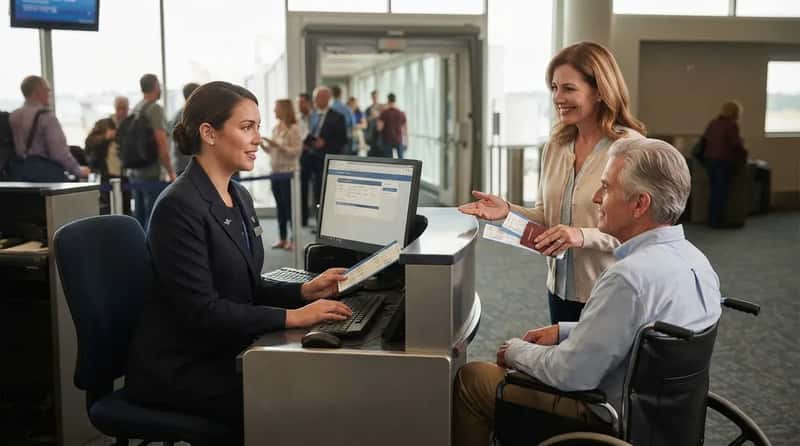
Most travelers assume pre-boarding covers exactly one seat and one person. That assumption is wrong more often than not. Pre-boarding doesn’t have to be a solo perk, and an experienced, empathetic agent will often extend early boarding to one travel companion without requiring a separate justification, especially on flights that aren’t full.
Couples and families skip this constantly because they assume the rule only covers one seat, which costs them a genuinely useful benefit on almost every flight. One clear ask at the podium usually covers both people, not just the one who needs assistance.
#19 – Free Last-Second Gate-Checking for Strollers and Car Seats
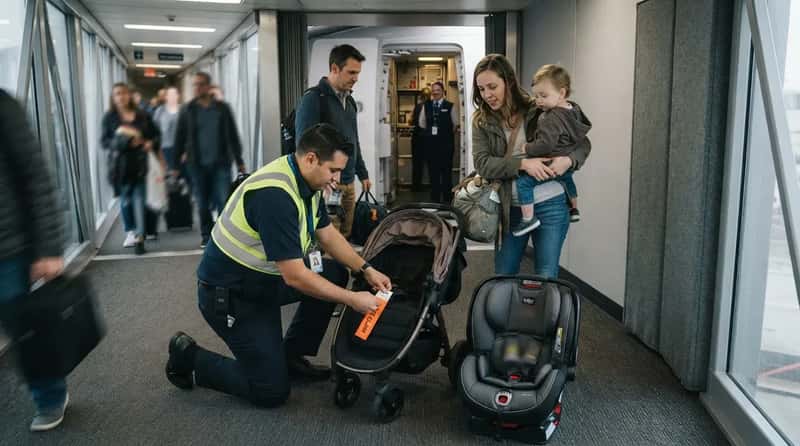
Parents juggling a toddler, a diaper bag, and a folding stroller rarely get pushback at the door. Ground crews tag strollers and car seats on the spot, often waiving any confusion about fees because federal guidance already treats these items differently from ordinary carry-ons.
What surprises most parents is how fast the tag goes on. There’s no debate, no supervisor call, just a quick label and a promise that the item will be waiting at the aircraft door on arrival, not at the baggage carousel.
#18 – Waiving Baggage Fees for CPAP Machines and Oxygen Concentrators
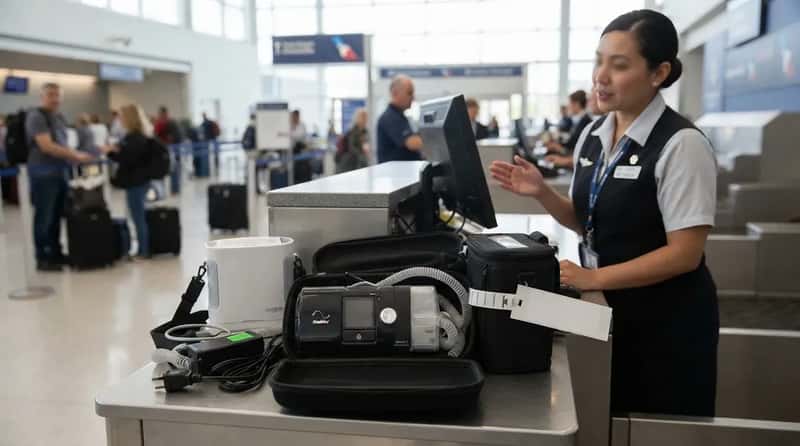
This is one of the least advertised rules in commercial aviation, and it saves travelers real money every year. The DOT and FAA confirm that CPAP machines don’t count as carry-on baggage when declared as medical devices, and most major U.S. airlines explicitly exempt FAA-approved medical equipment, including portable oxygen concentrators, from standard baggage fees.
The key detail almost nobody mentions is that this exemption requires no special form, just a verbal declaration at check-in or the gate. Ground crews rarely push back on this because the rule isn’t a courtesy; it’s federal policy they’re required to follow.
Worth Knowing
- CPAP machines are allowed on all commercial flights and do not count toward your carry-on limit, since they’re classified as medical equipment.
- Portable oxygen concentrators are different: the FAA requires that your POC be FAA-approved, and most carriers require advance notice, typically 48 hours or more.
- Airlines generally require enough battery power to last 150% of the total flight time, so packing extra batteries matters.
- Seating gets restricted too, since POC users must carry 150% of total flight time in battery, and cannot sit in exit row or bulkhead seats.
- None of this comes with a fee attached, because federal rules simply cannot charge fees for your POC.
#17 – Personally Escorting an Unaccompanied Minor, Not Just Pointing the Way
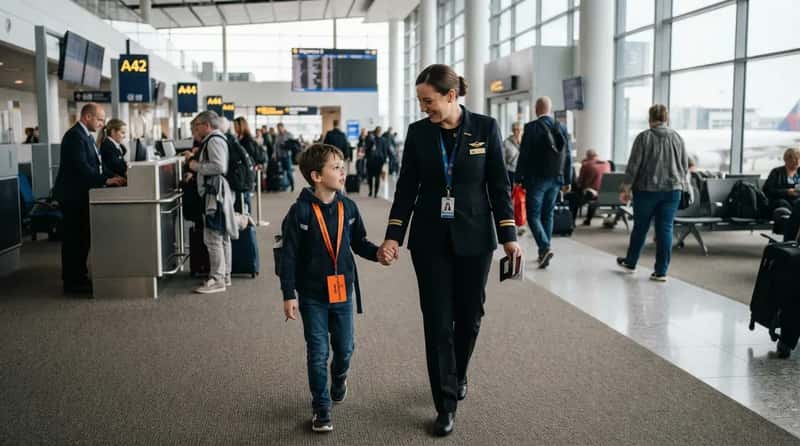
Kids flying alone get a level of attention most adult passengers never see. Crews check in more frequently, walk them through the flight step by step, and coordinate closely with gate staff on both ends of the trip so the handoff never falls through the cracks.
This isn’t a favor that depends on which agent happens to be working. It’s treated as a chain-of-custody responsibility, and ground crews rarely, if ever, shortcut the paperwork or the physical escort, even during a packed connection bank.
#16 – A Team Lift on an Oversized or Overweight Bag
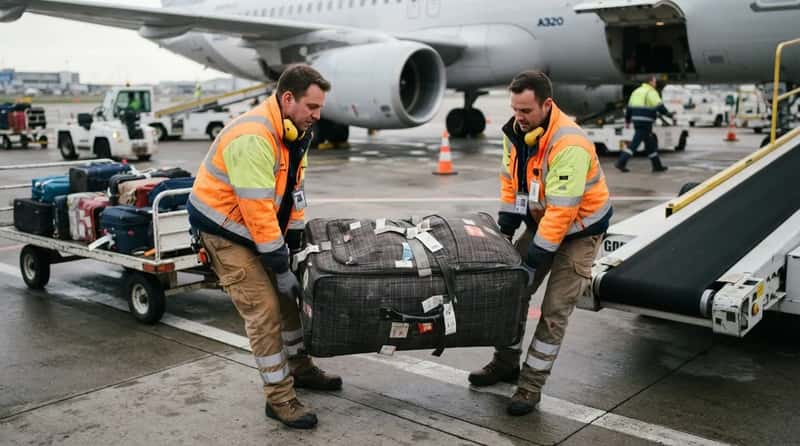
Nobody wants to be the one who throws their back out over a stranger’s suitcase, so ramp crews default to asking for backup rather than refusing to move a heavy bag. Requesting help lifting an unusually heavy checked item is treated as basic safety, not weakness.
Most travelers never see this negotiation happen behind the counter, but it’s constant. A second set of hands gets called over quietly, the bag gets moved, and the passenger never even realizes a request was made on their behalf.
#15 – Gentle, Padded Handling for Musical Instruments
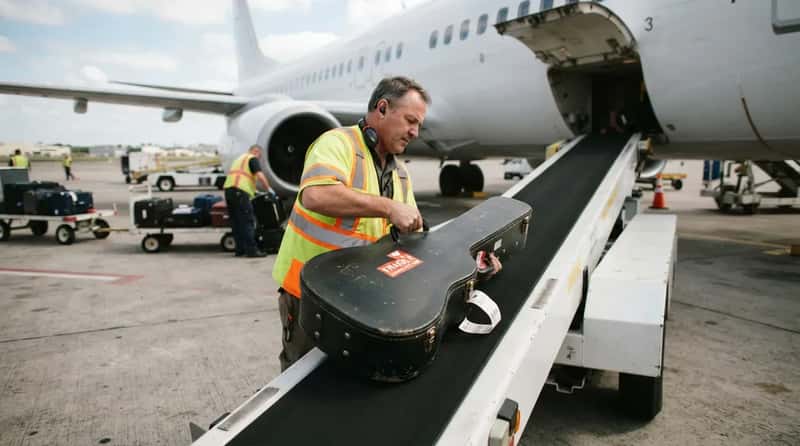
Guitars, violins, and other checked instruments get flagged differently than ordinary luggage almost everywhere in the U.S. Ground crews will honor a request for careful handling because a damaged instrument is a far bigger liability headache than a scuffed suitcase.
This request rarely gets refused because it costs the airline almost nothing to accommodate. A hand-carry to the belt loader instead of a toss down the chute is a small ask with an outsized payoff for the traveler.
#14 – Watching Your Own Bag Get Loaded Onto the Belt
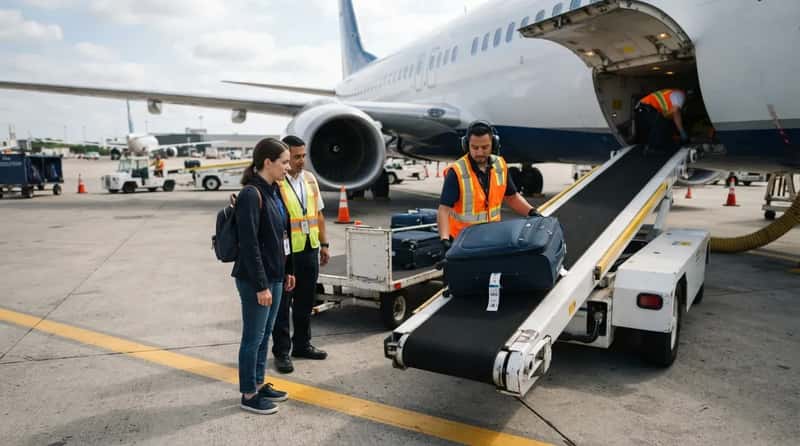
Anxious flyers, musicians, and anyone carrying something fragile sometimes ask to physically watch their bag disappear into the cargo hold. Ramp crews will usually allow a supervised, distant view of the process rather than sending someone away disappointed.
It’s a small courtesy that costs almost nothing in time but buys enormous peace of mind. Most passengers never think to ask, which is exactly why the ones who do are rarely turned down.
#13 – Keeping a Pet Carrier Off a Hot or Freezing Tarmac
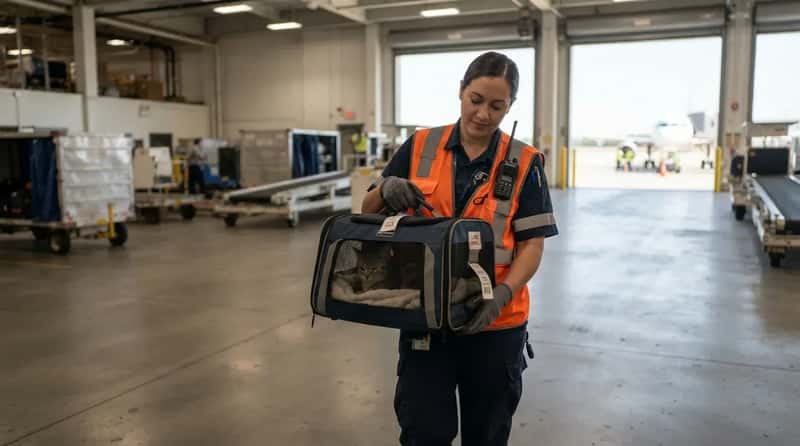
Extreme temperatures on the ramp can be dangerous for animals waiting in cargo holds, and ground crews know it better than anyone. A request to keep a pet carrier in a climate-controlled holding area, even briefly, is almost always honored when conditions are severe.
This request carries real urgency behind it. Crews would rather adjust a loading sequence than risk an animal’s safety, especially on the tarmac during a summer heat wave or a winter deep freeze.
#12 – Flagging a File as “Special Assistance” for Every Future Flight
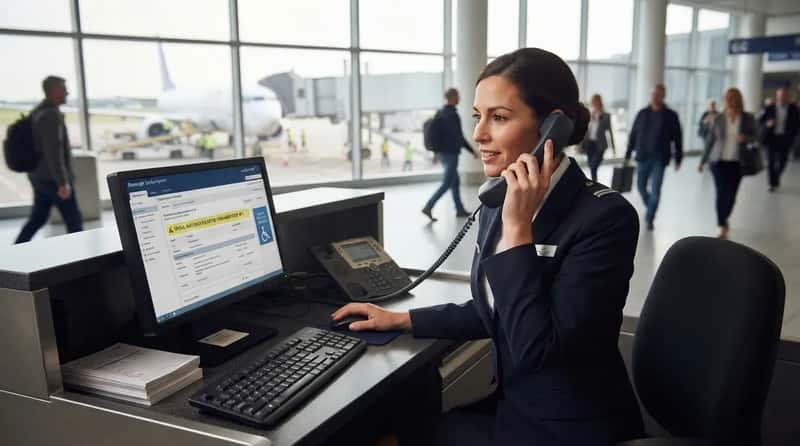
Once this note gets added, it follows a traveler for good, not just for one trip. A “special assistance requested” flag quietly alerts ticket counters, gate agents, and ramp crews long before the passenger ever shows up, so help is already expected instead of improvised on the spot.
The catch most travelers never hear about is timing. Airlines generally ask for at least 48 hours’ notice, and skip that window, and the help still exists, but it turns into a last-minute scramble instead of a plan that was already waiting.
Fast Facts
- The flag attaches to a traveler’s profile, not just a single itinerary, so it carries over to future bookings.
- Most airlines recommend requesting it at least 48 hours before departure for the smoothest handoff.
- It quietly follows the passenger through ticket counters, gate podiums, and ramp crews alike.
- Missing the notice window doesn’t cancel the help, it just turns a plan into a scramble.
#11 – Calling Ahead for a Missed-Connection Wheelchair Transfer
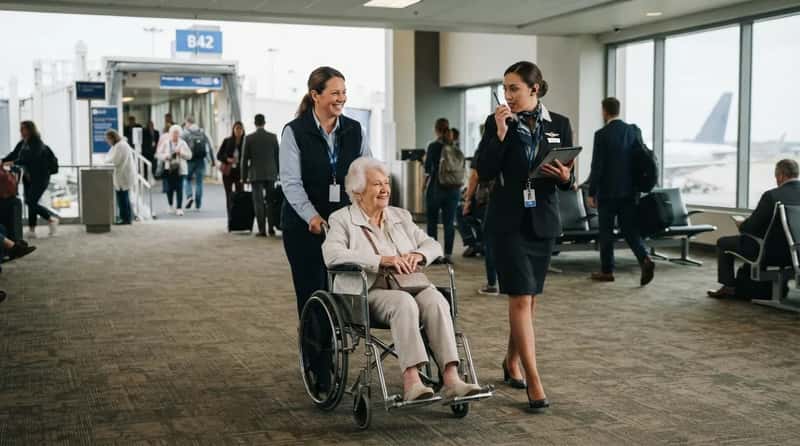
When a passenger with mobility needs is cutting a connection close, crews don’t leave it to chance. Once a wheelchair or mobility assistance request is made, crews typically communicate directly with gate agents on both ends so help is already waiting the moment the aircraft door opens, treated as a near-automatic yes rather than a special favor requiring justification.
It’s one of the most consistently honored requests in commercial aviation. Crews would rather over-communicate than risk someone being stranded alone at an unfamiliar gate in a strange airport.
#10 – A Translator or Translated Help at the Gate
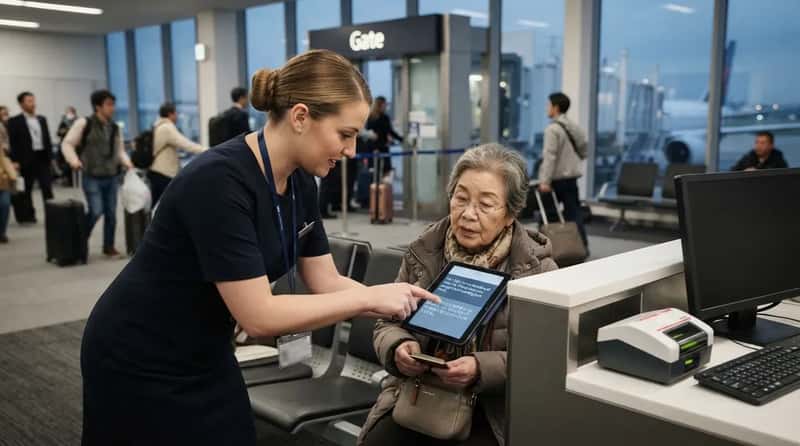
Language barriers create some of the tensest moments at a gate, and most crews would rather find a workaround than let a passenger board confused. Pulling in a bilingual coworker, using a translation app, or slowing down key instructions is common practice, not a rare exception.
This is one of the few requests that almost never gets a flat no, because the alternative, an entire boarding process breaking down over a misunderstanding, is far worse for everyone on the ramp and at the gate.
#9 – Holding a Jet Bridge for a Passenger Sprinting Through the Terminal
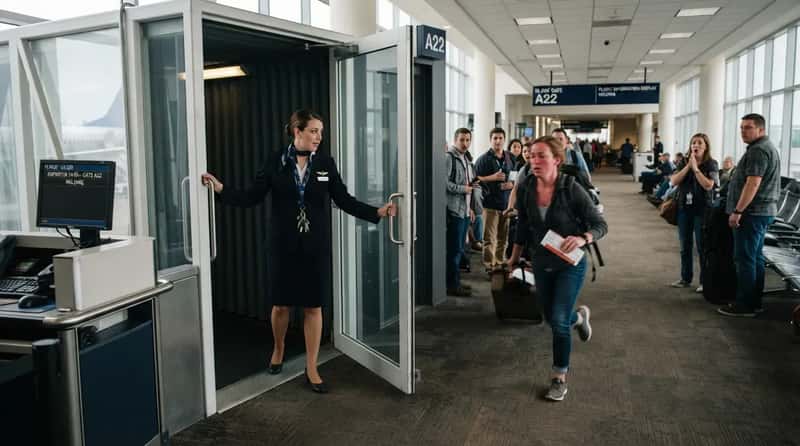
While official policy says doors close on schedule, plenty of gate agents will quietly stretch the window for someone visibly running with boarding pass in hand. This is one of the more controversial habits in the industry, and some frequent flyers argue it unfairly rewards people who arrive late in the first place.
Even so, crews will often radio the gate to hold for sixty to ninety seconds rather than close the door on someone within visible reach. It’s a judgment call, not a formal right, which is exactly why it varies so much airport to airport.
Quick Compare
- Official policy: the door closes at the posted departure time, no exceptions written down.
- Common practice: a visible sprinter often buys sixty to ninety extra seconds anyway.
- Official policy: no guarantee exists for anyone running late.
- Common practice: the outcome depends entirely on the agent and the airport that day.
#8 – Retrieving a Forgotten Item After the Cabin Door Has Closed
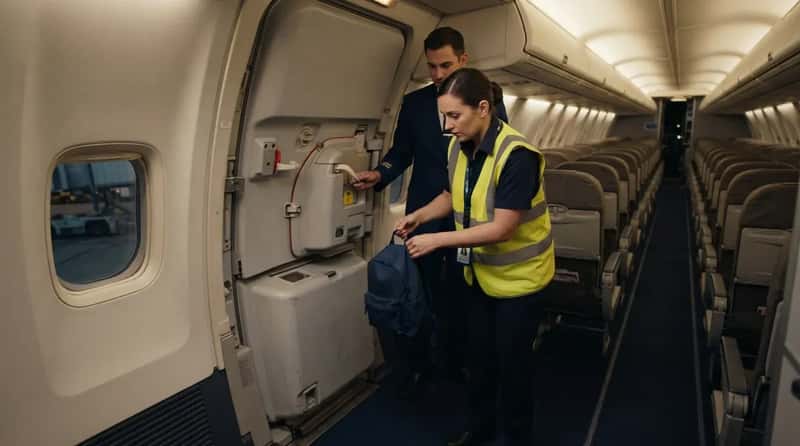
A phone left in a seat pocket or a jacket draped over an armrest triggers more scrambling than most passengers realize. Ground crews will often relay a message to the flight crew or arrange a retrieval before pushback if there’s still time on the clock.
Once the aircraft leaves the gate, the odds drop fast. But right up until that moment, this is a request crews rarely dismiss outright, because a two-minute fix beats an angry phone call to customer service later.
#7 – Swapping a Broken Airport Wheelchair for the Aircraft’s Aisle Chair
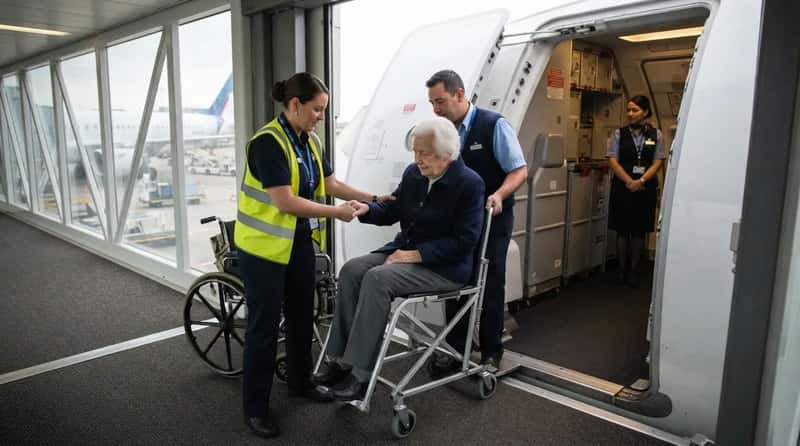
Airport wheelchairs occasionally break down or go missing at the worst possible moment. When that happens, ground crews will pull the aircraft’s own narrow aisle chair as a substitute rather than leave a passenger stranded at the door.
Most travelers have no idea aisle chairs exist specifically for this backup scenario. Crews treat this swap as a basic safety obligation, not an inconvenient favor, since leaving someone immobile at the boarding door simply isn’t an option.
#6 – Escorting a Nervous First-Time Flyer Through the Terminal
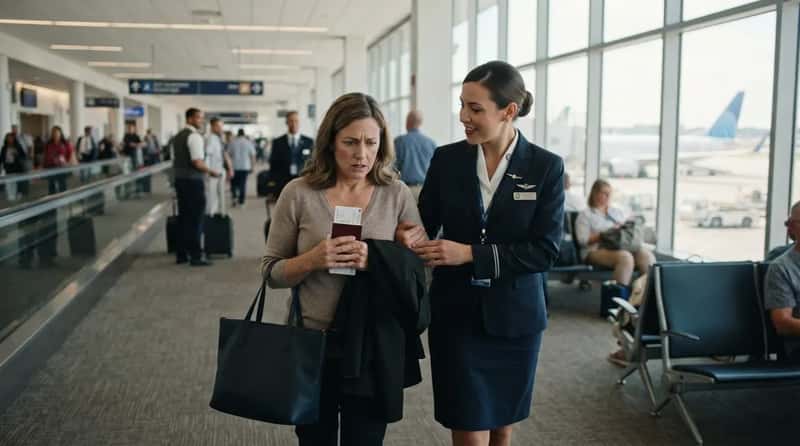
Fear of flying doesn’t stop at the security line for some travelers, and ground staff notice it immediately. A request for a calm walk-through, a slower pace, or simple reassurance about what happens next is almost always granted without hesitation.
This costs an agent nothing but a few extra minutes of patience, and the payoff is enormous for the passenger. Crews would rather talk someone through boarding anxiety than deal with a panic episode once the doors close.
#5 – An Escort Pass So Family Can Walk a Passenger to the Gate
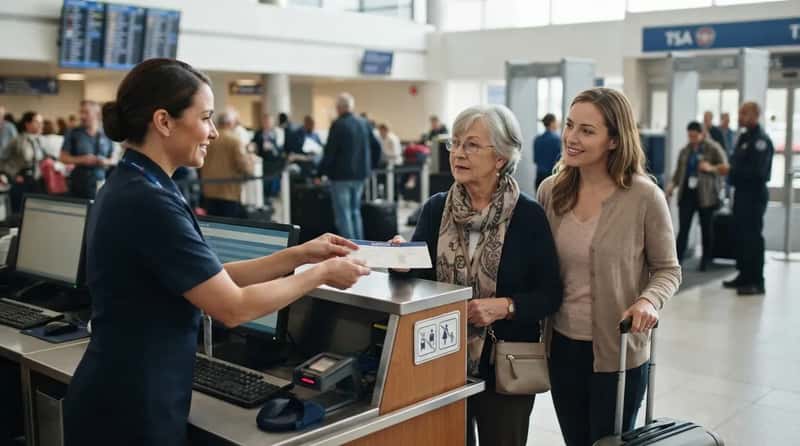
Getting a non-traveling family member past security to accompany someone anxious, elderly, or medically fragile requires paperwork most people don’t know exists. Airlines issue gate passes for exactly this situation, and ground staff will process the request rather than send a worried relative back to the curb.
This one still surprises frequent flyers who assume the TSA checkpoint is an absolute wall. It isn’t, as long as the right request gets made at the ticket counter with enough time before departure.
#4 – Rebooking a “Sensitive Traveler” First When a Flight Cancels
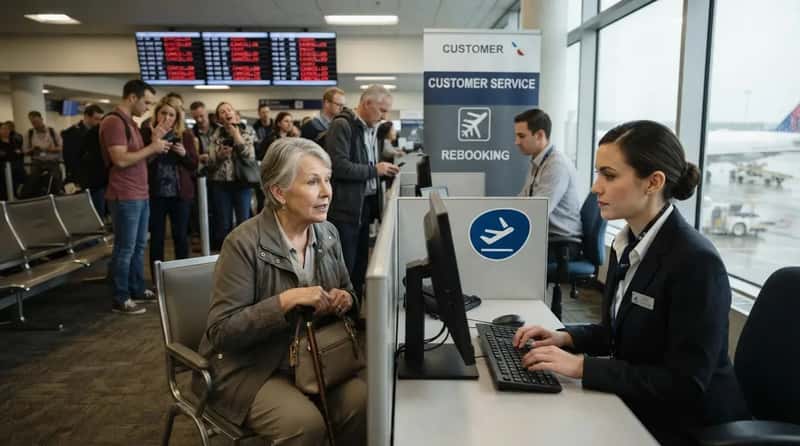
Cancellation chaos hits everyone the same way, except it doesn’t. Many airlines flag passengers under a “sensitive traveler” category, which includes seniors and people who’ve requested special assistance, and when a flight cancels and agents start rebooking the queue, those travelers often move first, quietly, with no public announcement.
The trick almost nobody knows is how to phrase the request. Walking up calm and specific, rather than frustrated and vague, tends to get faster results, since crews and gate staff respond more readily to a clear ask than to raised voices.
#3 – Fee-Free Priority Tags on Mobility Devices
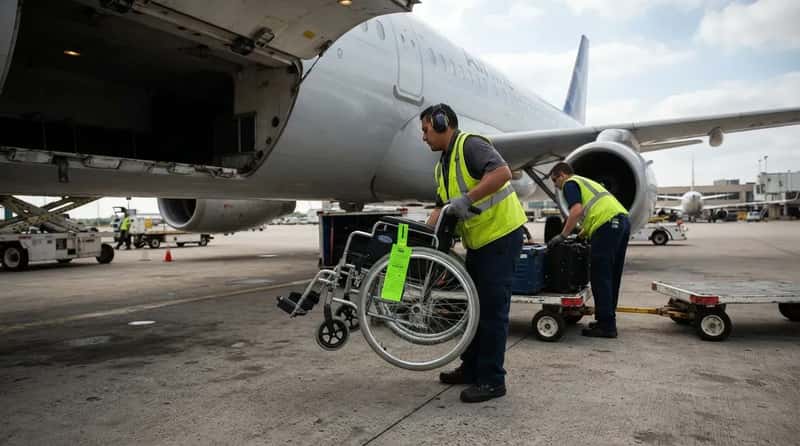
Wheelchairs and scooters checked at the gate get a different tag color and a different unloading priority than ordinary luggage almost every time. This isn’t negotiable the way normal baggage requests are; it’s closer to a guarantee than a courtesy.
Federal rules require airlines to provide prompt wheelchair assistance getting passengers off the aircraft, and mobility devices are supposed to come off the plane ahead of general cargo whenever possible. Most travelers never realize how much of this is law, not goodwill.
Fast Facts
- Federal rule requires that carriers give wheelchairs, other mobility aids, and other assistive devices priority for stowage in the baggage compartment over other cargo and baggage.
- Airlines are also required to notify passengers with disabilities, before the aircraft cabin door closes, whether their wheelchairs or scooters have been loaded in the cargo compartments of their flights.
- On top of that, airlines must allow assistive devices as carry-ons in the cabin free of charge consistent with safety rules, so there’s no fee attached anywhere in the process.
#2 – A Discreet Welfare Check Flag From a Single Sentence
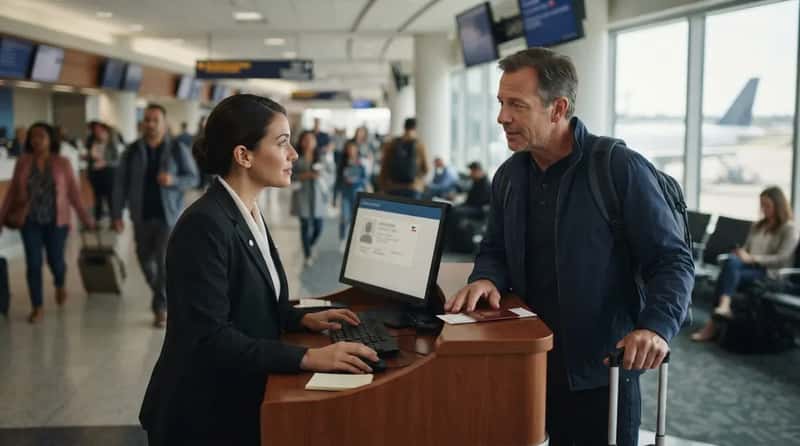
Few passengers know this power even exists. Gate agents can add a quiet note to a traveler’s file after just one honest conversation, and that note follows them into every future flight, not just the one they’re on.
Once that flag is added, every future gate agent sees it instantly, speeding up boarding, seating, and assistance requests without the passenger having to repeat the story each time. One conversation at a podium can quietly change how a person is treated for years of flying afterward.
#1 – Staying by a Distressed Passenger’s Side Until Help Arrives
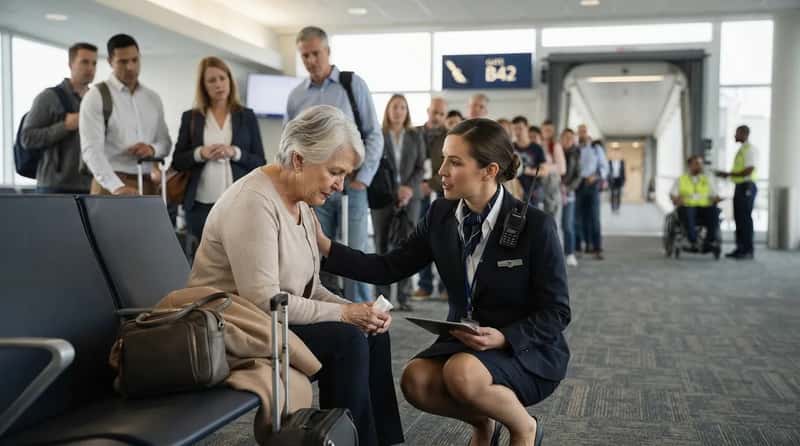
This is the one ground crews describe as non-negotiable, even when everything else about the schedule is falling apart. Whether it’s a medical scare, a panic attack, or a passenger who simply gets bad news mid-trip, staff will not walk away and leave someone alone at a gate, no matter how backed up the boarding line gets behind them.
Supervisors, wheelchair attendants, and gate agents will physically linger, radio for backup, or wait with a shaken traveler well past the end of a shift if that’s what the moment requires. It’s the one request nobody technically has to make out loud, because the moment a crew member notices, the decision to stay is already made.
Ground crews juggle schedules, weather, and federal rules all day, yet the requests above keep showing up as near-automatic yeses across airports big and small. Some are written into law, like priority handling for mobility devices and medical equipment. Others are simply habits good crews refuse to break, even when nobody’s watching or grading their patience.
The next time you’re standing at a gate wondering whether to ask, the honest answer from the people who work the ramp is usually the same: go ahead and ask.