
Ask any Gen X adult about a childhood road trip and watch their eyes go somewhere far away. The windows hand-cranked down. The bench seat wide enough to sleep across. A cassette tape hissing through a tinny speaker while dad refused to stop for a bathroom break because he’d already stopped once, and that was the deal. The 1980s family road trip was its own civilization — with its own rules, rituals, and completely unregulated chaos — and almost none of it exists anymore.
Most people assume today’s road trips are just upgraded versions of those old ones. Better cars, better snacks, same basic experience. Not even close. The habits that defined every summer drive between 1980 and 1989 have been so thoroughly erased that kids today wouldn’t recognize them as a road trip at all. Some of what’s gone is genuinely funny. A couple of entries are surprisingly emotional. And at least one will make you think twice about what screens quietly took from the back seat.
#23 – Packing the Night Before and Still Leaving Three Hours Late
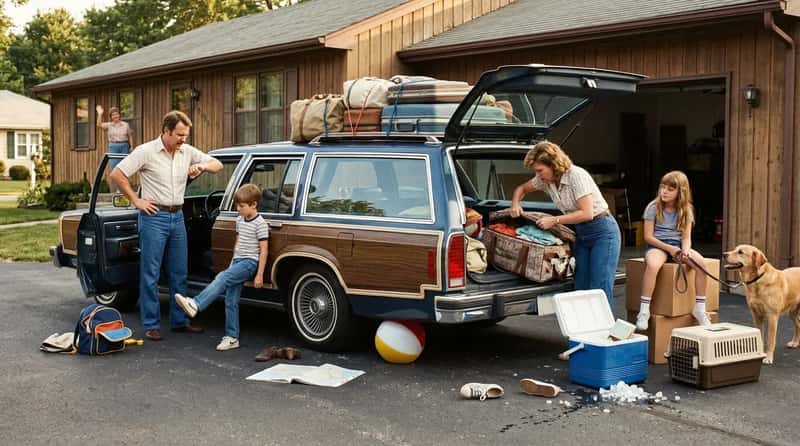
Every 1980s road trip family had a scheduled departure time. Mom said 7 a.m. Dad said 8. They left at 11. Someone couldn’t find their shoes, the cooler hadn’t been iced, and the dog needed to be dropped at the neighbors. The night-before packing session always missed something critical, which got discovered in the driveway, usually while the car was already running.
Today, apps remind you what to pack, navigation is pre-loaded the night before, and families who plan to leave early actually leave early. The ritual of vowing to pull out at 8 a.m. — and then watching that goal dissolve into a slow-motion domestic chaos — was practically a family law for an entire generation. That anarchic launch is gone. The modern road trip departs with a notification and a playlist already synced.
At a Glance
- Departure time promised: 7–8 a.m. | Actual departure: closer to 11
- Forgotten items discovered in the driveway — cooler, shoes, the dog’s food
- No packing list apps, no reminders, no pre-loaded route
- The chaos was universal — virtually every family had this exact morning
- Today’s families with planning apps actually leave on time. Something is lost.
#22 Riding in the Way-Back of the Station Wagon
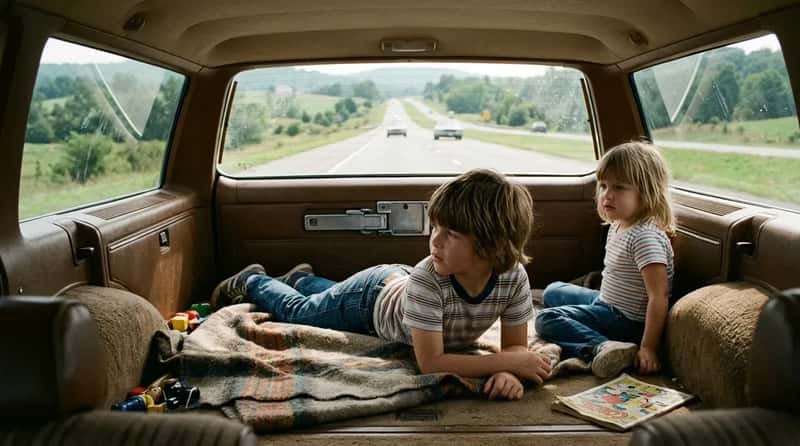
If your family had a station wagon, you know exactly what the way-back was. The rear-facing cargo area — no real seat, no seatbelt, sometimes just a blanket thrown down — was prime real estate for kids on long drives. You’d spend hours lying there watching the road disappear behind you, waving at truckers, or staring at the sky through the rear window. Dangerous by today’s standards. Completely unforgettable by every other measure.
By the mid-1980s, the minivan was already displacing the station wagon as the dominant family vehicle — Chrysler launched the first Dodge Caravan in 1984, which quickly reshaped how families traveled — and today the SUV reigns supreme. The way-back vanished with the wagon, and so did an entire category of childhood freedom: the specific, wind-in-your-face freedom of watching the highway unspool behind you while your parents had no idea what you were doing back there.
#21 Stopping at a Gas Station to Ask for Directions
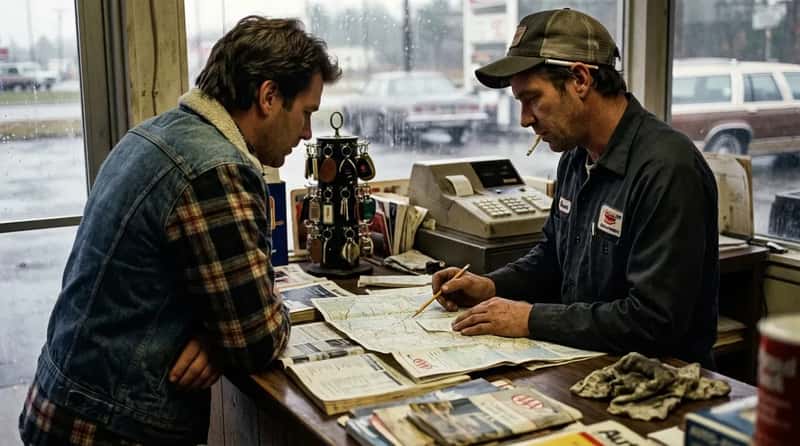
Getting lost was just part of the trip. You’d pull into a gas station, and dad — after a suitable amount of driving in circles first — would finally go inside and ask the attendant where the highway was. Sometimes they drew it on a napkin. Sometimes they were wrong. The gas station direction stop was part problem-solving, part social ritual, and completely unreliable in the best possible way.
With no phones and no navigation, all families had was a wrinkled AAA map and the goodwill of a stranger who might sketch a route on a receipt. That human exchange — being oriented in an unfamiliar town by someone who actually lived there — is almost entirely extinct. Google Maps launched in 2005 and killed it so completely that most kids today have never once watched their parent ask a stranger for directions. Not even once.
#20 The Mandatory Cooler Packed With Wax Paper Sandwiches

Before fast food became the default road trip meal, mom packed a cooler — the night before, or the morning of, at 10:47 a.m. — and that cooler was the family’s lifeline. Wax paper–wrapped sandwiches, warm cans of soda, maybe some grapes or a bag of chips: that was the entire menu for the first six hours. The cooler sat on the floor of the back seat, and every time it opened, something good was about to happen.
Rest stops became proper dining destinations where the cooler’s bounty was spread out on a picnic table while everyone stretched their legs. It was a ritual of its own — the unpacking, the negotiating over who got the good sandwich, the warm soda that nobody complained about because complaining wasn’t on the agenda. Drive-throughs replaced all of it. Nobody packs a cooler for a road trip anymore, and something genuinely communal went with it.
#19 Kids Roaming Freely Around the Back Seat
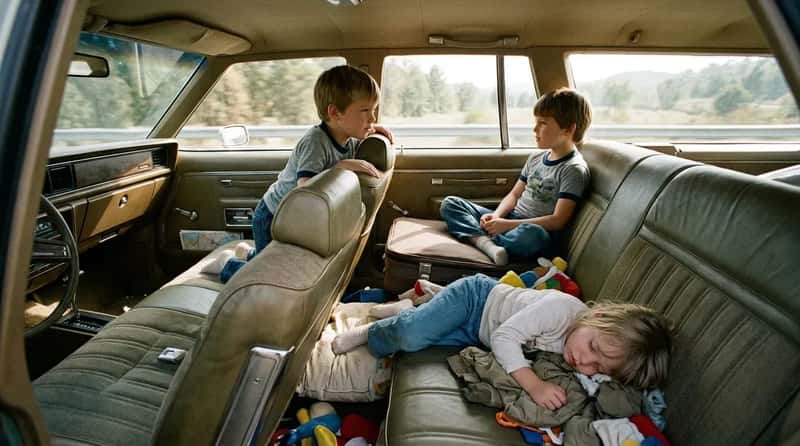
There was no enforcement of “stay in your seat” in the 1980s. Kids slid from side to side, kneeled on the seat to talk to the driver, made forts out of luggage, or simply stretched across the entire rear bench and slept. The back seat was effectively a mobile playroom with no rules, no floor manager, and no restraint system anyone took seriously past the city limits.
Child restraint laws existed, but enforcement was inconsistent and cultural expectations hadn’t caught up. Today those laws are strict, well-enforced, and based on decades of safety research that is impossible to argue with. The roaming back seat child isn’t just a nostalgic memory — in most states, it’s now illegal. The freedom was real. So was the danger nobody was fully counting at the time.
#18 Recording a Mix Tape Before the Trip
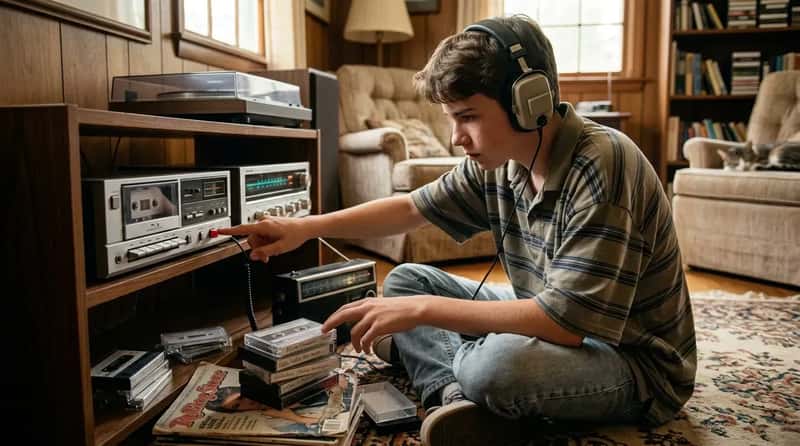
Weeks before a big road trip, the household ritual of building the perfect mix tape would begin. Someone sat near the radio with a finger hovering over the record button. Someone else shushed the room when the song started. The mix tape was a curated artifact that took real time and real effort — and every family had strong opinions about what made the cut and what absolutely did not.
The physical nature of those cassettes — passed between family members, labeled in someone’s handwriting, worn thin from overplaying — made them into objects with actual sentimental weight. Many parents still have shoeboxes of them in attics. Spotify took maybe thirty seconds to replace what used to take an entire Saturday afternoon. That’s not a complaint. It’s just a fact that feels slightly wrong every time you notice it.
Fast Facts
- A standard cassette held about 45 minutes of music per side — 90 minutes total
- Recording required sitting beside the radio and catching songs as they aired
- A misspoken word or door slam during recording ruined the whole take
- Cassette tapes sold over 400 million units annually in the U.S. at their 1980s peak
- Spotify’s library today: over 100 million tracks, available in under 3 seconds
#17 Rewinding the Tape With a Pencil
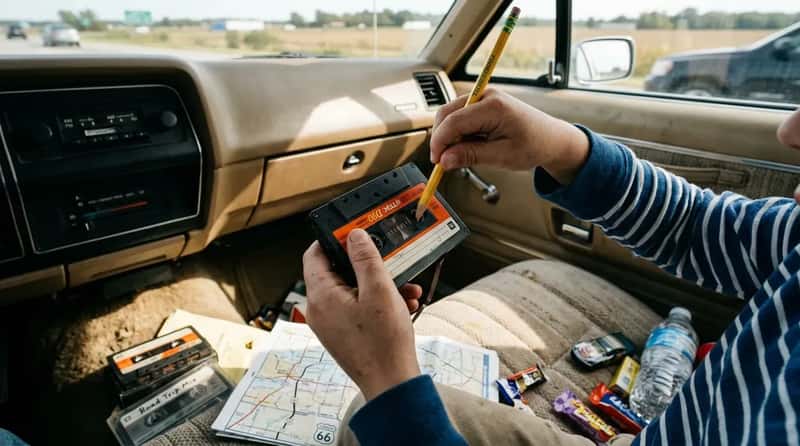
This one barely needs explanation. When a cassette got eaten by the deck or simply needed rewinding, you popped it out, stuck a pencil through one of the spools, and manually wound it back. Every kid in every car in America knew this trick without being taught it — absorbed through cultural osmosis before age eight, like tying shoes or knowing not to touch the car ceiling when you went through a yellow light.
It was mechanical problem-solving at its most beautifully low-tech. No electricity. No Wi-Fi. No adults required. Today’s kids stream from a cloud server holding 90 million songs and wouldn’t know what a tape spool was if they held one in both hands. The pencil trick was universally known for about fifteen years and then vanished the moment CDs arrived in consumer hands around 1982. It never came back. It never will.
#16 Fighting Over the Radio for the First Hour
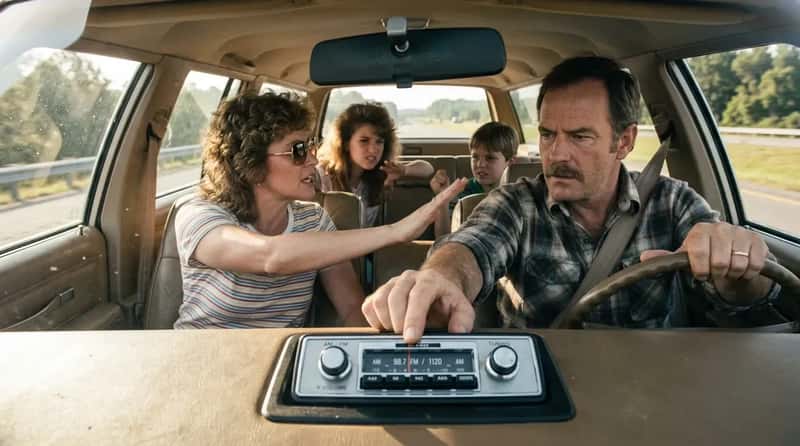
Before the mix tape went in, there was the radio negotiation. Dad controlled the dial, which meant classic rock or country. The kids wanted pop. Mom wanted something “without all that noise.” The first sixty miles of any road trip involved low-level political warfare over the AM/FM tuner. Everyone lost. Everyone eventually settled for whatever came in clearest. Static was a regular participant.
As maddening as it was, the radio fight was genuinely communal. One signal, one speaker, one argument — the whole family was in it together. Today every passenger has headphones and a personal queue. Nobody fights over the radio anymore because nobody’s listening to the same thing. The shared, slightly irritating family listening experience is completely gone. Some families would call that progress. Many would secretly trade a Spotify Premium account to have one more hour of it.
#15 The AAA TripTik
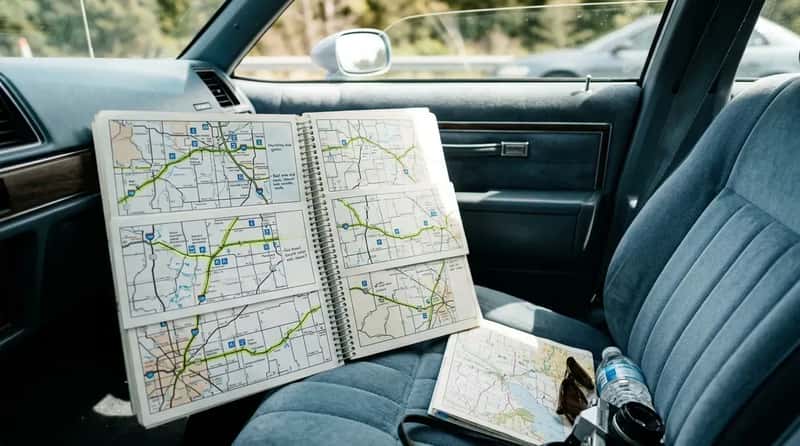
For AAA member families, the road trip started weeks earlier at the local branch office, where an agent hand-assembled a personalized route booklet called a TripTik — a spiral flip-through of map strips showing your exact route, with notes on construction, detours, and points of interest. Owning a TripTik meant your family took road trips seriously. It was the analog equivalent of turn-by-turn navigation, custom-built by a human being who had actually talked to you.
The first modern TripTiks date back to 1937, and AAA mass-produced them for decades before digital navigation changed everything. The classic flip-style spiral booklet — where an agent highlighted your exact route in orange marker — has largely given way to digital tools and app-based planning, though some AAA branches still produce printed versions on request. The generation that grew up flipping those spiral strips in the back seat remembers them with a specific, slightly irrational fondness that has nothing to do with efficiency and everything to do with feeling like the trip had already begun the moment that booklet landed in the house.
Worth Knowing
- First modern TripTik produced in 1937; mass production began in 1938
- An AAA agent highlighted your exact route on strip maps, then bound them into a booklet
- TripTiks included construction alerts, rest stops, gas stations, and sightseeing notes
- AAA paper TourBooks were officially discontinued in 2021
- Digital TripTik planning is still available through the AAA app and website
#14 Spotting Roadside Billboards as Entertainment
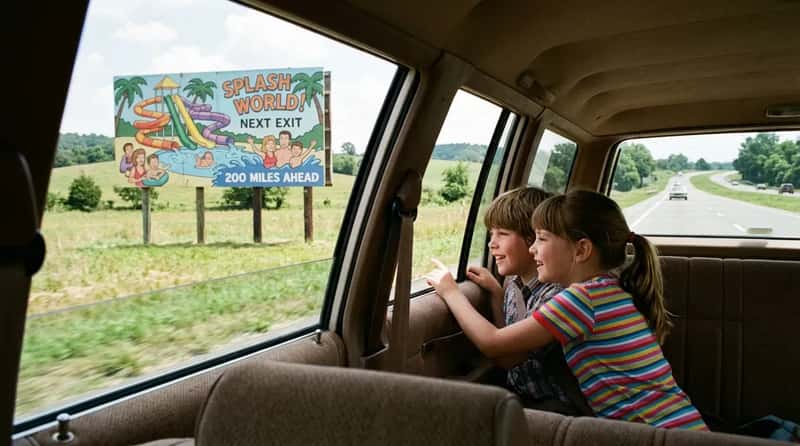
Before screens, billboards were genuinely exciting. Kids competed to read the next one first, turning commercial advertising into a legitimate road trip game. A billboard for a water park 200 miles ahead could generate twenty minutes of negotiation, bargaining, and carefully constructed arguments about why this detour was absolutely essential and completely reasonable.
The billboard was also the family’s primary way of discovering roadside attractions — the world’s largest ball of twine, the mystery cave, the reptile zoo that turned out to be one guy and a terrarium. Those unplanned detours started with a sign someone screamed about from the back seat. Now families pre-plan every stop online, and the spontaneous billboard detour is nearly extinct. The road still has the signs. Nobody’s actually reading them anymore.
#13 Making Kids Use a Buddy System at Rest Stops
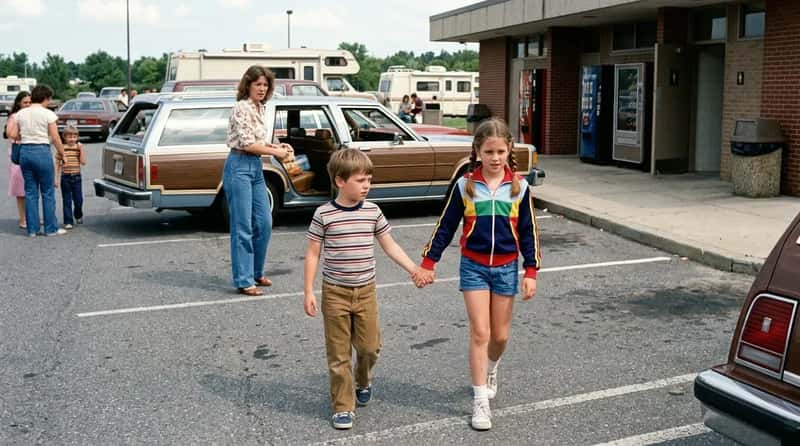
Rest stops in the 1980s were chaotic five-minute expeditions where the whole family piled out at once and the parental directive was simple: no one goes anywhere alone. Grab a sibling, stay in sight, don’t talk to strangers. A rest stop was treated like a brief foray into uncertain territory, not just a bathroom break. Kids who wandered got yelled at from across the parking lot, loudly and without embarrassment.
Those forced synchronizations meant everyone stretched their legs together, chose snacks as a committee, and experienced the trip’s rhythm as a unit. Now everyone operates on their own schedule, earbuds in, missing the shared experience of a genuinely sketchy rest stop bathroom that becomes family legend fifteen years later. The communal stop — everyone out, everyone back in five minutes, no exceptions — was its own kind of bonding event that nobody designed and everybody remembers.
#12 Writing Postcards and Actually Mailing Them
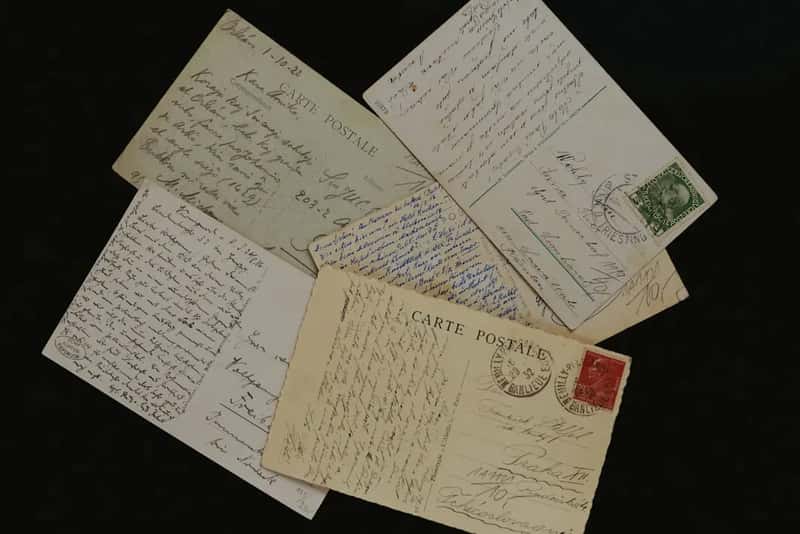
Every significant stop had a postcard rack. Kids picked one out — a lurid sunset over the Grand Canyon, a cartoon armadillo, a photo of a famous dam — and parents made them write a short message to grandma or a school friend. The mailing of the postcard was non-negotiable and completely sincere. It often arrived home after the family had already returned, which made it somehow even more meaningful rather than redundant.
This habit taught kids that communication had a delay — that telling someone about something you experienced was worth doing even without instant delivery. The postcard rack still exists at tourist traps across America, but almost nobody under 40 buys from it without a layer of irony. What replaced it — a photo texted in real time, requiring zero effort and leaving zero physical object behind — isn’t better. It’s just faster. And faster won.
#11 The License Plate Game
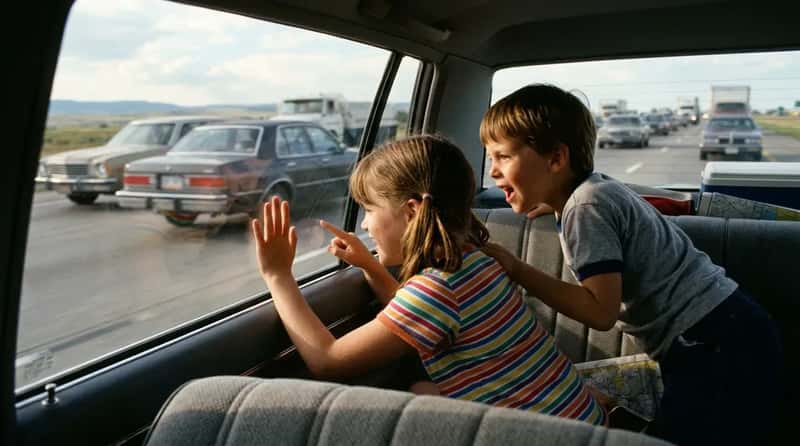
No screen. No app. No prizes. Just kids scanning every passing car for plates from states they hadn’t seen yet, calling them out loud, and arguing furiously about whether a plate half-hidden behind a truck bumper actually counted. The license plate game required sustained attention, genuine competitiveness, and a shared goal — which made it accidentally one of the best family bonding activities ever invented, despite the fact that nobody planned it that way.
It also gave kids a real geographic education. You learned where Montana was because you’d been hunting that plate for three summers. You knew Alaska was rare and New Hampshire was easy. Today the game exists as a downloadable printable sheet — a nostalgic gesture at something that used to happen organically, requiring nothing but eyeballs, competitive siblings, and a willingness to stare out a car window for six hours without losing the thread.
Quick Compare
- Then: Spontaneous, zero equipment, fueled by boredom and sibling rivalry
- Now: Downloadable bingo cards — played once, then the tablet comes back out
- Rarest plate then: Alaska or Hawaii — a multi-trip white whale
- What it actually taught: U.S. geography, patience, and how to lose gracefully
#10 Stopping at Every “World’s Largest” Roadside Attraction
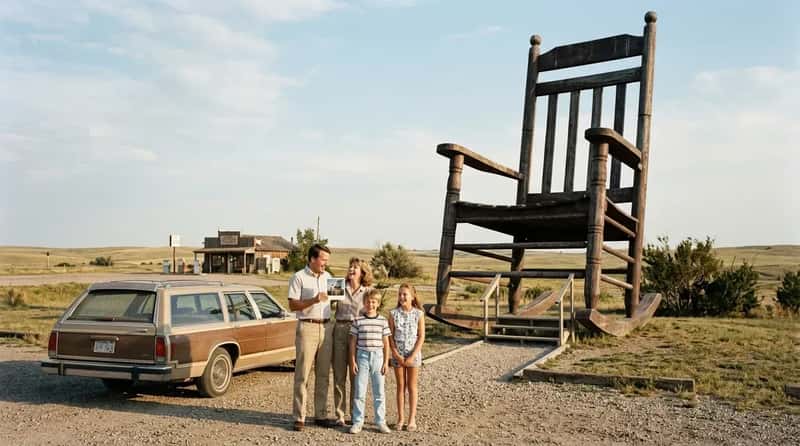
The 1980s road trip had an unwritten clause: if someone spotted a sign for something absurd and colossal — the world’s largest rocking chair, the world’s largest prairie dog, the world’s largest ball of twine — the car stopped. Not always. But enough. These stops were unplanned, slightly ridiculous, and remembered forever. They were often the unofficial highlight of trips that were supposed to have a completely different itinerary.
Part of what made this work was that nobody had reviewed the attraction online first. You arrived with zero expectations and left with a Polaroid and a story. Today most roadside attractions are pre-filtered through reviews, and the ones that disappoint don’t get visited. The serendipity is gone. So is the magnificent disappointment of driving an hour off the highway to see a “giant” something that turned out to be roughly the size of a minivan. That story was always better than the thing itself.
#9 The Massive Folded Road Atlas That Lived in the Car
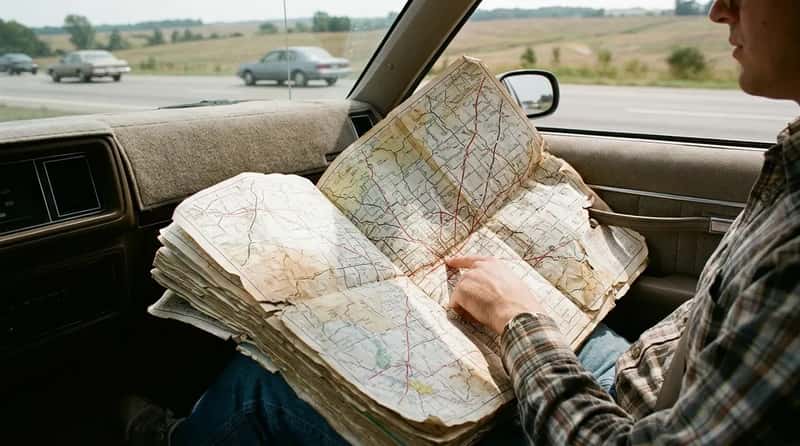
Every family car in the 1980s had one. A thick road atlas — Rand McNally was the gold standard — crammed into the glove box or wedged behind the front seat. It was coffee-stained, partially refolded in the wrong direction, and occasionally deployed as a sun shade. The atlas was the family’s single source of navigational truth, and it was never fully up to date. New highways were sometimes on it. Sometimes they weren’t. Dad drove confidently regardless.
The navigator would try to refold it mid-drive while dad insisted he already knew a shortcut, and kids learned geography by leaning over from the back seat and tracing the route with a finger. Rand McNally’s road atlas first appeared in 1924 — originally called the “Auto Chum” — and became a fixture in American cars for decades before GPS quietly made it irrelevant. Most people don’t remember throwing theirs away. They just did. It was gone before anyone noticed it was the last time.
“Travelers are rediscovering that paper atlases provide a richer, more comprehensive travel experience versus a GPS device.”
Rand McNally Publishing, 2023
#8 Eating at the Same Howard Johnson’s or Stuckey’s on Every Trip
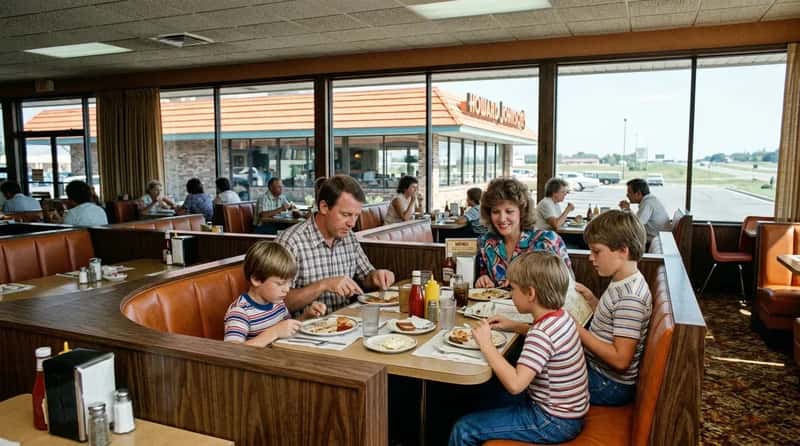
Regional chain loyalty was a real phenomenon in 1980s road trip culture. Families had their restaurant. Howard Johnson’s, Stuckey’s, Cracker Barrel before it was everywhere, Bob Evans, Shoney’s — these weren’t random stops. They were traditions. Returning to the same highway exit restaurant year after year gave the road trip a continuity that felt almost ceremonial. The kids knew the menu. Dad knew the parking lot. Mom knew which booth was the good one.
Howard Johnson’s reached over 1,000 locations across the U.S. by the mid-1970s — making it the largest restaurant chain in the country at the time, outselling McDonald’s, Burger King, and KFC combined at its height — but by the 1980s it was already struggling. The last Howard Johnson’s restaurant closed in Lake George, New York, in 2022, ending nearly 100 years of American highway dining history. Consistency beat character everywhere else, and something irreplaceable went with it.
Fast Facts: Howard Johnson’s by the Numbers
- Peak locations: 1,000+ restaurants and 500+ motor lodges by 1975
- Signature menu: 28 flavors of ice cream, fried clam strips, open-top hot dog buns
- Once outsold McDonald’s, Burger King, and KFC combined
- Sold by the Johnson family in 1980 for $630 million
- Final location closed: Lake George, New York, 2022
#7 Keeping a Trip Journal or Scrapbook
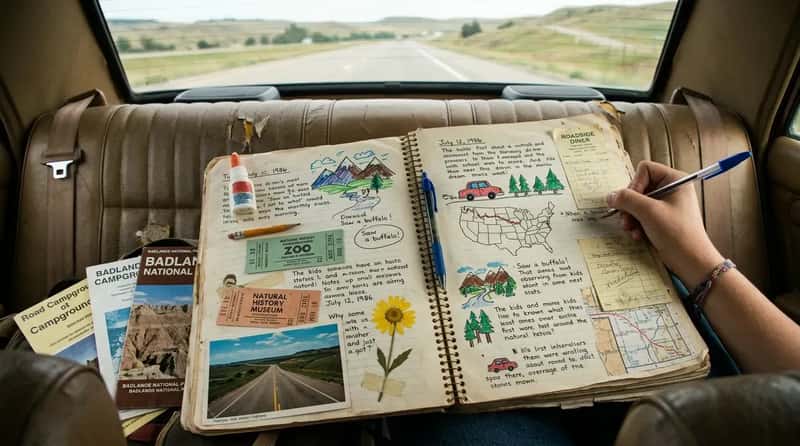
Before the camera was in every pocket, documenting a road trip took deliberate effort. Some families kept a running journal — a spiral notebook passed around the car where kids wrote observations, drew pictures, or recorded which states they’d crossed and when. Others did a scrapbook afterward: ticket stubs, brochures, pressed wildflowers, the receipt from that one diner with the good pie. The trip journal was physical proof that something real had happened to real people.
It also forced reflection. You had to decide what was worth writing down, which meant you were actively paying attention as the experience unfolded. Today those memories live in a phone’s camera roll — thousands of images, instantly sortable and instantly forgettable. Research on memory has consistently found that over-photographing experiences can actually reduce how well people remember them. The kids scribbling in the backseat notebook were, it turns out, encoding memories more effectively than anyone snapping and swiping on a phone screen.
#6 Playing 20 Questions and I Spy for Hours Without Irony
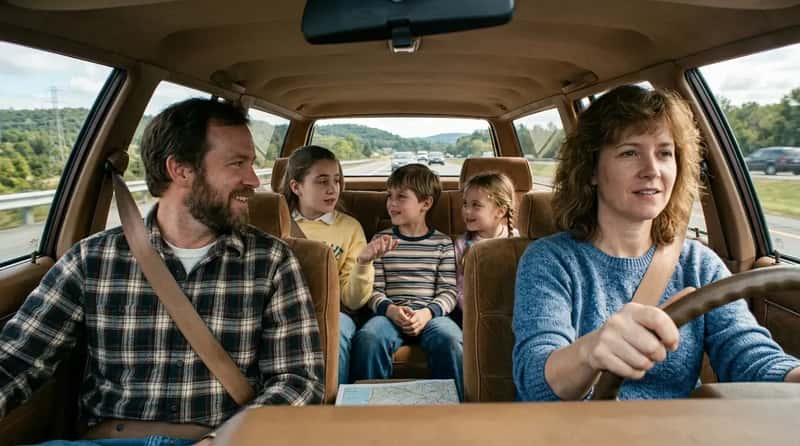
I Spy. 20 Questions. The Alphabet Game. Ghost. These weren’t backup options when the entertainment system failed — they were the entertainment system, and they ran for hours without a single battery or password. The remarkable thing is that they actually worked: kids stayed engaged, arguments about the rules became part of the game, and the miles genuinely moved faster. Just talking. Just competing. Just being in the same car, paying attention to the same world outside the window.
Screens didn’t just displace car games. They displaced the conversational necessity that made those games happen in the first place. A family playing 20 Questions is actually negotiating shared reality together — building a common language in real time, without realizing it. Nobody recognized it as profound while it was happening. It just was. The absence of alternatives turned out to be the whole point, and nobody understood that until the alternatives arrived.
#5 Taking Photos With a Disposable Camera and Waiting Weeks to See Them
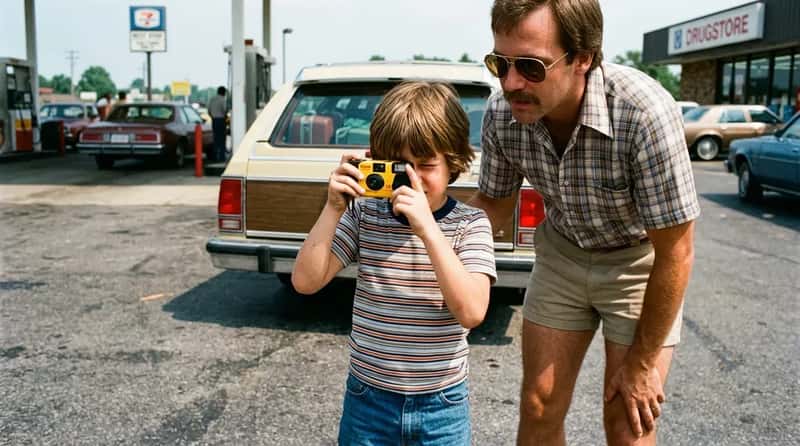
The Kodak disposable camera — or the family’s actual 35mm — came on every road trip in the 1980s, and film was finite. Twenty-four shots, maybe thirty-six. Every photo had real stakes because a wasted frame was gone for good. Kids learned to wait for the right moment. Everyone knew not to photograph nothing. The discipline of limited film made each shot a considered decision in a way that infinite digital storage never demands.
Then came the wait. Film dropped at the drugstore, prints back days or weeks later — sometimes after you’d already forgotten what half the photos were. That delay created a second experience of the trip: sitting around the kitchen table, passing photos around, narrating what had happened to people who weren’t there. It extended the life of the vacation in a way that instant digital previews simply don’t. The wait was part of the story. It’s completely gone, and nobody really decided to give it up. It just slipped away.
#4 No Reservations, Just Driving Until Dad Said Stop
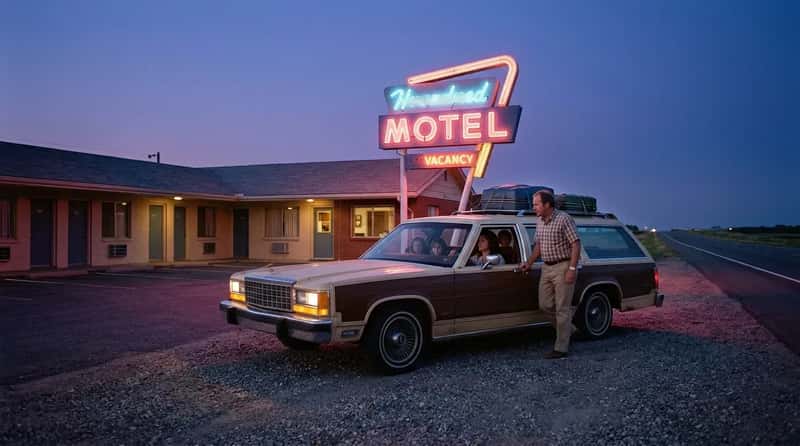
The most overlooked road trip habit of the 1980s was the absence of planning. Many families left without hotel reservations, without a locked-in route, and without a backup plan. You drove until dad got tired, then pulled off at whatever motel had a VACANCY sign lit in the window. That neon sign was a real, relied-upon navigation tool. Finding a room was part of the adventure — not an anxiety spiral managed through an app three months in advance.
That looseness wasn’t negligence. It was a different philosophy of travel, one that accepted uncertainty as part of the deal. Today most families book hotels months ahead, pre-select restaurants, and flag every point of interest before departure. The trip is optimized before it begins. What gets optimized away is exactly the kind of unexpected experience — the wrong turn that became the best night of the whole summer — that people still talk about forty years later.
#3 Counting Down Miles on the Green Highway Signs
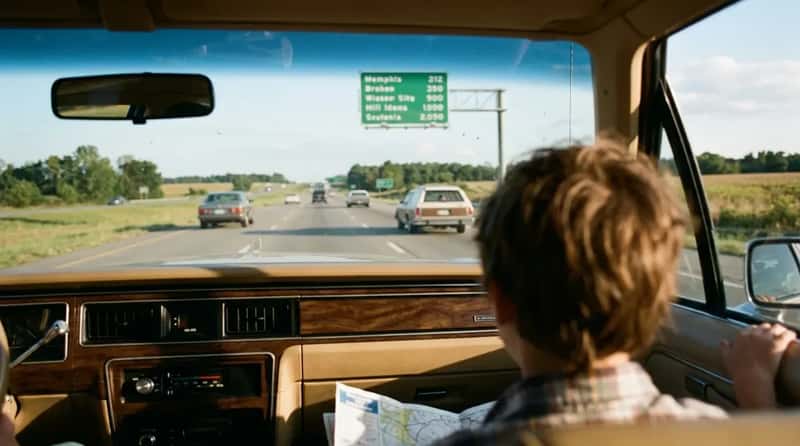
Before turn-by-turn audio navigation, the green highway distance signs were the family’s shared progress tracker. Kids stared at them obsessively. “Memphis: 212 miles” was both a disappointment and a target — something to calculate at 60 mph, to report to the front seat like breaking news. Reaching a number under 100 was a genuine milestone. Under 50 meant the destination was almost real. Under 20 meant the trip was over and nobody was fully ready for that yet.
Every child in every back seat did this math constantly, unprompted, for their own private reasons. It was often the first time kids understood that numbers could describe lived experience — that distance and time had a relationship you could track with your own eyes. GPS replaced a shared physical observation with a private screen update. The driver knows the ETA. The kids are watching a movie. Nobody’s doing the math together, and something quietly important went with it.
Why It Stands Out
- Green mile-marker signs were the only real-time progress update available
- Kids calculated speed and arrival time in their heads — unintentional math class
- Crossing under 100 miles was a family event worth announcing out loud
- Today’s GPS shows a live ETA — but only the driver sees it, and it kills the suspense
- The green sign countdown was one of the last things the whole car experienced together
#2 Smoking in the Car With the Windows Cracked One Inch
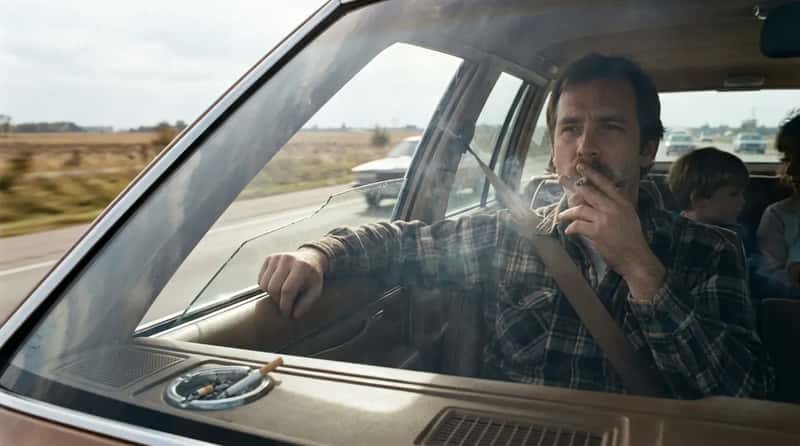
This one lands differently now, but it was so universal in the 1980s that skipping it would be dishonest. An enormous percentage of American adults smoked in 1980, and they smoked everywhere — including the family car, on a 10-hour drive, with a window cracked exactly one inch for “ventilation.” The back seat was a slow-motion hotbox, and nobody questioned it. This was simply what cars smelled like. Ashtrays were standard equipment on every vehicle sold in America.
Adult smoking rates in the U.S. hovered around 33% in 1980, according to CDC data — meaning roughly one in three families had at least one parent smoking in the car on road trips. By 2024, that rate had fallen below 12%. Awareness of secondhand smoke dangers, especially for children, began reshaping cultural norms sharply through the late 1980s and 1990s. Today, smoking in a car with children is illegal in many states. The one-inch window is a relic of a very different public health era, and its disappearance is the one item on this entire list that nobody is actually nostalgic for.
#1 Sitting in Silence and Actually Talking to Each Other
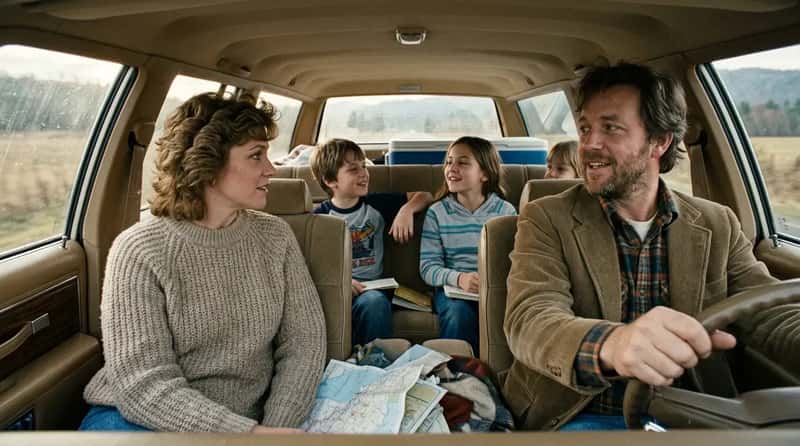
Here’s the one that actually matters. Before screens, before wireless headphones, before every passenger had a personal entertainment device — there was nothing to do in a car for eight hours except look out the window and talk to the people sitting next to you. That forced togetherness produced some of the most significant conversations in the lives of an entire generation. Kids asked their parents things they’d never ask at a dinner table. Parents told stories they only told when there was nowhere else to be and no reason to rush.
Those long, unstructured stretches — boredom converting into conversation, silence turning into something — created the conditions for exchanges that people still carry with them decades later. No app replicates a nine-year-old asking their dad, somewhere in Kansas, what it felt like to be young. And no dad, anywhere, forgets the moment they answered. The 1980s road trip wasn’t great because the cars were comfortable or the snacks were better. It was great because the constraints forced connection. And what’s been lost isn’t the technology. It’s the productive friction that made strangers who shared a last name actually know each other.
The pencil in the tape spool. The wax paper sandwich. The green sign counting down to somewhere. These weren’t just habits — they were the texture of a specific kind of family life that existed for one narrow window of time and then quietly closed. If any of these hit close to home, the one you miss most is probably the one worth remembering longest.