Most people assume the roadside diner died a slow, natural death – a victim of fast food and changing tastes. But the truth is stranger: many of these places didn’t fade away gently. They got sued out of existence, bulldozed for interstates, renamed out of shame, or simply padlocked overnight while regulars still had coffee going cold in the booth.
Some of these spots fed presidents, inspired Pixar characters, and invented the drive-thru before anyone had a name for it. Almost all of them are gone now, or hanging on by a thread. Here’s what old road-trip records and food historians actually say about the diners America built its highways around – and lost.
#23 – The Breakfast Inn Served Its Very Last Plate in 2025
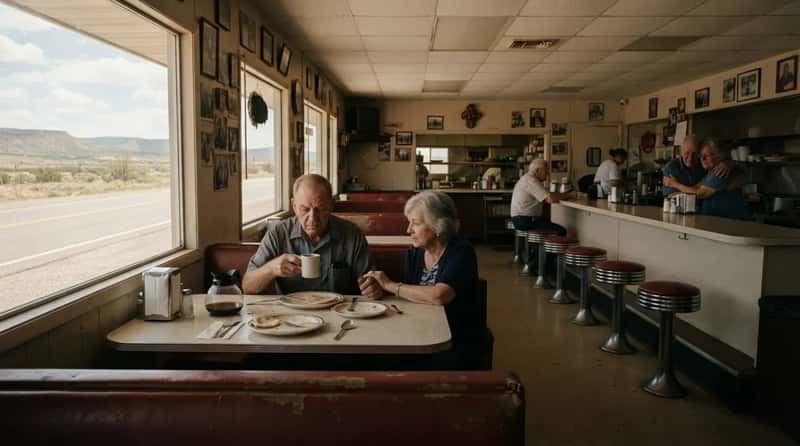
This one barely made the news, and that’s exactly the point. In May 2025, the owner announced the building had been sold and the license wouldn’t be renewed. On June 8, 2025, the diner served its final meal while regulars sat one last time in their usual booth.
Locals flocked in to soak up the memories and flavors that had defined so many of their mornings, and the owner thanked the patrons who’d kept the place alive for decades. No dramatic bankruptcy, no scandal – just a quiet last cup of coffee. That’s how most of these places actually end, and it’s nothing compared to what happened to #22.
#22 – A Beloved Breakfast Chain Has Quietly Closed Half Its Locations
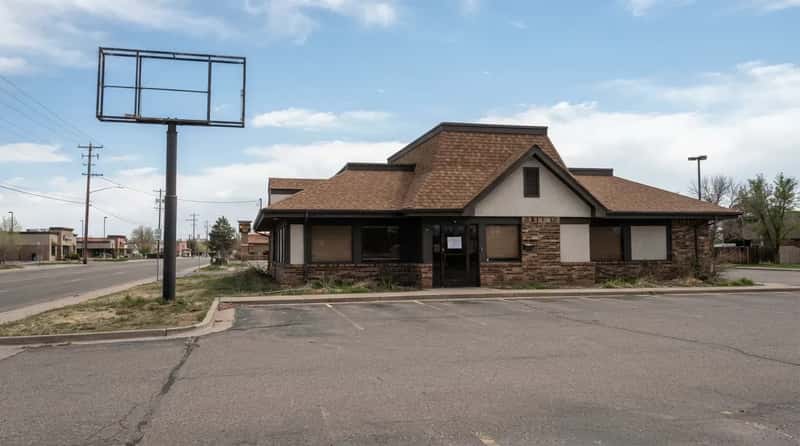
Most people don’t realize this chain has been vanishing in slow motion for years. In January 2026, two more Village Inn restaurants in Colorado closed, and since peaking at more than 220 locations, the chain has shrunk to just 111 restaurants as of late 2025. That’s a near-50% collapse with almost no headlines at all.
Patrons at locations that had operated for decades simply showed up one morning to find handwritten signs announcing a permanent closure. A Cornell hospitality professor told reporters it’s a clear trend – fewer customers, rising costs, and fewer people willing to work the dining room. But that’s nothing compared to what happened to a beloved California burger stand at #21.
At a Glance
- Peak size: 220+ locations nationwide
- Current size: 111 restaurants as of late 2025
- Two more Colorado closures hit in January 2026
- Roughly a 50% shrink with barely any media coverage
#21 – The Burger Joint That Fired a Movie Character Is Basically Gone
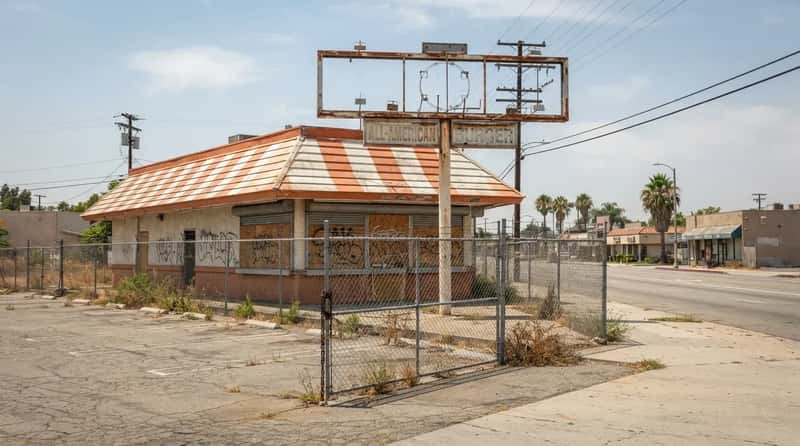
This spot’s biggest claim to fame wasn’t its food – it was a scene in a teen movie. The All-American Burger became a cultural touchstone after appearing in the 1980s coming-of-age film Fast Times at Ridgemont High as the place where Brad Hamilton gets fired.
It never became a national chain the way its bigger rivals did, but for a generation of Southern California road-trippers, it was a required detour off the highway. Most people who search for it today find only old photos and nostalgic forum threads. It’s a reminder that fame doesn’t guarantee survival – and #20 proves that neglect can kill a diner just as fast as competition.
#20 – The Neighborhood Diner That Died From the Outside In
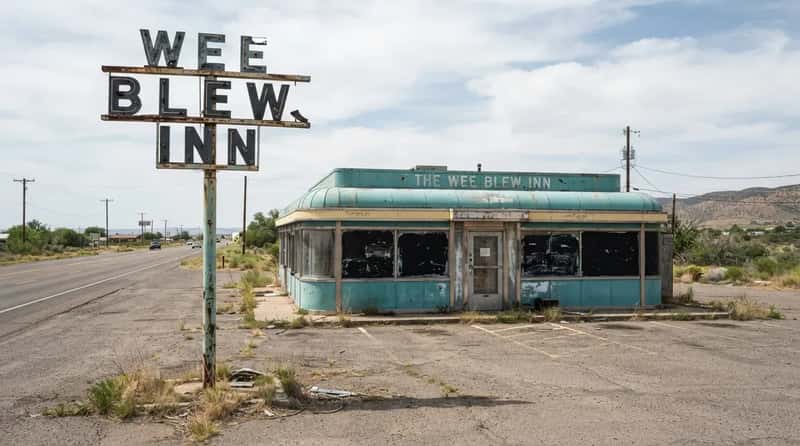
Sometimes a diner doesn’t collapse overnight – you can watch it happen for years. The Wee Blew Inn closed in July after 45 years of serving omelets, burgers, and fish fries, and locals say the warning signs were obvious long before the final closure.
There were missing letters on the sign for years, and the windows had been blacked out. Meanwhile the diner’s Facebook page kept announcing closures on random days due to staffing shortages. Frustrating as that slow decline was to watch, it’s nothing compared to the flood-battling barbecue joint at #19.
#19 – This Roadside BBQ Shack Survived Floods But Not Retirement
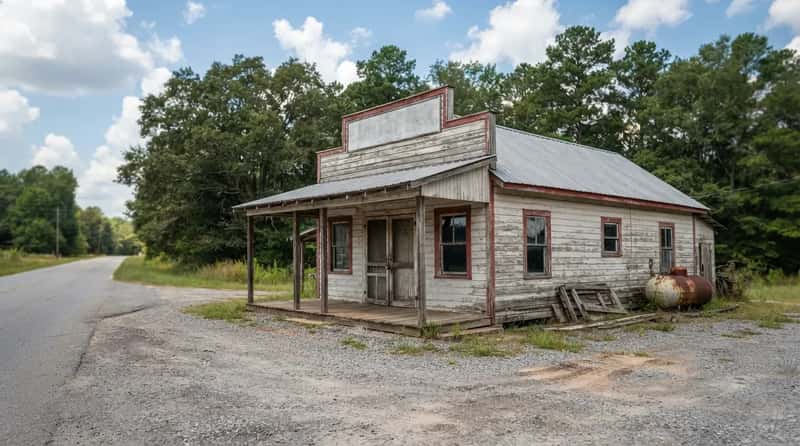
Surviving nature is easier than surviving age, apparently. Bunns BBQ was founded in 1938 by B.B. Weathers and taken over in 1969 by the Russell family, who ran it until closing in summer 2023 – an astonishing 85-year run at one address.
Run out of a century-old Texaco filling station, the joint had bounced back from multiple floods over the decades before the brothers finally decided they were ready for retirement. In a strange twist, it briefly reopened for a one-day stint in June 2025 after officially closing. Loyalty like that is rare, but it’s about to get more emotional at #18.
#18 – A 73-Year-Old Diner Closed Because Nobody Could Replace the Owners
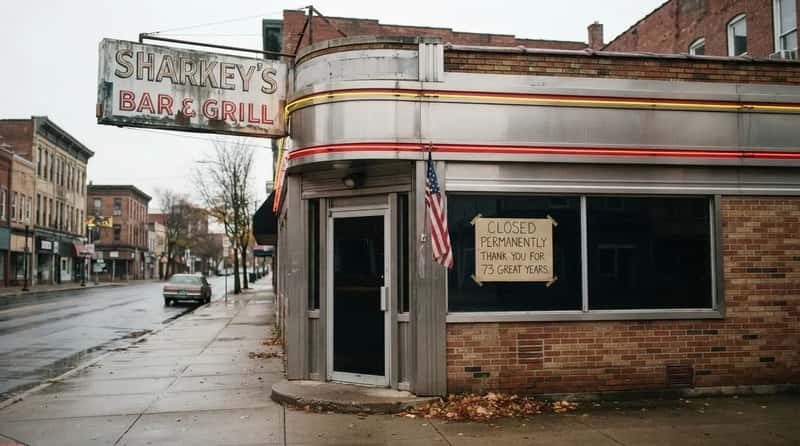
This one didn’t die from competition – it died from a lack of successors. Diners in Binghamton were devastated when Sharkey’s Bar & Grill closed its doors in 2020, nearly 73 years after it opened in 1947, simply because the owners were retiring.
The restaurant was one of the few remaining joints that specialized in the spiedie, a regional sandwich most Americans outside upstate New York have never even heard of. When the recipe and the regulars vanish together, an entire local food culture disappears with it. But a Texas café that survived the Depression couldn’t survive the pandemic – that’s #17.
#17 – The Oldest Café in Texas Couldn’t Outlast COVID
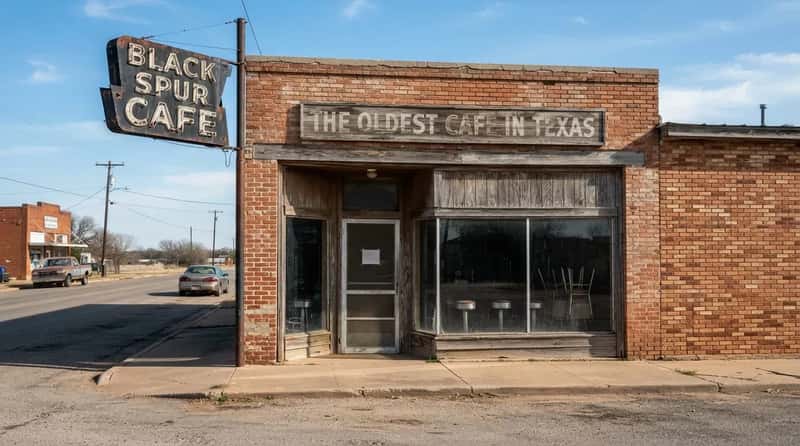
This diner survived nearly 85 years of Texas history, then lost to a virus. Reportedly the oldest café in the state, it opened in 1936 and was known for its original neon sign, diner-style bar stools, and made-from-scratch chicken fried steak.
Its regulars skewed older, so the café stayed closed early in the pandemic for safety – but the financial pressure became too much, and it closed for good in August 2020. The building was sold and is now, strangely, a museum. It’s an odd fate for a diner, but wait until you see the Route 66 burger stand down to its very last location at #16.
#16 – Only One of 200 Locations of This Route 66 Burger Chain Survived
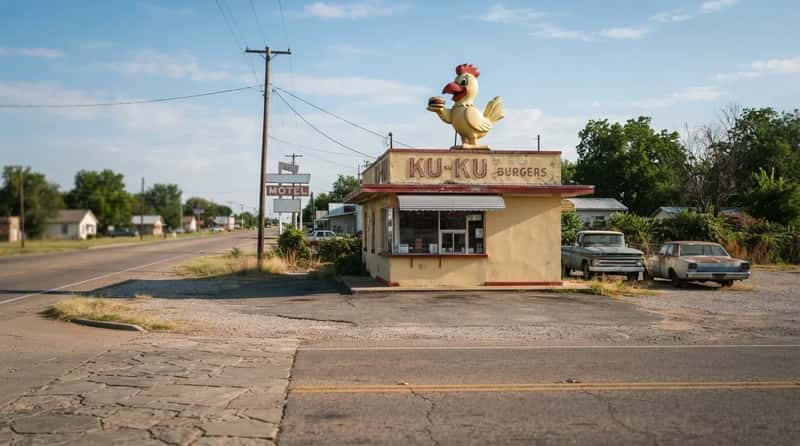
Here’s a statistic that stops people mid-scroll: Ku-Ku Burger was a wildly popular chain in the early 1960s, with more than 200 locations nationwide at its peak. Today, almost none of that remains.
This particular Route 66 location opened in 1965, and by 1969 most of the other branches had already shut down, leaving it the last one standing. One owner bought this Ku-Ku Burger in 1973 and worked nearly every day since, aside from four holidays a year. A 200-store empire reduced to a single counter is astonishing – but the candy-shop chain at #15 tells an even bigger story of collapse and rebirth.
#15 – Stuckey’s Nearly Vanished Completely Before a Relative Bought It Back
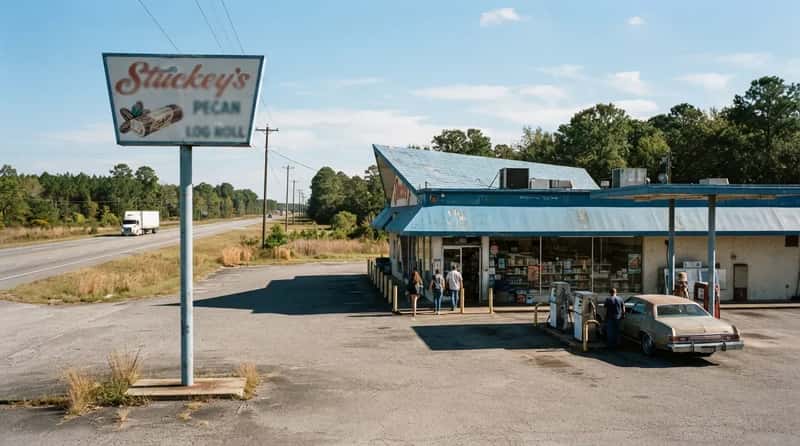
Most travelers assume Stuckey’s is still the same roadside empire it always was. It isn’t. The Stuckey family eventually sold the company, and the new owners ran it into the ground, with the chain declining from 350 outlets to just 75 before going bankrupt.
A Stuckey relative later bought the name back and reformatted the chain. Today there are around 200-odd stores, but about two-thirds are little more than a candy aisle inside a convenience store or truck stop, not the original diner-candy-gas station combo. The pecan log rolls survived; the classic roadside experience mostly didn’t. Still, that’s nothing compared to the drive-in that vanished from a small Illinois town without a trace, at #14.
Quick Compare
- Before decline: 350 full diner-candy-gas outlets
- After bankruptcy: just 75 locations left
- Today: around 200 stores under new ownership
- Two-thirds are now just a candy aisle, not a real stop
#14 – This Frosty-Mug Drive-In Disappeared Without a Single Sign Left Standing
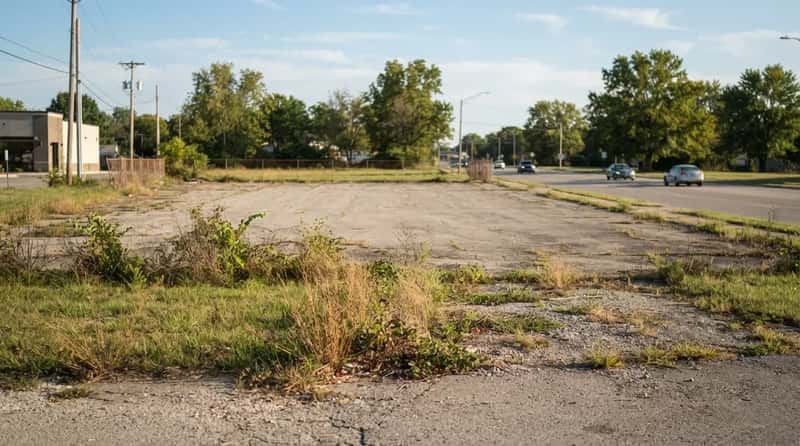
Some diners don’t even leave ruins behind. In Edwardsville, an A&W drive-in opened during the 1950s car culture boom, sitting right off Route 66 with frosty root beer mugs and trays that hooked onto rolled-down windows.
The drive-in eventually closed and was demolished, another casualty of changing tastes and traffic patterns. Only scattered photos and local nostalgia record that once-bustling corner of the Mother Road today. There’s no plaque, no replica sign – nothing but old postcards. That erasure is common, and even a giant neon ice cream cone couldn’t save the stop at #13.
#13 – A Towering Neon Ice Cream Cone Once Marked This Route 66 Landmark
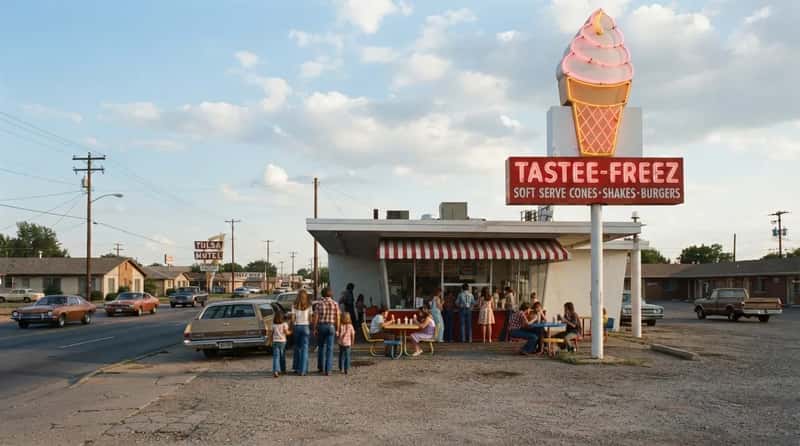
Families used to plan entire road trips around a soft-serve stop. Along East 11th Street in Tulsa, a stretch that doubles as historic Route 66, a Tastee-Freez sign once marked a classic soft-serve and burger stand, with vintage images showing a familiar ice cream cone towering over the roadway.
That particular Tastee-Freez is long gone, its architecture and neon replaced, after financial trouble and changing tastes wiped out most locations by the early 1980s. A roadside milkshake used to count as its own small destination. Now it’s just a photo caption – but the coney-dog empire at #12 disappeared just as fast.
#12 – The Coney Dog Chain That Chased Route 66 Families for Decades Is Nearly Extinct
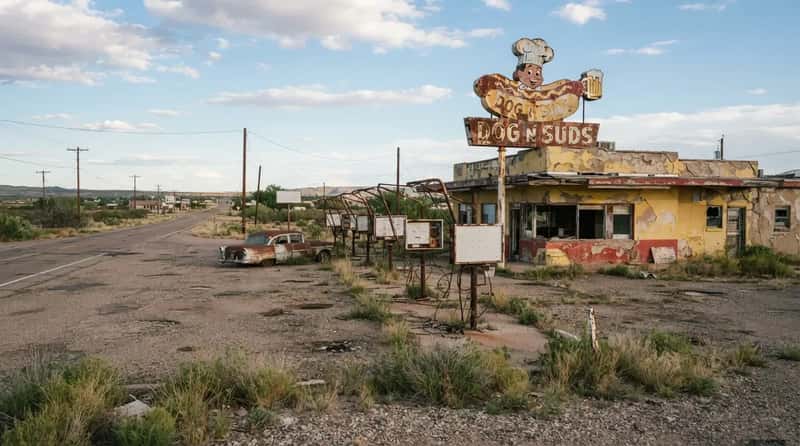
This one grew fast, then collapsed even faster. Dog n Suds grew from a small Midwestern stand into a drive-in chain famous for coney dogs, root beer in frosted mugs, and trays clipped to car windows, with several locations sitting near Route 66 towns.
As traffic shifted to the interstates and the chain contracted, those specific drive-ins closed or were repurposed one by one, town by town, until the brand became a memory shared mostly by grandparents. What’s coming at #11 might be even sadder: a beloved farm-themed rest stop reduced to rubble.
#11 – This Honey-Colored Rest Stop Was Bulldozed in 2014
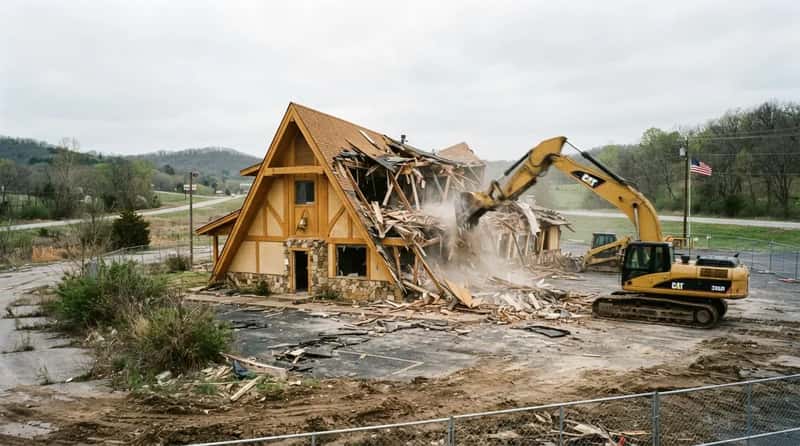
Most Route 66 landmarks fade gradually. This one was demolished outright. Outside Waynesville, the Witmor Farms building started life as the second Nickerson Farms restaurant, a honey-colored stop with food, fuel, and a gift shop right off Route 66.
Travelers used to grab a fast, family-style meal and browse candy and souvenirs before merging back into traffic, but over time it changed names, then closed altogether, and was finally demolished in 2014, leaving only old postcards to mark where it once stood. It’s an easy stop to forget existed at all. But the gas station at #10 accidentally became a Hollywood legend before it disappeared.
#10 – A Bypassed Gas Station Secretly Inspired Pixar’s Most Beloved Character
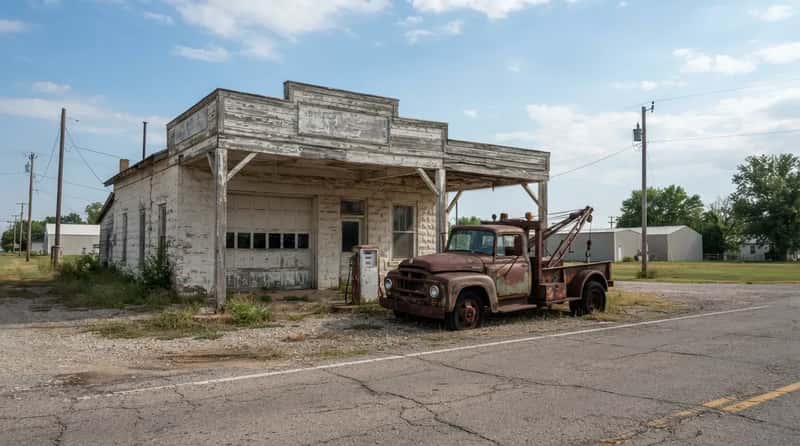
Turns out one of the most quietly influential roadside stops in America was a rusted-out Kansas gas station. Opened in 1934, the Kan-O-Tex Service Station operated for decades in Galena, Kansas, and ended up making one of the biggest cultural impacts of any Route 66 stop.
Dwindling traffic, partly caused by Interstate 44 bypassing that stretch of Route 66 in 1961, forced its closure. Decades later, a Pixar creative team traveling Route 66 for inspiration on the movie Cars spotted a rusty International boom truck outside the shuttered station that became the inspiration for Mater. That’s one of the strangest afterlives any dead roadside stop has ever gotten. Still, the desert café at #9 has a comeback story nobody saw coming.
#9 – This Googie-Style Café Closed in the ’70s and Might Reopen by 2026
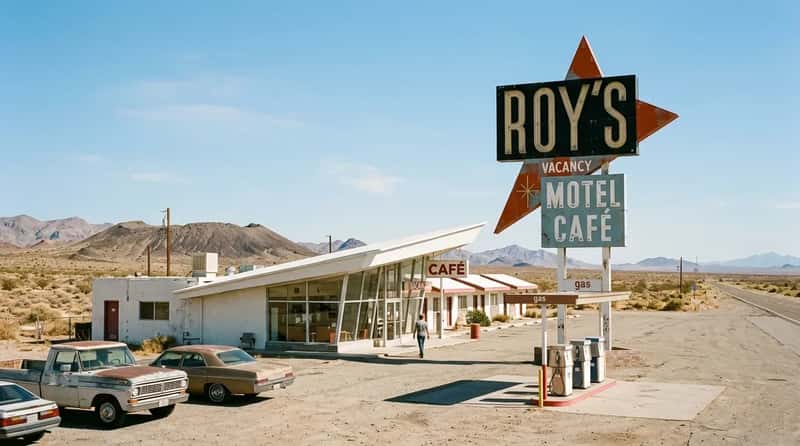
Most abandoned roadside stops stay abandoned. This one might not. Known for its distinctive 50-foot boomerang sign and Googie-style retro-futuristic architecture, Roy’s Motel and Café closed its doors in the 1970s, a victim of Interstate 40 diverting traffic away from the town.
The good news is that it’s currently being restored to its former glory and could be fully operational as soon as 2026, though right now the one-stop-shop only sells snacks, drinks, and souvenirs while motorists refuel at the tiny three-pump gas station. A genuine resurrection is rare in this business. It’s nothing, though, compared to the burger stand that claims the very first drive-thru in America at #8.
Worth Knowing
- Famous for a 50-foot boomerang-shaped sign
- Closed in the 1970s after Interstate 40 rerouted traffic
- Restoration is underway, with a possible 2026 reopening
- Currently sells only snacks and souvenirs at a tiny three-pump station
#8 – The Restaurant That May Have Invented the Drive-Thru Closed in 1984
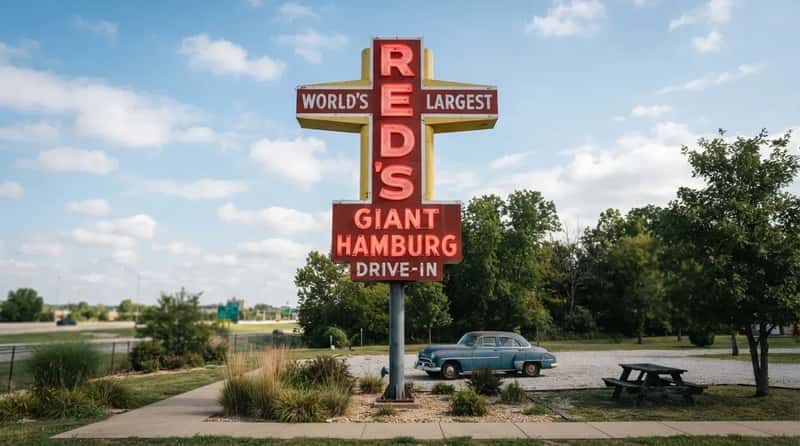
Here’s a fact that surprises almost everyone: the modern drive-thru might trace back to a single Missouri burger stand. Opened after World War II, Red’s Giant Hamburg was a staple on Route 66 for nearly 40 years before closing in 1984, and is sometimes credited as the first drive-thru in America in 1948.
What made it stand out was its giant cross-shaped sign – the owner had wanted to call it Red’s Giant Hamburger, but the too-tall sign he bought threatened to hit overhead power lines, so he simply dropped the “er”. A replica of that iconic sign was installed at the Birthplace of Route 66 Roadside Park in 2014. But the ice cream parlor chain at #7 collapsed even faster, and far more completely.
#7 – A Singing-Waiter Ice Cream Chain Grew to 130 Stores, Then Vanished by 1990
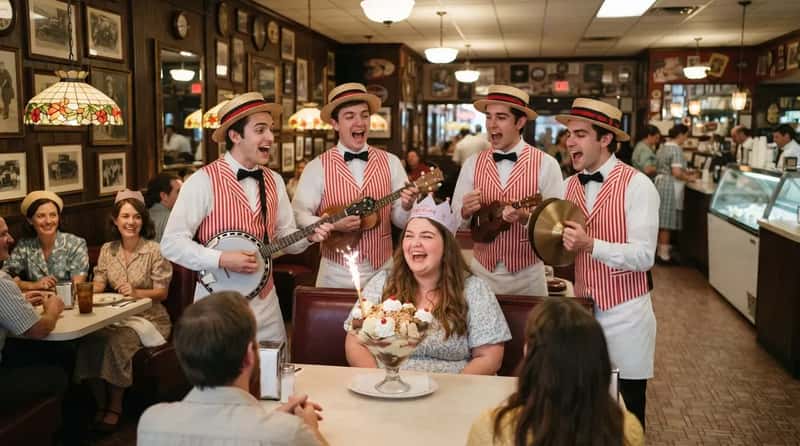
This one sounds almost too strange to be real: a sundae shop with singing waitstaff. Farrell’s was established in Portland, Oregon, in 1963, featuring a tabloid-style printed menu of sandwiches, burgers, malts, and shakes, and it was famous for a free birthday sundae complete with a full staff serenade.
Over the next decade it grew to 130 locations, but the brand only survived until 1990. A brief second wind in 2008 opened several branches around California – all of which are now closed too. Most people don’t realize a chain that big could just disappear twice. Still, it’s nothing compared to what happened to the slider chain at #6.
#6 – This Slider Chain Predated Its Bigger Rival and Still Lost the Fight
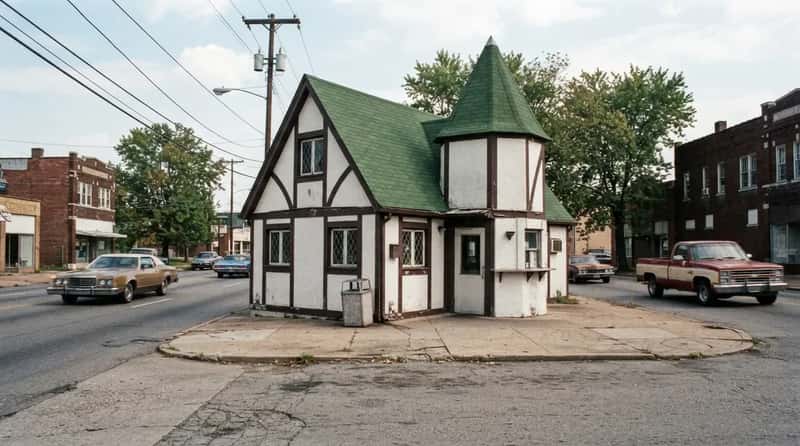
Everyone assumes the little square burger belongs to one company. It doesn’t. Little Tavern opened in Louisville, Kentucky, in 1927 and had nearly 50 outposts by the 1940s, famous for its sliders, its “Buy ’em by the bag” slogan, and a distinctive castle design later changed to a green-roofed Tudor cottage.
It stayed popular for decades, but by the 1980s it was losing ground to more modern fast food companies, and the last location closed in 2008. A near-century run, gone with barely a headline. But the mascot at #5 might be the most beloved statue America ever lost a restaurant behind.
#5 – A Giant Fiberglass Dachshund Outlived the Restaurant It Advertised
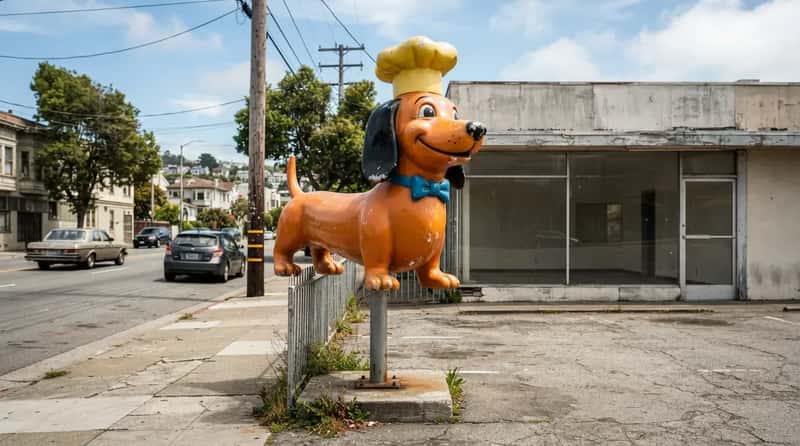
Most people who remember this chain remember the statue, not the food. Doggie Diner was a California-based hot dog and burger chain remembered more for the huge fiberglass statue of a dachshund wearing a bow tie and chef’s hat outside each restaurant, opened by amateur boxer Al Ross and expanded to 30 locations.
The pressure of competing with larger chains like McDonald’s eventually caused its demise, though the Doggie Diner name is still represented today at Oracle Park, home of the San Francisco Giants. A mascot outliving the menu is rare – but not as rare as a burger chain literally being taken to court for copying its rival, which happened to #4.
#4 – White Castle Sued This Copycat Chain, and It Still Somehow Outlasted the Lawsuit
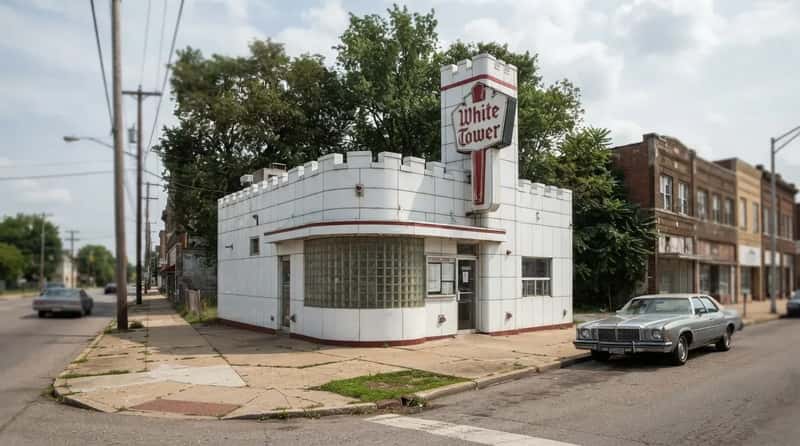
Few people realize White Castle wasn’t the only slider king – it just won every legal fight against the one that tried to be. White Tower Hamburgers was founded in 1926 in Milwaukee, with similar white fortress-like buildings and a menu considered a direct imitation of White Castle, reaching a peak of 230 locations in the 1950s.
In 1937, White Castle felt threatened enough by the Midwestern upstart to sue, and the U.S. Court of Appeals for the Sixth Circuit found in its favor. Remarkably, White Tower survived that loss for decades – the last Milwaukee location closed in 1976, but one lone White Tower in Toledo, Ohio, quietly soldiered on until 2022. Even that survivor’s ending was strange, but nothing compares to the diner chain forced to rename itself out of shame at #3.
Why It Stands Out
- Founded in 1926 in Milwaukee, one year before Little Tavern
- Grew to 230 lookalike locations by the 1950s
- Lost a 1937 copycat lawsuit to White Castle, yet kept operating
- Its very last location, in Toledo, held on until 2022
#3 – This 1,100-Location Chain Collapsed Partly Because of Its Own Name
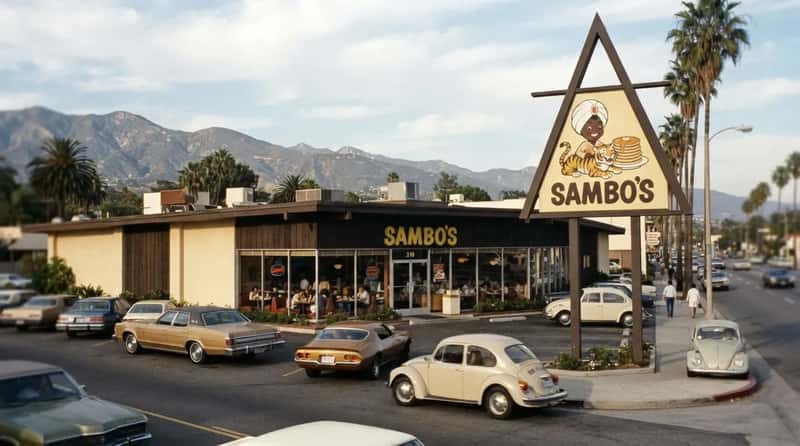
Some diners don’t die from competition or highways – they die from their own branding. In 1979, Sambo’s had 1,117 outlets across 47 states, making it one of the biggest family-diner chains in the country.
In the 1970s, the name and its racist depictions began taking a real toll on the business as lawsuits piled up, and by 1981 the company went bankrupt, closing hundreds of stores and laying off thousands of employees. By 1982, every location except the original Santa Barbara restaurant had closed, and that last one didn’t drop the name until 2020. Most people don’t realize a menu that popular could implode this fast – but the automat of #2 shows just how far America’s appetite for diners has shifted.
#2 – Coin-Operated Comfort Food Vanished From New York Almost Overnight
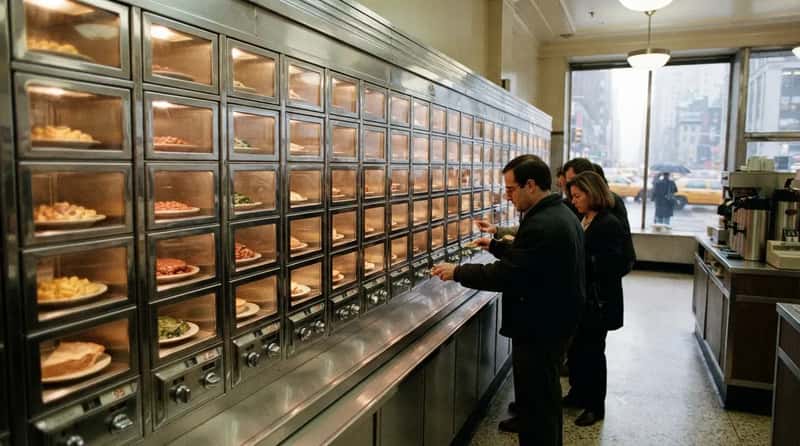
Before fast food existed, there was a wall of tiny glass doors filled with hot food. Founded in Philadelphia in 1888, Horn & Hardart became one of the most recognizable names in American dining, with hundreds of locations across Philadelphia and New York made famous by the Automat’s rows of small glass windows filled with fresh food.
They sold off many locations to Burger King in the 1970s, and the last Automat, at 42nd Street and 3rd Avenue, closed in 1991. Decades passed, and Horn & Hardart lived on only in memories, passed down to people who’d never once set foot inside one. That kind of nostalgic pull is rare – but nothing beats the orange-roofed empire that once defined the entire American road trip, at #1.
#1 – The Orange Roof That Once Meant “You’ve Made It” Is Almost Completely Gone
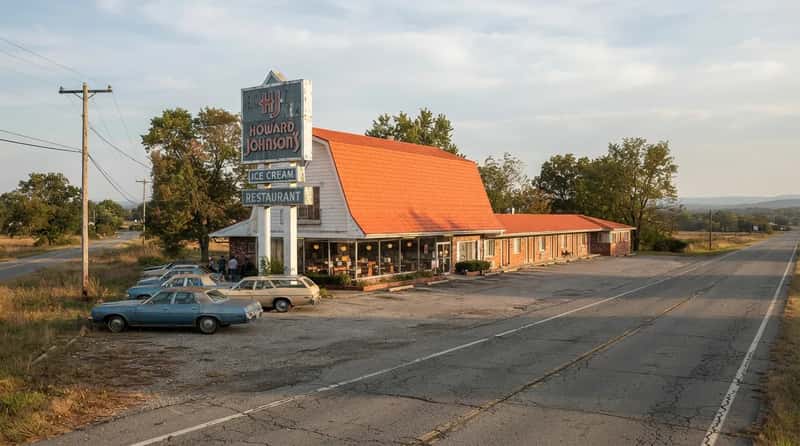
For most of the twentieth century, spotting this orange roof from the highway meant the same thing to every American family: you were about to get ice cream. By 1935 there were 25 Howard Johnson’s roadside restaurants, growing to 41 by the end of 1936 and swelling to 107 by 1939, making it the most recognized roadside brand in the country.
But franchise owners were often unwilling to spend money updating their hotels and restaurants, and by the end of the 1970s the brand had become synonymous with bland, with people joking that its ice cream came in 28 flavors and its food in one. Once the single biggest symbol of the great American road trip, it’s now reduced to a scattered handful of independently run survivors. It’s proof that even the most beloved roadside icon in the country isn’t guaranteed to make it to the next exit.
Fast Facts
- 1935: just 25 Howard Johnson’s locations existed
- 1936: grown to 41 restaurants nationwide
- 1939: exploded to 107 locations coast to coast
- By the late 1970s: reduced to a punchline, then near extinction
What ties all 23 of these places together isn’t just closed doors – it’s how differently each one disappeared. Some were bulldozed for interstates, some sued out of their own names, some just quietly padlocked while regulars still had coffee in their cups. A few, like Roy’s Motel and Café, might even come back. Most won’t. The roadside diner didn’t die a single death; it died dozens of small, specific ones, one exit at a time.
Did your favorite childhood diner make this list – or did we miss the one that mattered most to you? Drop the name in the comments and tell us what you remember about it.