
Most people think “finding the real America” means going back in time. Turns out, you just have to go off the interstate. Scattered across the country are towns where chain restaurants never showed up, main streets never got bulldozed, and the pace of life never accelerated past something that felt human. These aren’t ghost towns or tourist traps. They’re living, breathing communities that slipped through the cracks of modern development and landed on the other side looking exactly like they did when the Ford Pinto was new and gas cost 36 cents a gallon.
The strange part? Most Americans drive within a few hours of at least one of these places and have absolutely no idea it exists. Some were saved by geography, some by poverty, some by a single city council vote that held. A few were rescued by one stubborn family who decided a whole town was worth saving. Here’s what the slow-travel crowd, the preservationists, and the people who actually live in these places know that everyone else doesn’t.
#1 – Galveston, Texas (The Strand District): The Hurricane Town That Refused to Die Modern
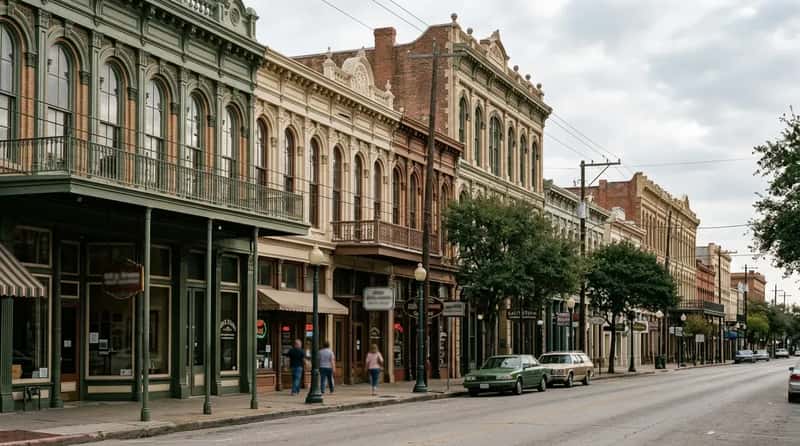
Galveston was the largest city in Texas and one of the most prosperous cities in America – right up until the 1900 hurricane that killed an estimated 6,000 to 12,000 people and left the island in ruins. The city never fully rebuilt to its former scale, and what survived that storm plus the following decades of slow decline is now one of the most extraordinarily preserved Victorian commercial districts anywhere in the United States. Galveston’s Strand district – once called the “Wall Street of the Southwest” – is six unbroken blocks of cast-iron-fronted Victorian commercial buildings, most of them original, almost all of them still in active use.
The Strand looks exactly like it did in the early 1970s when preservationists finally got serious about saving it, because in many ways it looked that way in 1900 too. Hurricane Ike hit hard in 2008, but the buildings held. The beach towns to the west got chain motels and tourist-trap boardwalks; Galveston’s historic core got something rarer – an actual neighborhood that kept its scale, its architecture, and its specific coastal Texas personality intact. The 1894 Grand Opera House still hosts performances, the 1877 tall ship Elissa still floats in the harbor, and the Strand still feels like a place where you could walk straight from 1975 into 1895 without noticing the seam.
Fast Facts
- The 1900 Galveston hurricane remains the deadliest natural disaster in U.S. history
- The Strand’s cast-iron commercial facades date primarily from the 1870s–1880s
- The tall ship Elissa, built in 1877, is one of the oldest operational sailing vessels in the world
- The Grand Opera House has been in continuous use since 1894 – over 130 years
- Galveston Island is roughly 27 miles long and never more than 3 miles wide
#2 – Islesford, Maine (Little Cranberry Island): The Island Town With No Road to Anywhere
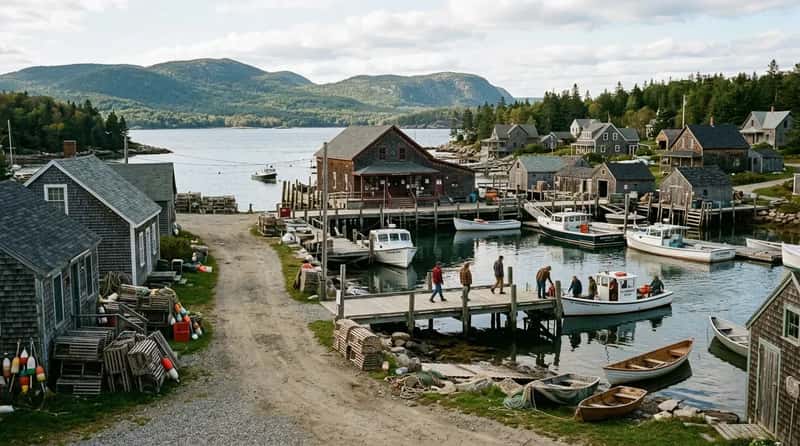
You can only reach Islesford by ferry, which means the 21st century has largely failed to find it. A tiny fishing village on Little Cranberry Island, Islesford feels like another era the moment the boat pulls away from the dock. Fewer than 75 people live here year-round. Lobster traps stack up in front yards, and the general store doubles as the community’s social hub. There are no chain stores here for the simple reason that there’s no road to drive a delivery truck on.
The whole island has barely changed since the 1960s and ’70s – the same families still lobster, the same houses still face the same harbor, and the pace of life is set by the tide schedule rather than anything happening on the mainland. The Islesford Dock Restaurant has been an island institution for years, drawing both locals and visitors with a taste of old New England coastal life that feels completely unrehearsed. The winter population of Little Cranberry Island is so small that it’s one of the most isolated year-round communities on the entire East Coast. The ferry ride alone feels like crossing into a different America.
#3 – Mackinac Island, Michigan: Where Cars Are Still Banned
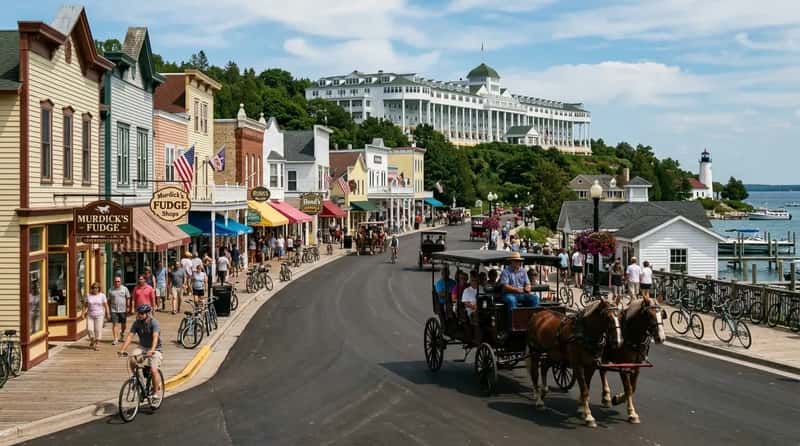
Mackinac Island banned automobiles in 1898 and never reversed the decision. On July 6, 1898, village leaders officially outlawed “horseless carriages” after early cars spooked horses and disrupted the island’s carriage industry – and the ban has held for more than 125 years. Today it is one of the only places in the United States where the default mode of transportation is still a horse-drawn carriage or a bicycle, and the effect on the town’s character is total. The absence of engine noise alone changes how you experience the place. You can actually hear the lake, the birds, the creak of carriage wheels on the pavement.
The Grand Hotel’s 660-foot porch is the longest in the world, and it looks in 2025 essentially as it did when it opened in 1887. No parking lots, no drive-throughs, no interstate on-ramp noise. Just horse hooves and lake wind. Fort Mackinac, still perched on the bluff above town, has been continuously interpreted as a historic site since 1958 – making it one of Michigan’s oldest heritage attractions. No other town on this list enforces its time-warp by literal law. That distinction belongs entirely to Mackinac.
At a Glance
- Car ban enacted: July 6, 1898 – over 125 years ago and still enforced
- Year-round residents: approximately 600 people (and roughly 600 horses in summer)
- M-185, the island’s shoreline road, is the only state highway in the U.S. where motor vehicles are banned
- About 1.2 million visitors arrive by ferry each summer season
- 80% of the island is a state park with old-growth forests and limestone cliffs
#4 – Deadwood, South Dakota: The Wild West Town That Legally Gambles on Its Own Past
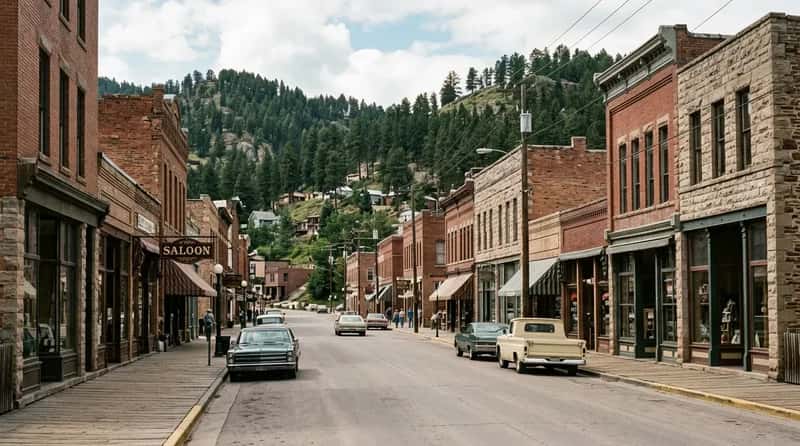
Deadwood is almost too on-the-nose – a real place that lived through the actual Wild West, declined nearly to nothing, and then got saved by a bizarre combination of preservation law and legalized gambling. Founded in 1876 during the Black Hills Gold Rush, Deadwood’s 1,200 residents have fully embraced their town’s rough-and-ready past. Original wooden walkways line the main drag, brick-and-stone facades constructed after an 1879 fire still stand, and saloons where you can still imagine poker games in the corner are everywhere.
Wild Bill Hickok was shot dead here in 1876, and his grave on Mount Moriah is still one of the most visited spots in South Dakota. The entire town was designated a National Historic Landmark District in 1964, which is the only reason the 1880s streetscape survived the 20th century at all. Deadwood could have become a highway exit with a casino attached. Instead it became something stranger and better: a living town that earns its keep by being exactly what it always was.
#5 – Woodstock, Vermont: The Town That Looks Like a Christmas Card All Year
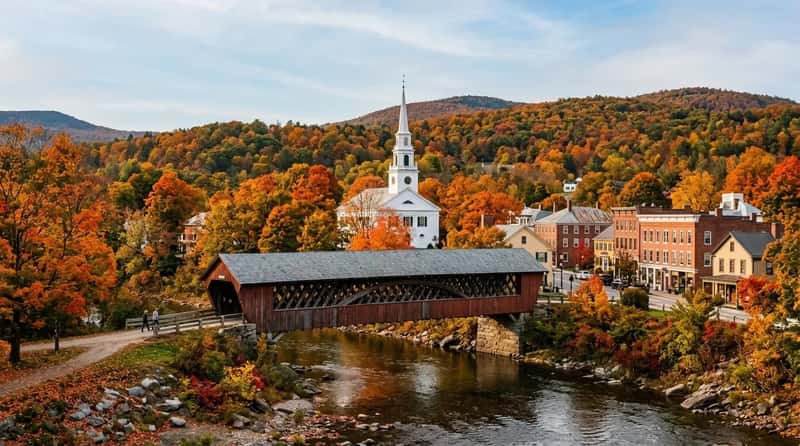
Woodstock operates on a different frequency than the rest of New England – slower, quieter, and so visually intact that it routinely appears on lists of the most photographed small towns in America. Covered bridges, white steeple churches, and maple trees that explode into color every fall make it feel like a postcard from a century ago. The town green hosts everything from farmers markets to winter festivals, and local shops still sell handmade quilts, fresh cider, and wooden toys. It’s the kind of town people move to after decades of city living and never fully explain why, except that it felt right immediately.
The Billings Farm and Museum operates as a working dairy farm on land continuously farmed since the 1870s, and the whole operation looks essentially unchanged from when Woodstock was a summer retreat for Gilded Age families. The Rockefeller family quietly funded much of Woodstock’s preservation throughout the 20th century – which is why it looks so improbably perfect, and why the roads through town were among the last in Vermont to get electric utility poles. That level of protected intention is extremely rare anywhere in America.
#6 – Taos, New Mexico: The Art Colony That Never Sold Out
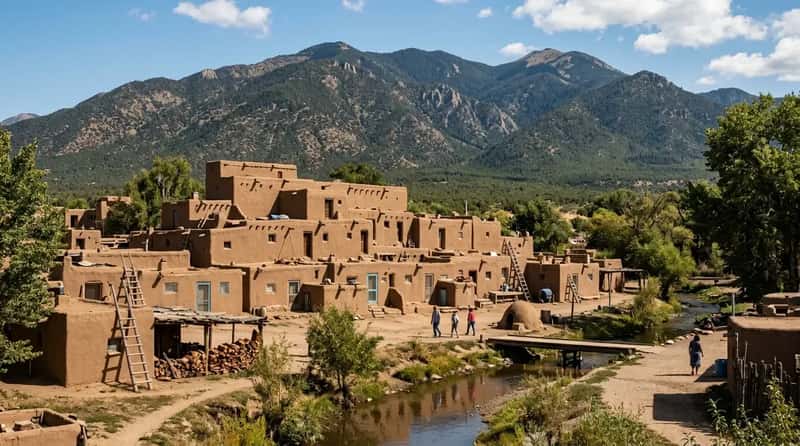
Taos has resisted becoming a theme park of itself, which is genuinely remarkable given how many forces have tried to turn it into one. With just about 6,400 residents, it pulls far more visitors than its population would suggest. The Taos art colony traces to painters who arrived in the late 1890s and formed the Taos Society of Artists in 1915. The adobe architecture, the Pueblo culture, the high desert light – all of it has remained stubbornly intact through waves of tourism that would have homogenized a lesser place.
Taos Pueblo, a multistory adobe dwelling at the base of the Sangre de Cristo Mountains, is a UNESCO World Heritage Site – designated in 1992 – and a living community that has been continuously inhabited for well over a thousand years. It is the only World Heritage Site in the United States cited specifically for the significance of its traditional Native American living culture. The current adobe buildings were constructed between approximately 1000 and 1450 AD, and the settlement looked essentially as it does today when the first Spanish explorers arrived in 1540. That kind of timeline makes the 1970s feel like last Tuesday. The soul of Taos – the one that drew Georgia O’Keeffe and D.H. Lawrence and generations of artists after them – is still there if you know where to look.
Worth Knowing
- Taos Pueblo is the only living Native American community to hold both UNESCO World Heritage Site and National Historic Landmark status
- About 150 people still live full-time inside the historic adobe structures – with no electricity or running water inside the pueblo itself
- The tribal land covers roughly 99,000 acres surrounding the pueblo
- The Taos Society of Artists was founded in 1915 and drew painters from across the country to the high desert light
- Taos sits at 6,969 feet elevation – high enough that the air and light feel genuinely different
#7 – Port Townsend, Washington: The Victorian Port That Never Modernized
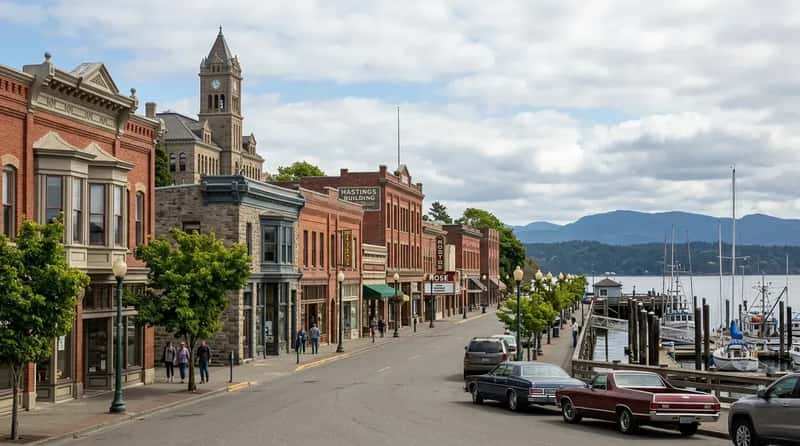
Port Townsend was supposed to be the great metropolis of the Pacific Northwest. In the 1880s, land speculators bet everything on it becoming the major port of Puget Sound – and then the railroad went to Tacoma instead, and Port Townsend’s economic engine stalled completely. The Victorian commercial district built for a city of 50,000 still stands, now occupied by a town of about 10,000, creating a grandeur-to-population ratio unlike anything else on the West Coast.
The uptown residential district contains some of the most intact Victorian homes in the American West, most of them still private residences rather than bed-and-breakfasts or museums. The waterfront still smells like salt and lumber. Port Townsend has one of the highest concentrations of Victorian-era commercial buildings still in active use of any town west of the Mississippi. The 1970s craft revival found a home here too – wooden boat builders, letterpress printers, and bookbinders still operate out of old cannery buildings along the water. That failure to become a metropolis turned out to be the town’s greatest gift.
#8 – Ferndale, California: The Danish Dairy Town Frozen in Cream
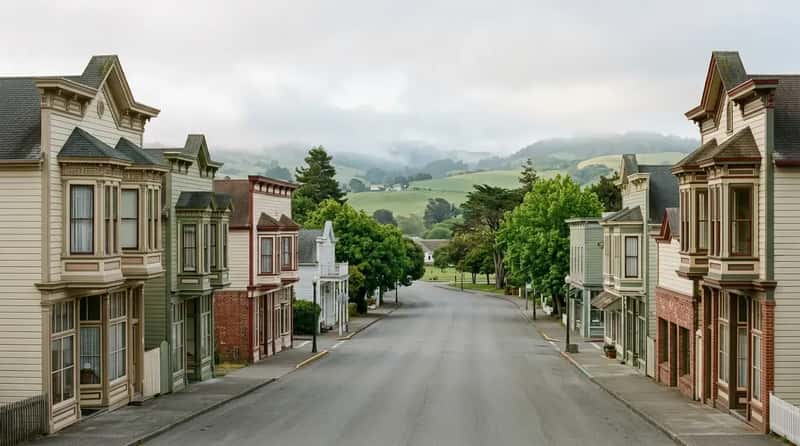
Most people driving the Northern California coast have never heard of Ferndale, which is exactly how the locals prefer it. The town hasn’t changed much since it was founded in 1852 by Danish dairy farmers, earning it the nickname “Cream City.” The elaborate Victorian shops and dwellings along Main Street have been protected for generations, giving visitors a glimpse of what life looked like here in the late 19th century. The town sits in the Eel River valley, ringed by coastal fog and dairy pastures, and the whole scene operates at a frequency that feels completely removed from the California everyone else is familiar with.
The Victorian “butterfat palaces” – mansions built by successful dairy farmers in the 1880s and 1890s – are still standing and still occupied by families, not converted into boutique hotels. The entire Main Street in Ferndale is a California Historic Landmark, preserving one of the most complete Victorian commercial streetscapes left in the state. Ferndale looks like what most of California’s small towns looked like before the freeways arrived. The fact that it survived is almost accidental. The fact that it’s still largely undiscovered feels like a minor miracle.
#9 – Marfa, Texas: Still More Desert Than Art World
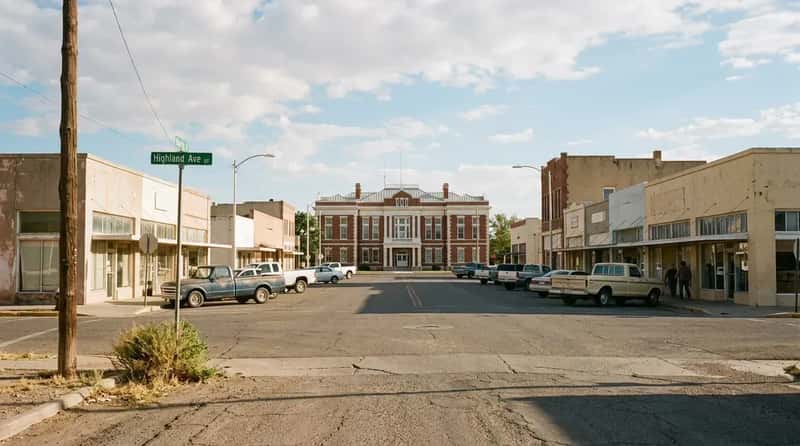
Yes, Marfa has been “discovered” – but the town itself still looks more like a West Texas ranching outpost than a gallery district, and that’s the part most travel writers get wrong. Sitting in the Chihuahuan Desert at about 4,680 feet elevation, Marfa transformed over recent decades from a small railroad town into one of the most unlikely art destinations in the country. The courthouse still dominates the square, the feed store still operates, and the Mexican food at the no-name spots along the main drag is still priced for locals. The bones of a 1970s border-country town are fully intact underneath the art world overlay.
Marfa earned its place in American film history when the 1956 film “Giant,” starring James Dean, Elizabeth Taylor, and Rock Hudson, was shot in the area. At night, the Marfa Lights Viewing Area east of town on US-67/90 offers the chance to witness unexplained lights that have been documented in the region for well over a century. The Marfa Lights remain scientifically unexplained to this day. A West Texas town with a world-class art foundation, a film legacy, and a genuine atmospheric mystery – and it still somehow feels like a place where real people live and work. That combination is essentially impossible to manufacture.
#10 – Bisbee, Arizona: The Copper Town That Never Let Go
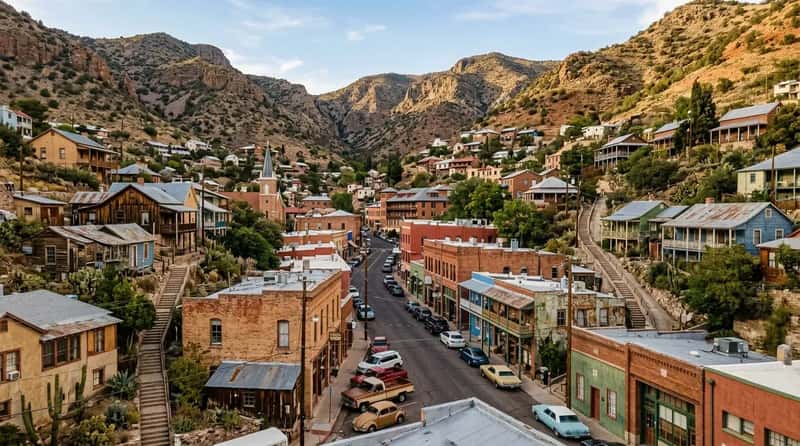
Built into the steep walls of the Mule Mountains, Bisbee is the kind of town where the streets sometimes turn into staircases and the 1970s counterculture never fully left. Its narrow passages twist and climb like a labyrinth frozen in time. Colorful buildings hug the hillsides, and old saloons still creak with the stories of miners and musicians. In the early 1970s, Bisbee became a magnet for artists and counterculture figures who moved into abandoned miners’ cottages for almost nothing – and many of their descendants are still there.
After copper was discovered nearby in 1877, Bisbee was incorporated in 1880 and became one of the largest cities in what was then the Arizona Territory. Today the former saloons and inns remain relics of the town’s mining past, and locals are careful to preserve them along with their tight-knit community. Bisbee sits at 5,538 feet elevation, making it America’s southernmost mile-high city – a geographic quirk that gives it a climate completely unlike the Sonoran Desert towns an hour away. That elevation, that terrain, and that stubborn personality kept the chains out and the character in.
#11 – Crested Butte, Colorado: The Mountain Town That Banned Chain Stores
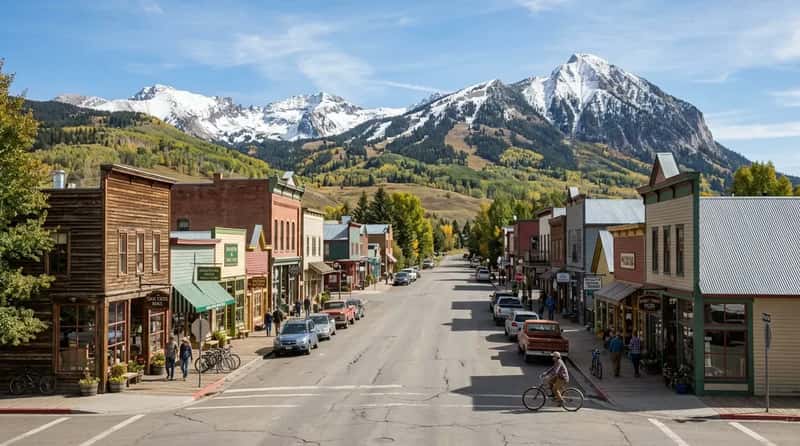
Here’s something almost no American town has managed to do: Crested Butte actually banned chain stores by policy – and it stuck. Located 8,885 feet above sea level in the Rocky Mountains, this former mining town turned ski village has been spared most of the modernization that swallowed similar mountain towns. Elk Street, the main thoroughfare, is lined with mom-and-pop cafes and bars in wooden buildings. Chain stores are banned on Elk Avenue, the town’s historic main street, meaning every business you walk into is locally owned. There is not a single Subway, Starbucks, or McDonald’s in town – and that is entirely deliberate.
There’s also not a single traffic light in town, but it doesn’t seem to matter because most people get around by bike. The ban on chains is real, it’s enforced, and it’s why Crested Butte still looks like a Colorado mountain town from 1973 rather than a branded ski resort. The painted Victorian storefronts along Elk Street are among the most photographed in Colorado, and unlike most ski towns, the soul of the place hasn’t been bulldozed to make room for slopeside condos. One city council vote – held decades ago – is the only reason any of this is still here.
Quick Compare: Crested Butte vs. a Typical Colorado Ski Town
- Chain stores on main street: Zero in Crested Butte vs. multiple in Breckenridge, Vail, Telluride
- Traffic lights in town: None in Crested Butte vs. standard grid signaling elsewhere
- Elevation: 8,885 ft – higher than most Colorado ski town centers
- Dominant architecture: Original false-front Victorian mining-era buildings, not slopeside condos
- Town founding: Mining boom, 1880s – the counterculture arrived in the early 1970s and never left
#12 – New Castle, Delaware: The Colonial Town That Time Literally Left Behind
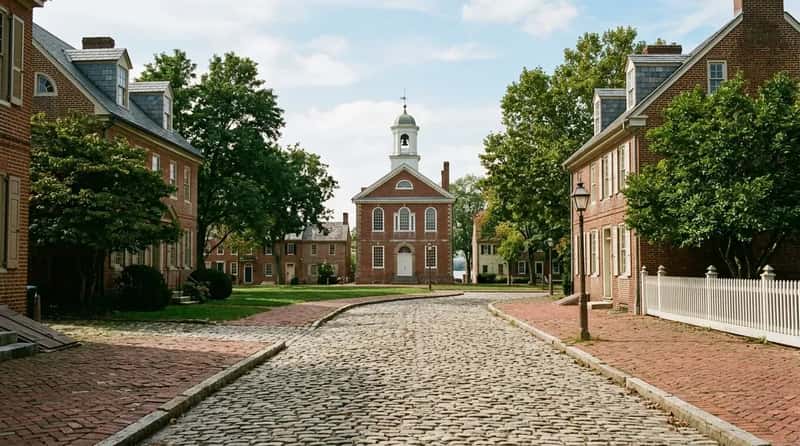
New Castle doesn’t look like it survived the modern era so much as it quietly refused to acknowledge it. Sitting along the Delaware River, it’s so well-preserved that walking its streets feels almost like trespassing into another century. Brick sidewalks lead past colonial homes, and a calmness settles over the place that makes you want to lower your voice. This was once the capital of Delaware, a bustling port, and a center of early American power – and then Wilmington grew up a few miles downriver and swallowed all the future development, leaving New Castle in a kind of accidental amber.
The courthouse green, the 17th-century Dutch house, and the cobblestone lanes all survive in remarkable condition, and the entire historic district is walkable in under an hour. History is woven into everything – the courthouses, the gardens, even the iron fences. New Castle is arguably the most underrated colonial town on the entire East Coast, yet most Americans couldn’t find it on a map. That obscurity is its best feature and, honestly, its best protection. The towns that everyone knows about tend to lose the thing that made them worth knowing about.
#13 – Galena, Illinois: The Town Ulysses Grant Couldn’t Outgrow
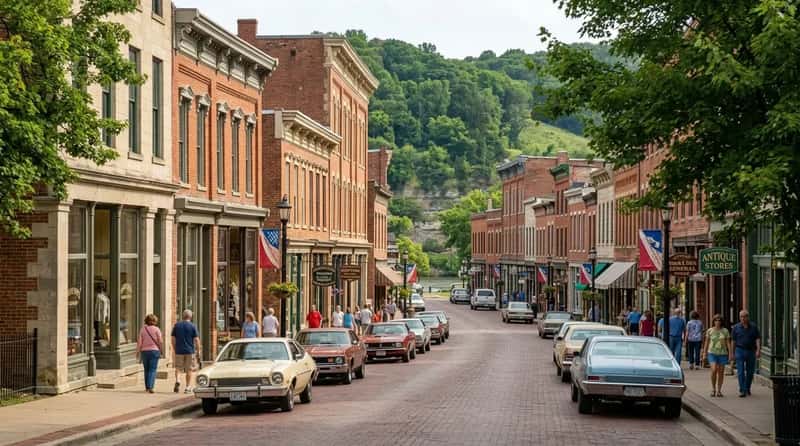
Galena is one of the Midwest’s most significant secrets – a Mississippi River town so well-preserved that roughly 85% of its structures are on the National Register of Historic Places. Officially founded in 1826, Galena was a major river port by the 1850s and the hometown of Ulysses S. Grant before and after his Civil War campaign. The town peaked commercially before the war, then quietly stepped out of the path of industrial progress and never looked back. That restraint, forced by geography and the decline of river trade, turned out to be the best thing that ever happened to it.
Walking through Galena’s main streets is an experience in itself – elegant storefronts house antique shops, specialty boutiques, and restaurants that have long embraced the town’s historical legacy. The Grant home, built in Italianate style and containing original furnishings from 1865, is still one of the most visited historic homes in Illinois. With 85% of Galena’s buildings made of stone and brick and still standing in their original form, it contains one of the most intact 19th-century streetscapes anywhere in the American Midwest. Most people drive right past it on the way to somewhere less interesting.
#14 – Jim Thorpe, Pennsylvania: The Coal Town That Became Something Else
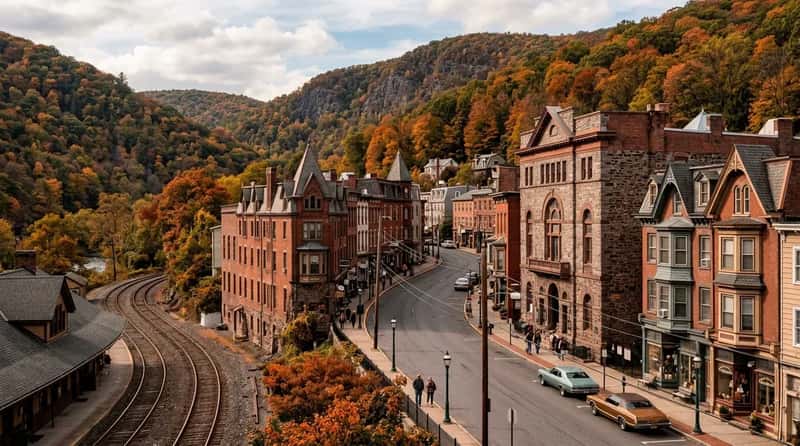
Jim Thorpe is one of those towns where the past never quite let go, and somehow that became its entire identity. Nestled in the Pocono Mountains, it looks more like a European village than an American town, with steep hills, gothic buildings, and a train station that appears exactly as it did 100 years ago. The carbon-copy Victorian streetscape is so intact that film crews use it regularly when they need the 1970s without a set budget. That’s not hyperbole – it genuinely looks like a period set that nobody dismantled.
Founded in 1818 and originally called Mauch Chunk, the town was renamed in 1954 after legendary Olympic athlete Jim Thorpe – in one of the most unusual deals in American civic history. The town was essentially renamed in exchange for the athlete’s remains, which are interred here along Route 903. Jim Thorpe’s memorial draws visitors from across the country who come specifically to pay respects to one of the greatest athletes America ever produced, in a town he never actually visited while alive. That specific, strange lore is exactly what keeps people talking about this place long after they leave.
#15 – Tahlequah, Oklahoma: The Cherokee Capital With the Oldest Main Street in the State
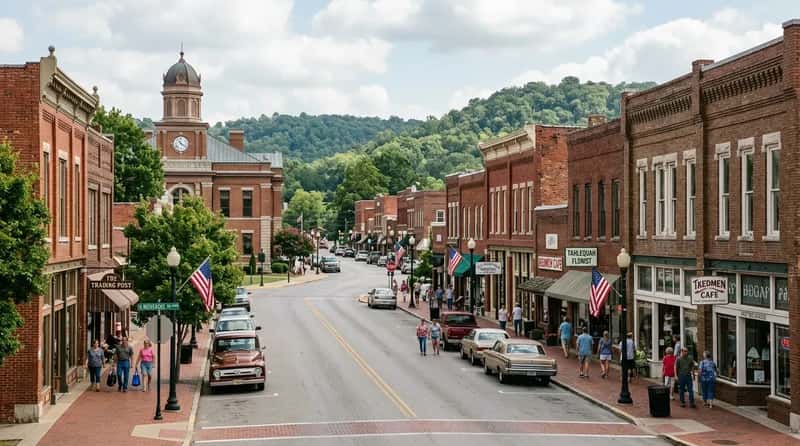
Most people don’t realize that the oldest continuously operating Main Street in all of Oklahoma isn’t in Oklahoma City or Tulsa – it’s in a town of about 16,000 people nestled in the Ozark foothills. Tahlequah is the capital of the Cherokee Nation, and in the Original Historic Townsite District, street signs are written in both English and Cherokee. Downtown Tahlequah is full of vintage storefronts, boutiques, and restaurants that feel like a time when life moved at a different speed.
The Cherokee Heritage Center recreates the lifestyle of indigenous peoples who lived in the area before European contact, and the Illinois River runs cold and clear nearby, with canoe outfitters operating out of old sheds that look like they’ve been there since the Nixon administration – because some of them basically have. The bilingual street signs alone make Tahlequah unlike any other American small town, and the cultural weight behind them is anything but superficial. It’s a living capital city with centuries of history compressed into a footprint most people dismiss as a small Oklahoma town. That gap between perception and reality is the whole point.
#16 – Fort Benton, Montana: The Oldest Town on the River
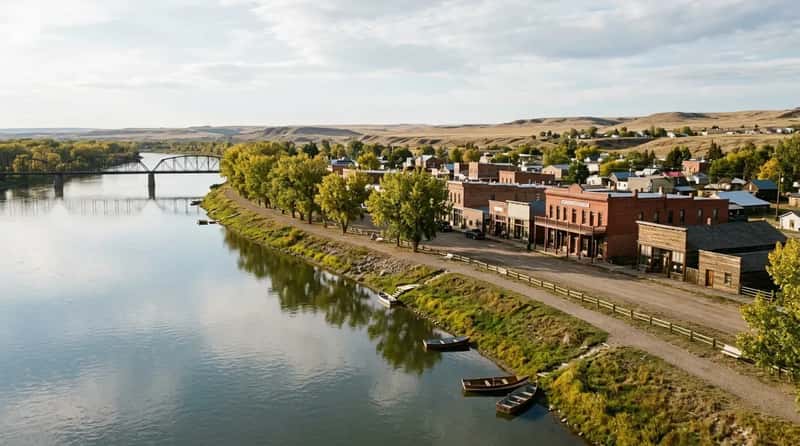
Fort Benton sits at the end of the navigable Missouri River, which made it the gateway to the American West for decades – and then the railroads bypassed it, history moved on, and Fort Benton got left behind in the best possible way. Established in 1846 as Montana’s oldest continuously occupied settlement, the town’s original charm is well-preserved downtown. The levee walk along the Missouri is one of the most quietly beautiful stretches of public space in the entire state, with wide-open fields and a historic district that reflects its earliest roots without apology.
The locals here are the rare kind who actually know their town’s founding date by heart – 1846, the same year the Oregon Trail was at peak traffic. The Grand Union Hotel, built in 1882, still operates and hasn’t been “renovated” into blandness. That level of authentic continuity, where the building is real and the history inside it is unperformed, is what separates Fort Benton from merely charming. It’s a town that existed before Montana was a state and still looks like it remembers that fact clearly.
Why It Stands Out
- Founded in 1846 – Montana’s oldest continuously occupied settlement
- Sits at the historic head of navigation on the Missouri River, once the superhighway of the American West
- The Grand Union Hotel (1882) still operates as a working hotel, not a museum
- The levee walk along the Missouri is considered one of Montana’s most underrated public spaces
- Population today: fewer than 1,500 people – same bones, fraction of the former traffic
#17 – Anaconda, Montana: The Almost-Capital Nobody Found
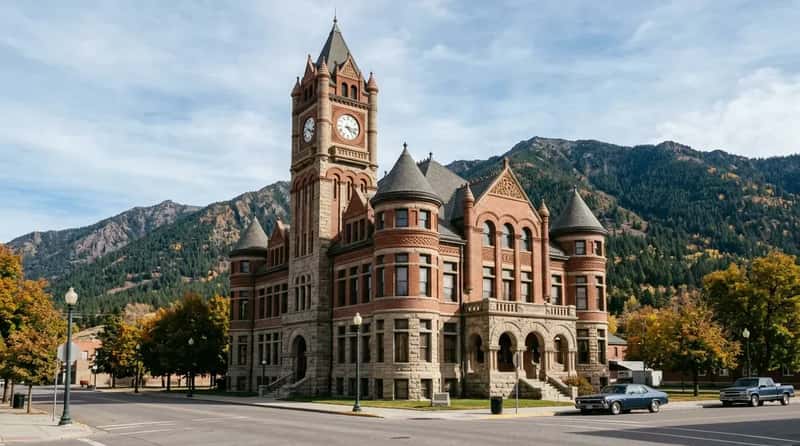
Anaconda was supposed to be the capital of Montana. Its founder, copper magnate Marcus Daly, lobbied hard for it – and lost. That near-miss turned out to be the best thing that ever happened to the town’s character. Originally named Copperopolis, Anaconda sits tucked in the lush foothills of the Anaconda Range, and the grand Victorian-era ambition of its buildings is wildly out of scale with its current population. That contrast – monumental architecture in a sleepy town – is exactly what makes it unforgettable.
Daly built a stunning Victorian-era city hall accented with ornate Roman and Romanesque details, designed for a capital that never came. The old city hall was restored in the 1970s and now houses the Copper Village Museum and Arts Center. The old smelter smokestack – one of the tallest freestanding brick structures in the world – still towers over the valley like a monument to industrial ambition that ran out of runway. Anaconda is a quiet, secluded community, and the residents wouldn’t have it any other way. The isolation isn’t a problem to solve. It’s the whole point.
#18 – Virginia City, Montana: Dirt Roads Nobody Paved
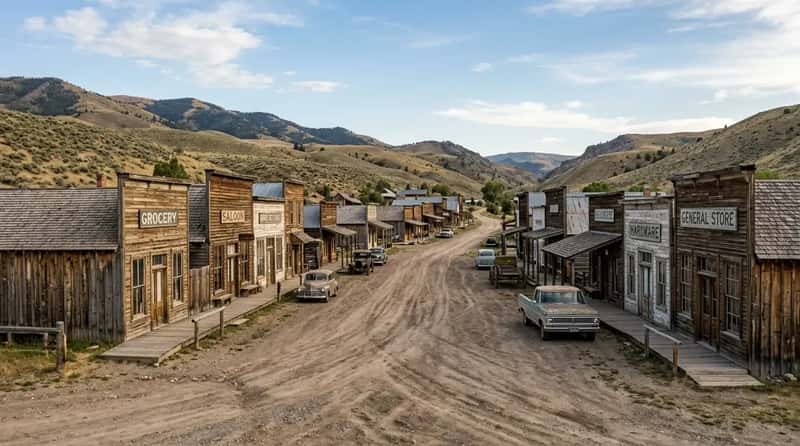
Virginia City, Montana isn’t a reconstruction or a theme park – it’s a real historic town where people still live, and the dirt roads just never got paved. Recognized as one of the best-preserved mining camps in the country, Virginia City lets you walk old dirt roads between rickety wooden buildings that are genuinely, structurally old. The gulch setting, the 1860s storefronts, and the total absence of big-box retail create an atmosphere that feels less like heritage tourism and more like accidental survival.
The nearby Nevada City Old Town Museum and Music Hall hosts one of the largest displays of Old West artifacts in the region, with over 100 historical buildings to explore. In summer, living history events bring the streets to life with actors portraying actual residents from the town’s territorial era. Virginia City was nearly demolished in the 1940s before a family of preservationists purchased the entire town and saved it. One family, one decision, one moment – and the reason this place still looks like 1972 wrapped around 1865. That’s the kind of story that doesn’t happen twice.
#19 – Eureka Springs, Arkansas: The Ozark Town That Terrain Preserved
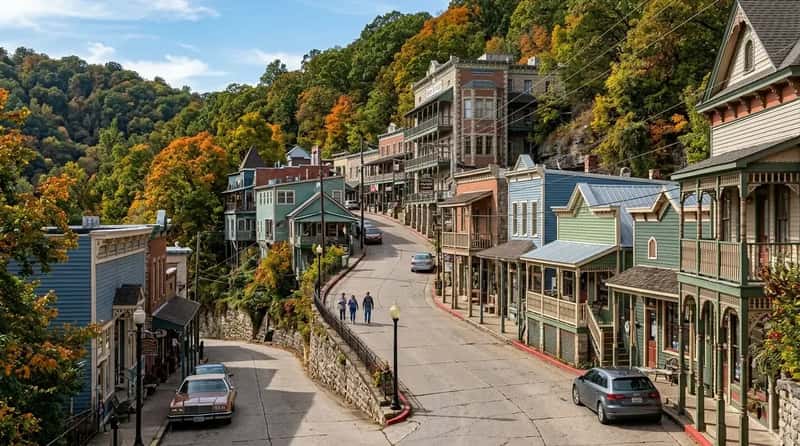
Eureka Springs is one of the only American towns where the hills themselves acted as a preservation policy. With a population around 2,000, the town retained its Victorian character largely because its terrain physically prevents mass bus tourism – the switchbacks are too narrow, the grades too steep. Bus tour companies literally can’t navigate the roads, which means the crowds that flatten other historic towns never arrived here in force. The result is a Victorian streetscape that feels genuinely intact rather than performed for visitors.
Nestled in the Ozark Mountains, Eureka Springs captivates with colorful buildings lining winding streets where every curve reveals something unexpected. The 1970s folk and crafts culture that passed through here never fully left – you can still find handmade dulcimers and herbal remedy shops tucked between galleries. The entire downtown is a protected historic district, making Eureka Springs one of the most comprehensively preserved small towns in the American South. The terrain saved it from the buses, the historic designation saved it from the developers, and the arts community saved it from becoming just another pretty empty shell.
#20 – Lewisburg, West Virginia: Carnegie Hall’s Forgotten Twin
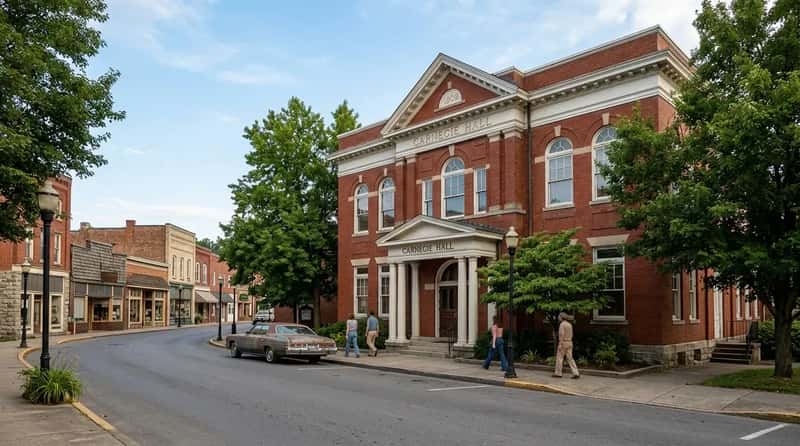
Most people have never heard of a Carnegie Hall outside of New York City – but Lewisburg, West Virginia has one, and it’s still operating. In the seat of Greenbrier County, population roughly 4,000, Carnegie Hall West Virginia – built in 1902 – still hosts concerts. Antique shops line Washington Street. The town square looks like a film set from a 1970s Southern drama, all brick storefronts and hand-painted signs, except it’s entirely real and entirely lived-in.
The median home price in Greenbrier County sits around $185,000 – about one-third of what you’d pay for a comparable house in Richmond, Virginia. Visitors routinely report it feels frozen in a better decade. The nearby Greenbrier resort gets all the press, but Lewisburg itself – with its walkable historic district and genuinely unhurried pace – is the real discovery. You can still get a full breakfast for under $10 at a downtown diner that’s been feeding locals since before Watergate. That kind of value attached to that kind of atmosphere is basically extinct everywhere else. Lewisburg hasn’t gotten the memo, and long may that continue.
#21 – Bramwell, West Virginia: The Millionaires’ Ghost Street
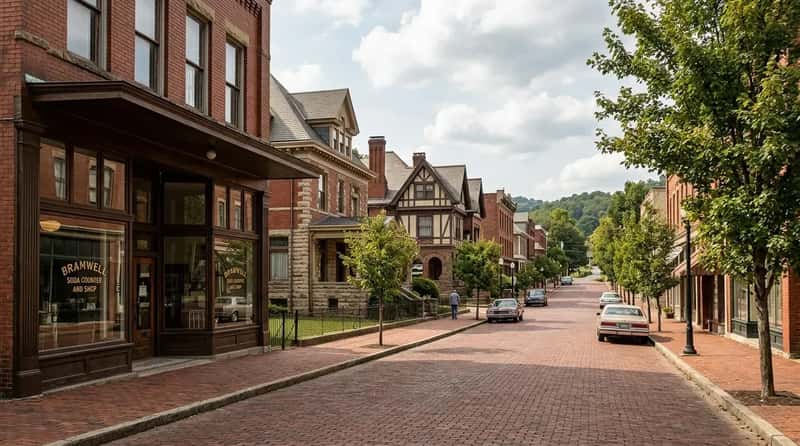
Here’s a stat that stops people cold: at the turn of the 20th century, Bramwell, West Virginia was nicknamed the “Town of Millionaires,” its streets bustling with the families of wealthy coal barons. Today those same streets are almost empty, a casualty of the vanishing coal industry. Fewer than 350 people live in Bramwell now, walking its perfectly preserved Main Street along the Bluestone River, occupying gorgeous Victorian and Tudor mansions that were built for a prosperity that evaporated. The wealth left. The architecture didn’t.
On one end of the brick-paved street, Bramwell Soda Counter and Shop still serves burgers, candy, and milkshakes. At the other, the historic train depot has been converted into a museum and visitors center. Bramwell has one of the highest concentrations of millionaire-era mansions per capita of any town in America – and most of them are still standing, still occupied, and still looking exactly like 1910. The whole place feels like it was paused mid-sentence. You walk through it wondering what it sounded like when it was full, and that question stays with you.
#22 – Castine, Maine: A Colonial Harbor Nobody Talks About
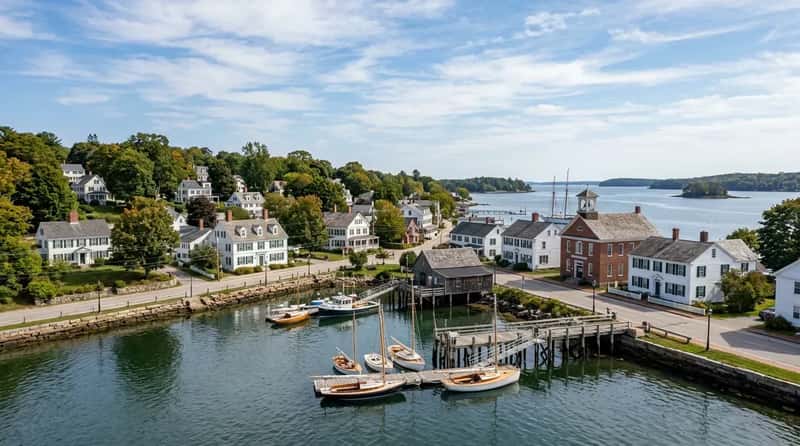
Most Maine tourists beeline for Bar Harbor and miss Castine entirely – which is honestly their loss. One of the hidden treasures along Penobscot Bay, Castine has its 18th-century charm completely intact. Fort Castine, Revolutionary War earthworks, and streets lined with Federal-style mansions all coexist here without a single neon sign to break the spell. It’s technically a college town – Maine Maritime Academy calls it home – but even that feels like it belongs to a different era.
The Castine Historical Society occupies an early 1800s building and offers a deep window into the town’s colonial past. Small local businesses like Compass Rose Books and Dennett’s Wharf Restaurant keep the place feeling alive without feeling touristy. Castine has changed so little that historians use its intact streetscape as a teaching tool for early American urban planning. That kind of stillness is increasingly rare – and increasingly precious. The towns that don’t know they’re special tend to stay that way longest.
At a Glance
- Castine has been a contested strategic port since the 1600s – French, Dutch, British, and American flags have all flown here
- Revolutionary War earthworks are still physically visible and walkable today
- Home to Maine Maritime Academy, one of only six state maritime academies in the U.S.
- Year-round population: approximately 1,300 people – quiet enough that strangers get noticed
- No traffic lights, no chain stores, and a harbor view that looks essentially unchanged from the 1970s
#23 – Wiscasset, Maine: The Town That Forgot to Change
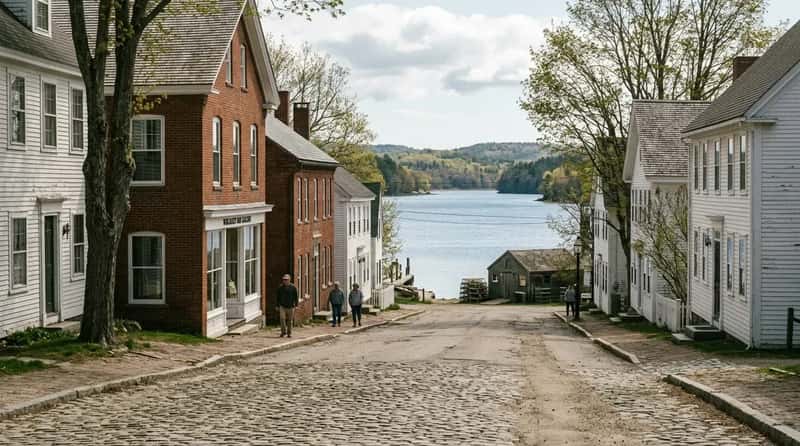
Pull into Wiscasset on a weekday morning and something will feel immediately off – in the best possible way. The town teeters frozen in time because of its dense 18th-century presence: colonial homes, cobblestone streets, and a quietness that belongs to a different generation entirely. The Kennebec River frames the whole scene like a landscape painting nobody bothered to update. It’s the kind of place where people still walk to the hardware store, and that walk takes them past buildings that have stood for 200 years.
Antique stores and art galleries, including the Wiscasset Bay Gallery, occupy buildings that predate the American Revolution. Red’s Eats, a seafood shack serving lobster rolls since 1938, feels like the epitome of the town’s old-time charm – a line out the door in summer, completely unchanged in character. Wiscasset bills itself as “the prettiest village in Maine,” and while that’s always up for debate, what isn’t debatable is that it looks almost exactly as it did in 1974. Some towns try to recreate that feeling. Wiscasset never had to try.
These 23 towns share one thing that no amount of money or marketing can manufacture: they were shaped by time, not by branding. Some were saved by geography, some by poverty, some by one stubborn family or one city council vote that held. The common thread is that somebody – or something – said no to the strip mall, the chain, the freeway bypass, the demolition order. And because of that, you can still walk down a main street in this country and feel the specific texture of a decade that most of America has already paved over. The question isn’t whether these towns are worth visiting. It’s whether you’ll get there before everyone else does.