Everyone sells all-inclusive resorts the same way: pay once, relax forever, zero drama. Ask anyone who’s actually worked the front desk, the pool bar, or a housekeeping cart, though, and you’ll hear a completely different version of paradise. The wristband goes on, and some guests turn into people their own families probably wouldn’t recognize.
Staff don’t forget. They remember the faces, the room numbers, the exact tone of voice – long after the guest has flown home and left a five-star review out of pure guilt. What follows is the stuff that actually sticks with the people working the shift, not the polished brochure version of an all-inclusive vacation.
#23 – Claiming Every Lounge Chair Before Sunrise, Then Vanishing

By 6 a.m., a row of prime beach chairs is already draped in towels, flip-flops, and the occasional hat – with not a single human being in sight. The guest who did it is back in bed, phone alarm set for two hours from now, mission accomplished.
Meanwhile, families who actually show up for the sunrise find nowhere to sit during the best hours of the day. Staff get flagged down to “fix” a problem they didn’t create, and most resorts admit they’ve stopped removing the towels altogether because it just starts fights.
#22 – Feeding the Local Wildlife to Get the “Perfect” Photo

It looks cute for exactly one photo: a guest tossing bread to a bird or coaxing an iguana in close for a selfie. Within minutes, that one bird becomes fifteen, and they’re not shy about swooping in on anyone eating outdoors.
Staff end up hosing down droppings, chasing off aggressive gulls, and apologizing to the table of strangers who just wanted a quiet lunch. The guest who started the whole thing, of course, has already walked off with their photo.
#21 – Treating the Buffet Like a Competitive Sport

Some guests hit the buffet like it’s a timed event, stacking a plate so high it’s basically a sculpture before they’ve even glanced at what else is on offer. Half of it comes back to the tray untouched twenty minutes later.
Kitchen staff say the waste bothers them more than anything else – trays of local dishes nobody actually tasted, scraped straight into the trash because someone had to grab everything at once. A slower first lap around the buffet almost always leads to a better plate and less regret.
#20 – Skipping the Tip Even After Standout Service

A lot of guests assume that because the trip is “all-inclusive,” tipping simply doesn’t apply. But most resort staff are paid modest wages precisely because the tip pool is expected to fill the gap.
Some properties now leave envelopes in the rooms specifically for gratuities because guests genuinely forget otherwise. The servers who show up early, remember your drink order, and never stop smiling remember exactly which guests never once reached for their wallet.
Worth Knowing
- Tip pools often quietly supplement modest hourly pay for bartenders, servers, and housekeeping.
- Gratuity envelopes left in rooms exist specifically because so many guests forget tipping applies at all.
- A few dollars a day for housekeeping and pool staff is a small gesture that goes a long way.
- Staff remember standout service either way – but they remember who noticed it, too.
#19 – Smuggling Food and Drinks Out of the Restaurant

Dinner rolls, fruit, the occasional full plate wrapped in a napkin – it disappears into beach bags constantly, and staff usually let it go rather than make a scene over a stolen croissant.
The real problem starts when it becomes a daily ritual: a cooler restocked from breakfast, a mini-fridge refilled from the dessert table every single night. Kitchens plan portions around expected guest counts, so quiet hoarding like this actually throws off supply for everyone else on the property.
#18 – Ringing the Front Desk Bell Like It’s a Five-Alarm Fire

That little bell at the desk exists for genuine emergencies, but it gets treated like a toy fast. One front desk clerk recalled a guest ringing it repeatedly while she was already mid-stride, walking straight toward them.
Unsupervised kids make it worse, turning the bell into background noise by day three. Staff say the sound becomes almost comedic by the end of a stay – everyone on shift can guess the room number before they even look up.
#17 – Demanding Maintenance Show Up at 2 a.m. for Anything

One guest reportedly asked a front desk worker why maintenance “couldn’t just come up” immediately, seemingly unaware that resort maintenance crews – like most hotel departments – aren’t sitting around at 2 a.m. waiting for a call.
Staff say the entitlement can turn ugly fast, with guests treating overnight workers like personal servants rather than people doing a job. The ones who scream about a slow AC repair at midnight are the ones every night-shift employee remembers by room number, not name.
#16 – Turning a Poolside Argument Into a Full Show

Nothing derails a lazy pool afternoon quite like a couple mid-meltdown three lounge chairs away. Whatever’s actually going on between them, the tension becomes public property the second voices start rising.
Staff nearby try to stay invisible and neutral, but they’re often the ones stuck cleaning up the aftermath – literally, if a drink or a plate ends up airborne. Everyone within earshot remembers it far longer than the couple probably wants them to.
#15 – Ignoring the Dress Code at the “Fancy” Restaurant
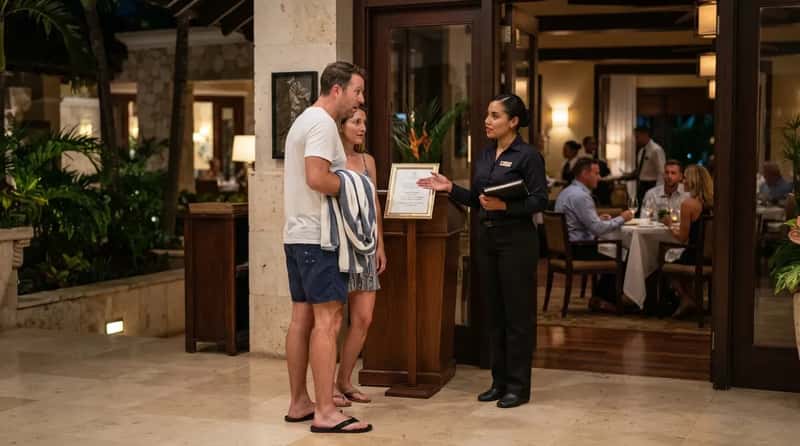
A resort is still a shared space, and the nicer restaurants usually post a dress code for a reason. Staff constantly turn away guests showing up in flip-flops and swim trunks to a reservation that clearly requires a collared shirt.
The standoffs at the hostess stand are some of the most awkward moments any front-of-house team handles on a nightly basis – polite explanations met with genuine confusion, as if the rule couldn’t possibly apply to them specifically.
#14 – Complaining About “Free” Food Like It’s a Michelin Tasting Menu

Not every all-inclusive resort is known for its cuisine, and most guests understand that going in. Others, apparently, do not – and staff field furious complaints over buffet food that was, by definition, already included in the price they paid.
Refund demands over a lukewarm pasta station aren’t rare, and staff say the intensity almost never matches the actual issue. A soggy waffle is a minor letdown; treating it like a five-star failure is what gets remembered.
#13 – Drinking the Bar Dry, Then Blaming Staff for the Hangover

Unlimited drinks have a way of rewriting people’s manners entirely. Something about walking through the resort gates convinces certain guests that maximum consumption equals maximum value, and the results are exactly what you’d expect.
Bartenders remember precisely who got cut off – and precisely who argued about it for twenty straight minutes the next morning, somehow certain the hangover was the bar’s fault, not theirs.
#12 – Letting Kids Run the Resort Like an Unsupervised Playground

Staff have watched kids climb furniture, barrel through other guests’ meals, and sprint across wet pool decks while parents order another round without looking up. It turns a relaxing afternoon into a genuine hazard zone fast.
The kids aren’t really the issue – it’s the parents who get defensive the moment staff gently ask them to step in. Lifeguards and entertainment teams remember these families vividly, mostly because they spend the whole week doing parenting duties nobody hired them for.
#11 – Walking Off With Towels, Robes, and Even Pool Floats
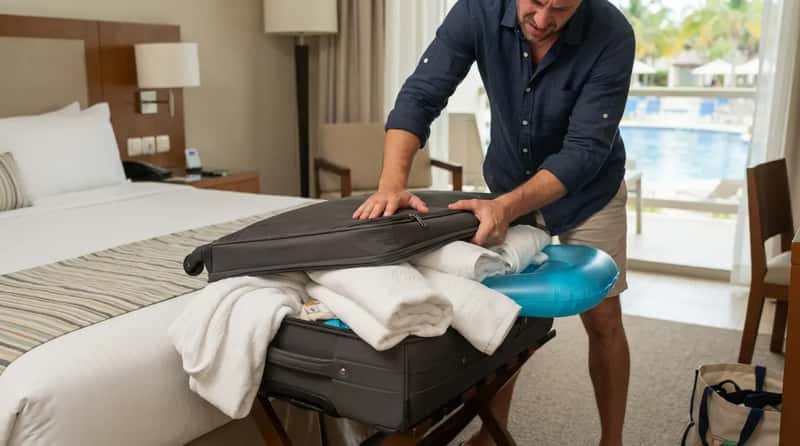
Housekeeping restocks pool towels constantly, yet the count somehow keeps shrinking. Robes, floats, and beach towels get folded into suitcases on checkout morning, on the assumption that nobody’s tracking inventory that closely.
They are. Shortages get logged property-wide, and the missing linens quietly raise replacement budgets for every future guest. Staff say the strangest part is watching someone struggle to zip a suitcase stuffed with hotel property, then act baffled when it’s mentioned.
Fast Facts
- Hotels lose an estimated $100 million each year to stolen items, according to the American Hotel & Lodging Association.
- Towels top every theft survey, with more than 88% of respondents saying they’re commonly taken.
- Bathrobes rank second, and hotels say each one costs at least $50 to replace.
#10 – No-Showing the Timeshare Tour, Then Getting Furious About It

Plenty of resorts dangle perks – free excursions, room upgrades, spa credit – in exchange for sitting through a timeshare presentation. Guests happily grab the perks, then skip the actual tour without a second thought.
When the promised upgrade gets pulled because they never showed, the anger lands squarely on front desk staff who had nothing to do with the sales team’s rules. Concierge teams say they watch this exact scene repeat almost word for word, week after week.
#9 – Barking Orders Like Staff Are Personal Servants
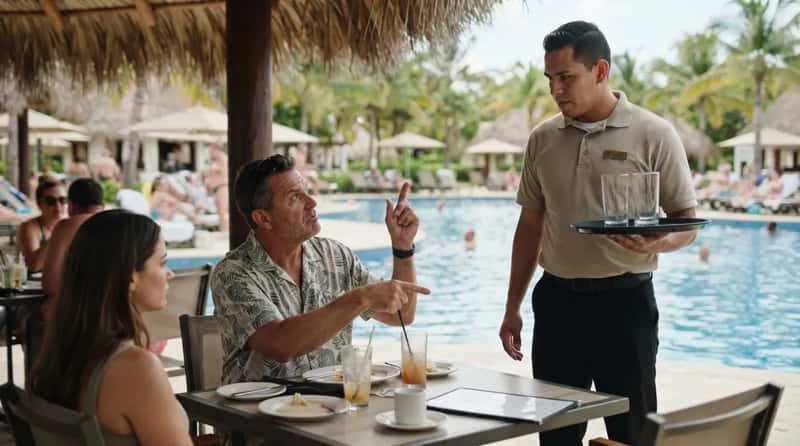
Staff can genuinely make or break a stay, and most guests treat them with basic decency. The ones who don’t – snapping fingers, refusing to say “please,” demanding immediate service like they’re the only guest on property – are the ones remembered longest, for all the wrong reasons.
The tone shift is what sticks with staff most: warm and polite at check-in, suddenly cold and dismissive by day two, once the vacation entitlement fully kicks in.
#8 – Threatening a One-Star Review Over a Slow Taco

“I’ll leave a bad review” has become the go-to move for guests who don’t get their way instantly, usually over something as minor as a delayed drink order or a taco that took eight extra minutes.
Ironically, the loudest threats rarely turn into anything. Staff say it’s the quiet guests who write calm, detailed, fair feedback afterward whose opinions actually get taken seriously by management – not the ones shouting in the moment.
#7 – Swimming Past the Red Flags, Then Expecting a Rescue

Red flags on the beach exist for real safety reasons, yet guests routinely wade or swim past them anyway, treating the warning like a polite suggestion rather than an actual rule.
Lifeguards end up in the water pulling someone back to shore, then absorbing the guest’s anger over being “stopped from having fun.” It’s one of the rare moments staff genuinely fear for a guest’s safety more than their own patience.
At a Glance
- A single red flag means high hazard – strong surf or dangerous currents – and swimmers are discouraged from entering the water.
- Double red flags mean the water is closed to swimming entirely, even for the strongest swimmers.
- Purple flags warn that dangerous marine life, like jellyfish, has been spotted nearby – a separate risk from the surf itself.
#6 – Throwing a Room Party That Shakes the Whole Floor

What starts as a couple of pre-dinner drinks in the room can turn into a full party by midnight, with music and noise carrying straight through paper-thin resort walls.
Security gets called, guests get defensive about “just having fun on vacation,” and the rest of the floor loses sleep for it. Staff remember these rooms specifically because the same complaint calls repeat night after night for the entire stay.
#5 – Smuggling In Outside Liquor to Dodge the “Premium” List
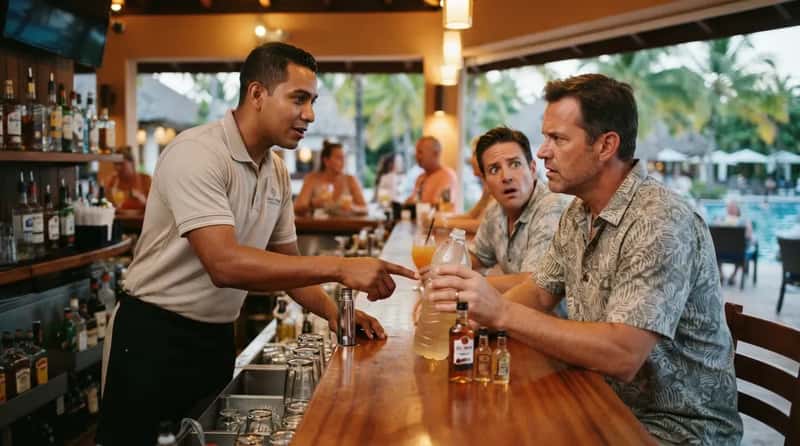
Some all-inclusives charge extra for top-shelf liquor, so guests pack mini bottles in their suitcase to skip the upcharge entirely. Bartenders usually clock it the moment they catch a whiff of what’s actually in that “water bottle.”
Most staff let it slide quietly, but they remember the guests who get genuinely aggressive when asked to keep outside alcohol out of the shared bar area. Someone always ends up delivering the bad news, even though they didn’t set the policy.
#4 – Sunbathing Nude or Half-Dressed in Family-Friendly Zones

Not every all-inclusive is adults-only, yet some guests treat the family pool like their own private resort. Staff get pulled into an awkward conversation because someone decided the dress code simply didn’t apply to them.
It’s a lose-lose moment for whoever has to handle it – enforce the rule and risk a scene, or ignore it and field complaints from every family nearby. Nobody on staff wants that conversation twice in one shift.
#3 – Posing as an “Influencer” to Score Free Upgrades

The moment someone mentions a “huge following” and asks for a free upgrade or a comped dinner in exchange for a post, staff already know exactly how the story ends. Many resorts now train staff specifically on how to politely decline the pitch.
The follow-through almost never matches the ask – a promised glowing post that never appears, or an account with a few hundred followers instead of the tens of thousands claimed at check-in. Staff say the confidence of the pitch is more memorable than the request itself.
Why It Stands Out
- Real collaborations are arranged in advance through a marketing contact, not improvised at check-in.
- Legitimate influencers can usually point to verified engagement, not just a follower count.
- Genuine follow-through is fast and traceable – a tagged post staff can actually pull up.
- A rehearsed, overly confident pitch is often the biggest tell that something’s off.
#2 – Skipping Staff Entirely and Going Straight to a Scathing Review

Plenty of unhappy guests never mention the problem in person at all. Instead, staff find out for the first time when a detailed complaint shows up on Reddit, Google, or Tripadvisor – after checkout, with zero chance to fix anything.
It’s a pattern hospitality workers bring up again and again: the guest who smiled through the whole trip in person, then wrote three paragraphs online about how miserable it apparently was.
Every hotel worker has a version of this story – the smile in person, the fury online.
Common refrain among hospitality workers
#1 – The Lobby Meltdown Over a Free Upgrade
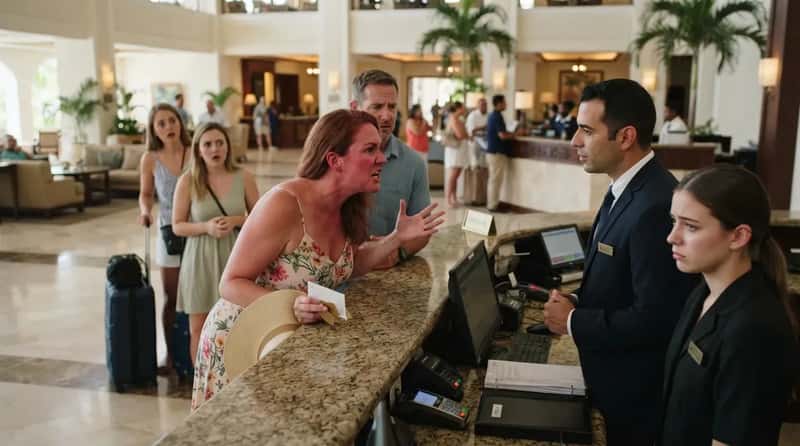
Every long-time resort employee has this exact memory: a guest, furious that a suite upgrade wasn’t “automatically” included, escalating a calm conversation into a full lobby scene – voice raised, other guests staring, a manager finally pulled in to smooth it over.
It’s rarely about the room. It’s entitlement meeting a policy that won’t bend, in front of an audience. Staff say these are the guests they remember years later, long after the upgrade request itself has been forgotten by everyone except the people who had to stand there and take it.
None of this means all-inclusive resorts are secretly miserable places to work – most staff genuinely love the job and the guests who treat them well. But the handful who don’t leave a mark, one chair-hogging, bell-ringing, upgrade-demanding moment at a time.
The next time you check in somewhere with a wristband and an open bar, remember: the staff has seen every version of this list play out before, and they remember far more than the checkout survey ever asks.