Most people assume flight attendants clock the crying baby, the kicked seatback, or the overtired toddler mid-meltdown. But ask any longtime crew member who they actually watch closest, and the answer surprises people every time: it’s the grandparents.
There’s a quiet, specific behavior pattern that shows up almost every single time a grandparent boards with a grandchild in tow – and once flight attendants notice it, they can spot the pairing from three rows away before either one says a word. Here’s what cabin crew actually see, row by row, flight after flight.
23. They Never Check the Boarding Pass – They Just Know
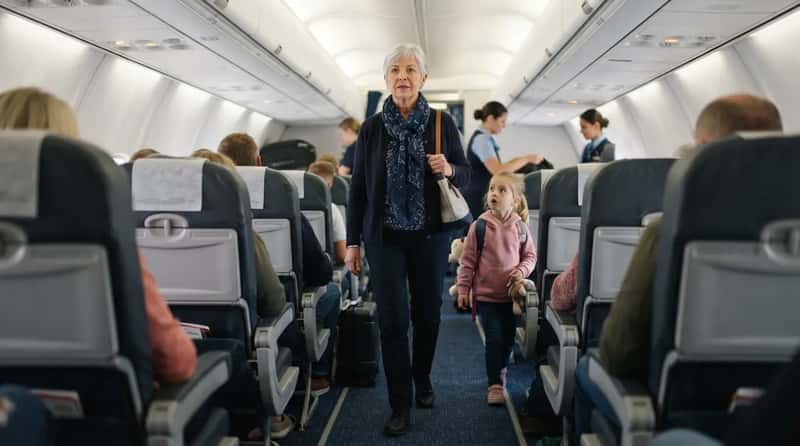
Parents fumble with their phones, squinting at seat numbers. Grandparents walk down the aisle like they’ve done this a hundred times, landing on the right row without glancing at anything. Crew members say it’s almost eerie how rarely a grandparent gets the seat number wrong, even on an unfamiliar airline.
It’s not magic – it’s decades of muscle memory from a lifetime of travel. But flight attendants say it’s one of the fastest ways to spot the pairing before a word is spoken. The kid trails a step behind, wide-eyed, while grandma or grandpa moves with total confidence.
22. They Pack Snacks for the Whole Row, Not Just Their Grandkid
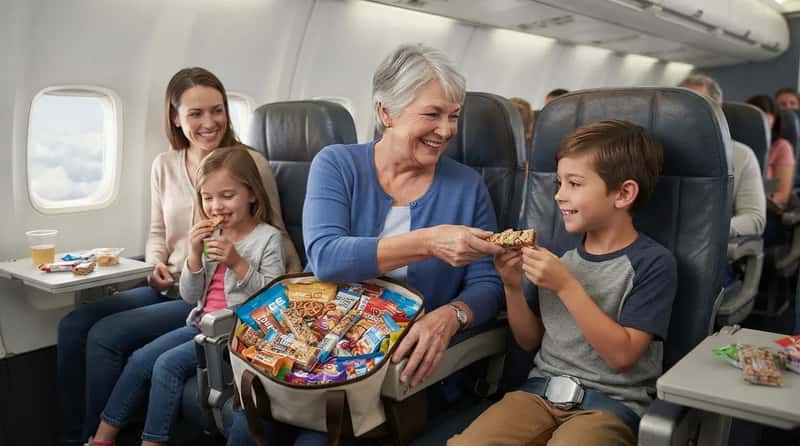
Ask any flight attendant and they’ll tell you: grandparents rarely pack light on food. Granola bars, crackers, candy, fruit snacks – enough to feed a small platoon, not just one child.
What surprises crew most is who the snacks are actually for. Grandparents routinely offer food to strangers seated nearby, not just their own grandchild. It’s a small gesture, but it’s consistent enough that veteran flight attendants say they can predict it before the seatbelt sign even turns off.
Fast Facts
- Solid snacks like granola bars, crackers, and fruit snacks can go through security in a carry-on with no special restrictions.
- Liquids and gel-style snacks still fall under the standard rule: containers of 3.4 ounces or less, all fitting in one quart-size bag.
- Baby food, formula, and breast milk are treated as exceptions and allowed in larger quantities than the general liquid limit.
- Because in-flight snack service has shrunk on most airlines, the overpacked grandparent go-bag isn’t paranoia – it’s just realistic planning.
21. They Photograph the Boarding Pass Instead of Screenshotting It
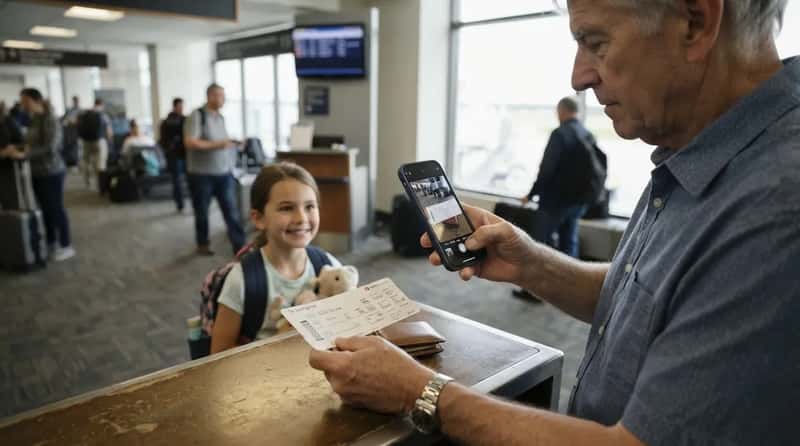
Younger travelers screenshot everything. Grandparents, more often than not, take an actual photo of the boarding pass on the counter or the gate screen – sometimes printing a paper copy as backup even when it’s not required.
Crew members find this oddly endearing rather than annoying. It signals someone who trusts paper over pixels, and who wants a physical backup in case a phone battery dies mid-trip. It’s a small generational tell that shows up on nearly every flight with a grandparent aboard.
20. They Ask for the Child’s Nickname and Use It Nonstop
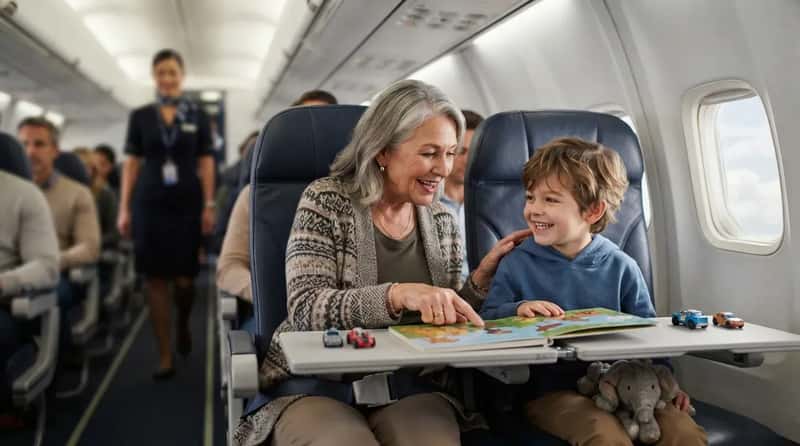
Flight attendants say grandparents almost always introduce the child by a nickname, not their formal name – “This is Bug,” “This is Peanut” – and repeat it constantly throughout the flight to keep the child calm and engaged.
It works. Kids respond better to a familiar nickname in an unfamiliar environment, and crew members notice these children settle faster than others. The nickname becomes a security blanket for the entire flight, a small parenting trick most grandparents deploy without even thinking about it.
19. They Bring a Printed Itinerary for a Two-Hour Flight
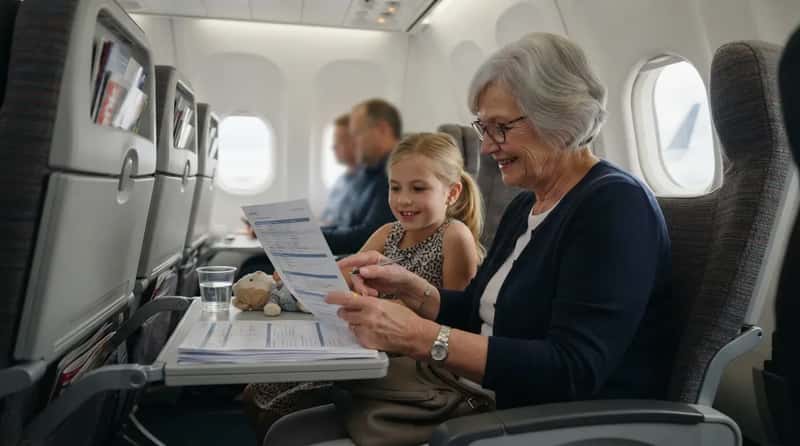
Even for a short domestic hop, many grandparents carry a fully printed itinerary – gate numbers, seat assignments, connection times, all spelled out on paper. Crew say it’s rarely necessary, but it’s almost always there.
This habit isn’t really about the flight; it’s about control in an unfamiliar system. It also means a grandparent is often the most prepared passenger in the entire row, ready to answer any question a gate agent throws their way, sometimes before the agent finishes asking.
18. They Narrate the Safety Demo Like a Play-by-Play
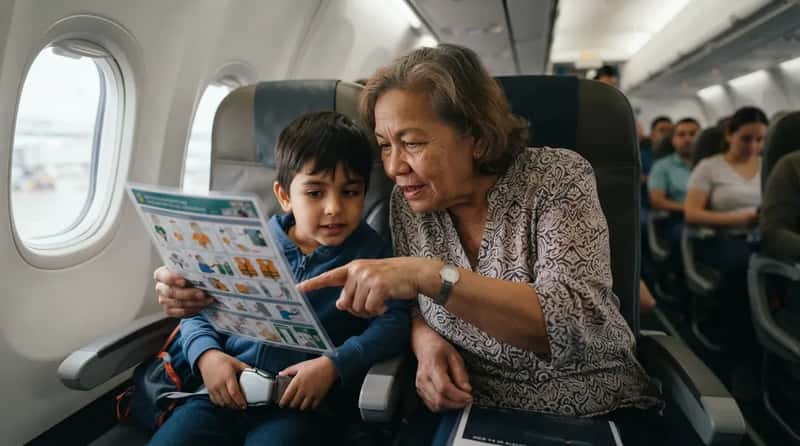
While most passengers ignore the safety briefing entirely, grandparents often lean toward their grandchild and quietly explain each step as it happens – pointing at the oxygen mask diagram, tapping the seatbelt buckle, whispering what the exit rows mean.
Cabin crew say this small habit actually helps. Airlines and flight attendants recommend giving kids a little preview of what to expect so the environment feels less like a shock, and grandparents seem to do this instinctively without ever being told to.
17. They Cry More Than the Kids Do During Landing
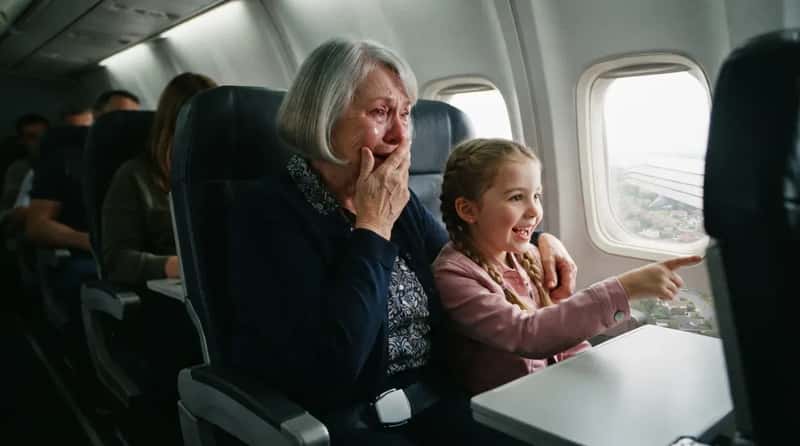
It sounds backwards, but flight attendants confirm it happens constantly: grandparents get emotional during landing announcements, especially on the flight home after a visit, far more often than the grandchildren themselves.
Kids are usually just excited to see the ground again. Grandparents are processing something bigger – the trip ending, the distance resuming, the visit already becoming a memory. Crew members say it’s one of the most quietly moving things they witness on the job.
16. They Negotiate Window Seat Swaps Like Professionals
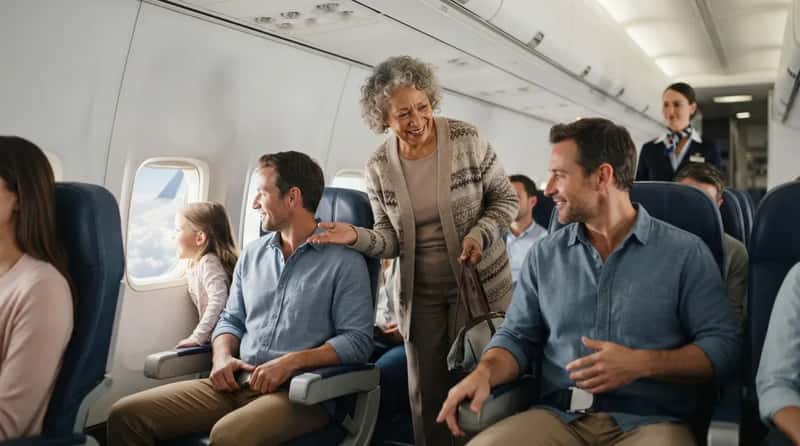
Grandparents rarely ask a flight attendant to force a seat change. Instead, they negotiate directly and politely with fellow passengers, almost always successfully, to get their grandchild a window seat.
Flight attendants say this negotiation style is smoother and more effective than almost any other passenger’s attempt at the same thing. Strangers say yes to grandparents at a noticeably higher rate than they say yes to anyone else asking for the same favor. It’s a skill that seems to come with age.
15. They Carry a Signed Consent Letter Even on Domestic Flights
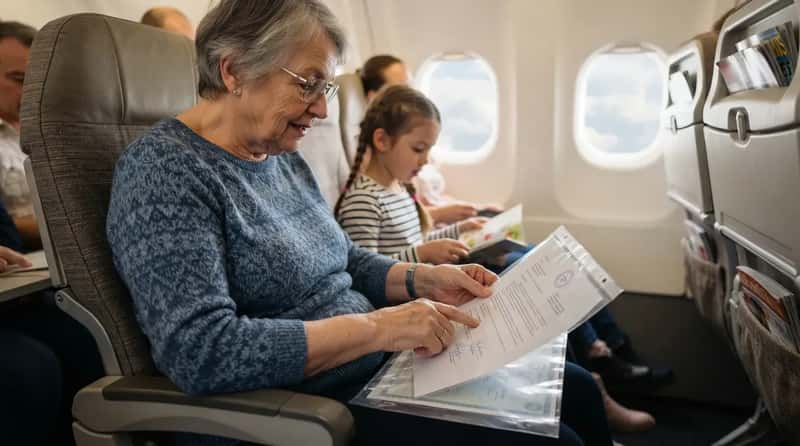
Legally, a notarized letter isn’t always required for a grandparent traveling with a grandchild, but crew members notice many bring one anyway, tucked in a plastic sleeve, just in case anyone asks. Before booking, plenty of grandparents make sure they have written permission from the parents indicating they’re allowed to travel with the grandchild – and most likely no one will ever ask to see it, but they’ll be glad to have a hard copy on hand.
Gate agents and flight attendants almost never ask to see it, but grandparents keep it ready regardless. Though not required, notarized permission can help prevent travel complications, grant medical decision authority if something goes wrong, and generally ensure smoother passage through security and customs. It’s peace of mind, not paperwork, that they’re really carrying.
Worth Knowing
- A solid consent letter usually lists the child’s full name, birth date, and both parents’ contact information.
- It typically spells out exact travel dates, destinations, and exactly who has permission to travel with the child.
- Many families add a line authorizing the grandparent to approve emergency medical care if something happens on the trip.
- Notarization isn’t required by TSA or U.S. airlines, but it’s often recommended for smoother international travel.
14. They Learn the Flight Attendant’s Name Within Minutes
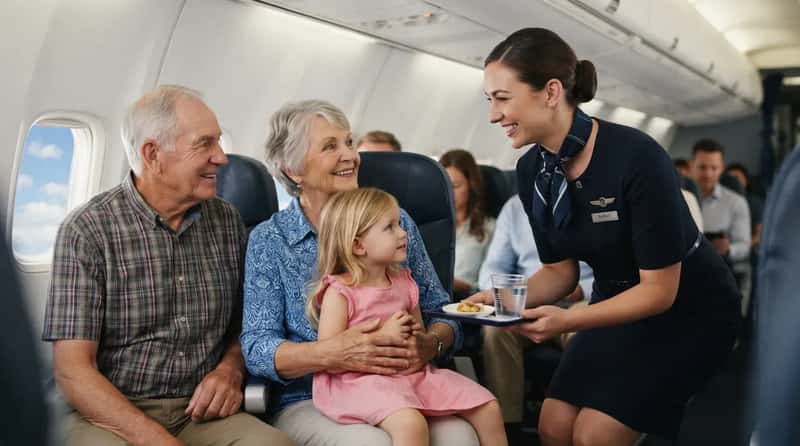
Most passengers never learn the name of the crew serving their row. Grandparents almost always do – and use it repeatedly, thanking the flight attendant by name multiple times over the course of a single flight.
Flight attendants say this small habit changes the entire dynamic of the row. It often leads to extra attention for the grandchild, without the grandparent ever explicitly asking for it. A little warmth goes a long way at 35,000 feet.
13. They Stay Calmer Than Anyone Else During Turbulence
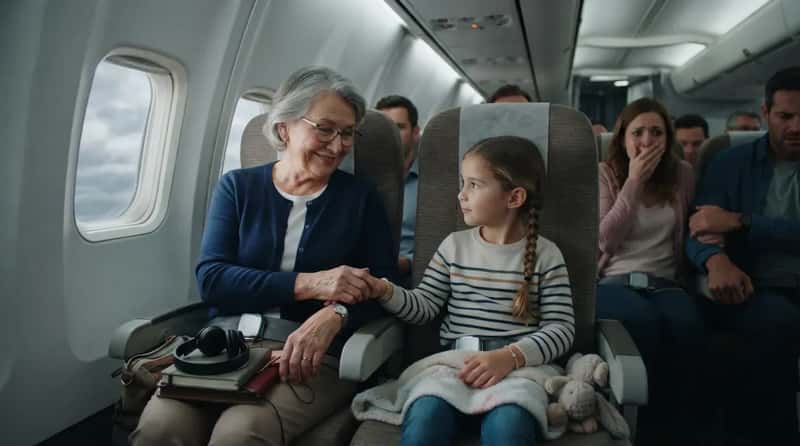
When the plane hits a rough patch, most adults tense up. Grandparents, according to cabin crew, are consistently the calmest people in the row – and that calm visibly transfers to the grandchild sitting beside them.
Flight attendants have long noticed that kids feed off the anxiety of the adults around them, and a calm, confident presence helps children feel safer and makes for a smoother flight for everyone nearby. Grandparents seem to understand this instinctively, decades before anyone bothered to study it.
12. They Thank the Crew With Notes, Not Just Words
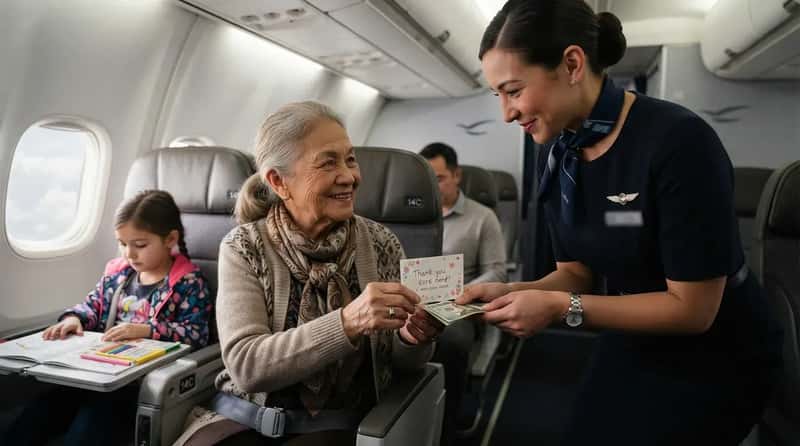
It’s a small but consistent pattern: grandparents are far more likely than other passengers to hand a flight attendant a written thank-you note, a small card, or even cash – gestures crew members say they rarely see from anyone else on board.
Airlines don’t allow gratuities in most cases, but the gesture itself sticks with crew. Flight attendants often mention these small moments as the reason they still love the job, even decades into their careers.
11. They Try to Memorize the Safety Card
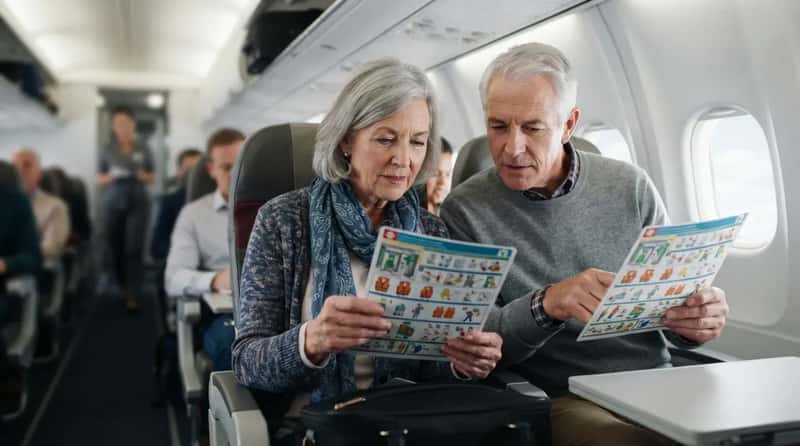
Cabin crew notice grandparents studying the safety card longer than any other passenger on the plane – flipping it over, reading every diagram, sometimes even quizzing themselves quietly.
It’s not anxiety; it’s responsibility. Many grandparents feel a heightened sense of duty when a grandchild is under their watch instead of the child’s own parents, and that shows up in small, careful behaviors most other adults skip entirely.
10. They Request Extra Legroom Seats for the Kid, Not Themselves
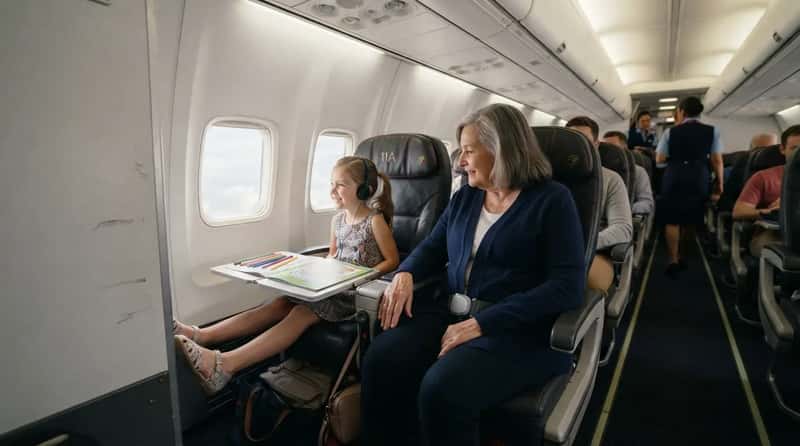
When grandparents book early, agents notice the seat requests almost always favor the grandchild – bulkhead rows, extra legroom, aisle access – while the grandparent takes whatever’s left over. Booking early matters here: airline staff routinely note that families who book ahead get a more open seat map and a better shot at sitting together.
The self-sacrifice is subtle but consistent enough that crew members pick up on it almost immediately. It’s rarely announced out loud – it just shows up in the seat map.
9. They Bring a “Go Bag” Full of Things Everyone Else Forgot
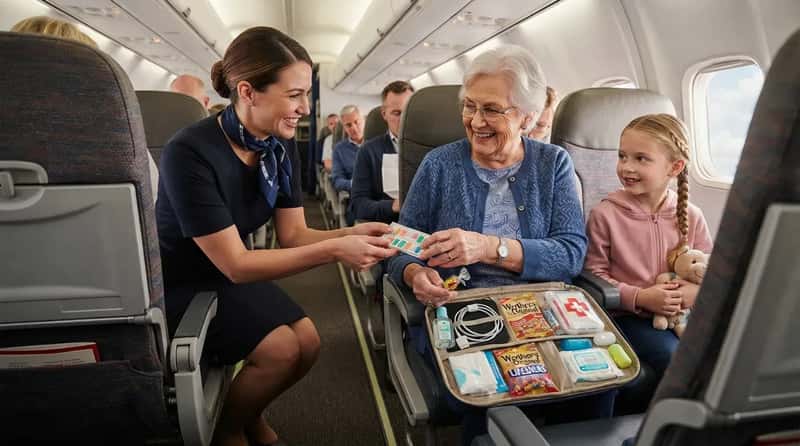
Bandages, hand sanitizer, a spare phone charger, tissues, hard candy for popping ears – grandparents tend to travel with a small emergency kit that other passengers end up borrowing from mid-flight.
Flight attendants say this happens often enough that they sometimes point stressed parents toward the grandparent a few rows back instead of digging through the galley themselves. It’s become an unofficial crew shortcut on family-heavy flights.
8. Crew Can Tell It’s a Grandparent Within Seconds – Not a Parent
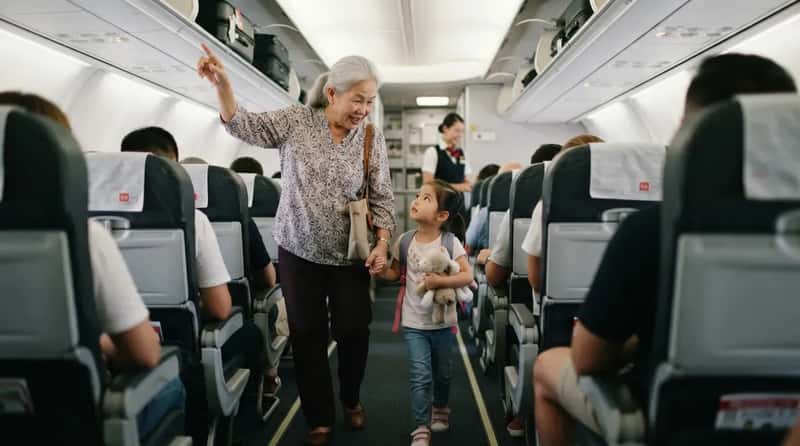
Long before boarding passes are scanned or names are exchanged, flight attendants say they can usually tell a grandparent-grandchild pair apart from a parent-child pair almost instantly, just from body language.
Grandparents tend to hover less and narrate more; parents tend to multitask while managing the child. The tell isn’t affection – both groups show plenty of that – it’s the pacing. Grandparents move slower, watch closer, and rarely check their own phones.
At a Glance
- Pacing: grandparents move slower down the aisle and check their own phones far less often.
- Narration: grandparents talk through boarding and the safety demo out loud, almost like a tour guide.
- Body language: grandparents lean in and watch the child closely instead of multitasking.
- Emotional cues: grandparents react more visibly to small moments, like a child dozing off mid-flight.
7. They Ask the Arrival Time More Than Once
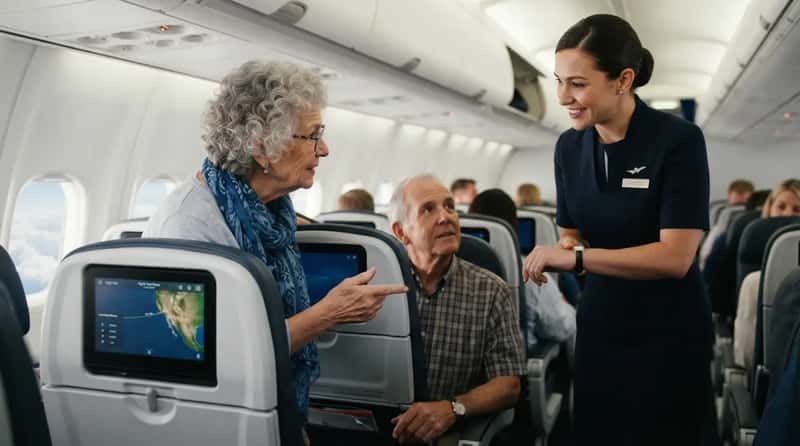
It’s a small habit, but a consistent one: grandparents ask flight attendants for the arrival time multiple times during a single flight, even when it’s clearly displayed on the seatback screen.
Crew members say it’s rarely about anxiety over the flight itself – it’s usually about coordinating a pickup on the ground, a family member waiting, or simply wanting to reassure the grandchild that the trip is almost over. It’s one of the most repeated questions crew hear on these flights.
6. They Tolerate Noise and Mess Far Better Than Parents Do
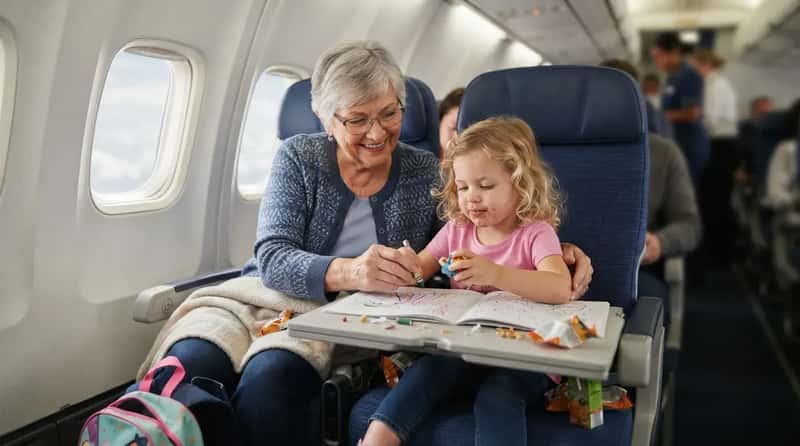
This one tends to spark debate among crew: grandparents are, on average, noticeably less rattled by a loud or messy grandchild than the child’s own parents would be in the same seat.
Some crew members chalk it up to experience; others say it’s simply not their daily responsibility anymore, so the stakes feel lower. Either way, flight attendants consistently notice less tension in the row when it’s a grandparent managing the meltdown instead of a parent. It’s a small but real difference in energy.
5. They Misunderstand Unaccompanied Minor Rules More Than Expected
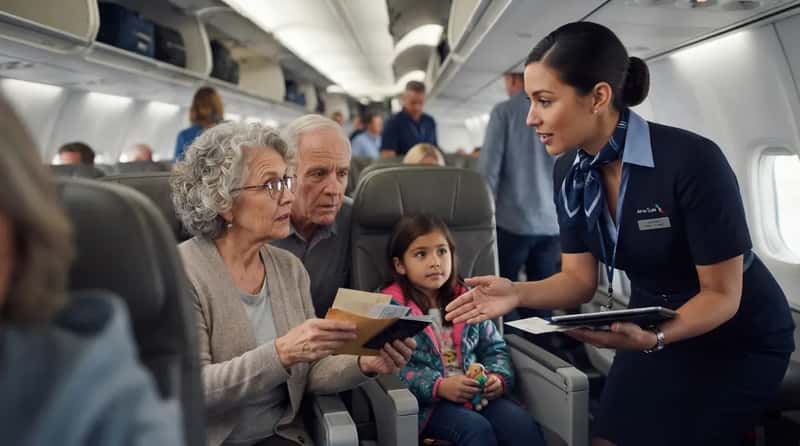
Grandparents traveling with a grandchild aren’t the same as an unaccompanied minor situation, but crew members say confusion between the two comes up surprisingly often – especially with older grandparents unfamiliar with newer airline policies. American Airlines, for instance, offers an unaccompanied minor service for children ages 5 to 14, and it’s optional for teens 15 to 17 – rules that don’t apply the same way when a grandparent is physically present the whole trip.
Flight attendants often end up clarifying, mid-boarding, that a grandparent accompanying a child isn’t the same category as a child flying solo. It’s a small paperwork mix-up that happens on almost every route with mixed generations aboard.
Quick Compare
- Unaccompanied Minor Service: required for ages 5-14, optional for 15-17, and the unaccompanied minor fee is $150 each way, plus applicable taxes, in addition to the ticket price, and this fee covers additional siblings on the same flight.
- Grandparent-Accompanied Travel: no special fee or age service required, since the child isn’t flying alone – though staff may still ask about documentation if something seems unclear.
4. They Comment on “How Different Flying Is Now”
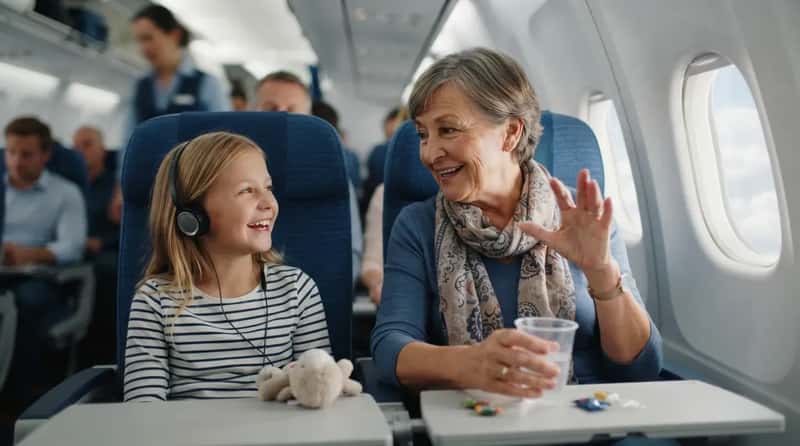
Nearly every flight attendant working a family-heavy route has heard some version of the same line from a grandparent: flying used to be so different. Free meals, more legroom, kinder service – the nostalgia is almost universal.
Crew members say they don’t mind hearing it, even repeatedly. It’s become such a predictable comment that some flight attendants privately joke about which grandparent will say it first on any given flight. It’s harmless, familiar, and oddly comforting for everyone involved.
3. They Build Real Relationships With Crew on Repeat Routes
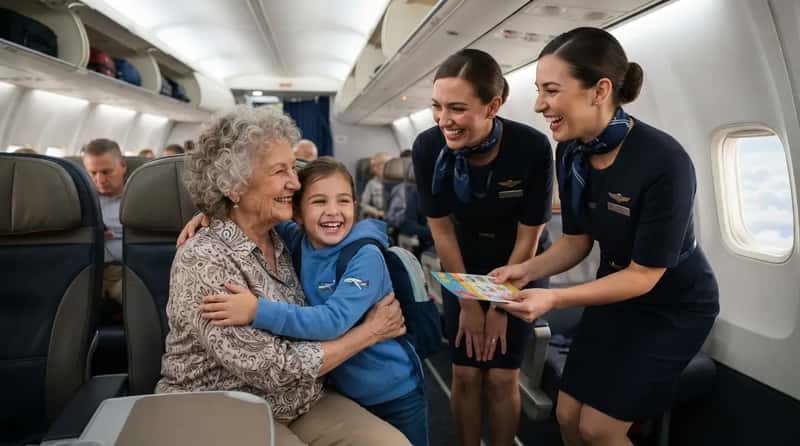
On routes flown often – say, a grandparent visiting the same grandchild every few months – flight attendants say they genuinely start recognizing the same pairs, remembering names, ages, and even inside jokes from previous flights.
It’s one of the few parts of the job that feels personal rather than procedural. Some crew members say these recurring grandparent-grandchild passengers become the highlight of an otherwise repetitive route, turning a routine flight into something closer to a small reunion.
2. They Get Visibly Emotional When the Child Falls Asleep on Them
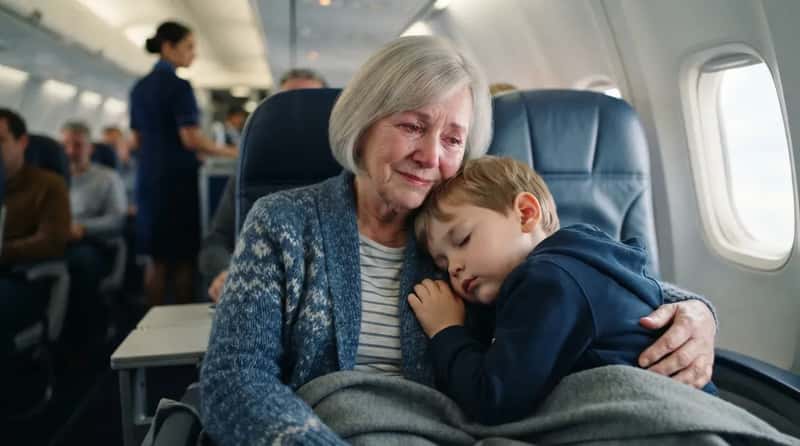
It’s one of the most consistent moments crew members mention: the instant a grandchild finally drifts off against a grandparent’s shoulder mid-flight, and the grandparent’s expression shifts completely.
Flight attendants say they try not to disturb this moment even during service passes, sometimes skipping a row rather than waking either one up. It’s described by more than one longtime crew member as one of the most genuinely touching sights in the entire job – no meal service interrupts it if they can help it.
1. Some Crew Members Say These Are Their Favorite Flights to Work
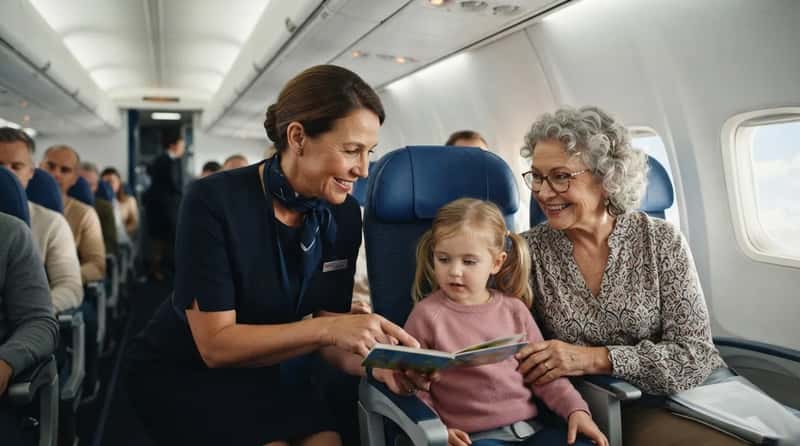
After everything else, this is the one thing flight attendants bring up unprompted the most: routes full of grandparents and grandchildren are, for many crew members, simply their favorite to work. One flight attendant, herself a grandmother whose own daughter lived overseas with a grandchild she rarely saw, described stepping in to comfort a crying baby on a flight and said she loves being able to hold a baby for a passenger, adding that working flights full of happy families is one of the best parts of her job.
That sentiment shows up again and again across airlines and routes. It’s not the paperwork, the seat requests, or the snacks that crew remember – it’s the visible, unguarded love passed between generations at 35,000 feet. For many flight attendants, it’s simply the best part of the job.
None of this shows up in any airline manual, and grandparents themselves would probably be surprised how closely they’re being watched. But that’s exactly why crew members keep noticing – because none of it is performed. It’s just what happens when a grandparent and a grandchild share a row for a few hours, thirty thousand feet above everything else.
Got a grandparent-grandchild flying story of your own – good, chaotic, or downright sweet? Drop it in the comments.