You probably picture 1970s air travel as glamorous jets, wide seats, and free legroom. What almost nobody remembers is what was happening in the terminal before anyone even boarded a plane. Airport cafes weren’t grab-and-go kiosks slinging nine-dollar bagels – they were full-service restaurants with waitstaff, real china, and menus that read almost like fiction today.
Some of what was considered totally normal back then would get a terminal evacuated now. Other items were simply a product of a slower, less-regulated, more indulgent era of travel, back when a layover felt like a night out instead of a security drill. Here’s what old airport menus, historians, and longtime travelers actually remember eating between flights.
#23 – Cocktails Poured Before You Even Reached the Gate
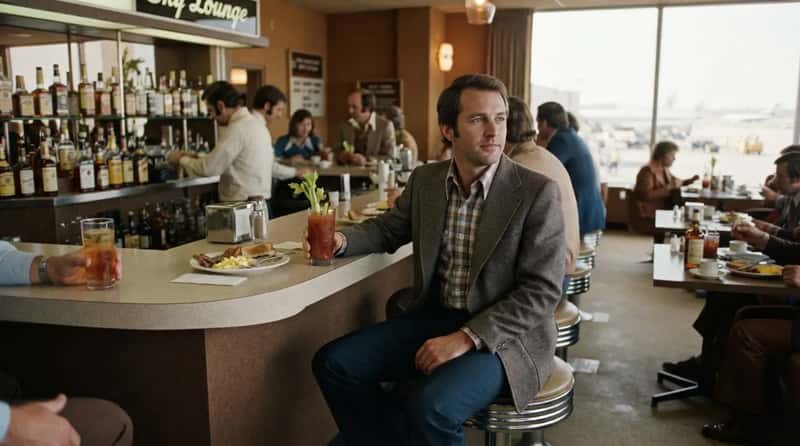
Airport bars in the 1970s didn’t wait for a “cocktail hour.” Drinking at 9 a.m. before an international flight was completely normal, and nobody blinked at a Bloody Mary served alongside eggs and toast. Airport lounges attached to terminal restaurants poured hard liquor freely, and the Admirals Club actually changed its policy on storing members’ personal bottles once Virginia’s liquor laws shifted in 1970.
There was no rush and no limit on how many rounds you could order before boarding. Passengers routinely had two or three drinks in the terminal cafe before a flight, and staff never questioned it. Today, an over-served passenger gets flagged before they even reach the jet bridge.
Fast Facts
- Bloody Marys and martinis were common orders at 9 a.m., right alongside eggs and toast.
- Virginia eased its liquor storage rules in 1970, letting airport clubs keep members’ personal bottles behind the bar.
- There was no standard drink limit before boarding, unlike today’s common two-drink cutoff policies.
- Bartenders and waitstaff rarely questioned how many rounds a passenger ordered before a flight.
#22 – Relish Trays Dropped on the Table Whether You Asked or Not
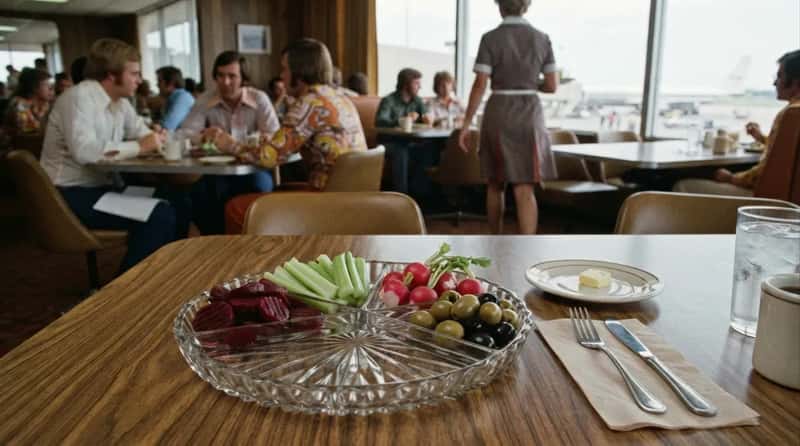
Before your entree even arrived, most airport dining rooms set down a relish tray without anyone ordering it. Pickled beets, celery sticks, radishes, and olives sat in little compartments, a holdover from Midwestern supper-club culture that spread straight into terminal cafes across the country.
It sounds quaint now, but it functioned like an unofficial course. Nearly every full-service airport restaurant treated the relish tray as a standard part of the meal, not a garnish. Waitstaff refilled it without asking, the same way a bread basket works today – except almost nobody serves pickled beets before a flight anymore.
#21 – Jell-O Salad Molds Served as a Legitimate Lunch Side
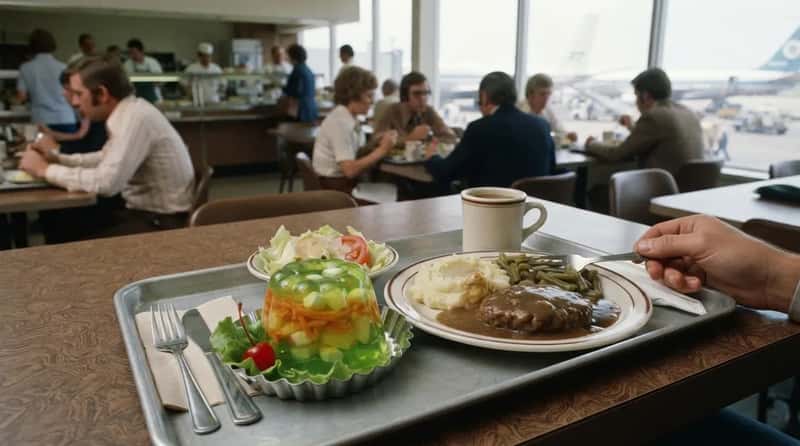
Wobbly, brightly colored Jell-O molds packed with shredded carrots, canned pineapple, or mini marshmallows weren’t a joke item. They were a serious lunch side in airport cafeterias, right at the peak of America’s decades-long obsession with congealed salads.
Travelers ordering a “hot lunch special” would often get a lime or orange Jell-O mold automatically included, no substitutions offered. Many cafes served it as the default vegetable side instead of an actual salad. It’s one of the clearest signs that airport food mirrored home cooking trends of the decade instead of trying to stand apart from them.
#20 – Deviled Eggs as the Go-To Bar Snack
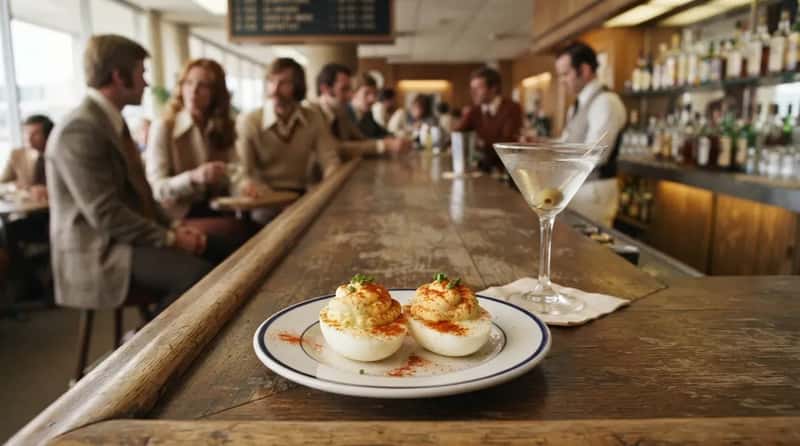
Long before stale pretzel mix and shrink-wrapped snack boxes took over, deviled eggs sat on plates at cocktail counters. Paprika-dusted, mayonnaise-heavy, and served two to a plate, they were considered an elegant nibble to pair with a martini while waiting out a delayed flight.
It was a dish that required actual kitchen prep, not a vending machine slot. Airport bars in the 1970s expected real cooking, not shelf-stable snacks, even for something as small as a bar bite. No modern airport bar would dream of plating fresh deviled eggs for a five-dollar order today.
#19 – Canned Fruit Cocktail Passed Off as the “Fancy” Dessert
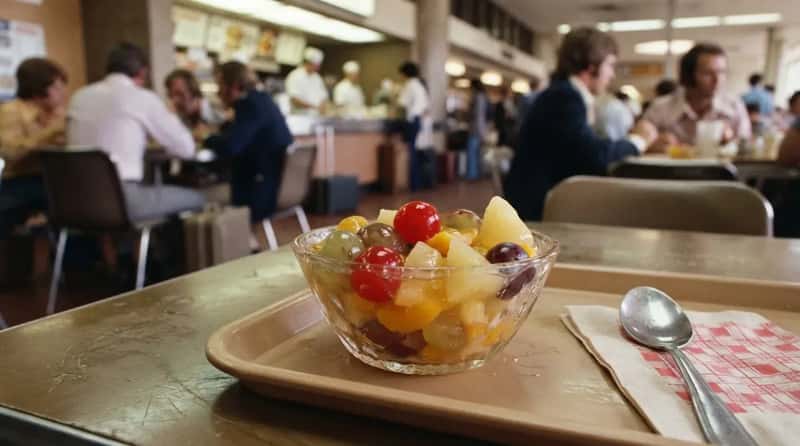
A small glass dish of canned fruit cocktail – cherries, grapes, and pear chunks swimming in heavy syrup – was considered a respectable dessert on most airport lunch menus. It wasn’t seen as cheap; it was seen as fresh and modern, since canned produce was still marketed as a convenience win in that era.
Fresh fruit was actually rarer on menus than the canned version. Airport cafes leaned on canned fruit specifically because it was seen as more sanitary and consistent than fresh produce shipped into a terminal kitchen. It’s a complete reversal of today’s “fresh and local” marketing obsession that dominates every airport food court sign.
#18 – Tabletop Cheese Fondue Pots With Open Flames
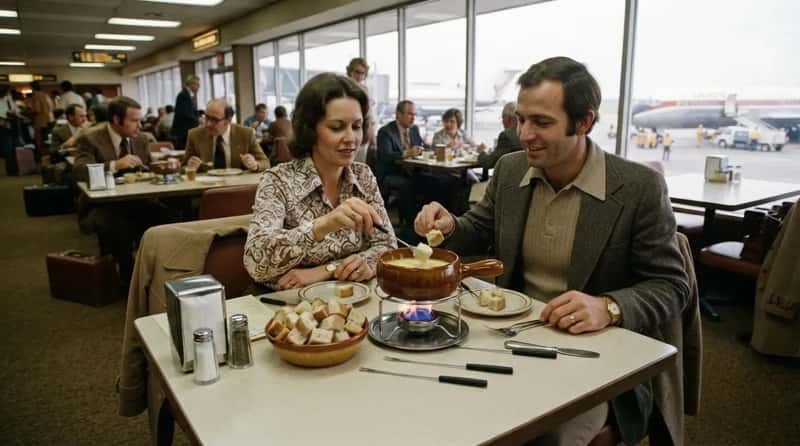
Fondue swept American dining culture in the late ’60s and stuck around hard through the ’70s, and airport restaurants weren’t immune. Some full-service terminal cafes actually wheeled out small fondue pots with sterno flames right at the table, letting travelers dip bread cubes into melted cheese before a flight.
It’s hard to imagine an open flame anywhere near a gate today. Terminal restaurants once allowed live tabletop flames for cheese and even chocolate fondue service, something that would trigger an instant safety review now. The idea of an open burner near a boarding area sounds almost unbelievable by current airport standards.
#17 – Salisbury Steak Smothered in Brown Gravy
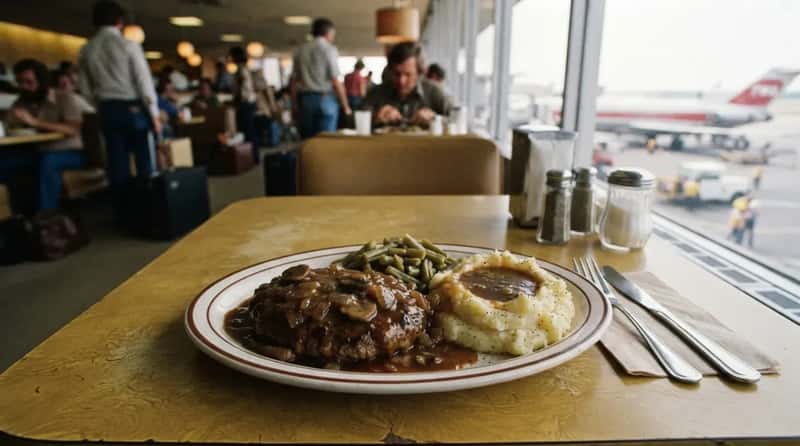
Salisbury steak was the ultimate “safe” airport lunch order in the 1970s – a ground beef patty shaped like a steak, drenched in gravy, and served alongside mashed potatoes. It was comfort food built for a fast turnaround, cheap to produce, and filling enough to satisfy a hungry traveler before a long flight.
Nearly every airport diner-style cafe had a version on the menu. Food historians actually consider it the unofficial signature dish of American terminal dining in that decade. Compare that to today’s overpriced flatbreads and pre-packaged sushi, and the contrast couldn’t be sharper.
Why It Stands Out
- It was the fastest hot meal a kitchen could turn out, which mattered when turnaround times were tight.
- Gravy and mashed potatoes made it feel like a home-cooked plate, not fast food.
- It appeared on menus at nearly every full-service terminal diner, coast to coast.
- It cost a fraction of steak or seafood, making it the default order for budget-minded travelers.
#16 – Shrimp Cocktail Towers as the Splurge Appetizer
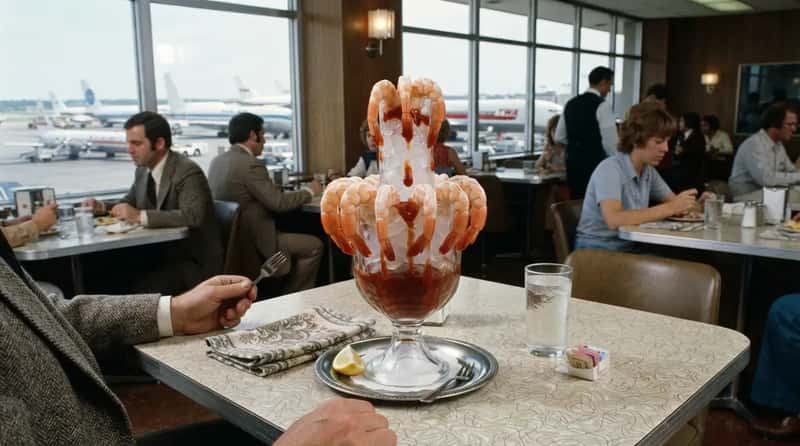
Shrimp cocktail wasn’t just an airline first-class perk – it showed up on the appetizer menu at sit-down airport restaurants too, served in tall glass towers with cocktail sauce dripping down the sides. It was the item travelers ordered when they wanted the trip to feel like an occasion, not just a commute.
It fit the era’s obsession with elegant presentation even in casual settings. Shrimp cocktail towers were considered a mid-range splurge, not a luxury item reserved only for first-class passengers. Today’s terminal food courts rarely offer plated seafood at all, let alone anything served in a chilled glass tower.
#15 – Prime Rib Carved Tableside on a Random Tuesday
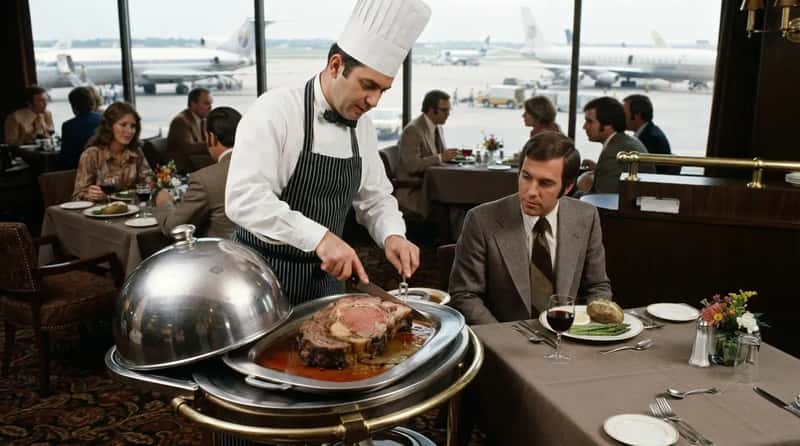
Some larger airport hotels and full-service terminal restaurants ran an actual carving station, slicing prime rib to order right in front of travelers. This wasn’t reserved for holiday travel either – it was a regular weekday lunch and dinner option in busier hub airports.
It reflected how airports modeled their restaurants after supper clubs rather than fast-casual chains. A full carving station with a chef slicing meat to order was standard in several major terminal restaurants, not a special-event feature. The thought of a carving station replacing today’s pre-wrapped sandwiches shows just how stripped-down airport dining has become.
#14 – Real China and Silverware for a Rushed Layover Lunch
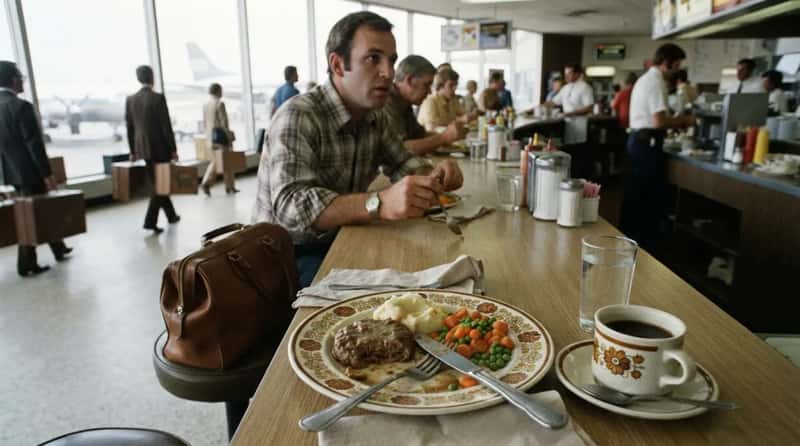
Plastic utensils and paper trays weren’t the norm – even a rushed layover lunch came on actual ceramic plates with metal forks and knives. Airport cafes treated every meal like a sit-down dinner, regardless of how little time a traveler actually had before boarding.
It slowed things down considerably compared to today’s speed-obsessed terminals. Full-service airport restaurants used real dishware even for travelers eating in under thirty minutes, prioritizing presentation over turnaround speed. Modern airports have flipped that priority entirely, favoring disposable everything just to move lines faster.
#13 – Cigarette Smoke Drifting Directly Over Your Food
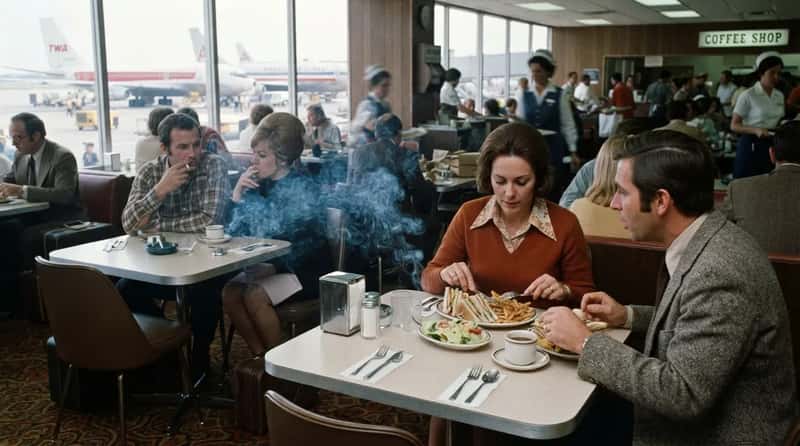
Smoking sections in airport restaurants weren’t separated by much more than a suggestion – often just a small sign on a table, not a wall or a ventilation system. Diners ate full meals while smoke curled over their plates from the table right next to them, no one thinking twice about it.
It wasn’t controversial at the time; it was simply how restaurants operated everywhere. Smoking sections in 1970s airport cafes were frequently just a few feet from non-smoking tables, with no real barrier separating the air. For travelers used to fully smoke-free terminals now, the idea feels almost impossible to picture.
#12 – The Three-Martini Lunch, Airport Edition
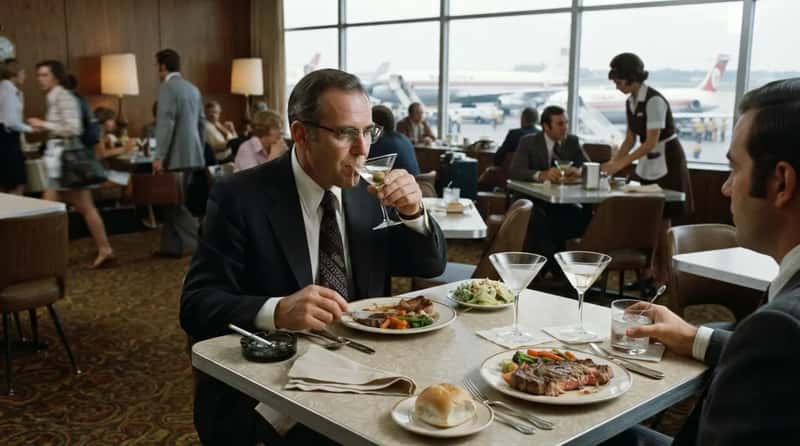
Business travelers famously stretched lunch into a multi-hour, multi-cocktail affair, and airport restaurants catered directly to that culture. A “quick bite” before a flight might actually involve three martinis and a full steak dinner, with no judgment from staff or fellow passengers whatsoever.
It was baked into corporate travel expectations at the time. The so-called three-martini lunch was common enough in airport dining rooms that waitstaff expected multiple drink orders as a normal part of a single meal. Try that today, and you’d likely be denied boarding before you even finished the appetizer.
#11 – Percolated Coffee Brewed and Refilled Tableside
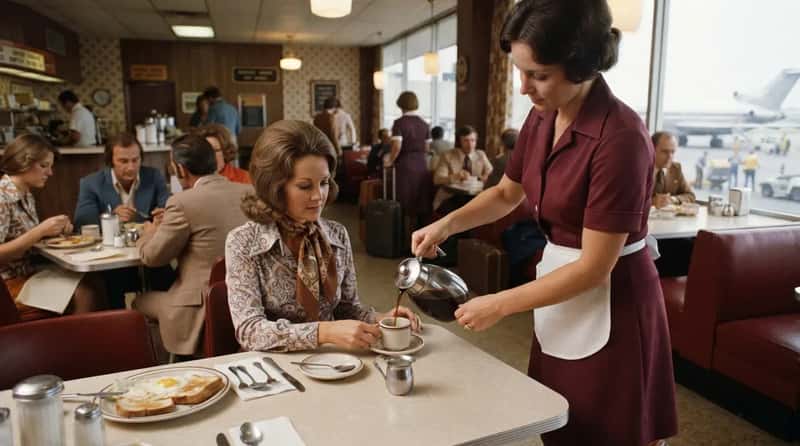
Coffee wasn’t poured from an automatic machine behind a counter – it was often brewed in percolators and delivered to the table in small metal pots, refilled by waitstaff throughout the meal without anyone asking. It was slower, but it felt like actual hospitality rather than a transaction.
This small ritual defined the entire pace of airport dining. Tableside coffee service, refilled multiple times at no extra charge, was standard practice in full-service terminal restaurants. Compare that to today’s six-dollar to-go cup grabbed in under ten seconds, and the whole philosophy looks unrecognizable.
#10 – Onion Soup Mix Dip Served Right Alongside Cocktails
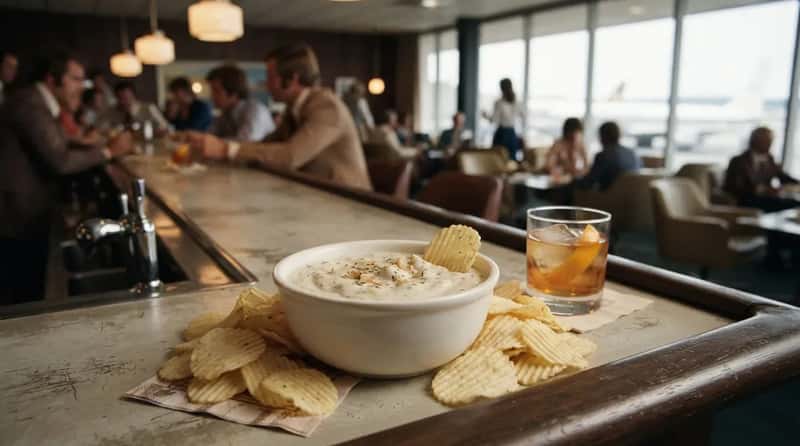
A simple bowl of sour cream mixed with a dry onion soup packet, served alongside potato chips, was a beloved snack-plate item at airport bars and lounges. It was cheap, fast to prepare, and instantly recognizable to anyone who grew up in that decade of backyard parties.
It reflected the broader home-cooking trends of the ’70s bleeding directly into commercial dining rooms. This dip was such a nationwide staple that terminal bars served it as a default snack alongside cocktails, not as a special order. It’s a detail most younger travelers have genuinely never even heard of.
Quick Compare
- 1970s snack: sour cream and dry onion soup mix, scooped with potato chips, served free at the bar.
- Today’s snack: shrink-wrapped chip bags or an overpriced packaged snack cup from a vending cooler.
- 1970s prep: mixed fresh behind the counter in minutes.
- Today’s prep: pre-portioned, sealed, and shipped in bulk months in advance.
#9 – TV Dinner-Style Trays for Time-Crunched Travelers
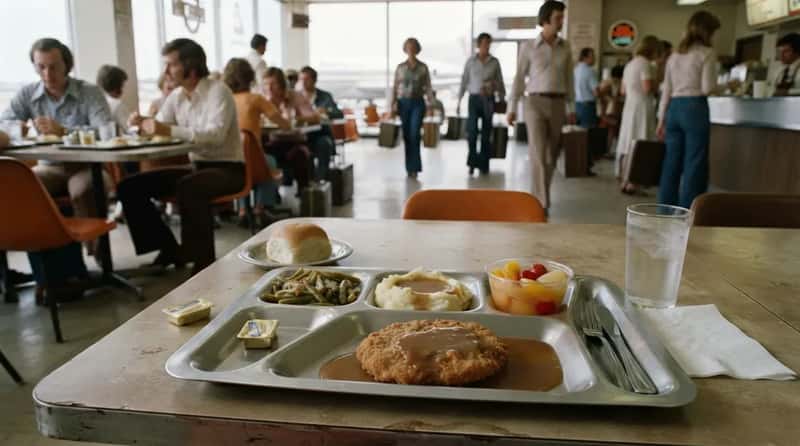
For travelers in a hurry, some airport cafes offered a compartmentalized tray meal, echoing the frozen TV dinner format exploding in American households at the time. Meat, a starch, and a vegetable sat in separate little sections, served hot and fast on real plates.
It was airport food’s answer to modern grab-and-go, just plated instead of packaged in plastic. These divided-tray meals were marketed specifically to travelers who needed a full hot meal without a long sit-down wait. It’s essentially the ancestor of today’s pre-packaged airport meal boxes, minus the shrink wrap.
#8 – Wagon-Wheel Cheese Boards Left Out for Self-Serve Snacking
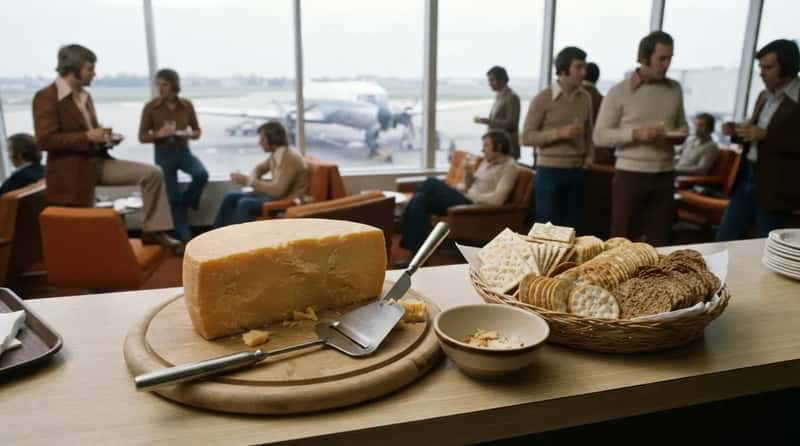
An entire wheel of cheese, or at least a large wedge of it, sometimes sat out at airport lounges for travelers to cut their own slices alongside crackers. It was treated as a casual self-serve snack rather than a curated charcuterie experience worth charging extra for.
This was less about luxury and more about convenience during the era’s slower travel pace. Self-serve cheese boards were common in airport clubs and lounges, letting travelers snack freely while waiting out delays. Today’s individually wrapped cheese cubes in a vending machine are a dramatic downgrade by comparison.
#7 – Full Fried Clam Platters From Roadside Chains Gone Airport
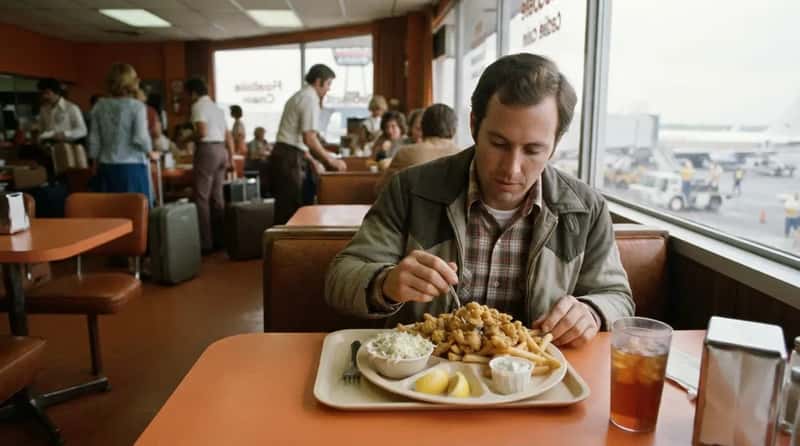
Orange-roofed roadside chains famous for fried clams and soft-serve ice cream expanded directly into airport terminals during this decade, bringing regional New England comfort food to travelers nationwide. It wasn’t unusual to grab a full plate of fried clams before a routine domestic flight.
These chains treated their airport locations as full restaurants, not stripped-down versions of the roadside menu. Airport locations of these regional comfort-food chains served the same full menu as their highway locations, including fried seafood platters. It’s a stark contrast to today’s homogenized food courts that look identical in every terminal in the country.
#6 – Kids Got Full-Sized Steak Dinners, Just Scaled Down
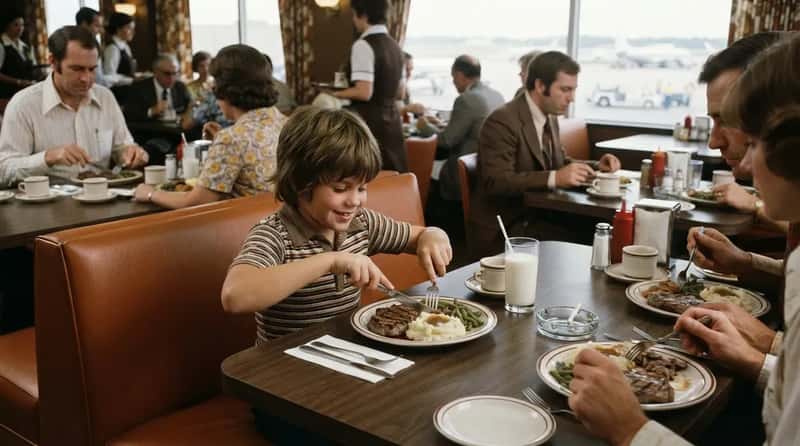
Children’s menus barely existed in the way they do now. A kid traveling with parents in the 1970s was often just served a smaller portion of the same steak, chicken, or seafood dish adults were eating – no chicken tenders or mac-and-cheese substitute in sight.
It reflected a completely different attitude toward what kids “should” eat while traveling. Airport restaurants rarely offered a separate children’s menu, instead scaling down adult entrees into smaller servings. Compare that to today’s kid-specific menus stuffed with nuggets and fries, and the shift in expectations is obvious.
#5 – Finger Sandwiches and Canapés Inside the Airline Clubs
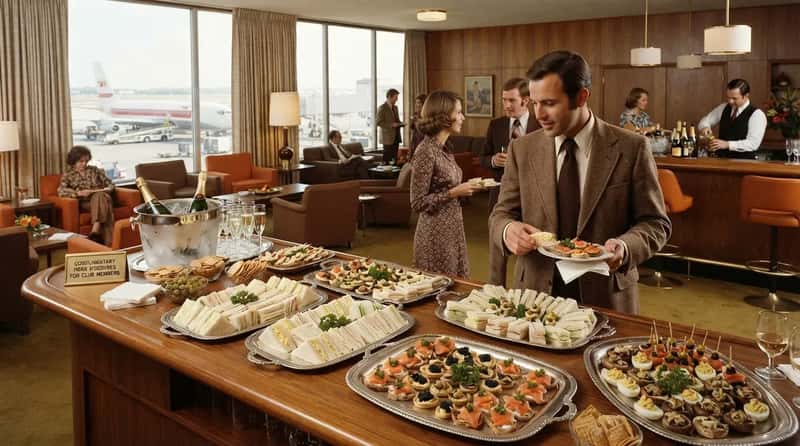
Airline-branded lounges attached to airport cafes served dainty finger sandwiches, canapés, and small hors d’oeuvres platters for members waiting on delayed or connecting flights. It was closer to a cocktail party spread than anything resembling modern lounge snacks.
These clubs were exclusive but still widespread across major hub airports. Virtually every major airline – United, TWA, Delta, National, Eastern, and Pan Am among them – opened clubs across the country and around the world. These clubs served elaborate small-plate spreads decades before “elevated lounge dining” became a marketing buzzword. It’s wild to think canapés were once standard lounge fare rather than a five-star exception.
#4 – Caviar and Champagne for a Supersonic Send-Off
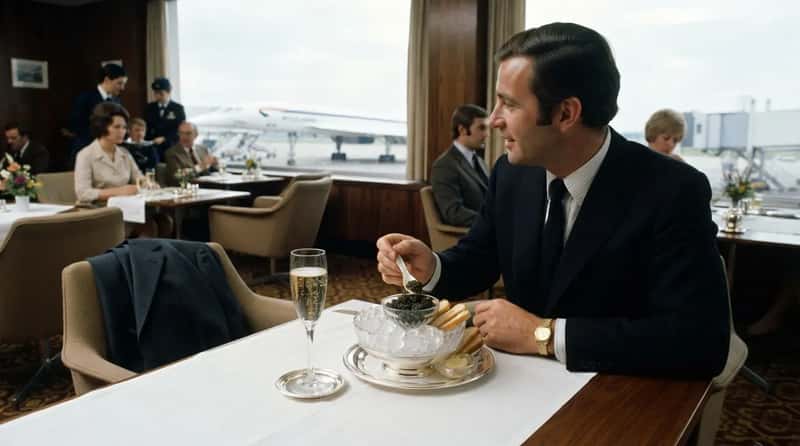
When supersonic Concorde flights launched in the mid-1970s, the airport lounges built for them went all-out with true luxury spreads. Travelers paying enormous fares for a three-hour transatlantic hop were treated to lavish pre-flight service that rivaled fine dining anywhere on the ground.
The Concorde lounge at Heathrow reportedly offered travelers paying as much as $14,000 for a ticket a sumptuous buffet, on top of a full tablecloth meal on the flight complete with champagne and caviar. Attendants even whisked away coats, only for them to reappear hours later when the traveler landed. It’s a level of pampering that simply doesn’t exist at any price point in modern commercial aviation.
At a Glance
- Concorde tickets could run as high as $14,000 round-trip for a single Atlantic crossing.
- The flight itself lasted roughly three hours, cutting the usual transatlantic time nearly in half.
- Lounge service included a full buffet with caviar and champagne before passengers even boarded.
- Coat-check attendants held travelers’ coats for the entire flight, returning them planeside on arrival.
#3 – Full Table Service With No Rush to Turn the Table
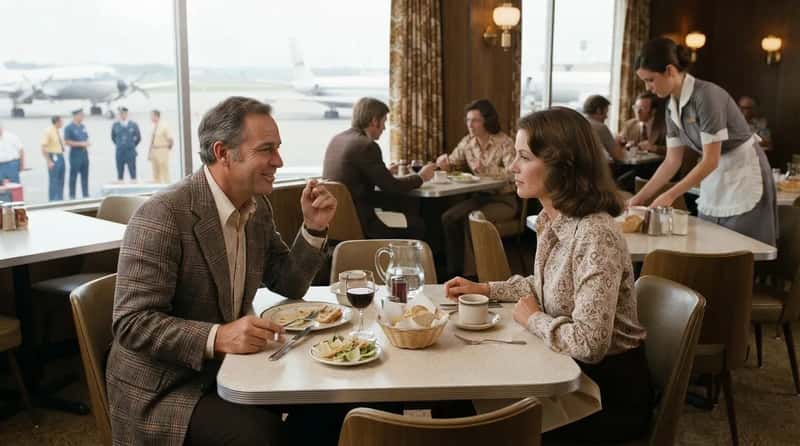
Waitstaff in airport cafes didn’t hover with the check the second your plate was empty. Meals moved at a leisurely pace, with multiple courses, refills, and conversation encouraged rather than discouraged by a ticking clock.
This was possible partly because airports themselves moved at a slower overall pace, with fewer flights and far less pressure to clear seating quickly. Full-course, multi-stop table service was considered completely normal even for travelers who had a flight in under an hour. It’s almost the opposite of today’s app-based ordering systems designed purely to minimize how long you sit at a table.
#2 – Fresh-Shucked Oyster Bars Tucked Into Big-City Terminals
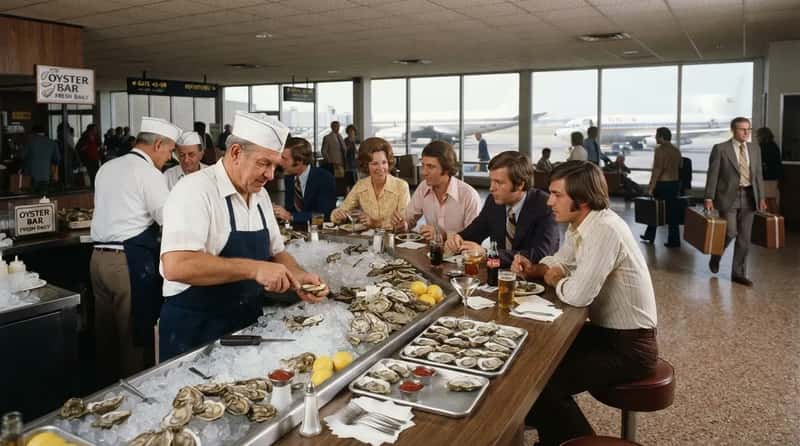
Some of the largest coastal airports had dedicated oyster bars, complete with shuckers working behind a counter, serving fresh oysters on the half shell to travelers simply waiting for a flight. It was treated as a normal terminal amenity, not a novelty attraction worth a special trip.
This reflected how seriously major hub airports took their food and beverage programs at the time, often partnering with respected regional restaurant operators rather than generic contracted vendors. Fresh-shucked oyster bars operating inside a terminal sound almost fictional by today’s standards, where raw bar options are rare even in premium paid lounges. It’s one of the clearest signs that airport food used to be a genuine destination, not an afterthought squeezed between gates.
#1 – You Could Walk Right Up to the Gate With a Drink in Hand
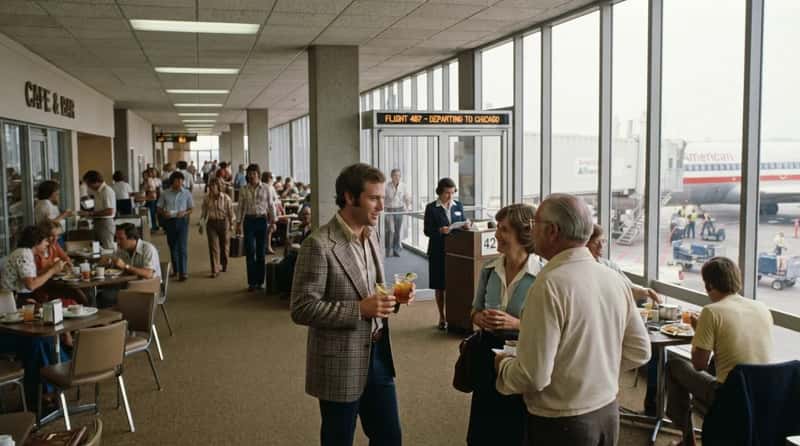
This is the detail that shocks modern travelers most: there was no security checkpoint standing between the airport cafe and the gate. Friends and family could walk a traveler all the way to the jet bridge, cocktail in hand, and wave them off in person as the plane pulled away.
Airport restaurants and bars sat close enough to gates that finishing a drink and strolling straight to boarding was completely routine – no ID checks, no bag scans, no separation between “public” and “secure” areas. The entire concept of a security-restricted zone simply didn’t exist in most U.S. airports throughout the decade, which made the cafe experience feel like an extension of the flight itself rather than a separate stop. It’s the single biggest reason 1970s airport dining feels like it belongs to an entirely different world.
Looking back, the biggest shock isn’t any single dish – it’s how differently airports treated the entire idea of a meal. Cafes weren’t pit stops; they were destinations with real service, real dishware, and zero rush to get you out the door. Smoking at the table, cocktails before 10 a.m., and walking a loved one straight to the gate all sound like myths now, but they were simply Tuesday in 1974.
Which one of these would you actually want back – the oyster bar, the carving station, or just the slower pace? Drop it in the comments and tag someone who still remembers eating a real steak dinner before a flight.