Most people assume flying alone on a red-eye means fending for yourself while everyone else gets the “real” treatment. Flight attendants who work overnight routes tell a very different story – one where solo travelers often get quieter, more personal attention precisely because they’re easier to look after than a family of five or a rowdy group heading to a bachelor party.
Turns out the dark, half-empty cabin of a night sector isn’t just a place to sleep. It’s where crews quietly rearrange the entire flight experience around the person traveling by themselves, often without ever announcing it. Here’s what actually happens once the lights go down and most of the plane drifts off.
#24 – The Wake-Up Whisper Before Descent
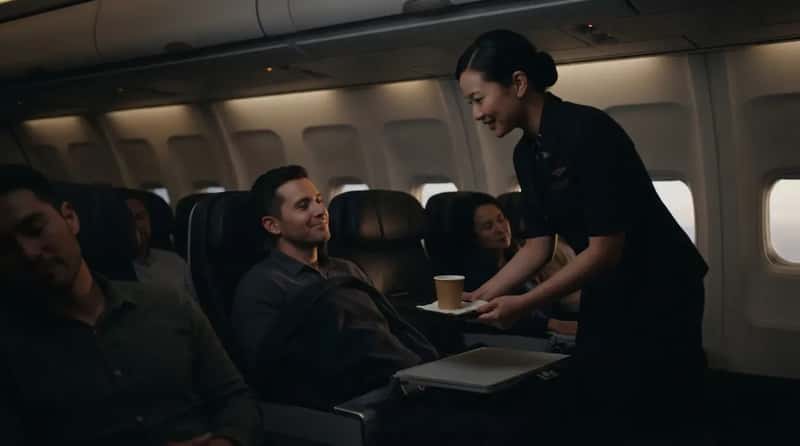
On overnight flights, crews know a solo passenger has no one to nudge them awake before landing. Flight attendants routinely make a quiet, individual stop at a sleeping solo traveler’s seat well before the seatbelt sign comes on for descent, rather than relying on a cabin-wide announcement to do the job.
It’s a small habit, but it prevents the jolt of waking up to trays being collected and shades flying open all around you. Crew say they’ll often ask softly, “Would you like me to wake you before we land?” earlier in the flight, then actually follow through hours later.
#23 – A Blanket Appears Before You Even Feel Cold
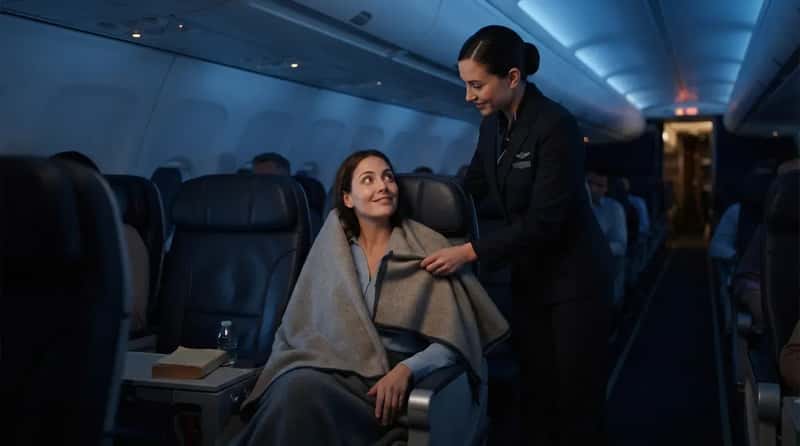
Cabins get noticeably colder once the lights dim and the engines settle into cruise altitude. Crews working red-eyes say solo travelers are often handed an extra blanket or pillow without asking, simply because there’s no travel companion sitting next to them to flag one down.
It’s one of the most repeated “unwritten rules” among overnight crews – if someone is flying alone and nodding off, offer the extra layer before they wake up shivering somewhere over the middle of the country. It costs nothing and quietly builds goodwill for the rest of the flight.
#22 – Crews Scout Empty Rows For You First
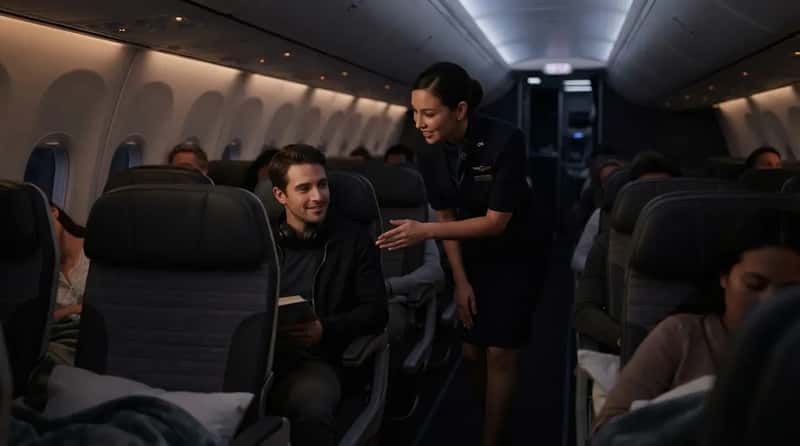
When a night flight isn’t full, crew members typically walk the aisle once boarding wraps up to mentally map out any open rows. Solo passengers are usually first in line for these spots simply because a single traveler is the easiest fit – no need to relocate a pair or an entire family together.
This isn’t announced over the PA system. Instead, a flight attendant will often lean in and quietly point out the free row, letting the passenger decide if they want to move once the seatbelt sign turns off.
Fast Facts
- Red-eye flights typically depart between 9 p.m. and midnight and land early the next morning.
- Crews usually dim cabin lights within the first 20 to 30 minutes after reaching cruising altitude on night flights.
- Federal rules require at least one flight attendant for every 50 passenger seats, no matter the hour.
- Beverage and snack service tends to move noticeably faster on overnight domestic routes than on the same route flown by day.
#21 – Headphone and Device Checks Go One-on-One
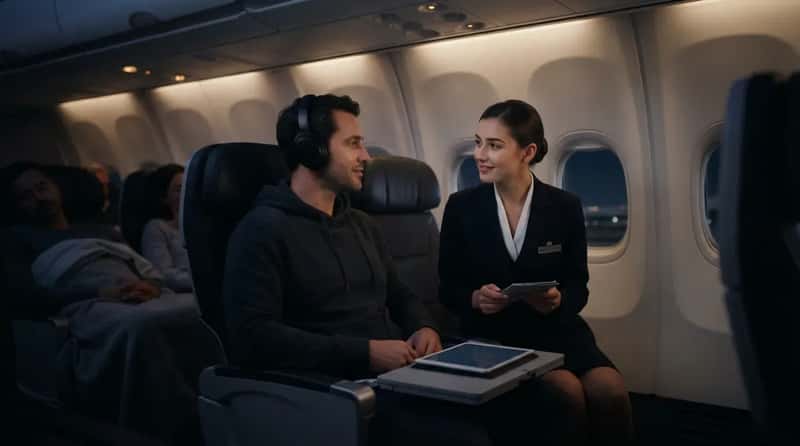
Instead of a blanket safety reminder, night crews often check in personally with solo passengers about headphones, seatbelts, and devices during the dimmed cabin walk-through. It’s a subtle way of confirming someone is actually settled and not just slumped uncomfortably against the window.
Crew say this individual check doubles as a wellness glance – noticing if a passenger looks unusually pale, restless, or uncomfortable before it becomes a bigger issue mid-flight, hours from the nearest airport.
#20 – The Galley Becomes an Unofficial Chat Spot
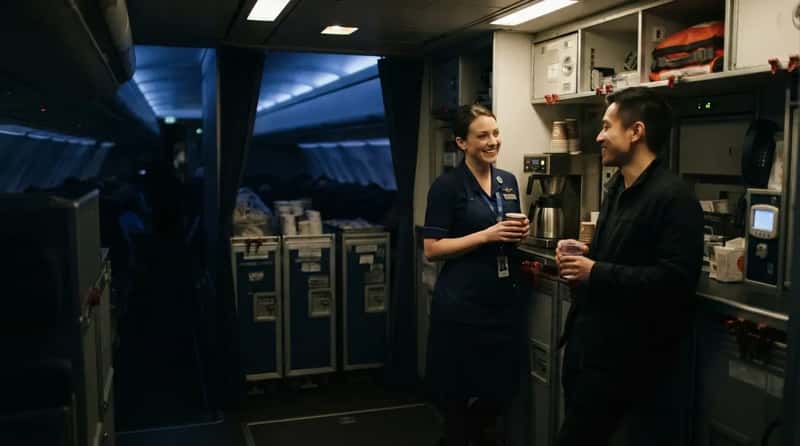
Solo travelers who can’t sleep sometimes wander back to the galley during a red-eye, and crews frequently welcome the company. With most of the plane asleep, flight attendants say a five-minute chat near the coffee maker breaks up a long, quiet shift for everyone involved.
It’s not official policy anywhere, but it’s a near-universal habit on overnight flights. A tired solo passenger and a bored crew member often end up trading small talk that neither one expected when the day started.
#19 – Meal or Snack Trays Get Held Back
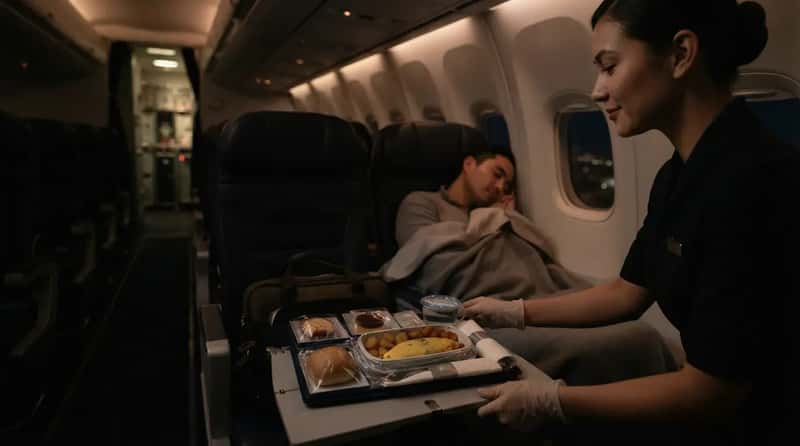
On red-eyes with a light meal or snack service, crews often hold a tray aside for solo passengers who fall asleep before the cart reaches their row. Rather than skipping them entirely, the food gets tucked away and offered later, sometimes with a quiet apology for the wait.
This small gesture avoids what crews call the “forgotten passenger” problem – someone traveling alone with no one to remind the crew that they hadn’t eaten yet somewhere over three time zones.
#18 – Aisle Seats Get Suggested for Bathroom Runs
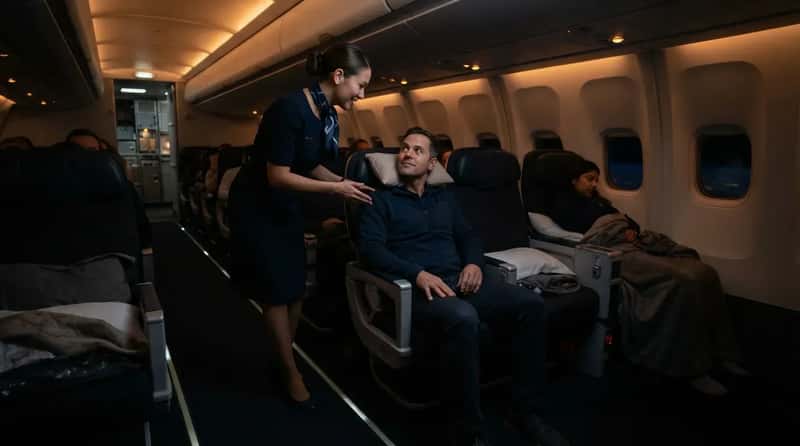
If a solo passenger asks about seat changes on a night flight, crews frequently steer them toward an open aisle seat rather than a window. The reasoning is practical: climbing over a sleeping stranger at 2 a.m. is awkward, and crews would rather avoid the disruption altogether.
It’s a quiet form of problem-solving that happens constantly on overnight sectors but rarely gets mentioned to passengers directly. Crews simply nudge people toward the smoother option before anyone even realizes there was a choice to make.
#17 – Solo Women Get a Quieter Kind of Watchfulness
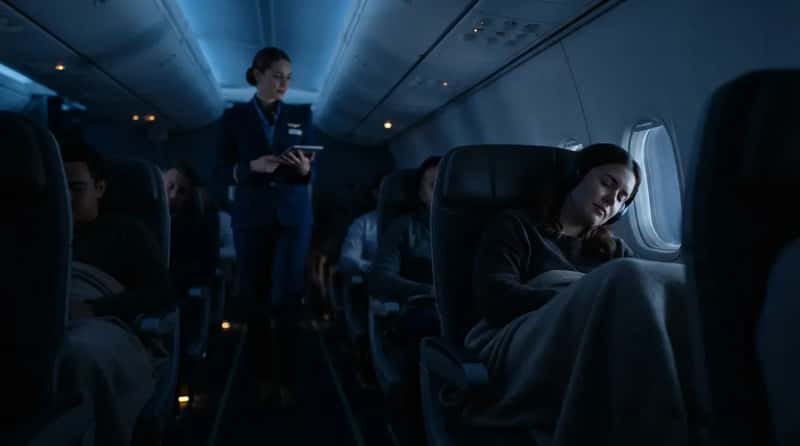
Cabin crews on night flights say they pay closer, more discreet attention to women traveling alone, especially in dimmed, mostly asleep cabins. This isn’t a formal policy anywhere, but rather an informal habit many flight attendants describe developing over years of overnight work.
It often means an extra pass through the cabin or a seat suggestion away from an uncomfortable neighbor. Crews say it’s less about suspicion and more about making sure someone flying solo doesn’t feel unseen for eight hours in the dark.
#16 – “Wellness Check” Walks Happen More Often
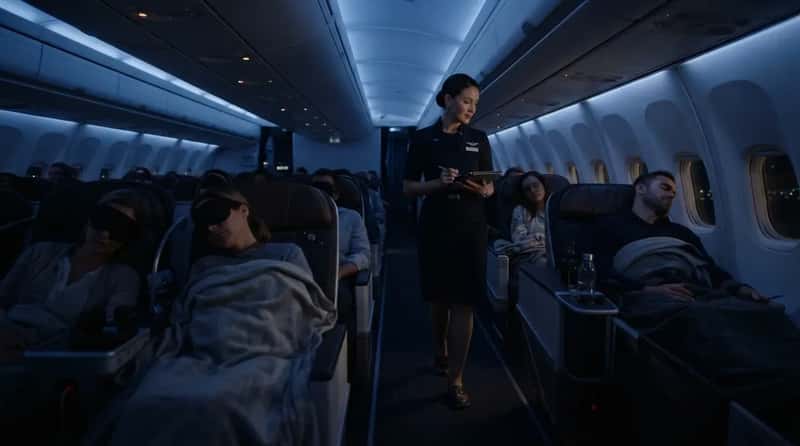
On a quiet red-eye, most of the cabin work disappears once meal service ends and passengers fall asleep. Crews say they use this downtime to walk the aisle more frequently than on daytime flights, partly to stay alert themselves and partly to keep an eye on solo sleepers.
These extra passes are rarely noticed by passengers, but they’re one reason night-flight crews often catch early signs of medical discomfort before a passenger even presses the call button for help.
#15 – Seat Shuffling Happens Without an Announcement
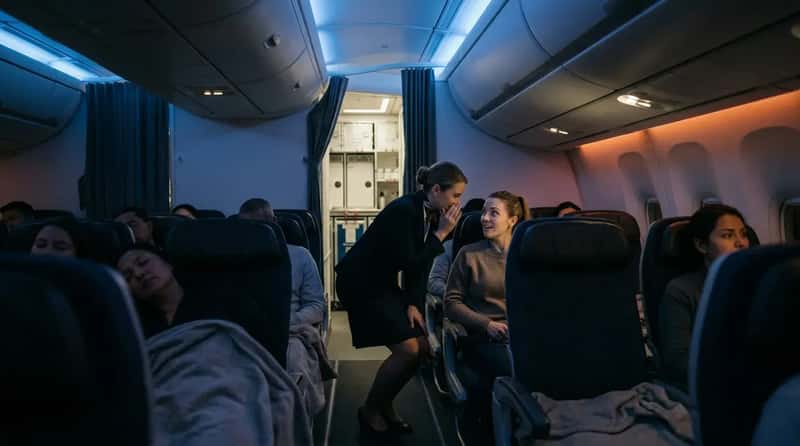
If a solo traveler is stuck in a middle seat between two strangers on an overnight flight, crews will often quietly offer a switch once the doors close and the seatbelt sign goes off. No cabin-wide invitation goes out – it’s handled passenger by passenger, in a low voice near the galley.
This keeps the process calm and avoids a scramble of passengers all requesting the same open seats at once, which crews say happens almost every time a move gets announced publicly instead of handled quietly.
#14 – Crews Remember Faces on Repeat Routes
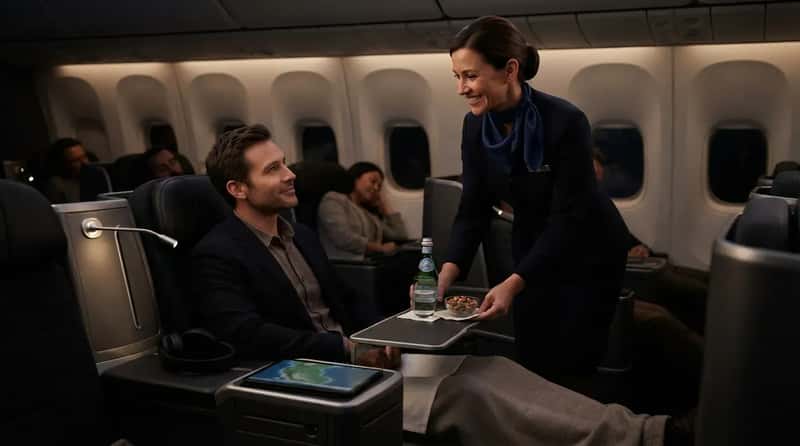
Flight attendants working the same red-eye route week after week say they start recognizing regular solo flyers, especially business travelers on predictable schedules. That familiarity often translates into small perks – a favorite drink poured without being asked, or a seat recommendation based on past preferences.
It’s not loyalty-program treatment, just human memory at work. Crews say these small recognitions matter more to frequent solo travelers than most airlines seem to realize, even years into a route.
#13 – The Drink Cart Skips the Small Talk
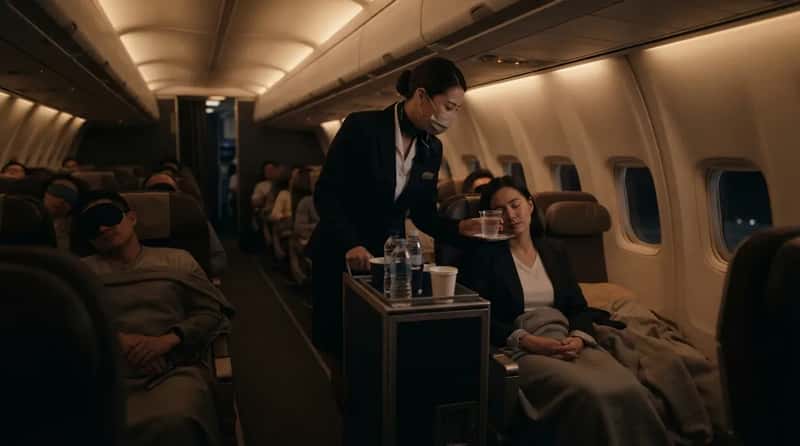
During a night sector, service moves faster and quieter than on a daytime flight. Crews working red-eyes have described lower service intensity on many domestic overnight routes compared to day flights on the same path, largely because most passengers are trying to sleep rather than chat or browse a menu.
For solo travelers, that means drink service is often reduced to a whispered “water or nothing?” rather than a full cart stop – efficient, but noticeably different from a midday flight where the same route feels almost social.
Quick Compare: Day Flight vs. Night Flight
- Cabin lighting: Bright and functional by day; dimmed to a soft glow soon after takeoff at night.
- Service pace: Full cart stops and menu chat by day; quick, whispered offers on red-eyes.
- Seat requests: Handled openly by day; solo shuffles happen quietly at night to avoid a scramble.
- Crew attention: Spread evenly by day; more concentrated on solo sleepers once night service winds down.
#12 – Turbulence Warnings Get a Personal Touch
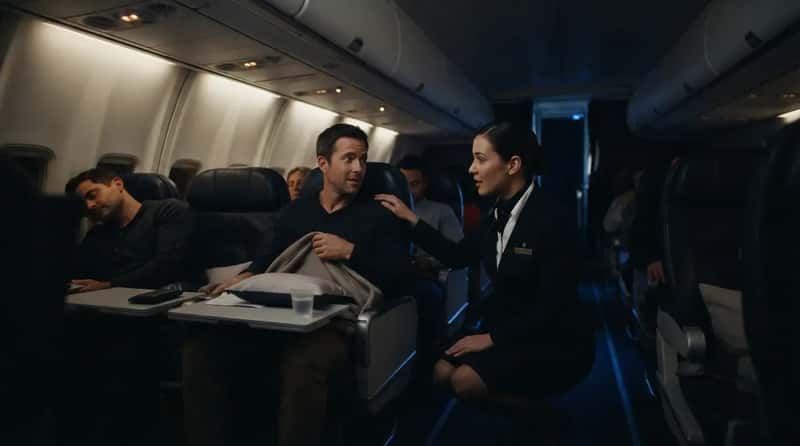
When light turbulence hits during a red-eye, crews say they’ll often walk the aisle and personally check on solo sleepers rather than relying solely on the seatbelt chime. A gentle tap or a quiet word is common if someone appears startled awake mid-bump.
It’s a small reassurance that costs a crew member almost nothing but noticeably calms nervous solo flyers who don’t have a seatmate to lean on for comfort in the moment.
#11 – Connection Worries Get Solved With a Sticky Note
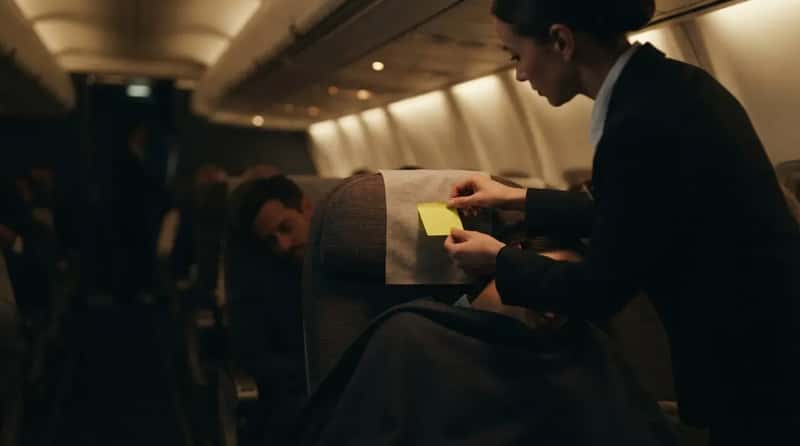
Solo travelers with tight connections after a red-eye often mention it to crew during boarding, and flight attendants say they’ll jot the gate or flight number down to remember later. Some crews physically flag the passenger’s seat number for a priority deplaning reminder near landing.
It’s an informal system, but one that regularly saves solo passengers from missing a connection simply because no one else on the flight knew to remind them in time.
#10 – The First Cabin Sweep Happens Early
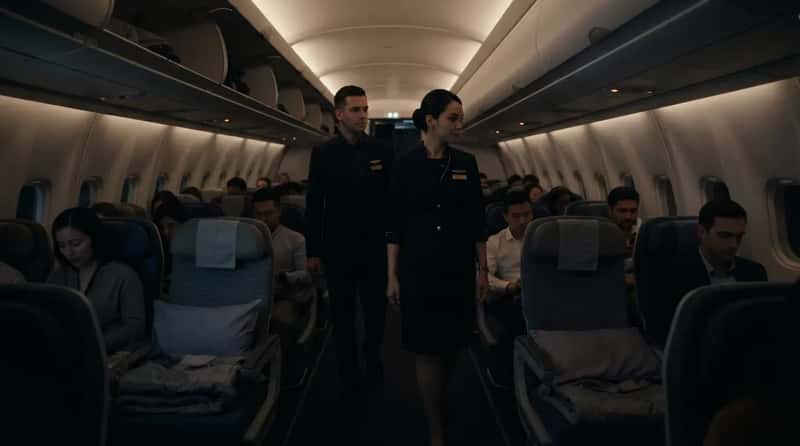
Before most passengers have even settled in, night-flight crews do an early walkthrough specifically to spot who’s traveling alone. This early read helps them plan the rest of the flight – who might need an extra pillow, who looks anxious, who’s likely asleep within the hour.
Crews describe this as second nature after enough red-eyes, a quick mental note that shapes how they move through the cabin for the next several hours without a single word spoken about it.
#9 – Extra Pillows Land in Laps Unprompted
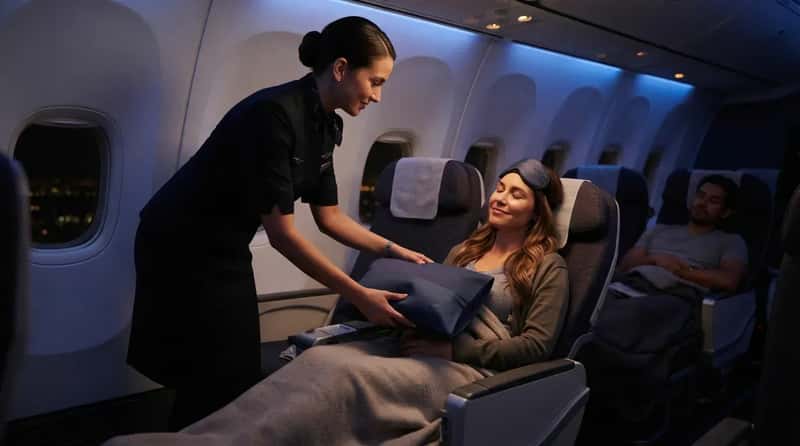
Just like blankets, pillows on overnight flights often get distributed proactively to solo travelers once the cabin lights go down. Crews say it’s easier to hand one over during the early aisle walk than to field individual requests once everyone’s trying to sleep.
This small habit is one of the most consistently mentioned “quiet perks” solo flyers report on red-eyes, even on airlines that don’t officially advertise it as part of the service.
#8 – Red Lights Replace Flashlights for a Reason
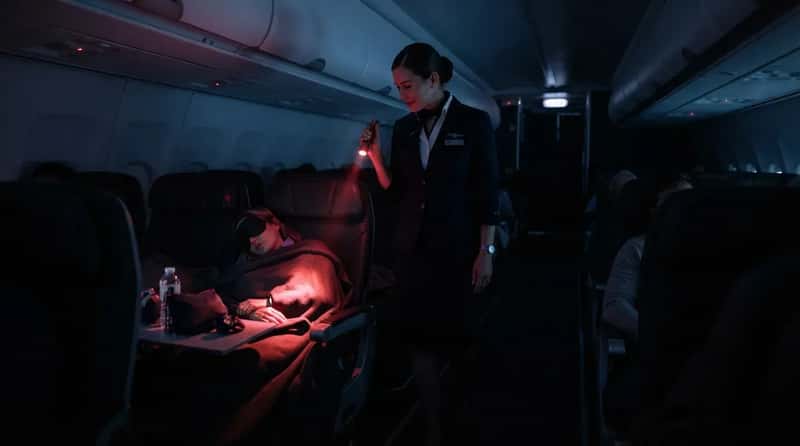
On darkened overnight cabins, crews increasingly use dim red-toned flashlights instead of bright white ones when checking on passengers. Bright light can jolt a sleeping passenger awake and disrupt the whole row, so red or amber beams have become common gear for red-eye service.
It’s a small technical detail passengers rarely notice, but crews say it makes a real difference in keeping solo sleepers undisturbed while still allowing a proper safety check every hour or so.
#7 – The “Do Not Disturb” Card Trick
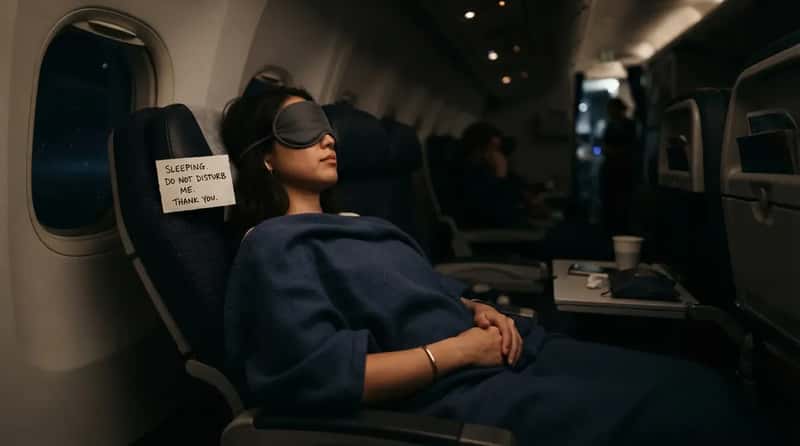
Some overnight crews carry or improvise small “sleeping, please don’t wake me” notes for solo passengers who want to skip a meal or drink pass entirely. It’s not a standard item on every airline, but where it exists, crews say it dramatically cuts down on unnecessary interruptions.
For a solo traveler with no one to intercept the cart on their behalf, this tiny signal does the job instead – a quiet handshake between passenger and crew that saves everyone the awkward whisper-wake.
#6 – Crews Track Solo Elderly Passengers More Closely
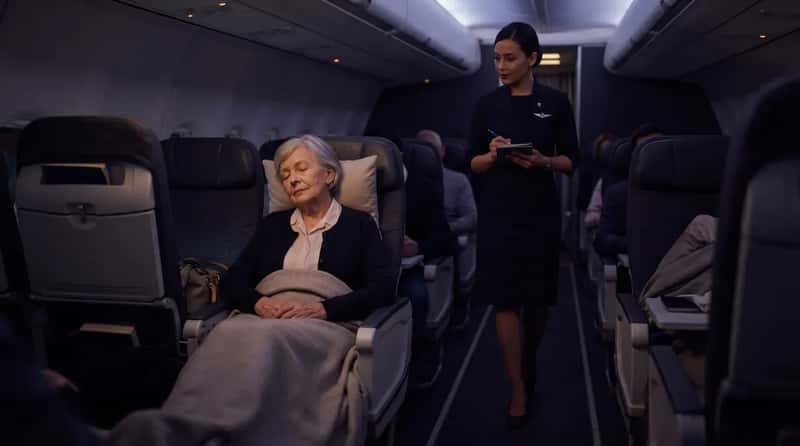
Older passengers flying without a companion on a night sector tend to get extra, subtle attention from cabin crew – more frequent aisle passes, a closer eye during turbulence, and quicker responses if a call button gets pressed. This isn’t formalized anywhere, but crews describe it as an instinct built from years of experience.
Many flight attendants say elderly solo flyers are the group they worry about most on red-eyes, simply because fatigue and unfamiliar cabins can compound existing health concerns that might otherwise go unnoticed.
Worth Knowing
- Cabin pressure and dry air on long flights can intensify fatigue, making solo elderly passengers more vulnerable to feeling unwell.
- Cabin crews receive first aid and CPR training, and many U.S. aircraft carry an automated external defibrillator onboard.
- Call-button response tends to be quicker on a quiet, half-empty red-eye than on a full, busy daytime flight.
#5 – A Second, Quieter Safety Briefing
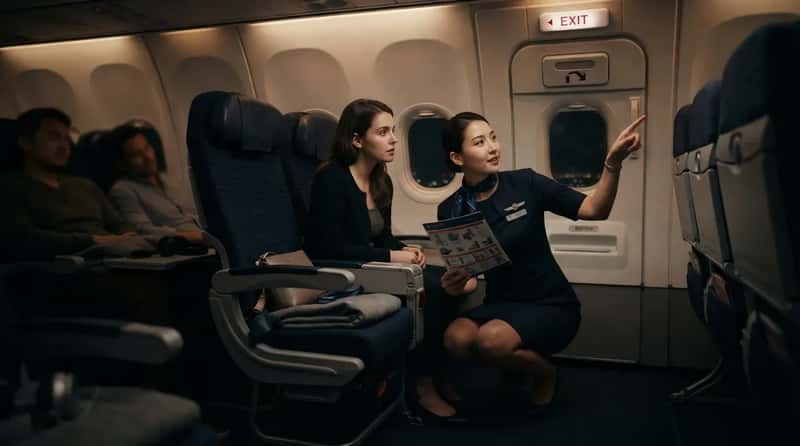
If a solo passenger looks confused or clearly nervous during the standard safety demo, crews often follow up personally once the seatbelt sign turns off. This might mean pointing out the nearest exit again or explaining the oxygen mask procedure one more time, away from the group setting.
Crews say this quiet repeat briefing happens more on night flights than people realize, especially for infrequent flyers traveling without anyone to translate the announcement for them in the moment.
#4 – The Seat Near the Galley Isn’t Random
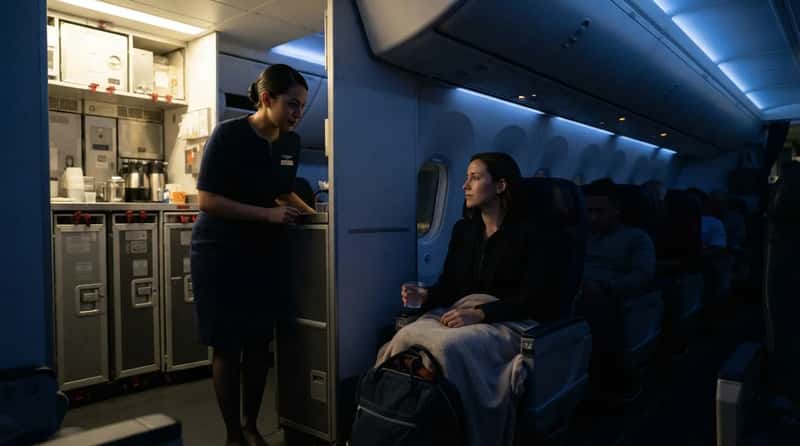
Solo travelers occasionally get placed or moved near the galley on overnight flights, and it’s rarely a coincidence. Crews say it’s easier to keep a discreet eye on someone traveling alone – especially anyone who seems unwell, anxious, or unusually quiet – when they’re seated closer to the crew’s working area.
It’s a subtle form of care disguised as a routine seating decision, one most passengers never connect to the actual reasoning behind it, even after landing.
#3 – Medical Forms Get a Second Glance
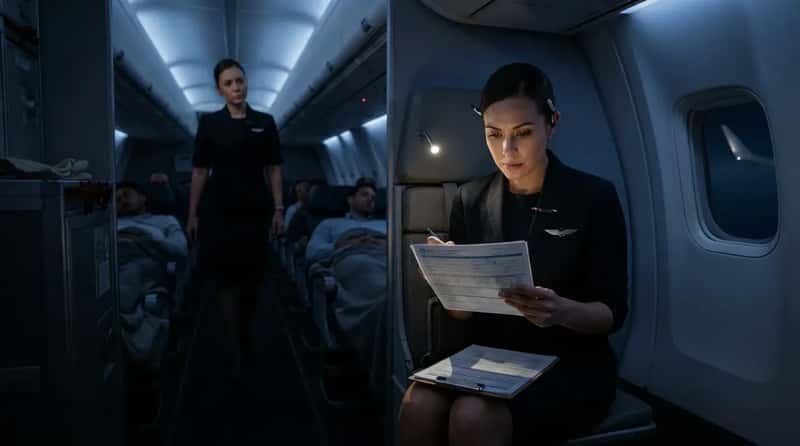
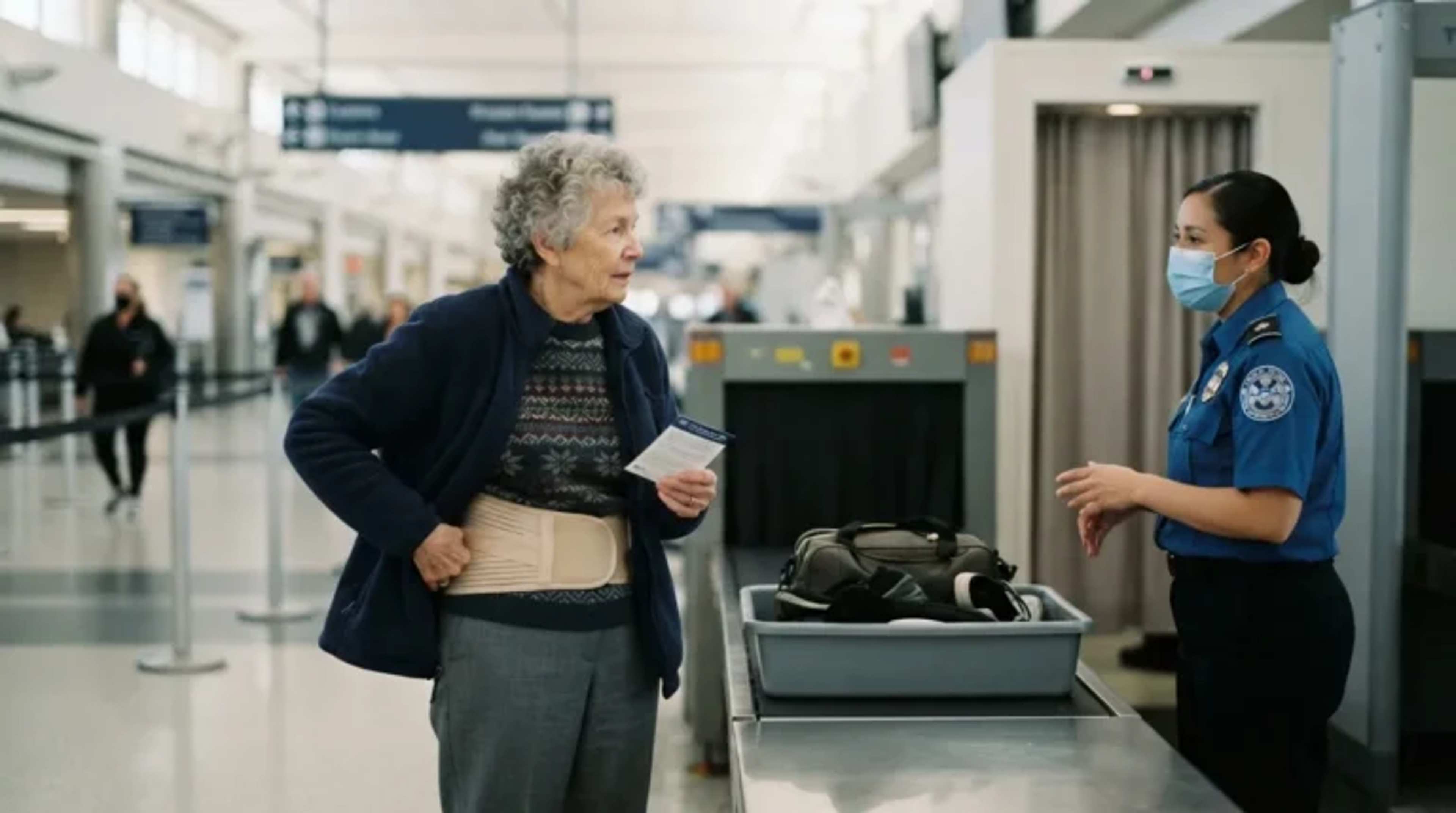
When a solo passenger flags any kind of medical concern before boarding a red-eye, crews say they pay noticeably closer attention throughout the flight – more check-ins, more awareness of symptoms, and often a mental note passed to the rest of the crew. With no travel companion to alert them if something goes wrong, crews fill that gap themselves.
This extra vigilance is one of the least talked-about parts of overnight service, but crew members consistently describe it as one of their top priorities on long night sectors over open water or empty stretches of country.
#2 – The Last Row Sweep Before Landing
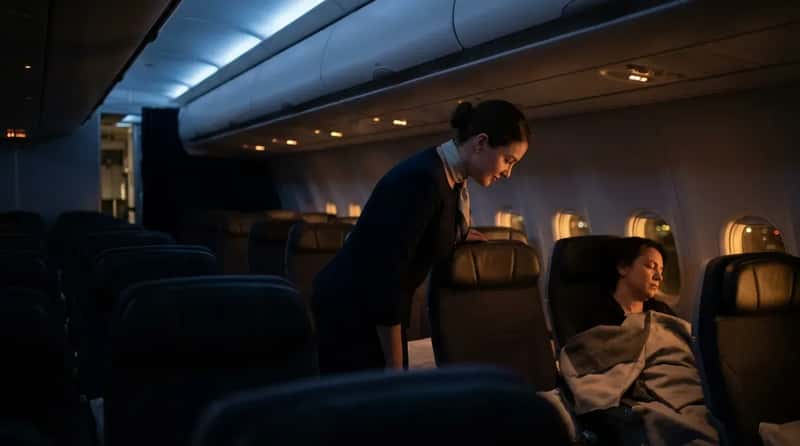
As a night flight nears its destination, crews do a final cabin sweep specifically looking for solo passengers who might still be asleep or disoriented from the time change. This sweep often includes a gentle reminder about the local time and any connection information the passenger mentioned earlier.
It’s a last small act of care before deplaning, meant to make sure no solo traveler walks off the aircraft groggy, confused, and unprepared for whatever comes next at baggage claim.
#1 – The Quiet Nod That Means “We’ve Got You”
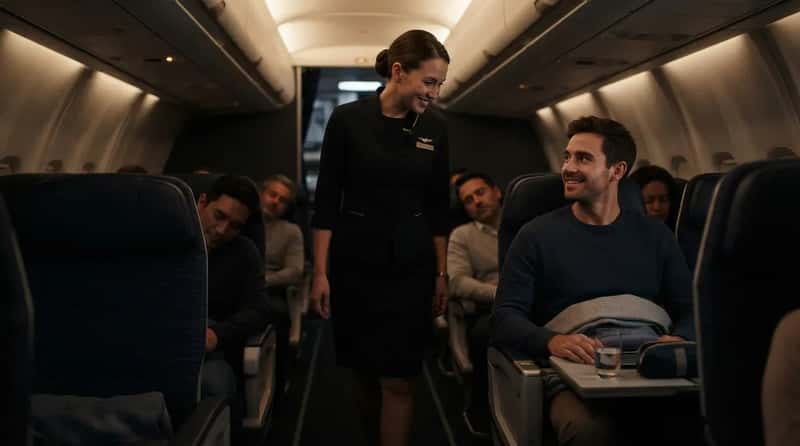
Ask any red-eye flight attendant what they wish passengers knew, and one theme keeps coming up: a little warmth goes a long way, especially for someone flying alone in the dark. Crews say solo passengers who are simply friendly – a smile, a “thank you,” a quick hello – tend to get remembered and looked after more closely for the rest of the flight.
It’s the single biggest, least official adjustment cabin crews make, and it isn’t written in any manual. It’s a quiet, human acknowledgment that flying alone at night is a little harder, and crews, more often than not, choose to make it a little easier.
None of these adjustments show up on a boarding pass or a service menu, but they add up to something real. Solo passengers on night sectors often get more personal attention than they expect, not because of policy, but because of the instincts crews build after years of dimmed cabins and sleeping strangers.
The next time you find yourself alone on a red-eye, watch for these small moments – the extra blanket, the quiet wake-up call, the offer to switch seats without a word to anyone else. Have you noticed any of these on your own overnight flights? Drop your story in the comments.