You’ve probably never thought twice about the person who knocks on your hotel door with a tray of food. But that quick, forgettable exchange is actually a full read – staff clock your outfit, your tone, your room, and your habits in under ten seconds, then quietly file it away for the rest of your stay.
Some of what they notice is harmless. Some of it is the exact reason your next request either shows up fast and warm, or last and lukewarm. Here’s what’s actually happening at that door.
#24 – The Outfit Says More Than the Order Ever Could
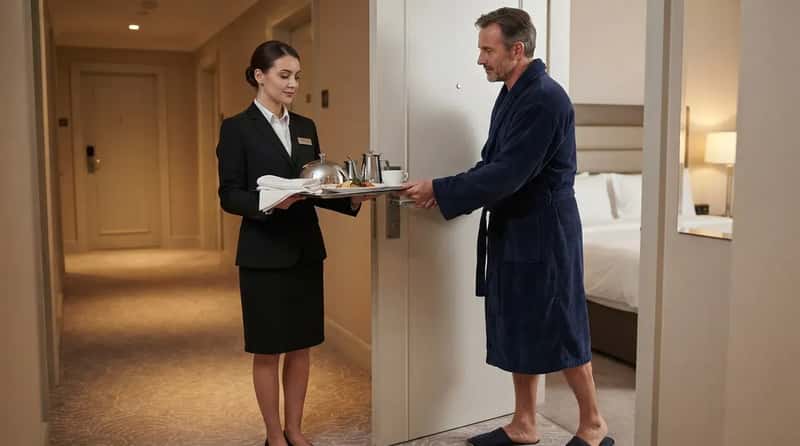
Room service staff clock what a guest is wearing before the tray ever leaves their hands. Answering the door half-dressed happens more often than you’d think, and it puts staff in an awkward spot they didn’t sign up for. A guest who bothered to grab a robe first is sending a small but real signal.
It’s not about modesty for its own sake – it’s about basic respect for a stranger doing their job. Staff remember who made the effort and who didn’t. Half the awkward encounters on a room service shift trace back to this one avoidable habit.
#23 – Whether the “Do Not Disturb” Sign Was Actually Followed
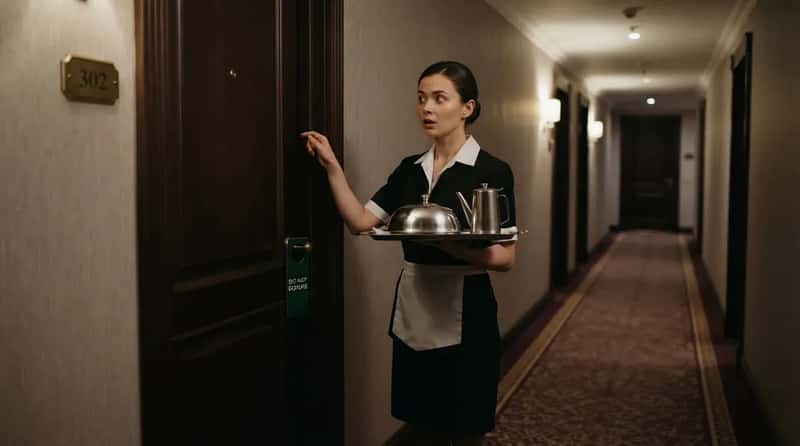
Servers notice instantly if a guest ignored their own privacy signal by opening the door anyway. A hallway sign flipped to “Do Not Disturb” but answered within seconds tells staff the guest either forgot it was there or doesn’t take hotel systems seriously.
Either way, it becomes a small mental flag. Staff quietly assume these guests will need extra reminders about other hotel policies too, from checkout times to noise levels. It’s a tiny detail, but it sets the tone for the rest of the stay.
#22 – The Smell of the Room Before the Door Even Fully Opens
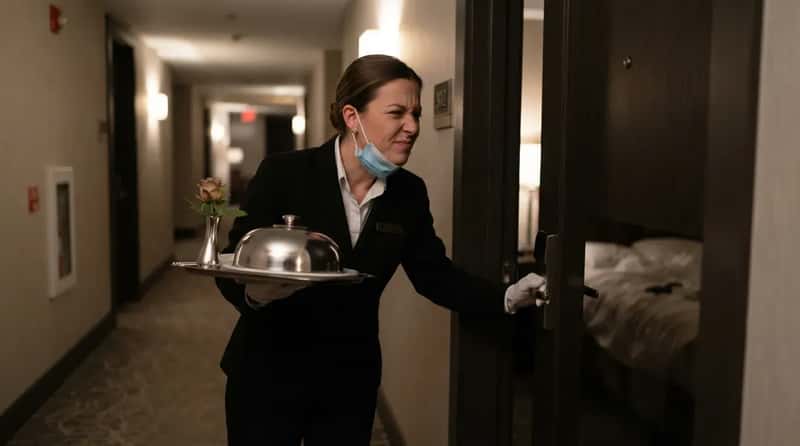
A trained nose picks up more than most guests realize. Smoke, spilled alcohol, or heavy air freshener masking something else all get detected in the first breath through a cracked door.
Staff aren’t trying to be nosy – it’s just muscle memory after hundreds of deliveries. A strong cover-up scent is often a bigger giveaway than the thing it’s hiding. Housekeeping gets a heads-up faster than most guests would guess.
#21 – Whether Luggage Looks Lived-In or Still Packed
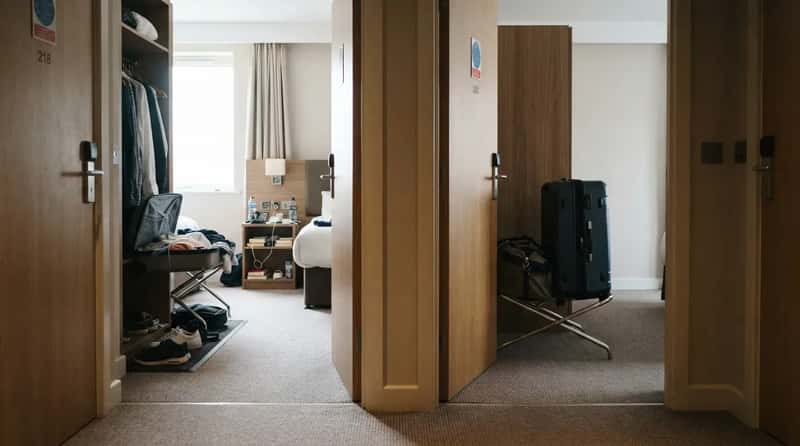
A quick glance past the guest’s shoulder tells staff whether they’re dealing with someone settling in for a long stay or someone who never really unpacked. Suitcases still zipped by day three usually signal a stressed traveler or a last-minute trip.
Fully unpacked closets and organized nightstands suggest the opposite – someone treating the room like home. Staff say the unpacking habit is one of the fastest ways to guess how long someone plans to stay, often more reliable than what’s on the reservation.
#20 – How the Guest Greets Them at the Door
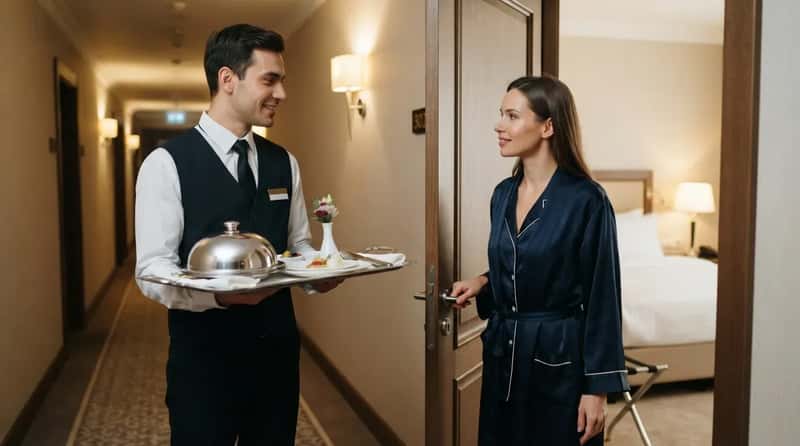
Eye contact, a quick “thanks,” or a distracted grunt without looking up – servers register the greeting style instantly. It’s the first real interaction of the exchange, and it sets expectations for everything after.
Guests who make eye contact and acknowledge the person delivering their food tend to get remembered in a good way. Staff privately admit the guests who never look up from their phone are the ones they forget fastest – and not in a flattering sense.
#19 – Background Noise Coming From Inside the Room
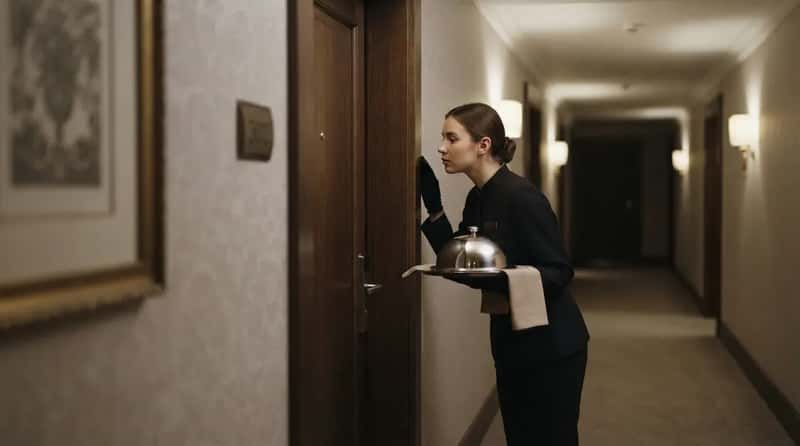
A blasting TV, a work call, or total silence all tell a different story before the door even swings open. Staff use this to gauge whether to knock softly, wait, or announce themselves louder.
It also hints at what kind of trip this is – business, leisure, or something in between. A quiet room with a laptop visible on the desk almost always means a guest ordering room service instead of leaving for a meal because they’re buried in work.
#18 – The Condition of Yesterday’s Tray Left Outside the Door
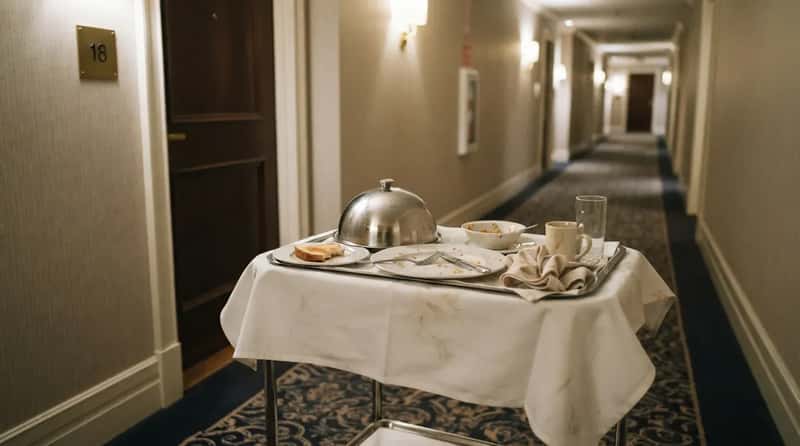
Hallway trays are a bigger tell than guests think, and a bigger headache than most realize. Leaving dirty dishes in the hallway isn’t just impolite – it creates hazards and unpleasant smells, and staff generally prefer guests request direct pickup from the room instead.
Untouched trays with barely eaten food suggest a guest who ordered out of boredom rather than hunger. Staff say a fully cleaned plate versus an ignored one is one of the clearest signs of how a guest is actually feeling that day, since stress and appetite are closely linked on the road.
#17 – Whether They Have Cash Ready for a Tip
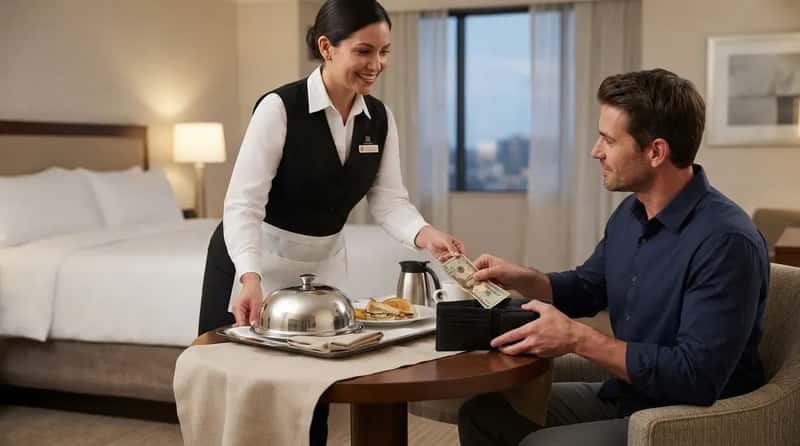
The second a guest reaches for a wallet before the tray even lands on the table, staff take note. In the U.S., tipping hotel staff is customary, while in other countries a service fee may already be built into the room cost – so American guests who plan ahead stand out immediately.
It’s not about greed – it’s about awareness. Staff say guests who tip generously and consistently often get faster response times on future requests during the same stay, whether that’s intentional favoritism or just better memory for names.
Worth Knowing
- A cash tip of a few dollars per delivery is the standard U.S. norm for room service, separate from any charge already on the bill.
- Many hotels add a delivery or service fee directly to the room service check, but a cash tip on top is still considered customary.
- Tips are sometimes shared with kitchen staff, so the person at the door isn’t always keeping the full amount.
- Guests who tip early in a stay often notice friendlier, quicker service on every order after that.
#16 – How Specific and Polite the Original Order Was
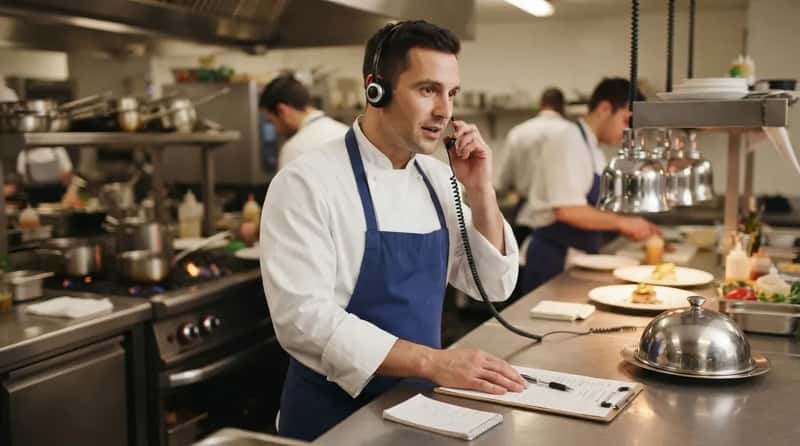
A clear, kind phone order versus a vague or rude one shapes the entire delivery experience before staff ever knock. Kitchens remember guests who explained allergies calmly versus the ones who barked instructions.
Custom requests aren’t actually a problem for most kitchens – it’s considered courteous to call well in advance for anything off-menu, and chefs like Camille Becerra have said they don’t mind custom orders at all. The tone of the request matters more than the complexity of it.
#15 – The Number of Empty Minibar Bottles or Cans in View
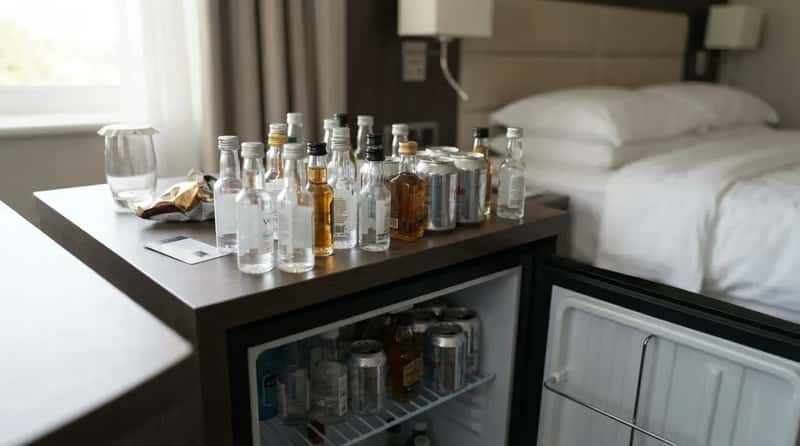
A quick scan of the trash or counter tells staff more about the night before than a guest would ever volunteer. Multiple empties by mid-morning usually means a rough night, a celebration, or both.
This isn’t judgment so much as pattern recognition built over hundreds of shifts. Staff say the drink count is one of the fastest predictors of whether a guest will need extra coffee, extra quiet, or extra patience that day.
#14 – Whether the Bed Is Slept-In on One Side or Both
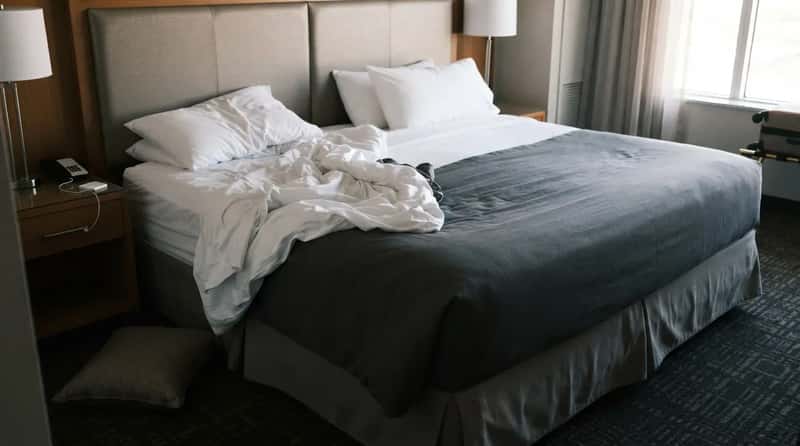
A single unmade side of a king bed in a room booked for two raises an instant, silent question. Staff rarely say anything, but they clock it every time.
It’s one of those small observational habits that comes with the job rather than curiosity for its own sake. Multiple pillows scattered on the floor versus a neatly made bed also signals whether a guest is a restless sleeper or barely used the room at all.
#13 – How the Guest Reacts If the Order Is Slightly Wrong
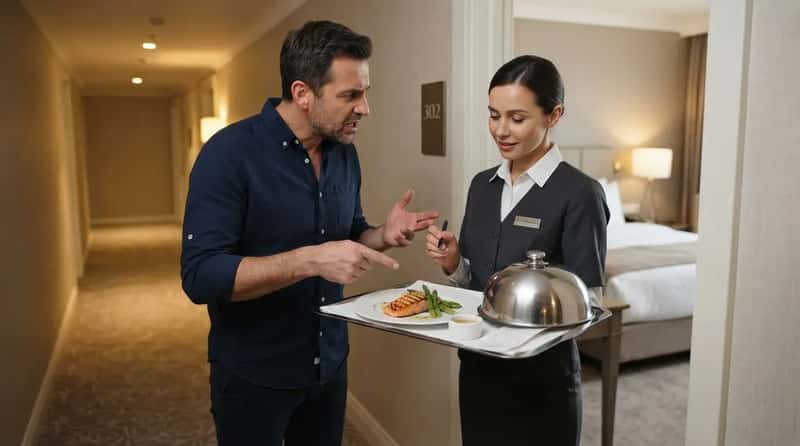
A missing side dish or a swapped sauce reveals personality faster than almost anything else on this list. Calm guests ask for a fix; frustrated ones escalate immediately.
Staff notice, and it tends to influence how future requests from that room get prioritized. Hotel workers who’ve shared their experiences publicly say the nicest and most understanding guest during a complaint usually gets the better compensation, while a rude guest gets the bare minimum – a dynamic that plays out the same way with room service mishaps.
#12 – Whether Kids or Pets Are Actually in the Room
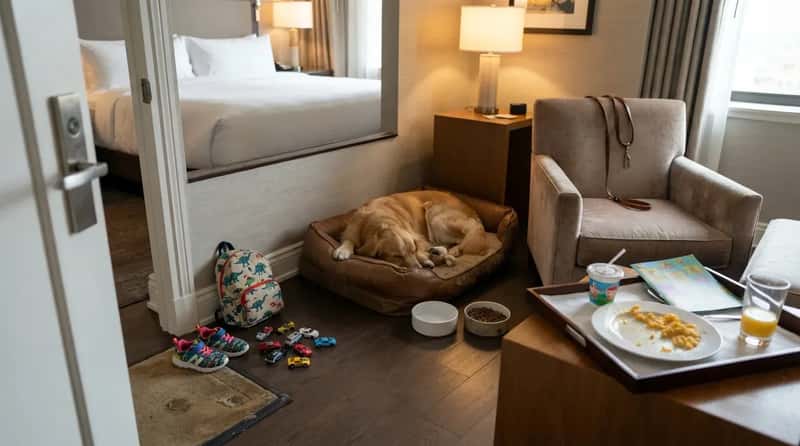
Toys by the door, a dog bed in the corner, or a half-eaten kids’ menu item all get noticed instantly, even if nobody mentioned traveling with family. Staff quietly adjust their tone and timing based on what they see.
Hotels have leaned into this more than guests realize. Some properties now offer surprisingly specialized services once staff pick up on these cues – including pet groomers and even a pet acupuncturist “for stressed pets” at certain luxury properties. A visible pet bowl can trigger an entirely different service track than a standard room.
At a Glance
- Pet-friendly hotels increasingly stock in-room beds, bowls, and treats the moment staff spot a leash or carrier.
- Some luxury properties keep pet groomers and even acupuncture services on call for anxious traveling animals.
- A children’s menu item or toy left in view can quietly shift a room onto a family-focused service track for the rest of the stay.
#11 – The State of the Desk: Work Mode or Vacation Mode
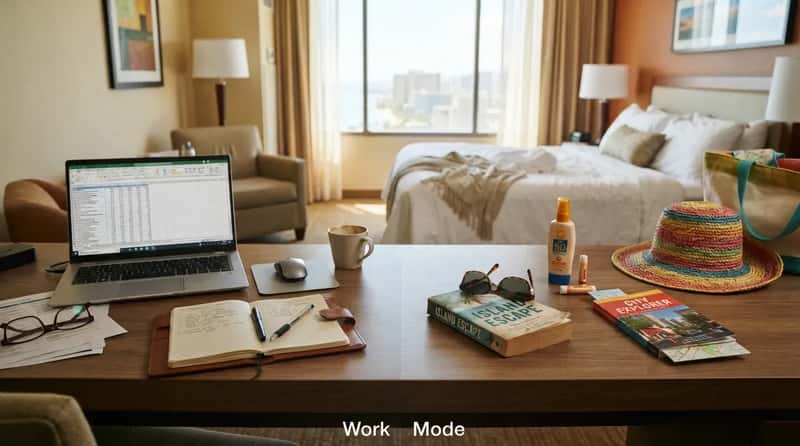
Laptops open with spreadsheets visible versus sunscreen and a paperback tell two completely different stories. Staff use this to decide whether small talk is welcome or intrusive.
Business travelers tend to order faster, simpler meals and want minimal interaction. Leisure travelers linger, chat, and ask questions about the area. Reading the desk in three seconds is often more accurate than reading the reservation notes.
#10 – Whether the Guest Uses Staff Names Off the Badge
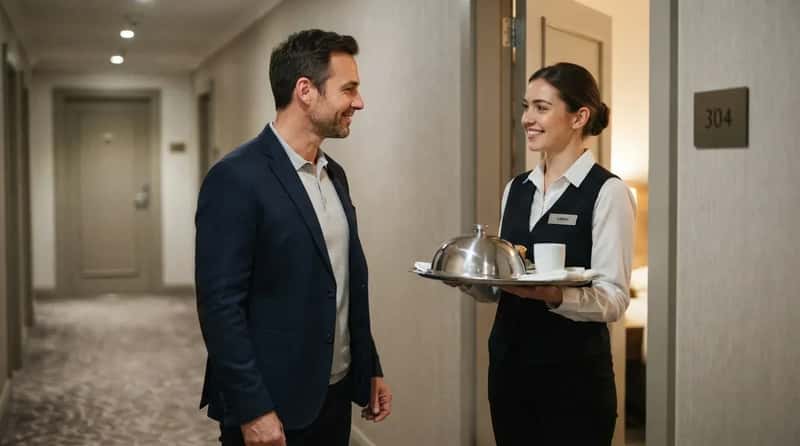
Using a first name from a name tag is a small gesture that staff notice every single time. It signals a guest who sees the person, not just the uniform.
It doesn’t cost anything, but it changes the entire interaction instantly. Staff have said this one habit alone predicts, with surprising accuracy, whether a guest will be pleasant for the rest of the stay.
#9 – How Guests Handle an Obvious Mistake by the Guest Themselves
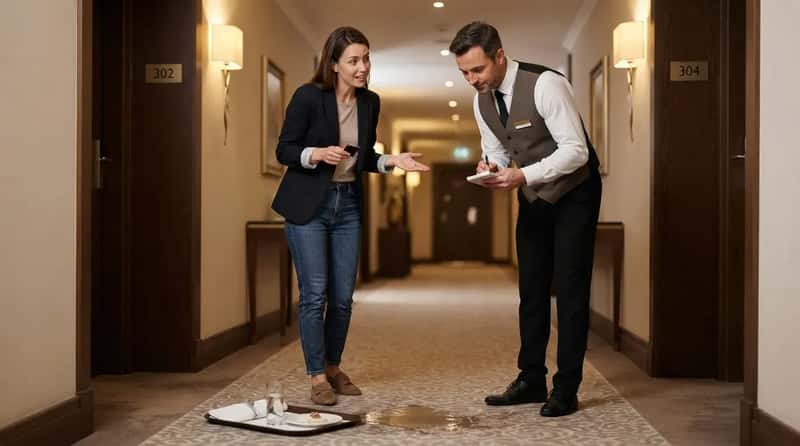
Spilled water on the hallway carpet, a jammed door, an order placed to the wrong room – how a guest owns up to these moments says a lot. Staff notice the difference between an apology and a shrug immediately.
Guests who acknowledge small mishaps tend to get more flexibility later in the stay. The ones who act like nothing happened are remembered just as clearly, just not as fondly.
#8 – The Age and Wear of the Guest’s Luggage or Gear
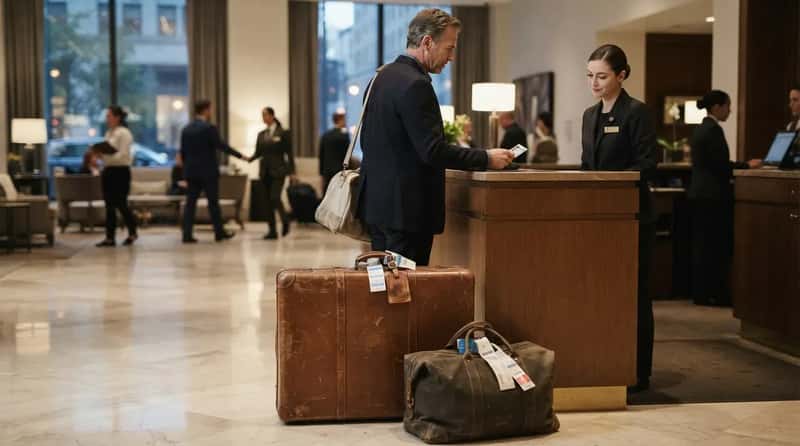
Frequent travelers tend to have battle-worn suitcases, luggage tags from a dozen airports, and a practiced efficiency about them. First-timers often bring brand-new bags and ask more questions.
Staff use this to gauge how much explanation a guest might need about hotel services. Loyalty program tags on luggage are an instant clue – staff quietly upgrade their attentiveness for guests who clearly travel often, since word-of-mouth from frequent guests carries weight.
#7 – What Was Left Behind From a Previous Order
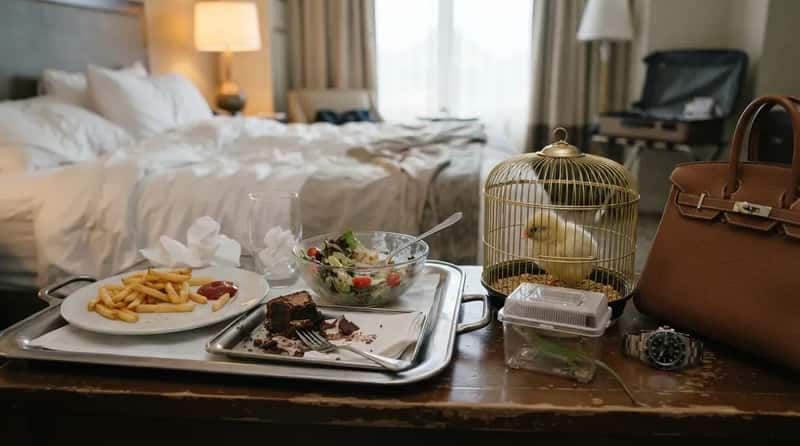
Uneaten fries, a barely touched salad, or a completely demolished dessert tray all tell staff something about appetite, mood, or even health. It’s a strange but consistent pattern across the industry.
Some of what gets left behind is far stranger than food. Hotel staff have found items ranging from a Rolex and a Birkin bag to a pet chick and a lizard left behind after checkout. Forgotten items reveal more about a guest’s actual trip than the folio ever could.
Fast Facts
- Reported lost-and-found items have included a Rolex watch and a Birkin bag left behind at checkout.
- Staff have also turned up live animals guests forgot, including a pet chick and a lizard.
- Barely touched trays versus wiped-clean plates are one of the quickest mood indicators staff track between visits.
#6 – Whether the Order Is Wildly Specific or Completely Unusual
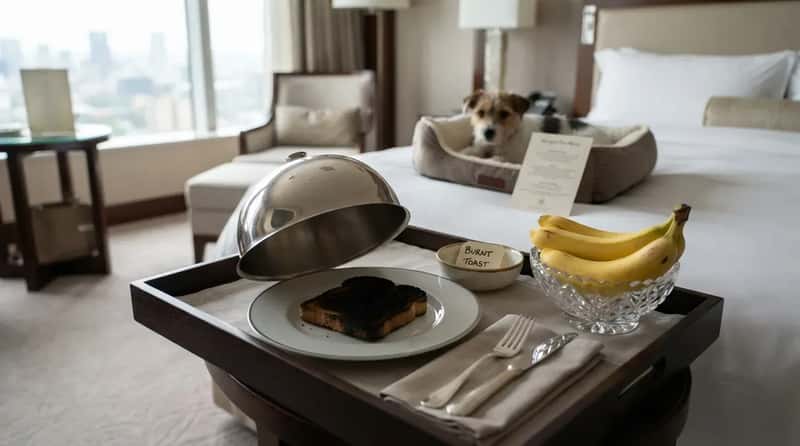
Some requests are so specific that staff remember the guest for years. Hotels have quietly built entire service categories around unusual demands they noticed repeating.
The most memorable orders tend to be the strangest ones. Peculiar requests have included an Evian-filled bathtub for a child, a caviar hot dog, burnt toast, four pounds of bananas, and a fully allergen-free menu built for a guest’s pet. Staff say the weirder the order, the more likely the guest becomes a hotel legend passed down between shifts.
#5 – Whether the Guest Confirms Their Order Was Actually Received
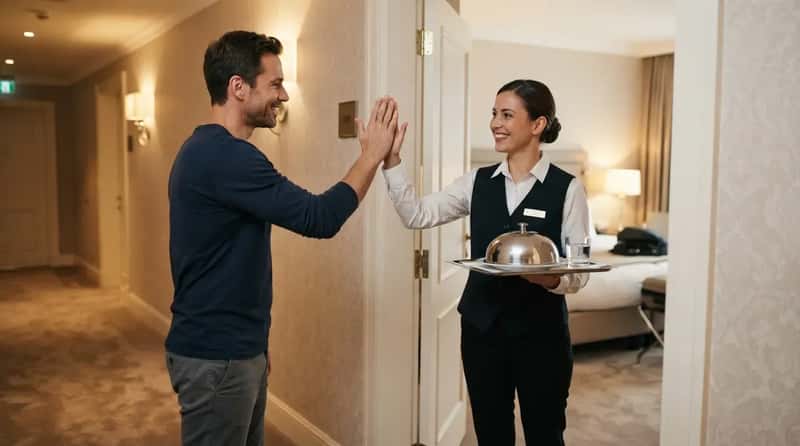
Some guests want reassurance that their unusual request landed correctly, and staff have found creative ways to provide it. One property even built a habit around it.
A high five from a team member to ensure their room service request was read.
Hotel worker, describing a guest reassurance ritual
Small confirmation gestures like this stick with guests long after the stay ends, often becoming the detail they mention in reviews.
#4 – How Guests Treat the Tray Itself Once It’s Delivered
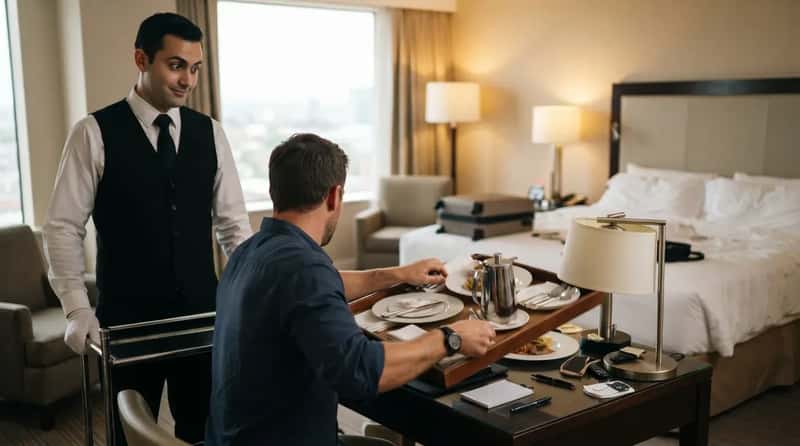
Some guests set the tray down carefully; others shove it onto the nearest flat surface without a second thought. Staff notice how the delivered item is treated in the moments right after handoff.
It sounds trivial, but it’s another small window into how a guest treats things that aren’t theirs. Careless handling of hotel property in these tiny moments often predicts bigger issues with the room by checkout.
#3 – Whether the Guest Remembers the Server From an Earlier Delivery
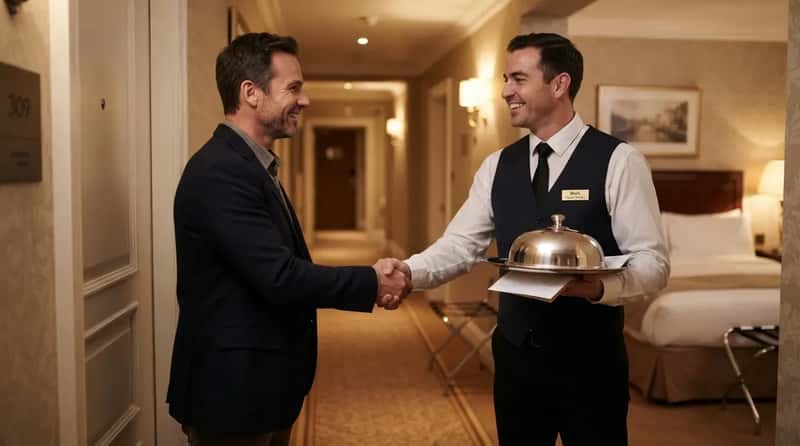
Repeat guests on multi-night stays either build rapport with the same staff or treat every delivery like a first meeting. Servers absolutely notice which type a guest is.
Building that rapport tends to pay off for the guest, too. Bellmen and room service staff who feel remembered and appreciated say befriending hotel staff benefits guests directly, and a generous tip early in a stay means staff will remember and “hook you up” later. The second and third interactions matter just as much as the first.
#2 – What the Room’s General Tidiness Says About Respect for the Space
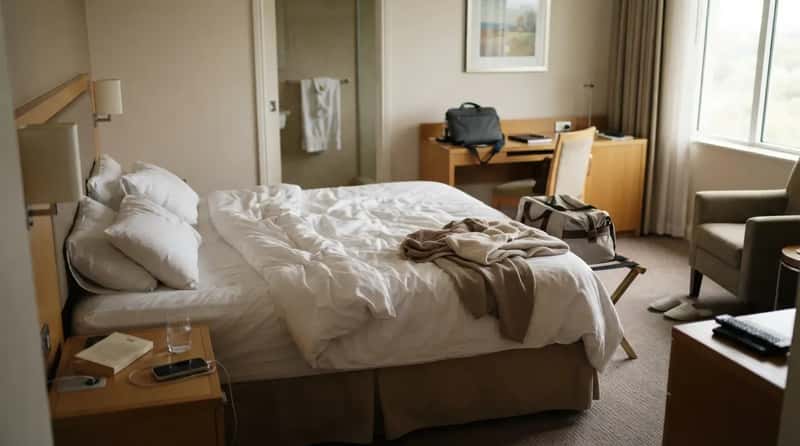
A room kept reasonably tidy versus one that looks like a storm hit tells staff a lot about how a guest views the property overall. It’s rarely about actual cleanliness – it’s about care.
Guests who treat the room with basic respect tend to treat staff the same way. Staff consistently say tidiness and courtesy toward people go hand in hand far more often than guests would expect.
#1 – The Overall Tone: Is This Guest Kind or Just Polite?
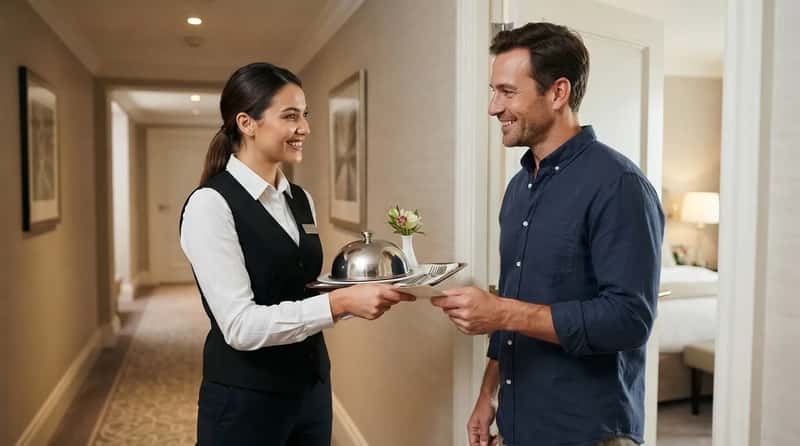
After everything else, this is the detail that sticks the longest. There’s a real difference between guests who are politely transactional and guests who are genuinely kind to the person in front of them, and staff feel that difference instantly.
It shapes every future interaction for the rest of the stay, sometimes without the guest ever realizing it happened. Staff across the industry consistently name genuine kindness – not tipping, not politeness, not status – as the single biggest factor in how a guest gets remembered.
Why It Stands Out
- Politeness follows a script; kindness responds to the actual person standing at the door.
- Kind guests ask how someone’s shift is going instead of just placing an order and closing the door.
- Staff say kindness is remembered longer than any tip amount, because it’s rarer and harder to fake.
None of this is a secret designed to embarrass anyone. It’s just what happens when someone does the same job hundreds of times a year and watches human behavior repeat itself at doors all over the country.
The guests who come across best usually aren’t trying to impress anyone. They’re just paying a little attention to the person standing in front of them – and it turns out that’s the one detail staff never forget.