Most people think frequent travellers are just lucky – right place, right time, smooth connections. Turns out, luck has almost nothing to do with it.
The real difference between someone who breezes through airports, finds the best food, and never loses a bag – and someone stressed out for half the trip – comes down to a specific set of habits nobody talks about. These 24 behaviours are things first-timers rarely know, and guidebooks almost never mention them.
#24 – They Plan for Disruption, Not Perfection
Experienced travellers build flexibility into a trip from the very start. They don’t assume the plan will hold – they assume something will shift, and they build time around that.
A fragile itinerary is one where every piece locks together perfectly. When one element moves – a delay, a cancellation, unexpected weather – the whole thing starts to unravel.
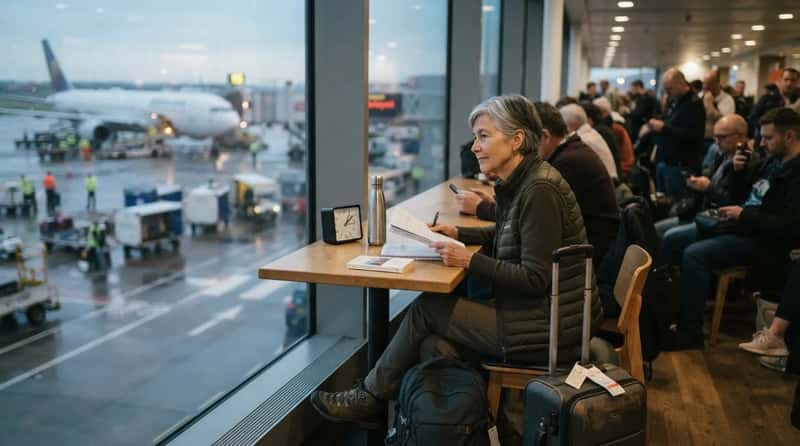
The most common rookie mistake is the back-to-back connection. Leave breathing room between flights, excursions, and check-ins – a 45-minute layover that works on paper almost never works in real life.
But that’s nothing compared to what they do before they even pack. What’s next reveals the habit that saves hours at the airport, every single trip.
#23 – They Never Check a Bag If They Can Help It
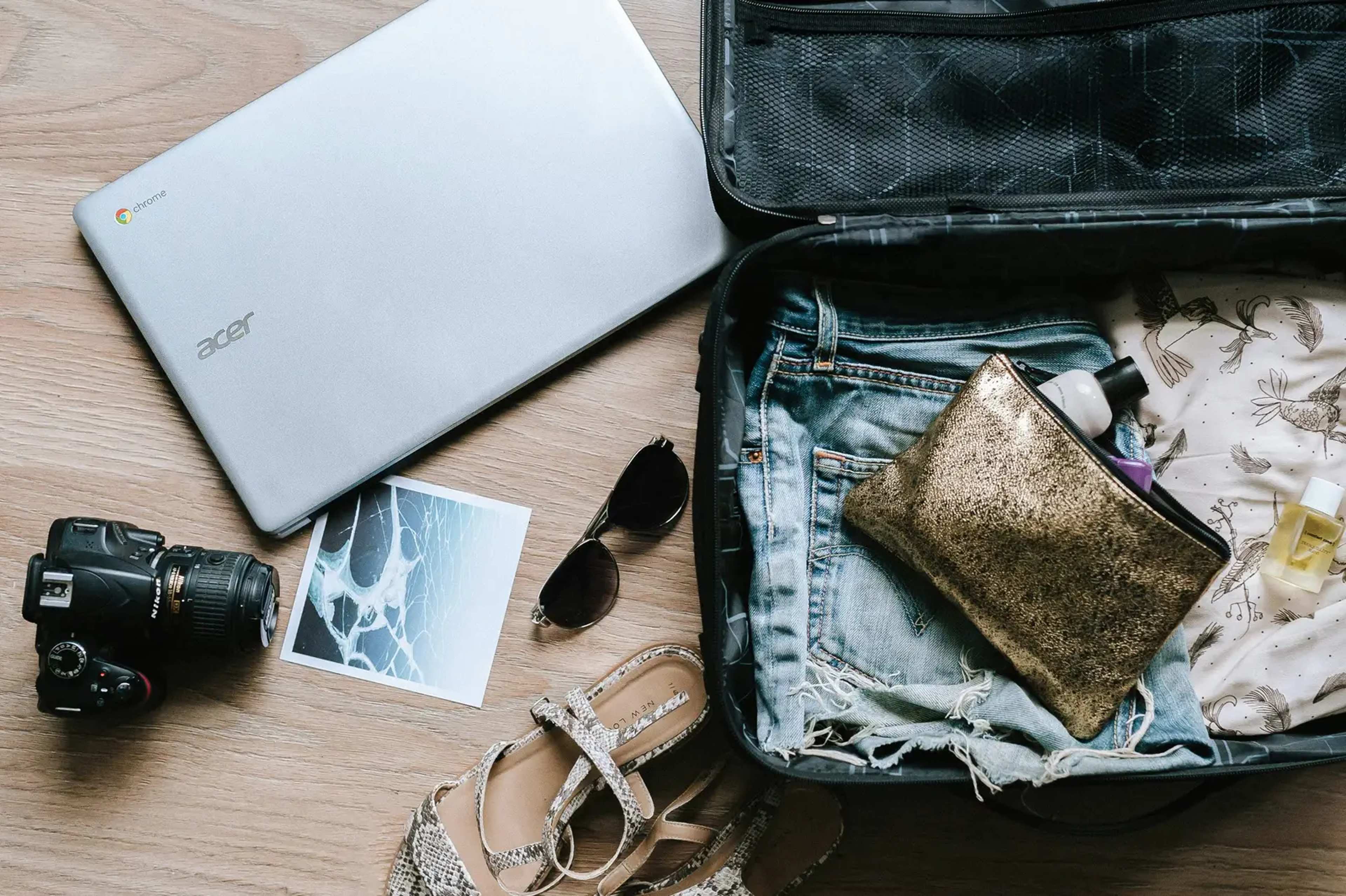
Frequent flyers know exactly which fabrics wrinkle, which shoes double for hiking and dinner, and how a sink and some soap solve ninety percent of wardrobe problems. It’s less about minimalism as a philosophy and more about never wanting to fight a suitcase down a train platform again.
You never need as much as you think you do – try cutting a third of your packing list before you even start folding. Veteran travellers do this automatically, without a second thought.
Carry-on only isn’t just about speed – it’s about control. No baggage claim, no lost bags, no surprise fees.
At a Glance
- Most major U.S. carriers cap carry-ons at 22 x 14 x 9 inches, including handles and wheels.
- Southwest allows a slightly bigger bag at 24 x 16 x 10 inches.
- Personal items must fit under the seat, typically around 17 x 10 x 9 inches.
- Gate-checking an oversized bag can run $35 to $65 on the spot.
The question of what actually goes inside that carry-on, though, is its own science – and next up is the part most people get completely wrong.
#22 – They Pack Using a System, Not a Pile

Seasoned travellers swear by packing cubes – not for style, but because separating clothing into compartments keeps a suitcase from turning into chaos after day two.
A capsule wardrobe of pieces that mix and match will carry you through almost any trip. Rolling clothes saves space, and quick-drying fabrics earn their keep in hot climates.
The single most efficient trick: stick to two or three colours so every item pairs with every other. No one at your destination knows or cares if you rewear an outfit.
Packing smart is step one. What experienced travellers do the moment they actually arrive is where things really start to separate from the first-timers.
#21 – They Master Public Transport on Day One
Nothing marks a tourist faster than confusion at a metro turnstile or a reflex to grab a taxi for every short trip. Experienced travellers force themselves to figure out public transport early, even if it costs an extra half hour on day one.
There’s something clarifying about riding a city bus next to people running errands instead of sightseeing. It resets the pace of an entire trip.
Taking an Uber every time isn’t just expensive – it insulates you from the place you came to experience. Experienced travellers treat the first metro ride as part of the culture, not an inconvenience.
But what they do before the airport – even before they pack – might be the most underrated habit on this entire list.
#20 – They Arrive a Day Early for Big Trips

A seriously underrated habit: arrive a day early, especially for long-haul trips. It gives your body a buffer to adjust, protects you from delays, and gives you time to actually rest.
If you’ve never crossed several time zones before – especially into Europe – you will be exhausted, and you will be glad you built in the cushion.
Fast Facts
- Jet lag hits hardest when you cross five or more time zones.
- Flying east tends to cause worse jet lag than flying west.
- Sunlight on arrival day helps reset your internal clock faster than sleep alone.
- Most travellers need roughly a day of recovery for every couple of time zones crossed.
Missing the first full day of a trip to jet lag is one of the most avoidable losses in travel.
First-timers think arriving a day early wastes time. Experienced travellers know it saves the entire trip.
The habit coming up next, though, is one that even frequent travellers sometimes skip – until something goes badly wrong.
#19 – They Never Skip Travel Insurance
Newer travellers sometimes skip insurance, betting that nothing will go wrong. Experienced travellers rarely make that bet twice.
Interest in travel protection has climbed steadily as more people report trip disruptions from weather, medical issues, or last-minute cancellations. A single medical evacuation abroad can run past $100,000 without coverage.
The travellers who skip insurance are the ones who haven’t yet had something go catastrophically wrong. One emergency abroad is usually all it takes to make coverage a permanent line item on every trip after.
The document habit that goes hand-in-hand with this one will make you rethink where your passport actually lives.
#18 – They Keep Multiple Copies of Every Document

Experienced travellers keep digital and physical copies of passports, visas, and vaccination records scattered across devices – one in the cloud, one in a different bag, one emailed to themselves.
This sounds paranoid until the moment your bag disappears on a red-eye and you need to prove your identity at a foreign embassy.
Losing your passport without a backup is one of the most stressful experiences in travel – and it’s entirely preventable. Experienced travellers treat document backup the same way they treat packing a charger: they simply don’t leave without doing it.
Speaking of knowing your documents cold – next up is a surprisingly small habit that instantly signals whether someone has done this before.
#17 – They Know Their Passport Number by Heart
Experienced travellers know their passport number by heart, filed away somewhere in a tired, pre-dawn brain.
It sounds trivial. It isn’t – when you’re filling out arrival cards at 5am with limited light, digging through a bag to copy a number is a rookie move.
Seasoned travellers write it in without breaking stride. The same goes for frequent flyer numbers, Global Entry IDs, and travel card PINs.
These numbers live in memory because they’ve been used enough times to earn a permanent spot there.
The next habit is a mindset shift that takes years to build – but once you have it, you can never unsee it.
#16 – They Read Online Travel Advice as a Starting Point, Not a Rulebook
Travel advice online can be useful, but not every recommendation suits every trip. A packing list or transit tip that works for one traveller may not work for another with a different budget or style.
Popular advice can sound universal when it isn’t. More practiced travellers treat online content as a starting point, not a rulebook.
The traveller who follows viral packing lists without filtering them arrives in Bali with three sweaters and no sandals. Experienced travellers adapt advice – they don’t copy it.
The next habit separates people who remember a trip forever from people who forget it within a month.
#15 – They Splurge on One Memorable Meal Per Trip

Experienced travellers often choose one standout dining experience per trip – a tasting menu, a famous local spot, a once-in-a-lifetime meal. The memory usually outlasts the cost.
This isn’t about being extravagant every night. It’s about anchoring the whole trip to one sensory memory that sticks.
The meal you save up for is almost always the one you’re still talking about five years later.
Roughly 44% of travellers say local food is what actually connects them to a destination – which means the shortcut to understanding a place is often just sitting on the plate.
But experienced travellers don’t just eat the local food passively – the next habit changes how they find it in the first place.
#14 – They Eat Where Locals Eat, Not Where Signs Say “Tourist Menu”
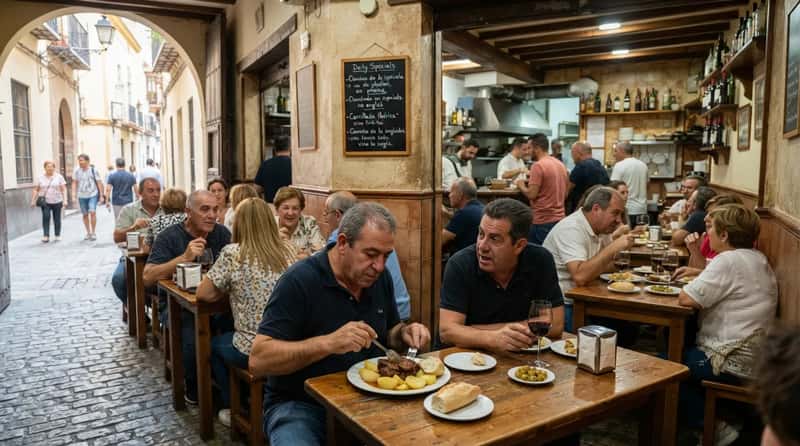
A restaurant advertising a “tourist menu” in three languages is a red flag, not an invitation. Experienced travellers walk two streets past the obvious strip and look for handwritten daily specials with no photos on the menu.
Culinary experiences and local-host activities are growing fast among experienced travellers – because the people who’ve done this before know a real local lunch costs half the price and tastes twice as good.
If it has a QR code menu with photos in four languages and a host waving you in from the street, keep walking. The good places never need to recruit anyone.
The next habit looks small in the moment but consistently changes the entire tone of a trip.
#13 – They Learn a Few Words in the Local Language
Experienced travellers learn a handful of words wherever they land – not fluency, just “hello,” “thank you,” “please,” and “do you speak English?”
Even with a language barrier, a smile and a basic greeting go a long way. It’s a small effort that’s consistently appreciated.
Most people never bother. That’s exactly why the people who do stand out. They tend to get warmer receptions, better service, and more genuine encounters.
The next habit shows respect before anyone even opens their mouth.
#12 – They Research Etiquette Before They Arrive
Experienced travellers research basic etiquette before landing somewhere new – not to seem impressive, but because interactions go smoother when locals feel respected. Dress codes at religious sites, tipping norms, greeting customs – they get quiet attention.
This awareness usually comes from actual mistakes made on earlier trips. Nearly every seasoned traveller has one mildly embarrassing cultural misstep in their past that they never repeated.
Cultural missteps cost more than embarrassment – in some destinations, they cost you access entirely.
The next habit flips this inward – it’s the difference between leaving with real memories or just a camera roll.
#11 – They Stop Needing a Place to Impress Them
You start to actually understand a place the moment you stop needing it to impress you. First-timers arrive with expectations shaped by Instagram; seasoned travellers arrive curious instead.
Viral images create expectations, but popular spots often come with long lines, timed entry, and angles that look nothing like real life. Experienced travellers stop building a whole trip around one famous photo.
The traveller chasing the perfect shot often misses the actual moment. The one who shows up without the agenda usually finds a better one.
The next habit is one of the clearest signals of serious mileage – you can spot it at any airport in the world.
#10 – They Don’t Overpack Their Itinerary

A schedule packed morning to night can look efficient on paper, but experienced travellers avoid plans with zero breathing room. Tight itineraries leave no space for delays, weather, closures, or plain fatigue.
Over-planned trips can start to feel like a checklist – physically present, mentally ticking boxes. Experienced travellers protect at least one unstructured block of time every day, even if they never use it.
The best travel moments – the conversation, the detour, the market you stumbled into – almost never appear on any itinerary. You have to leave room for them to happen.
The next habit is one most people only adopt after getting badly burned at least once.
#9 – They Carry a Portable Power Bank Everywhere
A small battery pack keeps a phone alive all day – and experienced travellers treat it as non-negotiable, because that phone is a map, a translator, a boarding pass, and an emergency line all at once.
Running out of battery in an unfamiliar neighbourhood isn’t just inconvenient – it can genuinely be unsafe.
A dead phone abroad is the modern equivalent of losing your map in a city with no landmarks. A 10,000mAh power bank weighs less than a paperback and solves the whole problem.
Worth Knowing
- The FAA caps lithium-ion power banks at 100 watt-hours without special airline approval.
- Power banks always have to travel in the cabin – they’re never allowed in checked luggage.
- A typical 10,000mAh power bank comes in around 37Wh, comfortably inside the limit.
- Batteries between 100 and 160Wh usually need airline approval, and most carriers cap it at two devices.
The next habit is one that many experienced travellers swear saved an entire trip – and most rookies never think of it until they’re already at the gate.
#8 – They Download Offline Maps Before They Land
Experienced travellers download offline maps before the airport Wi-Fi turns into a scavenger hunt. It takes two minutes and saves hours of confusion.
International roaming is expensive, airport Wi-Fi is unreliable, and a local SIM takes time to sort out – exactly when you need navigation most.
The traveller who already has the city downloaded is already moving; everyone else is standing at arrivals staring at a spinning wheel.
Google Maps and Maps.me both offer offline downloads, and experienced travellers use them before every single new destination.
The next habit is a financial one that separates smooth trips from the ones that end in a nasty bank statement.
#7 – They Sort Their Money Before They Travel
Experienced travellers skip airport currency exchange booths entirely. They arrive with a travel card that has no foreign transaction fees, and they already know the rough exchange rate before landing.
A big part of feeling in control on a trip is never being financially blindsided – by dynamic exchange rates, hidden ATM fees, or a cashless market that suddenly won’t take your card.
Airport currency exchanges can charge margins of 10 to 15% above the interbank rate. That’s real money lost on a meaningful holiday budget.
The next habit happens well before departure – and the travellers who do it consistently seem to get better outcomes across the board.
#6 – They Book Activities in Advance for High-Demand Dates

One of the most overlooked habits is how early experienced travellers plan the actual activities of a trip – not just flights and hotels, but the experiences themselves.
They ask a different question before booking anything: not “where should I go,” but “what will I actually do there that I couldn’t do anywhere else.”
Some of the world’s most sought-after experiences – national park permits, famous restaurant reservations, specific tour slots – sell out months in advance. The traveller who books early doesn’t just get in; they get the exact time slot they wanted.
The next habit changes how you feel about the entire trip before it even begins.
#5 – They Choose Shoulder Season Without Apology

More than 70% of travellers say they’re conscious of overtourism when picking a destination, and in 2025, 41% said they chose somewhere specifically because it promised fewer crowds.
Experienced travellers book shoulder season – the weeks just before or after peak – almost instinctively. Better prices, shorter queues, more genuine interactions, and often the exact same weather.
Arriving at the Amalfi Coast in late September instead of August isn’t a compromise – it’s an upgrade. Experienced travellers know this. First-timers find out the hard way.
Quick Compare
- Peak season: highest prices, longest lines, and reservations that vanish months out.
- Shoulder season: lower rates, shorter waits, often near-identical weather.
- Off season: the cheapest window, but some attractions or transport may run limited hours.
The next habit is one you can actually spot in experienced travellers at any airport, if you know what to look for.
#4 – They Treat Gate Agents, Flight Crew, and Hotel Staff Like People
Experienced travellers are consistently pleasant – to gate agents, flight attendants, drivers, porters. It doesn’t cost a single dime to be nice.
This isn’t just good manners – it’s strategically smart. Gate agents have discretion over seat upgrades, rebooking priority, and standby lists, and front desk staff can quietly upgrade rooms or waive fees.
The traveller who arrives with patience and basic courtesy is the one who most often gets the quiet room, the better view, or the flexible late checkout. The one who demands it almost never does.
The next habit is the one that most clearly separates people who travel a lot from people who travel well.
#3 – They Build a Routine for Recovery, Not Just the Journey
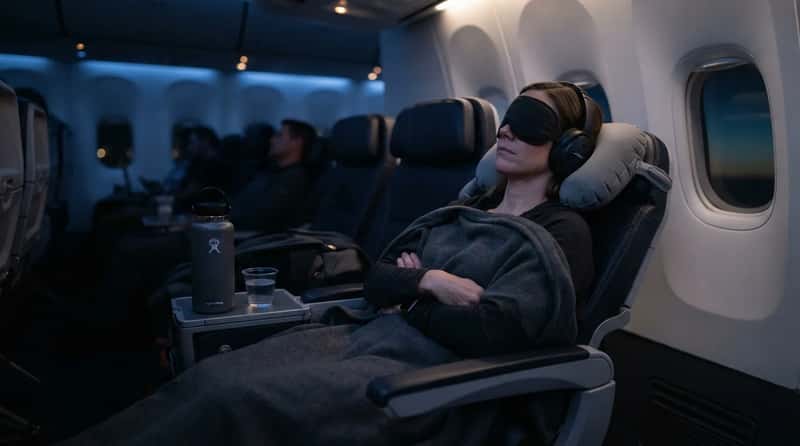
Experienced travellers favour depth over volume – richer experiences over packed schedules. Part of that is treating rest as a deliberate strategy, not a sign of weakness.
Experienced travellers sleep on the plane when it’s night at the destination, not when they personally feel tired. They walk in natural light on arrival to reset their circadian rhythm.
They hydrate aggressively on long-haul flights, knowing cabin humidity sits around 10 to 20% – far drier than most deserts.
Coming home exhausted is normal for first-timers. Experienced travellers have learned to manage the physical toll so the trip itself doesn’t grind them down.
The next habit fundamentally changes what you actually take away from a destination – and it’s the one most people never develop at all.
#2 – They Engage With Local People Instead of Other Tourists
If your reflex is to listen first – to ask how locals see an issue, how holidays are celebrated, how neighbours support one another – you’re practicing the most seasoned travel habit there is: humility.
Culinary experiences, local-host activities, and themed tours are all growing fast, reflecting a real hunger for deeper, more meaningful ways to explore a place.
The tourist who spends a week somewhere and only talks to hotel staff and other tourists from home has essentially visited a bubble, not a place. Experienced travellers know this, and actively choose the interactions that cross that line.
Travel is fatal to prejudice, bigotry, and narrow-mindedness.
Mark Twain
And all of it builds toward the one habit that defines every truly seasoned traveller – the one that makes everything else on this list possible.
#1 – They Are Comfortable Being Uncomfortable

The difference between a smooth trip and a stressful one never really comes down to luck. It comes down to habits – and the deepest one of all is a tolerance, even a preference, for the unexpected.
The train that doesn’t come. The hotel that doesn’t match the photos. The neighbourhood that feels nothing like the guidebook described.
First-timers panic. Experienced travellers pivot – because they’ve been here before, they know it resolves, and they’ve learned the detour is often better than the original plan.
You learn not to universalize from a single bad experience, and how quickly assumptions fall apart when they meet real people. That’s the actual mark of someone who has done this before.
This isn’t a skill you read your way into. It only comes from going – repeatedly, imperfectly, with your eyes open.
The Bottom Line
Experienced travellers don’t always travel more – they just travel smarter.
Over time, the gap between a stressful trip and a smooth one comes down to small decisions made before and during the journey: offline maps downloaded before landing, documents backed up in three places, shoulder season booked without hesitation, local food found two streets past the obvious strip.
None of it requires money or natural talent. It just requires repetition.
So which of these do you already do – and which one are you finally starting on your next trip? Drop it in the comments.