Here’s what almost every passenger gets wrong the first time the floor tilts: they assume something has broken. In reality, nearly everything you feel during a rough crossing – the noise, the sealed doors, the sudden hum of a second generator – is a system working exactly as designed, running procedures that have existed for decades.
The engineers and bridge crews behind the scenes aren’t panicking. They’re not even surprised. What actually gets under their skin isn’t the weather at all – it’s the requests, assumptions, and small habits passengers bring onto a rocking ship that make an already demanding job harder than it needs to be.
#24 – Actually, Deck Closures Aren’t a Suggestion
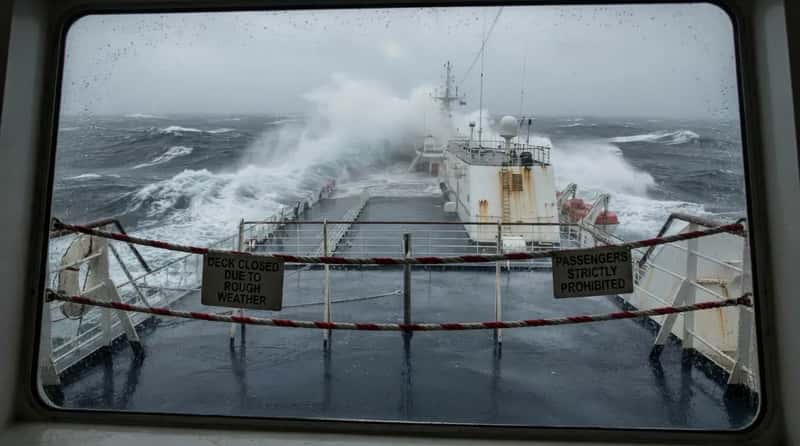
When crew close off open decks during heavy weather, it isn’t a cautious overreaction. Crews are specifically instructed not to go out on open deck in rough weather, and that rule applies to passengers even more strictly, since crew members at least know where the hazards are.
Guests who duck under a rope “for one photo” put rescue teams in an impossible position if a wave catches them. The closure isn’t about ruining your view – it’s about a ship that’s actively moving in ways you can’t predict from a hallway.
#23 – Turns Out Lashed Furniture Is a Warning Sign, Not Decor
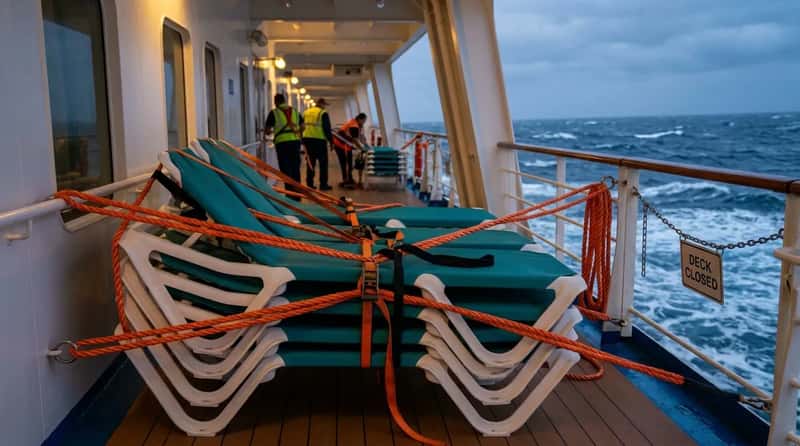
Deck furniture, ropes, and loose equipment get tied down before a storm for a very specific reason. Deck items like mooring ropes and lashing equipment have to be stored and lashed properly ahead of rough seas, because anything unsecured becomes a projectile once the ship starts rolling.
Passengers often read tied-down chairs as an inconvenience rather than what it actually is: a visible signal that the forecast has changed. Engineers say guests who notice this early and adjust their plans have a far calmer night than those who don’t.
#22 – Watertight Doors Slamming Shut Means the Plan Is Working
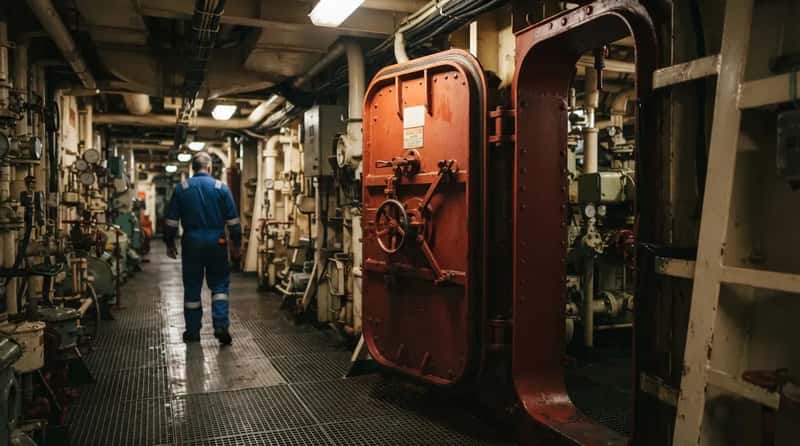
Few sounds startle passengers more than a heavy door sealing itself mid-hallway. Watertight doors in machinery spaces are closed as standard procedure once rough weather hits, long before there’s any actual danger.
It’s a preventive step, not a reaction to a problem. Crews say the worst thing a passenger can do is force a closed door open out of curiosity – it defeats the entire purpose of the system in seconds.
#21 – The Second Generator Kicking In Isn’t a Malfunction
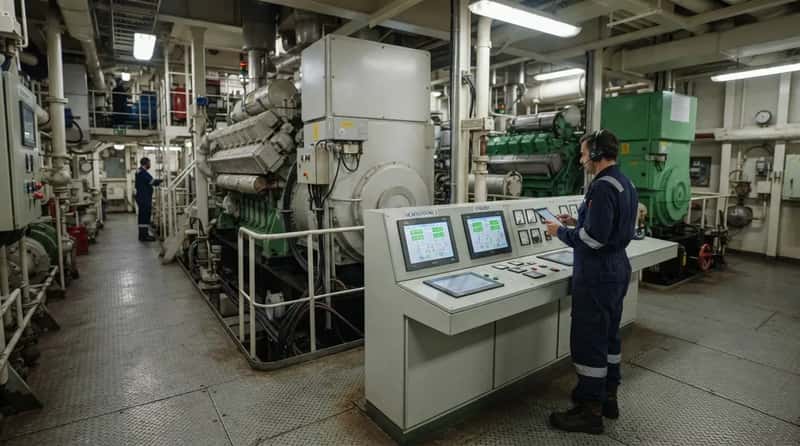
That new hum you hear isn’t a warning. A standby generator is kept on load until the rough weather situation passes, giving the ship backup power precisely when systems are working hardest.
Passengers sometimes assume extra engine noise means something failed. Engineers say it’s the opposite – it means redundancy is doing exactly what it was built for, quietly, in the background, without needing anyone’s attention.
#20 – Autopilot Gets Turned Off for a Reason You Never See
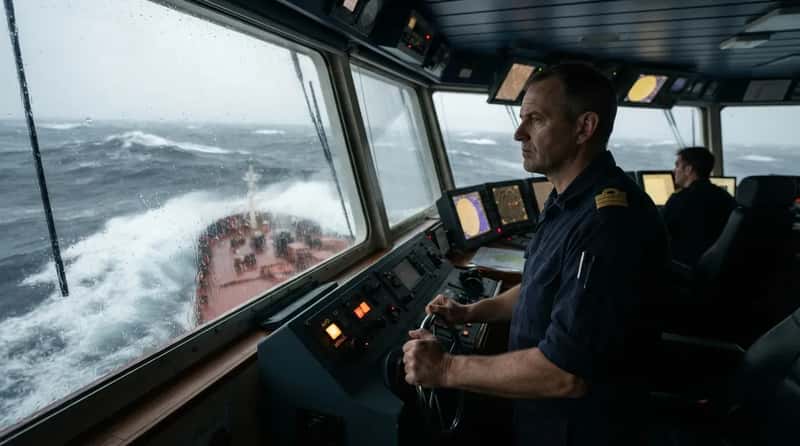
Bridge crews frequently abandon autopilot the moment seas get rough. Ships are normally on autopilot in open sea, but it’s advisable to switch to manual or hand steering to avoid excessive hunting of the rudder during heavy weather.
This switch is invisible to passengers but critical to comfort. Manual control lets officers react to individual waves instead of letting a computer overcorrect, which is often the difference between a smooth ride and a jarring one.
#19 – Slowing Down Is the Move Most Passengers Secretly Hate
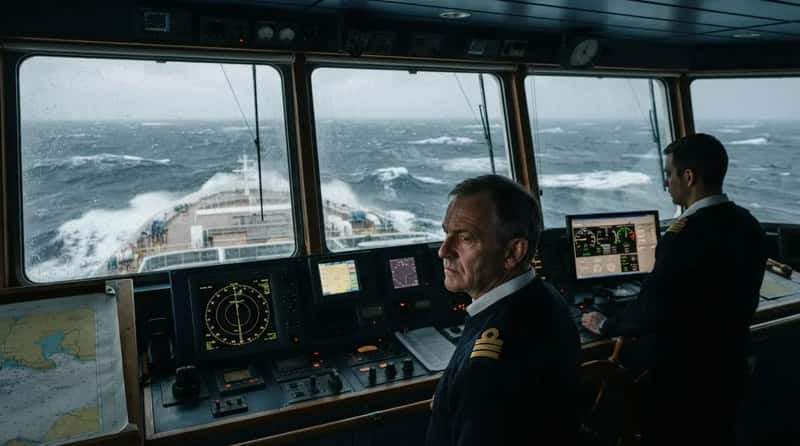
Nothing generates more onboard complaints than a captain cutting speed. Crews reduce ship speed and move carefully through rough waters specifically to protect the hull and everyone on it, not to pad the schedule.
Many travelers treat a slower crossing as a broken promise. Engineers see it differently: speed is the first variable they control, and giving it up early almost always prevents a much rougher night later.
#18 – Your Cabin Number Secretly Decides How Rough Your Night Gets
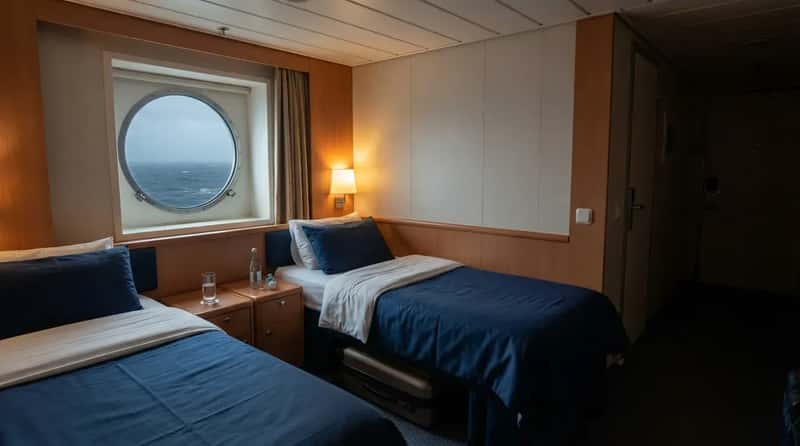
Passengers rarely realize how much cabin placement affects comfort in bad weather. Getting to a lower deck toward the middle of the ship matters, because the center – both front to back and side to side – experiences the least motion.
A cabin at the bow or on a high deck can feel like a completely different ship during the same storm. Crews say this single detail causes more seasickness complaints than the weather itself ever does.
Quick Compare
- Low deck, midship: motion is minimized, the most stable pick on the ship.
- Upper deck, bow, or stern: rolling and pitching are amplified, often noticeably.
- Same storm, different result: cabin location can matter as much as the weather itself.
#17 – Those Hidden Fins Are Doing 90% of the Work
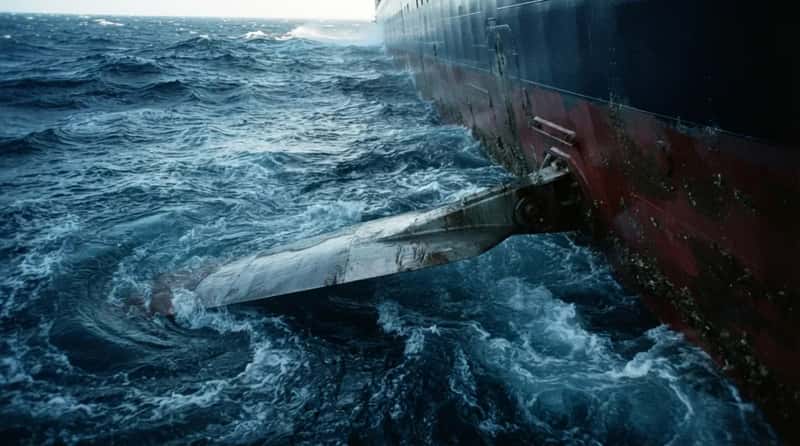
Most passengers have no idea what’s actually keeping them upright. Stabilizers on modern cruise ships can reduce rolling motion by as much as 85 to 90 percent, quietly absorbing most of what the ocean is actually doing.
What you feel is a fraction of the real motion outside. Engineers say the biggest misconception is passengers assuming a rocky night means the ship is “fighting” the sea – in reality, it’s already winning most of that fight before you notice.
#16 – Stabilizers Quietly Stop Working the Moment We Slow Down
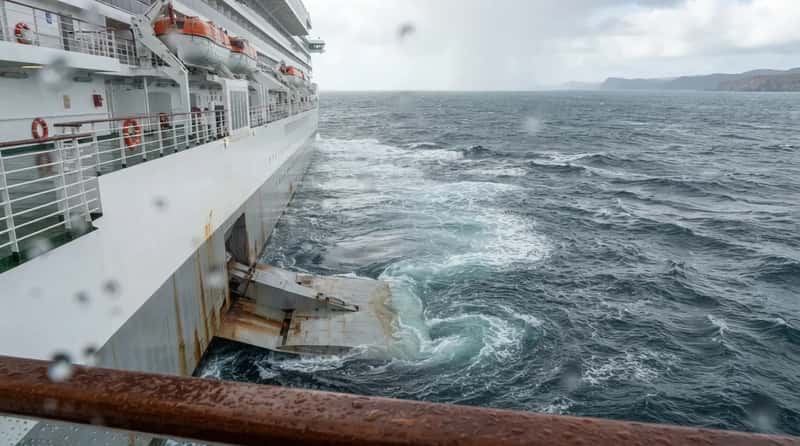
Here’s the part almost nobody understands: stabilizers aren’t always active. They’re only effective when the ship is sailing, since they rely on constant water flow across the fins to function.
Passengers frustrated by a rocking ship at low speed often assume the equipment failed. It didn’t – it simply has nothing to push against, which is a physics limitation no captain can override.
#15 – Retracting the Fins to Dock Isn’t Us Giving Up
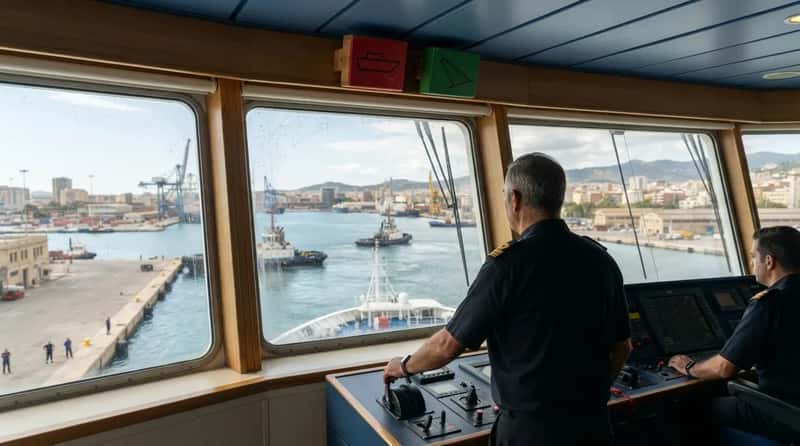
Just as ships approach port, stabilizers often disappear entirely. Fins are fully retracted when docking or passing through narrow waterways, to protect the equipment and improve handling in tight spaces.
On some ships, bridge officers even track this manually. Handwritten signs above the bridge windows indicate whether the stabilizers are deployed or retracted, a surprisingly low-tech detail behind a very high-tech system.
#14 – Idle Generators Roaring to Life Isn’t Overkill, It’s Insurance
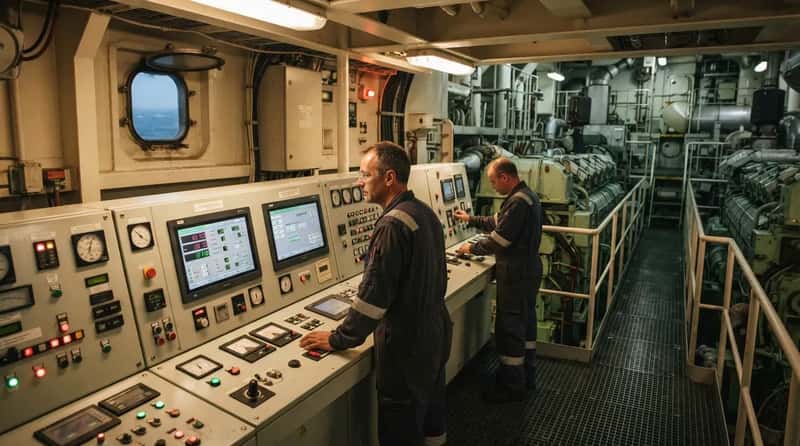
Passengers assume redundant systems are wasted money. Engineers disagree completely – the engine room is manned and every parameter of the main propulsion and auxiliary plant is monitored the moment rough weather hits.
That level of attention rarely gets noticed because nothing goes wrong. Crews say that’s the entire point – the visible calm passengers experience is the direct result of invisible vigilance they never see.
#13 – We’re Watching Numbers You’ll Never See on Your Cruise App
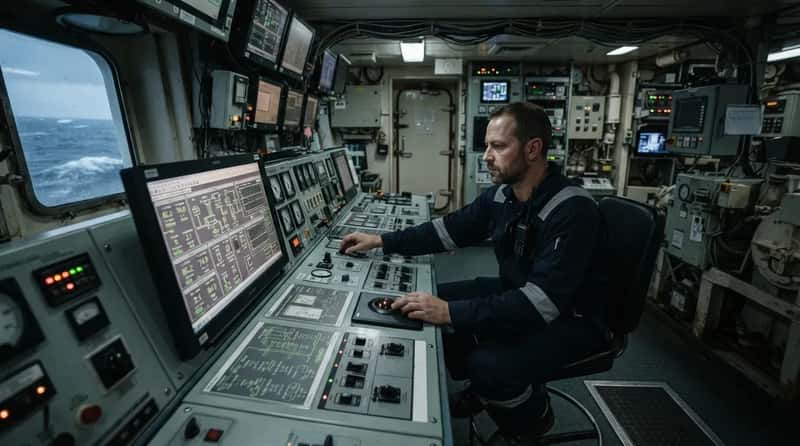
Long before waves get noticeable, engineers are already adjusting. Correct sump levels have to be maintained during rough seas, since rolling can trigger false level alarms that even trip running machinery if ignored.
It’s tedious, unglamorous work most passengers never think about. But it’s also the reason a “smooth crossing” almost never happens by accident – it happens because someone was checking tank levels an hour before you woke up.
#12 – A Spilled Drink Tray Is the Best-Case Scenario
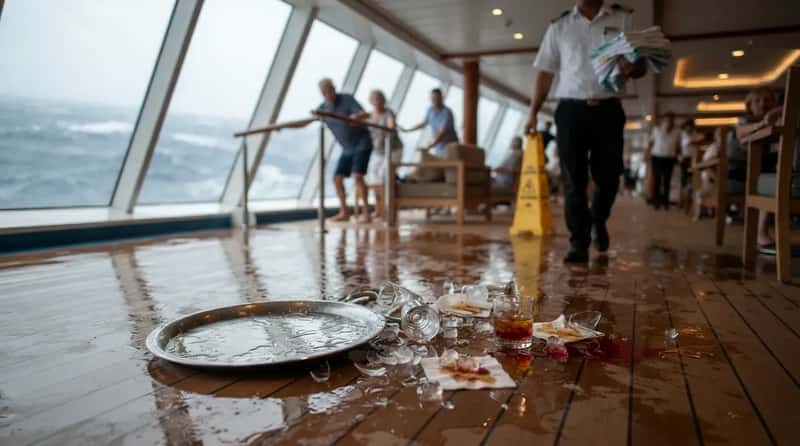
Crews genuinely prepare for spills as a serious operational detail, not just a mess. All trays are meant to be secured against spilling in the event of rough weather, because a slick floor is one of the most common injury causes onboard.
Passengers who laugh off a spilled cocktail rarely realize it’s treated as an early-warning sign for crew, not just an inconvenience for guests. A wet floor in rough seas is taken far more seriously than it looks.
Worth Knowing
- Drink trays and glassware are secured well before service starts in rough seas, not after something spills.
- Tank and sump levels get checked constantly, since rolling can trigger false alarms on running machinery.
- Loose furniture is treated as a genuine safety hazard, not just clutter to tidy up later.
- Skipping a scheduled port costs the cruise line real money, so it’s always a last resort.
#11 – Reporting a Sliding Chair Isn’t “Being That Passenger”
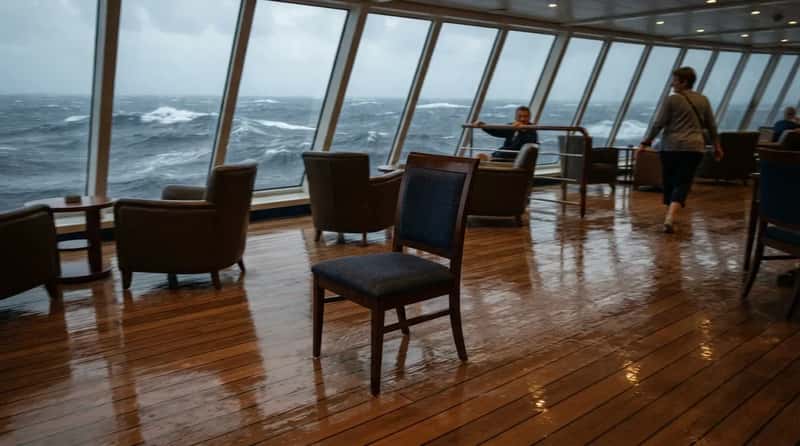
Many travelers stay quiet about small hazards to avoid seeming dramatic. Crews wish the opposite happened – loose furniture creates hazards and an unbalanced environment, and gear should be secured or tied down as part of standard safety protocol the moment it’s spotted.
A sliding chair reported early takes thirty seconds to fix. Left alone through a storm, it can become a genuine injury risk – and crews say passengers who speak up are helping, not annoying anyone.
#10 – Skipping a Port Is Never the Lazy Option
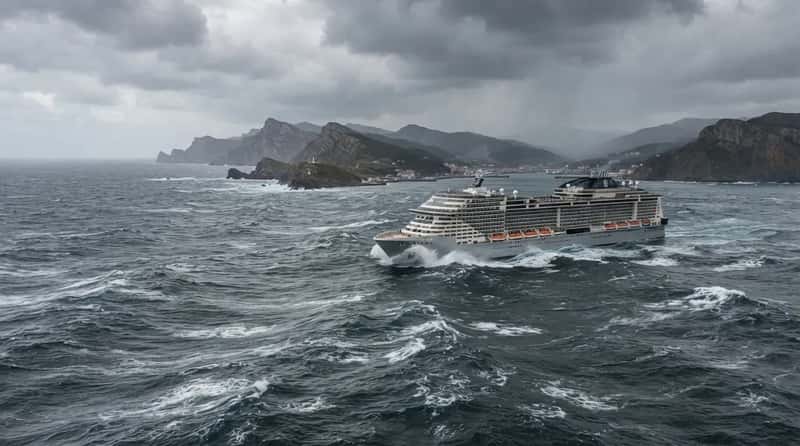
Few decisions generate more complaints than a canceled port stop. Rough water can make nausea-prone passengers seasick and force the ship to skip ports entirely, a call made reluctantly and only when conditions genuinely demand it.
Passengers often assume this is about convenience. It isn’t – dropping a scheduled port costs the line money and goodwill, which is exactly why it only happens when the alternative is worse.
#9 – Crowding the Rails for a Storm Photo Is the Riskiest Thing You’ll Do All Trip
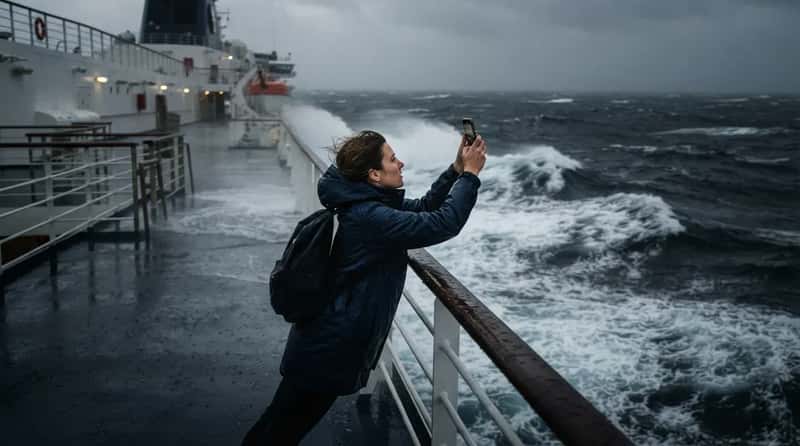
This is one of the more controversial opinions among crew: they believe the biggest danger on a rough crossing isn’t the storm – it’s passengers ignoring it for content. Rails and open decks become genuinely unpredictable in swell, and no photo is worth testing that.
Many travelers see storm footage as a bragging right. Crews see it as the single most preventable injury risk on the entire voyage, and they’ll say so bluntly if they catch you trying.
#8 – Staring at the Horizon Actually Rewires Your Balance
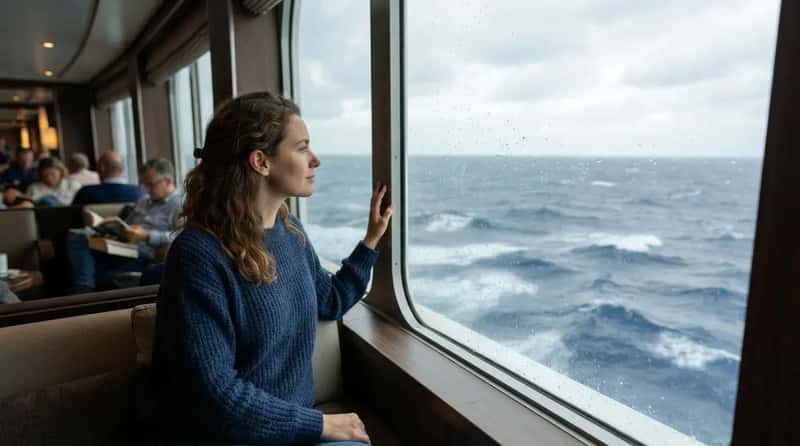
This isn’t folk wisdom – it’s basic inner-ear science. Your brain uses the horizon line as a reference point to adapt to the ship’s movement, which is why fixed screens and phones make seasickness noticeably worse.
Passengers glued to their cabin TV during rough seas are unknowingly fighting their own biology. Crews consistently recommend heading to a window with a real view instead, and it’s one of the few free remedies that actually works.
#7 – One Seasickness Pill Doesn’t Work for Everyone, and Crews Know It

Onboard medical teams see the same pattern every rough crossing: passengers assuming one remedy fits all. Many travelers rely on medication or motion bands to prevent seasickness, but response varies wildly from person to person.
What works for a cabinmate may do nothing for you. Crews wish more passengers tested remedies before departure instead of discovering, mid-storm, that their only backup plan doesn’t actually work on their body.
#6 – Skipping Sleep Before Rough Water Backfires Fast

Exhausted passengers get hit hardest once the seas pick up. Fatigue makes people more vulnerable to motion sickness, which is why crews quietly recommend rest over another late night at the casino before a forecasted rough stretch.
It’s a simple, unglamorous fix that most travelers ignore completely. Engineers say the passengers who feel worst the next morning are almost always the ones who fought sleep the night before.
#5 – The Drake Shake Reputation Only Tells Half the Story
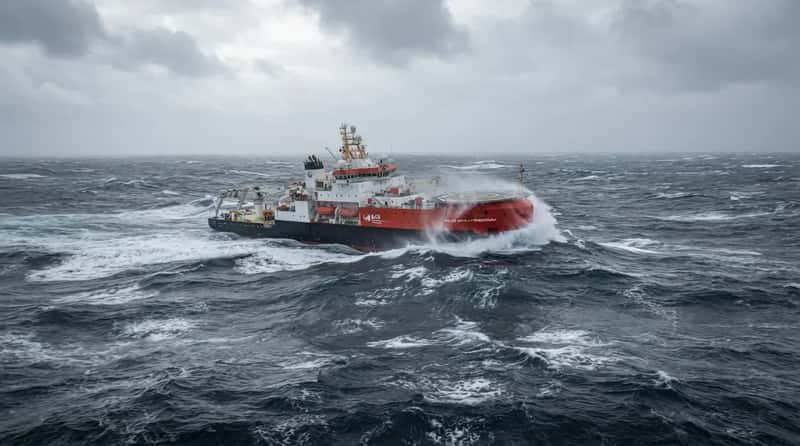
Antarctic sailors talk about this crossing like it’s guaranteed chaos, but the numbers tell a calmer story. Roughly 70% of Drake Passage crossings are calm to moderate, while only about 30% bring the more challenging conditions that earn the legendary status.
Even so, the passage earns its nickname honestly. Waves regularly reach 40 feet during storms, earning it the nickname “Drake Shake” among seasoned travelers – a reputation that’s dramatic, but far from constant.
At a Glance
- About 70% of Drake Passage crossings: calm to moderate, nothing close to legend status.
- About 30% of crossings: the rougher conditions that built the reputation.
- Storm waves: can reach 40 feet, which is where the “Drake Shake” nickname comes from.
#4 – Ferries Actually Move More Than the Cruise Ship Next Door
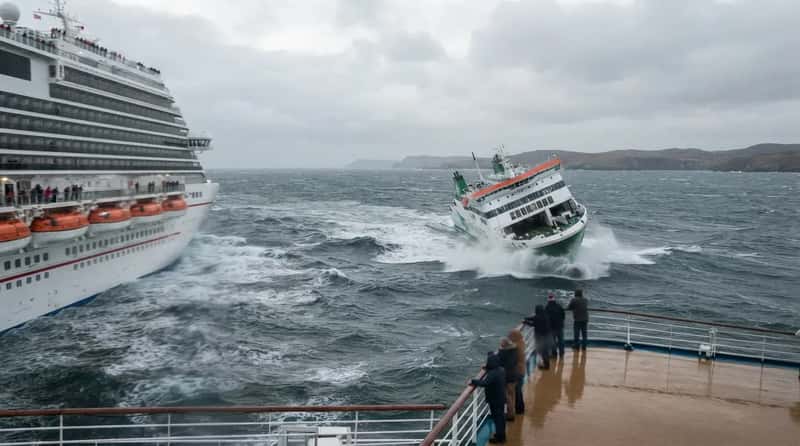
Here’s a controversial one crew love pointing out: size matters more than route. Passengers are far more likely to experience rough conditions on a ferry than on a cruise ship, simply because ferries are smaller.
Travelers often assume a “calm route” guarantees a calm ride, regardless of vessel type. Crews say that assumption is backwards – the same stretch of water can feel dramatically different depending on what you’re standing on.
#3 – Fifteen-Foot Waves Are Routine, Not an Emergency
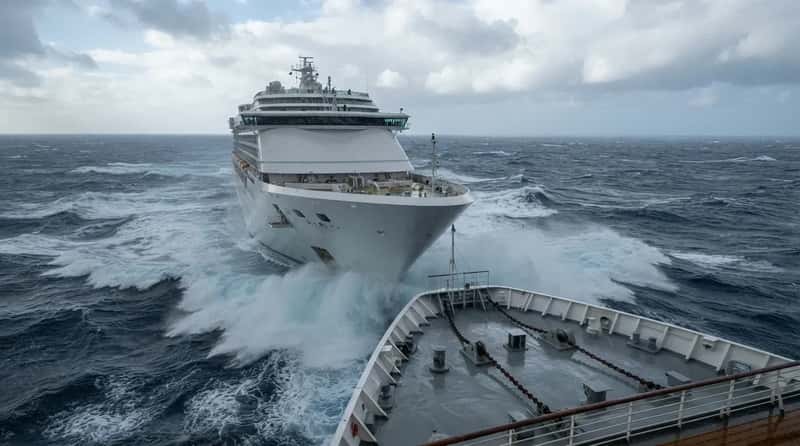
Passengers who see whitecaps outside their window often assume disaster is imminent. Cruise ships are built to handle waves up to 15 feet with no issues, a threshold most travelers dramatically underestimate.
What feels alarming from a lower deck is often completely unremarkable to the bridge. Engineers say the gap between passenger panic and actual risk is one of the widest misunderstandings at sea.
Fast Facts
- Standard tolerance: ships are engineered to handle waves up to 15 feet without any real issue.
- Backup motion control: stabilizer fins can cut rolling by up to 85 to 90 percent.
- Backup steering: bridge crews switch from autopilot to manual control in rough seas for faster reaction time.
#2 – Trusting the Bridge Beats Trusting a Stranger’s Video Online
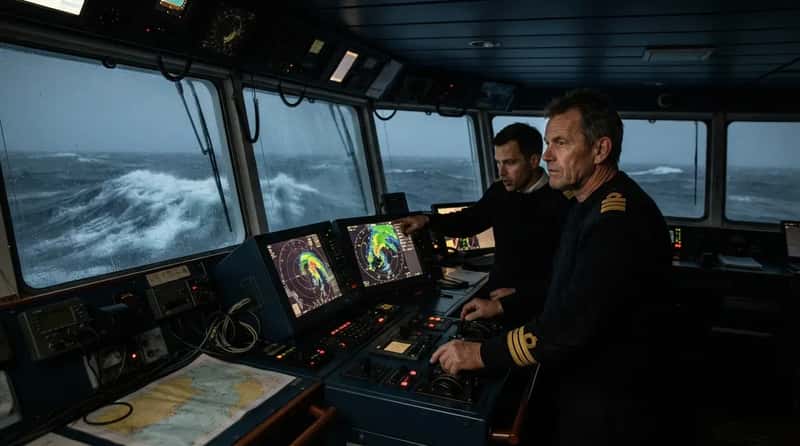
Viral storm footage has convinced a lot of passengers they know more than they do. Crews push back hard on this – cruise captains possess advanced skills that let them navigate through genuinely challenging ocean conditions that no video can fully capture.
Comparing your crossing to a stranger’s dramatic clip almost never gives an accurate picture. Every route, ship, and storm behaves differently, and the person actually reading the radar has context a phone screen never will.
#1 – When the Captain Reroutes, the Decision Was Already Made For You
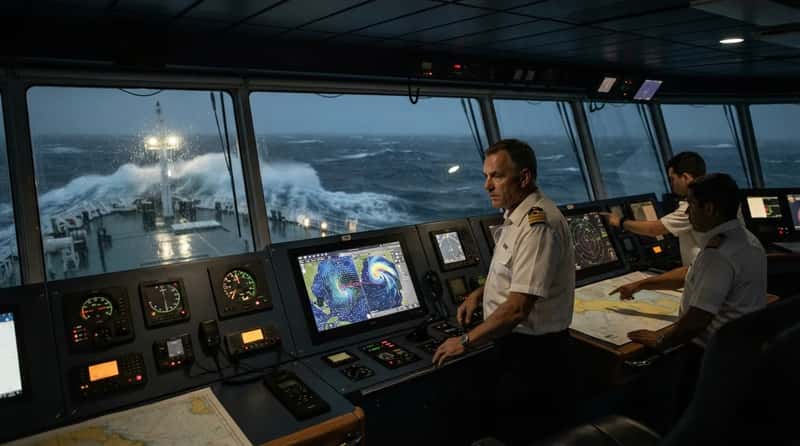
By the time passengers hear an announcement about a course change, the real decision-making happened hours earlier. The captain will order passengers to stay indoors when it’s deemed necessary, a call built on data most guests never see – weather models, swell direction, ship loading, and crew reports from multiple decks at once.
This is the request engineers say matters most: stop treating a reroute as an inconvenience to negotiate. It’s the single decision that keeps a rough crossing from becoming a dangerous one, and it’s never made lightly.
None of this is about scaring anyone off the water. Rough crossings are common, survivable, and – for most ships – exactly what the engineering was built to handle. The real gap isn’t between passengers and danger; it’s between what passengers assume is happening and what’s actually being managed, minute by minute, in rooms most people never see.
Next time the floor tilts and a door seals shut somewhere down the hall, that’s not chaos. That’s the plan working, exactly the way someone in an engine room designed it to.