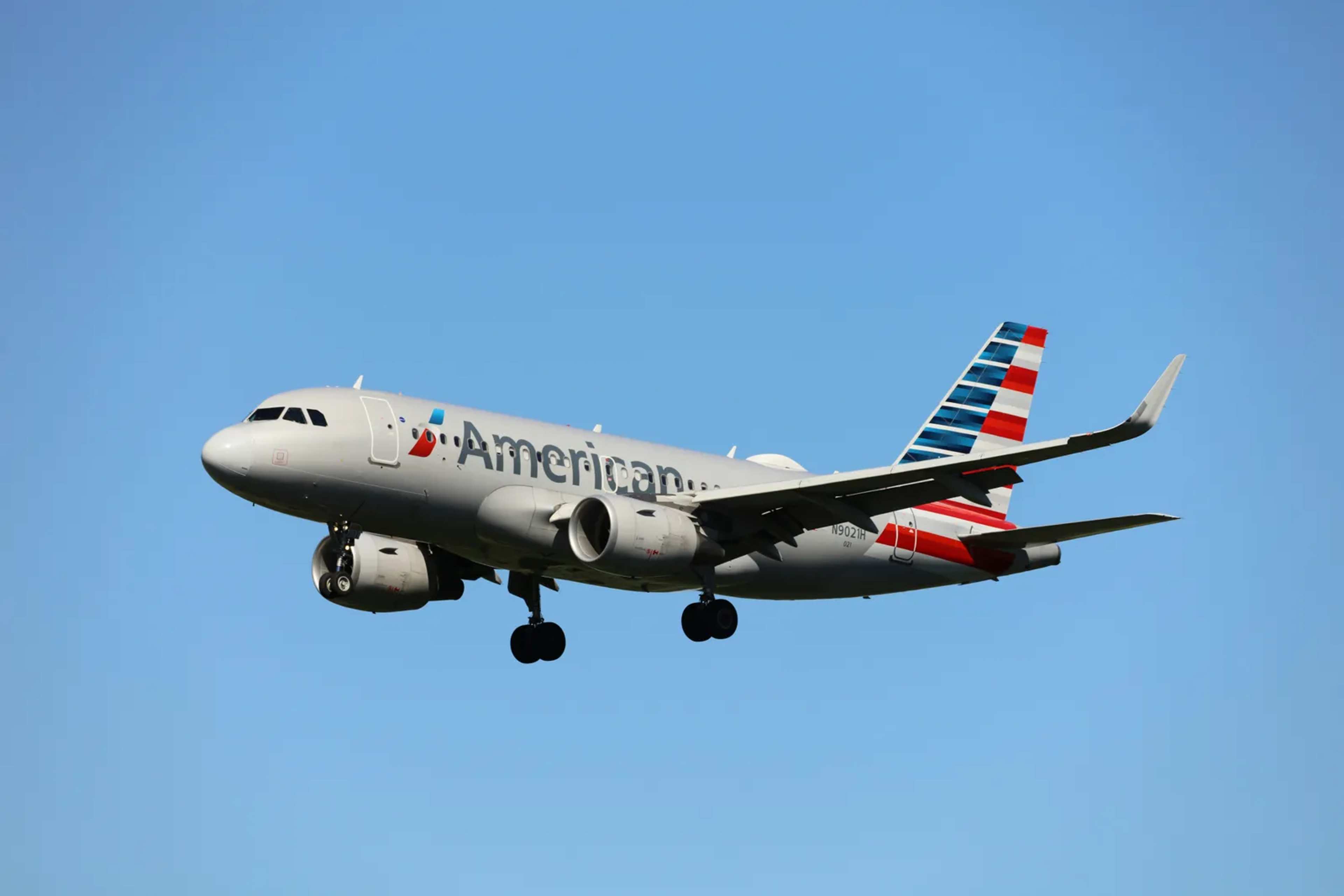
Most people assume flight attendants treat every economy passenger exactly the same, running through the same script row by row for eight, ten, or fourteen hours straight. But ask any veteran cabin crew member off the record, and they’ll tell you solo travelers quietly get a different kind of attention – not favors, exactly, but small, deliberate adjustments most passengers never notice.
It’s not charity. It’s pattern recognition. Crews who fly ultra-long-haul routes learn fast that a lone passenger without a travel companion to lean on needs different handling than a family of four, and the fixes they’ve developed over decades are surprisingly specific. Here’s what actually happens behind that galley curtain.
#24 – Your Name Quietly Ends Up on the Pre-Flight Briefing Sheet
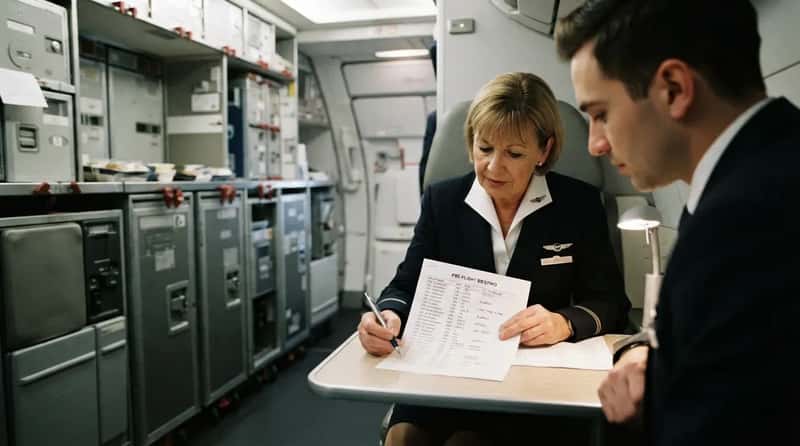
Before boarding even starts, the senior cabin crew member runs a full briefing covering special passengers, expected flight time, and anyone with reduced mobility or traveling as an unaccompanied minor. Solo adults flagged as elderly, first-time flyers, or visibly anxious sometimes get folded into that same mental checklist, even without an official flag on their booking.
It sounds bureaucratic, but the effect is real. A crew member who already knows “seat 34C is flying alone and looks nervous” checks that row more often without being asked. That single line item quietly shapes how attentive an entire flight crew is to one specific seat for the next twelve hours.
Fast Facts
- Senior cabin crew briefings happen before every flight, usually 30 to 60 minutes before boarding.
- Briefings typically flag unaccompanied minors, wheelchair users, and medical needs first.
- Solo adults aren’t officially flagged, but crews often add informal notes for nervous or first-time flyers.
- Ultra-long-haul flights tend to get more detailed briefings than short domestic hops.
#23 – Meal Service Reaches You a Beat Sooner
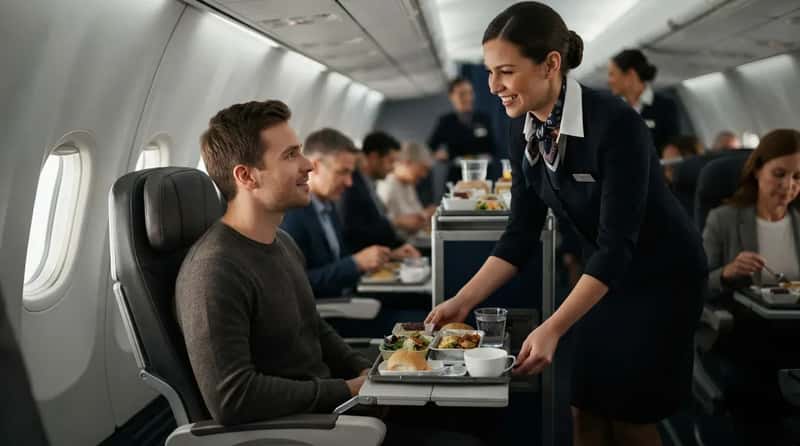
Crews often work solo travelers into the first meal pass rather than the last, especially in a full economy cabin. It’s a tiny sequencing choice, but it means less time sitting hungry with no one to talk to about it. The logic is simple: a companion can distract a hungry traveler, a stranger can’t.
This isn’t official policy anywhere, and it’s inconsistent flight to flight. But multiple crew members describe doing it instinctively, moving carts slightly out of strict row order to reach an obviously solo passenger before the cart runs low on the preferred entree. It’s a courtesy with zero cost to the airline and an outsized effect on a lonely flight.
#22 – Empty Rows Get Offered in a Whisper, Not an Announcement
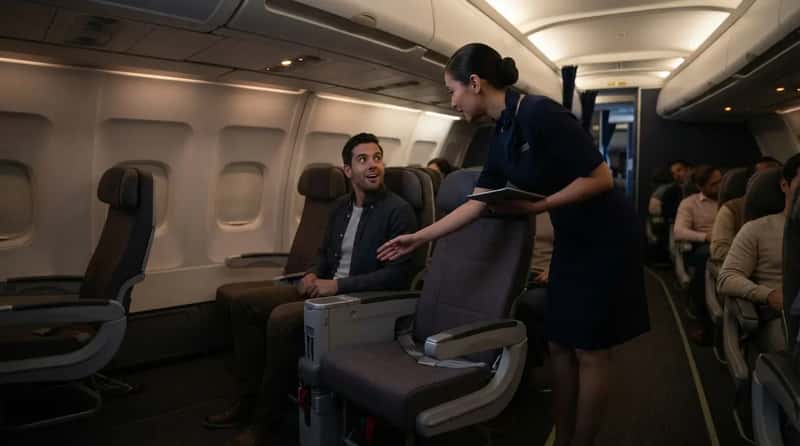
When a long-haul flight isn’t full, crews frequently walk the aisle before the cabin lights dim and quietly point solo travelers toward open rows instead of making a cabin-wide announcement. Announcing it would spark a stampede; a quiet tip to the person sitting alone doesn’t.
This is one of the most requested favors on ultra-long-haul flights, and crews know it well. A solo traveler stretched across three empty seats sleeps dramatically better than one wedged into a middle seat, which means fewer call-button interruptions later for headaches, stiffness, or requests to move. It’s practical crowd management disguised as kindness.
#21 – You’re Steered Away From the Loudest Row on Purpose
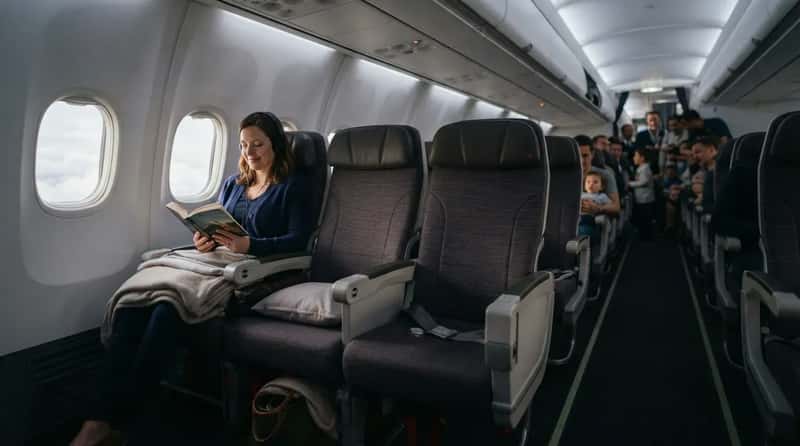
Gate agents and crew sometimes coordinate, almost invisibly, to keep solo adults away from rows packed with rowdy groups, screaming toddlers, or passengers who’ve clearly started drinking before boarding. It rarely looks deliberate from the outside.
Crew members describe this as basic conflict prevention. A solo traveler has no built-in ally to help manage an uncomfortable seatmate situation, so shifting the arrangement upstream avoids problems mid-flight entirely. It’s one of the more controversial habits crews admit to, because it means seating charts get quietly rearranged behind the scenes more often than airlines publicly acknowledge.
#20 – Hot Water Requests Get Fast-Tracked
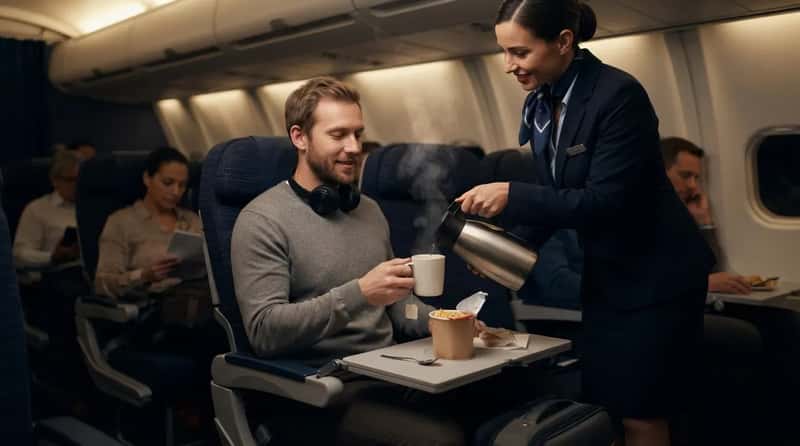
Solo passengers who packed their own instant meals or tea bags are frequently the first ones crew members remember to circle back to with hot water. It may not sound exciting, but it can turn a sad airplane snack into something closer to an actual meal, and crews notice who’s relying on it.
The reasoning crews give is straightforward: a solo traveler has no one else at the row to flag down a passing cart on their behalf. Missing that one window can mean a cold, forgotten request for the entire remaining flight, so attentive crews build in a mental reminder specifically for rows with a lone occupant.
#19 – First Aid Gets Offered Without Much Hesitation
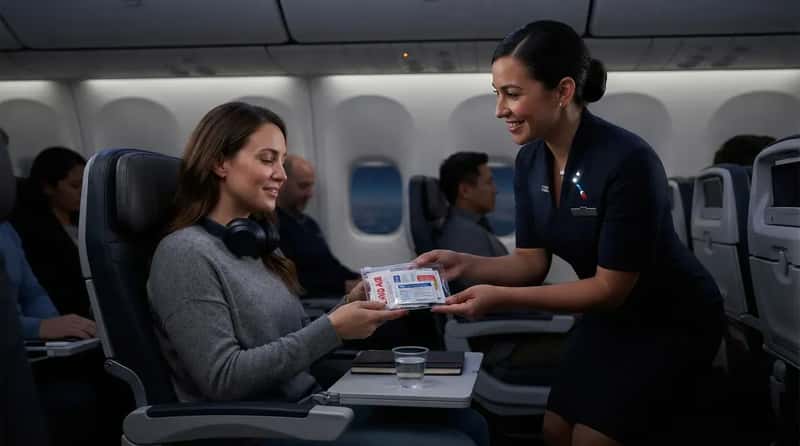
Headaches, minor scrapes, or a rough stomach hit differently when there’s no travel partner to hand you a painkiller from their bag. Crews say they’re quicker to offer first aid supplies to solo travelers because there’s genuinely no backup plan sitting next to them.
This is standard equipment on most long-haul aircraft, and passengers rarely realize they can just ask.
Passengers can request first aid supplies like Band-Aids or over-the-counter pain relievers.
Larry Holcombe, American Airlines flight attendant
#18 – A Little Extra Small Talk, On Purpose
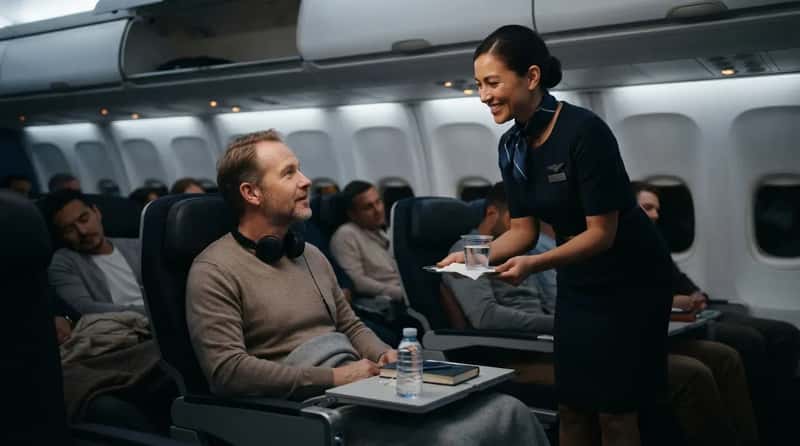
Crews say a short, genuine “how’s the flight treating you?” during a beverage pass isn’t filler chat, it’s a wellness check disguised as politeness. Solo travelers who seem withdrawn or overwhelmed get a few more seconds of conversation than passengers chatting happily with a companion.
It’s a small gesture with a real purpose. A brief exchange lets crew gauge anxiety, dehydration, or confusion before it becomes an actual problem mid-flight, especially on overnight routes where a solo traveler might otherwise go eight hours without speaking to a single person. Experienced crew members treat this as informal duty of care, not just friendliness.
#17 – Elderly Solo Flyers Get Watched More Closely
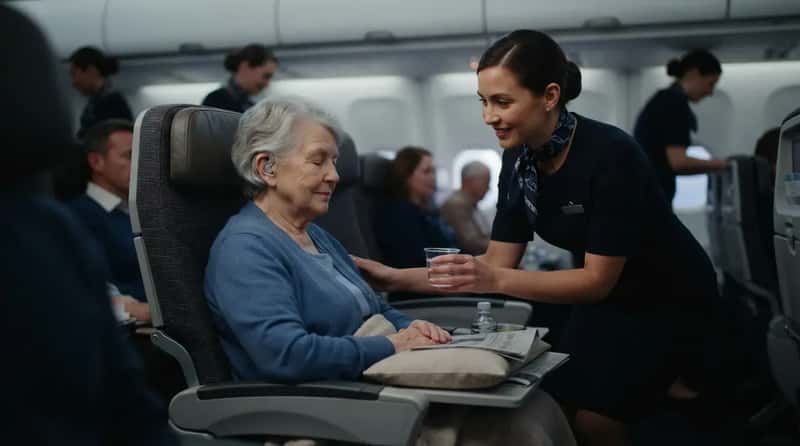
An elderly passenger traveling without family draws quiet extra attention from crew throughout a long-haul flight – more frequent glances during the walk-through, a gentler nudge to drink water, a subtle check that they’ve eaten. None of it is announced or logged; it’s simply muscle memory built from experience.
This habit exists because crews have seen what happens when it’s skipped. Dehydration, disorientation after a nap, or trouble reaching the overhead bin are common on flights over ten hours, and a solo elderly traveler has no one nearby to catch the early warning signs. Crew members essentially become that missing travel companion for the duration of the flight.
#16 – Aisle Seat Swaps Get Approved Faster
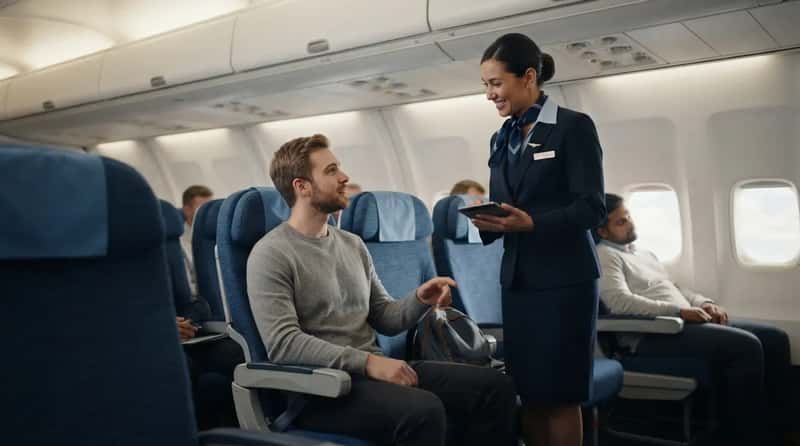
A solo traveler asking to move seats for easier bathroom access tends to get a quicker yes than the same request from someone mid-conversation with a travel partner. Crews say it’s partly about efficiency, since resolving one person’s comfort issue is simpler than untangling a group’s seating preferences.
But there’s also a fairness argument crews bring up often, and it’s mildly controversial: many flight attendants privately believe solo travelers get deprioritized for seat changes on paper, so they overcorrect in person. The result is that lone passengers often have an easier time getting moved than families assume.
#15 – Leftover Meals Quietly Go to the Person Flying Alone
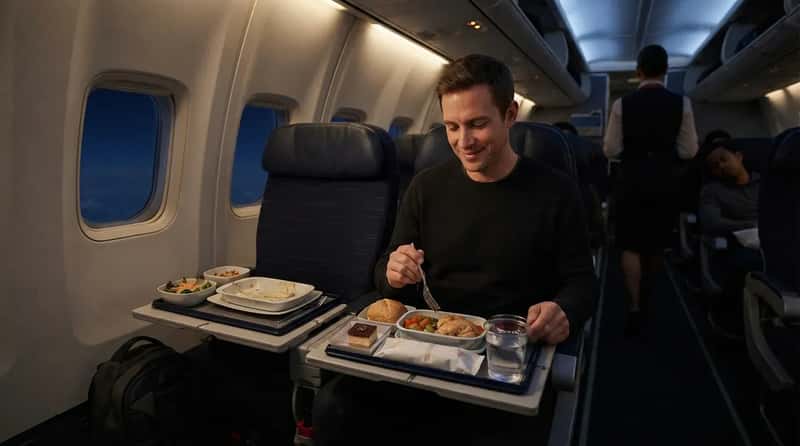
When a long-haul flight has extra meals after service, a common outcome since crews count for no-shows and special orders, solo travelers in the back are often the first ones offered seconds. It’s rarely broadcast to the whole cabin.
Crew members describe this as low-risk generosity. A solo passenger without a partner to share fries or dessert with is an easy, appreciative recipient, and it costs the airline nothing since the food would otherwise be thrown away. It’s one of the more universally loved small arrangements crews make, and one of the least talked about publicly.
#14 – Discreet Reseating When a Seatmate Feels Wrong
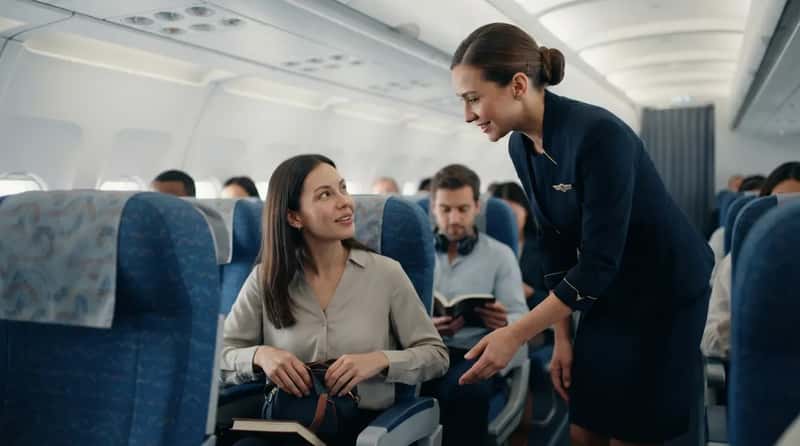
Solo women in particular sometimes flag discomfort about a seatmate quietly to crew rather than making a scene, and experienced flight attendants say they take these requests seriously and move fast. The reseating usually happens without explanation to anyone else nearby.
This is one of the more sensitive arrangements crews make, and many say airlines could be doing it more consistently. A solo traveler has no built-in witness or ally if a seatmate situation escalates, which is exactly why crew members treat these quiet requests as a priority rather than an inconvenience.
#13 – Turbulence Updates Get More Personal
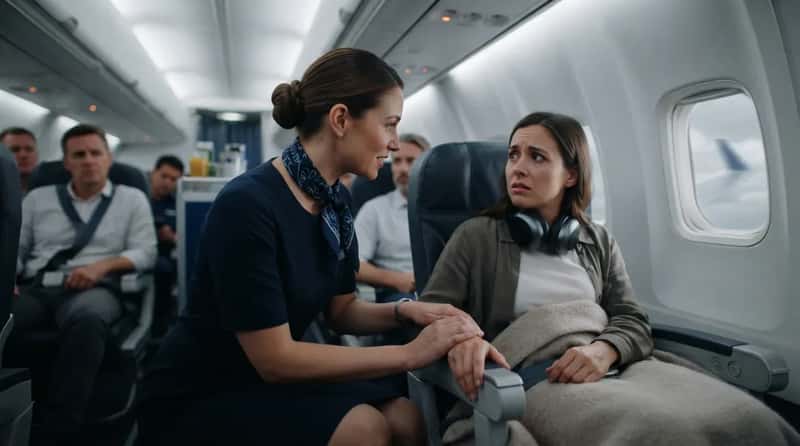
A nervous flyer traveling with family often gets reassurance from a loved one squeezing their hand. A solo nervous flyer doesn’t have that option, so crews say they make a point of walking through the cabin more visibly during rough patches, offering a calm word to passengers flying alone.
It’s a small script adjustment, but it matters. Anxiety during turbulence spikes fastest in passengers who have no one next to them to talk it through, and crew members who’ve flown long enough recognize the difference between someone gripping an armrest alone versus with a companion. The extra pass-through is deliberate, not accidental.
#12 – Open Upgrades Quietly Favor the Solo Traveler
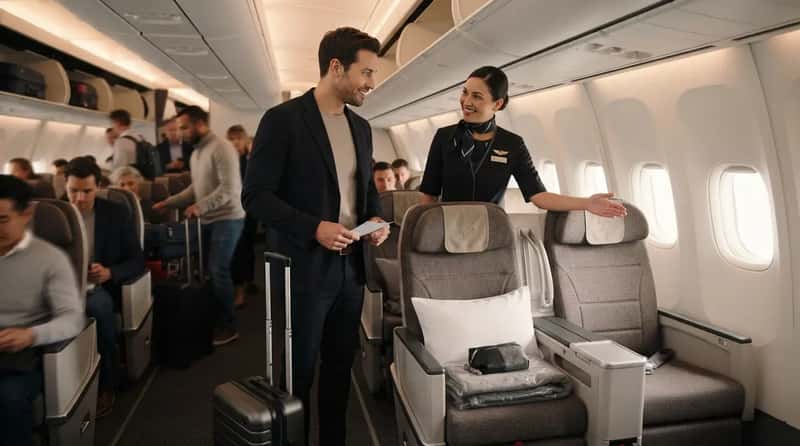
When a rare open seat appears in premium cabins, solo travelers have a real edge over groups, according to flight attendants who’ve worked the boarding door for years. Being dressed neatly, flying on a less-than-full plane, traveling alone, and boarding last all seem to stack the odds in a lone passenger’s favor.
The math is simple from a crew’s perspective: one open seat can only fit one person, so a solo traveler is the cleanest fit. Families or couples asking for an upgrade usually need multiple open seats together, which almost never exists on a full flight, making single travelers the practical first choice.
Quick Compare
- Solo traveler: Needs just one open seat, the easiest fit for a last-minute upgrade.
- Couple: Needs two open seats together, far less common on a full flight.
- Family of four: Needs multiple adjoining seats, rarely available at all.
#11 – Extra Blankets Show Up Before You Ask
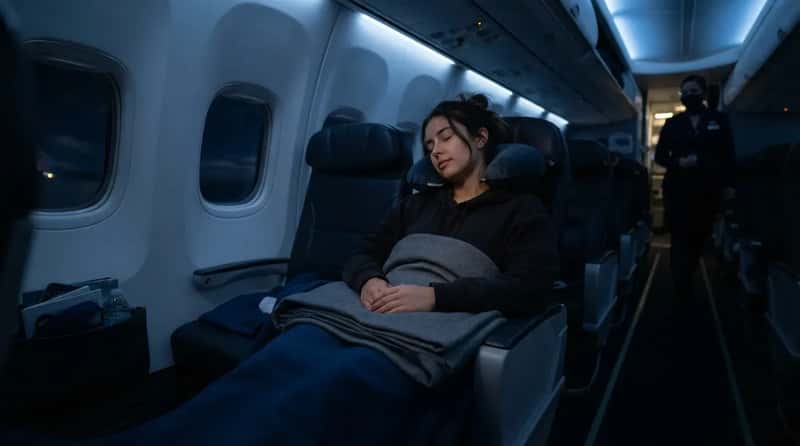
On overnight long-haul flights, crews say solo passengers are more likely to get a spare blanket or pillow handed over proactively, especially once the cabin lights go down and most of the plane is asleep. It’s a low-effort gesture with an outsized comfort payoff.
The reasoning is practical. A solo traveler who wakes up cold has no partner to quietly ask for their blanket, so they either suffer through it or hit the call button, and most crew members would rather prevent the call button entirely. Spare linens get funneled toward single-seat travelers first when supplies run short.
#10 – Deplaning Directions Get a Little More Detail
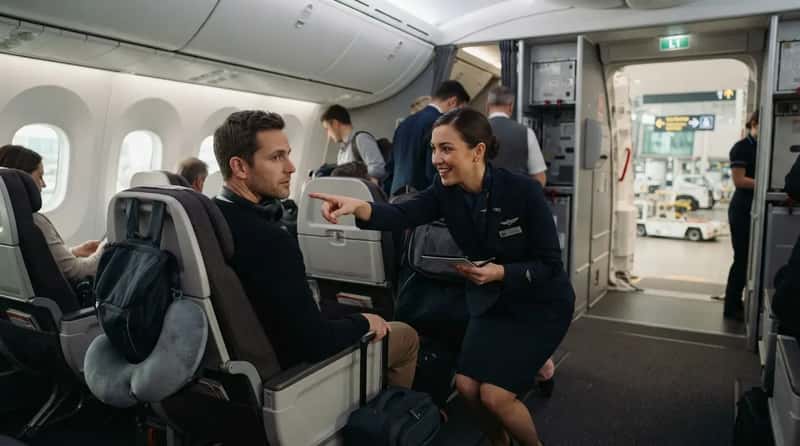
Solo travelers connecting through an unfamiliar airport occasionally get a more detailed rundown from crew during descent – which door to use, roughly where the connecting gates sit, how long customs typically takes. Groups usually figure this out collectively; solo flyers don’t have that luxury.
It’s one of the more overlooked small arrangements, but crew members who fly international long-haul say it’s common enough to be a habit. A thirty-second heads-up can save a jet-lagged solo traveler twenty stressful minutes wandering a massive terminal alone, and most crews consider that trade obviously worth it.
#9 – Water Rounds Happen More Often for the Rows Sitting Alone
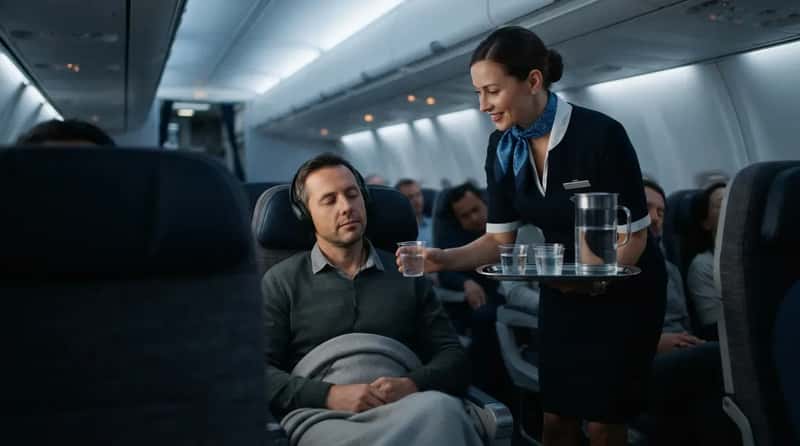
Regular hydration checks are standard crew duty on any long-haul flight, but crews say they tend to circle back more consistently to rows where a passenger is sitting entirely alone, since there’s no seatmate to nudge them to drink. Walking the cabin every thirty minutes offering water is routine, but a solo traveler is easy to miss if they’ve drifted off.
Solo travelers, especially ones who’ve fallen asleep with headphones in, are easy to overlook. Crews describe deliberately pausing a beat longer at rows with a single occupant to make sure the offer actually registers, rather than gliding past someone who looks unconscious under a blanket.
#8 – A Softer Landing on Bad News
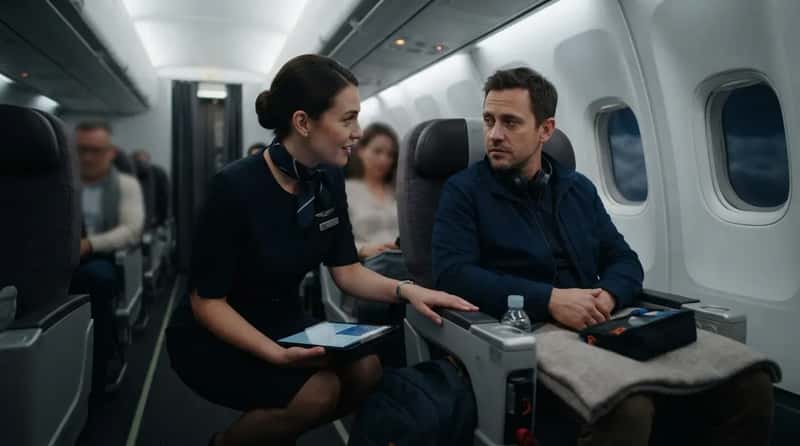
Delays, missed connections, or gate changes get delivered a little more gently to solo travelers, according to several crew members, simply because there’s no companion nearby to help process frustrating news. A short explanation replaces a curt announcement whenever crew has the bandwidth.
This arrangement is subtle but consistent across long-haul crews who’ve spoken about it publicly. A solo passenger reacting badly to unexpected news has nowhere to vent except at the crew member in front of them, so many flight attendants find it easier, and kinder, to over-explain rather than under-explain when something goes wrong.
#7 – Extra Snack Stashes Get Mentioned Quietly
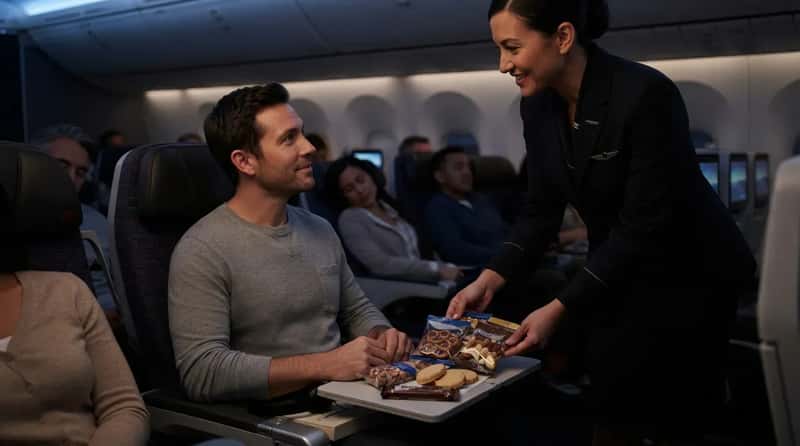
Long-haul aircraft typically carry backup snacks beyond the standard cart pass, and crews say solo travelers are more likely to be told about them directly rather than left to discover the offer buried in the entertainment system’s ordering menu. Groups traveling together often share snacks brought from home, but a solo traveler running low on food mid-flight has no backup.
Crew members say pointing this out proactively is one of the easiest, lowest-cost ways to make someone’s ten-hour flight noticeably better. It costs the airline nothing and it’s the kind of tip that gets passed along to a friend the moment the plane lands.
#6 – Jet Lag Advice Gets Passed Along Unprompted
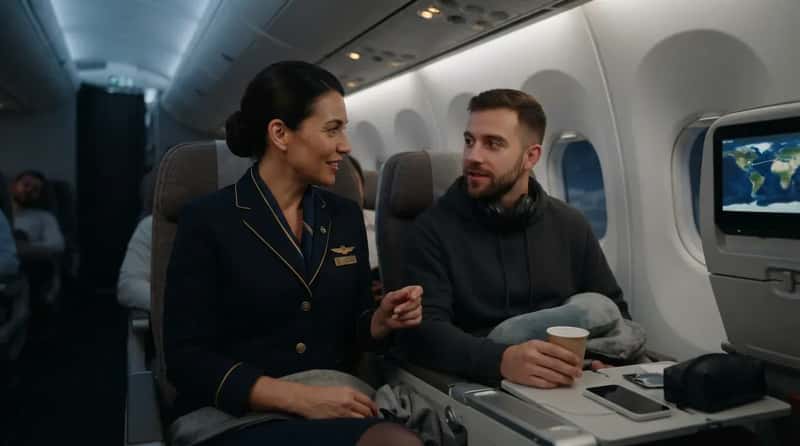
Solo travelers heading into a big time zone shift occasionally get informal advice from crew about when to sleep, when to force themselves awake, or when to avoid caffeine – tips normally reserved for close friends comparing notes before a trip.
Crews who fly the same long-haul routes constantly have this advice memorized, and solo travelers are the ones most likely to ask for it, since they don’t have a travel partner already coordinating a plan. It’s a small exchange, but it often becomes the most useful piece of advice a passenger gets on the entire trip.
Worth Knowing
- Getting sunlight at your destination helps reset your internal clock faster.
- Staying hydrated and limiting alcohol in flight can ease jet lag symptoms.
- Switching your watch to destination time as soon as you board helps the mental transition.
- Flights crossing six or more time zones usually call for a sleep schedule adjustment; shorter hops rarely do.
#5 – A Little More Personal Space, When Possible
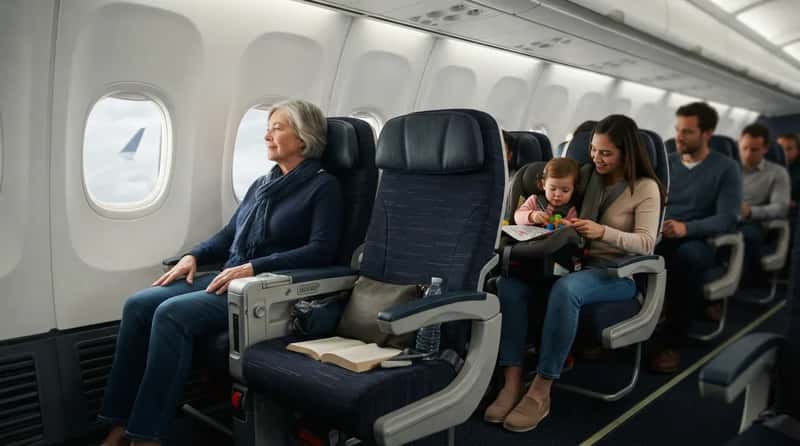
On flights with any flexibility at all, crews say they try to avoid seating a solo traveler directly beside a family that’s clearly going to need the middle seat for a car seat, toys, or overflow. It’s a small logistical shuffle that avoids an uncomfortable ten hours for everyone involved.
This arrangement is more about damage control than generosity. A solo traveler squeezed against a family’s spillover has no natural buffer, and crews who’ve seen that dynamic play out badly enough times start avoiding it by default whenever the seat map allows for even minor adjustments.
#4 – Longer Conversations During the Dead Hours
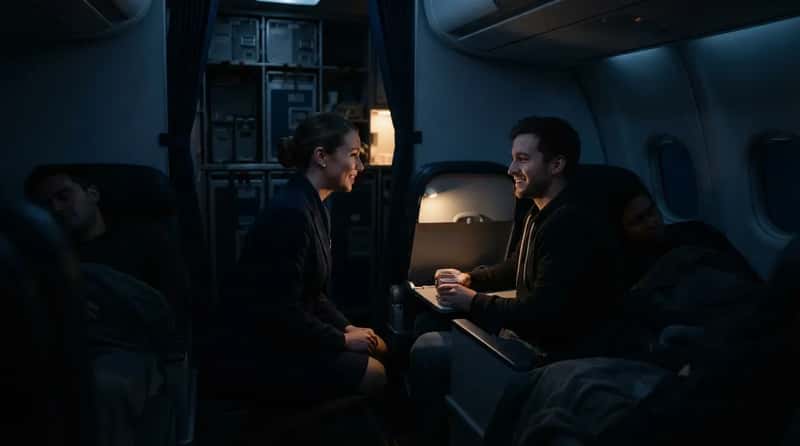
Somewhere in the middle of a long-haul flight, when the cabin is dark and most passengers are asleep, crews say solo travelers who are still awake tend to get pulled into slightly longer conversations than usual. It’s less about service and more about basic human company.
Flight attendants describe this as one of the quieter parts of the job that never makes it into training manuals. A solo passenger wide awake at 3 a.m. cruising altitude is often just lonely, not needing anything specific, and a two-minute chat during a slow stretch of the flight can genuinely change how the rest of the trip feels.
#3 – Closer Watch During Rough Health Moments
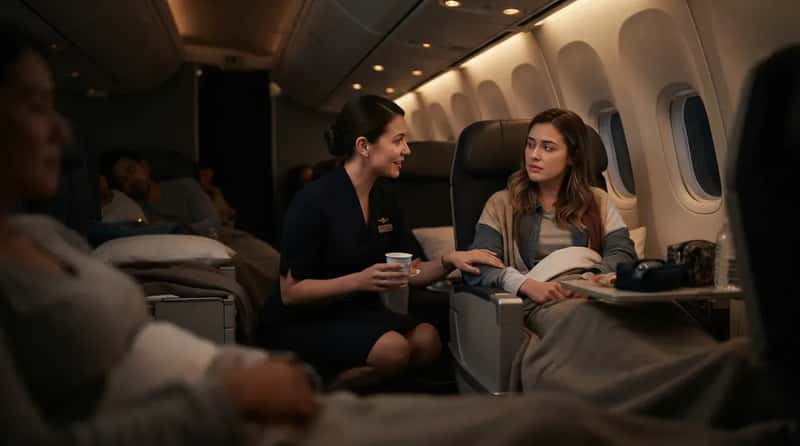
If a solo traveler mentions feeling unwell mid-flight – nausea, dizziness, anxiety – crews say the follow-up checks happen more frequently than they would for someone with a companion nearby to monitor them. There’s no one else to notice if things get worse, so the crew fills that gap.
This is one of the more serious small arrangements on this list, and crew members take it seriously precisely because solo travelers are more vulnerable in a medical situation. A crew member checking in every fifteen minutes instead of waiting for the call button has, by several crew accounts, caught worsening symptoms early enough to matter.
#2 – Being Treated Like the Cabin’s Unofficial “Plus One”
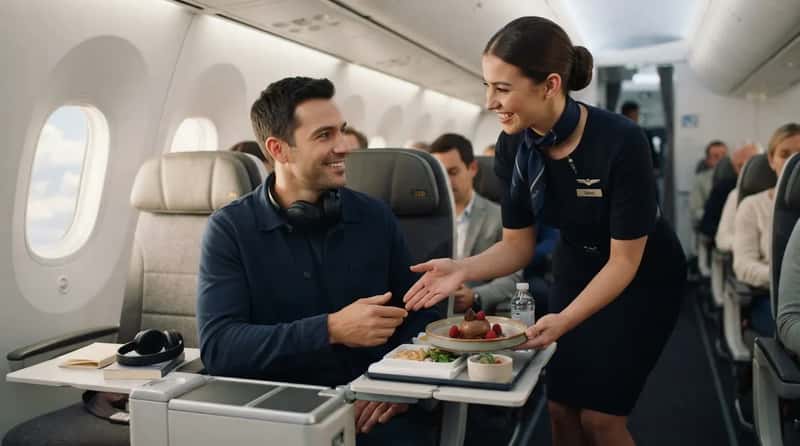
Solo travelers occasionally get folded into small moments meant for pairs or families – an extra dessert meant for a no-show, a spare amenity kit, a slightly longer explanation of the in-flight entertainment system. Crews describe it as an instinct to make sure no one feels forgotten simply because they’re traveling alone.
It’s a subtle form of inclusion that costs an airline nothing but changes how a flight feels. Many crew members say they specifically avoid leaving any passenger feeling like the only person in the cabin nobody’s looking out for, and solo travelers are usually the ones most at risk of that exact feeling.
Why It Stands Out
- Costs the airline nothing, yet consistently ranks among the gestures solo flyers remember most.
- Reflects an unwritten crew instinct rather than any official airline policy.
- Turns a purely transactional flight into a moment of genuine connection.
#1 – Regulars Get Remembered, Sometimes for Years
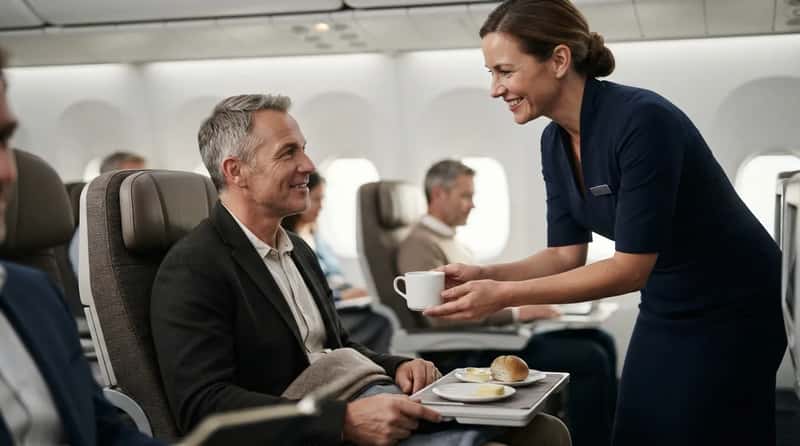
The single most consistent small arrangement veteran long-haul crews describe is simple: they remember frequent solo flyers. Not just the frequent-flyer number, but the coffee order, the aisle preference, the fact that this particular passenger always skips the appetizer and asks for extra bread instead.
Crew members who’ve flown the same routes for years say recognizing a repeat solo traveler, and greeting them by a small, specific detail instead of a generic hello, is the one gesture passengers mention most often afterward. It turns a routine long-haul flight into something closer to being remembered by name at a neighborhood diner, thirty-five thousand feet up.
None of these twenty-four arrangements show up in an airline’s official service manual, and most passengers will never notice them happening in real time. That’s the point. Solo long-haul travel has a reputation for being lonely and unforgiving, but the small, unscripted adjustments cabin crews make quietly push back against that reputation every single flight.
Taken together, they suggest something most travelers don’t expect: the person most likely to be looked after on a packed long-haul flight isn’t the family with three kids or the couple in row 12, it’s often the passenger sitting completely alone.