Ask any coach driver what actually wears them down after a season behind the wheel, and they won’t mention black ice, hairpin turns, or fourteen-hour driving days. They’ll bring up seat 3B, the guy who screamed at them over a five-minute delay, or the woman who reclined straight into a stranger’s laptop and never once looked back.
Every route has its horror stories, and every driver has a mental highlight reel they didn’t ask for. Some of these habits are just annoying. A few are the exact moment a normal day on the road turned into the story a driver still tells, years later, to explain what the job is really like.
#24 – The Front-Row Backseat Driver Who Grades Every Turn Out Loud
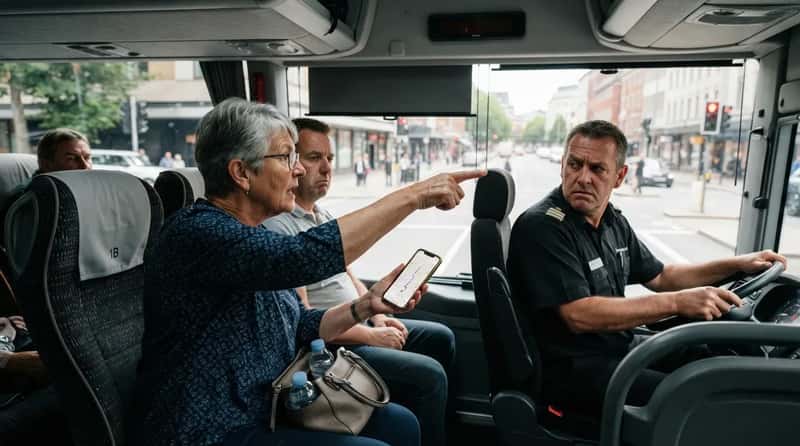
There’s always one passenger who sits directly behind the driver and narrates the whole route like they’re scoring a test. They question every red light, sigh at every merge, and mention a “faster way” they saw on a map app twenty minutes ago.
Drivers say this seat almost always attracts the same personality. Most have already run the route hundreds of times and know exactly why certain turns exist, including one-way restrictions and weight limits that are completely invisible from a passenger seat.
#23 – The Phone-Call Broadcaster Who Turns the Coach Into a Living Room
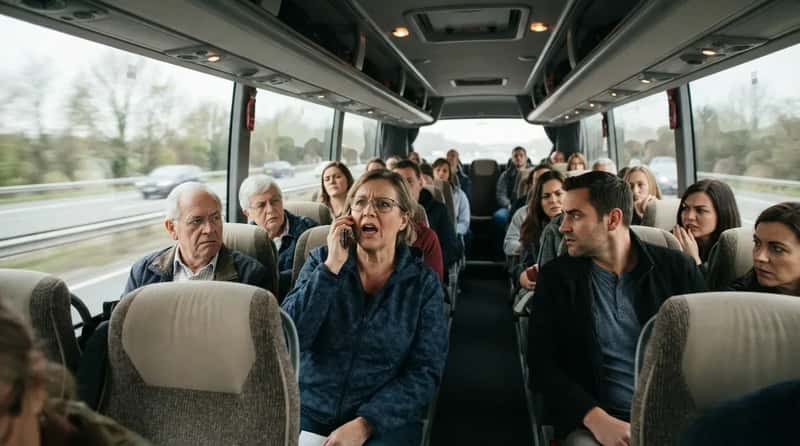
A five-minute call somehow becomes a full conversation about mortgage refinancing, broadcast to forty strangers at sixty miles an hour. Coach acoustics are brutally unforgiving, and the caller is almost always the last person on board to realize everyone can hear every word.
What feels like a normal phone habit at home becomes an accidental group therapy session at highway speed. Drivers say this single behavior generates more passenger-to-passenger complaints than almost anything else on a tour, second only to a reclined seat.
#22 – The Snack Smuggler Whose Bag Smells Like a Bad Decision
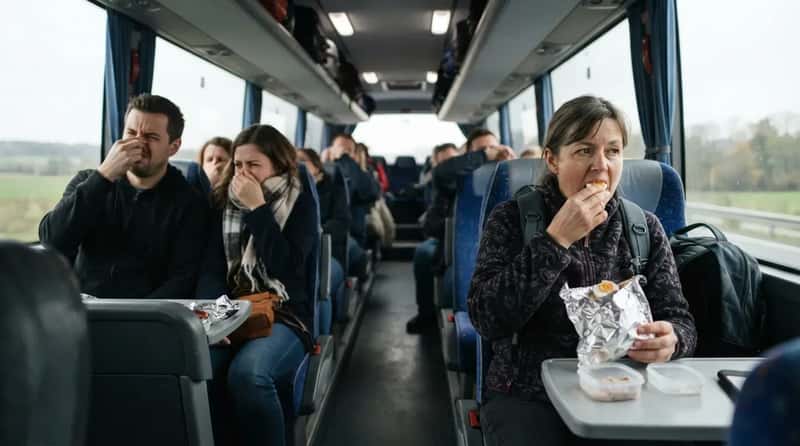
Coach cabins recirculate the same air for hours, sometimes across a whole multi-day itinerary, so one aggressively fragrant snack can ruin the ride for thirty people sitting behind it. Boiled eggs, tuna packets, and durian-adjacent fruit are the recurring offenders drivers bring up most.
It’s rarely malicious. Most snack smugglers genuinely have no idea how far a smell travels inside a sealed vehicle, which is exactly why the complaint almost always comes from three rows back, not from the person actually eating.
#21 – The Seat Hog Who Turns an Empty Cushion Into a Coat Rack
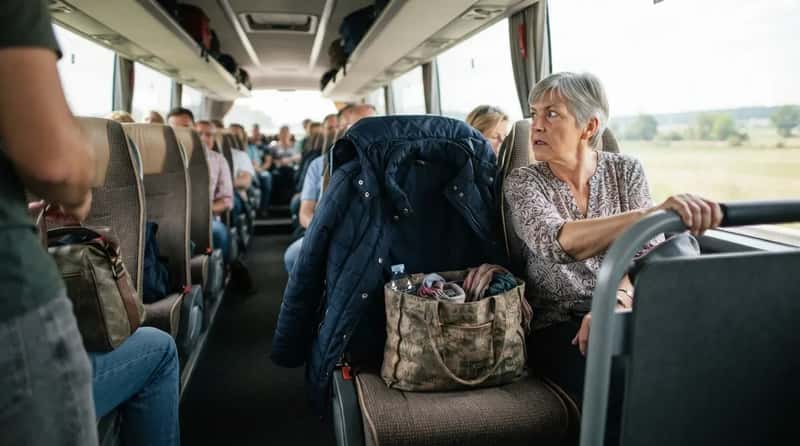
Every tour has one passenger who decides on day one that the empty seat beside them is now permanent storage. They drape a jacket over it, plant a bag on the cushion, and glare at anyone who dares to sit down, even on a nearly full bus.
Most tour operators build in seat rotation specifically to prevent this, but it rarely stops the habit from creeping back the very next morning. Drivers say this quiet turf war creates more slow-burn resentment in a group than almost any other single behavior.
#20 – The Chronic Latecomer Who Keeps Forty People Waiting
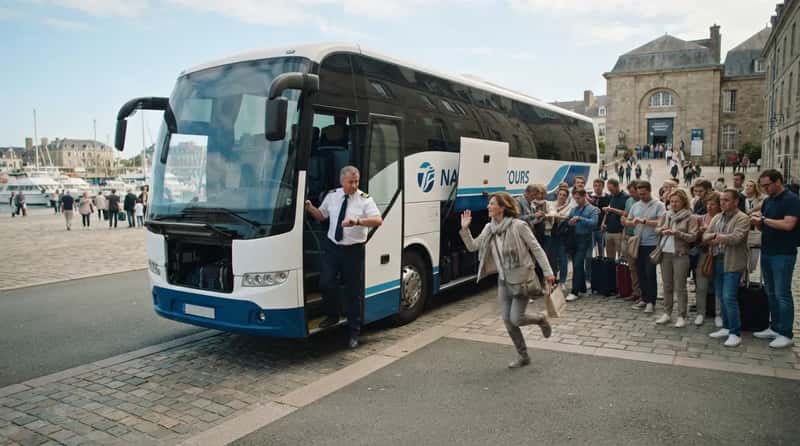
Coach schedules are built around tight departure windows, sometimes timed to the minute to catch a museum entry or a ferry crossing. One passenger who treats “meet at the bus at 9:00” as a gentle suggestion can unravel the whole day for everyone else.
Drivers say it’s almost always the same one or two people sprinting across the parking lot at 9:12. A single ten-minute delay, repeated at every stop, can cost a full-day tour nearly an hour by dinnertime.
Fast Facts
- Most scheduled day tours build in only 10-15 minutes of buffer time between stops.
- A single 10-minute delay repeated at four stops can push a group’s dinner reservation back nearly an hour.
- Museums, ferries, and other timed attractions often hold reserved entry slots for only a short grace window.
- Drivers say the same one or two passengers are almost always the ones running behind.
#19 – The Backpack-Wearer Who Clotheslines the Whole Aisle
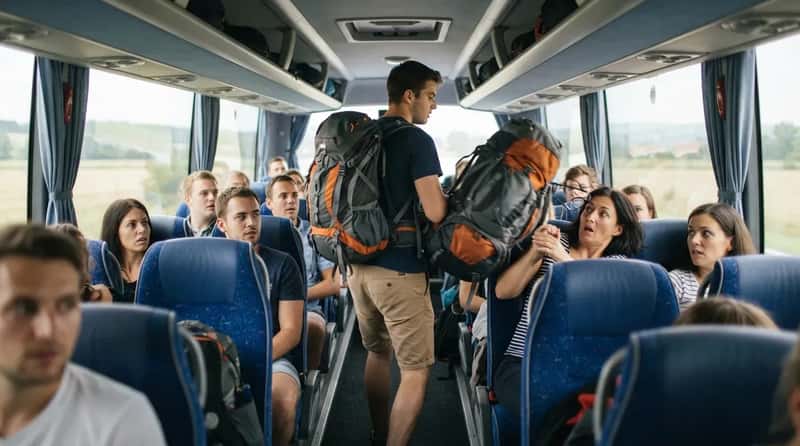
Walking a narrow coach aisle with a fully loaded backpack still strapped on is the bus equivalent of turning around on skis without checking behind you. It knocks elbows, clips armrests, and occasionally smacks another passenger square in the face.
Seasoned travelers learn fast to take the bag off before boarding and carry it by the strap instead. Drivers say it’s one of the quickest ways to spot a first-time coach passenger versus someone who’s done this a hundred times.
#18 – The Restroom Abuser Who Breaks the One Rule Everyone Should Know
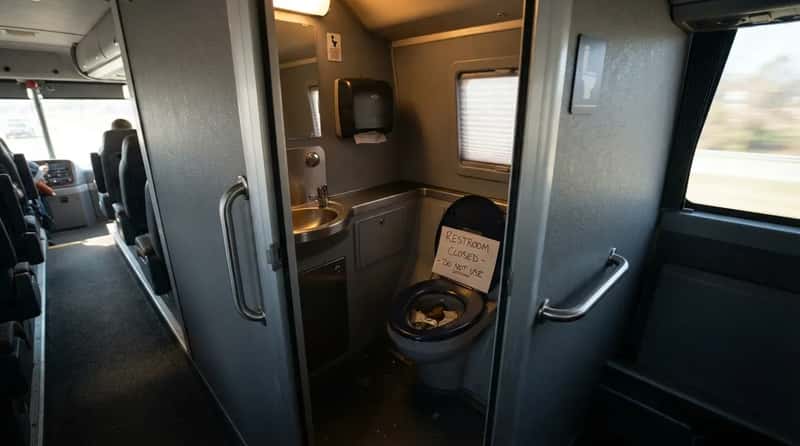
Most passengers have no idea how limited an onboard restroom really is until someone breaks the unwritten rule. It’s built for liquid waste only, since servicing a chemical holding tank mid-route is expensive and often impossible until the next scheduled overnight stop.
First-timers usually learn this the hard way, through an awkward driver announcement over the intercom. A single misuse can take the entire onboard restroom out of service for the rest of the day, for every single passenger.
#17 – The Gift-Shop Wanderer Who Turns 10 Minutes Into 40

Rest stops are scheduled tightly, timed down to the minutes needed before the next attraction’s entry window closes. One passenger treats every stop like a leisurely mall trip, browsing souvenir racks while thirty-nine other people sit waiting on an idling bus outside.
Drivers say they can usually predict, almost to the minute, exactly which passenger will be the last one back. Groups have lost entire reserved museum time slots because of one wandering shopper who lost track of time.
#16 – The Tipping Extremist Who Overpays or Vanishes Completely
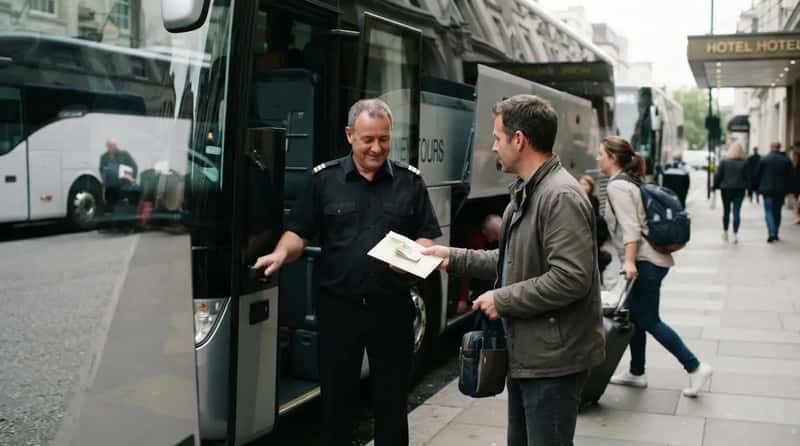
Tipping etiquette confuses nearly every first-time coach traveler, and it tends to swing hard toward one extreme or the other. Some passengers hand the driver an envelope stuffed with far more than industry norms suggest, while others walk off at the final stop without a word.
Drivers rarely say it out loud, but the inconsistency is noticeable trip after trip. A modest, standard tip left quietly at the end of a tour is remembered far more fondly than either extreme.
Quick Compare
- Half-day tours: roughly $3-$5 per person is a commonly suggested driver tip.
- Full-day tours: many tour operators suggest around $5-$10 per person.
- Multi-day trips: guidance often lands closer to $10-$15 per day per person.
- An envelope handed over quietly at the end is usually easier for a driver to manage than cash offered in front of a crowd.
#15 – The Reclining Rebel Who Slams the Seat Back Without Warning
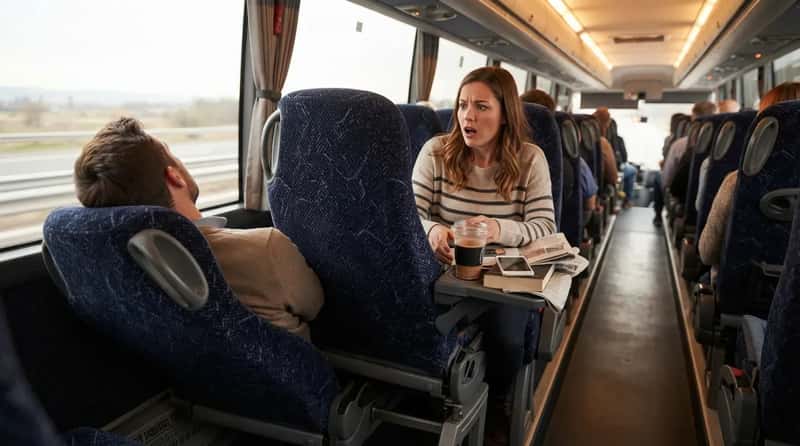
Coach seats recline further than most economy airline seats, which makes a sudden, unannounced recline feel like a small ambush to whoever’s sitting behind. Knees, laptops, and coffee cups have all been casualties of this exact habit.
Drivers hear about it constantly during rest-stop chatter, even though it’s technically a passenger-to-passenger issue. A quick glance backward before reclining is the one habit drivers say would erase half the mid-route seating complaints on any given tour.
#14 – The Kid Left to Run Wild in a Moving Aisle
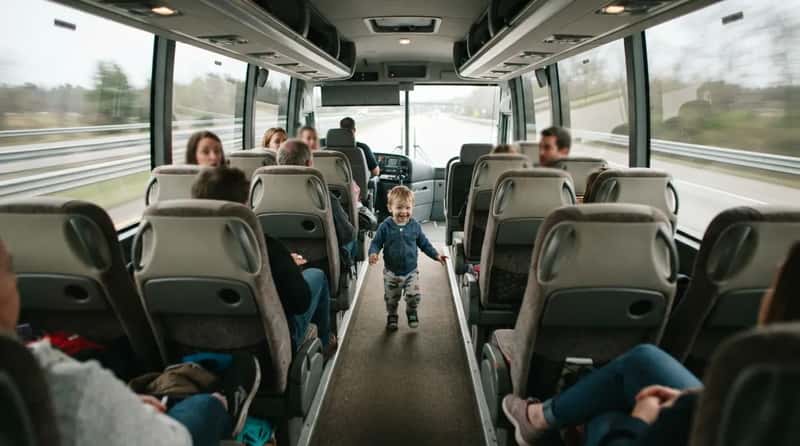
A moving coach is not a playground, but some parents seem to forget that the moment their child gets restless. Drivers describe watching toddlers dart down the aisle while the vehicle is still rolling, sometimes just feet from the front step.
It’s one of the few habits that shifts instantly from irritating to genuinely alarming. A sudden stop or sharp turn at highway speed can throw an unbuckled child several feet in seconds.
#13 – The Complainer Who Turns Every Meal Into a Formal Grievance

There’s always one passenger determined to turn every included meal into a complaint session, regardless of what’s actually being served. Swapping in ten different meal options for a group of forty over a multi-day tour simply isn’t realistic, but that logic rarely lands.
Drivers say persistent complaining wears down group morale faster than almost anything else on the road, including mechanical delays. Tour staff often absorb this frustration on the driver’s behalf, even though menus were locked in weeks in advance.
#12 – The Photographer Who Leans Over the Driver’s Shoulder for the Shot
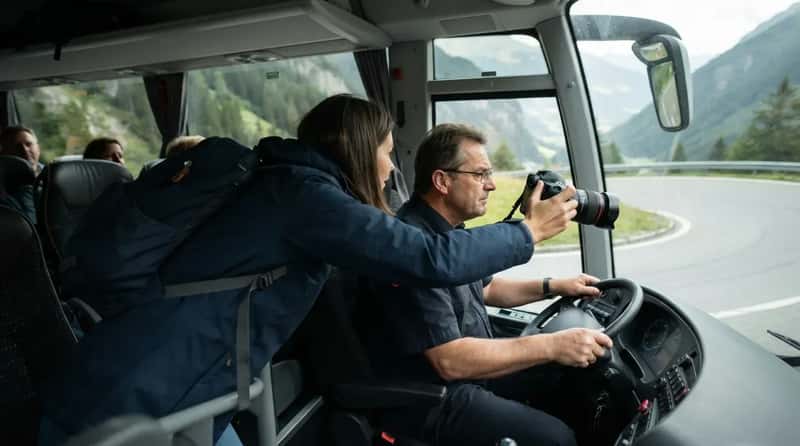
Front-row scenery is tempting, but some passengers take it a step further by leaning across the aisle or over the driver’s seat to snap a photo through the windshield. It blocks sightlines at exactly the wrong moment, especially on winding roads.
Most drivers will ask politely once, then get visibly tenser if it happens again. Even a two-second obstruction of the windshield view is enough to force a driver to brake early or swerve wide.
#11 – The Itinerary Skeptic Who Treats the Schedule Like a Suggestion
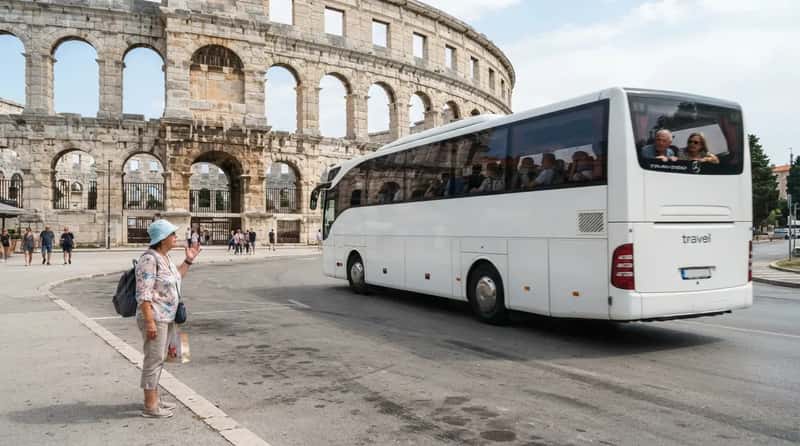
A coach itinerary functions more like a moving contract than a flexible vacation plan, and some passengers never quite grasp the difference. They assume there’s more wiggle room than there actually is, right up until the bus pulls away without them.
Veteran travelers treat the printed schedule as gospel, knowing departure times are fixed because dozens of other people rely on that exact same clock. The gap between “vacation pace” and “tour pace” is usually where first-timers get their first real reality check.
#10 – The Sick Passenger Who Boards Anyway and Coughs for Six Hours

A sealed coach recirculates the same air for hours, sometimes across an entire multi-week itinerary. One uncovered cough near the front can spread through the whole vehicle before the next scheduled stop, and drivers watch it happen almost every season.
Most passengers don’t board planning to get anyone sick, but a long-haul coach is one of the least forgiving environments for it. A single contagious passenger has been known to take out half a tour group within 48 hours.
At a Glance
- Enclosed coach cabins recirculate the same air for hours at a stretch.
- Respiratory illness tends to spread faster in tight, shared spaces than in open-air settings.
- A contagious passenger near the front can affect rows several seats back before the next stop.
- Many tour operators now keep hand sanitizer on board as a simple precaution.
#9 – The Nighttime Talker Who Won’t Let the Cabin Go Quiet
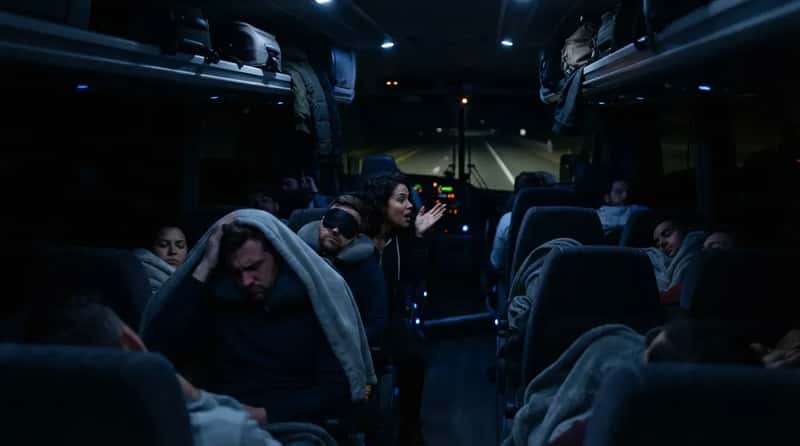
Overnight coach routes ask passengers to keep noise down once the cabin lights go low, but there’s always one person who treats bedtime as prime conversation hours. Whispered chats have a strange way of carrying farther than people expect in a dark, quiet cabin.
Drivers say sleep loss caused by one inconsiderate passenger can sour an entire group’s mood for the whole next day of sightseeing. A single loud talker at 1 a.m. can effectively steal sleep from dozens of people at once.
#8 – The Repeat Offender Who Forgets Something at Every Single Stop
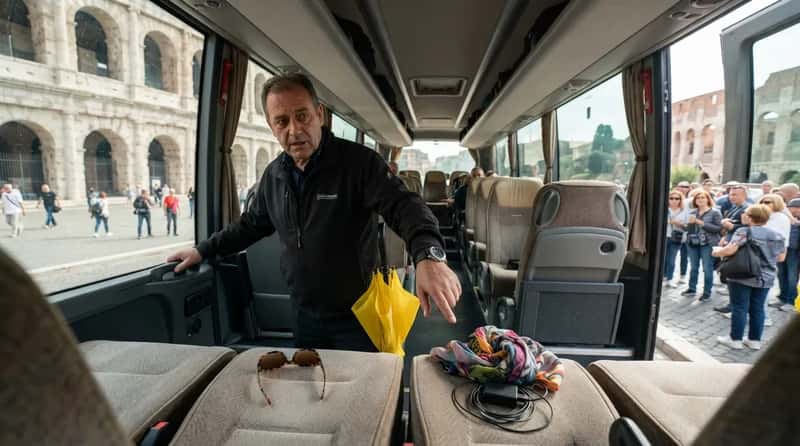
Sunglasses at the museum, a scarf at the restaurant, a phone charger at the hotel – some passengers leave a small trail of belongings at every stop on the itinerary. Drivers end up as the unofficial lost-and-found coordinator by day three.
It sounds harmless, but retrieving forgotten items often means backtracking or holding the whole group while someone runs back inside. A single item left behind can delay an entire coach’s departure by ten minutes or more.
#7 – The Litterbug Who Treats the Seat Pocket Like a Trash Can
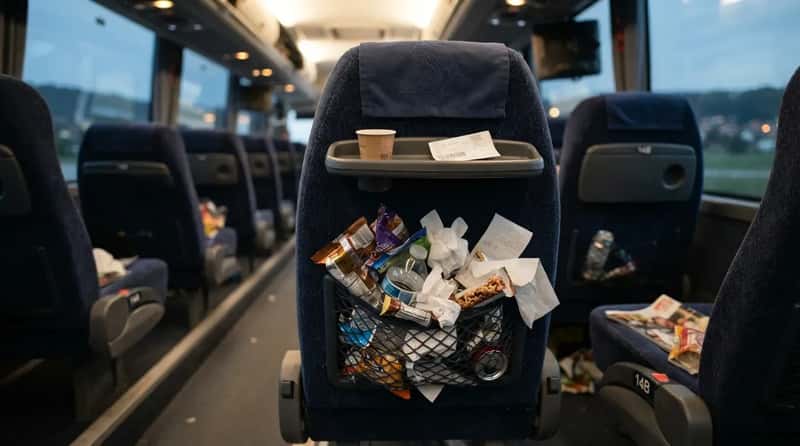
After a long day of sightseeing, some passengers decide cleanup is somebody else’s problem entirely. Wrappers, empty bottles, and used tissues get stuffed into the seatback pocket instead of a trash bag, left for someone else to find.
Drivers often spend their few minutes of downtime between stops picking up after guests who’ve already walked off to dinner. Multiplied across a forty-person group over a two-week tour, this small habit becomes a genuine daily cleanup job.
#6 – The Route Negotiator Who Tries to Redirect the Driver Off Schedule
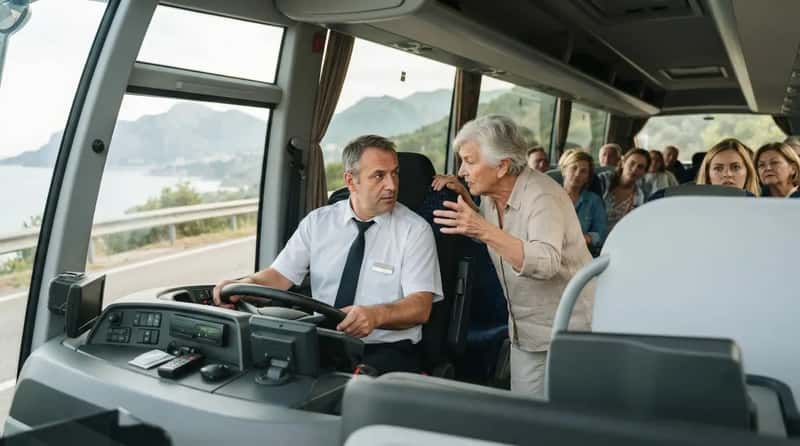
Some passengers treat the driver like a personal chauffeur rather than someone following a fixed, insured route plan. Requests to “just stop real quick” at an unplanned shop, or detour to a relative’s house, come up more often than most people would guess.
Drivers can’t legally or logistically accommodate most of these requests, since routes are pre-approved and timed for the whole group. A single unauthorized detour can violate insurance terms and throw off arrival times for everyone else on board.
#5 – The Standing-While-Moving Passenger Who Ignores the Seatbelt Sign
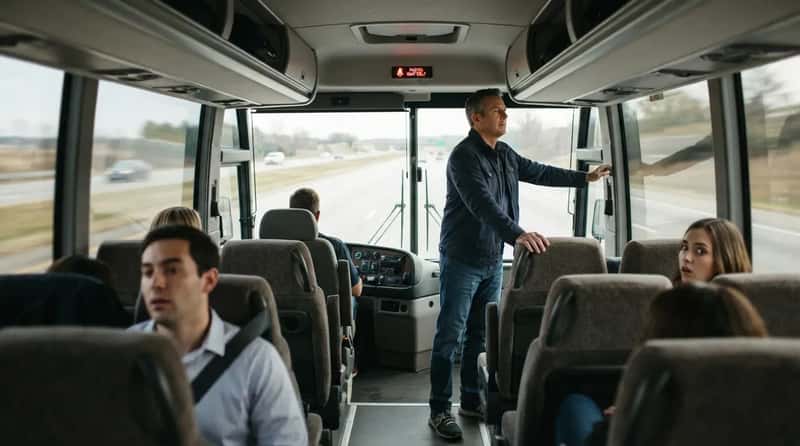
Some passengers treat a moving coach like a train car, standing up to stretch, dig through overhead bags, or wander to a friend’s seat while the vehicle is still at highway speed. It looks casual, but it’s one of the more dangerous habits drivers watch for constantly.
A sudden brake, a pothole, or an evasive maneuver can throw a standing passenger several rows in an instant. Drivers say this is one of the few habits that genuinely alarms them every single time it happens, not just annoys them.
Worth Knowing
- Federal regulators finalized a rule in November 2013 requiring lap and shoulder seat belts on new motorcoaches and other large buses.
- The requirement took full effect for new vehicles in November 2016.
- The rule was aimed squarely at reducing injuries from frontal crashes and rollover ejections, the two scenarios drivers worry about most.
- A belted passenger seated during a sudden stop has dramatically better odds than someone standing in the aisle.
#4 – The Door-Blocker Who Chats With the Driver During Boarding
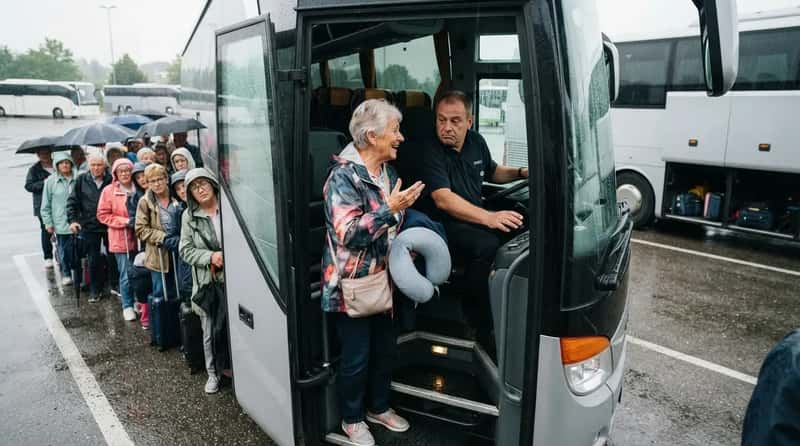
Boarding a full coach on a tight schedule requires a steady rhythm, and one chatty passenger camped at the front door can back up the entire line behind them. They’ll ask about the weather, the route, or last night’s game while thirty-nine people wait in the rain.
Drivers appreciate friendliness, just not at the exact moment they’re managing a fifteen-minute boarding window. A single extended conversation at the door has been known to push an entire departure back by five minutes or more.
#3 – The Vanishing Act Who Wanders Off and Holds Up the Whole Group
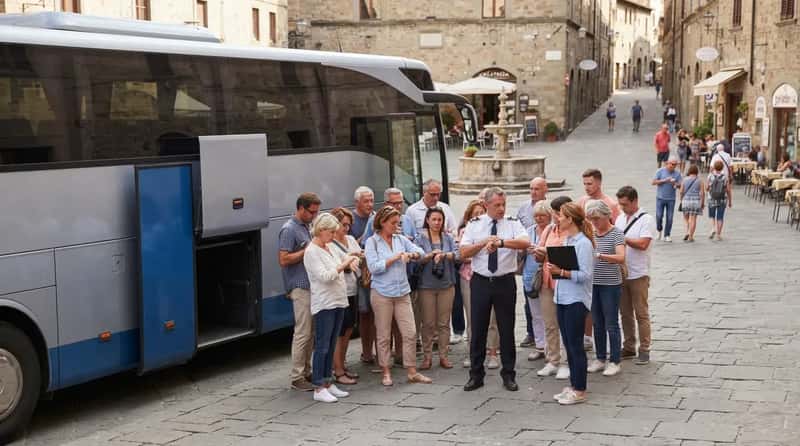
Every tour has a story about the passenger who simply disappeared at a rest stop, wandered down a side street, or lost track of time at a café. What starts as a quick errand turns into a group-wide search, sometimes involving local staff or hotel concierges.
Drivers describe this as one of the most stressful moments of the job, since safety and schedule collide at once. A missing passenger at a single stop can delay an entire multi-city itinerary by well over an hour.
#2 – The No-Tip Ghost Who Skips the Driver Entirely at Trip’s End
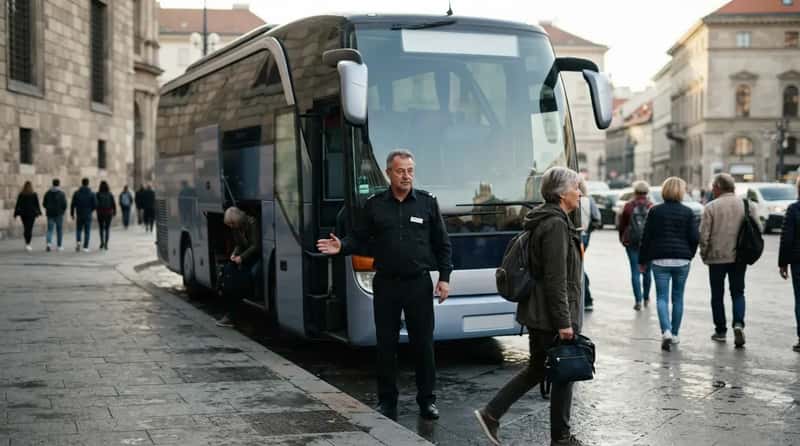
After days or weeks of early mornings, tight parking maneuvers, and long highway stretches, some passengers walk off the coach at the final stop without so much as a nod toward the driver. It’s not always about the money – drivers say the silence itself stings more.
Many coach drivers work split shifts and irregular hours for modest base pay, relying on gratuity as a meaningful part of their income. A quick handshake and a small tip is remembered far longer by drivers than most passengers ever realize.
#1 – The Meltdown Passenger Who Makes the Driver the Target of a Public Blowup
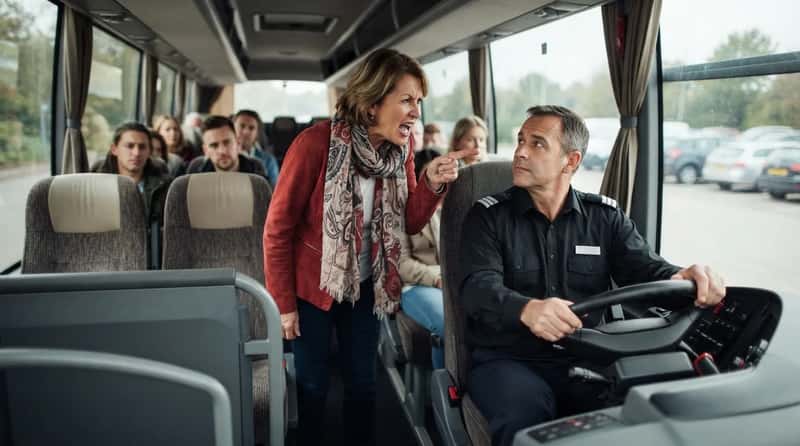
Every long-tenured coach driver has at least one story about a passenger who turned a delay, a missed stop, or a seating dispute into a full public meltdown – voice raised, finger pointed, the entire bus watching in uncomfortable silence. It’s rarely about the actual incident; it’s usually the last straw after a long day.
Drivers say these moments stick with them longer than almost anything else on the job, precisely because they’re forced to stay calm while everyone else on the coach absorbs the tension. A single blowup at the front of the bus can shift the mood of an entire tour group for the rest of the trip, sometimes for days. It’s the one story drivers tell first when someone asks what the job is really like.
None of these habits belong to one tour company, one country, or one age group. Drivers see the same small handful of behaviors repeat, season after season, whether the route runs through the Rockies or the Scottish Highlands.
What separates a smooth tour from a miserable one usually isn’t the itinerary – it’s whether forty strangers can share a confined space for a week without forgetting there’s a person driving them through all of it. Most of these mistakes are fixable in seconds: a lowered voice, a returned nod, a seat given up without a fight. The drivers who’ve seen it all agree the good passengers rarely realize how much their small courtesies matter, while the difficult ones almost never see themselves in these stories at all. Which one from this list have you actually witnessed on a trip?