Everyone loves to talk about the “golden age” of flying, back when meals came on real china and flight attendants carved meat tableside. But nostalgia has a way of hiding the fine print. Peel back the white tablecloth and you’ll find canned peas, powdered eggs, and gelatin molds that jiggled all the way to cruising altitude.
Most people assume 1970s airline food was universally elegant. Turns out, the truth is a lot stranger – and a lot more processed – than the vintage ads let on. Here’s what actually landed on those fold-down trays.
#25 – Canned Fruit Cocktail Swimming in Heavy Syrup
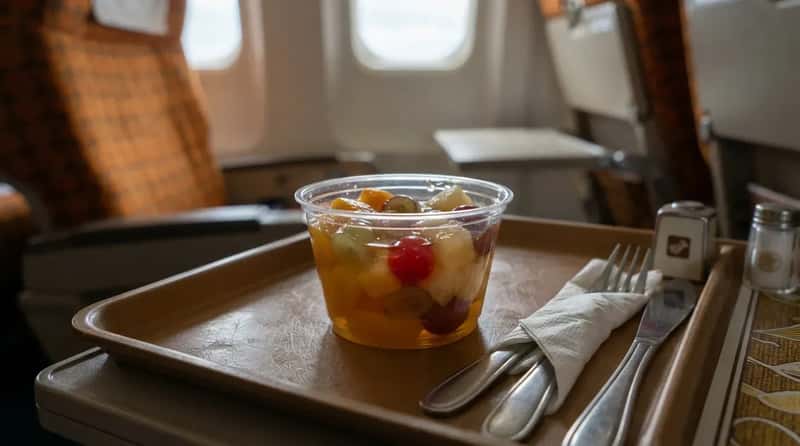
Before every 1970s meal even started, passengers usually got a little metal or plastic cup of fruit cocktail – diced peaches, pears, grapes, and one lonely maraschino cherry, all suspended in thick sugar syrup. It was cheap, shelf-stable, and identical on nearly every carrier, no matter how “gourmet” the rest of the tray claimed to be.
The fruit itself was almost always canned, not fresh, because refrigeration space on 1970s galleys was extremely limited. Today’s passengers, used to real produce even in economy, would likely push this straight back. It tasted more like a school cafeteria dessert than the luxury flying was supposedly selling.
#24 – Tomato Aspic That Jiggled on the Tray
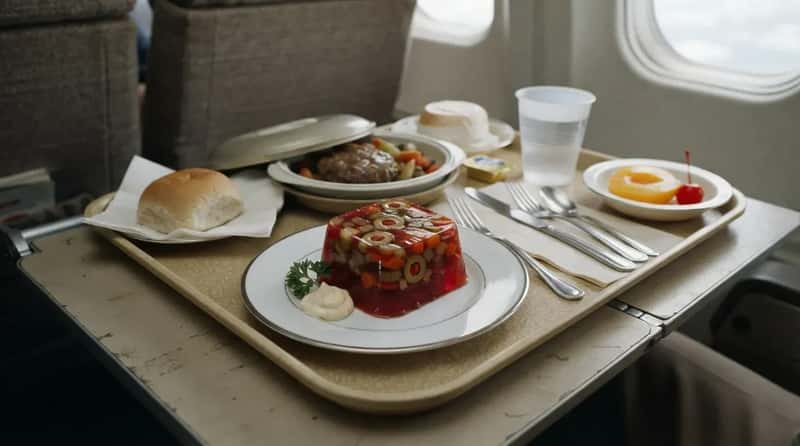
Tomato aspic – basically savory tomato juice set into gelatin – was a genuine first-class staple in the early 1970s, served cold as a starter or side salad. It looked like a slice of stained glass and wobbled every time the plane hit turbulence.
Airlines loved it because it was pre-made, portioned, and didn’t spoil easily at altitude. Modern travelers would almost certainly assume it was a mistake on the tray, since savory gelatin dishes have all but vanished from American dining. Back then, though, it was considered refined.
#23 – Powdered Scrambled Eggs at 30,000 Feet
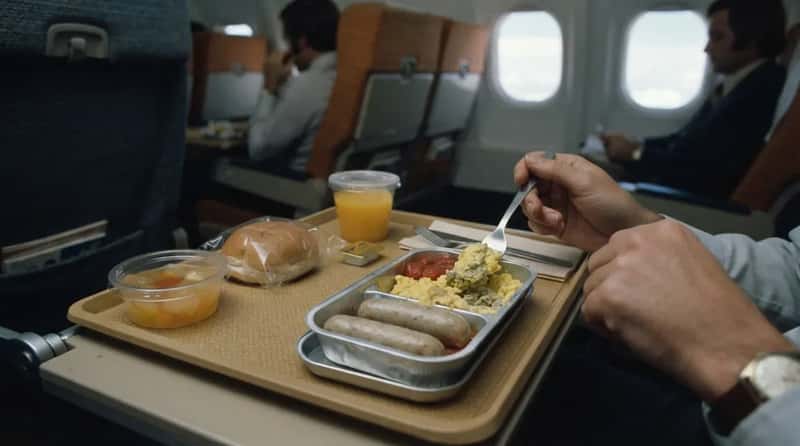
Breakfast service sounded impressive on paper – menus actually promised “eggs cooked to order,” even in coach. One Pan Am flight attendant who worked the galleys from 1964 to 1975 later admitted the reality was reconstituted egg powder, whisked with water and baked in a convection oven until it set.
The texture came out rubbery and slightly gray, nothing like a real scrambled egg off a skillet. It sounded generous that coach got the same treatment as first class – until you realized that just meant everyone was eating powder. Today’s flyers, spoiled by fresh omelets even in premium economy, would send this tray right back.
#22 – Salisbury Steak Drowned in Brown Gravy
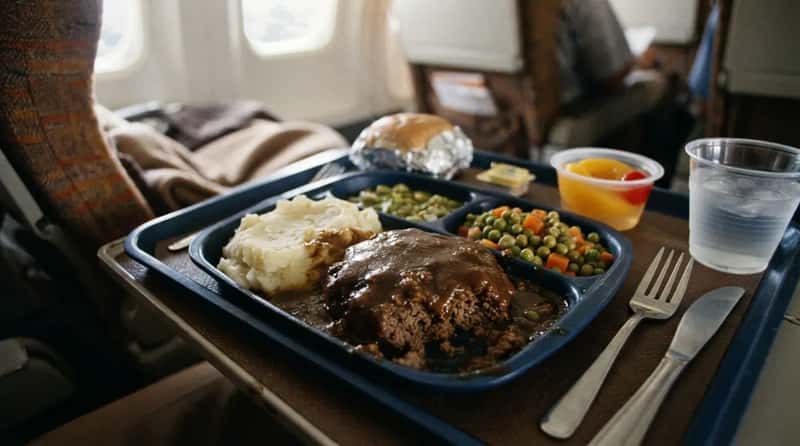
Salisbury steak was the default “meat and gravy” option on countless domestic flights, a ground-beef patty smothered in a thick, salty brown sauce to mask reheating flaws. It was filling, familiar, and almost impossible to mess up in a convection oven.
The gravy was doing all the heavy lifting, since the patty itself often arrived dry after being frozen, reheated, and held under heat lamps. It was comfort food, sure, but hardly the fine dining the ads promised.
#21 – Chicken à la King Over Soggy Toast Points
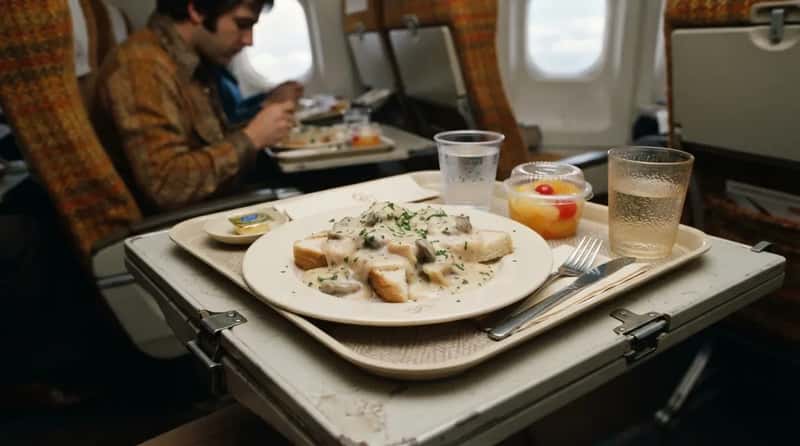
This creamy chicken-and-mushroom sauce poured over toast points was a genuine coach-class staple heading into the 1970s, most famously as part of American Airlines’ “Royal Coachman” menu. It was meant to feel like a step up from typical airplane food – real china, a printed menu, a sense of occasion.
By the time chicken à la king actually reached a tray, the toast underneath had usually gone soft from steam and sauce. The cream base itself often started as a canned or powdered mix, dressed up with a splash of sherry to sound more elegant than it was. It photographed beautifully in the airline’s own ads – it just didn’t eat that way.
Worth Knowing
- Before airline deregulation took hold in the late 1970s, carriers couldn’t compete on ticket price – so they competed hard on food, uniforms, and service instead.
- Full hot meals were standard even in coach on most domestic routes, a stark contrast to today’s snack boxes and pay-to-eat menus.
- Real china plates and metal cutlery were common in coach cabins on many carriers, not just up front.
- Printed, multi-course menus were handed out on flights as short as an hour, turning even a quick hop into an “occasion.”
#20 – Deviled Ham Spread on White Bread Triangles
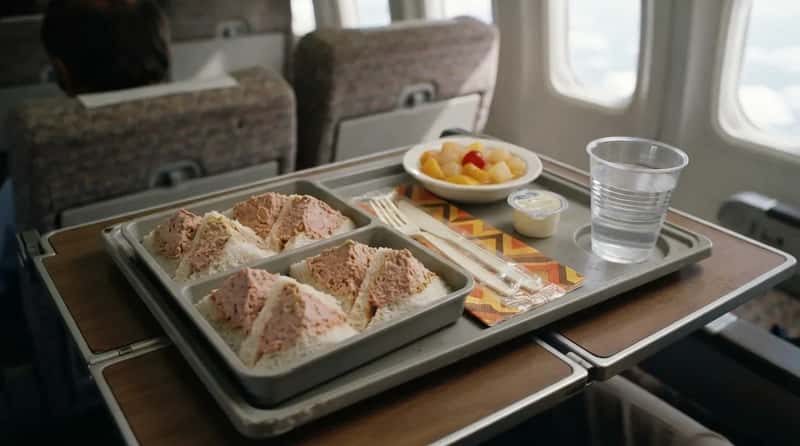
Short domestic hops often skipped hot entrées entirely in favor of cold sandwich trays, and deviled ham – a spiced, canned meat spread – was a constant. It got slapped onto crustless white bread triangles and called a “luncheon selection.”
The spread came straight from a tin, not a kitchen, which made it one of the least “airline glamour” items on any 1970s tray. It was practical, not memorable, and modern flyers used to fresh deli sandwiches would barely touch it.
#19 – Liver Pâté With Stale Crackers
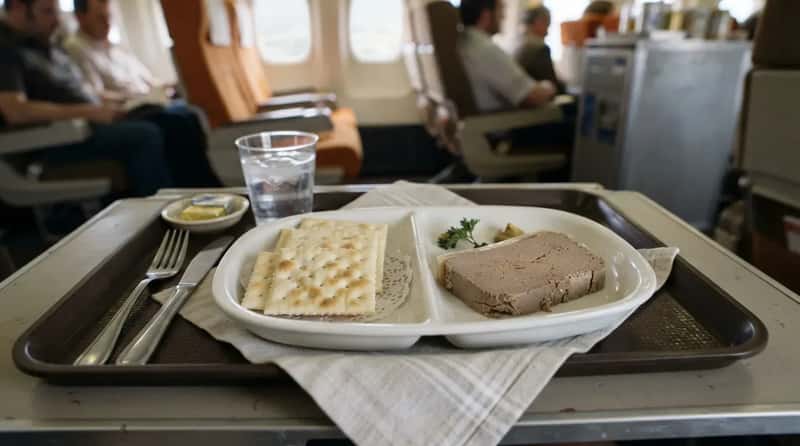
First-class starters loved to lean on pâté, a smooth spread of liver, fat, and seasoning, served with a few dry crackers on the side. It was meant to evoke French bistro sophistication at 35,000 feet.
The problem was texture: pâté served cold from a chilled cart often turned waxy and dense mid-flight, and the crackers, packed for shelf life rather than freshness, were frequently stale before the tray even reached the passenger. It looked fancy in photos, less so in person.
#18 – Beef Stroganoff Reheated Into Rubber
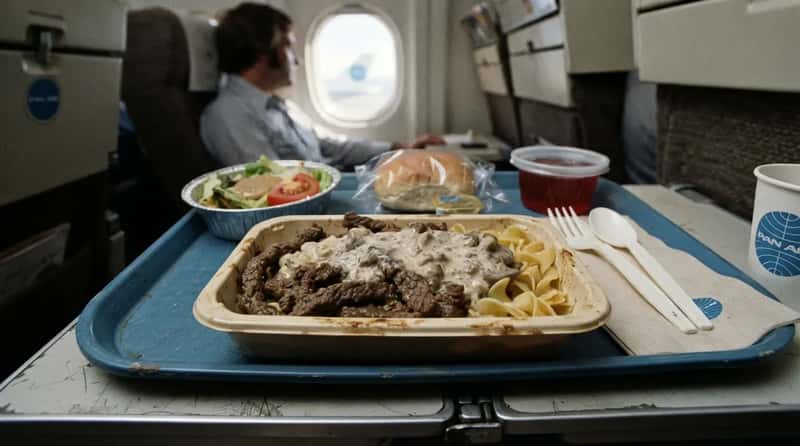
Beef stroganoff – strips of beef in a sour cream and mushroom sauce over egg noodles – showed up constantly on long-haul flights, including in Pan Am’s economy cabin, right alongside dishes like chicken vol-au-vent, beef bourguignon, and Cornish hen.
The beef itself frequently overcooked into a chewy, rubbery texture after being frozen, reheated, and held for hours in a galley cart. The sauce masked a lot of sins, but not the toughness of the meat underneath – a problem no amount of sour cream could fully hide.
#17 – Rumaki: Bacon-Wrapped Chicken Livers as an Appetizer
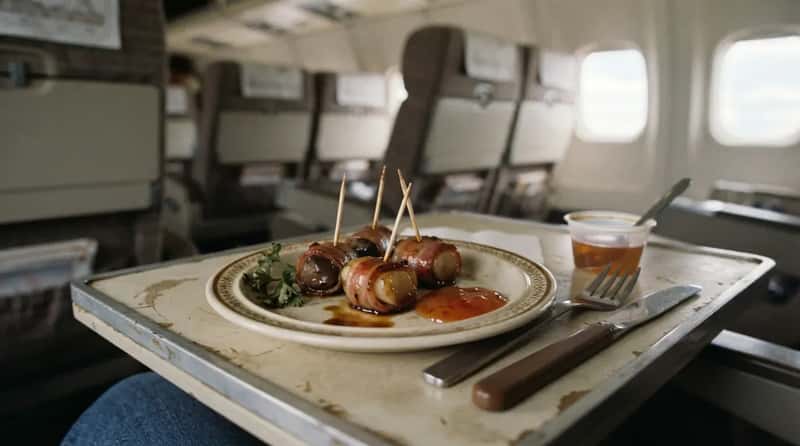
Rumaki – chicken liver and water chestnut wrapped in bacon, then broiled – was a genuine cocktail-party staple that airlines borrowed for first-class hors d’oeuvres. It fit the era’s love of retro finger food.
Most modern passengers have never even heard of rumaki, let alone expect it on a plane. Served lukewarm from a rolling cart, the bacon rarely crisped properly, leaving a greasy, chewy bite that feels distinctly out of step with today’s tastes.
#16 – Shrimp Cocktail With Canned Cocktail Sauce
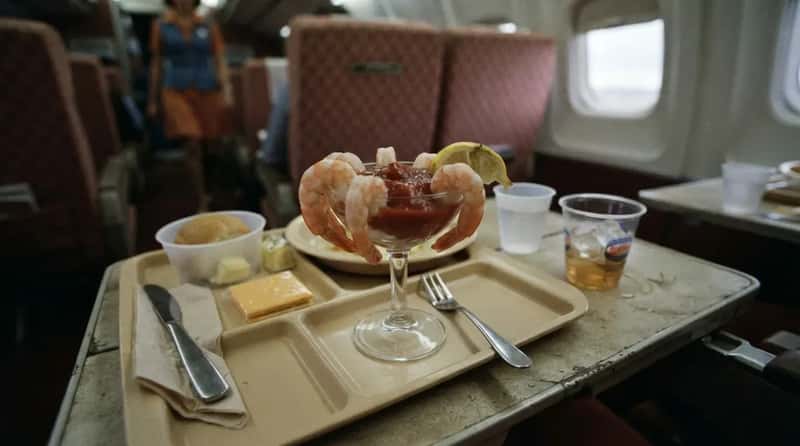
Shrimp cocktail was the go-to “fancy” starter across almost every airline and class of service in the 1970s, plated with a lemon wedge and a dollop of tangy red sauce. It photographed beautifully in vintage menu ads.
The shrimp were almost always pre-cooked and frozen, then thawed on board, and the cocktail sauce came from bulk cans, not fresh horseradish and tomato. It tasted fine, but it was assembly-line seafood dressed up as luxury.
#15 – Ambrosia Salad With Maraschino Cherries
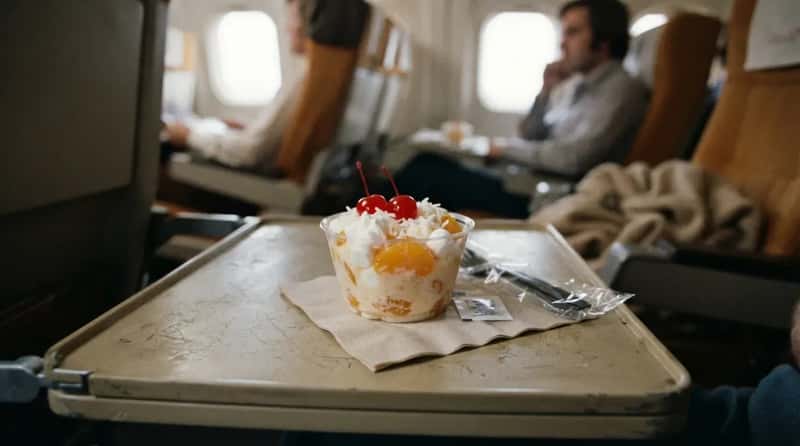
Ambrosia – canned mandarin oranges, shredded coconut, mini marshmallows, and whipped topping – was a genuine dessert-course fixture, especially on domestic routes. It leaned hard into the era’s love of sweet, mayo-adjacent salads.
None of the ingredients were fresh, which made it cheap and easy to portion into small plastic cups. Today it reads more like a 1970s potluck dish than anything you’d expect served at altitude, and most flyers would find it jarringly sweet.
#14 – Cold Poached Salmon Under a Gelatin Glaze
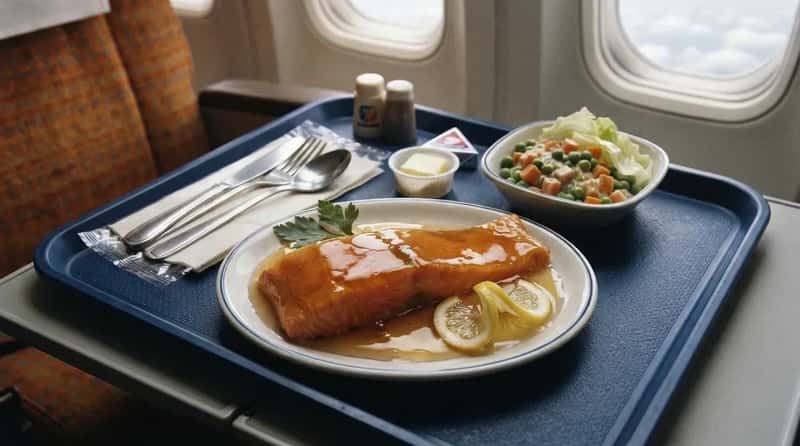
Long-haul first-class trays sometimes featured a whole poached salmon fillet, chilled and coated in a shiny aspic glaze to keep it from drying out during service. It looked stunning under photography lights.
The gelatin coating was purely functional, not flavorful, meant to seal in moisture rather than add taste. Once it warmed slightly during service, the glaze turned slick and rubbery, a texture most modern diners would find genuinely unappetizing.
#13 – Jell-O Mold With Suspended Fruit
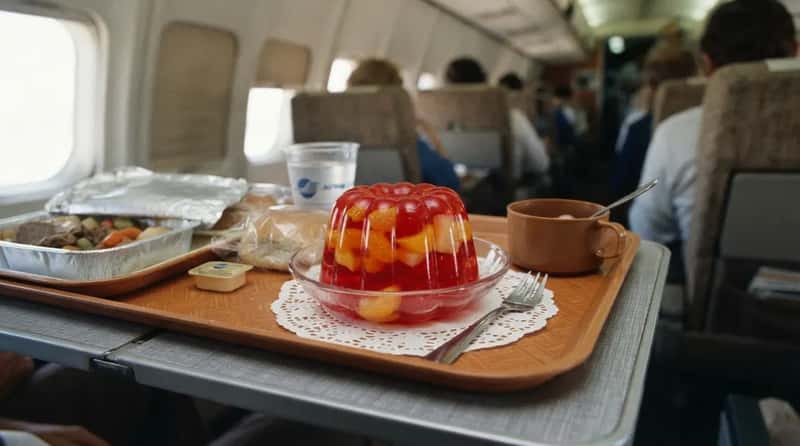
Dessert carts frequently rolled out Jell-O molds, colorful gelatin shaped in decorative tins with canned fruit suspended inside. It was a home dinner-party trend that airlines adopted wholesale for its shelf stability.
It required zero refrigeration tricks and traveled well, which made it a galley favorite regardless of taste. Visually, it was striking; texturally, it was the kind of wobbly, artificial-tasting dessert that would get mocked on social media if served today.
#12 – Instant Mashed Potatoes From a Foil Packet
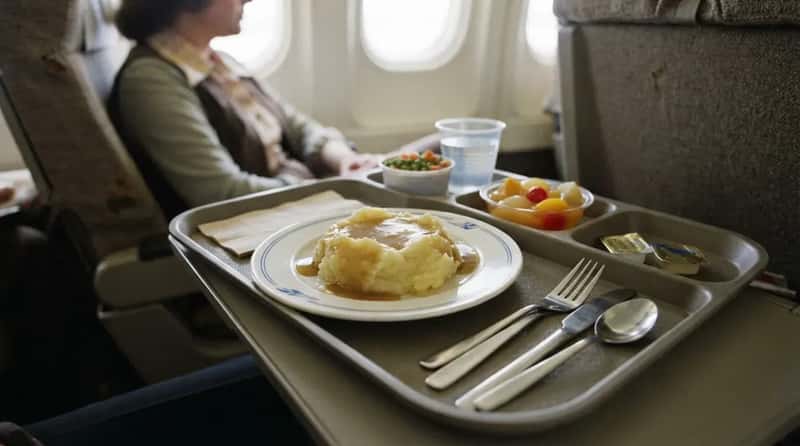
Even at the height of “gourmet” airline marketing, potatoes were almost always reconstituted from dehydrated flakes rather than boiled and mashed fresh. It was faster, lighter to carry, and impossible to overcook badly.
The texture gave it away instantly – slightly gluey, with none of the density of real potatoes. Paired with gravy, most passengers didn’t notice at the time, but today’s flyers, used to real mash even in premium economy, would spot the difference immediately.
Quick Compare
- Then: canned vegetables and fruit on nearly every tray. Now: fresh or frozen produce is standard on most major carriers.
- Then: real china and metal cutlery in coach. Now: plastic trays and disposable utensils in economy.
- Then: multi-course hot meals on short domestic hops. Now: snack boxes or pay-to-eat menus on many of the same routes.
- Then: complimentary meals across every class of service. Now: free hot meals mostly reserved for premium cabins on U.S. carriers.
#11 – Canned Peas and Carrots, Every Single Flight
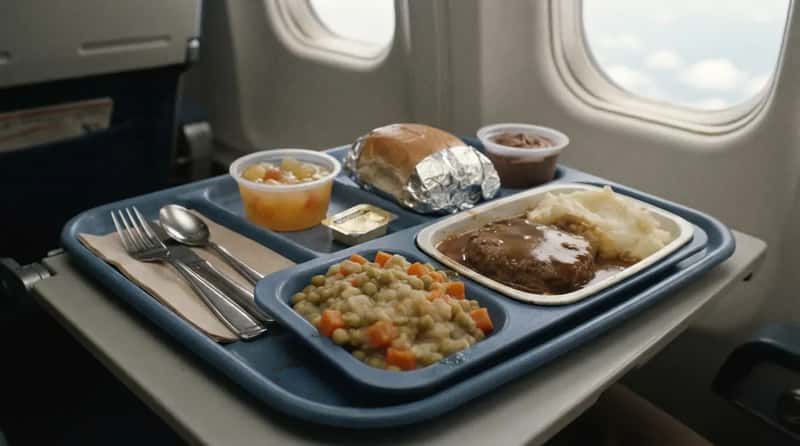
No matter the entrée, a small mound of canned peas and diced carrots seemed to appear on nearly every 1970s tray, hot or cold. It was the default “vegetable” component across nearly every carrier.
The vegetables were mushy from the canning process long before reheating even started, losing most of their color and crunch. It was consistent and cheap, but it’s exactly the kind of soft, flavorless side modern travelers routinely complain about and leave untouched.
#10 – Tongue Sandwiches in First Class
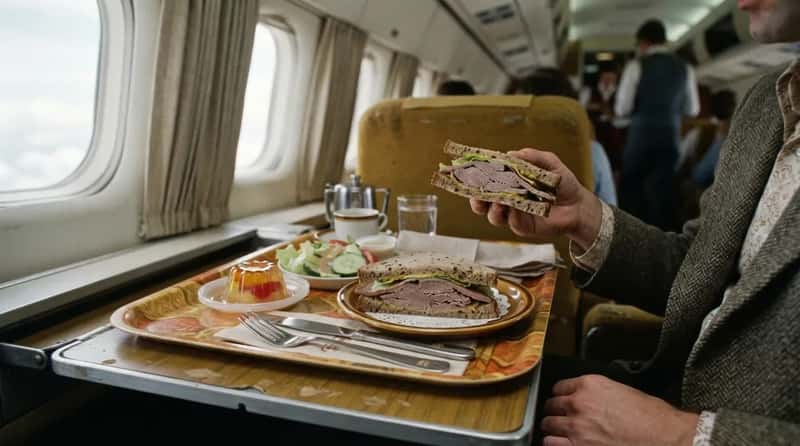
Beef tongue, thinly sliced and served on rye or white bread, was a genuine first-class sandwich option on multiple carriers during the decade. It was considered a delicacy at the time, not a novelty.
Tongue has almost entirely disappeared from mainstream American menus since then, making it one of the most jarring items on this list to modern eyes. The texture – soft, slightly gelatinous – is a hard sell for a generation raised on turkey club sandwiches.
#9 – Beef Wellington That Went Soggy in Coach
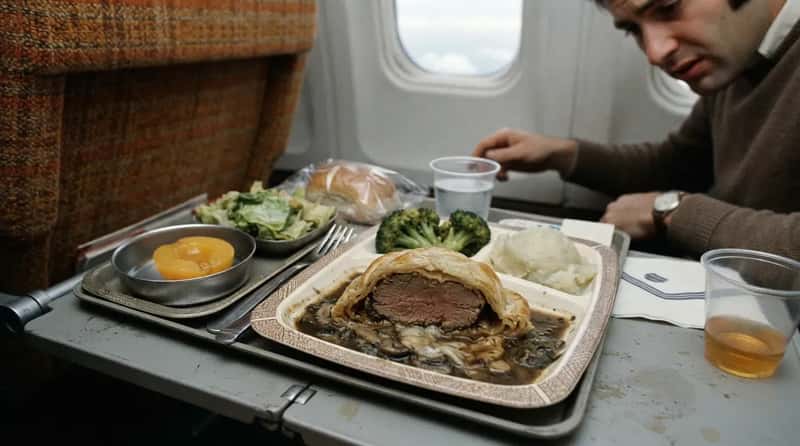
Beef Wellington – filet wrapped in pastry with mushroom duxelle – was a genuine premium-cabin showpiece dish across the 1970s, prized for looking impressive on a cart. Singapore Airlines rolled out a cart overflowing with appetizers, salads, beef Wellington with truffle sauce, and shrimp etouffée.
The catch: pastry and steam don’t mix. Reheating in a galley oven almost always left the puff pastry soggy rather than flaky, a problem airlines still struggle with even in modern recreations of the dish. It looked luxurious; the actual bite rarely lived up to the presentation.
#8 – Chicken Kiev That Sprayed Butter on Impact
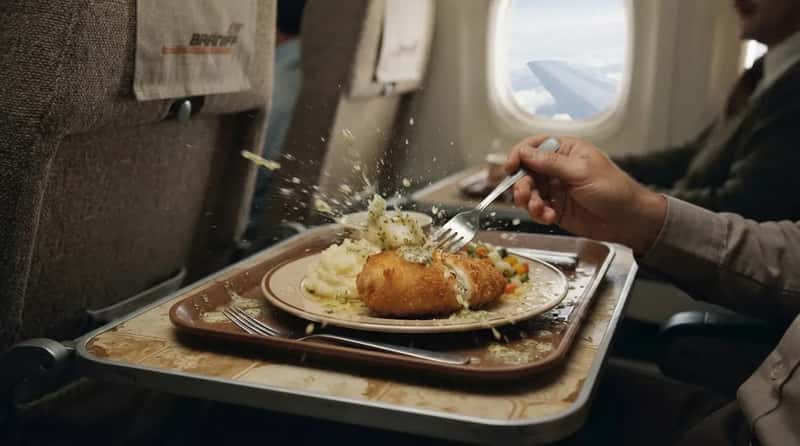
Braniff International made real waves in the early 1970s by hiring actual restaurant chefs and putting dishes like Chicken Kiev and steak with Sauce Diane onto its menus – a genuine upgrade from standard airline fare, and a big part of the airline’s flashy rebrand.
The dish itself, though, is chicken breast stuffed with garlic-herb butter, breaded and fried – and it’s notorious for exploding hot butter the moment a fork breaks the crust. In a cramped economy seat at cruising altitude, that’s less “elegant” and more “hazard,” and it’s exactly the kind of dish today’s flyers would refuse to eat mid-air.
Fast Facts
- In 1965, Braniff had begun implementing its End of the Plain Plane Campaign, which called for a change in the way the airline presented itself to the public, an upgrade that included its inflight cuisine going gourmet.
- That same year, Braniff hired an executive chef to administer the airline’s commitment to providing its passengers with the finest food aloft.
- Braniff’s new first-class menus included dishes like Breast of Pheasant and Trout Almondine, paired with champagne and a French pastry dessert.
- Rival carriers like Pan Am and Singapore Airlines followed suit, turning in-flight dining into a genuine competitive battleground.
#7 – Prime Rib Carved Tableside but Gray Inside
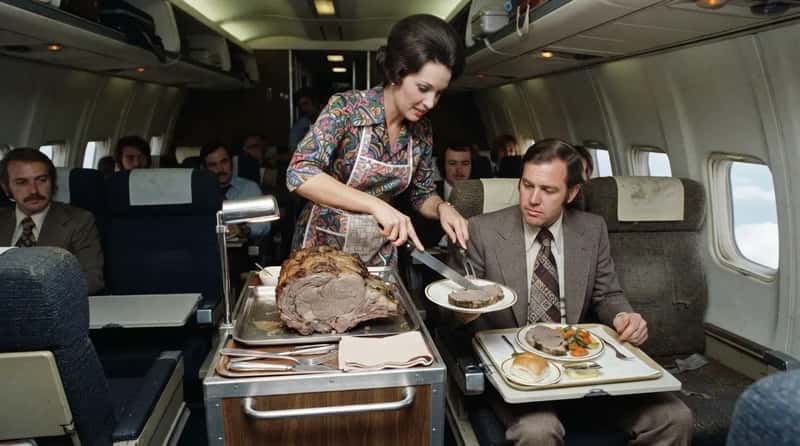
Some premium cabins genuinely wheeled out a cart with a whole roast and carved it in front of passengers, a showpiece meant to recreate a steakhouse experience at altitude. It was one of the most photographed rituals of the era.
The problem was consistency: holding a large roast warm for hours of service almost guaranteed the interior turned gray and overcooked by the time later rows were served. First passengers got a decent slice; the last got shoe leather.
#6 – Consommé Served in a Paper Cup
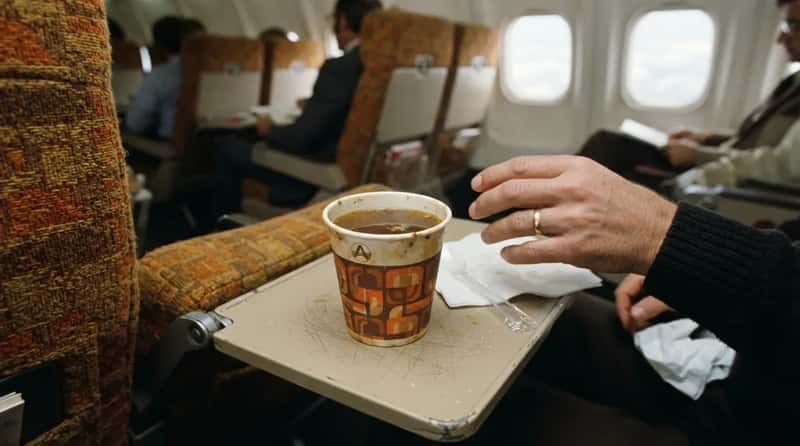
Beef consommé – a clarified, deeply reduced broth – was practically a signature starter across American carriers in the 1970s, the kind of dish meant to signal real French technique before the main course even arrived. It sounded like serious cooking.
In practice, serving hot liquid in a flimsy paper or foam cup during turbulence was a genuine spill risk, and the broth itself was frequently reconstituted from bouillon rather than simmered for hours from real bones. It was soup theater dressed up as soup craft, and one bump in the air could ruin the whole performance.
#5 – Fruit Tartlet That Tasted Like Wax
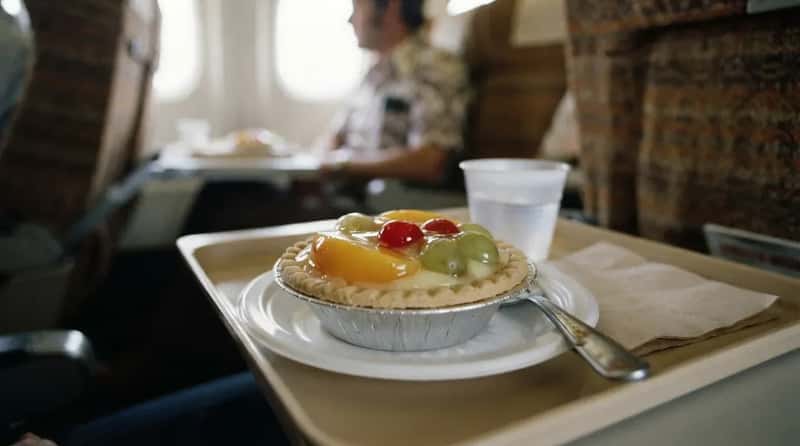
Nearly every “elegant” 1970s meal ended the same way: a small glazed fruit tartlet, set down as the finishing touch after courses that were supposed to feel like a night out. It was the dessert equivalent of a mic drop – dainty, sweet, and photogenic.
The glaze on these tartlets was usually a thick, shelf-stable gel designed to survive hours of cart service without melting or leaking. It gave the fruit an unnatural shine and a slightly waxy mouthfeel that modern dessert lovers would notice – and reject – within one bite.
#4 – The Free Cigarette That Came With Dessert
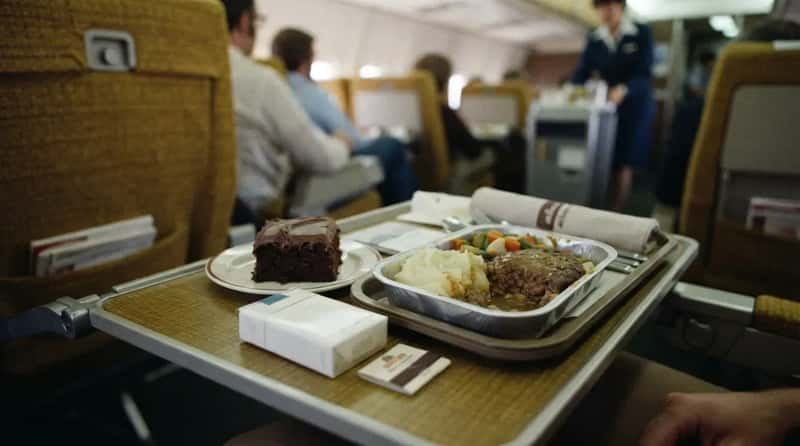
Perhaps nothing signals “different era” faster than this: flight attendants routinely handed out complimentary cigarettes right alongside the dessert course, treating them as a normal part of finishing a big meal.
Smoking sections existed just rows away from where other people were still eating, an idea that would be unthinkable on a commercial flight today. It wasn’t an oversight – it was standard service, baked into the whole in-flight experience.
At a Glance
- United Airlines became the first carrier to offer a non-smoking cabin section onboard select aircraft, back in 1971.
- A federal smoking ban on domestic flights of less than two hours went into effect on January 1, 1988.
- Congress extended the smoking ban to all domestic flights under six hours in 1990, and to every domestic and international flight in 2000.
#3 – Non-Dairy Creamer and Freeze-Dried Coffee
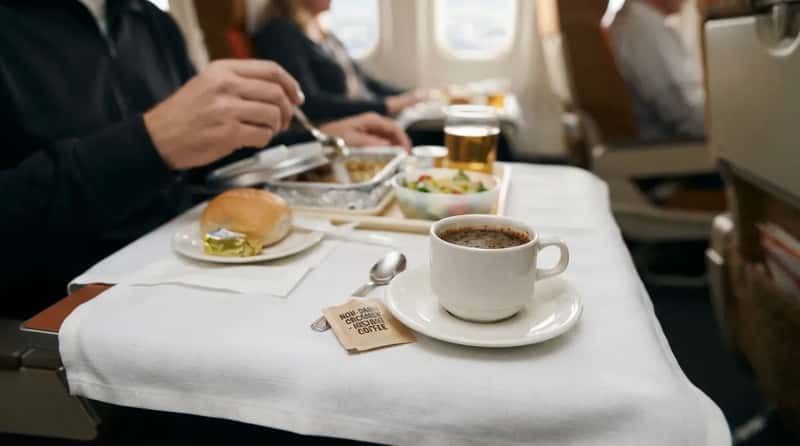
Despite the white tablecloths and fine china, the coffee itself was rarely brewed to any real standard, often relying on instant or freeze-dried grounds mixed with hot water from the galley. Non-dairy powdered creamer was the default, not real milk.
The “fine dining” illusion fell apart the moment coffee hit the table, since the taste was noticeably flatter and more bitter than brewed coffee. It’s one of the clearest gaps between how elegant the meal looked and how it actually tasted.
#2 – Canned Pineapple Upside-Down Cake
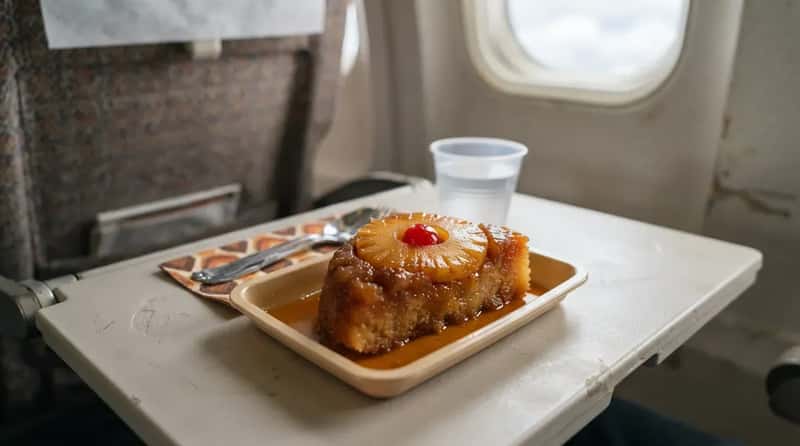
Dense, syrupy pineapple upside-down cake – made with canned pineapple rings and maraschino cherries – was a common dessert on domestic routes, chosen for its ability to survive hours of transport without falling apart. It was homey, not haute cuisine.
The cake itself was usually baked hours or even days earlier, then reheated, leaving it dense and slightly gummy rather than fresh from the oven. It leaned on nostalgia and sweetness to distract from the fact that it wasn’t made anywhere near the plane.
#1 – Golden Samovar Vodka-Coffee, Served Mid-Meal
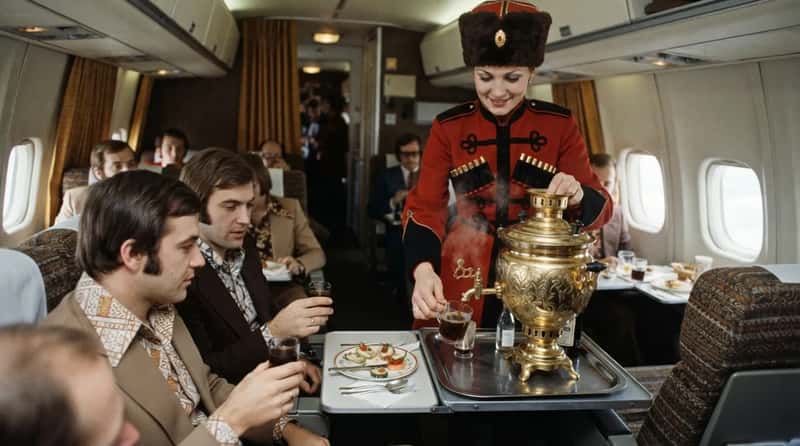
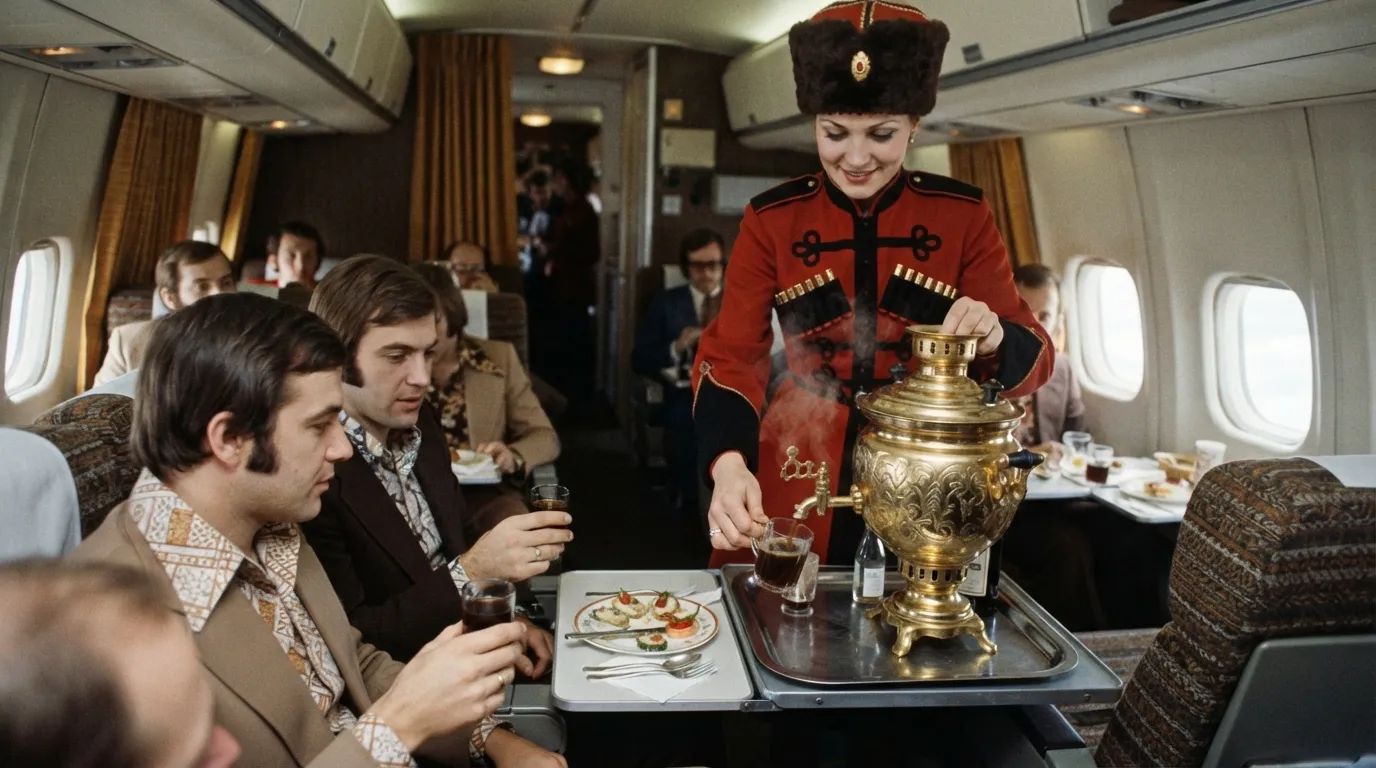
Alaska Airlines’ legendary Golden Samovar service is the single strangest – and most telling – example of 1970s in-flight excess. For a few years in the decade, the airline ran charter flights from Alaska to the Soviet Union with flight attendants dressed in Cossack-style outfits, serving Russian-themed food and a signature drink dispensed tableside from an ornate golden urn.
That drink was coffee, vodka, and liqueur, poured mid-meal like it was the most normal thing in the world. Paired with balalaika music and elaborate costumes, it captures exactly how far airlines went to turn a meal into theater – spectacle first, substance a distant second. Today, it reads less like fine dining and more like a fever dream of Cold War-era branding.
People didn’t fly to eat well. They flew to feel like someone.
Common refrain among former 1970s flight attendants
Looking back, the 1970s airline meal wasn’t really about the food – it was about the performance of luxury. Canned vegetables, powdered eggs, and gelatin molds got dressed up in white tablecloths and fancy French names, and passengers went along with the illusion because flying itself still felt glamorous. Strip away the theater, and most of these dishes wouldn’t survive one bite of scrutiny from a modern flyer.
That doesn’t make the era less fascinating – if anything, it makes it more human. Airlines were selling an experience, and passengers were buying into the spectacle as much as the meal itself. Which one of these would you actually try if it showed up on your tray tomorrow?