Most people assume housekeepers only care about wrinkle-free sheets and a tightly tucked comforter. The truth is far stranger – the real judgment happens over things guests barely think twice about, from ignored Do Not Disturb signs to mystery stains nobody bothers to mention on the way out.
Housekeepers rarely say any of this out loud to a guest’s face. They just remember, room after room, and trade the stories later in the break room. Here’s what actually earns someone a permanent spot in those conversations.
#25 – Flipping the Do Not Disturb Sign All Day, Then Complaining Nothing Got Cleaned
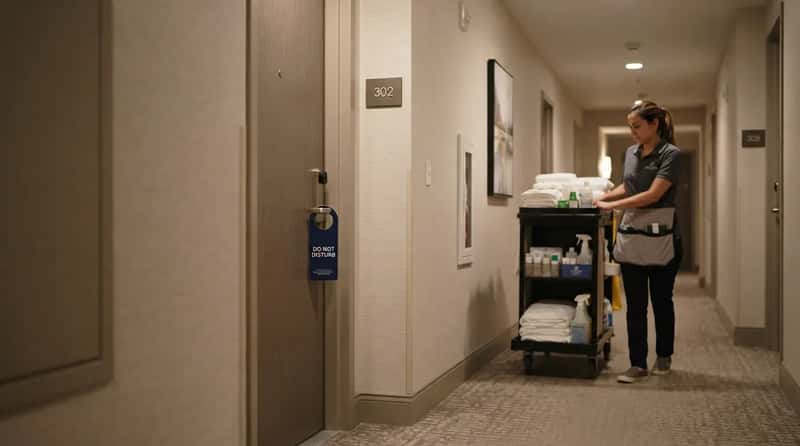
This is reportedly the single most common complaint among housekeeping staff, and it’s almost entirely self-inflicted. Several hotel workers have described guests putting out a Do Not Disturb sign all day, then getting angry that the room never got touched. Others pull the sign down late in the evening and expect immediate service after housekeeping has already clocked out for the night.
Housekeepers can’t read minds, and they definitely can’t walk through a locked door. If the sign is up, staff are trained to skip the room entirely – no exceptions – which creates a bizarre standoff where guests feel neglected and staff feel blamed for something completely outside their control.
#24 – Showing Up at 8 A.M. Demanding to Know Why the Room Isn’t Ready
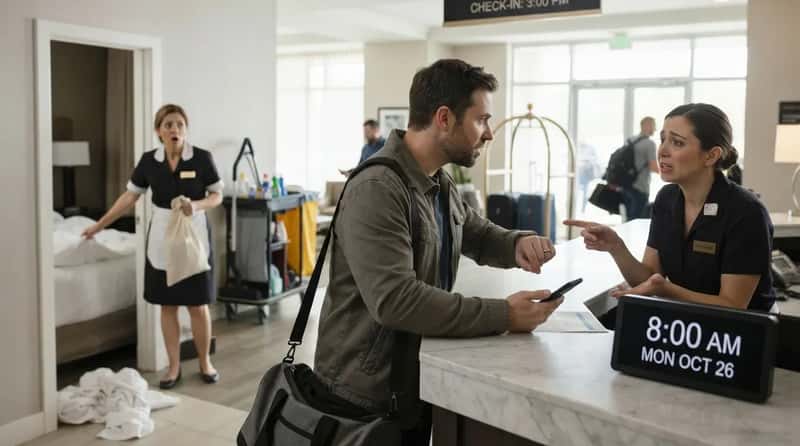
Check-in times exist for a reason, and housekeepers are the ones who feel the pressure when guests ignore them anyway. Some guests arrive as early as 8 A.M., hours before check-in, then ask why the room isn’t ready yet.
What guests don’t see is the domino effect that follows. A rushed turnover means shortcuts, and shortcuts mean the next guest gets a worse room. Housekeepers quietly clock who shows up before dawn expecting miracles.
#23 – Insisting There Must Be a “Hidden Room” When the Hotel Says It’s Sold Out
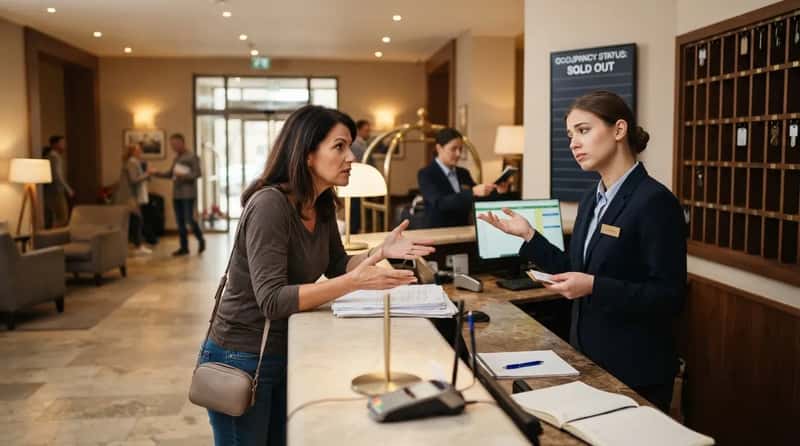
Front desk staff and housekeepers both dread this one because it never actually pans out. When a hotel says it’s sold out, it’s sold out – there’s no secret stash of rooms being held back for the right amount of persistence.
Every room that’s clean and available is already listed on the board. The ones that aren’t listed are being cleaned, damaged, or genuinely occupied – not saved for whoever asks nicely enough.
#22 – Treating Breakfast Hours Like Suggestions, Not Rules
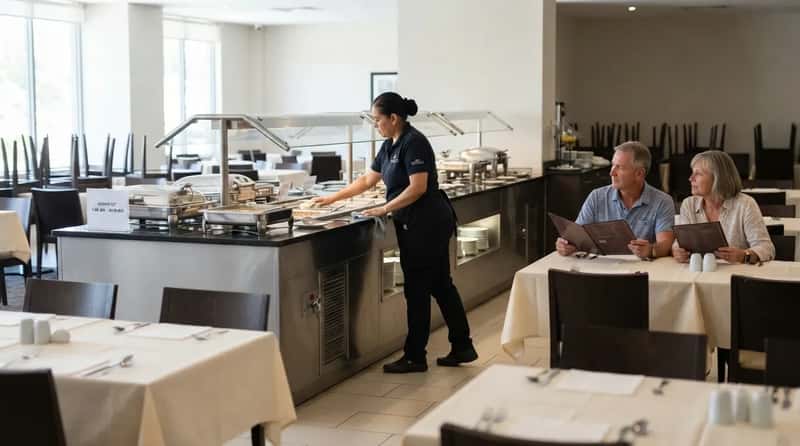
Hotel schedules are built around tight turnaround windows that guests almost never think about. A recurring complaint from staff is that guests treat breakfast and kitchen hours as loose guidelines, when in reality those cutoffs exist because staff need every remaining hour to reset for the next service.
Wandering in fifteen minutes after closing and expecting a full spread doesn’t just inconvenience the kitchen. It pushes back cleaning, restocking, and prep for the entire property’s next shift.
#21 – Stripping Their Own Bed Before Checkout to “Help”
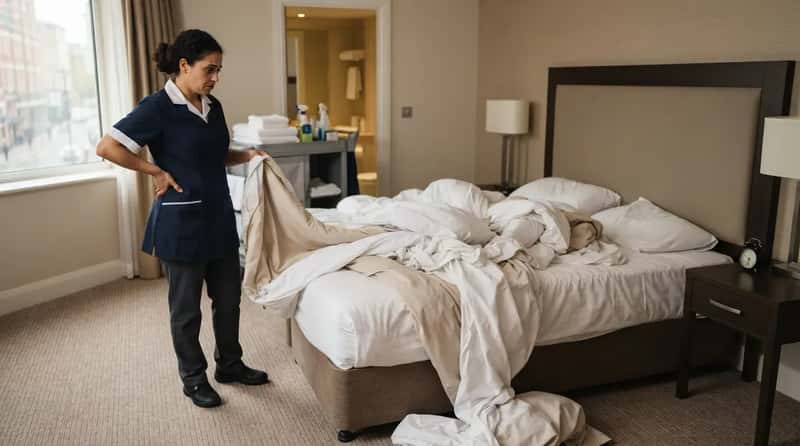
This one feels considerate, but housekeepers say it usually backfires. Guests think they’re being helpful by stripping the bed themselves, but it actually slows the process down – pulling everything off tangles pillow protectors and duvet covers and makes it harder to inspect for stains.
What looks like a small courtesy actually creates extra work, since unraveling twisted linens takes longer than starting from a properly made bed. Housekeepers appreciate the intention, but they’d genuinely rather guests just leave it alone.
Fast Facts
- Average industry benchmarks are 20-30 minutes for stayover cleans and 30-45 minutes for check-out cleans.
- A standard performance target for a room attendant is usually 12-18 rooms per eight-hour shift.
- Some state proposals have even pushed for a guaranteed minimum, since a hotel housekeeping worker shall not be required to clean a hotel room in less than 40 minutes on average under one such bill.
#20 – Sitting on a Zoom Call While a Housekeeper Tries to Clean Around Them
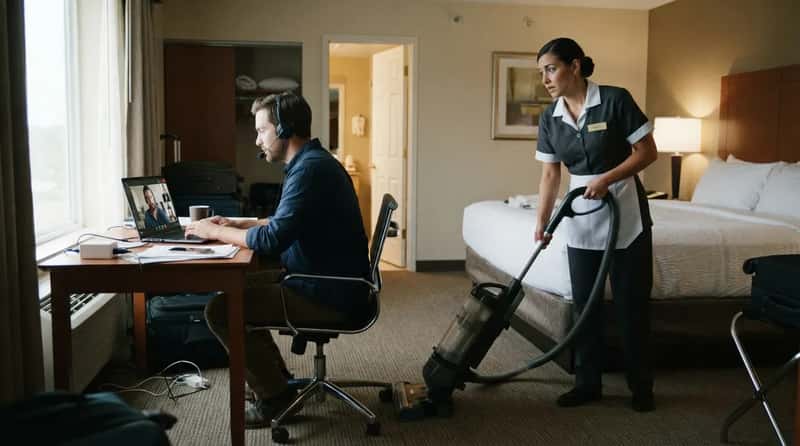
Nothing slows a shift down quite like an audience. Housekeepers overwhelmingly say they hate cleaning while a guest sits there watching, and many would rather come back later than vacuum around someone on a video call or lounging in bed.
It’s not that guests are doing anything wrong by staying in the room. It’s the expectation that a full clean should happen quietly, instantly, and without disruption while someone’s inches away on a work call – and housekeepers notice every time they have to reschedule around it.
#19 – Leaving a Coffee Cup on Every Single Surface
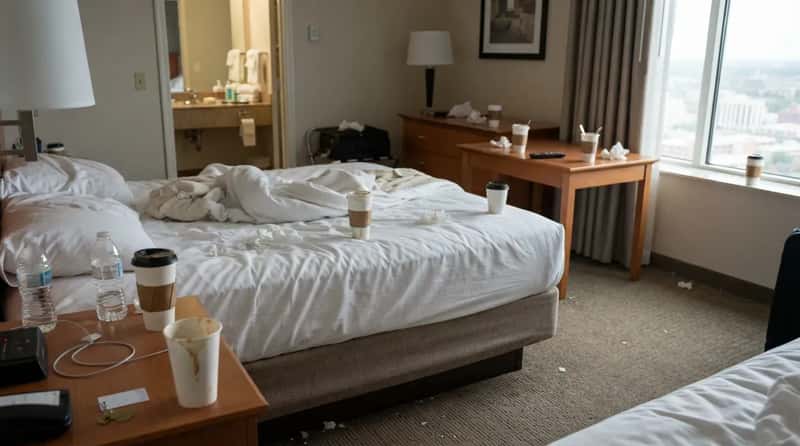
One cup left behind is normal. An entire trail is a pattern housekeepers talk about. One housekeeper described finding cups on nightstands, desks, bathroom counters, and windowsills – all while spilled coffee stains furniture and linens and leftover dairy or sugar adds a sanitation problem.
It sounds harmless enough, but multiply it by dozens of rooms a day and it becomes a real time sink. A quick trash run before checkout would erase the whole issue.
#18 – Wiping Greasy Hands Directly on the White Towels
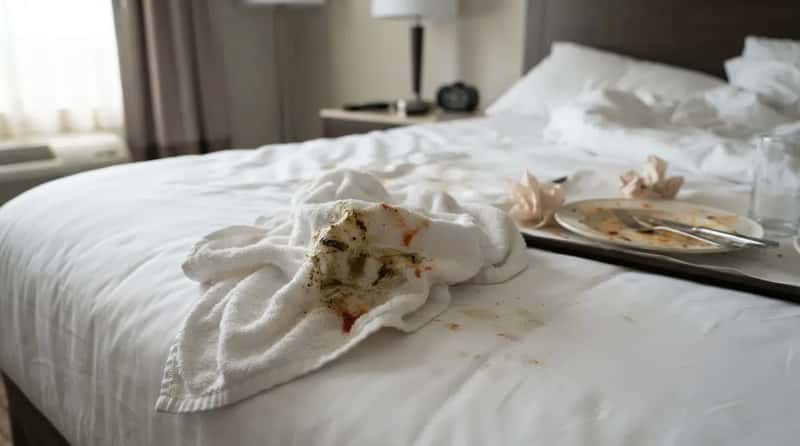
Room service napkins exist, yet plenty of guests skip them entirely. Housekeepers say guests often wipe greasy, food-covered hands straight onto white towels, sheets, and comforters instead of reaching for a napkin.
Grease stains are notoriously stubborn, and a ruined towel or comforter often means it gets pulled from circulation for good. What feels like a two-second convenience for a guest can turn into a real financial loss for the property.
#17 – Renting a Room Specifically to Shave Every Inch of Their Body
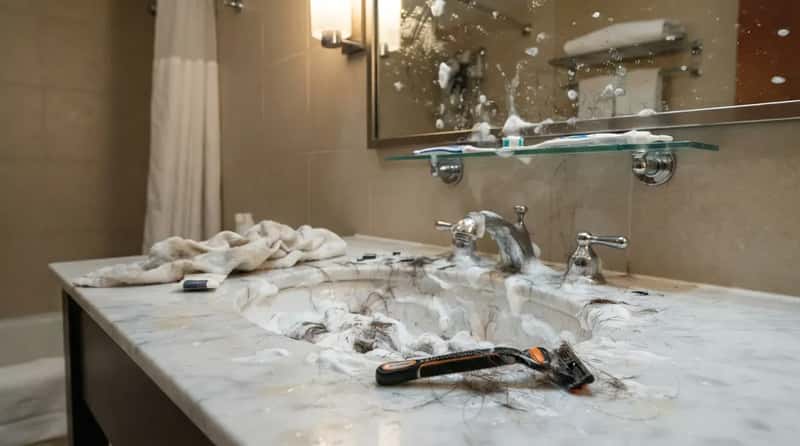
This is one of the stranger patterns housekeepers report, and it’s more common than most guests would guess. A surprising number of people book a room specifically to shave head to toe, then make zero effort to clean up afterward.
It’s a small thing that becomes a big, unpleasant surprise for whoever cleans the bathroom next. A quick wipe of the sink or tub takes seconds and spares the next person a genuinely gross discovery.
#16 – Turning a Kid’s Birthday Party Into a Full Crime Scene
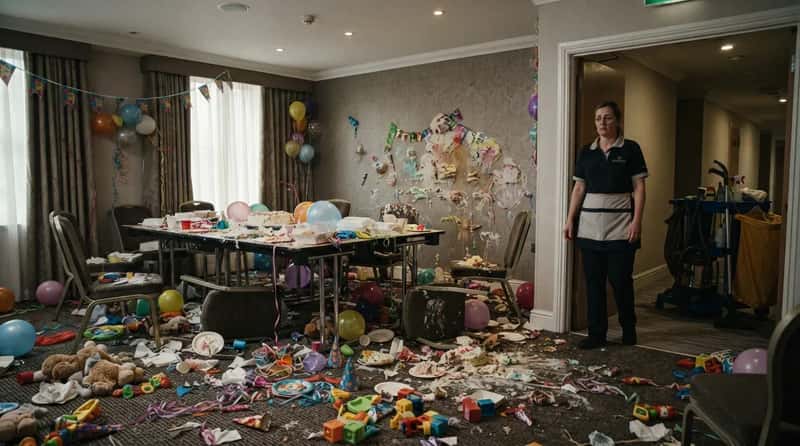
Party rooms are a notorious dread among hotel staff, and for good reason. Housekeepers specifically call out birthday parties – cake smeared on walls, toys everywhere, food ground into the carpet – as one of the most consistent nightmares on the schedule.
Nobody expects a spotless room after a celebration. But the sheer scale of frosting-on-the-ceiling chaos some parents leave behind turns a routine 45-minute clean into an hour-plus deep scrub, with zero warning for the staff walking in.
#15 – Piling Trash in the Hallway Instead of Using the Room’s Own Bin
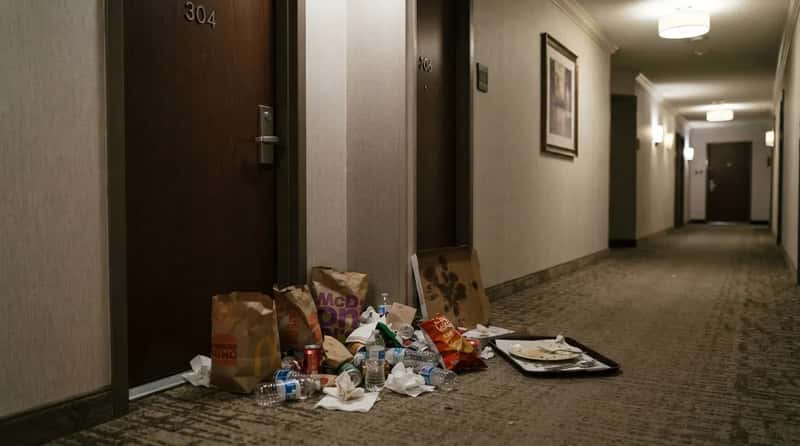
This small habit quietly frustrates entire housekeeping floors. One housekeeper’s biggest pet peeve is guests leaving loads of trash outside the door – a room service tray is fine, but everything else belongs in the room’s own bin.
Hallways lined with fast-food bags and empty bottles look bad to every other guest walking by. It also puts extra unplanned work on staff, who now have to sort and haul trash that was never bagged properly in the first place.
#14 – Leaving Hair Behind in the Tub or Sink After Shaving
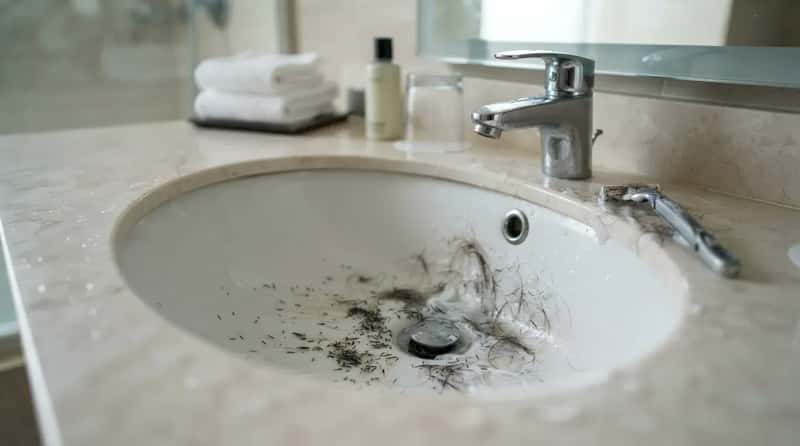
This is one of the most frequently mentioned complaints across housekeeping interviews, and it’s an easy fix most guests skip anyway. Dirty tubs and sinks come up even more often than unflushed toilets in these accounts – leftover hair is gross and genuinely difficult to clean, so a quick rinse afterward goes a long way.
It takes ten seconds to rinse a drain. Skipping it means someone else has to physically remove hair by hand before they can even start sanitizing the surface underneath.
#13 – Never Flushing the Toilet
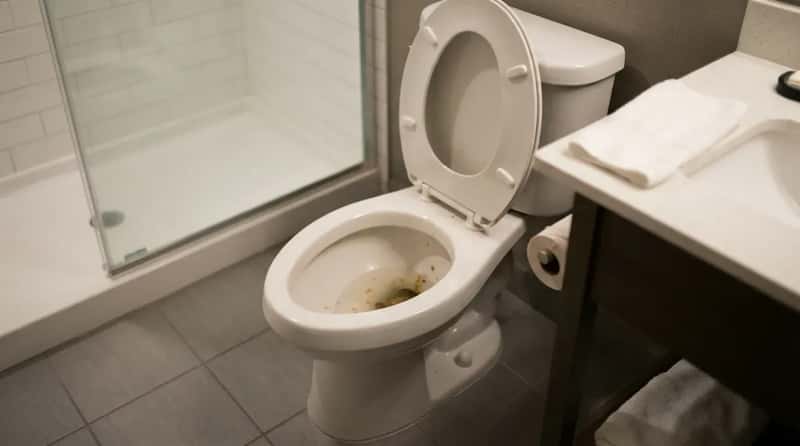
It sounds almost too basic to mention, yet it comes up constantly in housekeeper interviews. Unflushed toilets are a near-universal complaint – not only smelly and unsightly, but unsanitary – and a single flush would make the job noticeably easier.
Housekeepers point out the obvious contradiction: nobody leaves a toilet unflushed in their own bathroom at home. Doing it in a hotel simply because someone else will deal with it is one of the clearest signs of disrespect they notice.
#12 – Asking Housekeeping to Let Them Into a Locked Room
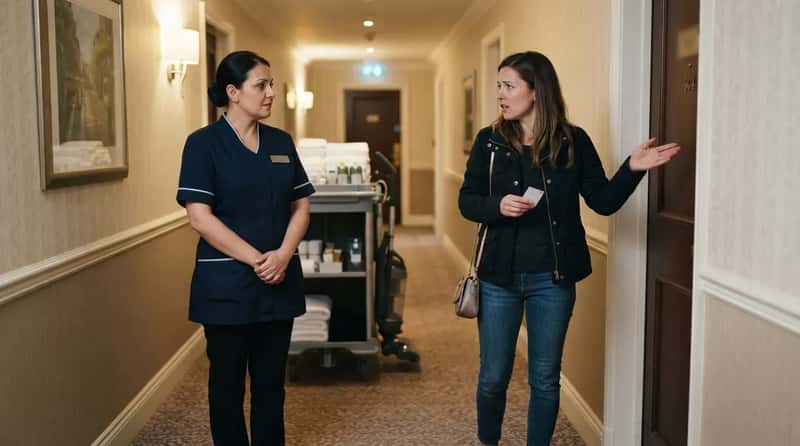
This request feels innocent to guests but puts staff in an impossible position. Housekeepers are never allowed to let anyone into a room for security reasons, even when a guest insists they left their key inside or is in a hurry, because breaking that rule could genuinely cost them their job.
This puts housekeepers in a terrible position.
Hotel housekeeping manager
Housekeepers aren’t being difficult when they refuse and redirect guests to the front desk. They’re following a rule designed to protect everyone, including the guest doing the asking.
#11 – Grabbing Toilet Paper and Towels Straight Off the Housekeeping Cart
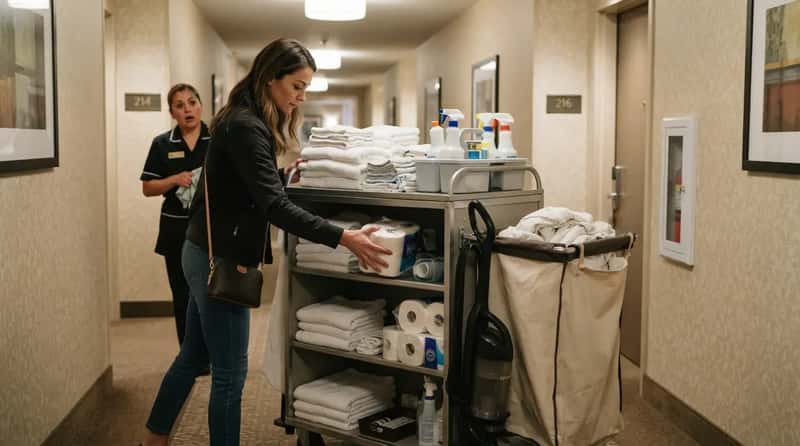
Guests treat the cart like a self-serve station more often than most people would guess. Housekeepers report guests helping themselves to toilet paper, towels, and even cleaning tools directly off the cart without asking – one cleaner said someone once walked off with her broom mid-shift.
It might feel like a victimless shortcut, but those carts are stocked for a specific number of rooms per shift. Every item taken means one more supply run a housekeeper has to squeeze in on their own time.
Worth Knowing
- Carts are packed in advance for a full shift, not restocked room by room as the day goes on.
- A standard performance target for a room attendant is usually 12-18 rooms per eight-hour shift, so supplies are counted out to match that exact number.
- An item grabbed mid-shift almost always means an unplanned trip back to the supply closet later.
#10 – Hiding Used Tissues and Chew-Spit Cups in Random Secret Spots
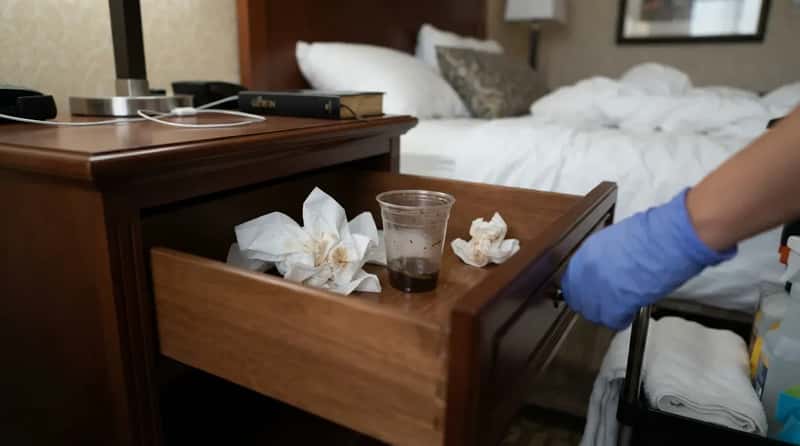
This is one of the stranger patterns housekeepers describe, and it genuinely baffles them. Staff have described finding chew-spit cups, soaked towels, and used tissues tucked into drawers, closets, and under beds – one worker even found vomit stashed inside a bedside drawer.
There’s no logical reason to tuck trash into a drawer instead of a wastebasket two feet away. Housekeepers say it’s less about the mess itself and more about the sheer strangeness of the hiding instinct.
#9 – Leaving Underwear and Personal Items Scattered in Plain View
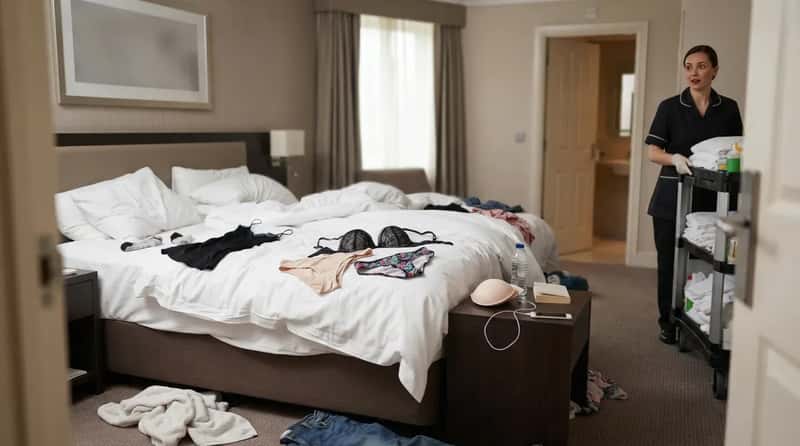
This one shapes a housekeeper’s mental picture of a guest almost instantly. Personal items left out in the open come up often, with one former housekeeper admitting she saw far too many bras, bra inserts, and underwear strewn across furniture and floors.
It’s not a moral judgment – it’s just an easily avoidable one. A two-minute tidy before heading out for the day spares housekeepers an awkward moment, and spares guests an unflattering first impression.
#8 – Not Disposing of Condoms or Wrappers Properly
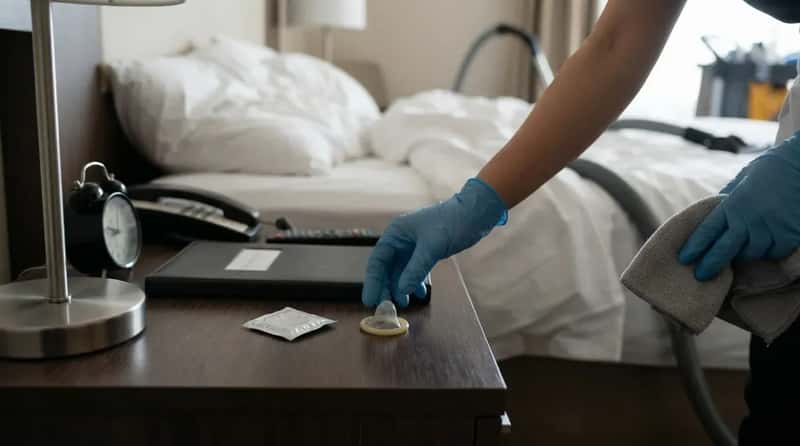
Housekeepers bring this up in nearly every interview, and it’s less about prudishness than basic courtesy. One former housekeeper said condom wrappers were one of the clearest giveaways of an overnight guest, and her advice was simple: dispose of things properly, because handling it herself was not fun.
It’s a private matter, and housekeepers genuinely don’t care what happens in a room. What they do care about is not being the one who has to find and dispose of it without any warning.
#7 – Leaving a “Suitcase Explosion” Level of Mess Across Every Surface
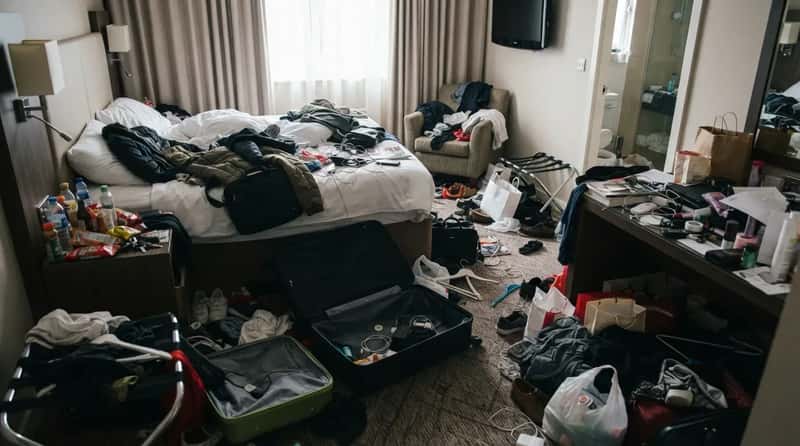
Housekeepers expect some disorder – nobody folds clothes into origami before heading out for the day. But there’s a clear line they notice immediately. The rooms that bother them most look like several suitcases detonated at once, with items strewn across every surface.
The math is simple: a room with clear surfaces takes minutes, while one buried under luggage, electronics, and clothes can nearly double the cleaning time, with no extra pay to match.
#6 – Complaining the Room Isn’t Clean, Then Refusing to Let Anyone Back In
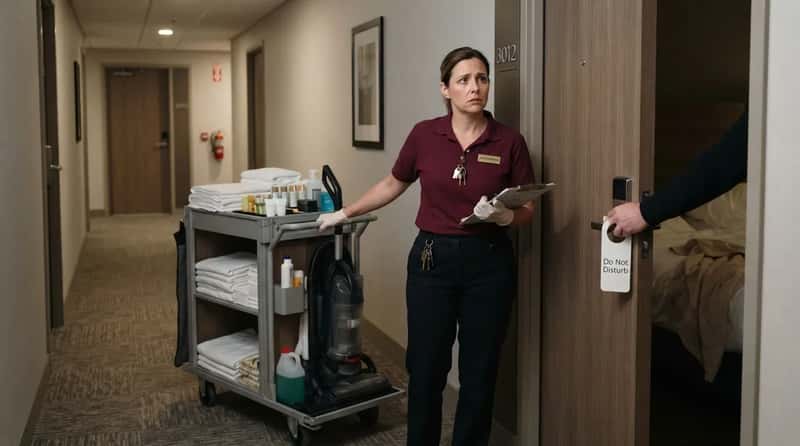
This contradiction drives housekeeping staff up the wall. Guests who complain about cleanliness after checking in, but then refuse to be disturbed, create a frustrating loop where nothing can actually get fixed.
Housekeepers can’t correct a problem they’re not allowed to see. If something’s genuinely wrong, staff say the fastest fix is simply flagging it at the front desk and letting someone in to address it directly.
#5 – Leaving Vomit or Blood Behind Without Telling a Single Person
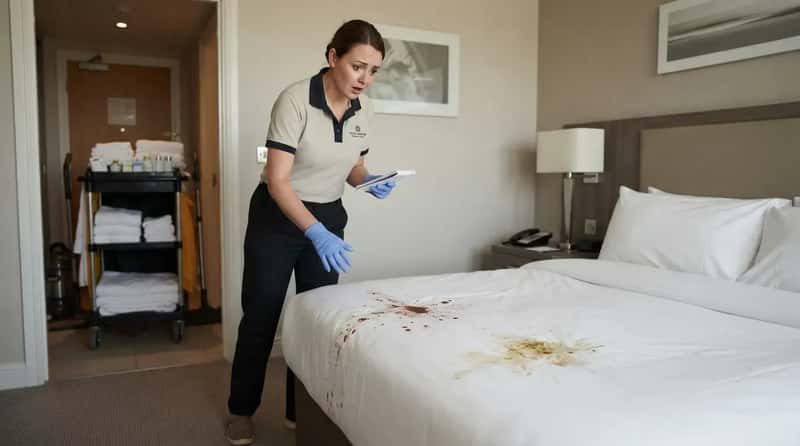
This is where minor annoyance turns into a real safety issue for staff. One former housekeeper said she was always frustrated when guests made a huge mess and said nothing – recalling guests who threw up on the bed or left blood behind and never mentioned it, even after talking to multiple employees in the lobby.
Housekeepers open doors expecting a normal turnover, not a biohazard. A simple heads-up at checkout, even an embarrassed one, gives staff the chance to protect themselves before they’re blindsided.
Worth Knowing
- Housekeeping already carries higher physical risk than many hotel jobs, with the average injury rate for hotel housekeepers at 7.6 recorded injuries per 100 full-time equivalent workers, with one hotel chain in particular having a rate of 10.8.
- Unannounced bodily fluids turn a routine clean into an unplanned biohazard situation, with no gloves or extra cleaner on hand.
- A short heads-up at checkout gives staff time to grab the right supplies before opening the door.
#4 – Acting Shocked That Housekeepers Actually Accept Tips
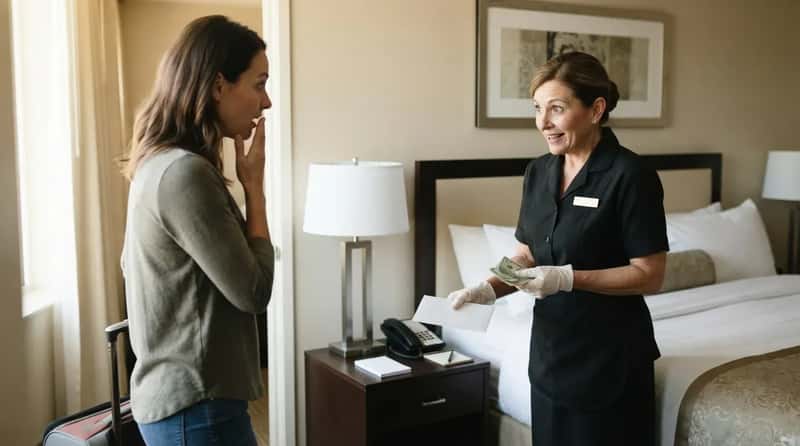
Plenty of guests simply don’t realize tipping housekeeping is normal, and staff notice the gap every time. A small amount left daily is appreciated, especially since staff often rotate day to day, with a bigger tip warranted if guests leave behind an unavoidable mess.
It’s rarely about the money itself. It’s the acknowledgment that someone spent part of their day cleaning up after a total stranger – something easy to forget when you never actually see them do it.
Fast Facts
- The American Hotel & Lodging Association (AHLA) suggests tipping housekeeping $1–$5 per night at most standard properties.
- At luxury hotels and resorts, tips typically fall between $10 and $20 per night, and sometimes they go even higher.
- Etiquette guides note that a better practice is doling out incremental tips daily, as hotel housekeepers might have different day-to-day room assignments.
#3 – Praising the Hotel to Everyone Except the Person Who Cleaned It
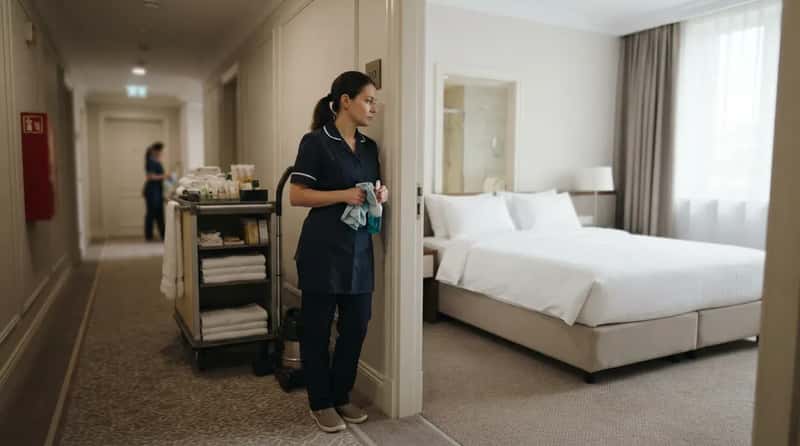
This is the quiet frustration that comes up again and again in interviews. One former housekeeper shared that guests will happily tell the front desk they enjoyed their stay, but almost never say a word to the housekeepers themselves, even though it’s a hard job and a simple thank-you goes a long way.
Front desk staff get the five-star reviews and thank-you notes. Housekeepers, who did the actual physical labor, often get nothing but an empty room and a new set of dirty sheets – a mismatch that stings more than most guests realize.
#2 – Leaving Behind Destructive “Prank” Damage Just Because They Could
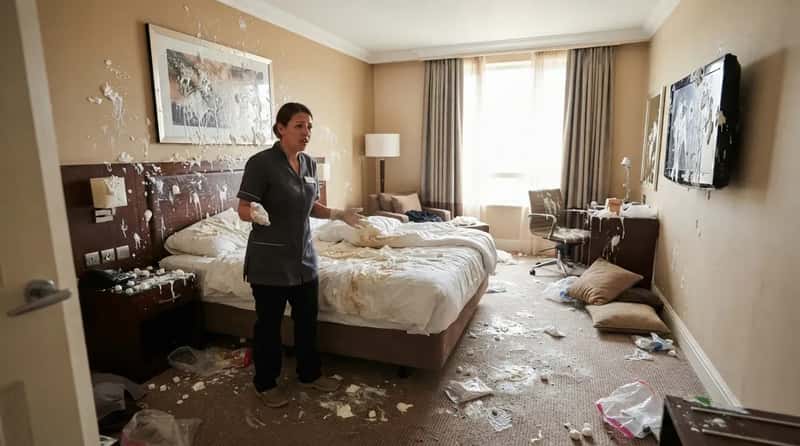
Some messes go beyond careless and straight into baffling. In one account, a group of teens bombarded an upscale hotel room with goo from marshmallow guns, coating the walls, picture frames, furniture, carpeting, and even the flat-screen TV in sticky white residue.
The housekeeping team reportedly couldn’t even figure out what they were looking at when they first opened the door. Cleaning up deliberate destruction, versus an honest accident, is the moment housekeepers say pushes annoyance into genuine disbelief.
#1 – Never Realizing How Strongly a Room Actually Smells
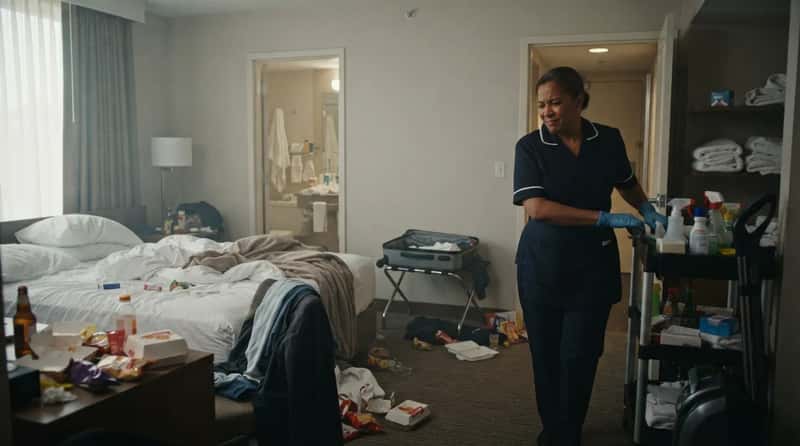
This is the detail that surprises guests most when housekeepers finally say it out loud. Most guests have no idea how bad they’ve made a room smell, simply because they’ve adapted to it over the course of their stay – but the housekeeper walking in next gets the full, unfiltered version.
It’s not an insult; it’s just biology. Guests live inside their own scent all day and stop noticing it entirely, which is exactly why nose plugs quietly exist in some housekeeping carts.
None of these habits make someone a bad person. Most guests genuinely don’t realize how differently a room looks through a housekeeper’s eyes, or how much a two-minute tidy-up before checkout actually matters to the person cleaning up next. The pattern across every account is the same – it’s rarely the mess itself that housekeepers remember. It’s whether a guest treated them like a person or like part of the furniture.
Which one of these have you caught yourself doing without even thinking twice? Drop it in the comments – housekeepers are probably reading.