Step onto a 1960s ocean liner and the dining room looked more like a black-tie wedding than a vacation. Waiters in white gloves carved meat tableside, silver trays arrived stacked twelve courses deep, and nobody asked what was “sustainably sourced.” Most people assume old-school cruise food was just fancier versions of today’s buffet classics – bigger steaks, more butter, maybe a fancier dessert cart.
The truth is stranger than that. Some of these dishes would get a modern cruise line fined, boycotted, or shut down by a health inspector before the ship even left the dock. Here’s what old menus, maritime historians, and food archives actually reveal about what was really on the plate.
#25 – Green Turtle Soup, Made From Actual Turtles
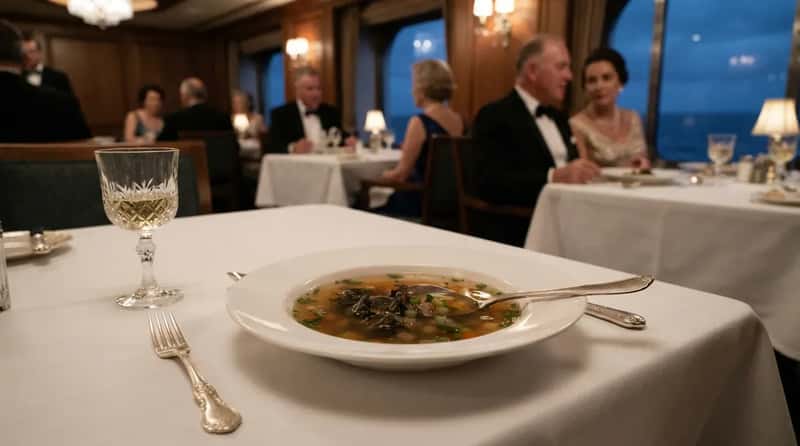
This wasn’t a cute name for a vegetable soup. First-class dinner menus on major liners routinely listed iced beluga caviar, clear green turtle soup, cauliflower mousseline, and venison cutlets à la Nérac as standard fare, and the turtle soup was exactly what it sounds like – simmered from real green sea turtle. It was considered one of the most prestigious opening courses a kitchen could offer.
Green sea turtles are now internationally protected, and harvesting or serving them is illegal across virtually every port a modern cruise ship visits. What was once a symbol of luxury dining is now a federal wildlife violation. No line today would risk the fines, the boycott, or the conservation backlash. But that’s nothing compared to what we found about #24.
Fast Facts
- Green sea turtles were once considered a status ingredient on par with caviar and foie gras.
- They’re now protected under both U.S. wildlife law and international conservation treaties.
- Serving real turtle soup today would expose a cruise line to fines and public backlash, not applause.
#24 – Real Terrapin Stew, the Turtle’s Land-Dwelling Cousin
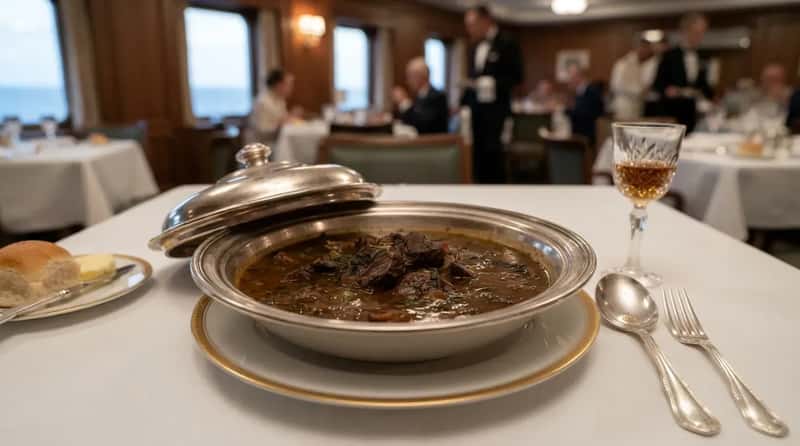
Before “farm to table” was a buzzword, ships served whatever was regionally prized, and diamondback terrapin stew was an East Coast delicacy that made its way onto shipboard menus heading out of American ports. It was rich, slow-cooked, and heavy with sherry – the kind of dish that signaled you’d paid for the good ticket.
Diamondback terrapins were hunted to near collapse by the mid-20th century, which is exactly why most states now regulate or outright ban commercial harvesting. The dish disappeared not because tastes changed, but because the animal almost did. Modern cruise lines wouldn’t touch it, and honestly, most passengers today wouldn’t recognize it on a menu. Wait until you see what #23 poured freely at breakfast.
#23 – Wild Beluga Caviar, Served Without Limit
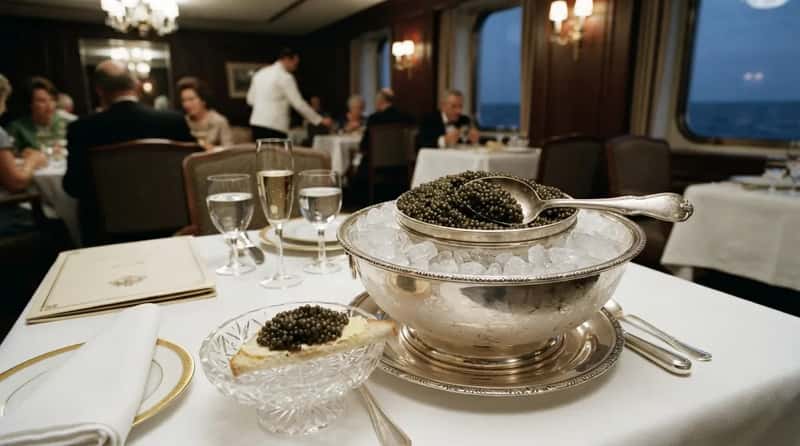
On today’s ships, caviar is a $40 upcharge served in a thimble-sized dollop. In the 1960s, wild beluga caviar showed up standard on first-class breakfast and dinner menus, spooned generously and refilled on request. It sat on the table the way ketchup does now.
Wild beluga sturgeon populations have since collapsed from overfishing, and international trade restrictions now make wild beluga caviar nearly impossible to legally serve in the quantities ships once offered. A dish that was once “unlimited” is now one of the most tightly regulated foods on earth. Most farmed caviar today is a different animal entirely, in every sense. But #22 might be the most jaw-dropping entry on this whole list.
At a Glance
- The US has blocked wild beluga imports since 2005, and most of Europe followed soon after.
- Beluga sturgeon populations have fallen 90 percent in the past 20 years due to overfishing, habitat loss and pollution.
- Most of the world’s beluga caviar is imported by the United States, usually originating from the Caspian and Black seas.
- Sturgeon has been listed under CITES since 1998.
#22 – Whale Steak, Sold as a Novelty Entrée
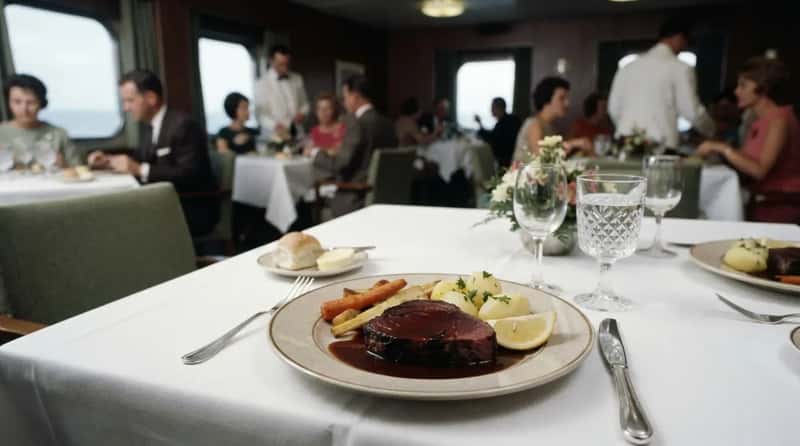
On certain Nordic and European-operated liners running winter cruise itineraries, whale meat occasionally appeared as an exotic specialty dish – marketed to curious American and British passengers as something they’d never tried at home. It was treated less like a controversial choice and more like a bragging-rights souvenir.
The International Whaling Commission’s commercial whaling moratorium changed all of that, and most nations now ban whale meat in commercial food service entirely. A dish once pitched as adventurous is now one of the most heavily condemned items a restaurant could put on a menu. No cruise line operating today would come near it. Slide #21 is almost as controversial, just with feathers instead of fins.
#21 – Roasted Wild Plover, a Protected Songbird Delicacy
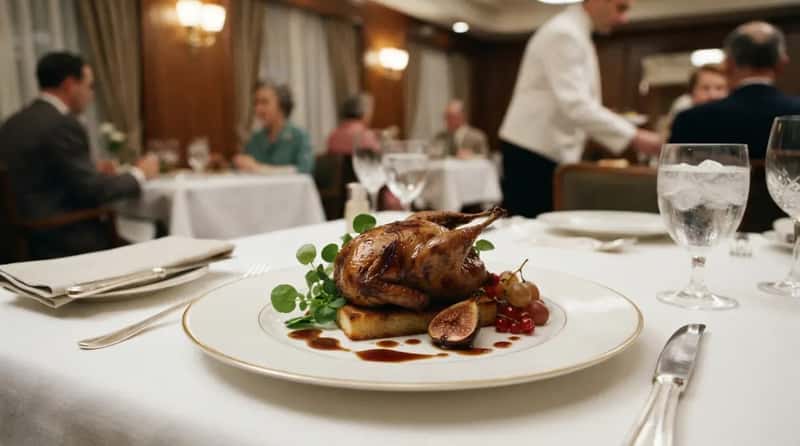
Small wild game birds were a fixture of golden-age dining, and menus from the era prove it – passengers could order rich foie gras, roasted plover, or Vermont turkey smothered in cranberry jelly as an alternative to the seafood course. Plover, in particular, was prized for its delicate, gamey flavor.
Plovers are now protected under migratory bird conservation laws in most Western countries, making it illegal to hunt or sell them for food. A bird that once signified elegance is now a federally protected species. The idea of ordering wild songbird for dinner sounds almost fictional today, but it was standard fare on the finest ships afloat. Up next, a dish that’s making a slow, controversial comeback on land – but never at sea.
#20 – Foie Gras Torchon, Served Every Single Night
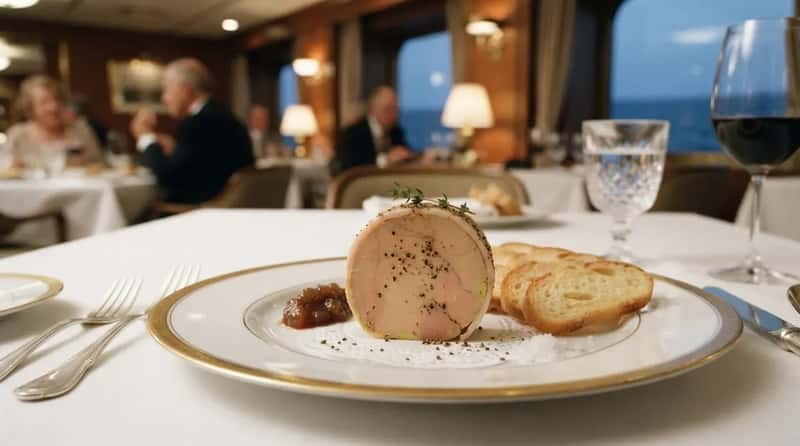
Foie gras wasn’t a rare treat on 1960s liners – it was practically a nightly fixture, appearing course after course as a rich, buttery counterpoint to lighter seafood dishes. Kitchens produced it in bulk because first-class passengers expected it.
Animal-welfare concerns over force-feeding practices have since led several U.S. states and cities to restrict or ban foie gras sales outright, and major hospitality brands have quietly dropped it to avoid controversy. What was once served nightly is now a legal minefield in half the ports a ship might dock at. Cruise lines that want to avoid protests and headlines simply leave it off. Slide #19 swaps the controversy for pure Southern excess.
Quick Compare
- California: passed a ban on both the production and sale of foie gras in 2004 (going into effect in 2012).
- Chicago: banned the production and sale of foie gras in 2006, though it was repealed two years later.
- New York City: passed a law in 2019 forbidding the sale of foie gras in stores and restaurants, but the New York Supreme Court has ruled that New York City’s attempt to ban the sale of foie gras in the city violates state agricultural laws.
#19 – Chicken à la Maryland, Drowned in Cream Gravy
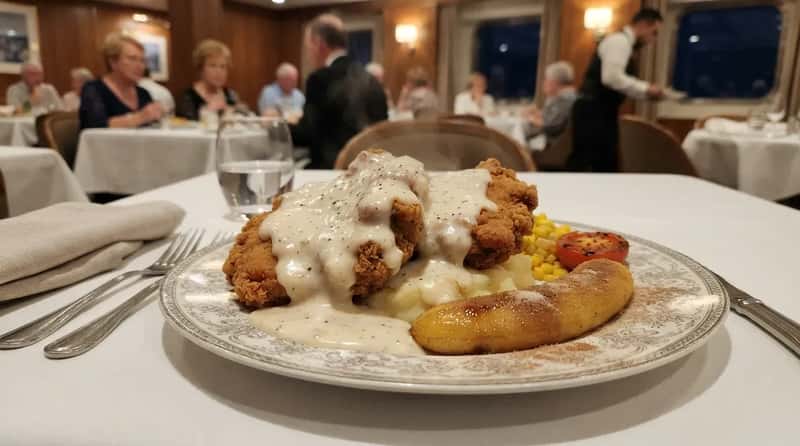
This wasn’t the lean grilled chicken breast on today’s spa menu. Historic farewell dinners describe Chicken à la Maryland – a crispy fried chicken dish smothered in steaming cream gravy – served alongside tenderloin steak as one of the evening’s showpiece mains.
It was fried, then drenched in cream sauce, then often plated with a fried banana on the side for good measure. A single serving likely blew past a modern passenger’s entire daily calorie recommendation before dessert was even served. Nutrition labeling requirements and health-conscious cruise branding have made this kind of unapologetically rich plate all but extinct on contemporary ships. Slide #18 takes the excess in a completely different, gamier direction.
#18 – Venison Cutlets à la Nérac
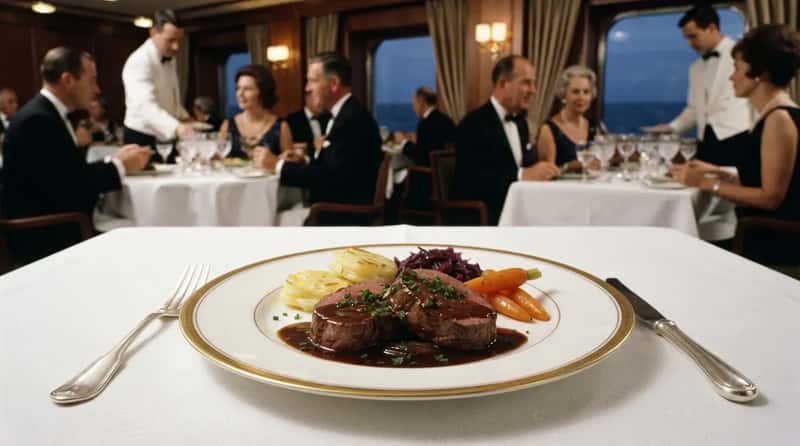
Game meat was a mainstay of first-class dinner menus well into the 1960s, and venison cutlets prepared in the classic French “Nérac” style – a rich sauce built on shallots and reduction – sat comfortably alongside caviar and turtle soup as a signature main course.
Modern food-safety regulations around wild-sourced game, combined with the logistical nightmare of keeping specialty meats properly inspected and refrigerated for thousands of portions, have pushed venison off almost every mainstream cruise menu today. Most large cruise lines now stick to USDA-inspected beef, poultry, and farmed fish exclusively to avoid the liability. Slide #17 brings the amphibians into the picture.
#17 – Frogs’ Legs Princesse
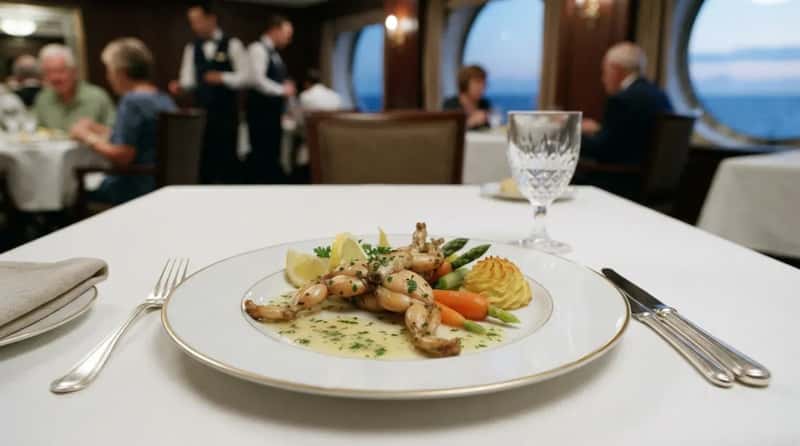
Frogs’ legs prepared in the elegant “Princesse” style – sautéed in butter with a light garnish – were a recurring holdover from the grand ocean-liner era, the kind of dish that signaled a kitchen was operating at full classical French capacity.
They’ve mostly vanished from mainstream cruise menus today, not because they’re illegal, but because mass-market lines feeding thousands of guests per meal have shifted toward dishes with broader appeal and simpler sourcing chains. A dish that once impressed passengers now reads as a liability for a line trying to please a family of four from Ohio. Frozen imported frog legs also raise sourcing and traceability questions most food-safety teams would rather avoid. Slide #16 is where things get genuinely risky.
#16 – Steak Tartare, Mixed Tableside With a Raw Egg
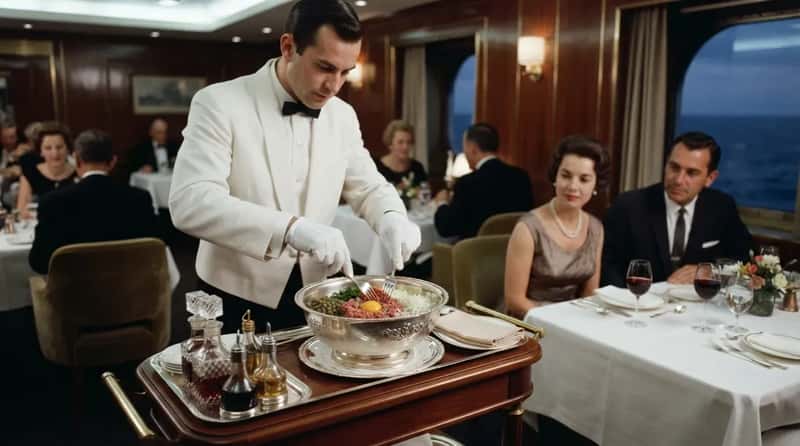
Tableside preparation was theater in the 1960s, and steak tartare – raw ground beef mixed with a raw egg yolk cracked directly onto the plate – was one of the flashiest performances a waiter could put on for a table of first-class passengers.
Modern food-safety codes around raw egg and raw beef handling, paired with the sheer liability of feeding thousands of passengers who might not disclose allergies or health conditions, make tableside raw-egg preparation a nightmare for any cruise line’s legal department. A single documented illness on a ship carrying thousands of passengers can end a brand’s entire reputation. Most lines now serve tartare pre-portioned in a controlled kitchen, if they serve it at all. Slide #15 exploits a loophole nobody enforces anymore.
#15 – Oysters on the Half Shell, Served in Every Month of the Year
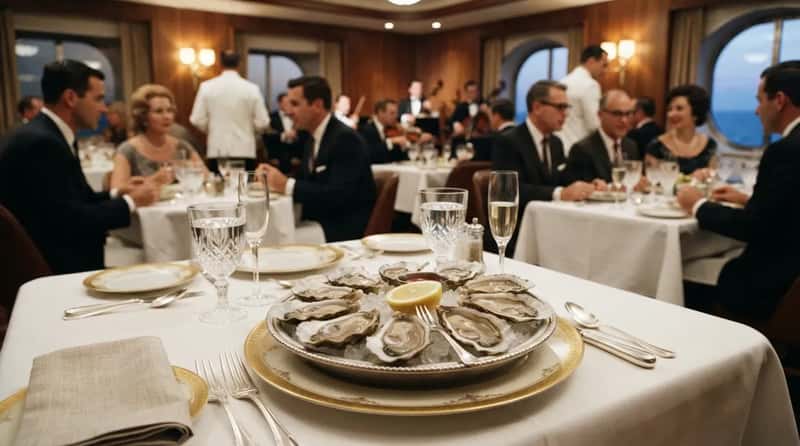
The old folk rule said only eat oysters in months with an “R” in them, but 1960s dining rooms ignored seasonal caution entirely. Oysters appeared as a near-constant fixture on first-class menus regardless of the calendar, alongside other raw seafood delicacies.
Modern cold-chain tracking, allergen labeling, and stricter shellfish-safety inspections mean today’s cruise lines are far more careful about sourcing and timing raw shellfish service. What used to be served on instinct is now tracked by refrigeration logs and supplier certifications. A single bad batch today triggers a recall; in the 1960s, it just triggered a bad night for a handful of unlucky passengers. Slide #14 moves the risk to breakfast.
#14 – Deviled Kidneys for Breakfast
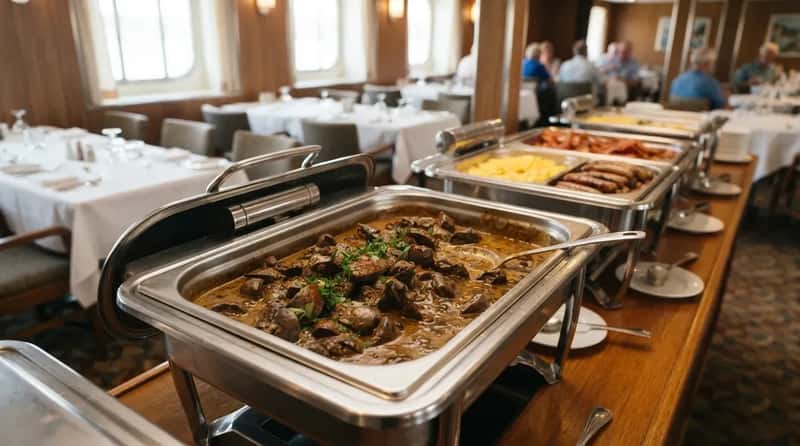
Organ meats were a completely normal breakfast option, not a shock-value novelty. Deviled kidneys – sautéed in a spicy mustard-cream sauce – sat on the breakfast buffet next to eggs and bacon like it was the most ordinary thing in the world.
Modern passengers overwhelmingly favor familiar comfort food at breakfast, and organ meats have all but disappeared from mainstream American food culture since the mid-20th century. A dish that once opened the day for wealthy travelers would now get sent back to the kitchen untouched. Sourcing consistent, high-quality kidney in bulk for thousands of daily breakfasts also isn’t worth the logistical headache for most lines. Slide #13 leaves food sitting out far longer than any health inspector would allow today.
#13 – Kippers and Finnan Haddie, Left Out for Hours
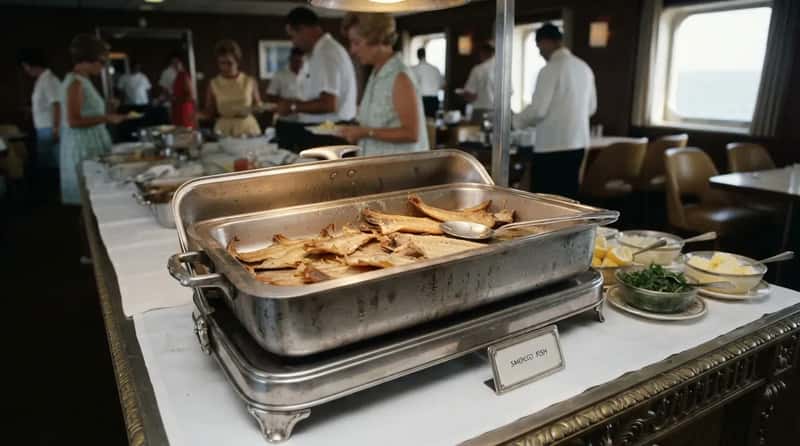
Smoked fish was a breakfast staple straight out of British maritime tradition, and it sat on open buffet spreads for hours at a stretch as passengers wandered in and out on their own schedule throughout the morning.
Today’s food-safety standards require strict temperature holding times for perishable proteins, and modern buffets are monitored far more closely than a 1960s dining steward ever was. Food sitting unrefrigerated for hours on end would now trigger an automatic health-code violation on almost every ship. Lines today rotate buffet trays constantly and discard anything that’s been out too long, something no 1960s kitchen worried about. Slide #12 gets even more literal about “nose to tail.”
#12 – Head Cheese and Brawn Platter
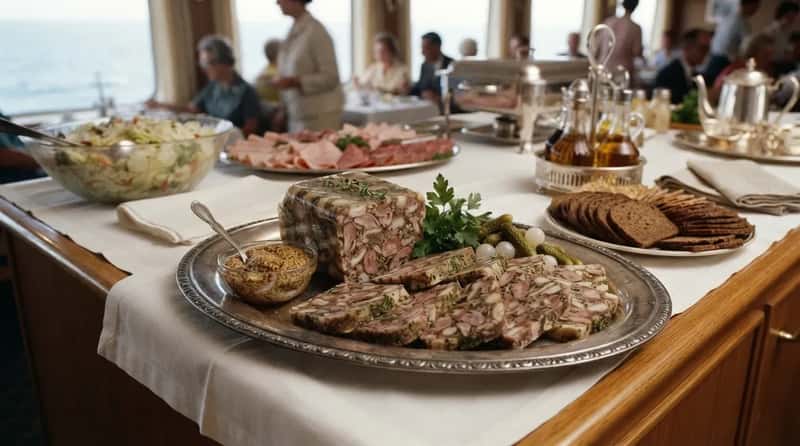
Despite the name, there’s no cheese involved – head cheese is a jellied meat terrine made from the head of a pig or calf, and it appeared as a cold cut option on midday buffet spreads without a hint of hesitation from either kitchen or guest.
Modern passengers, especially American and European ones raised on boneless, unrecognizable cuts of meat, tend to be far more squeamish about visible organ or offal dishes than their 1960s counterparts were. A dish once considered a practical, no-waste kitchen staple is now something most guests wouldn’t even recognize as edible. Cruise lines have quietly replaced it with deli-style cold cuts that look nothing like their original animal. Slide #11 is a strange, glossy cousin of the same idea.
#11 – Aspic-Glazed Beef Tongue
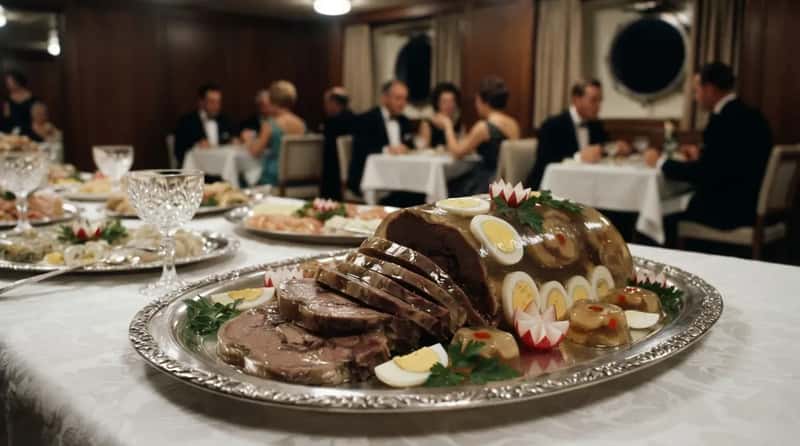
Cold tongue, sliced thin and set in a shimmering savory gelatin, was a classic cold-buffet centerpiece – the kind of dish that looked impressive on a silver tray even if modern eyes would find it unsettling.
Aspic dishes in general fell out of fashion across Western dining by the 1980s, as refrigeration improved and gelatin-set savory food lost its practical purpose of preservation and presentation. The dish survived for decades mainly because gelatin kept meat looking fresh under warm dining-room lights, not because anyone truly craved it. No modern cruise buffet uses aspic as a centerpiece anymore. Slide #10 trades the gelatin for actual fire.
#10 – Lobster Thermidor, Flambéed Tableside in Heavy Sherry
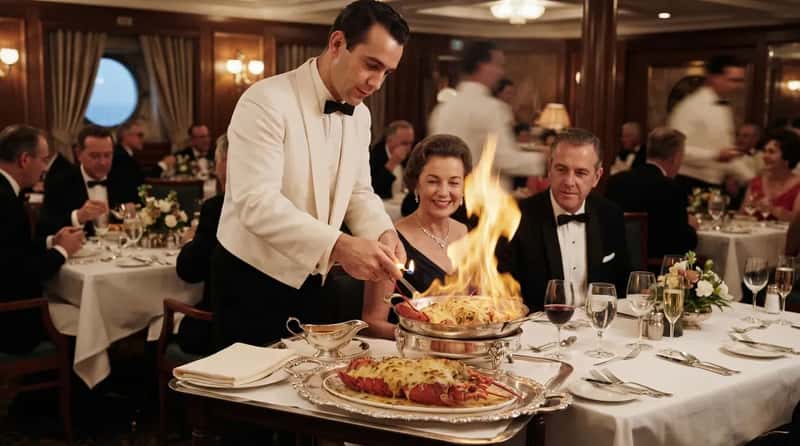
Lobster thermidor is still around today, but the 1960s version came with a show: a waiter would ignite a generous pour of sherry or brandy right at the table, sending flames briefly over the dish before serving.
Modern cruise ship insurance policies and fire-safety regulations have made open-flame tableside cooking extremely rare, given the obvious risks of doing it in a crowded dining room on a moving vessel. A single stray flame on a rocking ship is a liability nightmare no modern line wants to gamble on. Most ships now finish flambé-style dishes safely in the kitchen instead. Slide #9 is the version people ordered when they couldn’t afford the real thing.
#9 – Mock Turtle Soup, the Budget Alternative
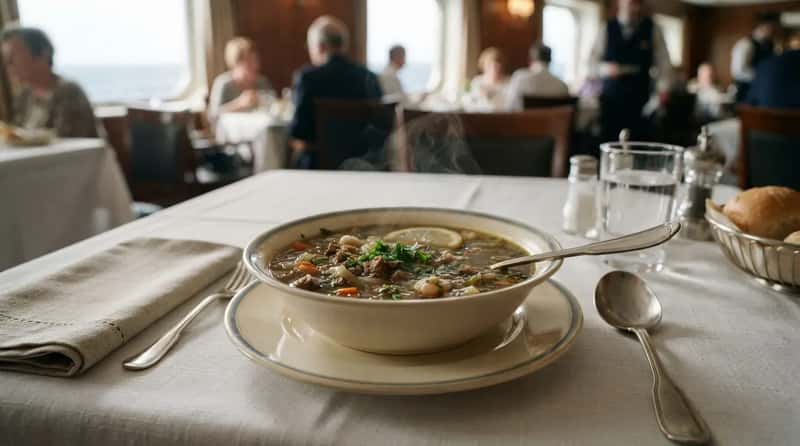
Not every passenger dined in first class, and not every kitchen had access to real turtle. Mock turtle soup – traditionally made from calf’s head to mimic the texture and flavor of the real thing – filled that gap on cabin-class and tourist-class menus.
It’s a strange dish by any modern standard: an elaborate workaround built entirely around imitating an animal most people today would never eat in the first place. The entire dish existed only because turtle soup was so aspirational that even a fake version was worth the effort. With real turtle now illegal and demand for the imitation gone, mock turtle soup has essentially vanished from existence. Slide #8 brings raw egg back into dessert.
#8 – Nesselrode-Style Pudding, Loaded With Raw Egg and Rum
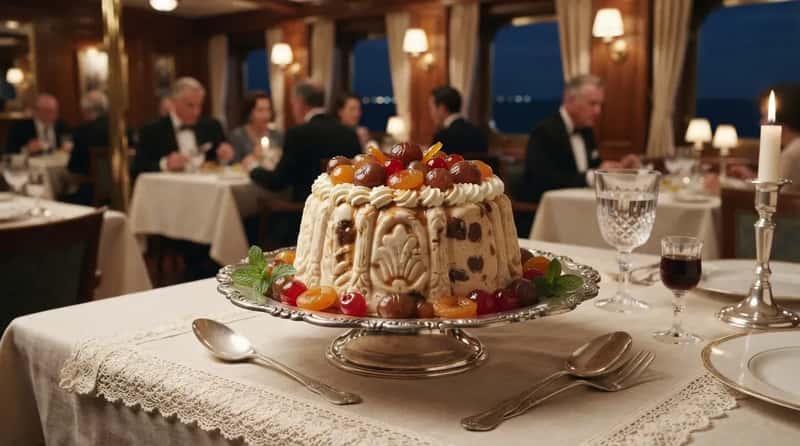
Rich chestnut-and-dried-fruit desserts inspired by the classic Nesselrode style were a fixture on formal dinner menus, and old menu archives describe similarly indulgent frozen puddings filled with chestnuts, dried fruit, and liquor as showpiece finales to a long meal.
Traditional recipes for these desserts often relied on raw or barely cooked egg custard bases, something modern food-safety guidelines around salmonella risk have made far riskier to serve at scale. A dessert built on raw egg and hard liquor sounds almost reckless by today’s cruise-dining standards. Most lines now use pasteurized egg products or skip raw-egg custards entirely. Slide #7 turns caviar into a spread you’d barely notice today.
#7 – Canapés of Caviar Butter and Anchovy Paste
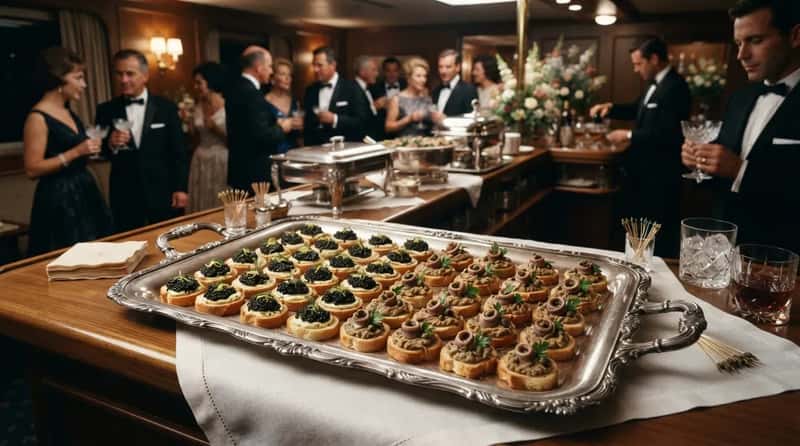
Late-night buffets weren’t an afterthought – they were loaded with elaborate cold canapés, tiny toasts topped with caviar-infused butter, anchovy paste, and other salty, pungent spreads meant to pair with cocktails after a formal dinner.
Rising seafood costs, sustainability concerns around anchovy and sardine populations, and simply changing late-night snacking habits have pushed elaborate canapé service off most modern midnight buffets. What was once a nightly indulgence is now considered an unnecessary expense for a snack most guests would skip anyway. Today’s late-night spreads lean toward pizza, sliders, and simple comfort food instead. Slide #6 sets dessert on fire in front of the whole dining room.
#6 – Baked Alaska, Set Ablaze With 151-Proof Rum
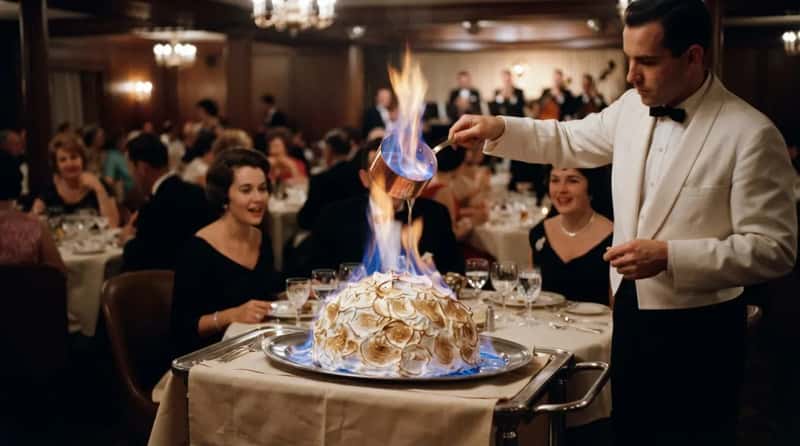
Baked Alaska’s tableside flambé moment was one of the biggest spectacles a 1960s dining room could offer – a parade of waiters carrying flaming desserts through a darkened room while an orchestra played, all doused generously in high-proof rum.
The exact same fire-safety and insurance concerns that killed tableside lobster flambé apply here, and open flame in a packed, moving dining room is simply not worth the risk to modern cruise operators. A single spilled flaming dessert on a rocking ship could end in a lawsuit, not applause. The dessert survives today, but the fire almost never does anymore. Slide #5 carves an entire animal in front of the room.
Worth Knowing
- Modern cruise ships carry thousands of passengers seated close together, making open flame in a dining room a far bigger insurance risk than it was in the 1960s.
- High-proof rum and moving decks are a combination most legal departments now flag automatically.
- Kitchens today can recreate the same caramelized, toasted-meringue look using a torch in a controlled back-of-house setting.
- The visual spectacle hasn’t disappeared entirely – it’s just been moved somewhere safer than a crowded dining room.
#5 – Suckling Pig, Roasted Whole and Carved at the Table
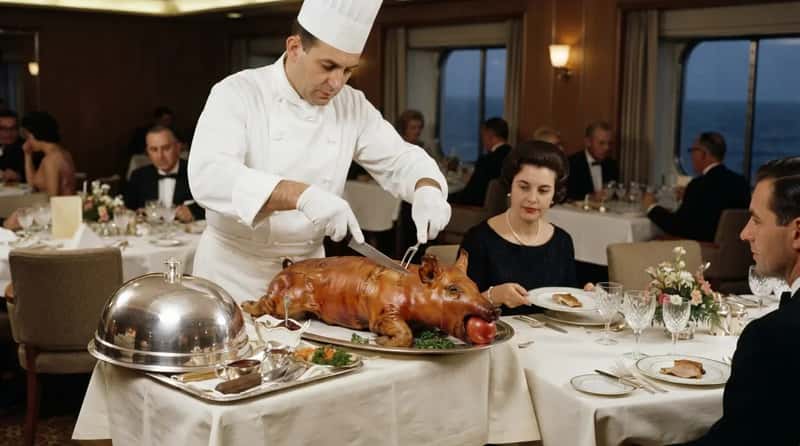
Formal dinners occasionally featured a whole roasted suckling pig wheeled out on a cart and carved tableside by a white-gloved chef, complete with the traditional apple or lemon perched in its mouth for presentation.
Modern cruise dining has largely moved away from whole-animal presentation, partly due to changing guest sensibilities around visible animal carcasses and partly due to the sheer kitchen logistics of carving one animal for a fraction of the dining room while feeding thousands more from a central galley. Most passengers today would find a whole roasted pig at the table jarring rather than impressive. It’s been replaced by pre-portioned pork dishes that never show their original shape. Slide #4 pulls fish straight from a river with zero oversight.
#4 – Trout Pulled Straight From a Named River, No Sustainability Check
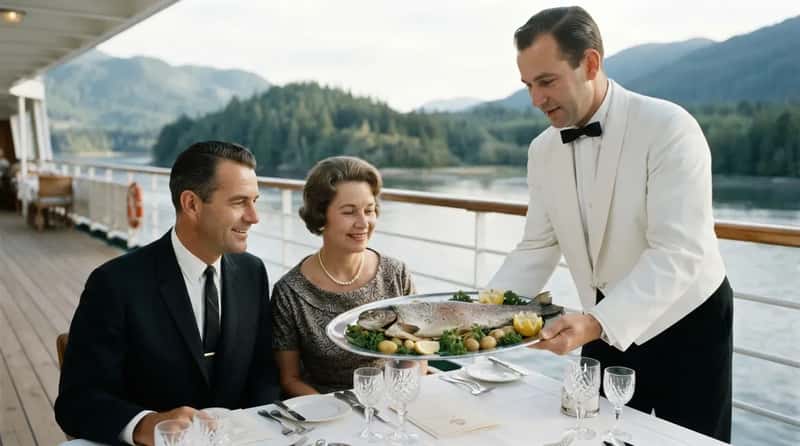
Farewell dinners on certain liners bragged about sourcing specific, named catches. One historic farewell menu opened with turtle soup, then added Olympia oysters and trout plucked straight from British Columbia’s Fraser River as a point of pride rather than a marketing gimmick.
There was no sustainability certification, no catch-limit tracking, and no consumer expectation that a menu justify where a fish came from beyond the name of the river. A wild-caught, single-source fish dish with zero traceability paperwork would be a compliance disaster for a modern cruise line today. Every major line now partners with certified sustainable seafood programs to avoid exactly this kind of unchecked sourcing. Slide #3 goes back to the operating table, culinarily speaking.
#3 – Sweetbreads à la Maréchale
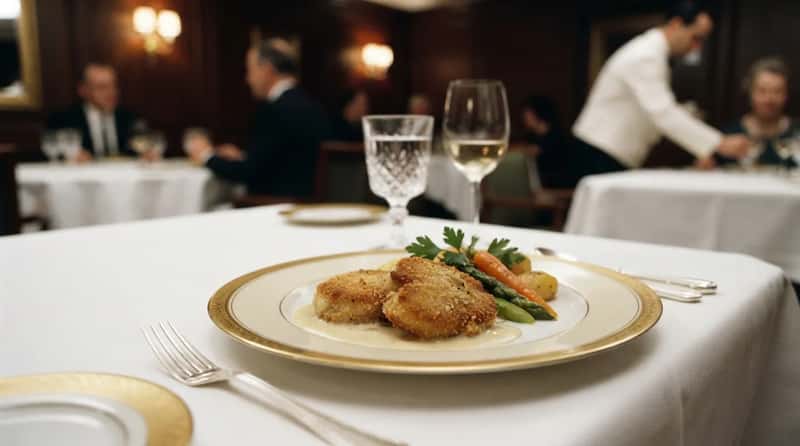
Sweetbreads – the thymus gland of a calf, breaded and pan-fried in the classical “Maréchale” style – were considered a genuinely refined delicacy, not an oddity, and appeared regularly on formal first-class dinner menus of the era.
Organ meats in general have fallen dramatically out of favor with mainstream American diners over the past several decades, and most passengers today wouldn’t recognize the dish by name, let alone order it willingly. A food once reserved for the wealthiest travelers on the fanciest ships now sounds more like a dare than a delicacy. Cruise lines have quietly replaced these dishes with familiar cuts guests already trust. Slide #2 puts a raw yolk right in your soup bowl.
#2 – Consommé Garnished With a Raw Egg Yolk
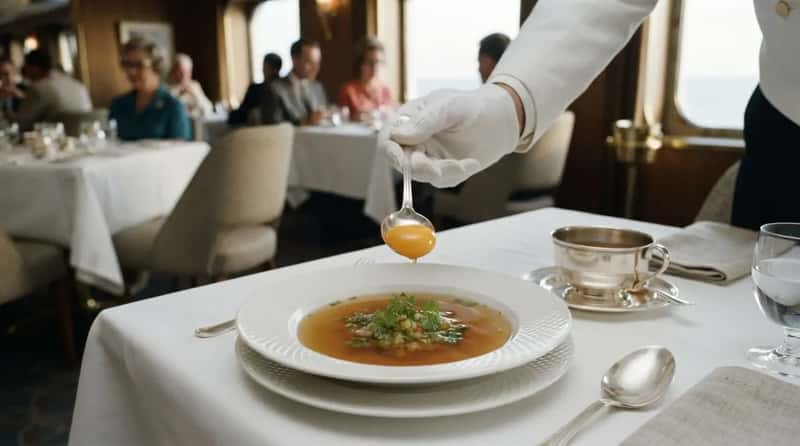
A classic tableside flourish involved a clear consommé served with a whole raw egg yolk slipped into the bowl at the last second, gently cooked only by the heat of the hot broth itself.
It’s an elegant idea in theory, but it depends entirely on consistent, controlled temperatures to make the raw egg safe – something far harder to guarantee across a dining room feeding hundreds of tables at once. Modern egg-safety standards make this kind of partially-cooked, tableside preparation almost impossible to justify at scale. Most lines now use pasteurized eggs in any dish involving a raw or undercooked yolk. And the final dish on this list might be the most quietly alarming of all.
#1 – Midnight Buffet Ice Sculptures Surrounded by Unrefrigerated Meats for Hours
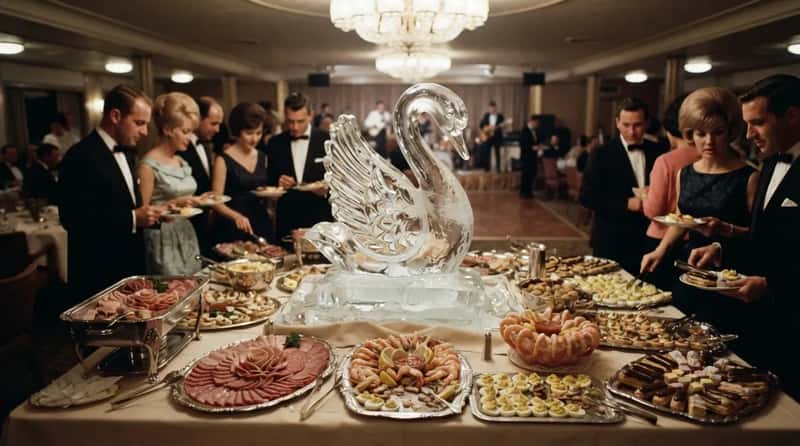
The midnight buffet was the crown jewel of 1960s cruise dining: towering ice sculptures surrounded by cold cuts, seafood, and rich pastries, all laid out for hours so passengers could wander through at their leisure after a night of dancing.
The problem was simple – that food sat at room temperature under warm dining-room lighting for hours at a time, with no digital temperature monitoring and no strict rotation schedule the way modern buffets require. A spread that looked like pure glamour was, by today’s food-safety standards, a genuine health risk hiding in plain sight. Modern cruise lines now rotate buffet trays constantly, track holding times digitally, and would never let a spread sit untouched that long. It’s the most visually stunning entry on this list – and also the one modern health inspectors would shut down the fastest.
Looking back, it’s clear the golden age of cruise dining wasn’t just about elegance – it was operating with almost no modern safety net. Wild turtles, wild caviar, raw eggs, and food sitting out for hours were treated as luxury, not liability. Regulations, conservation laws, and simple changes in taste quietly erased nearly all of it within a generation.
The white gloves and flaming desserts made for unforgettable theater, but most of it couldn’t survive a single modern health inspection. Which of these dishes surprised you the most? Drop your pick in the comments.