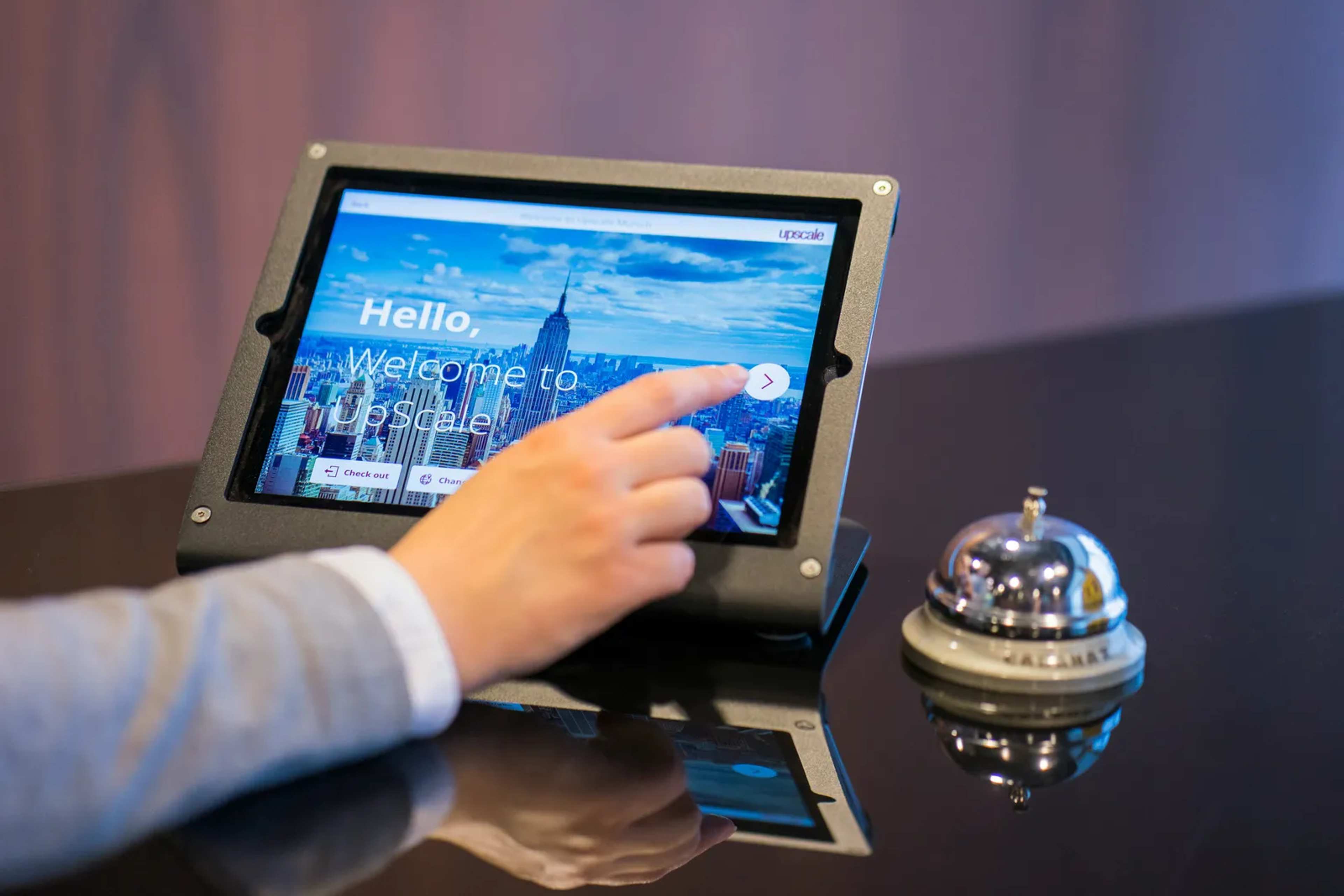
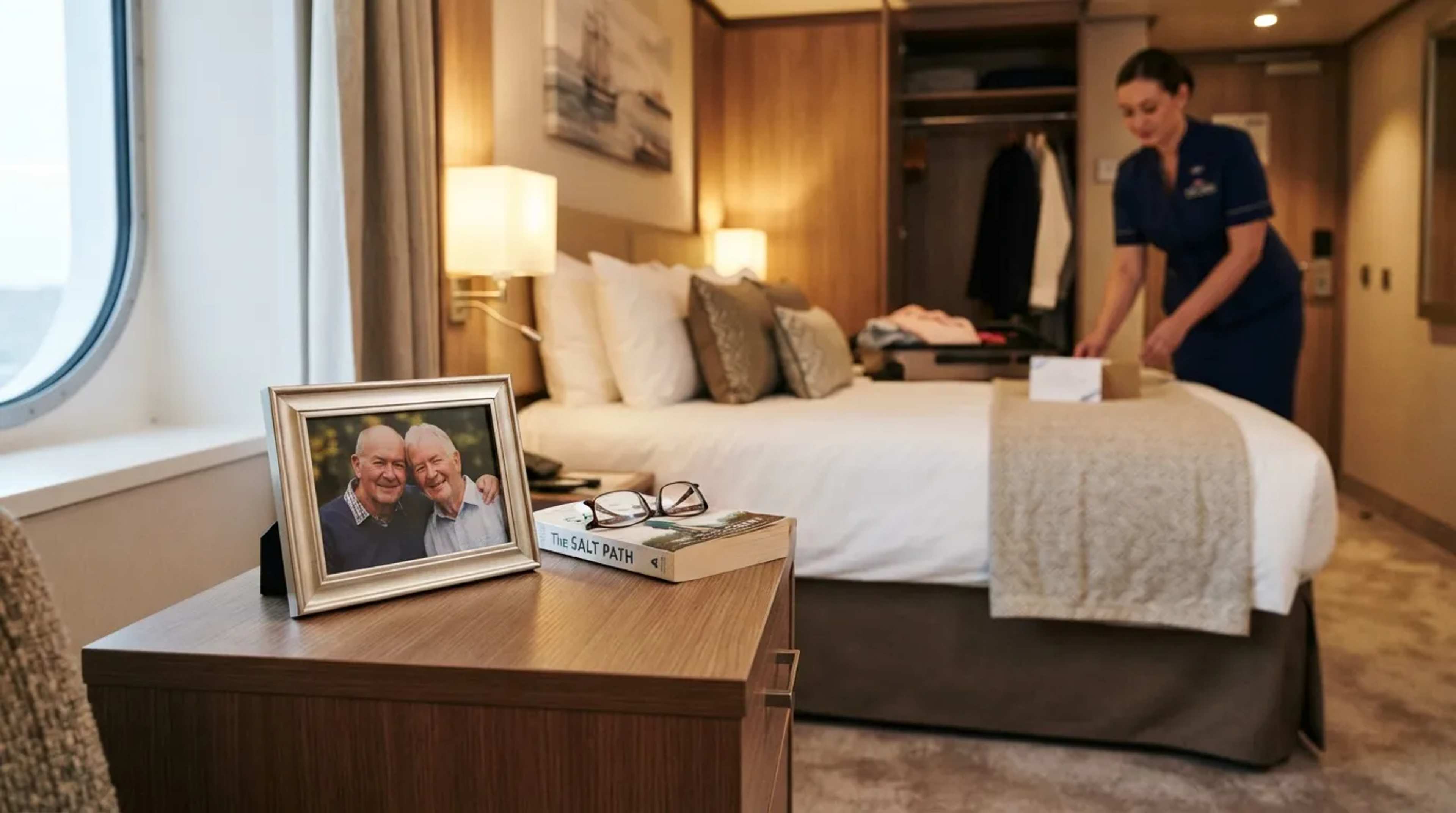
Most travelers assume hotel staff just hand over a key and wish you luck. Ask any longtime front-desk manager, though, and they’ll tell you something different happens the moment a grandparent checks in with a grandchild in tow. Rooms get reassigned. Notes get added to files. Small, unspoken favors start moving down the line before anyone even asks for them.
None of it shows up on the bill, and most guests never realize how much was quietly rearranged on their behalf. Here’s what actually happens once that reservation flags a multigenerational trip.
#25 – The Front Desk Flags Your Reservation Before You Even Arrive

Long before you walk through the lobby doors, someone has already noticed the age gap on your booking. Front desk systems at most full-service hotels let staff add internal notes to a reservation, and “grandparent traveling with grandchild” is a common one.
That single flag quietly changes how the rest of your stay gets handled. Housekeeping gets a heads-up, the restaurant hostess gets a note, and sometimes the whole property has been briefed before you even check in. All because someone typed a sentence into a computer system days earlier.
#24 – Connecting Rooms Get Prioritized, Even When They’re “Sold Out”
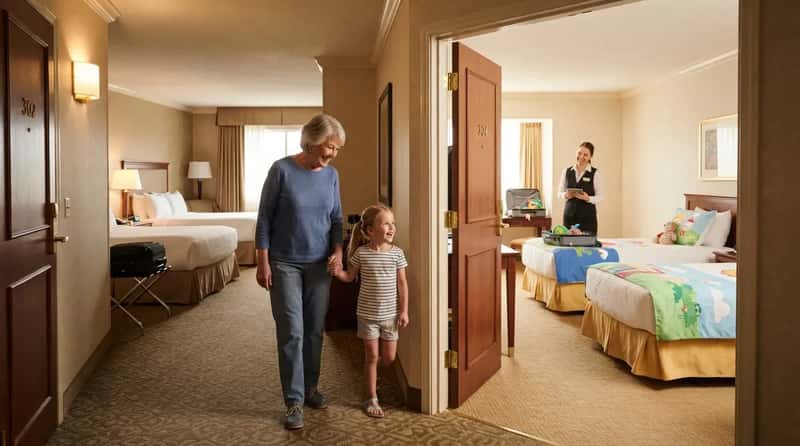
Officially, connecting rooms are often listed as unavailable online. Unofficially, many properties hold back a small inventory specifically for families who need to stay close but not crammed together.
Staff know that a grandparent sharing one room with an energetic six-year-old is a recipe for nobody sleeping. So when the system shows “no connecting rooms,” a manager will frequently make a call anyway, especially when the request comes through a phone conversation instead of a website form.
Worth Knowing
- Call the property directly – held-back inventory rarely shows up through online booking engines.
- Mention the grandchild’s age up front; it helps staff match the right room configuration.
- Ask for written confirmation once a connecting room is secured, especially for peak weeks.
- Book as early as possible around school breaks and holidays, when family-friendly rooms disappear first.
#23 – Cribs and Pack-N-Plays Arrive Already Set Up, Not Just Delivered

Any hotel can drop off a crib. Fewer bother to actually assemble it, test it, and make the bed before you arrive. Staff who regularly handle grandparent-grandchild trips have learned that an exhausted grandparent doesn’t want to build furniture at 9 p.m.
So the good ones do it in advance, quietly, while you’re still checking in downstairs. Many properties now pre-assemble portable cribs with a fitted sheet and a spare blanket already in place. It’s the kind of detail nobody mentions in a review, but everyone remembers.
#22 – Housekeeping Adds a Second Midday Pass for Toddler Messes
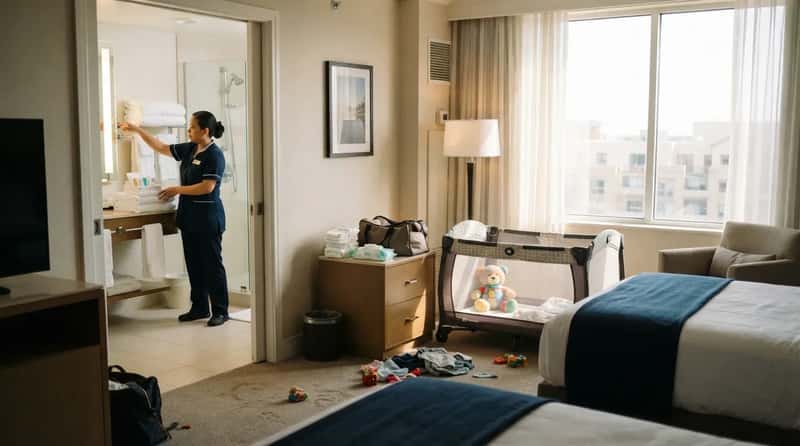
Standard housekeeping shows up once a day. Families with toddlers often get quietly bumped to a second, lighter pass instead – fresh towels, a quick trash pickup, maybe a spot-clean on the carpet – without ever filing a request.
This isn’t a listed amenity anywhere. It’s a judgment call housekeeping supervisors make when they spot a pack-n-play or a stack of diapers during the morning clean, and it happens far more often than guests assume.
#21 – High Chairs and Booster Seats Get Pre-Set at Your Breakfast Table

Walking into a packed breakfast room with a toddler and no high chair in sight is a special kind of stressful. Staff who’ve been through it enough times start pre-positioning a high chair at reserved family tables before the family even sits down.
It sounds small, but it saves ten minutes of standing in a crowded buffet line holding a crying kid. Restaurants inside family-oriented hotels increasingly pre-stage seating the moment a reservation note mentions a child’s age. It’s a courtesy, not a policy, which is exactly why it feels so personal when it happens.
#20 – A Quiet, Off-Peak Breakfast Table Gets Reserved Without Asking

Grandparents rarely want to fight a breakfast rush with a cranky four-year-old. Hostesses who notice the pattern will often hold a table in a quieter corner, away from the main buffet chaos, timed just before or after the busiest window.
It’s rarely offered outright. Usually it’s just handed to you when you arrive: “We have a nice quiet spot for you over here.” Staff steer multigenerational families to lower-traffic seating simply because they’ve watched enough overwhelmed grandparents to know it matters more than a view.
#19 – Room Service Menus Get Quietly Adjusted for Picky Eaters

Kids’ menus are usually limited to chicken tenders and mac and cheese. But grandparents dealing with allergies, sensory issues, or just a stubborn grandchild often get more flexibility than the printed menu suggests.
Kitchen staff will frequently build an off-menu plate – plain pasta, a specific fruit cut a certain way – without charging extra or making it complicated. These requests get honored far more often than guests realize, especially when a server senses a grandparent is already stretched thin managing everything else.
#18 – Pool Toys and Floaties Get Held Behind the Towel Desk

Not every hotel advertises a pool toy stash, but many keep one anyway – kickboards, arm floaties, a few kid-sized life vests tucked behind the towel counter.
Staff will often mention it only if they notice a grandparent struggling to keep a grandchild entertained poolside. These informal toy stockpiles are usually restocked from lost-and-found rather than any hotel budget line, and most families never even know to ask.
#17 – Nightlights and White Noise Machines Appear Without a Request
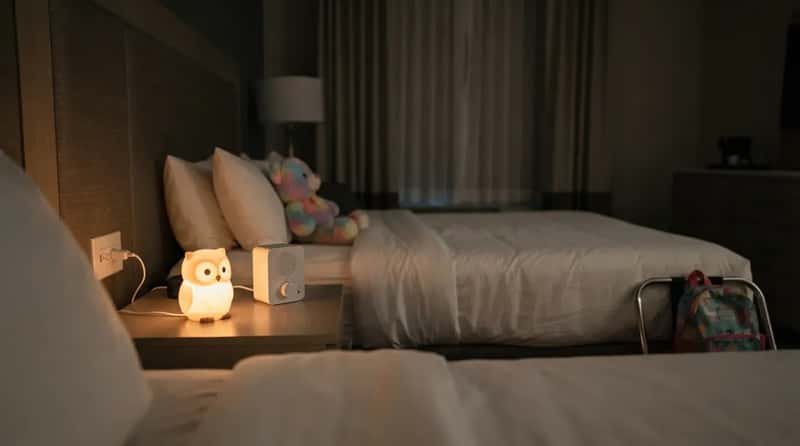
A grandchild who doesn’t sleep well in unfamiliar rooms can turn a relaxing trip into an exhausting one for everyone. Some hotels have quietly started adding a nightlight or a small white noise machine to rooms flagged for young children, before the guest ever asks.
It’s a low-cost fix with an outsized effect. A single overlooked detail like room darkness or hallway noise is one of the top reasons young kids struggle to sleep in unfamiliar hotels, according to staff who deal with the fallout every morning at checkout. Solving it quietly avoids a much bigger problem later.
Fast Facts
- Unfamiliar rooms, hallway noise, and light gaps around blackout curtains are common sleep disruptors for young kids.
- A bathroom fan or a free white-noise app can substitute if a machine isn’t on hand.
- Many front desks keep a small stash of nightlights specifically for family requests.
- Packing a familiar blanket or stuffed animal remains one of the simplest fixes seasoned grandparents swear by.
#16 – Mini-Fridges Get Stocked With Milk and Snacks Before Arrival

An empty mini-fridge means a late-night grocery run with a tired kid in the car seat. Staff who anticipate this will sometimes pre-stock a small amount of milk, juice, or fruit before a family with young children checks in.
It’s not listed on any amenities page, and it’s usually free or added at cost. A pre-stocked fridge is one of the quieter perks extended to grandparent-led trips, arranged by a guest services team that simply doesn’t want to hear a hungry toddler at 11 p.m. down the hallway.
#15 – Wheelchairs and Mobility Scooters Get Delivered Straight to the Room
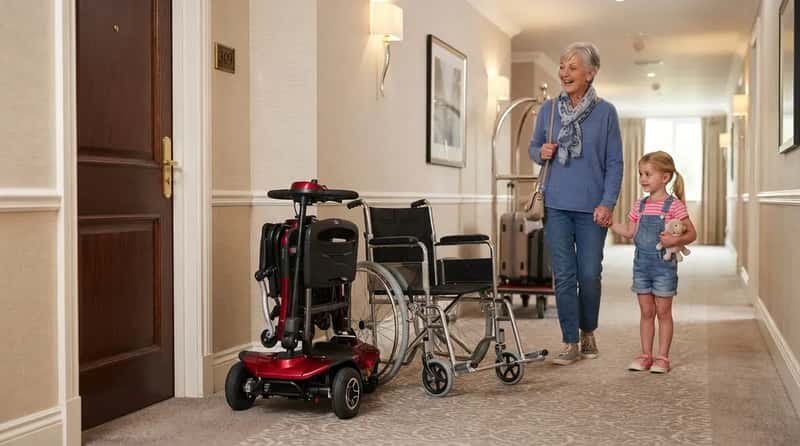
Grandparents managing mobility issues alongside an energetic grandchild face a genuinely tough balancing act. Many resorts, especially ones built around theme parks or large campuses, will arrange for a rented scooter or wheelchair to be delivered directly to the room ahead of arrival.
Guests with mobility concerns can often have an electric scooter waiting at check-in, ready to navigate the resort and beyond. This single arrangement often determines whether a grandparent can actually keep up with a grandchild all day, which is exactly why staff treat it as a priority rather than an afterthought.
#14 – Lower Beds and Grab Bars Get Swapped In Without a Formal Request

Standard hotel beds are often higher than what an older guest is used to at home, and bathrooms rarely come with grab bars unless requested. Staff trained in multigenerational travel have learned to proactively offer alternate rooms once they notice a grandparent traveling alone with a child.
Multigenerational travelers may quietly need rooms with lower beds, grab bars, or easier access to the elevator. This kind of room swap almost never appears on a bill or receipt – it’s simply handled at check-in once someone notices the need.
#13 – Hearing-Friendly Communication Gets Set Up at the Front Desk
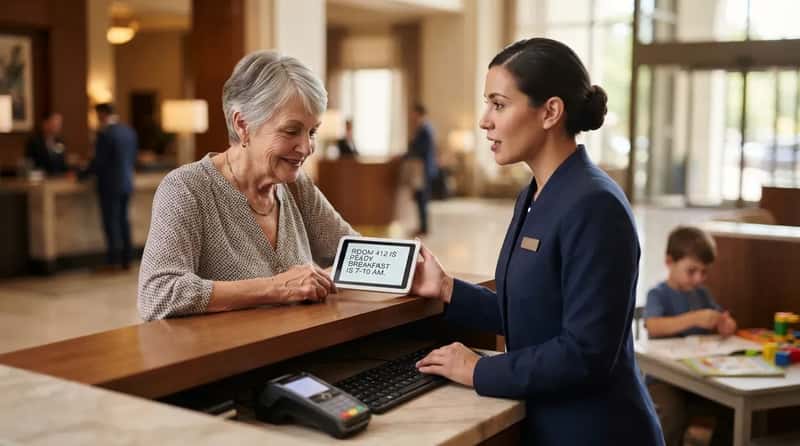
Loud lobbies and mumbled front-desk chatter are a real problem for older guests with hearing loss, especially when they’re also trying to track a grandchild darting around the lobby. Trained staff will slow down, face the guest directly, or switch to written notes without making a scene of it.
Some properties keep TTY phones or guest-messaging tools on hand specifically for this. It’s a small adjustment, but it quietly removes one of the most common sources of frustration in a grandparent’s entire stay.
#12 – A Dedicated Family Travel Expert Gets Assigned, Not Advertised

Some hotel brands have started formally assigning a single point of contact to multigenerational bookings, someone who plans the whole stay around different ages and energy levels rather than treating it as a standard reservation.
Select resorts offer a dedicated Family Travel Expert who works one-on-one with families curating an itinerary that fits different ages and interests. Most guests never realize this role exists until a staff member introduces themselves by name and starts asking about grandkids’ ages before discussing anything else.
#11 – Themed “Reunion Kits” Get Left in the Room as a Surprise
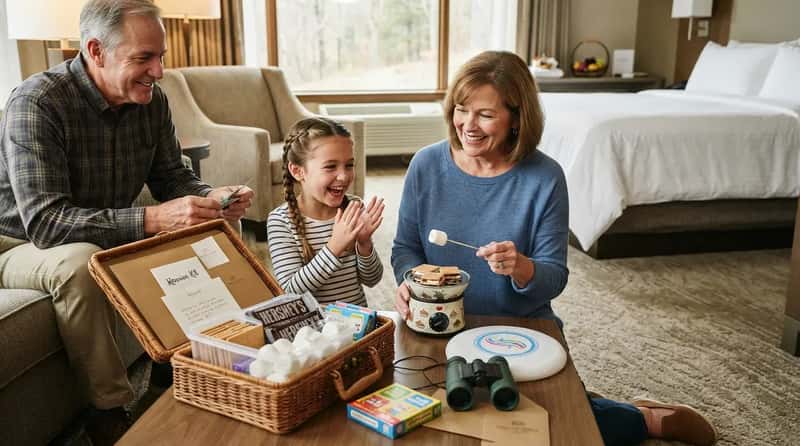
A handful of resorts have quietly built out welcome kits specifically designed to give grandparents and grandkids something to do together, rather than separately.
Some hotels offer “reunion ready” kits with items like snowball makers at one property, pickleball essentials at another, or s’mores ingredients at a third. None of this is charged separately – it’s positioned as a small gesture, but it often becomes the single most photographed moment of the entire trip.
#10 – Restaurant Staff Quietly Steer Grandparents Away From the “Mistake” Table
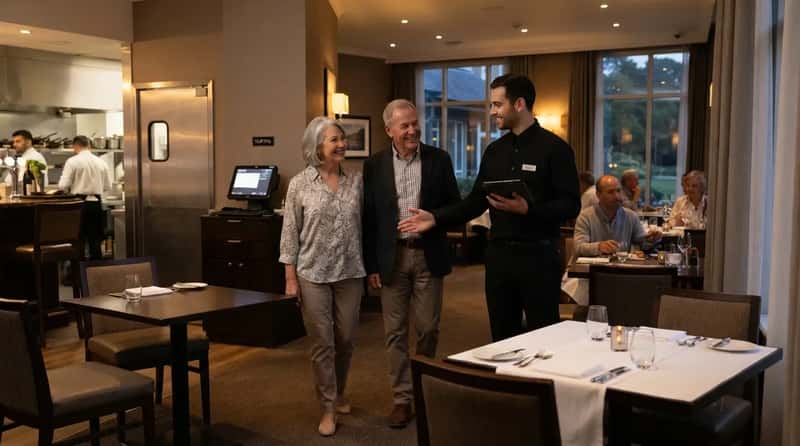
Here’s a mildly controversial one: many hosts admit the table nearest the kitchen door or the bar is often the worst seat in the house, yet it’s frequently the first one offered to walk-ins. Staff who recognize a grandparent-grandchild pair will often skip that table entirely and hold out for something better.
It’s a judgment call, not a policy, which means some families get quietly upgraded seating while others don’t. Many servers privately admit the “family table” system is inconsistent property to property, which is exactly why calling ahead and mentioning grandkids can make a real difference.
#9 – Childproofing Kits Get Added Room-by-Room, Not Property-Wide

Outlet covers, corner guards, and cabinet locks aren’t standard in most hotel rooms, but many properties keep a small stash for families who ask, or who get flagged in advance.
The catch is that it’s rarely offered upfront. Staff usually wait for a request, or notice a toddler wandering the room during a housekeeping visit and act on their own. Childproofing supplies exist in far more hotels than guests assume – they just sit in a supply closet instead of a guest services brochure.
#8 – Late Checkout Gets Extended Without Anyone Officially Approving It

Late checkout is usually framed as a paid upgrade or a loyalty perk. In practice, front desk agents frequently grant it informally to grandparent-led families simply because they understand the packing chaos involved in wrangling a toddler out the door by 11 a.m.
It’s rarely written down anywhere. A quick note in the system, a verbal “take your time,” and the room stays yours an extra hour or two. This kind of informal grace period is one of the most commonly extended, least advertised courtesies in hospitality.
#7 – Kids’ Club Waitlists Quietly Move Faster for Grandparent Bookings

Kids’ clubs at resorts often run at capacity during peak weeks, with waitlists that can stretch for hours. Staff who notice a grandparent solo-parenting a grandchild for the day will sometimes bump that child up the list, understanding the adult may need a genuine break more urgently than a parent traveling with backup.
This isn’t formal policy at most properties – it’s a judgment call made quietly at the activities desk. Grandparents traveling without the child’s parents are frequently prioritized for short-notice childcare slots, simply because staff know there’s no second adult to tag in.
#6 – Concierge Teams Coordinate Ahead With Your Next Hotel

Multigenerational trips rarely stay in one place. A good concierge knows this, and many quietly reach out to a counterpart at your next destination before you’ve even left.
If you mention your onward travel plans, the best concierges will have a discreet word with a counterpart at your next hotel so a warm welcome is already waiting. Most travelers never realize their next hotel already knows they’re coming with grandkids, until a small welcome gesture appears at that next check-in.
#5 – Staff Quietly Discourage the “Everyone Gets Their Own Room” Mistake

Here’s a more pointed one: booking every family member into a separate room is one of the most common – and most quietly regretted – decisions multigenerational travelers make, according to travel advisors who watch it play out repeatedly.
The concern is that separate rooms mean the family never actually gets unstructured time together, since everyone retreats to their own space at the end of the day. Experienced front desk staff will often gently suggest connecting rooms instead, even when a family initially books separately, because they’ve seen how the alternative plays out by day three.
Quick Compare
- Separate rooms: more privacy, but everyone disappears to their own space by evening.
- Connecting rooms: kids get independence while grandparents stay within earshot overnight.
- Connecting rooms: mornings and evenings naturally turn into shared family time instead of scheduled visits.
#4 – Culturally Specific Comforts Get Arranged Without Being Asked Twice
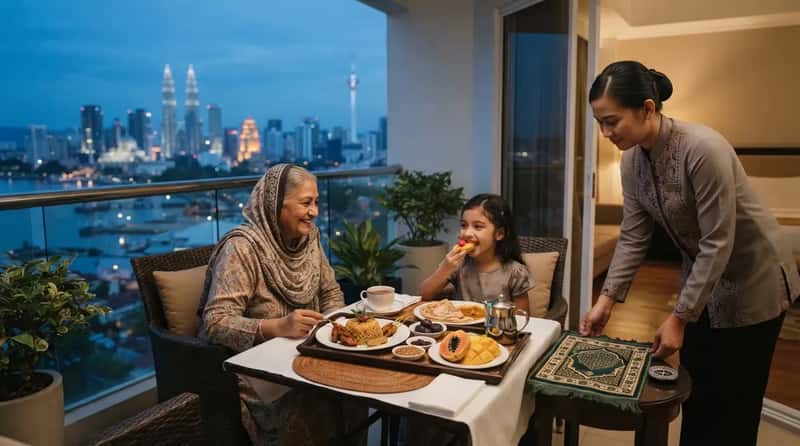
For grandparents traveling internationally with grandchildren, or hosting family from abroad, staff at larger properties often quietly adjust service style based on cultural cues rather than waiting for a formal request.
Some hotels accommodate dietary and religious needs proactively – a subtler service approach for certain guests, prayer-time scheduling or halal options for others. These adjustments happen almost invisibly, folded into the stay rather than announced, which is exactly the point.
#3 – A Milestone Trip Quietly Triggers a Small Celebration

Birthdays, first trips without parents, or a grandchild’s first flight often get flagged internally, and hotels frequently respond with something small but memorable – a dessert with a candle, a handwritten card at the front desk, a note left in the room.
None of it is guaranteed, and none of it is charged. It depends entirely on whether a staff member noticed the detail and decided to act on it. These gestures are almost always staff-initiated, not requested, which is part of why they land so emotionally when they happen.
#2 – Multigenerational Trips Get Quietly Prioritized as a Growing Business Category

This one explains why so many of these small favors exist in the first place: hotels have noticed how big this travel category has become, and many are training staff specifically around it.
According to an IMG customer survey, roughly 35 percent of families expected to take an intergenerational trip in 2024, as multiple generations of one family traveling together keeps growing as a trend. Grandparent-grandchild trips aren’t a niche request anymore – they’re a business priority, and the quiet extras on this list are largely a byproduct of that shift.
At a Glance
- 47% of U.S. travelers chose multigenerational trips in 2025, a jump of 17% over the year before.
- 71% of grandparents surveyed in 2025 said they’d already traveled with their children and grandchildren.
- 57% of those grandparents plan to book another multigenerational trip in the near future.
#1 – A Small Keepsake Gets Quietly Created to Mark the Trip

Of everything on this list, this is the one families remember longest. A staff member notices something – a grandchild’s excitement at the pool, a grandparent teaching a card game in the lobby – and quietly arranges a printed photo, a note from the team, or a small memento left in the room before checkout.
It’s never billed. It’s never promised. It happens because someone on staff decided a moment was worth holding onto – the extra almost no guest expects, and the one most likely to turn into a framed photo back home years later.
None of these extras show up on a rate confirmation, and most hotels will never advertise them, because the moment something becomes official policy, it stops feeling like a kindness. That’s the throughline here: the best hospitality for grandparents and grandchildren isn’t loud or branded, it’s noticed, judged, and quietly handled by someone paying closer attention than the job technically requires.
Have you had a hotel staffer quietly go out of their way for your family? Drop your story in the comments – the good ones deserve to be named.