Picture a 6:40 a.m. gate: burnt coffee smell, a delay board flickering, and a gate agent scanning boarding passes with a face that gives away absolutely nothing. That blank expression is doing more work than most passengers realize, because airline staff spend years learning to read a crowd the way a lifeguard reads a pool. The same handful of behaviors show up flight after flight, city after city, and crews notice every single one.
This isn’t a list of the obvious sins everyone already complains about, like seat recliners or crying babies. It’s the quieter stuff, the habits crews joke about once the jet bridge door closes, the ones that quietly shape how patient a flight attendant feels toward you three hours later somewhere over Ohio. Here’s what actually gets remembered, even when nobody says a word out loud.
#25 – Camping the Jet Bridge Door Before Boarding Even Starts
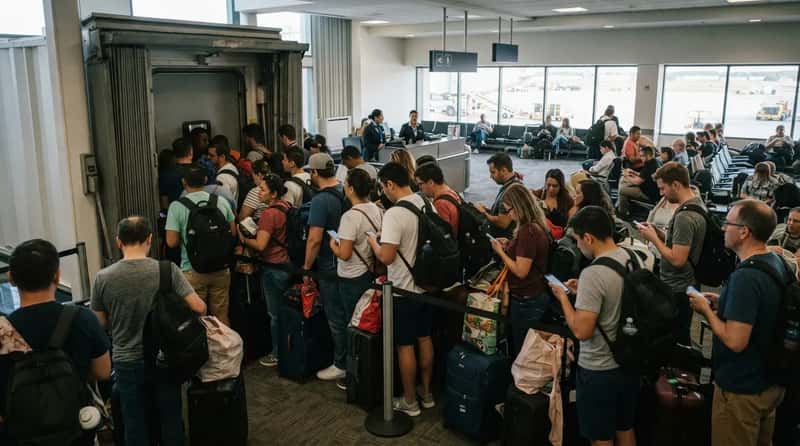
Long before a single zone gets called, a cluster forms directly in front of the gate door and simply refuses to move. Airline staff have a blunt nickname for this crowd, and it isn’t flattering. Flight attendants widely call these passengers “gate lice,” a term that reportedly traces back two decades to online forums obsessed with carry-on space.
It looks harmless, but gate loitering can block boarding lanes, slow down deplaning, and get in the way of crew members trying to move through. It’s especially rough on travelers who need accessibility assistance or families juggling small kids and strollers. Crews rarely say anything in the moment, but they clock exactly who’s doing it.
#24 – Swarming the Scanner Before Their Group Is Called
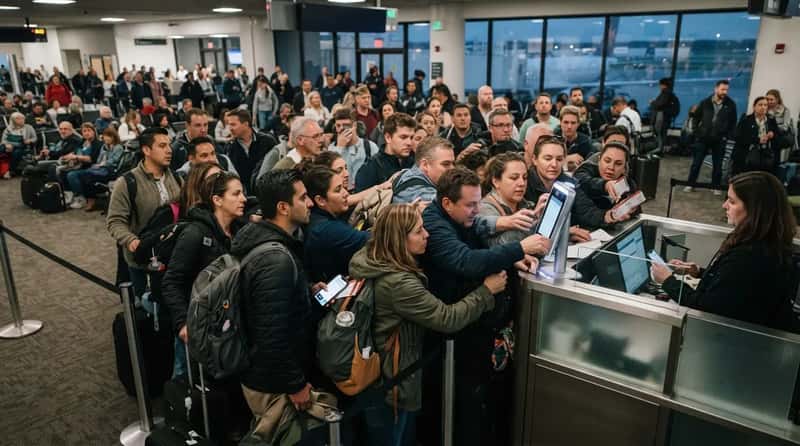
There’s a real difference between waiting near a gate and physically pressing against the scanner before your zone is announced. Boarding gets messy fast when a crowd builds up early, making the lane harder to read and turning boarding announcements into background noise nobody hears.
Former gate agents have said plainly that they never hover this way themselves, even off duty. One former American Airlines gate agent explained she never stands near the podium before her group is called, since crowding the area only slows everything down. Airlines have since built entire boarding-tech systems specifically around breaking this habit.
Fast Facts
- Southwest ended its roughly 50-year open-seating system, shifting to assigned seats and numbered boarding groups starting January 27, 2026.
- Most major U.S. airlines now board in numbered groups, often five to eight per flight, sequenced by seat location and loyalty status.
- Gate scanners are increasingly programmed to beep and flag the wrong group, a direct industry response to early crowding at the door.
#23 – Blasting TikToks and Ringtones With Zero Headphones
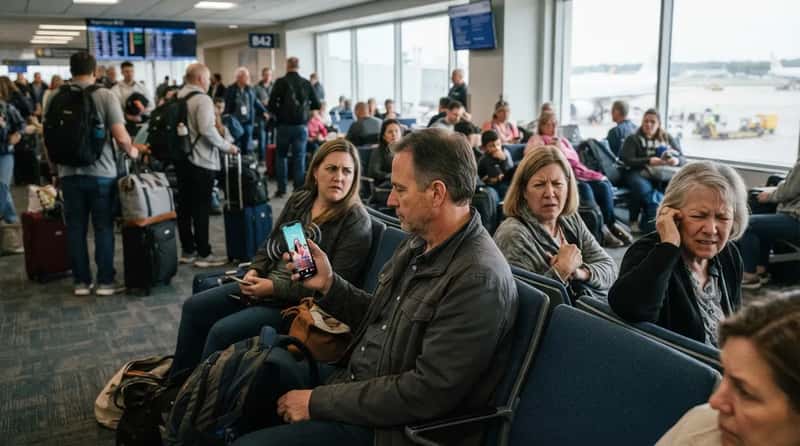
Somewhere along the way, an entire subset of travelers decided personal audio was optional. One of the most repeated complaints crews hear is that nobody stops people from playing videos and music out loud, turning a quiet gate into a wall of competing sound.
One passenger raised this exact pet peeve online, pointing out that flight attendants rarely step in when someone blasts a phone speaker in a crowded waiting area. Multiply that by a dozen phones at one gate, and the noise becomes its own small daily crisis that crews have simply learned to tune out.
#22 – Insisting the Wrong City on Their Ticket Is Correct
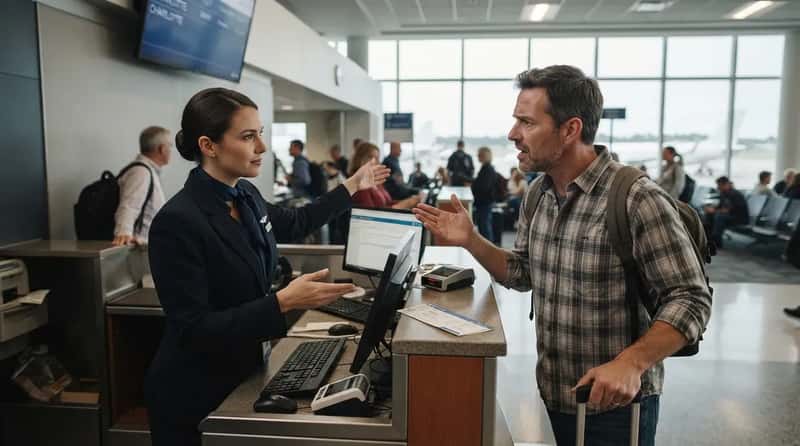
Gate agents deal with a strange, specific kind of confidence: passengers who argue their printed destination must be a mistake. It happens often enough that staff barely blink when someone tries to board a Charlotte flight while swearing they booked Chicago.
These moments rarely end in real anger. They end with a quiet re-check of the boarding pass, a slightly sheepish apology, and a rebooking trip to customer service. Crews don’t judge the mix-up itself; they judge the insistence that the airline’s system must somehow be wrong instead.
#21 – Assuming Bachelorette Sashes Cancel Every Boarding Rule
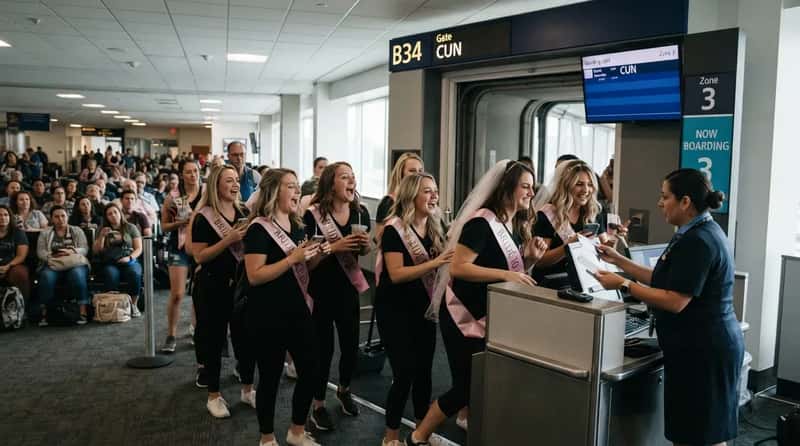
Celebration groups are usually a genuine highlight at a gate, and crews say so honestly. But there’s a specific assumption that creeps in with matching shirts and sashes: the idea that boarding order stops applying once everyone’s “together.”
One flight attendant admitted she quietly braces every time a bachelor or bachelorette group boards, not because the celebration is a problem, but because a few members always try to skip zones or crowd the door as a pack. Most of the group behaves fine. It’s usually just two or three who ruin it for everyone else.
#20 – Cornering the Gate Agent for a Seat Change Mid-Boarding
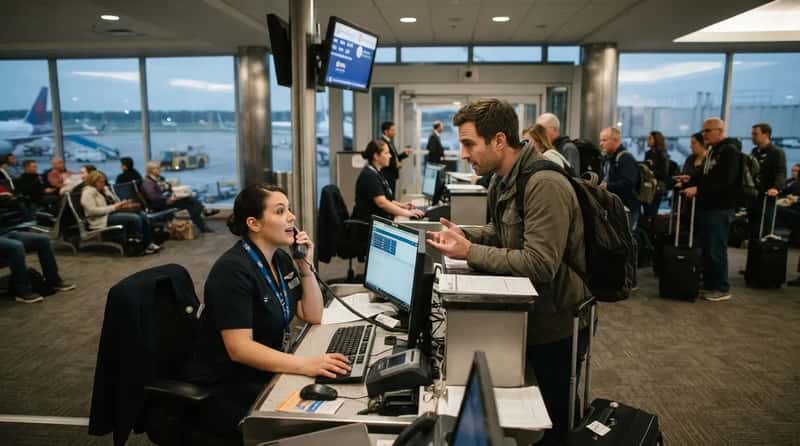
Walking up for a last-minute seat swap feels small to the person asking. To the agent, it lands right in the middle of a dozen simultaneous priorities happening at once.
A current United gate agent said she never approaches for seat changes once boarding starts, since staff are already coordinating with flight attendants, pilots, ramp crews, and operations against a hard countdown clock. Most airline apps now let passengers change seats themselves before boarding even begins, which makes the podium request even less necessary than it used to be.
#19 – Wheeling Up a Bag Everyone Can See Won’t Fit
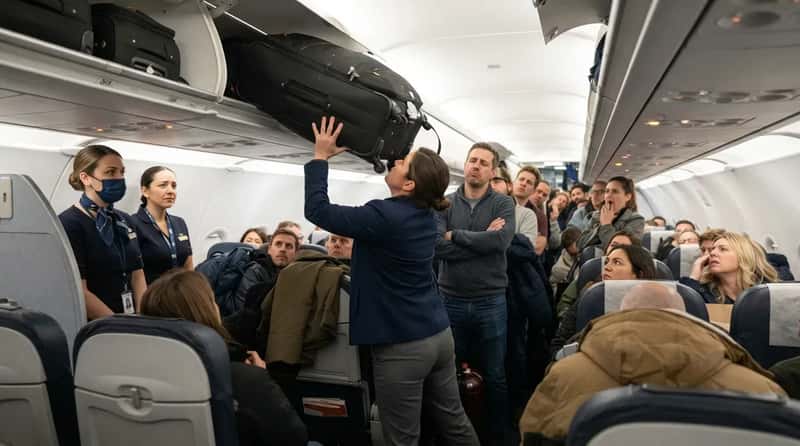
Some carry-ons are so obviously oversized that other passengers start placing bets before the owner even reaches the jet bridge. Gate staff see it coming from thirty feet away, every single time.
Nothing slows boarding like a bag that won’t fit, followed by an awkward negotiation right at the aircraft door, at which point the delay stops being one person’s problem and becomes everybody’s problem. Flight attendants watch with a mix of amusement and low-grade dread as travelers try to jam a bulging bag into the overhead bin, holding up the entire line behind them.
#18 – Wearing Four Jackets to Dodge a Bag Fee
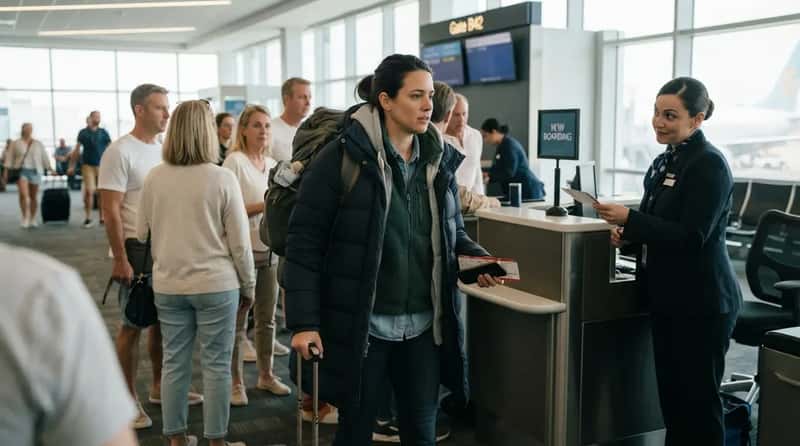
It’s become a quiet trend: travelers layering a hoodie, a jacket, and a coat all at once purely to avoid checking a bag. Crews spot it instantly, especially in warm-weather airports where nobody actually needs three layers of clothing.
Flight attendants notice when someone is bundled up like they’re headed to Antarctica in July, since excessive layering is a known sign of dodging luggage fees or hiding extra items. It rarely works as smoothly as passengers hope, and it always earns a second glance at the gate.
#17 – Digging for a Power Bank After It’s Already Checked
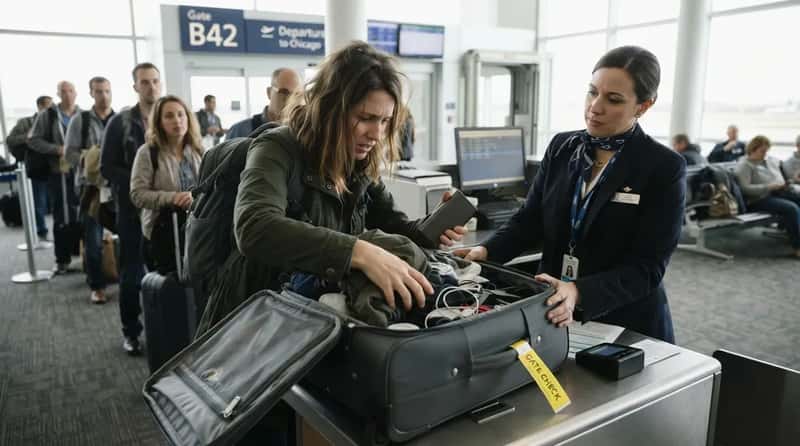
This one catches even frequent flyers off guard. A bag gets tagged for gate-checking, and only then does someone remember the battery pack, spare batteries, or vape device buried deep inside it.
This happens constantly, since the FAA requires spare lithium batteries and power banks to stay in carry-on baggage rather than checked bags. Suddenly the passenger is unzipping every pocket, scrambling to relocate the item before the bag disappears down the belt, and holding up an entire boarding line in the process.
#16 – Taking a Speakerphone Call Like the Gate Is Empty
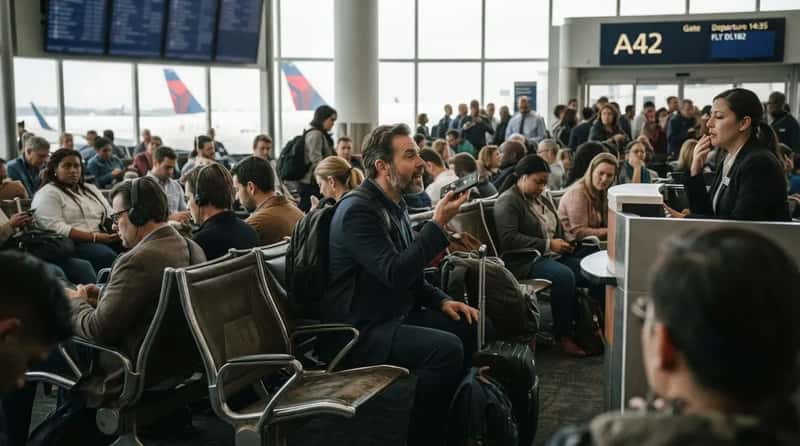
Somewhere in every terminal, someone is running a full work call on speaker, completely unaware that fifty strangers are now looped into their meeting. Gate agents hear every word, whether they want to or not.
It’s not against any rule, which is exactly why it keeps happening. But crews have quietly started associating loud, unbothered speakerphone use with passengers who tend to need extra reminders once boarding actually begins – the same disregard for shared space just shows up twice.
#15 – Walking Past the Crew’s “Hello” Like They’re Invisible
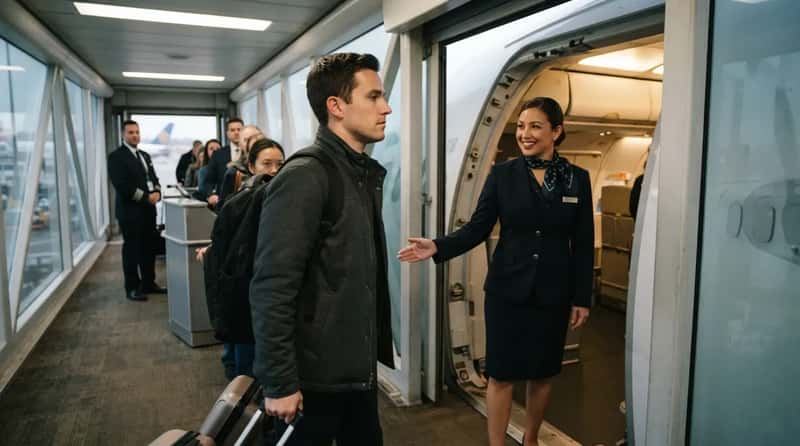
It sounds minor, almost too small to mention, but gate and boarding-door staff bring it up constantly. A greeting costs nothing, and skipping it entirely gets noticed far more than passengers realize.
Crews aren’t expecting a conversation; a simple nod covers it. But the passengers who breeze past without any acknowledgment tend to be the same ones flagged later if something during boarding needs a calm, cooperative reaction instead of a frustrated one.
#14 – Letting Toddlers Sprint Loose Near the Jet Bridge
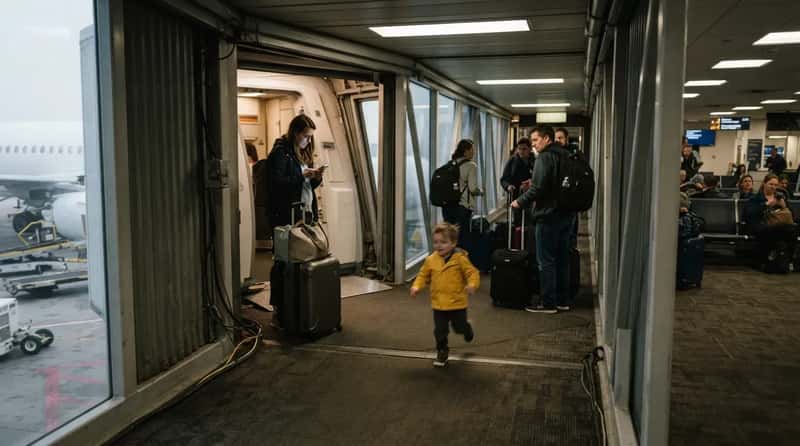
Jet bridges are narrow, sloped, and full of moving carts, rolling suitcases, and distracted adults – not exactly built for a toddler in full sprint mode. Gate staff notice which parents are tracking their kids and which ones simply aren’t.
Nobody expects perfect behavior from a four-year-old at 6 a.m. But crews do notice the gap between a parent actively managing the chaos and one scrolling their phone while a child weaves between strangers’ rolling bags near a moving jet bridge.
#13 – Guarding a Charging Outlet Like It’s Personal Property
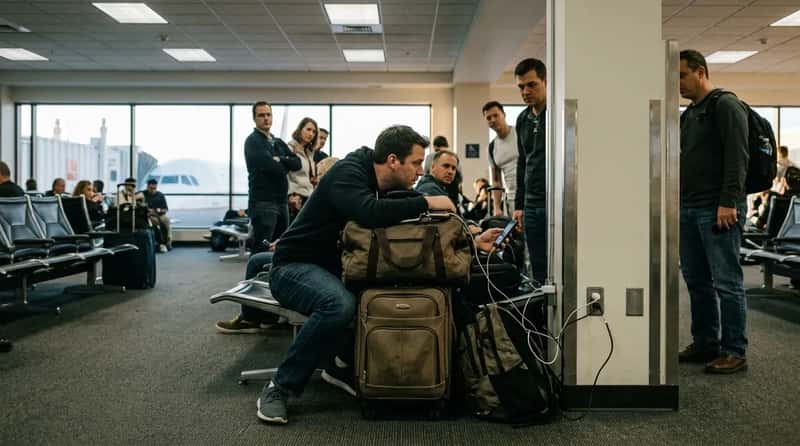
Outlets at a crowded gate are scarce, and some travelers treat their spot like a claimed campsite, bags piled around it, sharp looks aimed at anyone who gets close. It’s a small thing that says a lot about a person.
Gate agents don’t police outlet etiquette, but they see the tension it creates among waiting passengers. The travelers who share space without fuss tend to be the same ones who board calmly later; the ones guarding an outlet rarely stay calm for long once boarding starts.
#12 – Turning Three Gate Seats Into a Personal Storage Unit
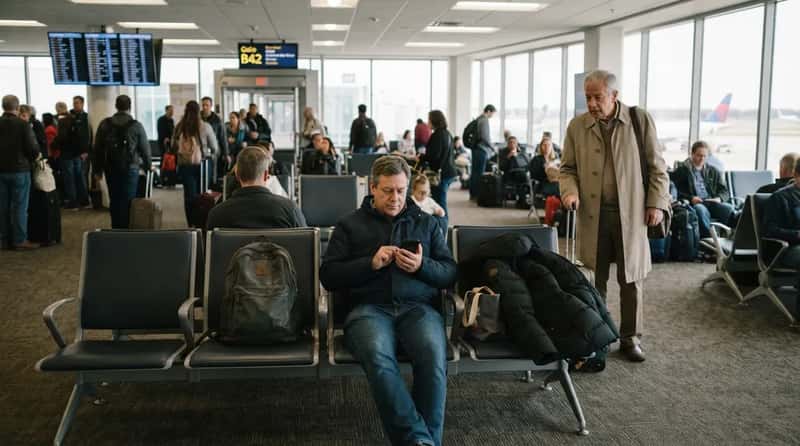
A backpack on one seat, a coat on another, a laptop bag on a third, while an older traveler stands nearby with nowhere to sit. It happens at nearly every crowded gate in the country.
Crews notice who moves their belongings the second someone needs a seat, and who pretends not to see the person standing. In a full terminal, that split-second reaction says more about a passenger than almost anything that happens once boarding actually starts.
#11 – Carrying a “Personal Item” the Size of a Suitcase
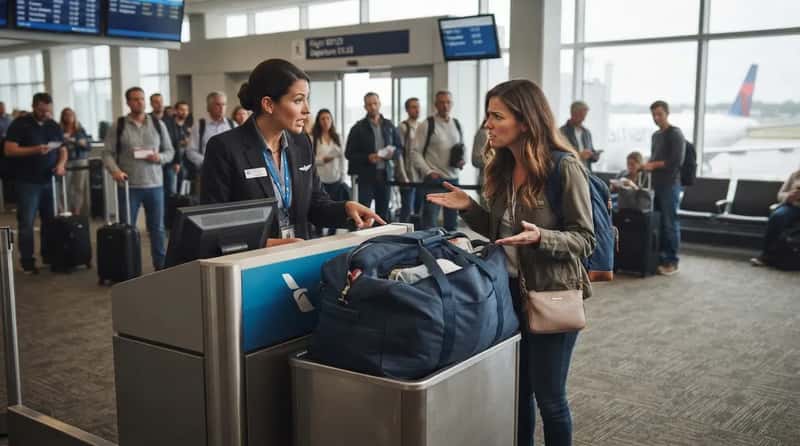
Basic economy fares only allow one small item, and some travelers treat that rule as a loose suggestion, showing up with something closer to a duffel bag stuffed to its seams.
Airlines are clear that a carry-on has to fit in the overhead bin or under the seat, and if it doesn’t, it has to be checked, with some flights carrying extra restrictions because overhead space runs out fast. Gate staff see this exact standoff at nearly every boarding call, and it never resolves quickly.
Quick Compare
- Standard personal item: around 18 x 14 x 8 inches on most major U.S. carriers, small enough to slide fully under the seat.
- United’s personal item: a tighter 17 x 10 x 9 inches, one of the strictest limits in the industry.
- Standard carry-on: 22 x 14 x 9 inches on Delta, United, American, Alaska, and JetBlue.
- Southwest and Frontier carry-ons: a roomier 24 x 16 x 10 inches, giving noticeably more packing space.
#10 – Loudly Trash-Talking the Gate Agent Within Earshot
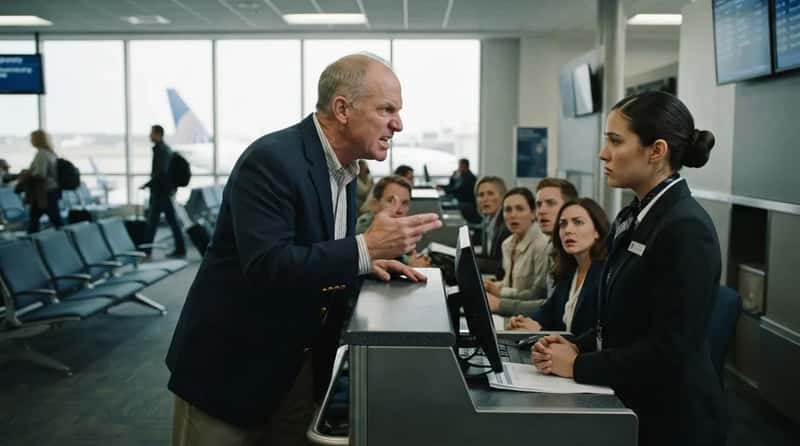
Delays happen. What crews remember isn’t the frustration itself; it’s the passenger who narrates their complaints loudly enough for the entire gate to hear, aimed directly at the one person with zero control over weather or mechanical issues.
Agents are trained to stay composed no matter what’s said. But staff have quietly admitted that passengers who vent respectfully, even while genuinely annoyed, get remembered far more kindly than the ones who turn a delay into a public performance.
#9 – Vaping Near the Gate Like No One Will Notice
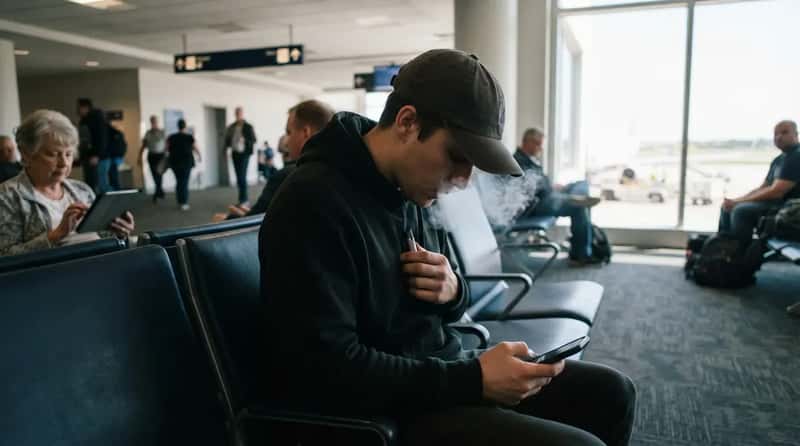
U.S. terminals don’t allow smoking or vaping outside designated areas, yet gate seating regularly gets a faint cloud anyway. Staff smell it before they see it, and it almost never goes unnoticed for long.
It’s a small rule break, but it’s one crews associate with a broader pattern: passengers who treat airport rules more like guidelines than actual policy. That same assumption tends to resurface once boarding starts, testing other boundaries too.
#8 – Peeling Off Shoes and Socks Before the Plane Even Boards
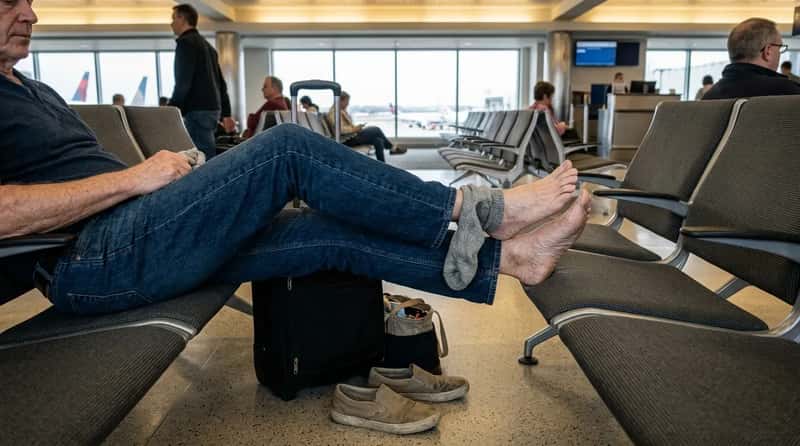
Gate seating isn’t a living room, but some travelers treat it that way, shoes off, feet propped on the seat across from them, long before their flight is even called. Staff have seen everything from bare feet on furniture to full sock changes in public.
It’s not against any posted rule, which is exactly why it keeps happening in plain sight. Crews just quietly note it, especially when the same passenger later expects extra patience once the actual flight begins.
#7 – Skipping Basic Hygiene Before a Full, Enclosed Flight
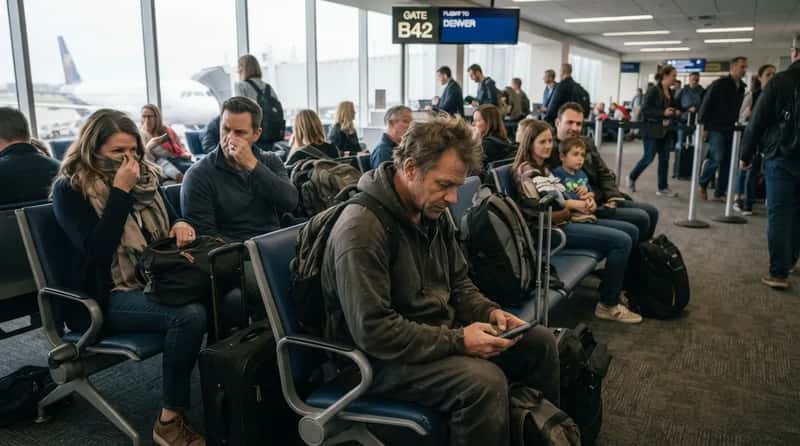
This one is delicate, and crews rarely mention it directly to a passenger’s face. But staff have admitted, off the record, that it’s one of the few things that genuinely makes a shift harder for everyone packed into a full cabin later.
It’s not about appearance; it’s about spending hours in close quarters with recirculated air. Gate agents can’t do much about it directly, but they’ve learned to recognize the discomfort building among nearby travelers before boarding even starts.
Worth Knowing
- Modern jetliners typically refresh cabin air every two to three minutes, blending fresh outside air with filtered recirculated air.
- The recirculated portion passes through HEPA filters similar in efficiency to those used in hospital operating rooms.
- Even with strong filtration, tight rows mean smells, noise, and close contact still travel fast in a pressurized cabin.
#6 – Fumbling for a Boarding Pass at the Scanner, Every Single Time
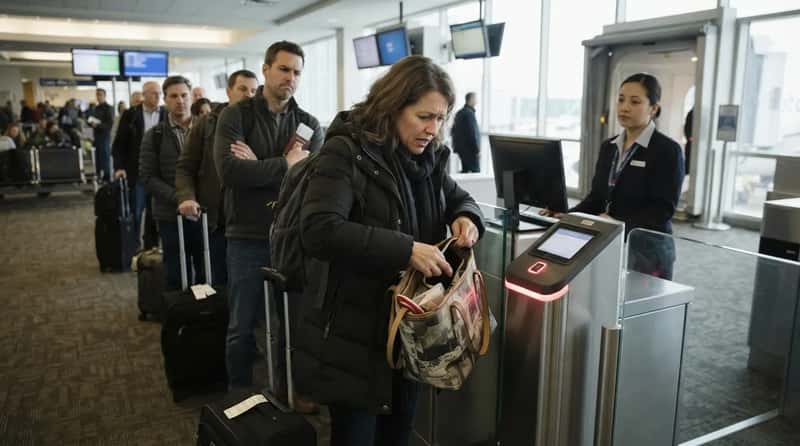
The scanner beeps, the line stops, and someone starts patting down every pocket for a phone that was in their hand thirty seconds earlier. It happens at nearly every boarding call, without fail.
Flight attendants and gate staff notice the passengers who stay organized, since they’ve got what they need, settle quickly, and don’t require five little favors in the first few minutes. The unprepared passenger usually becomes the stressed passenger, and that stress has a way of spreading to everyone stuck in line behind them.
#5 – Filming Gate Agents for Content Without Asking
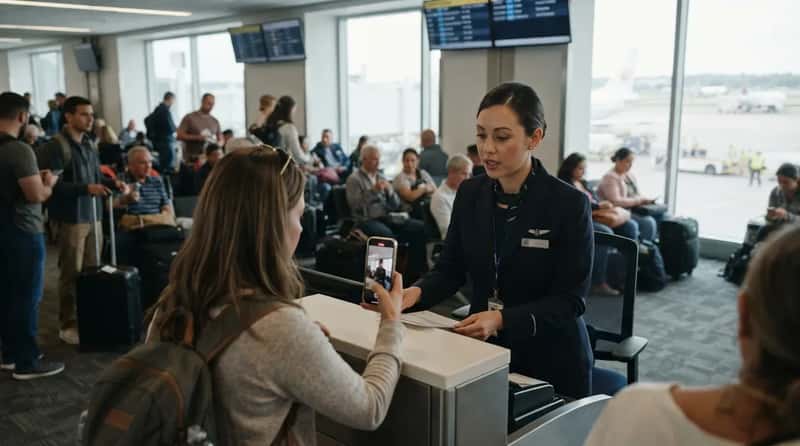
Phones come out constantly at gates now, and increasingly they’re pointed at staff instead of scenery. Recording an agent mid-conversation for a social post, without so much as a heads-up, has quietly become its own source of tension.
Most agents won’t stop working over it, but they notice every time. It shifts an ordinary interaction into a performance, and staff say it changes how carefully they choose their words for the rest of the exchange – not rudely, just guarded.
#4 – Faking a Priority Need to Skip the Line
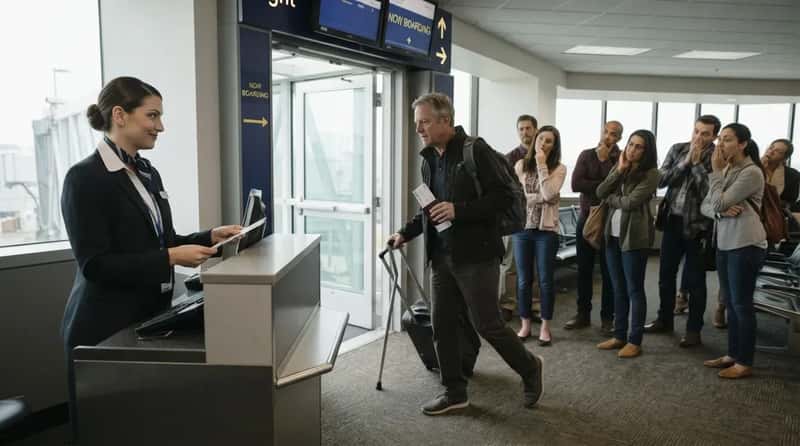
Every gate agent has watched someone suddenly develop a limp, a stroller, or an urgent connection the moment priority boarding is called, only for the “emergency” to vanish the instant they’re through the door.
Agents rarely challenge it outright, since accusing a passenger of faking a need is a fast way to escalate a situation. But staff quietly remember which travelers do this often enough that gate crews at busy hub airports start to recognize the same repeat faces.
#3 – Sprinting Up at the Last Second and Blaming the Agent
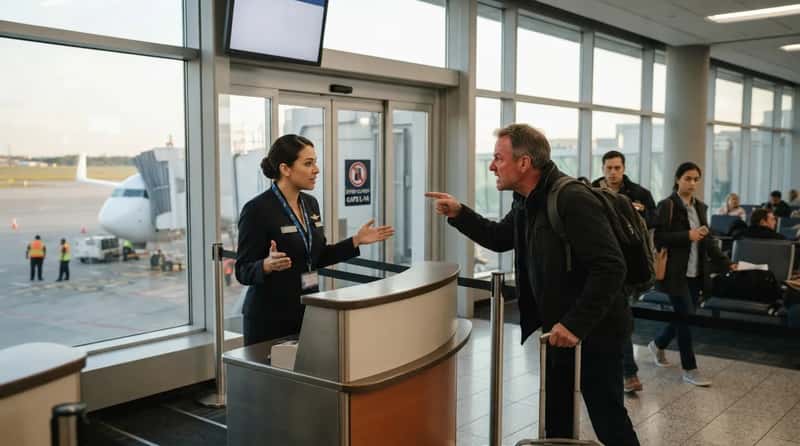
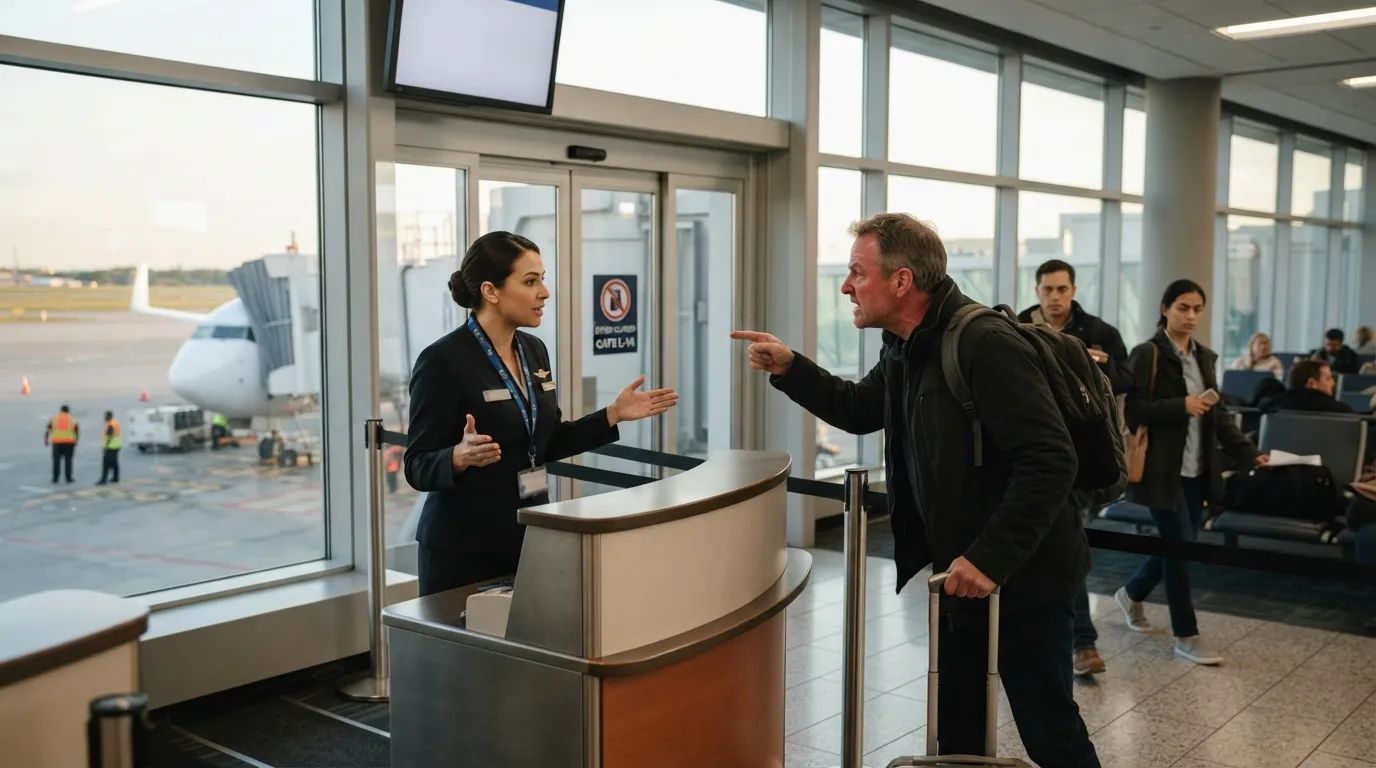
Doors close on a schedule, not a feeling, and gate agents get nearly the same reaction every single time someone arrives after the cutoff: anger aimed at the one person who didn’t actually make the rule.
Crews understand missed connections happen. What they remember is the tone. Passengers who calmly ask for options tend to get rebooked faster than the ones who raise their voice at a closed door that was, by policy, closed well before they ever arrived.
#2 – Sprawling Across Four Seats With Bags as Roadblocks
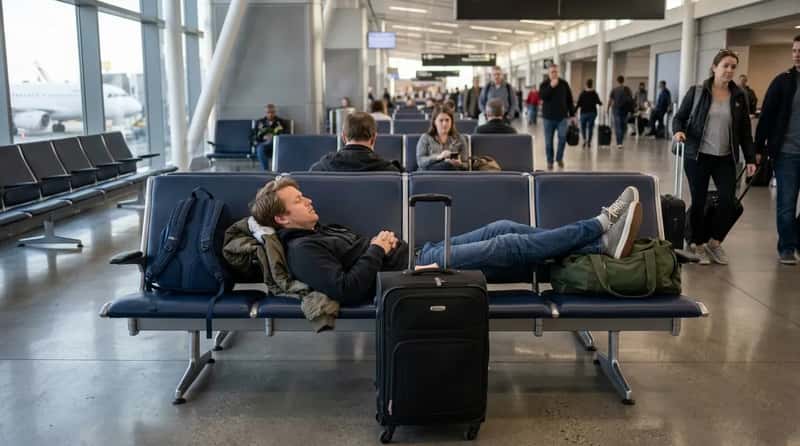
A single traveler stretched across an entire bench, luggage fanned out to block anyone from sitting nearby, is one of the most common sights at a crowded gate during a long layover.
It rarely draws a direct comment from staff, but it does get noticed, especially at gates already short on seating. Crews say the same passengers who guard four seats for themselves are often the first to complain when boarding feels disorganized around them minutes later.
#1 – Blocking the Door So Families and Older Travelers Can’t Get Through
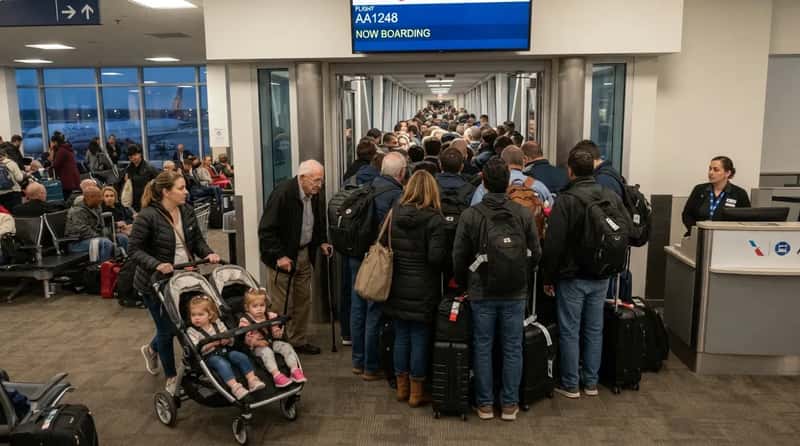
At the very top of the list is the behavior crews say sticks with them the longest: a solid wall of bodies pressed against the boarding door, making it physically hard for anyone else to pass.
This kind of crowding can slow deplaning, hinder crew movement, and make things especially difficult for passengers who need accessibility assistance or families wrangling small children through a narrow gap. Gate agents rarely step in during the moment itself, but they remember exactly who caused it once boarding turns chaotic.
None of these behaviors are illegal, and most won’t get anyone stopped at the door. But airline staff have long memories for patterns, and the travelers who show a little basic awareness at the gate tend to get smoother, faster, quieter treatment when something actually goes wrong.
The gate, it turns out, is where crews quietly decide who they’re rooting for before the flight even starts. Which one of these have you seen with your own eyes? Tell us in the comments – the stories are always better than the list.