

If you packed a suitcase in 1975, you did it completely differently than you do now – and not just because packing cubes hadn’t been invented yet. The rituals were real, the rules were unwritten, and every seasoned traveler swore by them like gospel. Dress sharp for the flight. Lock every latch. Bring enough traveler’s checks for the whole trip. Tuck a full-sized iron in the bag. These weren’t quirks – they were the correct way to travel, passed down from parents who’d learned from their own.
Here’s what makes this list genuinely strange: almost none of it holds up today, but nearly every ritual made perfect logical sense in its original world. Airport security rewrote half the playbook. Cheap international flights killed another chunk. Smartphones finished the job. The rituals feel so reasonable in context that it’s hard to laugh at them – until you try to picture doing them now. Here’s what travelers actually swore by, and why every single one has been completely retired.
#25 – Wearing Your Absolute Best Outfit to Fly
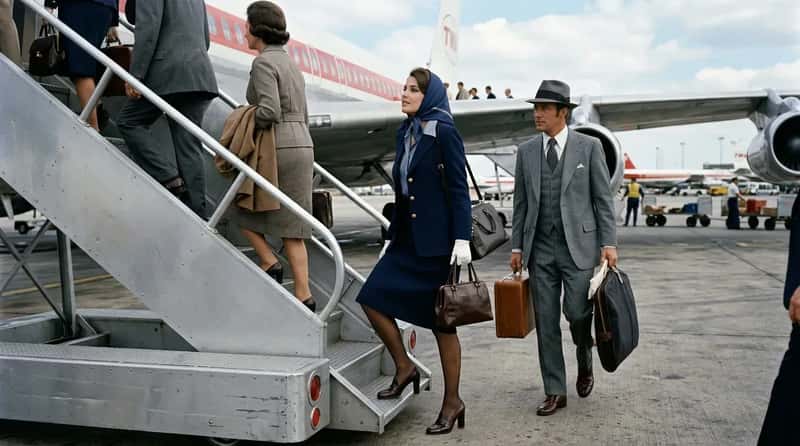
In the 1970s, getting on a plane was an event, not a commute. People dressed for air travel the way they dressed for church – suits, heels, pressed slacks, coordinated accessories. The airport was a place you were seen, and looking sloppy was a quiet social failure. Many women packed a separate “travel outfit” reserved entirely for the ritual of boarding, never worn anywhere else.
Today the gate area looks more like an airport-themed sleepover. Athleisure, hoodies, and slides dominate every terminal in America. The shift happened gradually as flying became less of an occasion and more of a bus ride at altitude. Nobody’s judging your sweatpants – they’re probably jealous. But that 1970s instinct to dress with intention came from a world where the airplane was genuinely special, and that world is gone.
At a Glance: How the “Dress to Fly” Culture Collapsed
- In the 1950s and early ’60s, a suit and tie for men and a formal dress for women was the expected flying uniform
- The number of U.S. air passengers more than quadrupled between 1955 and 1972 – once flying became common, dressing up felt less necessary
- The Airline Deregulation Act of 1978 drove ticket prices down sharply, accelerating the shift from occasion to commute
- Today virtually no U.S. airline enforces a dress code beyond “no bare feet” and “no offensive clothing”
- During the 1970s golden era, even coach passengers enjoyed multi-course meals on fine china – the experience matched the attire
#24 – Packing a Full Matching Luggage Set
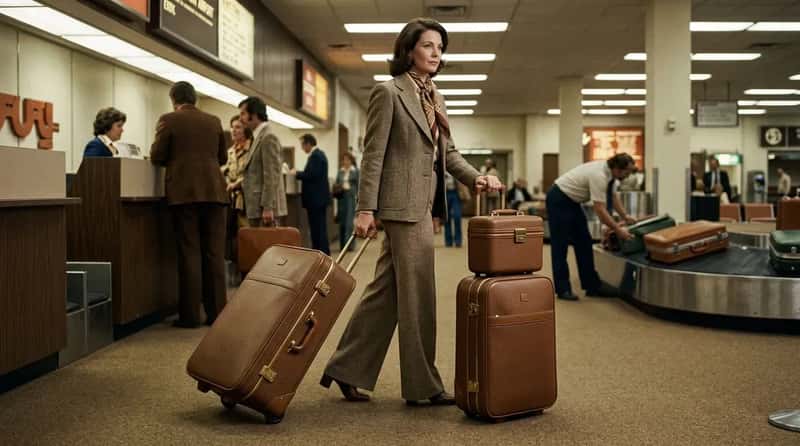
Showing up at the airport with a mismatched collection of bags in the 1970s was quietly embarrassing. Coordinated luggage sets – a large check-in case, a smaller carry-on, and a train case for cosmetics – were a point of pride. The set announced that you were a person who traveled properly, not someone improvising with whatever they found in the closet.
Today, matching luggage sets are practically a liability. Most frequent travelers deliberately choose distinctive luggage – bright colors, patterns, stickers – so they can spot their bag at baggage claim without squinting. Coordinated sets also tend to be heavier and costlier, and airlines now charge per checked bag, making that second and third piece of a “set” an expensive habit. The ritual made sense when porters handled your bags and the airport was a fashion runway. Now it’s just dead weight.
#23 – Locking Every Single Latch With a Padlock
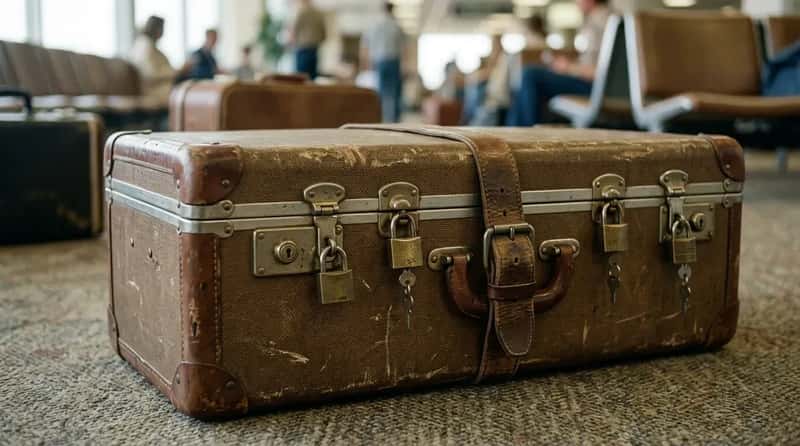
Before the TSA existed, padlocking your suitcase shut was considered smart and responsible. 1970s travelers padlocked their bags, wrapped leather straps around the whole thing, and considered this the gold standard of luggage security. A locked bag was a protected bag – or so the thinking went.
Then came the post-9/11 era and everything changed. TSA reached agreements with Safe Skies and Travel Sentry to use universal master keys, meaning TSA-approved locks can be opened without damage – but non-approved padlocks simply get cut off. So that padlock ritual your grandfather swore by now gets your lock destroyed and your bag opened anyway, and you don’t even get the lock back. The modern workaround is a TSA-compliant lock, which is an entirely different product solving an entirely different problem.
#22 – Ironing Clothes Before Packing Them

This one is almost poignant. 1970s travelers would iron their garments to crisp perfection before folding them into the suitcase – not after arriving at the destination. The logic was that wrinkle-free clothes started wrinkle-free, and careful folding would preserve that pressed state. Some travelers ironed everything: shirts, trousers, even pajamas.
The problem is that folding anything and forcing it into a bag for six hours creates wrinkles regardless of what state it started in. Modern travelers skip the pre-trip iron entirely, rolling clothes to minimize creasing or using packing cubes to keep items flat. Wrinkle-resistant fabrics have also made the ritual largely unnecessary. Pre-packing your iron was energy spent on a problem that solves itself the moment you shake a shirt out and hang it up.
#21 – Packing a Separate Hatbox
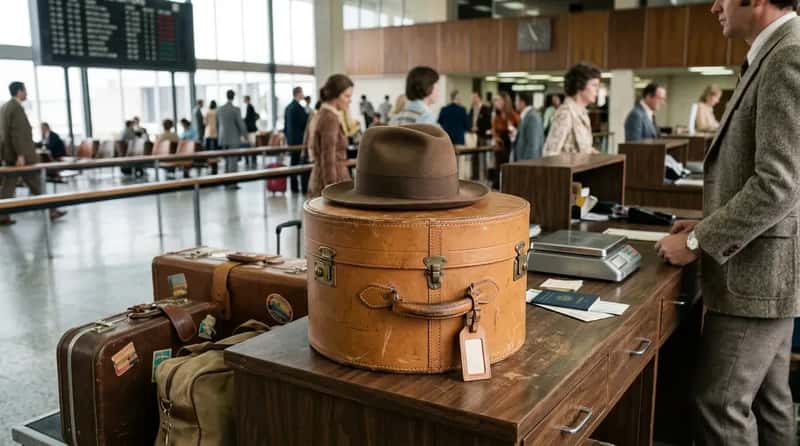
Through the early 1970s, hats were still a travel staple for many Americans – not just a fashion accessory but a practical part of the outfit. Fedoras, trilbies, Panamas, and homburgs were common enough that a dedicated cylindrical hatbox traveled alongside the main luggage, protecting the hat’s shape in transit. It was its own piece of luggage just for one item.
Today, hatboxes are largely relegated to storage, display, film sets, and photography props. Hats declined as fashion shifted, and carry-on restrictions made hauling a cylindrical case through a terminal an absurd proposition. If you travel with a hat now, you either crush it into your bag or wear it on your head and accept the overhead bin battle. The dedicated hatbox ritual is pure nostalgia – charming to look at, completely impractical to live with.
#20 – Traveling With a Train Case Full of Full-Sized Toiletries

The train case – a small boxy cosmetics bag that opened like a tackle box – was a travel staple in the 1970s. Travelers packed full-sized bottles of shampoo, perfume, hairspray, and lotion without a second thought. There were no liquid restrictions, no quart-sized bags, no 3.4-ounce limits. You packed what you used at home, in the same sizes you used at home, and nobody said a word at the airport.
A 2006 terrorist plot targeting transatlantic flights out of London changed all of that permanently. The TSA’s 3-1-1 rule has governed carry-on toiletries ever since – all liquids in containers of 3.4 ounces (100ml) or less, fitting inside a single quart-sized bag, one bag per passenger. Packing a full-sized bottle of shampoo in your carry-on now means watching it get confiscated at the checkpoint. The train case ritual wasn’t wrong – it was obliterated by a security rule that simply didn’t exist yet.
Fast Facts: The 3-1-1 Rule
- Introduced by the TSA in August 2006 after a foiled liquid explosives plot targeting transatlantic flights from the UK
- The rule: containers of 3.4 oz (100ml) or less, all fitting in 1 quart-sized clear bag, 1 bag per passenger
- As of 2025, the liquid restriction remains in effect across the U.S. and most international airports
- A 2025 survey found 63% of experienced travelers want the TSA to revise the rule – only 12% want it unchanged
- Some airports in London, Amsterdam, and Tokyo are already testing or phasing in relaxed liquid rules using advanced CT scanners
#19 – Arriving at the Airport Barely 30 Minutes Before Departure
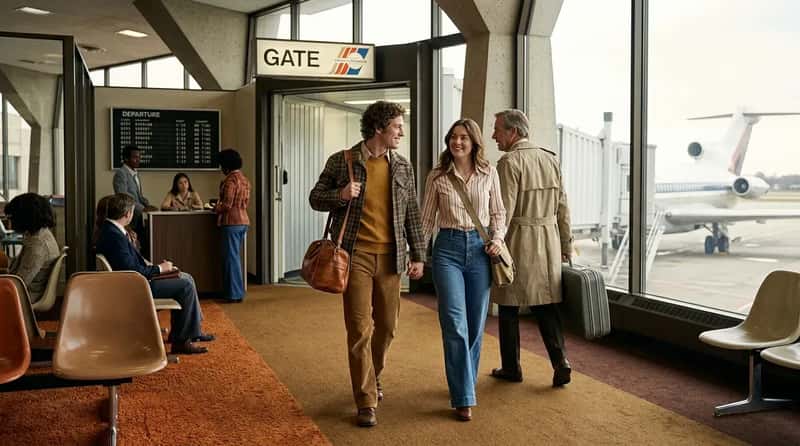
In the early 1970s, airport security was nearly nonexistent. No lines, no shoe removal, no body scanners. Anyone could walk straight to the gate – ticketed passengers and their entire entourage alike. Travelers routinely showed up 20 to 30 minutes before a domestic flight, strolled to their gate, and boarded without ceremony. It was closer to catching a city bus than the ordeal it is today.
Security checks did eventually arrive in the mid-1970s, but they were fast – a quick pass through a metal detector and an X-ray of your bag. Post-9/11 security theater changed the math permanently. Most U.S. airports now recommend arriving two hours before domestic flights and three hours before international departures. The 30-minute arrival habit that worked perfectly in 1974 would get you bumped today without a second glance from the gate agent.
#18 – Bringing Non-Traveling Family All the Way to the Gate
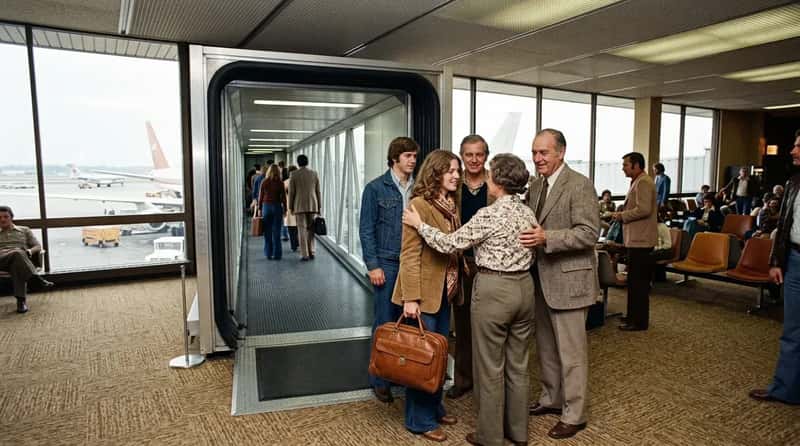
One of the most emotionally loaded 1970s travel rituals was the gate farewell. Non-traveling friends and family walked ticket-holders straight to the departure gate – no ticket required, no problem. There were tearful goodbyes at the jetway door and excited reunions the moment someone stepped off the plane. It made arrivals and departures feel like genuine occasions.
That changed definitively after 9/11, when only ticketed passengers were permitted past security checkpoints. Today the gate goodbye happens at the security line – a considerably less cinematic location, usually somewhere near a Cinnabon and a row of self-check kiosks. Some airports offer gate passes for specific situations like unaccompanied minors, but the casual walk-your-family-to-the-jetway ritual is gone for good, and anyone under 30 has never experienced it.
#17 – Packing Enough Traveler’s Checks for the Entire Trip

Before ATMs became globally ubiquitous, traveler’s checks were the financial backbone of every serious 1970s trip. You’d visit the bank before departing, purchase a stack of pre-printed checks in fixed denominations, sign each one, and then countersign them at the point of purchase abroad. They were considered theft-proof and internationally accepted – the safest way to carry money overseas. Organizing them carefully was a pre-trip ritual of its own.
Today, traveler’s checks are almost completely extinct as a practical travel tool. Global ATM networks, credit cards with no foreign transaction fees, and mobile payment apps have replaced them so thoroughly that many younger travelers have never seen one in person. Hotels and merchants that once displayed “Traveler’s Checks Accepted” signs quietly stopped updating those signs years ago. The ritual of organizing checks by denomination and storing them separately from your passport now feels like something out of a period film – which, at this point, it basically is.
Quick Compare: Traveler’s Checks Then vs. Now
- 1970s: Purchased at the bank before departure in fixed denominations; required a countersignature at every purchase
- 1970s promise: Replaceable if lost or stolen – considered the safest way to carry money abroad
- Today: ATMs are available in over 200 countries; a lost debit card can be canceled instantly via app
- Today’s reality: Many major banks – including Chase – stopped selling traveler’s checks; many merchants have never processed one
- The irony: More than $1 billion in unredeemed traveler’s checks are estimated to still be sitting in drawers and safe deposit boxes across the U.S.
#16 – Packing a Separate Bag Just for Shoes
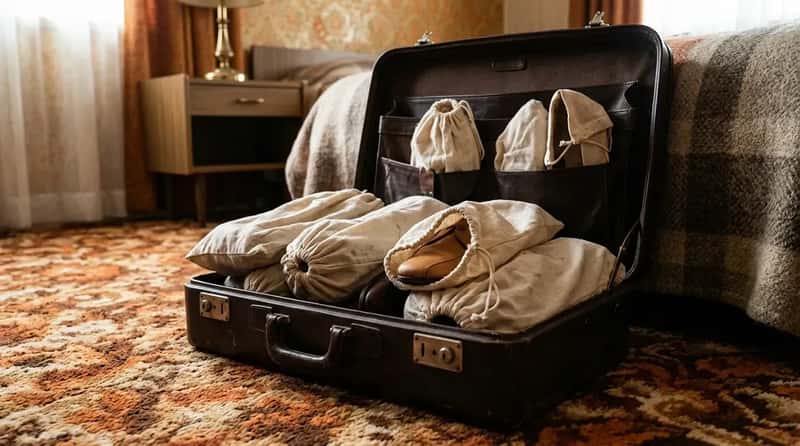
1970s travelers packed shoes the way they packed everything: abundantly and with formal intention. Multiple pairs – dress shoes, casual shoes, walking shoes, evening heels – were wrapped in fabric shoe bags and tucked into the main suitcase or their own secondary case. The idea that you’d travel with only one or two pairs was considered underprepared. A properly packed bag had a shoe for every possible context.
Modern packing philosophy has done a near-180 on this. Airline baggage fees made overpacking financially painful, and the rise of versatile footwear – one pair of neutral sneakers that works for both a museum and a casual dinner – made the multi-shoe ritual feel excessive. The separate shoe bag still exists, but now it’s an organizer for fewer shoes, not a dedicated case for many. Nobody’s winning a fashion award at customs anyway.
#15 – Bringing a Full Set of Stationery to Write Letters Home

Packing writing supplies for a trip wasn’t optional in the 1970s – it was essential communication infrastructure. Travelers brought postcards by the dozen, bought stamps before crossing borders, and carved out time at cafes or hotel desks to write longer letters home on proper notepaper. These weren’t just nice gestures; they were often the only way to reassure family that you’d arrived safely.
Today, a text sent from the plane covers what a handwritten letter took three days to deliver. Instagram stories and group chats have replaced the postcard ritual so completely that mailing a postcard in 2025 is actually considered a charming, deliberate act – not the default it once was. The stationery kit has vanished from the packing list entirely; the phone handles everything it ever did and then some, without weighing an extra pound or requiring a trip to the post office.
#14 – Folding Every Piece of Clothing With a Prescribed System
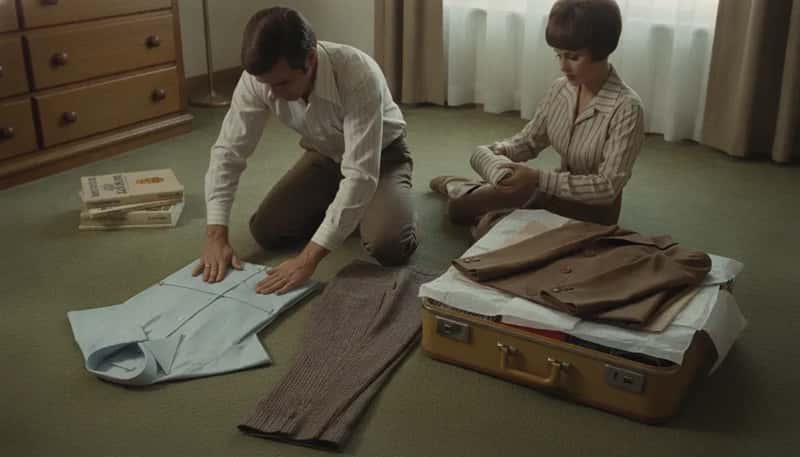
1970s packing guides – and yes, those existed – prescribed elaborate folding systems for every garment type. Dress shirts went collar-out with the sleeves folded back precisely. Trousers were folded along the crease. Jackets were layered with tissue paper to prevent impression marks. Getting the fold wrong meant arriving with a creased outfit and no easy fix, so the system was taken seriously and passed down like family lore.
The rolling method – turning garments into tight cylinders – now dominates modern packing advice, and it consistently outperforms flat-folding for wrinkle prevention in soft fabrics. Packing cubes added a structural layer the 1970s folder never had. The careful fold ritual made sense when it was the only technique anyone knew. Turns out it wasn’t even the best one available – it just had a 50-year head start.
#13 – Packing a Full-Sized Hair Dryer and Hot Rollers
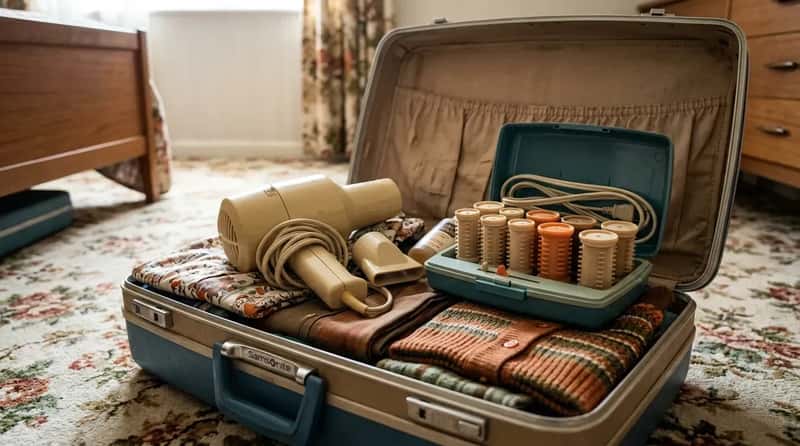
Before hotels standardized the in-room hair dryer, packing your own was non-negotiable – especially for longer trips. 1970s hair dryers were bulky, heavy, and came in hard plastic cases. Hot rollers were even bulkier. With the decade’s fashionably long hair on both men and women, these items were packed as seriously as clothing. The alternative – arriving somewhere with no way to style your hair – was genuinely not considered acceptable.
Today, virtually every hotel from budget chain to luxury resort provides a wall-mounted dryer in the bathroom. It’s so standard that packing your own is actually unusual behavior now. Travel-sized versions exist for the rare property that skips it, and most travelers simply check the hotel amenities page before deciding. The 4-pound hot roller set that once claimed prime real estate in a suitcase has been replaced by a Google search that takes 10 seconds.
#12 – Attaching Identifying Tags to Every Single Item Inside the Bag
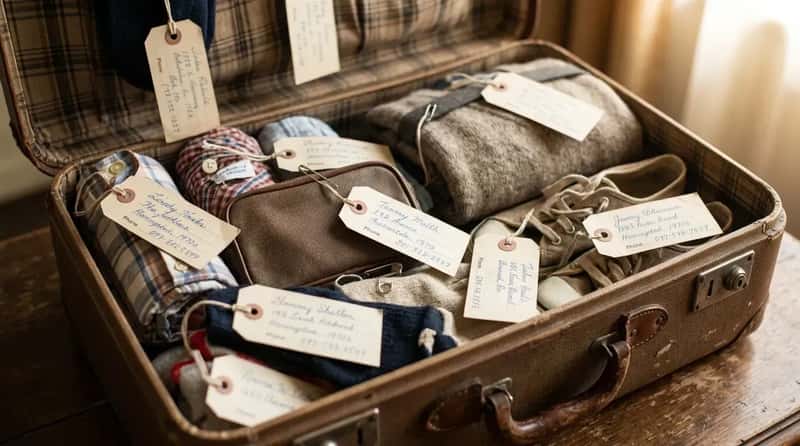
Lost luggage in the 1970s was a genuine and relatively common disaster. Airlines had no digital tracking, baggage handlers worked from paper manifests, and a misrouted bag could take days to reunite with its owner – if it ever did. Savvy travelers responded by tagging not just the outside of the suitcase but individual items inside – clothing, toiletry kits, shoes – with small name-and-address labels, in case the bag burst open during rough handling.
Modern baggage tracking has made interior tagging almost entirely unnecessary. Airlines now use barcoded tags scanned at multiple checkpoints, and many carriers offer real-time bag tracking through their apps. Bluetooth trackers like AirTags have become the sleek modern equivalent – slipped inside once, tracking the bag continuously across connections. Labeling individual socks with your home address was rational problem-solving in 1974. Today it’s the kind of thing that would make a TSA agent quietly curious about you.
#11 – Packing a Road Atlas or Physical Guidebook for Every Destination
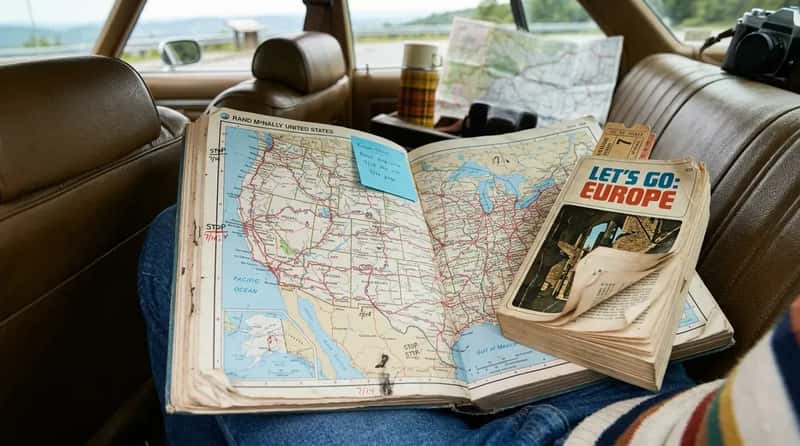
No trip in the 1970s left home without a physical road atlas, and no international flight landed without a travel guidebook in the carry-on. These weren’t backups – they were the primary navigation and information system. Travelers marked pages with sticky notes, dog-eared corners, and underlined restaurant recommendations in pen. The guidebook was consulted the way a smartphone is consulted today: constantly, for everything.
Google Maps, TripAdvisor, and offline navigation apps have replaced the physical guidebook so thoroughly that carrying one now feels retro rather than practical. The weight alone makes it a losing proposition – a comprehensive city guide can run 600 pages and weigh over a pound. That said, many seasoned travelers quietly note that phone dependency creates its own problems: dead batteries, no signal, and the loss of the serendipitous detour you’d never have found if an algorithm had kept you on the main road. The atlas had some things right that GPS gets wrong.
#10 – Building the Entire Trip Wardrobe Around Ironing Access

In the 1970s, most travel clothing was made from natural fibers that creased badly under packing pressure. The solution wasn’t to change the clothes – it was to build the entire trip schedule around access to an iron. Travelers would check in, locate the ironing board, and spend real time re-pressing their wardrobe before doing anything else. The first hour of every trip was partly a laundry ritual.
Today’s traveler selects fabrics specifically because they don’t need ironing. Merino wool, performance synthetics, and stretch-woven blends have made the iron almost optional for most trip types. Travel-focused brands now engineer entire clothing lines around a single promise: pull it out of the bag and wear it directly. That first-hour ironing ritual has been almost entirely engineered out of existence by material science – which is genuinely one of the most underrated travel improvements of the last 30 years.
#9 – Packing Multiple Rolls of Film and Keeping Them Out of X-Ray
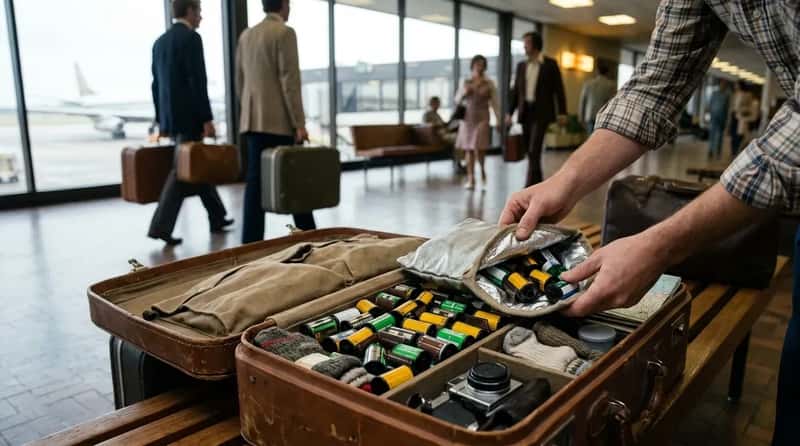
Photography in the 1970s meant managing rolls of film – typically 12 to 36 exposures per roll – and carefully rationing shots across the whole trip. Serious travelers packed dozens of rolls for two weeks and developed an elaborate ritual around protecting them. Early airport X-ray machines could fog unexposed film, so the film management operation was real and time-consuming: lead-lined pouches, hand-inspection requests, careful compartment placement to keep rolls cool and dark.
Today, of course, digital cameras and smartphones have made physical film essentially a specialist hobby. You can take thousands of photos on a device that weighs less than a single roll of film, review them instantly, and back them up to the cloud at 30,000 feet. The entire film ritual – legitimate, careful, and genuinely stressful – vanished almost overnight when digital cameras hit mass adoption in the early 2000s. One of travel’s great anxieties just quietly ceased to exist.
#8 – Overpacking “Just in Case” Formal Wear
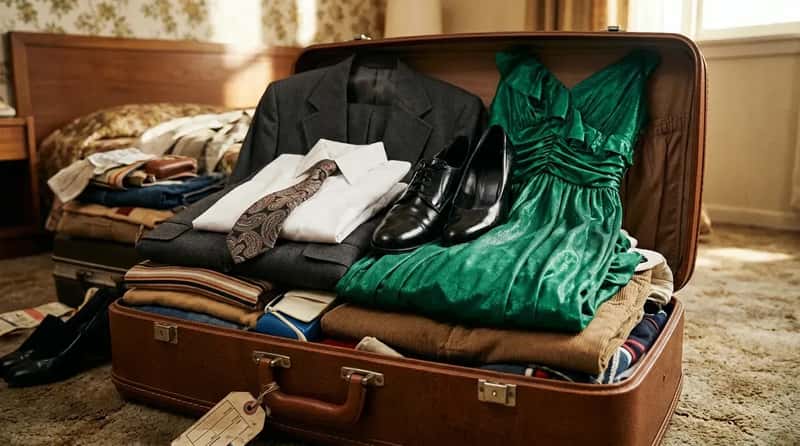
The 1970s traveler packed for the trip they might have, not the one they were actually taking. A week of leisure travel routinely included a full formal outfit – dress and heels, or suit and tie – on the off chance someone invited you to a fancy dinner, a show, or a spontaneous event requiring it. Being caught underdressed was a social failure worth hauling an extra five pounds to avoid.
Modern travelers have largely abandoned this habit, for two reasons: formal dress codes have relaxed dramatically across restaurants, theaters, and social events, and airline baggage fees made the “just in case” outfit a measurable financial decision. Restaurants that once required jackets now welcome guests in dark jeans without blinking. Today’s traveler packs for the trip they’re actually taking, not the fanciest version of it. The just-in-case tuxedo lives in the closet now, where it belongs.
#7 – Securing the Suitcase With External Leather Straps
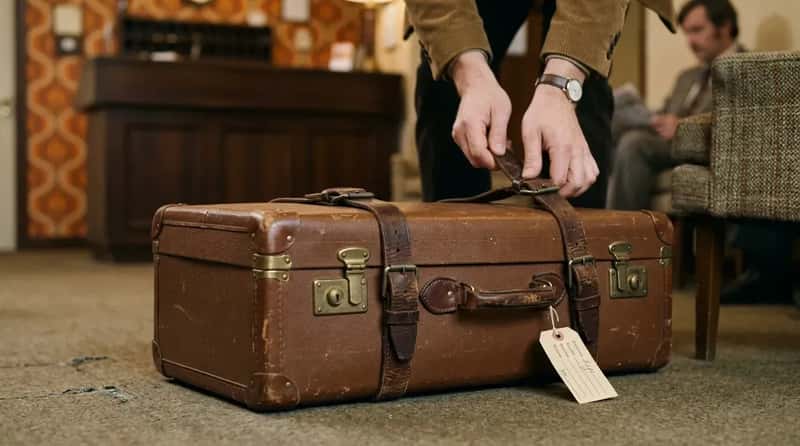
Before modern zipper-and-latch designs became standard, 1970s hard-shell cases were secured with external leather straps buckled around the entire bag. This wasn’t decorative – it was structural. The straps kept the bag closed if a latch failed and added compression that prevented the case from popping open during rough baggage handling. Knowing how to buckle them efficiently was a minor but real travel skill.
As suitcase manufacturing shifted to plastics, synthetic fabrics, and reliable zippers through the late 1970s and ’80s, external straps became redundant for most travelers. Modern polycarbonate hardshell cases are engineered to stay closed under significant stress without any external reinforcement. The leather strap ritual was real engineering for a real problem – it’s just that the problem was eventually engineered away, along with the latches that made the straps necessary in the first place.
#6 – Arriving at the Hotel and Asking the Concierge for Everything
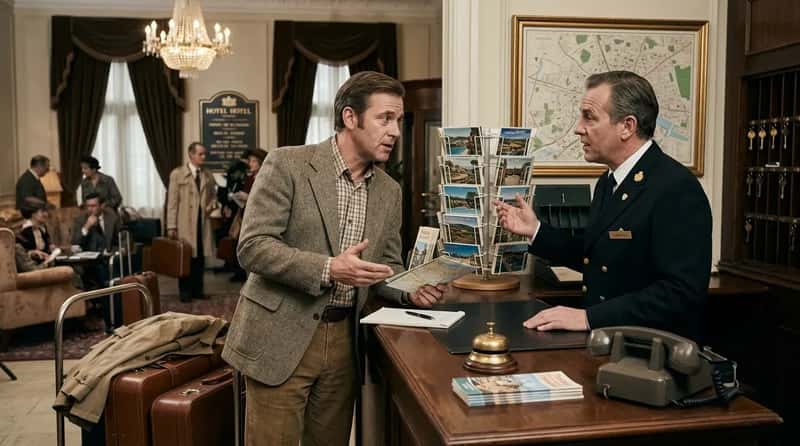
Pre-trip research in the 1970s was thin. Guidebooks were general, international phone calls were expensive, and tourist information was scattered and hard to find before departure. So travelers often arrived at their destination with almost no local knowledge – trusting that the hotel concierge would fill in every blank. Restaurant recommendations, attraction hours, event schedules, local transportation: all of it came from the front desk, in person, on arrival.
Concierges still exist and still add real value for specialized or complex requests. But the ritual of arriving with zero local knowledge and outsourcing your entire experience to someone behind a desk has been thoroughly disrupted by TripAdvisor, Google Maps, and the ability to research a neighborhood’s best spots from the plane. Today’s travelers often arrive with itineraries more detailed than anything a concierge would suggest. The information asymmetry that made the ritual necessary is simply gone – the concierge went from essential oracle to specialist consultant.
#5 – Packing a Pouch of Coins Specifically for Payphones

Every 1970s traveler packed a specific supply of coins – kept carefully separate from regular change – specifically for payphone calls. Long-distance calls from a hotel room were expensive enough to budget around, and payphones were the backup communication system when you were away from your lodging. Running out of coins in a foreign city meant borrowing from strangers or hunting for a currency exchange. Some travelers kept a dedicated small pouch just for phone money.
The entire physical infrastructure of payphone communication has effectively disappeared. At their peak in 1999, there were over 2.1 million payphones in service across the United States – by 2016, fewer than 100,000 remained, a decline of over 95%. Pay phones have become so rare that the FCC stopped requiring audits of them in 2018. Today’s traveler carries a smartphone with international calling plans, WhatsApp, FaceTime, and more communication options than an entire 1970s telephone exchange could provide. The coin pouch is as obsolete as the rotary dial.
Worth Knowing: The Payphone’s Staggering Disappearance
- Peak U.S. payphones: over 2.1 million in service in 1999
- By 2016: fewer than 100,000 remaining – a 95%+ decline in under two decades
- New York City removed its last public payphone in 2016; many booths were converted into Wi-Fi hubs
- The FCC stopped requiring annual payphone audits entirely in 2018
- By comparison, there are now approximately 341 million mobile voice subscriptions in the U.S.
#4 – Packing a Portable Typewriter for Business Travel
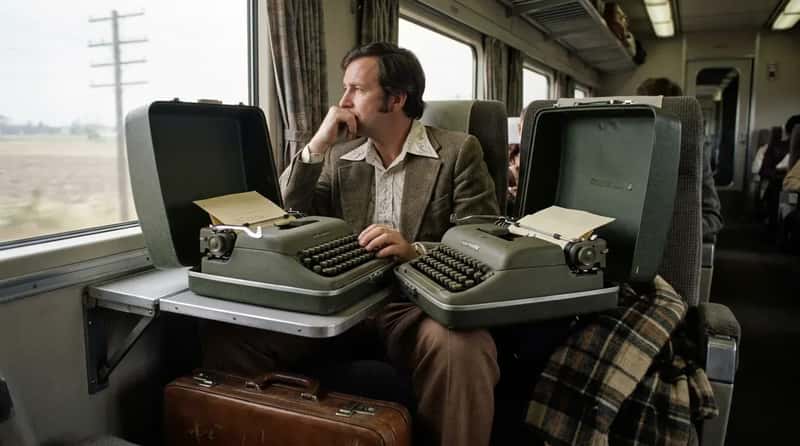
Serious 1970s business travelers packed portable typewriters. Not as a quirk – as a practical necessity. Correspondence, reports, and proposals needed to be typed and mailed from the road, and handwriting a formal business letter was considered unprofessional. Olivetti, Smith Corona, and Hermes all made travel-specific portable models that weighed 8 to 12 pounds and came in hard-shell cases of their own. Packing one was simply what business travelers did.
The laptop replaced the typewriter so completely that most travelers under 40 have never seen a portable model in person. But the weight math is striking: that 10-pound typewriter, hauled on weekly business travel over a full year, amounts to roughly 500 additional pounds of luggage moved through airports. The business packing ritual that once centered on a mechanical keyboard now fits in a device thinner than a magazine – and doesn’t require a ribbon change mid-report.
#3 – Wrapping Breakables in Clothing Instead of Any Real Padding

Bringing back souvenirs, wine bottles, or fragile gifts in the 1970s meant wrapping them in your own clothing inside the suitcase – shirts, socks, sweaters, whatever provided enough cushion to survive checked baggage handling. There was no bubble wrap in the bag. No dedicated bottle protectors. The ritual was entirely improvised: nest the breakable in the center, surround it with soft layers, and hope the luggage handlers were having a good day.
Today, purpose-designed bottle sleeves, padded wine carriers, and inflatable packing protectors exist specifically for this problem. TSA’s 3-1-1 liquid rule also means you’re thinking twice about what liquids make it into carry-on from abroad in the first place. The clothing-as-bubble-wrap habit wasn’t bad thinking – it was rational improvisation with whatever was available. The materials have just gotten dramatically better, and a padded wine sleeve doesn’t leave your sweater smelling like Chianti if something goes wrong at the conveyor belt.
#2 – Packing Everything You Might Need “Because You Can’t Get It There”
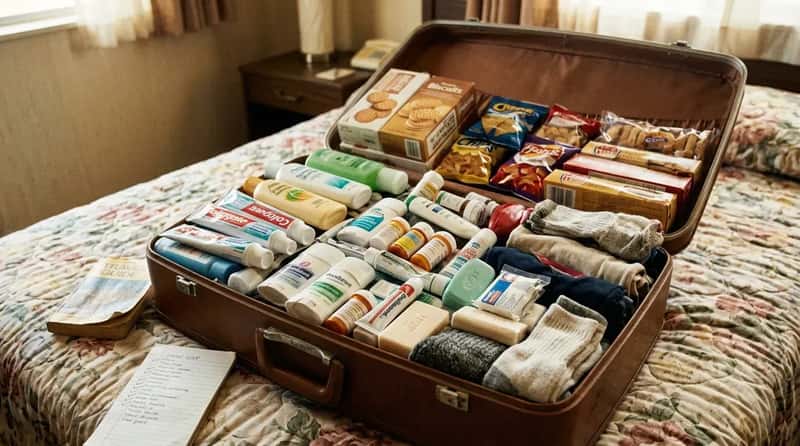
The 1970s traveler operated under a very real assumption: foreign destinations – even developed ones – might not have the specific products you used at home. Your brand of toothpaste might not exist abroad. A particular medication might be unavailable or require a local prescription. Even common items like certain snack foods or over-the-counter remedies weren’t guaranteed outside the U.S. So travelers packed as if their destination were a remote outpost with limited resupply options – because, in a meaningful sense, it sometimes was.
Globalization and international retail chains have made this assumption almost entirely obsolete for travel to developed destinations. A CVS equivalent exists in most major European cities. American snack brands appear in convenience stores on six continents. “You can’t get it there” now applies only to hyper-specific regional products or genuinely remote destinations – not Paris, not Tokyo, not London. This shift in global commerce arguably did more to change packing habits than any single invention. The 1970s over-packer wasn’t irrational – they were shopping for a world that no longer exists.
#1 – Packing for the Person You Were Expected to Be on the Trip
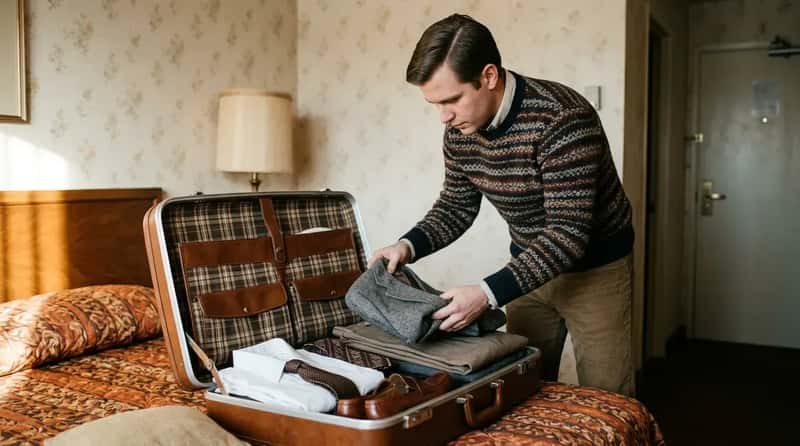
The deepest 1970s packing ritual wasn’t about any specific item – it was about identity. You packed the wardrobe of the person you were supposed to present yourself as on the road: polished, formally dressed for formal occasions, prepared for every social context, and never looking like someone who hadn’t done their homework. The suitcase was a curated self-portrait. Packing was performative in the truest sense, and everyone understood the unspoken rules.
Today’s travel culture has inverted that almost completely. The modern packing ideal is less – fewer items, more versatility, less performance. Capsule wardrobes, minimalist travel, and carry-on-only movements reflect a fundamental shift from packing to impress to packing to function. What’s most striking is that the 1970s ritual wasn’t really about vanity – it was about social norms so ingrained that breaking them felt genuinely wrong. The traveler who showed up under-dressed or under-prepared wasn’t just inconvenient; they were seen as someone who hadn’t done the work. That unspoken agreement, more than any specific item in the bag, is what truly no longer exists.
Almost every ritual on this list made complete, logical sense in its original context – and that’s exactly what makes it so fascinating. The dress codes existed because flying was rare and social. The coin pouches existed because communication was physical and expensive. The leather straps existed because zippers hadn’t proven themselves yet. These weren’t arbitrary habits; they were solutions to real problems. The problems just got solved – by technology, by security policy, by globalization, and by a slow but total shift in what travel even means. The 1970s packer wasn’t doing it wrong. They were doing it exactly right for a world that quietly disappeared around them.