Most people think experienced travellers are just lucky – catching deals by chance, stumbling onto cheap restaurants, always somehow paying less. They’re not lucky.
They’re running a quietly ruthless system of small habits that most first-timers never figure out.
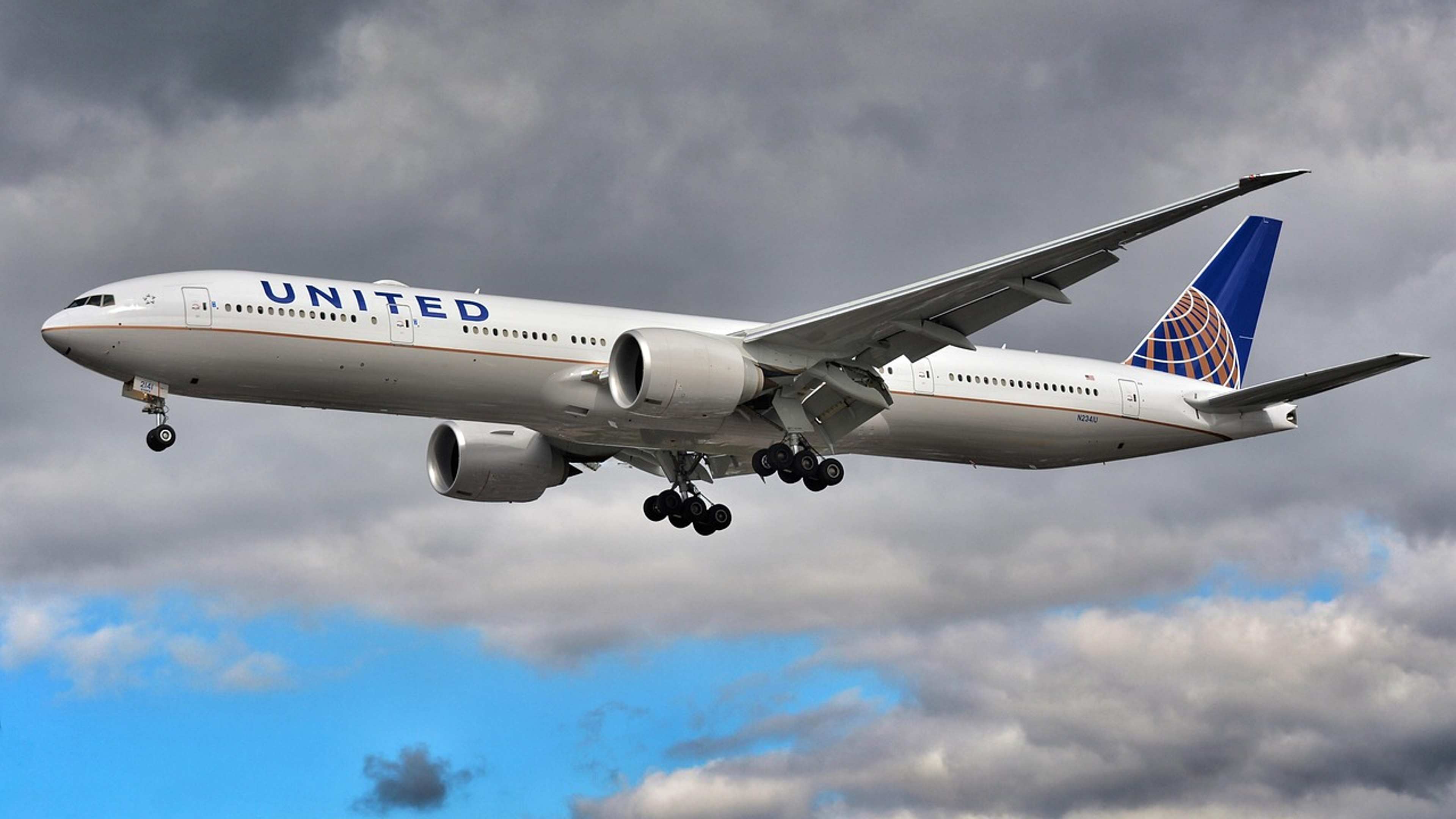
Travel costs in 2026 are near record highs, with airfares running nearly 15% above last year. That gap between what a seasoned traveller pays and what a first-timer pays is only getting wider.
Here’s what the insiders actually do, every single trip.
#25 – They Fly on the Right Day, Every Time
Most travellers pick flight days based on work schedules. Seasoned travellers pick them based on data.
For domestic flights, Tuesday is the cheapest day to depart, averaging 14% below Sunday fares. For international flights, Friday wins, saving up to 8% versus Sunday – the priciest day for both.
Most business travellers leave Monday and return Friday, while vacationers cram into weekend departures. Shift your schedule by just 24–48 hours and you can save hundreds on international fares, for zero extra effort.
But that’s nothing compared to what we found about #24…
#24 – They Book Inside the “Goldilocks Window”
Booking too early costs money. Booking too late costs more.
Travel experts call this the “Goldilocks window” – the sweet spot when cheap fares are most likely to appear. It runs three to seven months out for domestic flights, and four to ten months out for international routes.
Most people book when it’s convenient for them, not when it’s cheapest. Fares can occasionally drop closer to departure, but they’re far more likely to climb, so book the moment your schedule is locked in.
But that’s nothing compared to what we found about #23…
#23 – They Set Price Alerts and Never Manually Search Again
Refreshing flight search pages every morning is amateur hour.
Tools like Google Flights track fare drops automatically and fire alerts the moment prices move. Services like Going and Secret Flying hunt mistake fares and massive drops – a $1,200 flight to Europe can suddenly show up at $400.
The real trick: set alerts the moment you start thinking about a trip, not after you’ve decided. Early alerts catch the widest swings, and most travellers set them too late to catch the best dips.
But that’s nothing compared to what we found about #22…
#22 – They Rebook the Instant Prices Drop
Most people think booking a flight ends the job. Seasoned travellers know it’s just the beginning.
Here’s the biggest mistake most travellers make: assuming that once they book, they’re done. Almost every fare today, apart from basic economy, can be changed or cancelled without a penalty.
Keep watching the price alerts you set – if a better fare appears, cancel and rebook at the lower rate. Do this consistently and you can save hundreds per trip without taking on any extra risk.
But that’s nothing compared to what we found about #21…
#21 – They Never Touch the Airport Exchange Counter
Landing at a foreign airport and swapping cash at the first exchange booth is one of the most expensive habits in travel.
Airport exchange counters almost always carry the worst rates and the highest fees. Once you land, a bank ATM is usually your best bet for local currency.
Look around before you commit – exchanges in heavily touristed spots often charge steeper fees than ones just a few blocks away. A 5–10% markup on a $1,000 exchange is $50–$100 gone before you’ve even left the terminal.
But that’s nothing compared to what we found about #20…
#20 – They Always Pay in Local Currency
This one trips up even semi-experienced travellers. When a card reader abroad asks whether you’d like to pay in your home currency, always say no.
Choosing the dollar option usually triggers dynamic currency conversion, which almost always hands the merchant a better rate than you. Local currency, every time.
It takes one second to decline the conversion. Do it consistently and the savings add up fast on longer trips where transactions pile up.
But that’s nothing compared to what we found about #19…
#19 – They Carry a No-Fee Travel Card
Most standard credit cards charge a 2–3% foreign transaction fee on every single purchase abroad. A no-fee travel card wipes that out entirely.
The Wise debit card, for example, converts at the real mid-market exchange rate with minimal fees. It consistently beats traditional bank cards and airport currency counters.
One card swap. Zero ongoing effort. Real money saved every time you spend.
Fast Facts
- Foreign transaction fees typically range from 0% to 3% of each purchase, with the average card charging roughly 1.5%.
- Capital One and Discover are unique in having zero foreign transaction fees across all their credit cards.
- A 2025 WalletHub survey found that 32% of Americans do not know whether their credit card charges a foreign transaction fee.
- On a $3,000 international trip, even a 3% fee quietly adds about $90 in charges you never see coming.
But that’s nothing compared to what we found about #18…
#18 – They Use an eSIM Instead of Paying Roaming Fees
International roaming charges are a quiet budget killer most travellers accept without a fight.
eSIMs changed that – $10–25 gets you 10GB, versus roughly $10 a day for carrier roaming. If your phone supports eSIM (most models from 2020 onward do), there’s no reason to pay roaming in 2026.
This is one of the fastest-growing habits among frequent travellers, and it’s not even a sacrifice – eSIM data is often faster than patchy roaming signals. You land, activate, and you’re connected for a fraction of the cost.
But that’s nothing compared to what we found about #17…
#17 – They Pack Carry-On Only
Checked baggage fees stopped being a minor inconvenience years ago. They’re a full-blown travel tax now.
With budget carriers and basic economy fares everywhere, a free checked bag is no longer guaranteed, and some airlines charge the fee per leg, doubling it on connecting flights.
Sticking to carry-on only gets you through the airport faster and skips the fee entirely. Seasoned travellers treat packing light as a rule, not a challenge.
But that’s nothing compared to what we found about #16…
#16 – They Fly Into Secondary Airports
The airport everyone flies into is rarely the cheapest one. The one 45 minutes away often is.
Flying into a smaller regional airport instead of the major hub – think San Jose over San Francisco – can save serious money, plus cheaper car rentals on arrival.
The fare difference between a major hub and a secondary airport serving the same city can hit $100–$200 each way. Always check both before you commit.
But that’s nothing compared to what we found about #15…
#15 – They Pack Their Own Airport Snacks
We’ve all been there – starving at the airport, staring down a marked-up sandwich.
Packing your own food sidesteps the markup entirely. It’s healthier too, and guaranteed to beat anything sold past security.
It’s a small saving on its own. But it’s the compounding of habits like this one that separates a seasoned traveller’s total spend from everyone else’s.
But that’s nothing compared to what we found about #14…
#14 – They Bring a Reusable Water Bottle
Bring an empty bottle through security, then fill up at a fountain on the other side. Free hydration instead of an inflated terminal price.
Tourist-area drinks and snacks carry markups as high as 300% in many destinations. Bringing your own saves $5–8 a day – that’s $150–240 over a month-long trip.
Sounds trivial for one bottle. Multiply it across ten days for a family of four, and it isn’t trivial anymore.
But that’s nothing compared to what we found about #13…
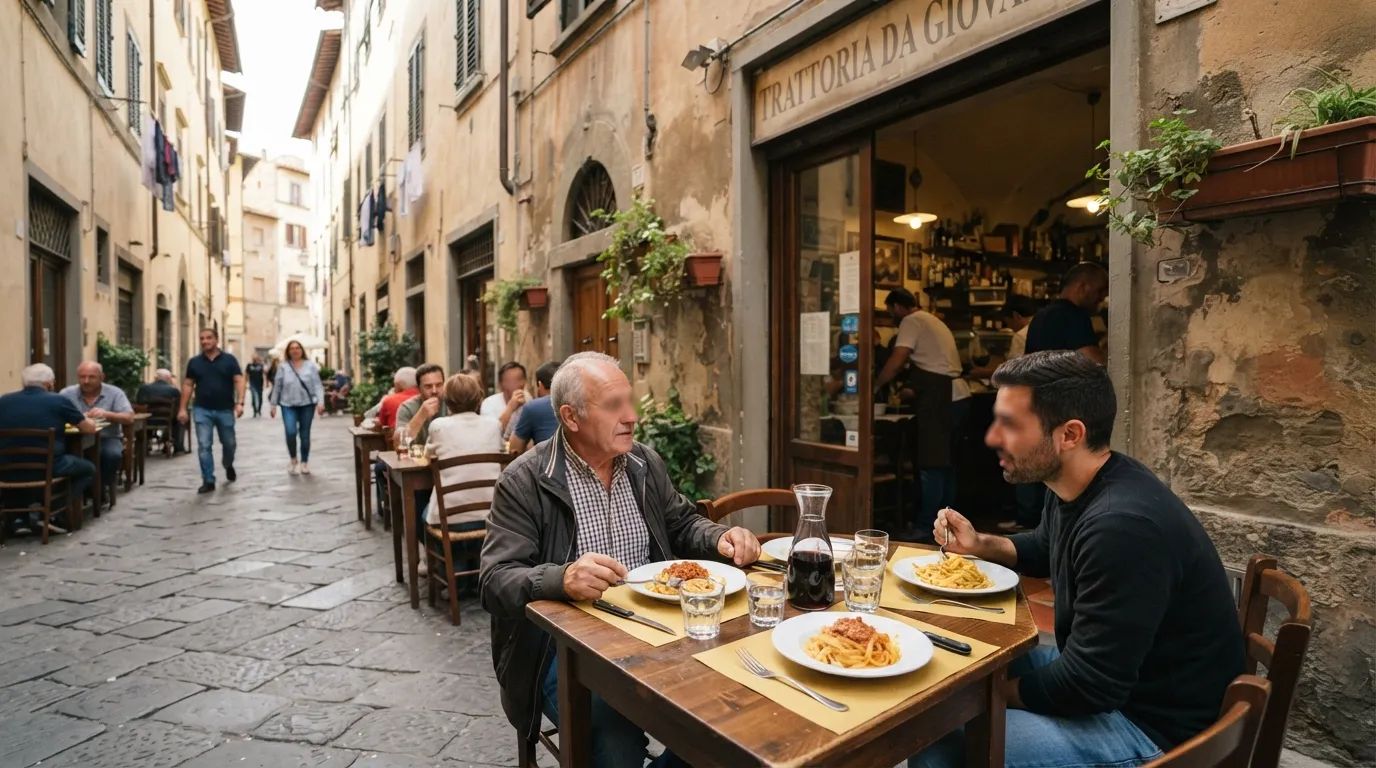
#13 – They Eat Two Blocks Away From the Tourist Zone
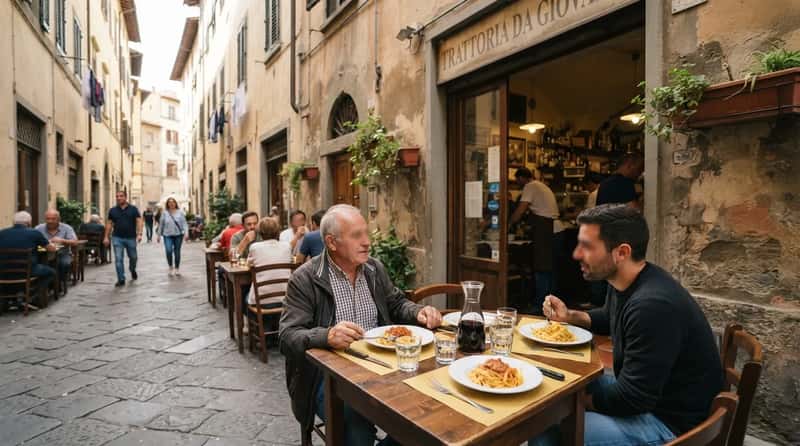
Every popular attraction has a restaurant ring around it built entirely on tourist prices. Seasoned travellers walk straight through it.
Food in tourist zones carries a 200–300% markup. Walk two blocks away and the same quality – usually better – costs a fraction as much.
Those tourist-facing restaurants survive on foot traffic, not flavour. Follow the people who work nearby at lunchtime, and you’ll eat better for half the price.
But that’s nothing compared to what we found about #12…
#12 – They Order Lunch, Not Dinner

Same restaurant. Same food. Wildly different price.
Lunch is typically 30–50% cheaper than dinner at the exact same place. Many restaurants, especially in Europe, run a set lunch menu that makes the dinner prices look absurd.
Quick Compare
- Lunch: Same kitchen, same menu, prices trimmed 30–50% versus the evening service.
- Dinner: Full à la carte pricing, plus premium markups on wine and dessert.
- Set lunch menus: Common across Europe – a starter, main, and drink bundled for one flat rate.
Seasoned travellers flip the script – big meal at lunch, lighter dinner. You get quieter service, more attention, and menus the evening crowd never sees.
But that’s nothing compared to what we found about #11…
#11 – They Buy a Multi-Day Transit Pass on Day One

Tapping in and out of transit individually is for tourists who haven’t done the math.
Most major cities sell unlimited transit passes for 3, 5, or 7 days, and the per-day cost almost always beats individual tickets. It also nudges you to explore more spontaneously.
Save the taxis and rideshares for the airport run with heavy luggage. For everyday movement, buses, metros, and trams get you there for a fraction of the price.
But that’s nothing compared to what we found about #10…
#10 – They Stay in Shoulder Season

Peak season is a premium tax wearing a holiday costume.
Shifting a trip to April–May or September–October – shoulder season for most destinations – typically saves 20–50% on hotels and 15–30% on flights. The weather is usually still excellent.
You’ll deal with fewer crowds and shorter lines everywhere you go. Many places are simply better this way – friendlier locals, shorter queues, and you actually feel like you’re somewhere instead of queuing for it.
But that’s nothing compared to what we found about #9…
#9 – They Book Hotels Early and Then Keep Watching

Thousands of hotels offer 14- or 21-day advance rates at 10–30% off standard pricing, just for booking early.
The move most travellers miss: book refundable, then keep watching the price. If it drops before arrival, cancel and rebook at the lower rate.
Hotel prices are more flexible than they look. Try calling the hotel directly and asking about discounts for students, government employees, or groups like AAA.
But that’s nothing compared to what we found about #8…
#8 – They Stay Just Outside the Tourist Centre

Accommodation right in the middle of the action is priced for people who never checked the map.
Rooms 2–3km from the tourist centre are dramatically cheaper, and with decent public transport, you’ll barely notice the difference. A 10-minute metro ride costs almost nothing next to a room facing the landmark itself.
For families or groups, a shared apartment often beats booking separate hotel rooms outright. Kitchen access alone changes the math on every single meal.
But that’s nothing compared to what we found about #7…
#7 – They Join Hotel Loyalty Programmes (for Free)

Hotel loyalty programmes are usually free to join, and most travellers skip them anyway, thinking they only matter for business road warriors. Wrong.
Even occasional travellers rack up points faster than they realise once stays are consolidated under one programme. Free night certificates, room upgrades, and early check-in cost nothing to unlock.
Worth Knowing
- A hotel loyalty program is a free membership that rewards you with points for every dollar you spend at a hotel brand, and joining costs nothing.
- Members also get lower “member rates” – usually 2% to 5% below public prices – on top of the points.
- Splitting nights across three chains gets you low-tier status everywhere and real benefits nowhere – pick one programme and stick with it.
- IHG lets loyal guests book a fourth award night free, a better value than the fifth-night-free policies most other chains offer.
The most expensive mistake in loyalty travel is signing up after you’ve already stayed somewhere. By then, the points are gone for good.
But that’s nothing compared to what we found about #6…
#6 – They Slow Down the Itinerary

The faster you move between destinations, the more you spend, full stop.
Moving every day stacks up transport costs, new accommodation fees, and constant eating out. Every city change costs $20–$80 per leg, plus last-minute accommodation premiums.
Stay five to seven days in one place instead of two, and weekly accommodation discounts kick in, typically 15–25% off. You also get time to find the good local restaurants instead of guessing.
But that’s nothing compared to what we found about #5…
#5 – They Squeeze Points and Miles Out of Every Dollar
Paying for everyday expenses without earning travel points is money left on the table.
Credit card points are usually worth the most when redeemed for travel, not cash back. Since points can’t be invested like cash, spend them down before reaching for your wallet.
Picking a card that matches your actual travel habits gets you the most value. The gap between someone who earns points on everything and someone who doesn’t is often a free flight every year or two.
But that’s nothing compared to what we found about #4…
#4 – They Mix Airlines on the Same Trip
Most booking platforms push round-trip fares on a single carrier. Seasoned travellers ignore that entirely.
Booking a one-way outbound with one airline and a separate one-way return with another is a well-worn hack, because the cheapest outbound and the cheapest return rarely belong to the same carrier.
Round-trip searches default to one airline, which hides this completely. Search each leg separately, especially across budget carriers, and cheaper combinations show up almost every time.
But that’s nothing compared to what we found about #3…
#3 – They Negotiate the Hotel Rate Directly
The price on the booking platform is not always the final price.
Calling a hotel directly and asking about rates – or discounts for specific groups – can unlock prices below what’s listed online. Hotels avoid a 15–25% commission on direct bookings and will often share part of that saving with someone who simply asks.
This works best at independent hotels and boutique properties. Chains are tougher, but not impossible, and the worst they can say is no.
But that’s nothing compared to what we found about #2…
#2 – They Book Attractions in Advance and Skip the Queue Tax
Showing up at a major attraction without a booking is one of the most expensive mistakes a traveller makes, and not just in money.
Buying tickets in advance for spots like the Louvre or Sagrada Família usually means a cheaper price and no queue at all. The skip-the-line services sold outside those attractions charge a heavy premium for something advance booking already gives you for free.
Many cities also run free food tastings at farmers markets and food halls, especially on weekends. Seasoned travellers always check what’s free before spending on entertainment.
But none of that compares to what we found at #1…
#1 – They Treat Every Small Saving as a System, Not a One-Off
Here’s what actually separates a seasoned traveller from everyone else: they don’t treat these as individual tricks. They run them as a system, applied automatically, every single trip.
The best travel hacks aren’t loopholes – they’re habits that quietly save real money and real time, trip after trip.
For most international trips, three habits move the needle most.
Why It Stands Out
- Flying midweek during shoulder season instead of peak weekends.
- Choosing apartment-style stays over hotel rooms on longer trips.
- Using local transit and walking instead of taxis and rideshares.
Combined, they usually beat any single discount code.
The compounding effect is the whole point. A traveller who applies even 10 of these 25 habits consistently can shave 30–40% off a typical trip’s cost, without giving up a single worthwhile experience.
The first-timer pays for lessons. The seasoned traveller stopped paying for those lessons years ago.
The Bottom Line

Experienced travellers aren’t luckier. They’re running a tighter system.
Flying on the right day, staying just outside the tourist zone, ditching checked bags, paying in local currency, and booking attractions ahead – these are the moves that quietly separate a smart trip from an expensive one. None of it requires insider access.
It just requires doing it every time, not occasionally. The gap between what a savvy traveller pays and what a first-timer pays keeps growing as fees multiply and pricing gets more dynamic.
Start applying these now. Got one that saves you serious money every trip? Drop it below.