You’ve probably never exchanged a single word with the strangers around you in a TSA line, and yet by the time you reach the scanner, you’ve already formed an opinion about at least three of them. Nobody admits it out loud, but airport queues are one of the most quietly judgmental places in modern life.
Some habits earn a nod of respect from total strangers who will never see you again. Others make an entire line groan in unison without anyone saying a word. The gap between the two is smaller than you’d think, and it usually comes down to one small choice made in a matter of seconds.
#25 – Rebooking a Flight Out Loud on Speakerphone
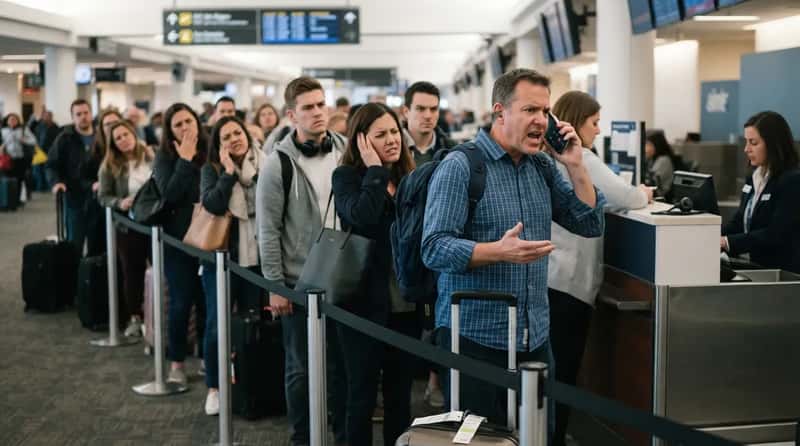
Nothing travels faster through a queue than someone loudly negotiating with an airline agent on speakerphone. Within a minute, twelve strangers know the flight number, the connecting city, and this traveler’s very detailed opinion of the airline’s customer service department.
People behind this scene tend to remember it for the wrong reasons. It’s rarely malicious, just oblivious, and it instantly signals to everyone nearby that this particular line is about to move slower than expected.
#24 – Building a Carry-On Fortress Before the Bins Even Load
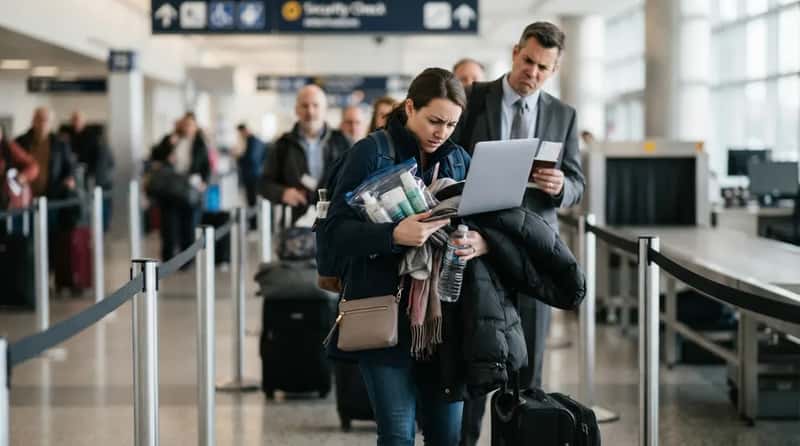
Some travelers start unpacking laptops, liquids, and jackets the second they join the queue, long before the conveyor belt is even in sight. It looks efficient at first glance, but it usually creates a small, precarious pile of loose items balanced across two forearms.
Regular flyers spot this instantly because it almost never goes as planned. One dropped water bottle or one unzipped pocket, and the whole carefully arranged system collapses in front of everyone waiting behind.
#23 – Wearing Every Metal Accessory Possible Through Security
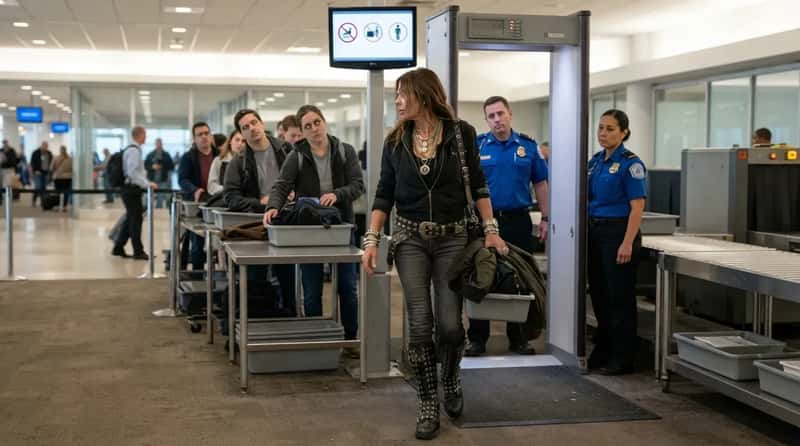
Belt buckles, layered necklaces, chunky watches, and boots full of metal eyelets are basically a guaranteed alarm trigger, and seasoned travelers spot this outfit choice from several people back. It’s one of the most predictable slowdowns in the entire security process, right up there with liquids in the wrong bag.
The irony is that most frequent flyers strip down to the bare minimum before they even reach the scanner. Everyone else in line quietly notices who learned that lesson the easy way, and who’s about to learn it the hard way.
#22 – Squinting at a Boarding Pass Like It’s Foreign Technology
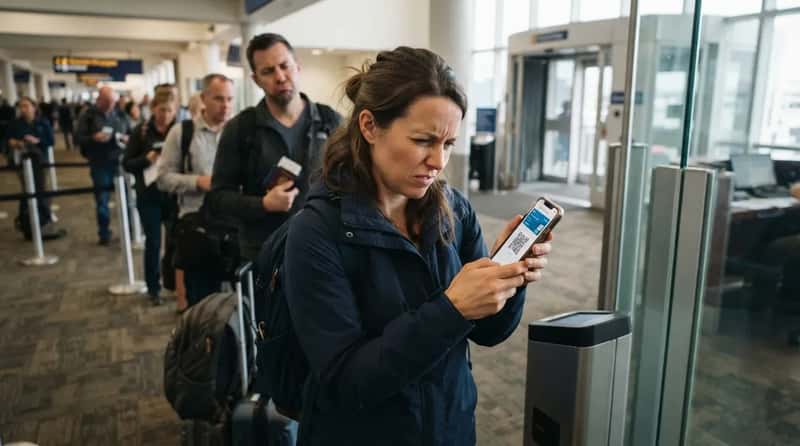
There’s a specific kind of traveler who stares at their phone screen, flips it sideways, and squints at the QR code like they’ve never seen one before in their life. It’s a small moment, but it’s noticeable to everyone waiting behind them to scan and move along.
This hesitation usually isn’t about tech confusion at all. It’s more often nerves, unfamiliarity with a specific airline’s app, or simply not bothering to check the boarding pass until the very last second.
#21 – Letting a Toddler Wander Near the Moving Conveyor Belt
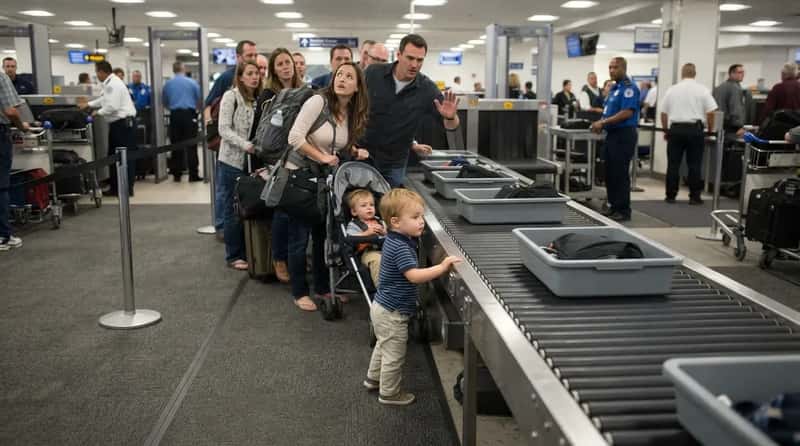
Parents traveling with young kids often have their hands completely full, and a toddler wandering near moving bins draws instant, involuntary attention from everyone nearby. It’s less about judgment and more about a wave of shared nervous energy running through the whole line.
Most people instinctively become extra alert in this moment, quietly ready to step in if a small hand gets too close to the belt. It’s one of the rare queue situations where total strangers work together without anyone saying a single word out loud.
#20 – Arguing That a Snack Doesn’t Count as a Liquid
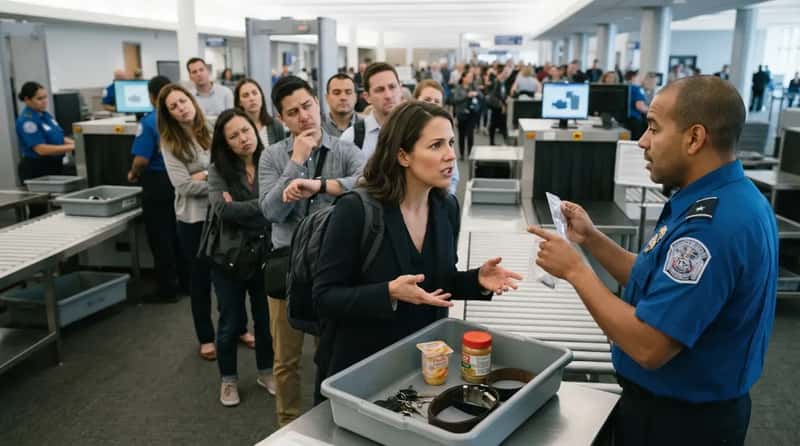
Yogurt, peanut butter, and even certain fruit cups spark genuine debate at the security bin, and the traveler insisting their snack “isn’t really a liquid” becomes an instant spectacle for the whole line. It’s oddly one of the most common holdups at any checkpoint in the country.
Under current TSA guidelines, anything spreadable or pourable falls under the same 3.4-ounce liquid rule as drinks and lotions. The travelers behind this debate almost always know exactly how it’s going to end before the agent even finishes the sentence.
Fast Facts
- Liquids, gels, and pastes must be 3.4 ounces or less per container
- All containers need to fit inside one quart-size, clear zip-top bag
- Each traveler is allowed just one liquids bag through the checkpoint
- Spreadable foods like peanut butter and yogurt count under the same rule
#19 – Sprinting Forward Because “My Flight Is Boarding”
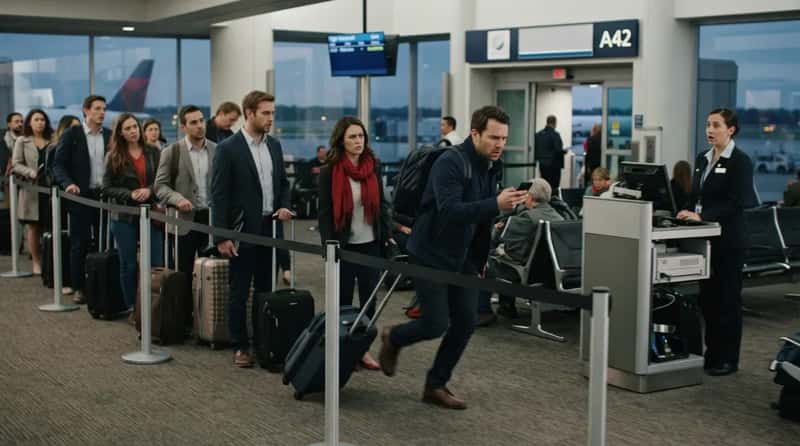
Every queue has witnessed this exact moment: someone weaving toward the front, phone in hand, insisting their flight is boarding in ten minutes. Sometimes it’s completely true. Just as often, it’s an initial boarding call from forty-five minutes earlier that hasn’t reached final boarding yet.
Gate agents and fellow travelers have grown skeptical of this move simply because it happens so often. The people behind them will usually let it slide once, but a full line rarely believes the same urgency twice in a single wait.
#18 – Turning Shoe Removal Into a One-Foot Balancing Act
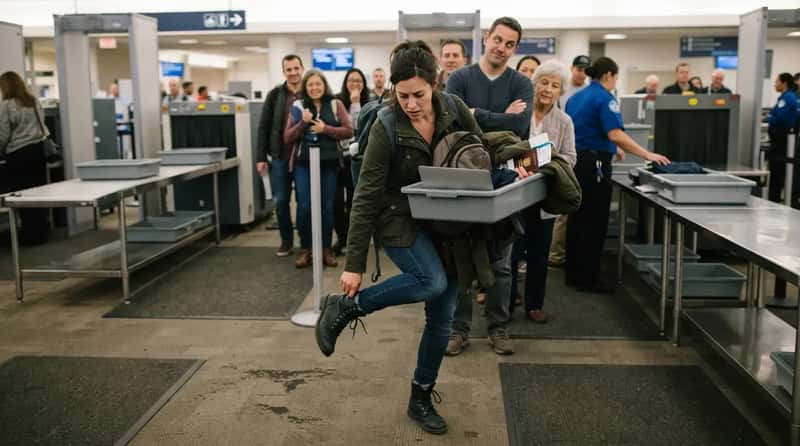
A small percentage of travelers treat the shoe-removal step like an Olympic event, hopping on one foot while juggling a bin, a laptop, and a boarding pass all at once. It’s chaotic, sure, but it’s also weirdly entertaining for everyone watching from a few feet back.
Most seasoned flyers slip into shoes that come off in two seconds specifically to skip this whole scene. The line behind them can tell almost instantly who packed for comfort and who packed for a night out.
#17 – Treating the Queue Like a Personal Phone Booth
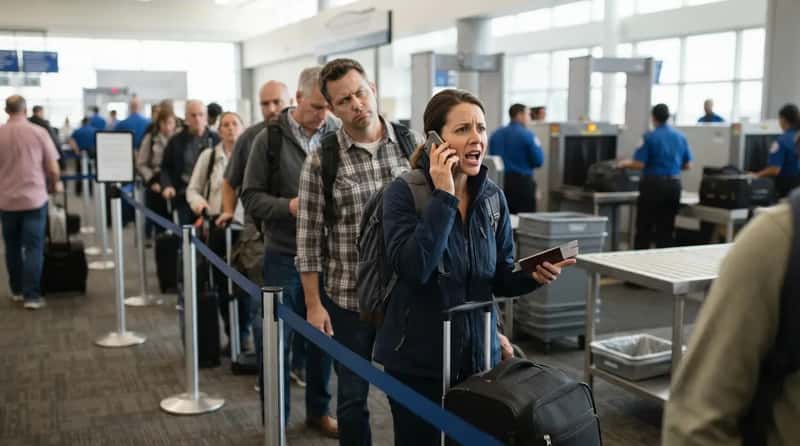
Loud phone calls about unrelated personal drama, arguments with a partner, or work calls full of sensitive details all become public property in a security line. Nobody asked to hear any of it, yet everybody does, whether they want to or not.
This habit tends to stick in people’s memory longer than almost anything else on this list. Strangers rarely forget the specific details of someone else’s personal life overheard mid-security-line, and they will absolutely repeat it to a friend later.
#16 – Not Noticing the Line Just Split Into Two
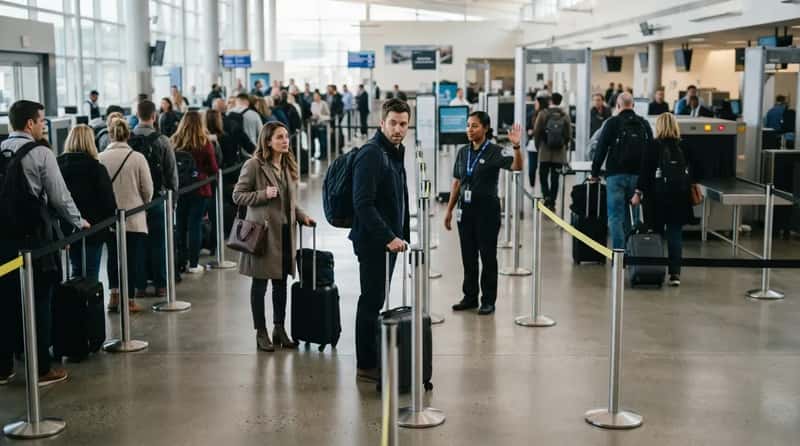
Modern checkpoints often split into multiple lanes without much warning, and there’s always one traveler who doesn’t notice, leaving an awkward gap that confuses everyone stacked up behind them. It creates a small ripple of hesitation that moves down the entire queue like a slow wave.
Airport staff have gotten used to gently redirecting these travelers with a wave or a quick call-out. Everyone else just quietly shifts into the open lane and keeps moving, no complaint necessary.
#15 – Bringing a CPAP Machine Without Prepping It First
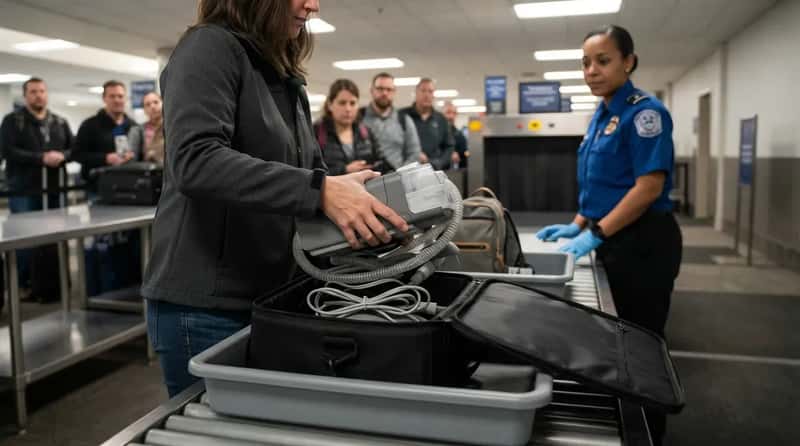
Medical equipment like CPAP machines requires separate screening, and travelers who haven’t prepared for that extra step can unintentionally slow the whole line while agents sort through cords and tubing. It’s nobody’s fault, but it’s absolutely noticeable to everyone waiting.
Per TSA’s own published guidance, medical devices are permitted through security but often need additional inspection beyond the standard X-ray. Regular travelers recognize this instantly and tend to wait patiently, understanding it’s a real necessity rather than an inconvenience someone chose.
Worth Knowing
- CPAP machines and other medical devices don’t count toward carry-on limits
- Machines usually need to come out of their case for X-ray screening
- TSA offers a free notification card travelers can show agents in advance
- Extra screening for medical equipment is standard, not a sign of a problem
#14 – Drifting Into Priority Boarding on a Basic Economy Ticket
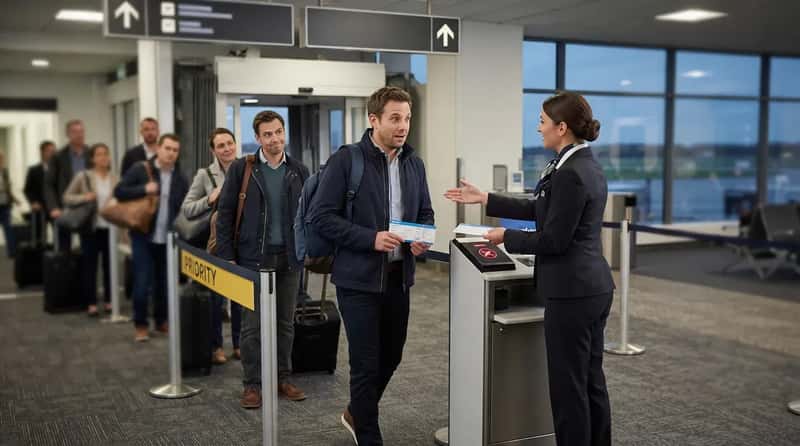
Some travelers casually wander toward the priority boarding line despite holding a bare-bones economy ticket, quietly hoping nobody checks too closely. Gate agents almost always catch it anyway, and the people standing behind absolutely notice the polite redirect back to the regular line.
This move rarely works, and it usually creates one distinctly awkward pause. Everyone behind them silently clocks the exact moment the boarding pass gets scanned, rejected, and handed back.
#13 – Repacking an Entire Suitcase Right at the X-Ray Belt
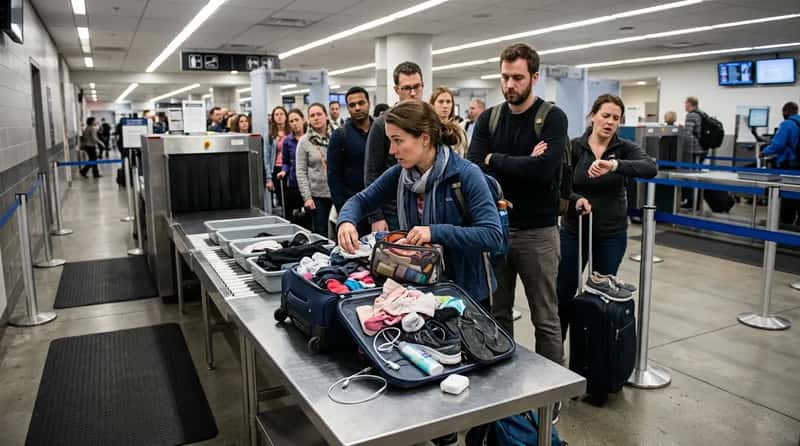
Few things stall a security line faster than someone deciding this is the moment to fully reorganize their suitcase. Shoes, chargers, and half-folded clothes end up scattered across the table while an entire line stands there watching it happen.
Frequent flyers have learned to pack with intention specifically to avoid ever becoming this person. The travelers stuck behind a full suitcase reorganization tend to visibly shift their weight from foot to foot, arms crossed, patience thinning by the second.
#12 – Testing the Personal Item Size Limit and Losing
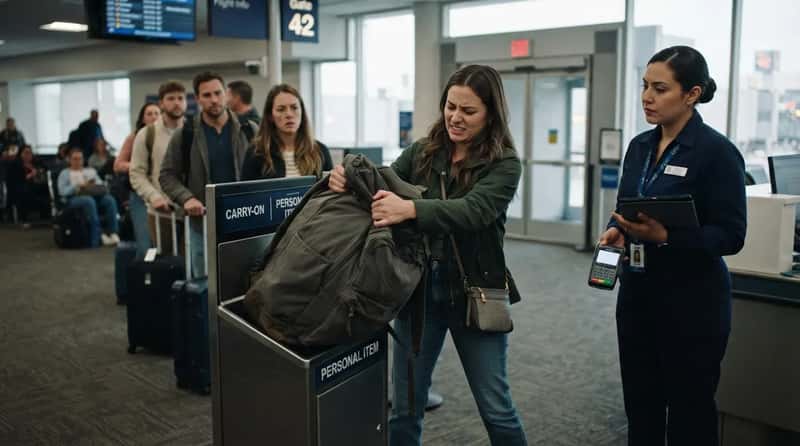
Airlines have tightened personal item enforcement noticeably over the past couple of years, and travelers pushing the limit with an oversized tote or backpack often get flagged right at the gate. Everyone in line behind them watches the size-checker moment unfold with unmistakable interest.
Budget carriers in particular have gotten far stricter about this recently, sometimes charging steep fees on the spot. It’s become one of the more common flashpoints of visible tension between travelers and gate staff in 2024 and 2025.
Quick Compare
- Typical personal item limit: around 18 x 14 x 8 inches
- Typical carry-on limit: around 22 x 14 x 9 inches
- Budget carriers often measure bags at the gate, not just the counter
- Oversized bags can trigger a fee on the spot, paid before boarding
#11 – Standing Close Enough to Breathe Down Someone’s Neck
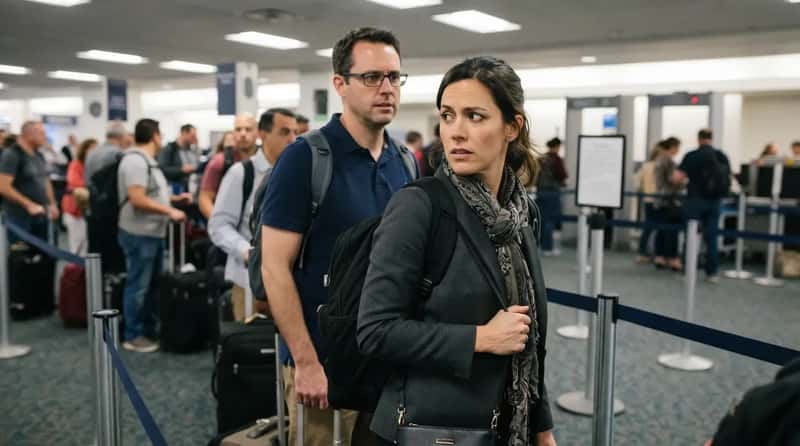
Personal space etiquette in queues varies by culture and personality, but standing too close is one of the fastest ways to make the person ahead visibly uncomfortable. It’s subtle, but everyone nearby picks up on it almost immediately.
This habit usually comes from anxiety about losing a spot in line rather than actual rudeness. Still, the person being crowded almost always shifts, turns slightly, or glances back at least once before saying anything.
#10 – Wearing Noise-Cancelling Headphones and Missing Every Announcement
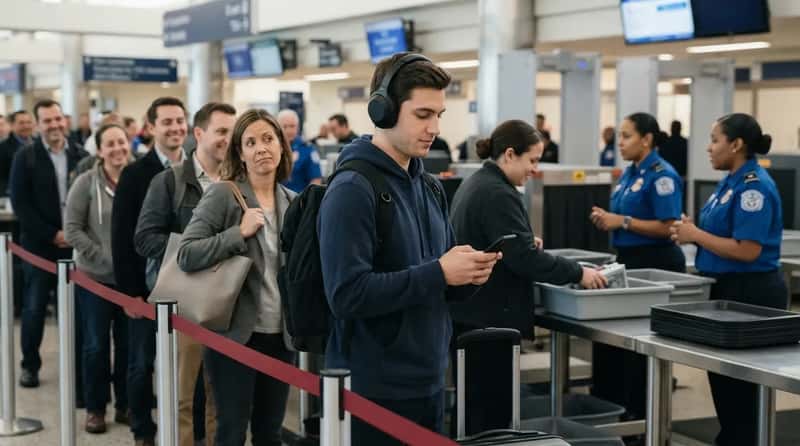
There’s always one traveler completely zoned out, headphones on, missing gate changes, boarding calls, or even a TSA officer speaking directly to their face. It creates a small comedic pause that everyone nearby quietly notices and enjoys.
This has become far more common as noise-cancelling technology has gotten dramatically better in recent years. The moment someone finally taps their shoulder to get their attention is one of the most universally recognizable queue moments in modern travel.
#9 – Waving a Group of Six Forward “Just to Say Hi”
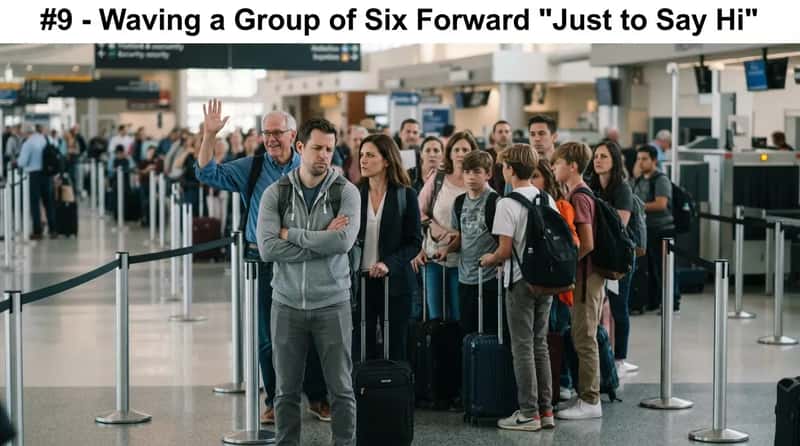
Few things frustrate a queue faster than watching someone wave a large group forward under the guise of a quick hello, only for the entire group to stay put and act like they belong there. It’s one of the most universally disliked moves in any airport line.
People behind this scene tend to exchange knowing glances or quiet sighs without a single word spoken. It rarely turns into a confrontation, but the irritation is almost always written plainly across several faces at once.
#8 – Traveling With a Pet Carrier and Not Knowing the Rules
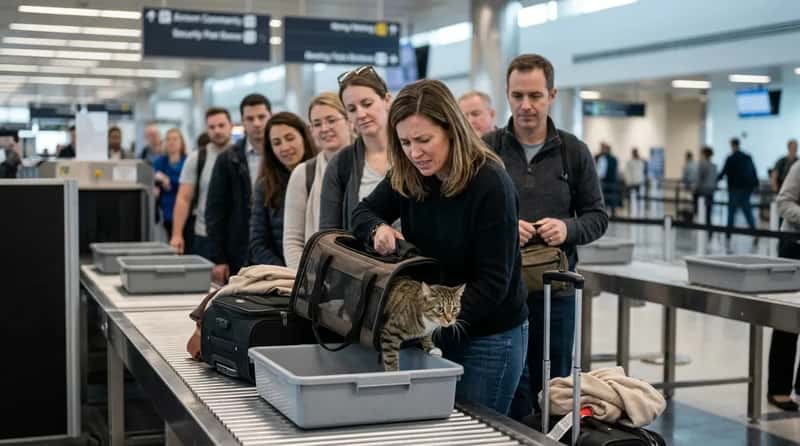
Airlines have specific requirements for pet carriers going through security, including removing the animal for screening in most cases. Travelers unfamiliar with this process often cause a brief, chaotic pause while trying to calm a nervous, squirming pet mid-line.
Most people standing behind a pet owner soften instantly, offering patience they might not extend to anyone else. It’s one of the rare queue disruptions that draws genuine sympathy instead of frustration from the whole line.
At a Glance
- Pets in the cabin must stay in an approved carrier that fits under the seat
- Animals typically need to come out of the carrier for X-ray screening
- Airlines usually cap the number of pets allowed in the cabin per flight
- Emotional support animals no longer get special onboard access under current DOT rules
#7 – Refusing to Take Off a Jacket Even After Being Asked Twice
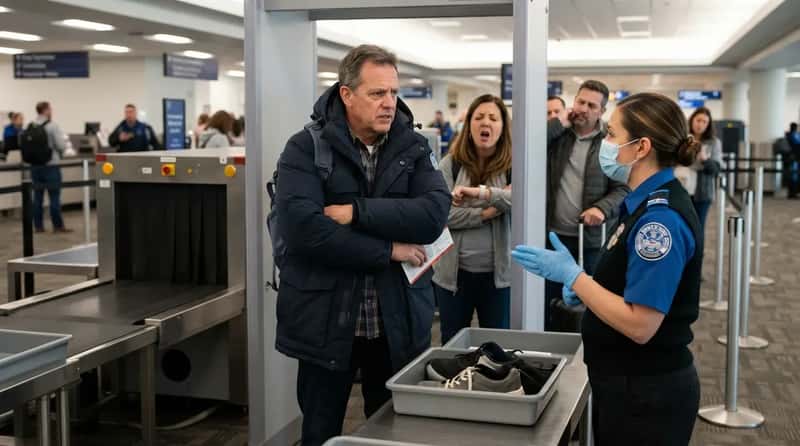
Bulky jackets almost always trigger secondary screening, yet some travelers resist taking them off even after being asked directly. It typically leads to a longer, more thorough pat-down that holds up everyone stacked up behind them.
Seasoned travelers know to strip down layers before they even reach the scanner specifically to dodge this exact scenario. Everyone caught behind a jacket standoff tends to visibly brace for a longer wait the second it starts.
#6 – Refreshing a Boarding Time That Hasn’t Changed in an Hour
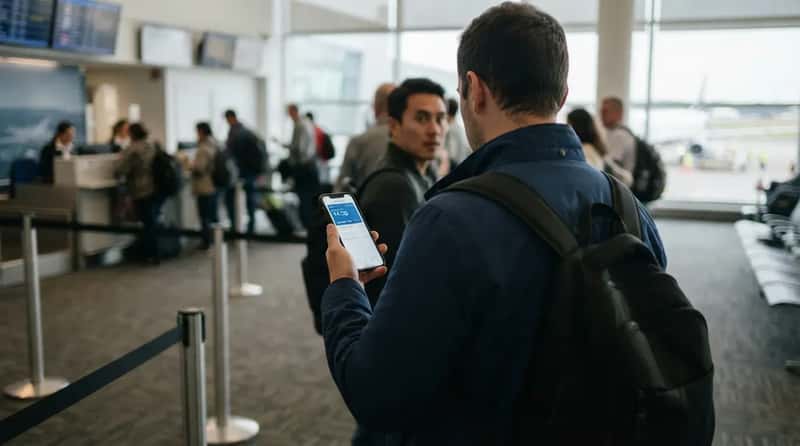
Anxiety shows up in small, repetitive habits, and constantly refreshing a flight status app while standing completely still is one of the most common ones out there. It’s harmless, but it’s noticeable to anyone standing close enough to glimpse the screen over and over.
This habit has only grown alongside real-time flight tracking becoming standard on nearly every phone. The person behind them usually recognizes the nervous energy immediately, having almost certainly done the exact same thing themselves on a different flight.
#5 – Narrating the Line’s Length to No One in Particular
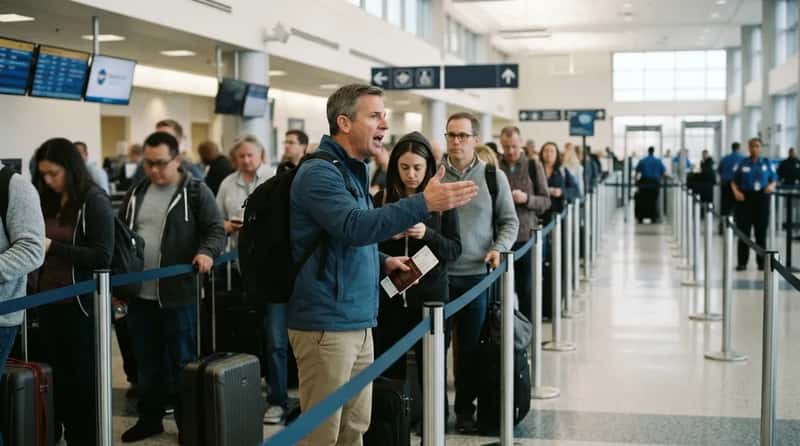
Every long line has at least one traveler loudly narrating their frustration, commenting on wait times as if sheer complaint volume might summon a faster process. It rarely changes a single thing, but it absolutely sets a mood for everyone within earshot.
Other travelers usually respond with silence rather than agreement, letting the comment die on its own. Most people in a slow-moving line would rather wait quietly than add more tension to an already frustrating morning.
#4 – Riding Out a Toddler Meltdown Without Panic or Apology
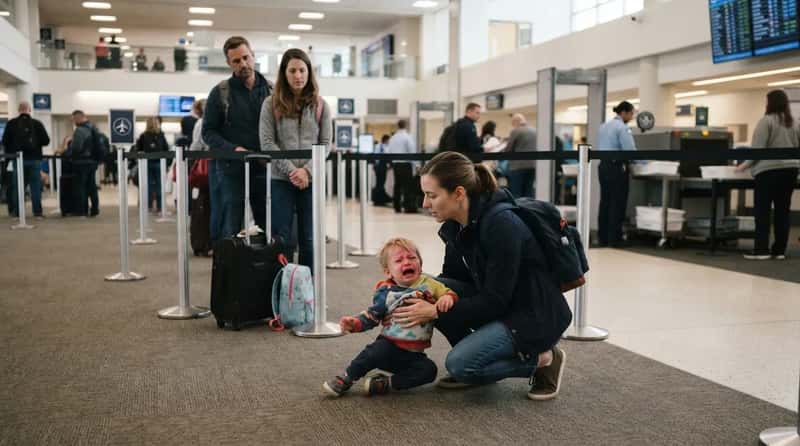
Traveling with an overtired child is one of the most universally understood struggles in any airport, and parents who calmly ride out a full meltdown often earn quiet respect instead of judgment. It’s a small moment, but it speaks volumes to everyone watching.
Most experienced travelers have either lived this exact moment themselves or watched it happen enough times to feel real empathy instead of annoyance. The line behind a calm, unbothered parent tends to visibly relax rather than tense up.
#3 – Quietly Catching a Stranger’s Dropped Passport
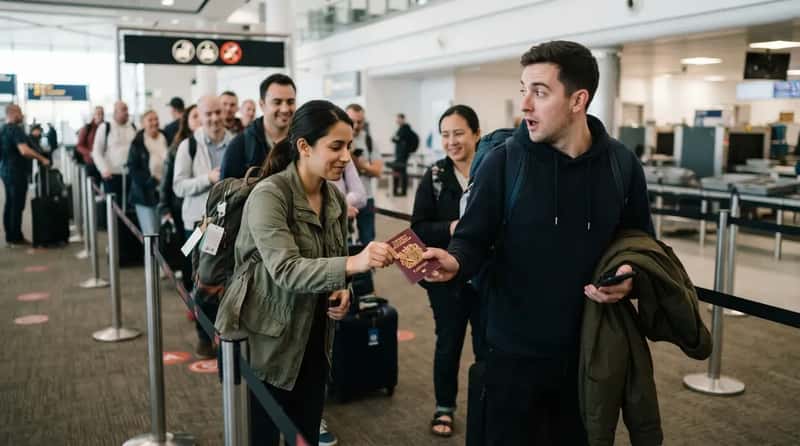
Every so often, someone drops a passport, boarding pass, or phone, and a nearby stranger scoops it up before it gets stepped on or left behind for good. It’s a tiny gesture, but it stands out sharply against the usual low hum of queue tension.
These small moments tend to shift the entire mood of a line for several minutes afterward, sometimes longer. People behind a small act of kindness often become noticeably friendlier to each other for the rest of the wait, as if permission had quietly been granted.
I’ve learned that people will forget what you said, people will forget what you did, but people will never forget how you made them feel.
Maya Angelou
#2 – Reading a TSA Agent’s Badge and Using Their Name to Say Thanks
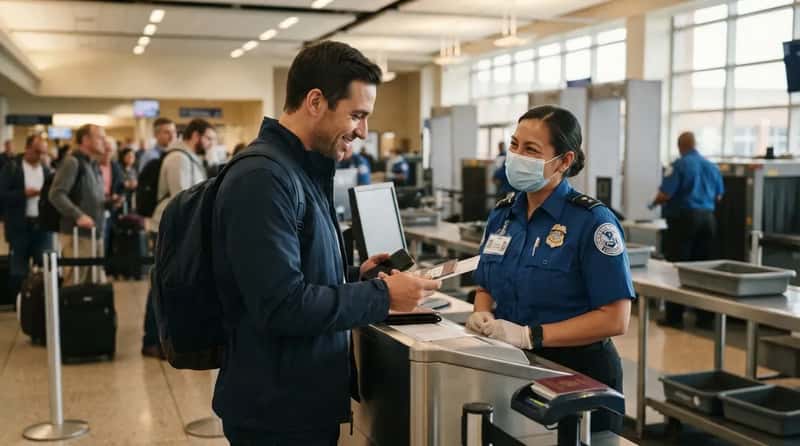
It’s a small habit, but travelers who glance at a TSA agent’s badge and use their actual name while saying thank you stand out immediately. It’s such a rare gesture that agents often visibly react to it, sometimes with a genuine smile after a long shift.
This tiny moment of recognition tends to soften the entire mood of an otherwise tense checkpoint. Everyone standing behind that interaction notices the shift in energy, even if they couldn’t quite explain why it suddenly felt different.
#1 – Staying Completely Calm During a Random Additional Screening
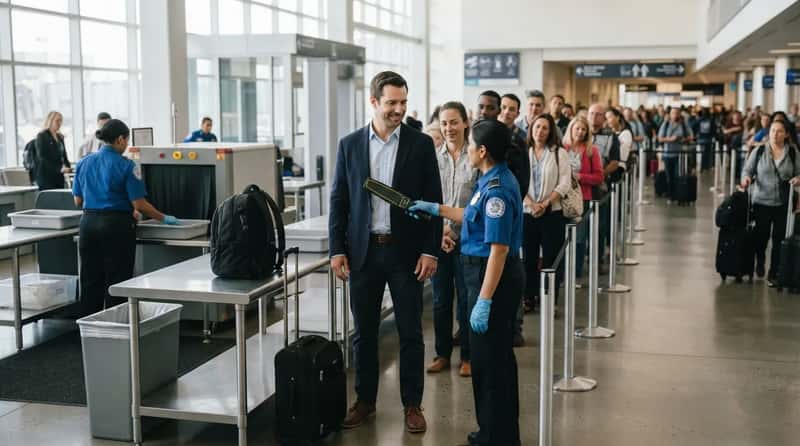
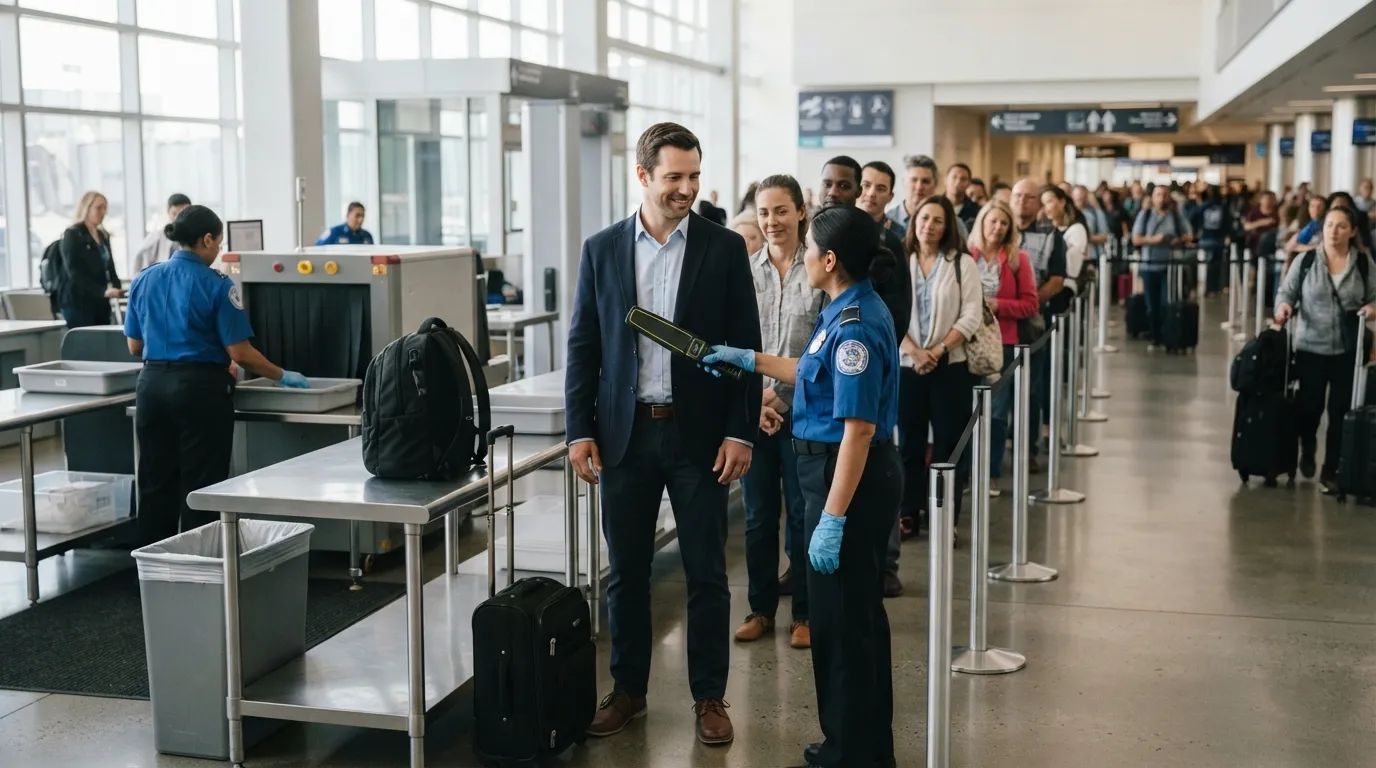
Getting pulled aside for extra screening can feel embarrassing or unfair, but travelers who handle it with visible patience and zero attitude leave a lasting impression on everyone watching from the line. It’s one of the most quietly respected reactions any queue will ever witness.
This calm response almost always speeds up the entire process for both the traveler and the agent involved. People behind a smoothly handled extra screening tend to relax immediately, sensing the line is finally about to move again.
Airport queues reveal more about human behavior than almost any other public space in modern life. Patience, panic, kindness, and frustration all show up within a few feet of strangers who will likely never cross paths again.
What separates a smooth line from a miserable one usually isn’t the airport, the airline, or even the TSA. It’s the small, human choices made by the people standing in it, one bin, one boarding pass, one deep breath at a time.