Most new RVers assume campground etiquette starts and ends with the quiet-hours sign posted at check-in. It doesn’t. The rules that actually matter – the ones that separate a welcomed neighbor from “that camper” everyone whispers about at the dump station – are almost never written down anywhere.
Seasoned full-timers learn these the hard way, usually after an awkward run-in with a neighbor or a pointed knock from a camp host at 6 a.m. Here’s what actually keeps a campground peaceful after dark, straight from the people who’ve been living it for years.
#26 – Cutting Through a Neighbor’s Site Gets You “The Look” Every Time
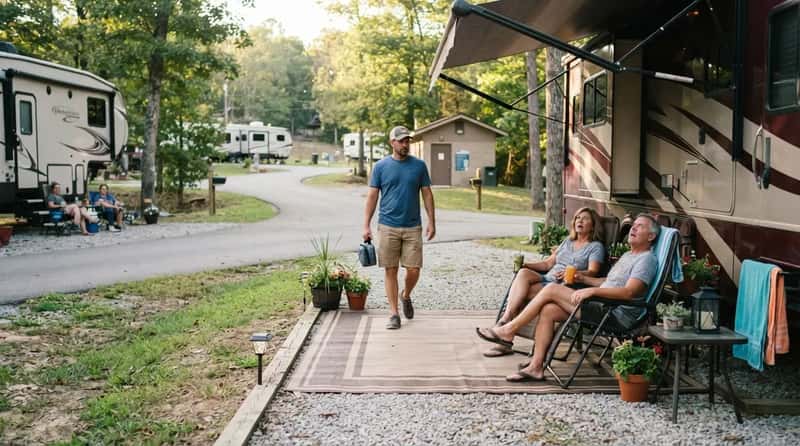
Walking across someone else’s site to shave thirty seconds off your walk to the bathroom feels harmless, but it isn’t. Each campsite functions as someone’s temporary front yard, a place to relax, eat dinner, or just enjoy some quiet. Most people who cut through don’t mean any harm.
Campground staff see it constantly: guests treat the space between rigs like a public sidewalk, never realizing they just walked through someone’s outdoor living room. Staying on the road or a marked path costs you almost nothing. Skipping it costs you a reputation you won’t even know you have.
#25 – That “Empty” Site Might Already Belong to Someone
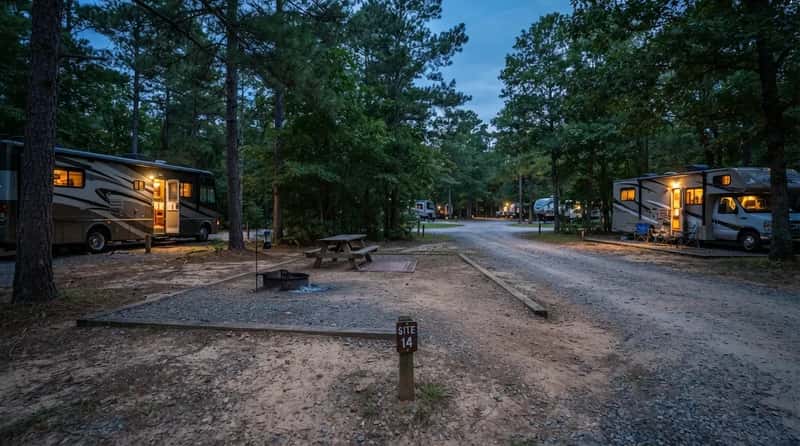
An open spot doesn’t always mean an open spot. Plenty of RVers travel in Class B or C rigs with no separate tow vehicle, so a grocery run or sightseeing trip means taking the whole RV with them. The site looks abandoned, but it’s paid for and very much occupied.
Rolling in at 9 p.m. to find your reserved spot blocked by someone else’s truck isn’t just annoying – it feels like a small betrayal after a long driving day. The fix is simple: if you need overflow parking, ask the campground office instead of assuming a “vacant” site is up for grabs.
#24 – Quiet Hours Start Earlier Than the Sign Says
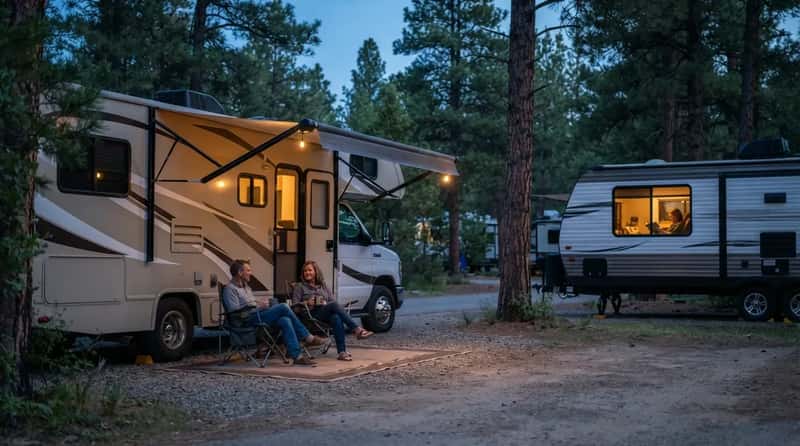
Most campgrounds post quiet hours somewhere between 10 p.m. and 8 a.m., but the truth is you can become the noisy neighbor long before those hours officially begin. RV walls are notoriously thin, and ordinary conversation carries much farther than people expect.
A normal-volume chat on your patio might mean your neighbor is catching every word of your podcast instead of the crickets they came for. Seasoned campers start winding things down well before the posted cutoff, not exactly at it, because by then the damage is already done.
#23 – The Generator Rule Nobody Reads Until It’s Too Late
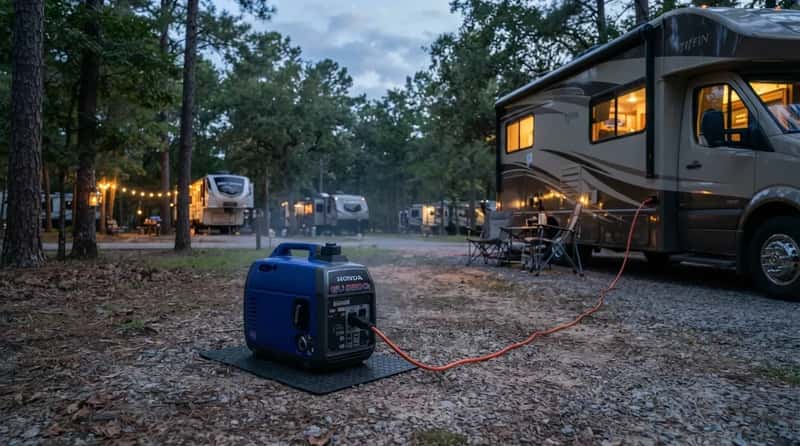
Generator etiquette trips up more newcomers than almost anything else on this list. Policies vary by land manager, but the most common window runs from about 8 a.m. to 8 p.m., with some parks loosening that to 7 a.m.-10 p.m. and others tightening it to 9 a.m.-7 p.m.
Distance matters as much as timing. A generator that reads a quiet 55 decibels at five feet can still hit 45 to 50 decibels thirty feet away, so moving it further from neighboring rigs makes a real difference. Veteran RVers shut theirs off a few minutes early rather than cutting it right at the deadline.
Fast Facts
- Typical generator hours run 8 a.m.–8 p.m., though some parks allow 7 a.m.–10 p.m. and others limit it to 9 a.m.–7 p.m.
- A quiet generator reads about 55 decibels at five feet away.
- That same unit can still hit 45-50 decibels thirty feet out.
- Shutting down a few minutes early beats cutting it exactly at the deadline.
#22 – “My Dog Is Friendly” Doesn’t Mean Everyone Else Trusts It
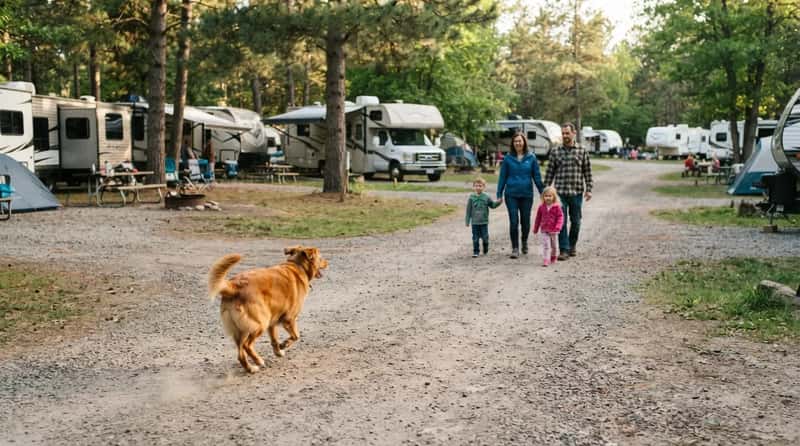
Leash violations top nearly every list of campground complaints for a reason. It’s the single most common etiquette breach experienced campers see, and almost every campground has a leash rule posted somewhere near the entrance.
The problem isn’t the rule – it’s the excuse. Owners convinced their dog is somehow the exception ignore it constantly, but nobody else at the campground knows that story. A strange dog sprinting toward a family with small kids doesn’t read as friendly. It reads as a threat, every single time.
#21 – High Beams at Midnight Turn You Into Enemy Number One
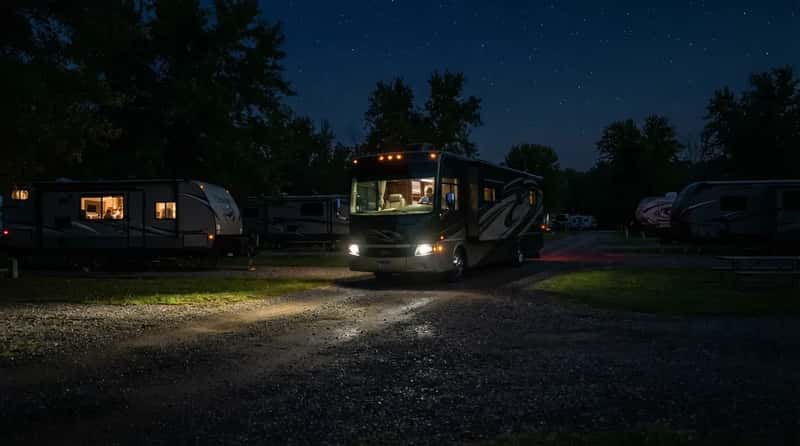
Arriving after dark is unavoidable sometimes, but how you handle it matters more than most drivers realize. Bright, unshielded headlights spill straight into neighboring rigs and wash out the stars many campers came to see in the first place.
Smart late arrivals dim everything down before pulling in – low beams, a soft red headlamp for navigating, quiet doors, and setup saved for morning. It takes ten extra minutes and saves an entire campground’s worth of goodwill you’ll never know you needed.
#20 – Slamming Compartment Doors at 5 A.M. Ends Friendships
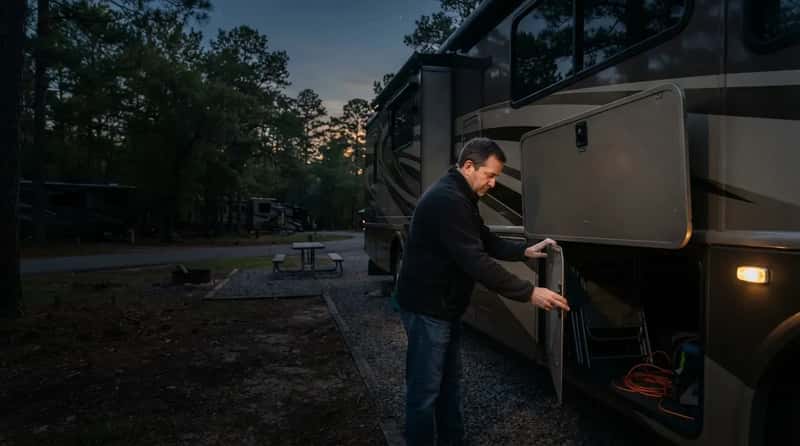
Early departures are just as disruptive as late arrivals, maybe more so, because nobody expects to be woken by a stranger’s toolbox. Packing up 99% of camp the night before avoids slamming compartment doors at dawn, something your neighbors will absolutely notice.
The same courtesy applies on the way out as it does on the way in: no slamming doors, no blaring headlights into someone’s window, no generator unless it’s genuinely necessary. A quiet exit matters just as much as a quiet arrival.
#19 – The Bathhouse Test That Reveals Who You Really Are
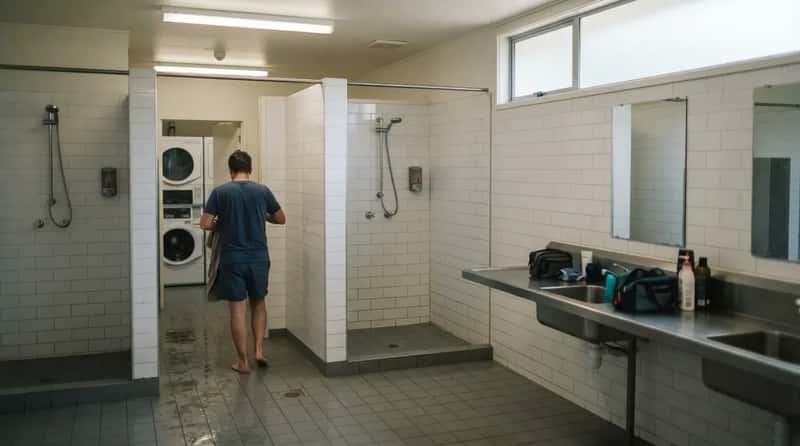
Shared facilities say more about a camper than almost anything else on this list. Bathhouses, laundry rooms, and dump stations get used by everyone and maintained by a staff usually doing a lot with limited resources and even less time.
The standard is simple but constantly ignored: leave the bathhouse cleaner than you found it, wipe down surfaces, and don’t spread your toiletries across the entire counter. It sounds minor until you’re the family walking in behind someone who didn’t bother.
#18 – Hogging the Laundry Room Is a Bigger Sin Than You Think
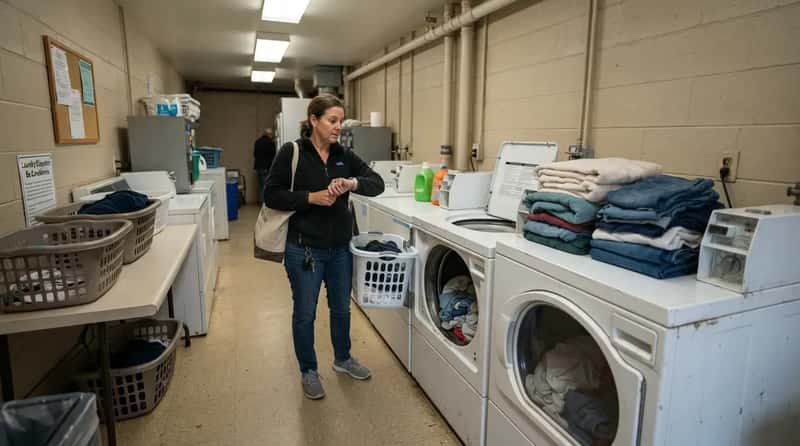
Campground laundry rooms are usually tiny and shared by dozens of rigs at once. It’s convenient to have laundry on-site, but the small space only works if everyone treats it as shared property instead of their own personal appliance.
Camping communities don’t even fully agree on the exact etiquette, but the spirit is consistent everywhere. Don’t camp out reading a novel while your one load finishes and three more sit folded on top of the dryer. Leave the space open for the next person the moment your clothes are done.
#17 – Dust Clouds on Gravel Roads Feel Like a Declaration of War
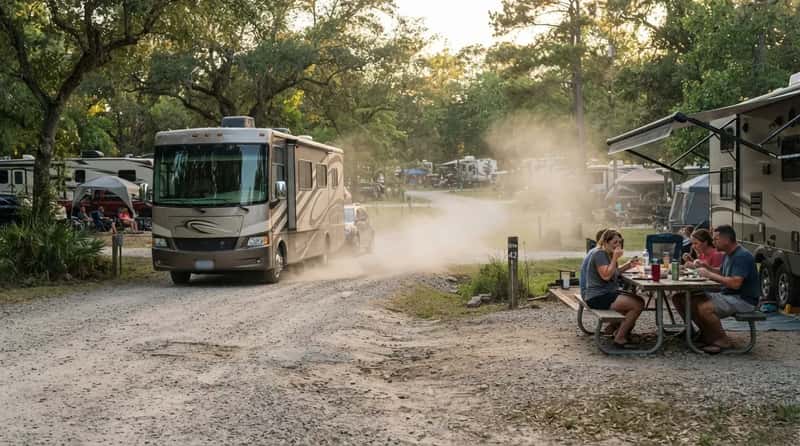
Speed feels harmless until you see what it kicks up behind you. Driving slowly, especially on gravel roads, matters because dust clouds aren’t fun for the folks sitting outside eating dinner, and kids or pets could dart into the road unexpectedly.
Nobody wants their meal coated in road dust because someone was in a hurry to reach their site. Slowing down costs a driver maybe fifteen extra seconds – it’s one of the cheapest courtesies in the entire campground.
#16 – Setting Up Gear in the Road Blocks More Than Traffic
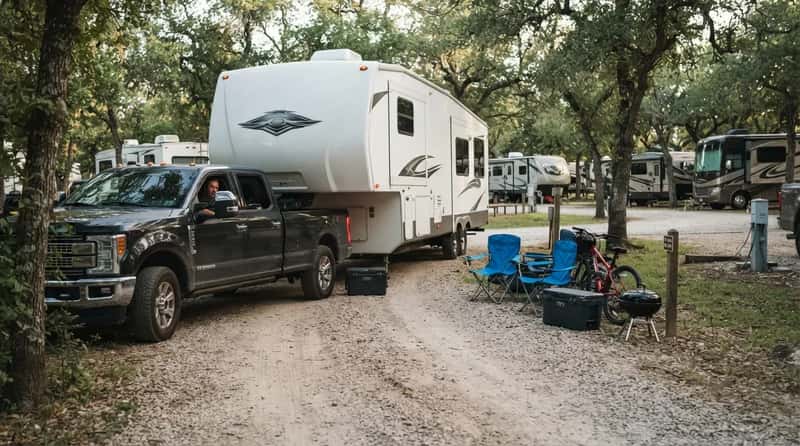
Chairs, bikes, and coolers spilling into the roadway create real problems for bigger rigs trying to maneuver. Most private campground roads aren’t wide enough for a 35-foot fifth wheel to swing around an obstacle without backing up half the loop.
Seasoned RVers keep gear inside the site boundary even when the campsite feels cramped. It’s a small habit, but it’s one of the fastest ways to avoid a tense exchange with a neighbor trying to back a trailer past your cooler.
#15 – Campfire Smoke Drifting Into a Neighbor’s Site Isn’t Always an Accident
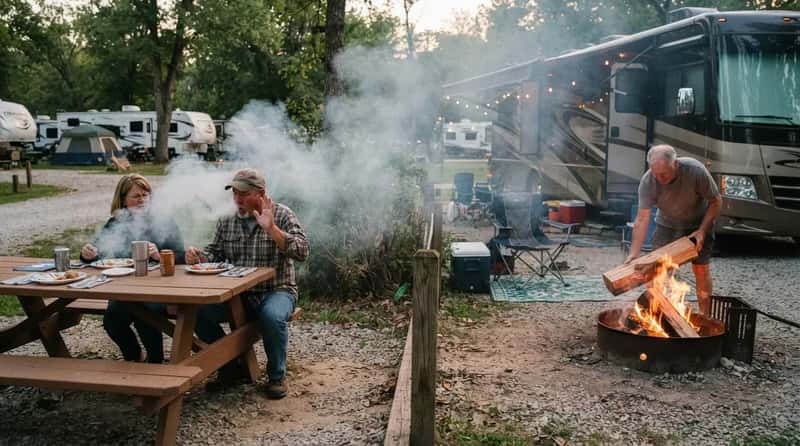
Wind shifts happen, and nobody blames a camper for the first few minutes of smoke drift. What separates a considerate camper from an oblivious one is what happens next – whether they notice and adjust or just keep piling on wood.
Experienced campers check which way smoke is blowing before building a fire up. If it’s heading straight into the neighbor’s dinner table, that’s the signal to bank the fire down, not add another log and pretend not to notice.
#14 – Leaving a Half-Burned Fire Ring Is a Rookie Mistake
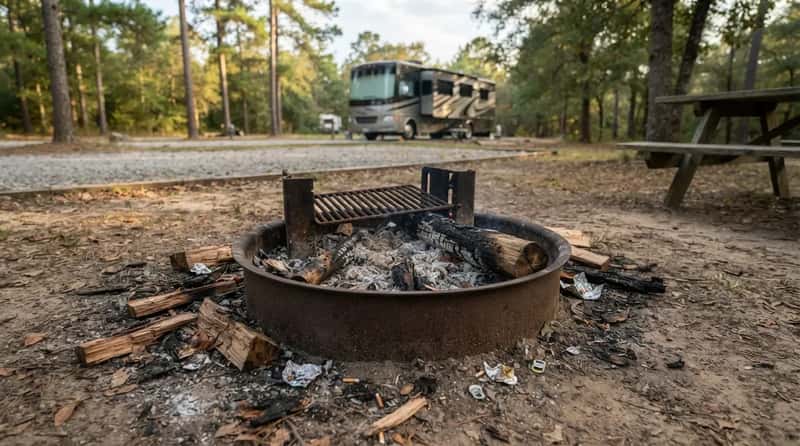
The state you leave a fire pit in tells the next camper everything about you. If there’s a grate, put it back. If you brought firewood, don’t leave half-burned pieces scattered around the ring for someone else to deal with.
This isn’t just about tidiness – it’s about a cycle every RVer eventually lives through. Leaving the site the way you’d want to find it matters because you’ll be pulling in after someone else at every campground for the rest of your RV life, and campground karma is very real.
#13 – Dumping Black Water Wrong Can Get You Banned for Life
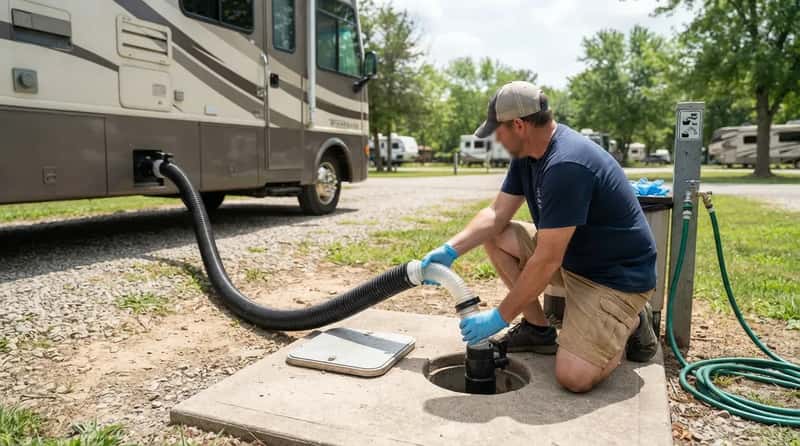
Few mistakes carry a heavier social and practical penalty than sloppy tank dumping. RV owners and renters who get careless with gray and, especially, black water risk creating a mess that campground staff and neighbors won’t forget anytime soon.
This is one rule where a single bad afternoon can define your reputation at a park for the rest of your stay. Some campgrounds have permanently banned repeat offenders – a five-minute mistake at the dump station can follow you for years.
Worth Knowing
- Let the black tank fill to at least two-thirds before dumping for a cleaner flush.
- Never let gray water hit the ground or grass – always use the designated station.
- Wear disposable gloves and keep the drinking-water hose completely separate from the sewer hose.
- A single sloppy dump can mean a lifetime ban at some parks.
#12 – Overstaying Checkout Time Punishes the Next Family in Line
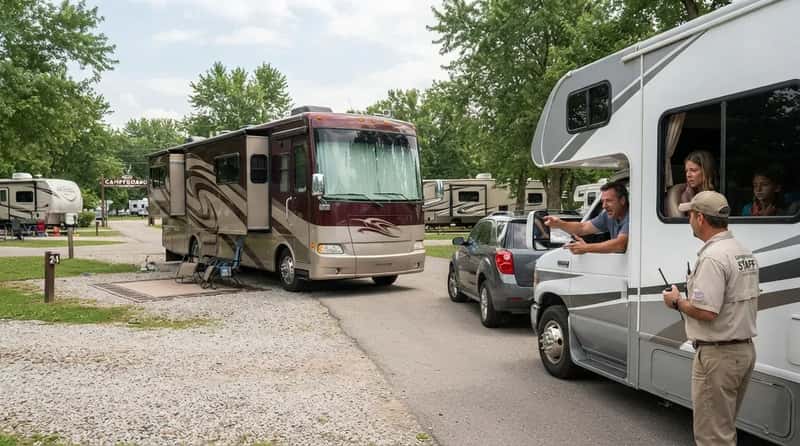
Checkout time isn’t arbitrary – it’s the gap another family has been counting on since they booked. Running late happens, but it needs to be communicated, because overstaying or blocking incoming campers undermines the timelines that keep a park running, especially during peak season.
The incoming family has often been driving for hours with a full tank and cranky kids in the backseat. Making them wait in a parking lot because you didn’t call the office is a completely preventable frustration. A two-minute phone call fixes nearly all of it.
#11 – Rolling In Late Without a Heads-Up Is a Bigger Deal Than You Think
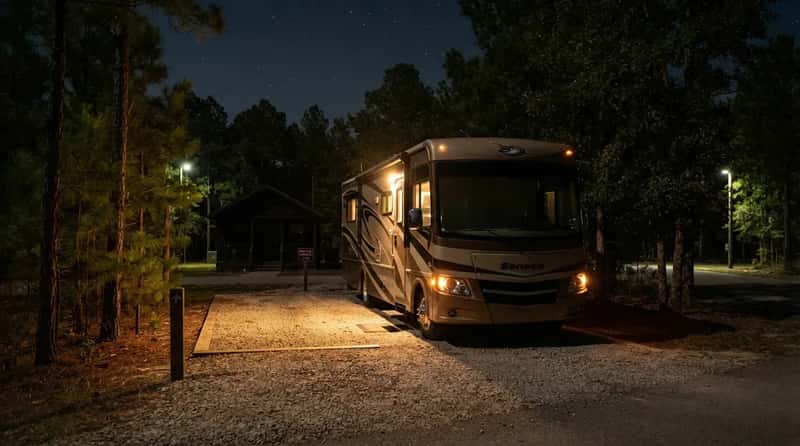
Late arrivals aren’t automatically a problem – silent late arrivals are. Arriving after hours ideally means parking in designated late-arrival bays if the campground has them set up for exactly this situation.
Campgrounds that know you’re coming late can plan around it, holding a spot open or leaving instructions at the gate. Ones that don’t know are left guessing whether a truck idling near the office is a guest or a problem. A quick text to the front desk changes everything.
#10 – Letting Kids Wander Into Other Sites Isn’t as Cute as It Looks
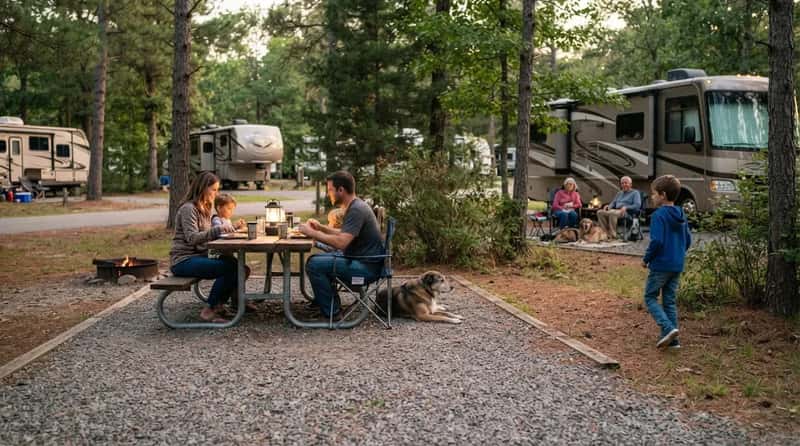
Campgrounds feel communal, which makes it easy to forget that every site is still private space with an invisible fence around it. Each campsite is someone’s temporary home, kids and pets included, and it should be treated like private property.
A curious eight-year-old wandering into a stranger’s site to pet their dog isn’t automatically endearing to the family trying to eat dinner in peace. Seasoned parents watch the boundary lines just as closely as they watch the road.
#9 – Flying a Drone Over Someone’s Campsite Without Asking First
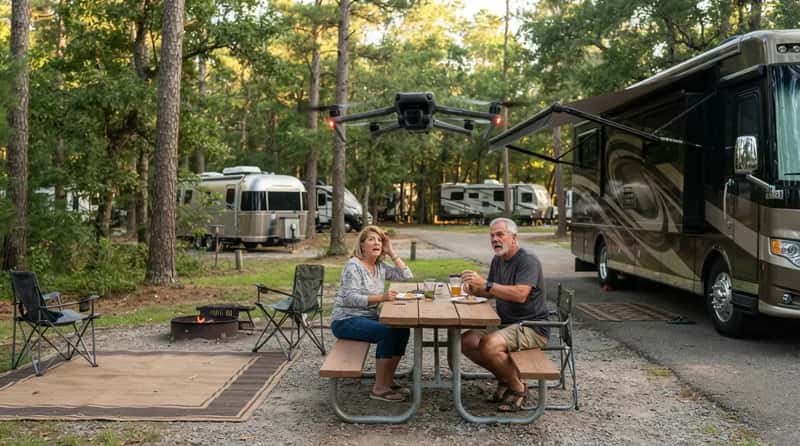
Drones have quietly become one of the newer flashpoints in campground etiquette. A buzzing rig hovering over someone’s picnic table or open awning feels invasive, even if the pilot only meant to catch a sunset shot for Instagram.
Plenty of campgrounds now restrict drone use outright, and even where it’s technically allowed, seasoned RVers ask before launching near occupied sites. It’s a newer rule, but it’s already earned a permanent spot on every experienced camper’s list.
#8 – Parking Right Next to the Only Other RV in an Empty Park
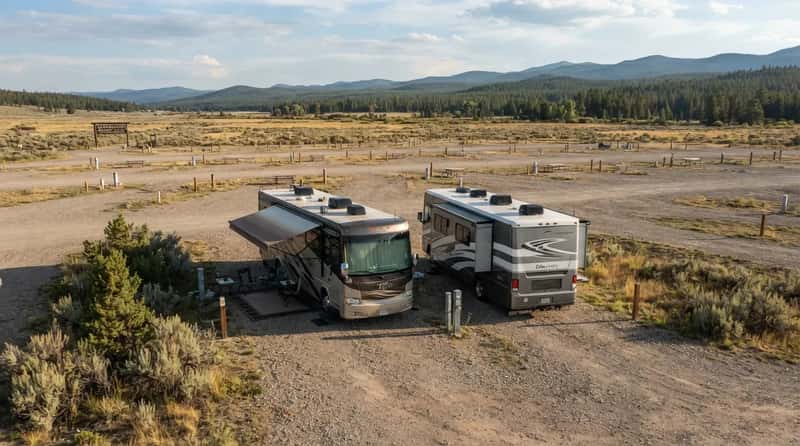
First-come, first-served parks test a camper’s spatial awareness immediately, and some people fail spectacularly. Maintaining a respectful distance from other campers matters, especially for anyone who chose that quiet park precisely for the privacy.
There’s a specific move that irritates almost every veteran camper on sight: picking the spot next to the only other RV in a 40-site park. If there are options, give everyone room to spread out. A near-empty campground is not the moment to become best friends by default.
#7 – Letting Your Awning or Slide Creep Into Someone Else’s Space
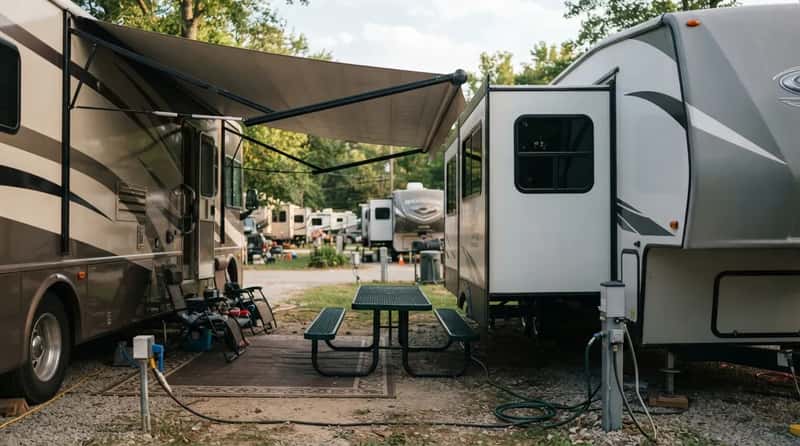
Tight sites make this one genuinely tricky, but it still matters just as much. An awning stretched over the property line, or a slide-out that puts a neighbor’s picnic table an arm’s length from your bedroom window, shrinks their space without asking permission.
Experienced RVers check sightlines and clearance before extending anything, not after. If a site is truly too tight to open up without crowding the next rig, the better move is asking the office about a swap rather than forcing it and hoping nobody minds.
#6 – String Lights Left Blazing All Night Ruin the One Thing People Came For
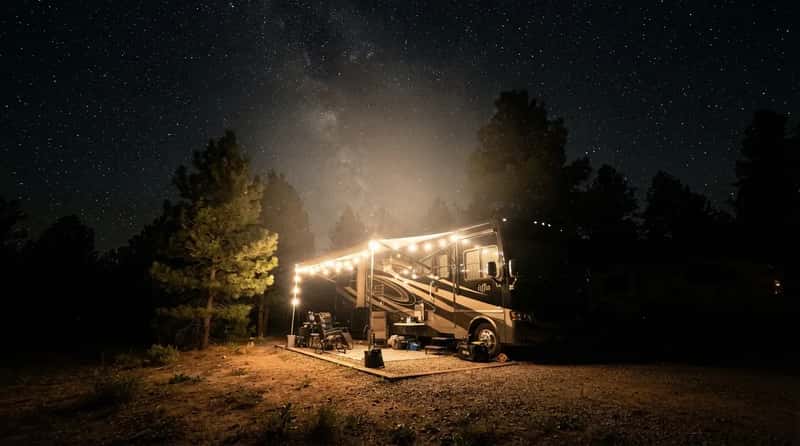
Plenty of campers rank string lights as a must-have RV upgrade, but many experienced full-timers now argue they’re one of the most overrated additions in the hobby once quiet hours hit. Left on all night, they wash out the dark sky views that draw people to remote campgrounds in the first place.
Bright, unshielded lights spill into neighboring rigs and erase the exact stars half the park drove hours to see. Turning them off once everyone’s settled in isn’t killing the vibe – it’s respecting the reason someone booked that site.
Quick Compare
- String lights on: cozy patio glow, easier nighttime footing, festive campsite feel.
- String lights left on past quiet hours: washed-out stars, glare into neighboring rigs, a rule veteran RVers now flag as overrated after dark.
- Better habit: enjoy them at dusk, flip them off once quiet hours start.
#5 – Outdoor TVs and Speakers After Dark Carry Farther Than You Think
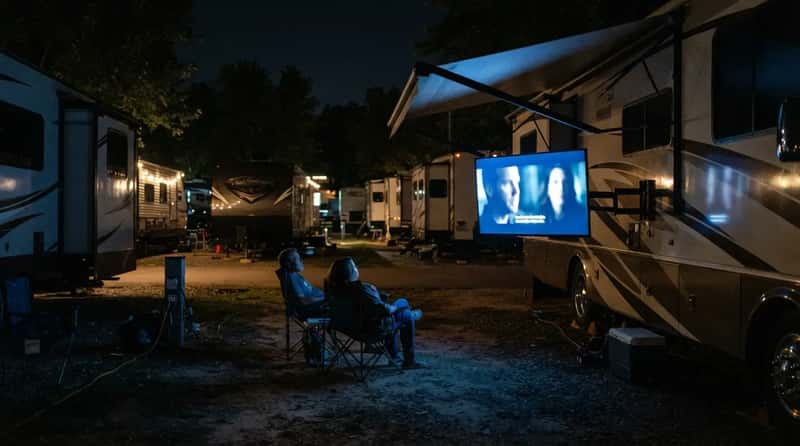
Sound behaves strangely at night, and most people underestimate it badly. Even during the day, entertainment at a reasonable volume matters, since what’s fun for one camper might be exactly what’s ruining a nap or a quiet read two sites over.
After dark, that gap widens fast. With more people working remotely from their RVs, peace and quiet has become more valued than ever among campers packed into tight rows. A true-crime podcast at “normal” volume can feel like a full broadcast three sites down.
#4 – Skipping the Pet Relief Area Isn’t a Small Thing
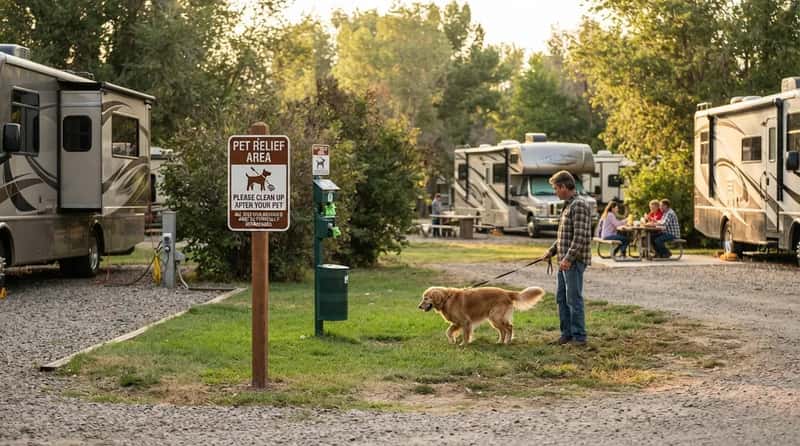
Skipping the designated pet area for a “quicker” spot behind someone’s rig has bigger consequences than most owners realize. Irresponsible behavior from a few pet owners can push campground management to ban pets entirely, and good manners help keep RV parks open to everyone with a dog.
One overlooked mess near a family’s picnic table can shape that entire park’s pet policy for every future guest. Seasoned dog owners treat the relief area rule as non-negotiable because it protects a privilege the whole community shares.
#3 – Hovering Over New Neighbors Instead of Giving Them Space
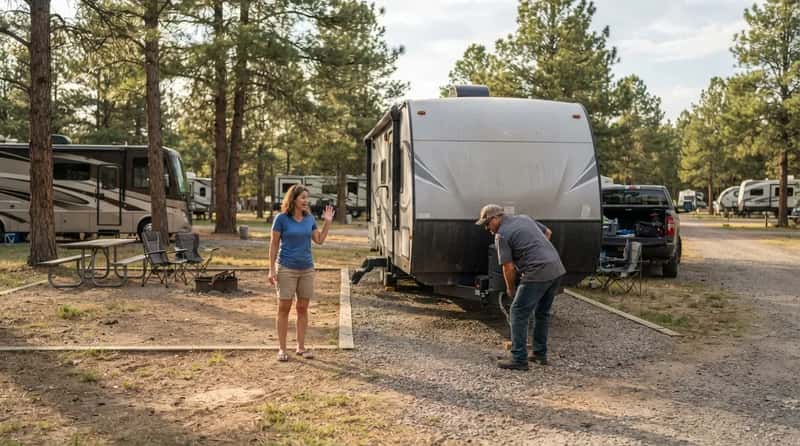
Campgrounds have a social reputation, and plenty of RVers genuinely enjoy meeting whoever pulls in next door. RVing has a social side, but not everyone wants to engage deeply – a friendly wave, a brief chat, or help when clearly needed is always appreciated, but reading the room matters just as much.
The instinct to walk over immediately and start a conversation is usually well-meaning. But a family unhitching after an eight-hour drive isn’t always in the mood to talk truck specs. A wave now, a conversation later, works better than most people assume.
#2 – Leaving a Site Messier Than You Found It
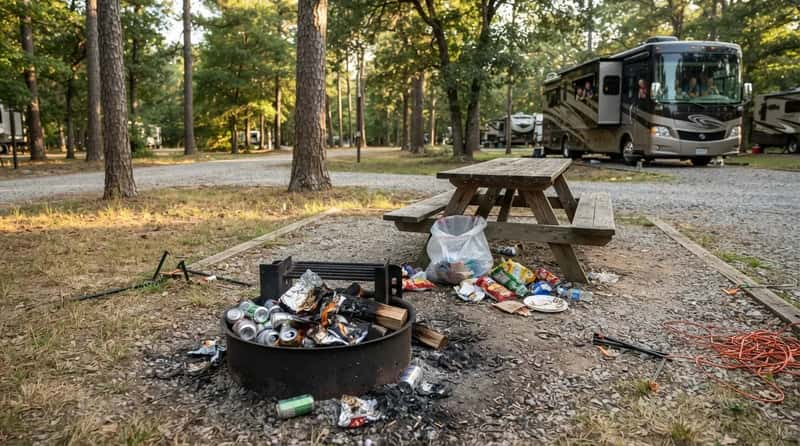
This is the rule almost every seasoned RVer names first when asked what actually bothers them. Trash tucked behind a picnic table, cigarette butts ground into the gravel, or a fire ring full of half-burned cans isn’t rare – it’s common enough that staff expect it on turnover day.
Leaving a site the way you’d want to find it matters because every RVer eventually pulls into someone else’s leftovers. It’s the simplest rule on this entire list, and also, somehow, the most frequently broken.
At a Glance
- Fire ring: ash cleared out, grate placed back on top.
- Trash: bagged and hauled to the dumpster, never tucked behind the picnic table.
- Site walk: one last lap for stray cords, tent stakes, or forgotten gear.
- Tanks: dumped properly, not left as a surprise for the next guest.
#1 – Treating Every Site Like It’s Someone’s Temporary Home, Because It Is
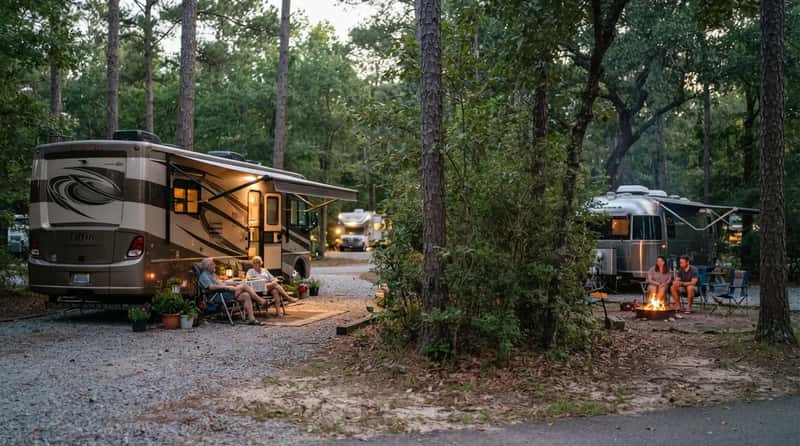
Every rule on this list traces back to one idea that seasoned RVers repeat more than any other: treat other campers the way you’d want to be treated yourself. That means letting fellow campers enjoy as much privacy as possible without interfering with their ability to relax undisturbed.
Nothing about that requires a rulebook or a posted sign. Each site is someone’s temporary front yard – a place to eat dinner, visit with family, or simply enjoy a little peace – even if it’s only home for a single night. The RVers who last decades on the road are the ones who never forgot that.
None of these rules require a park ranger to enforce them – they’re just the quiet agreements that keep a campground full of strangers feeling more like a neighborhood for a night. The generator, the leash, the headlights, the fire ring – it’s rarely one big violation that ruins a stay, it’s a string of small ones nobody bothered to notice.
The RVers who get invited back to the same site year after year aren’t the loudest or the most social. They’re the ones who leave things exactly as they found them, or better. What’s the one campground rule that drives you up the wall? Drop it in the comments – chances are half the campground has felt the same way.