You’d think a hotel is a hotel, no matter what country stamps your passport. Same check-in, same towels, same unspoken rules as the Marriott back home. That assumption is exactly what makes a front desk clerk’s smile tighten the second a familiar type of guest walks in.
Nobody gets yelled at. Nobody gets a lecture. The staff just quietly fixes it, resets the room, and moves on to the next guest making the exact same mistake an hour later. Here’s what actually happens behind that polished front desk, according to the people who clean up after it.
#26 – Tipping Housekeeping in a Currency Nobody Can Spend
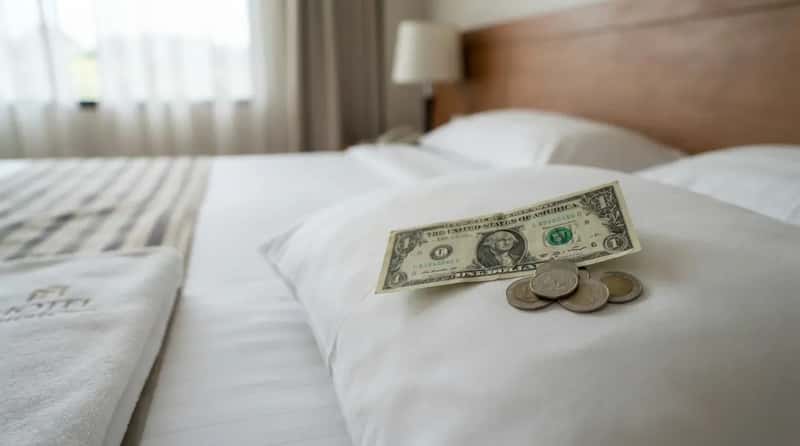
Leaving a crisp US dollar bill on the pillow feels generous. In plenty of countries, it’s basically decorative paper, because local banks won’t exchange small foreign bills without eating most of the value. The “tip” quietly becomes a souvenir nobody wanted.
Managers routinely swap these bills out of their own pocket just so housekeeping actually gets paid for the gesture. A few coins in the local currency does more good than a fistful of foreign cash ever will.
#25 – Assuming Resort Fees Stayed Behind in America

Travelers love complaining about surprise resort fees, then assume they’ve dodged them the moment they land overseas. That’s wishful thinking. New transparency rules cracking down on hidden fees only apply to U.S. properties, so international bookings are still wide open to sneaky surcharges at checkout.
Front desk staff watch the same confused face every single day. The fix is always the same: pull up the itemized bill and gently explain that “total price” was never actually total.
#24 – Frying Their Own Hair Tools on Foreign Voltage
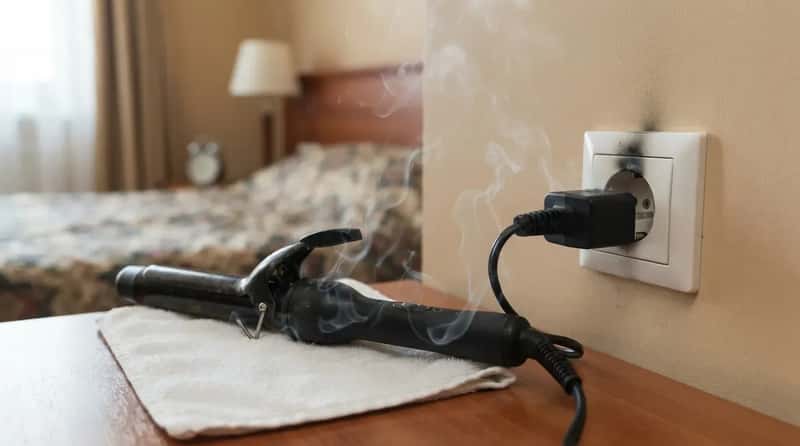
Nothing ruins a morning faster than a curling iron sparking, smoking, and dying in a foreign outlet. Travelers grab a plug adapter and assume that’s the same thing as a voltage converter. It is not, and the difference is usually discovered the hard way.
Hotel engineering teams field these calls constantly, usually right after a burnt smell drifts into the hallway. Managers now keep spare adapters at the desk purely because guests keep making this exact mistake, trip after trip.
Fast Facts
- The U.S. and Canada run on 110-120V power, while most of Europe, Asia, and Africa use 220-240V.
- A plug adapter only changes the shape of the plug – it does nothing to convert voltage.
- Dual-voltage devices, like many phone chargers and laptops, are usually safe with just an adapter.
- Single-voltage hair tools plugged into the wrong outlet can fail in seconds, sometimes with visible sparking.
#23 – Tossing the Suitcase Straight Onto the Bed
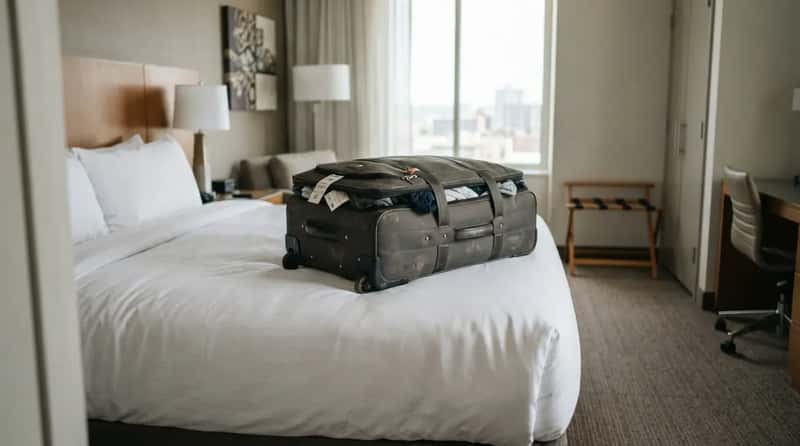
It’s an automatic move: walk in, heave the suitcase onto the nearest flat surface, which is almost always the bed. Housekeeping sees this constantly, and it’s one of the fastest ways to turn a clean room into a genuine problem.
Travel experts warn against it for a reason: bed bugs show up in hotels simply because of how many people cycle through, luxury or budget, no exceptions. The correction managers teach is simple, use the luggage rack or the bathtub first, not the bedspread.
#22 – Expecting Daily Housekeeping Like It’s Home

In the US, fresh towels and a made bed every single day feels standard. Abroad, especially across Europe and parts of Asia, plenty of hotels only do a full clean every few days unless a guest specifically asks otherwise.
Guests storm down to the lobby convinced something’s broken. Managers calmly explain it’s policy, not neglect, and that one quick phone call usually gets daily service arranged without any of the drama.
#21 – Trying to Haggle Over the Posted Room Rate

Bargaining works beautifully at a street market. It does not work at a hotel front desk in most countries, though travelers try it anyway, treating check-in like a negotiation table.
Front desk staff have a polite script for this, delivered with the same practiced smile every time. The rate is the rate. The only real negotiation ever happening is over a possible upgrade, never the price.
#20 – Assuming the Front Desk Speaks Fluent English
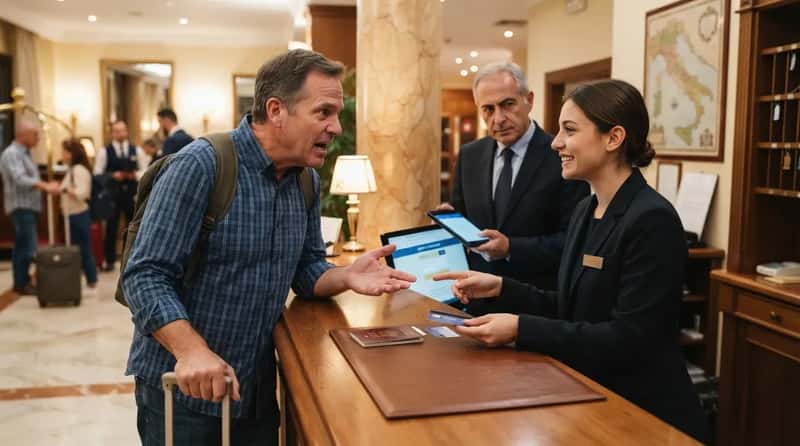
English gets travelers remarkably far worldwide, which is exactly why so many stop bothering to learn even a basic local phrase. That confidence occasionally collides with a clerk who speaks limited English, and check-in stalls completely.
Managers step in fast, translation apps come out, and the moment passes without much fuss. But staff always notice which guests attempted a “hello” or “thank you” first, and which ones just talked louder.
#19 – Ignoring Entry Paperwork Until It Becomes the Hotel’s Problem
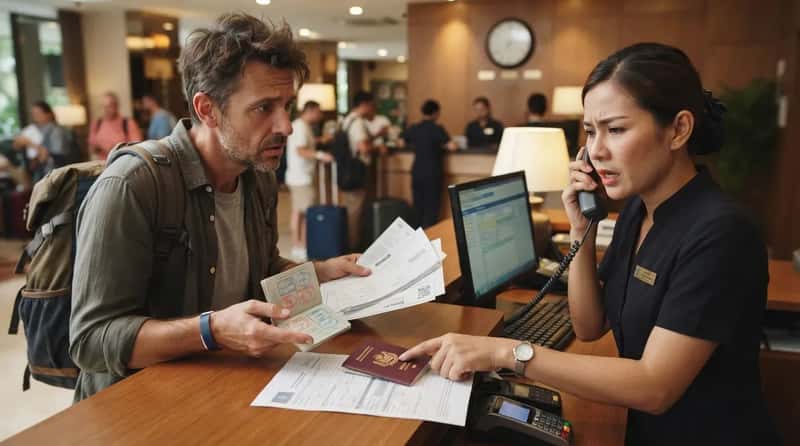
Some travelers treat visas and entry documents as an afterthought, figuring they’ll sort it out on arrival. When that paperwork isn’t in order, the hotel is often the first place the fallout lands, since some countries require proof of accommodation or on-site registration.
Front desk teams end up playing document detective, calling embassies or immigration hotlines on a stranger’s behalf. It’s entirely avoidable stress that managers have simply learned to expect from a percentage of arrivals every single week.
#18 – Bringing a Pet Without Checking the Fine Print

Assuming “pet-friendly” means “anything goes” is a costly misread. A recurring headache for hotel staff is guests arriving with emotional support animals without checking the property’s actual policy first, forcing an awkward conversation about fees, restrictions, or the difference between a service animal and an ESA.
Pet-friendly does not mean anything-friendly, and that particular chat rarely improves anyone’s evening. Managers now ask about animals before the room key ever gets handed over.
#17 – Demanding a Kettle That Was Never Coming
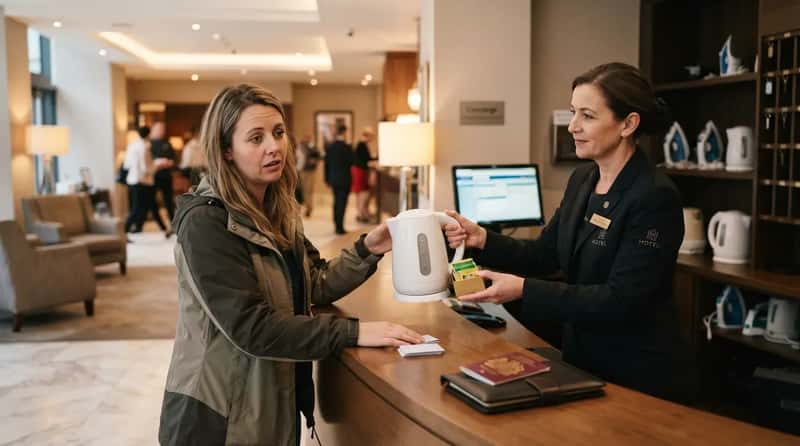
This one’s practically a running joke among hospitality staff, especially with British guests. Plenty of countries outside the UK simply don’t treat an in-room kettle as standard, which comes as a genuine shock to travelers who grew up with one in every room they’ve ever stayed in.
Front desk teams field the request so often they’ve started stocking a few spare kettles just to hand out on demand. It’s a tiny cultural gap that turns into a surprisingly loud complaint.
#16 – Hunting for an Ice Machine That Doesn’t Exist
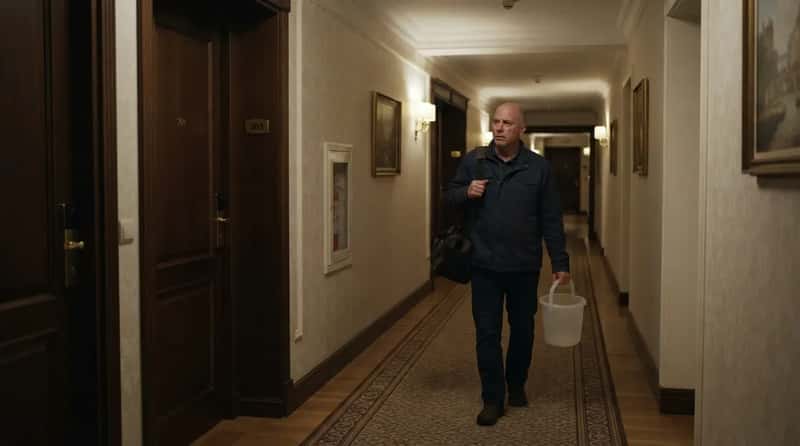
American hotel culture runs on the hallway ice machine. Most hotels abroad don’t have one, and definitely not one on every floor, which catches a lot of US travelers completely off guard mid-search.
Guests wander hallways looking for a machine that was never installed. Managers redirect them to the bar or room service instead, usually with a short explanation of why it works differently there.
#15 – Lingering Past Checkout Without Asking First
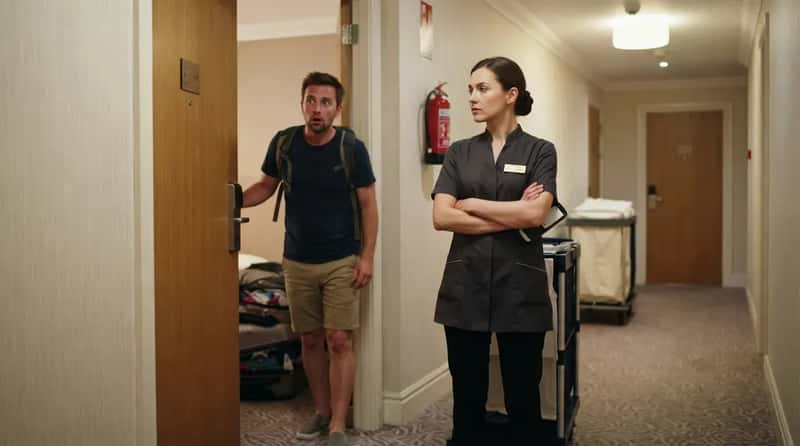
Rolling out of a US hotel a little late sometimes gets a shrug and nothing more. Try that abroad without clearing it first, and it can trigger a surprisingly strict, sometimes fee-heavy response depending on the country and property.
Housekeeping is often already waiting outside the door, running a tight turnover for the next arrival. A five-minute heads-up to the front desk the night before avoids the entire standoff.
#14 – Getting Lost Over What “First Floor” Even Means
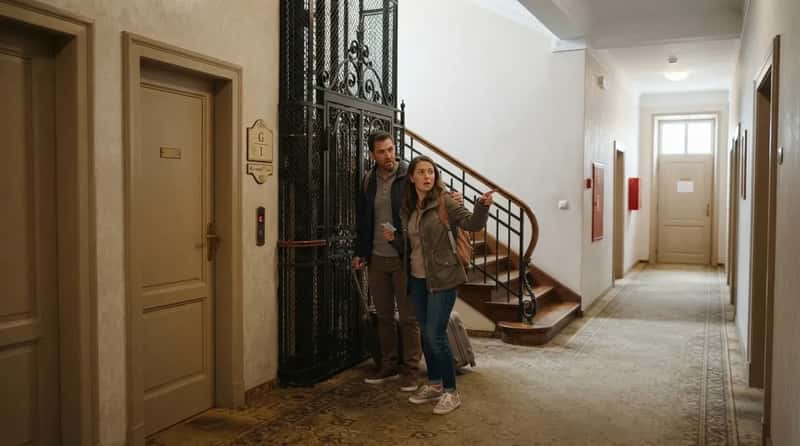
In the US, the first floor is the ground floor. Across much of Europe and beyond, the ground floor is its own separate level, and the “first floor” is actually one flight up from where an American would expect it.
Guests wander confused hallways searching for a room that’s genuinely one level away from where they assumed it was. Managers have explained this numbering quirk so many times it’s basically muscle memory by now.
Quick Compare
- United States: Ground level is the “1st Floor,” the level above is the “2nd Floor.”
- Much of Europe: Ground level is the “Ground Floor,” the level above is the “1st Floor.”
- Result: what an American calls the 2nd floor is often the 1st floor on the elevator panel.
#13 – Staying Silent Instead of Reporting the Broken Lamp

Something breaks, and the instinct for a lot of travelers is to say nothing and quietly hope nobody notices. That instinct backfires more often than guests realize, and most travelers actually agree it’s the wrong move once they think it through.
Hotel managers can usually fix a damaged item fast or move a guest to a different room without much hassle. Reporting it right away turns a bad moment into a total non-issue instead of an awkward one at checkout.
#12 – Sneaking Two Extra Guests Into a Double Room
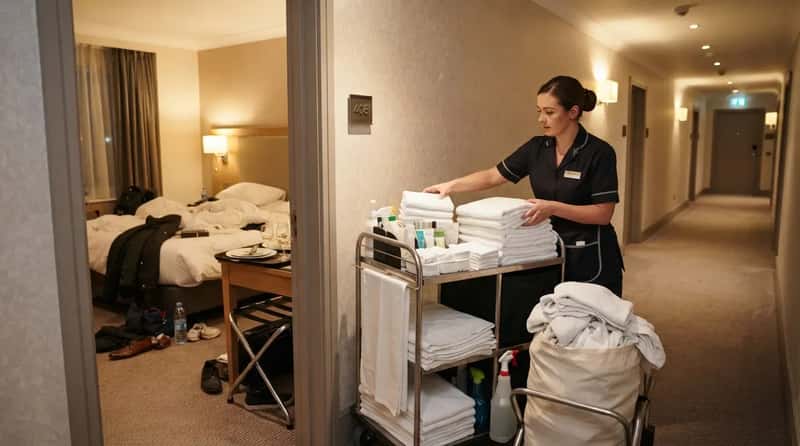
Booking a room for two, then quietly adding a third or fourth person, is a classic move front desk staff spot almost instantly. Extra towels, extra room service trays, extra key requests, it all adds up fast and gives it away.
Managers usually catch it within the first day and either charge for the extra occupancy or ask the guest to rebook correctly. It rarely ends in the guest’s favor, and staff have watched this exact play attempted hundreds of times before.
#11 – Assuming Hotel Wi-Fi Is Free Everywhere
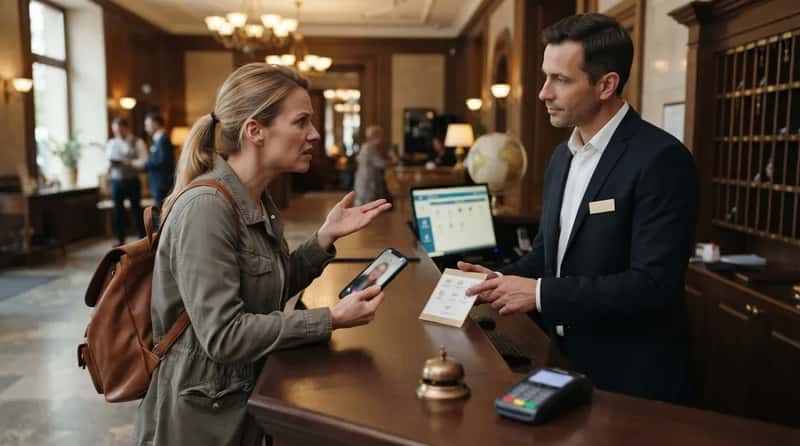
Free Wi-Fi feels like a basic given at this point, especially for American travelers. Plenty of hotels abroad, particularly higher-end properties across Europe and Asia, still charge for it or throttle the free version down to a crawl.
Guests discover this mid-video-call, then storm down to the desk visibly annoyed. Managers quietly explain the tiered internet packages nobody bothered reading about at booking.
#10 – Wandering the Lobby in a Bathrobe and Slippers

The robe feels perfectly appropriate on the way to a spa or pool. It does not feel appropriate in the main lobby, at the breakfast buffet, or waiting for an elevator, yet plenty of guests treat the whole hotel like a private house.
Front desk staff redirect these guests more often than anyone would guess. It’s not a rule posted anywhere; it’s just an expectation quietly enforced with a smile and a gentle word.
#9 – Taking Loud Video Calls in Shared Hotel Spaces
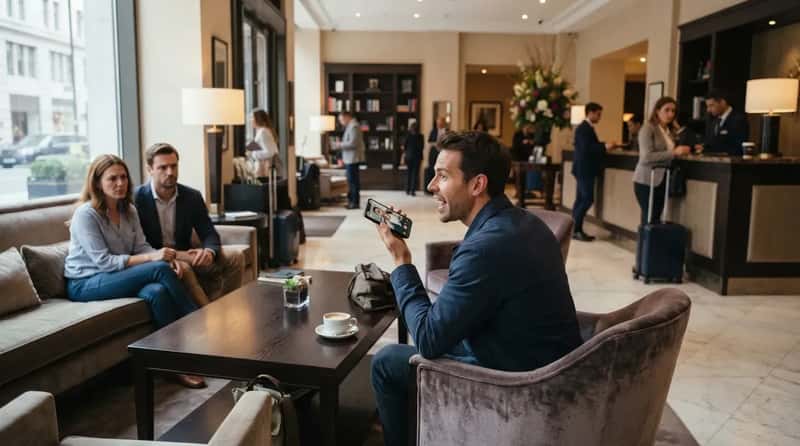
Speakerphone conversations in the lobby, on the elevator, at the breakfast table, are one of the newest habits staff quietly correct. It’s a modern headache older hotel etiquette guides never had to cover.
Other guests complain to the desk, and staff end up delivering the awkward “please take that outside” conversation. It’s become common enough that some properties now post discreet signage in shared spaces asking for quiet.
#8 – Claiming Every Sunbed With a Towel at Dawn

Sprinting down at sunrise to claim a poolside chair, then vanishing for hours, is one of the most universally hated guest habits in hospitality. It’s a genuine flashpoint at pools worldwide, right up there with being outright rude to staff, which travelers themselves tend to rank as even worse.
Managers now walk the pool deck removing abandoned towels after a set window, freeing chairs for guests actually using them. It’s a quiet correction that plays out every single morning at properties around the globe.
Worth Knowing
- Reserving a sunbed and disappearing for hours consistently tops surveys of travelers’ most-hated pool habits.
- Many resorts now enforce a fixed grace period, often somewhere between 30 and 90 minutes, before towels get cleared.
- Staff typically leave a note or move belongings to a shared table rather than tossing them outright.
#7 – Assuming Tipping Works the Same Everywhere
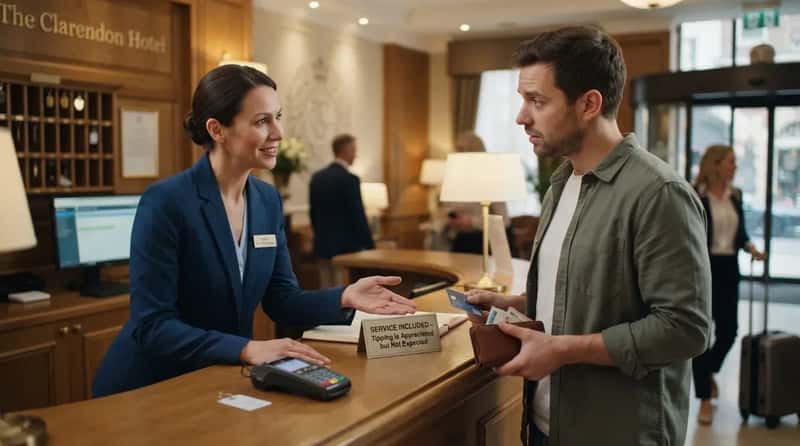
American tipping habits don’t translate cleanly overseas. In some countries, service is baked into the bill and extra cash feels genuinely awkward for staff to accept. In others, it’s expected in ways US travelers never anticipate.
Front desk teams end up gently explaining local norms more often than guests would expect. Getting it wrong in either direction, over-tipping or ignoring it completely, tends to stand out immediately.
#6 – Grumbling to a Travel Companion Instead of Telling Staff
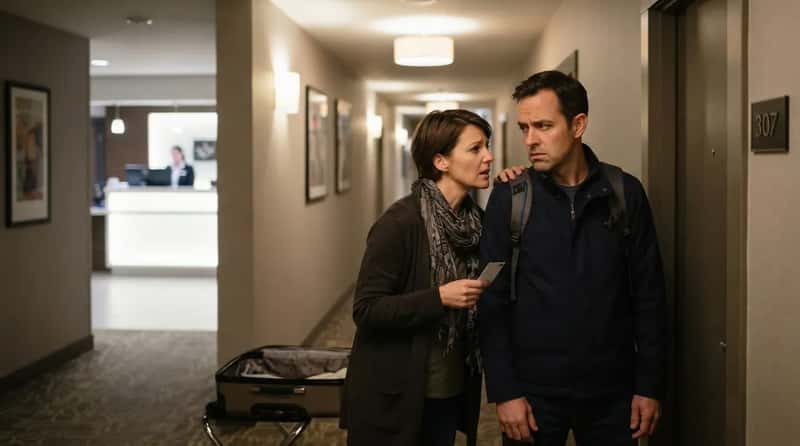
There’s a real pattern in hotels: guests quietly complain to each other about a problem instead of simply telling the front desk. Politeness sometimes gets mistaken for staying silent, even when something genuinely isn’t right with the room.
Managers actually prefer the direct version, awkward as it feels in the moment. A fixable problem left unspoken just festers into a one-star review instead of a five-minute solution.
#5 – Draining the Minibar Without Checking the Price Card
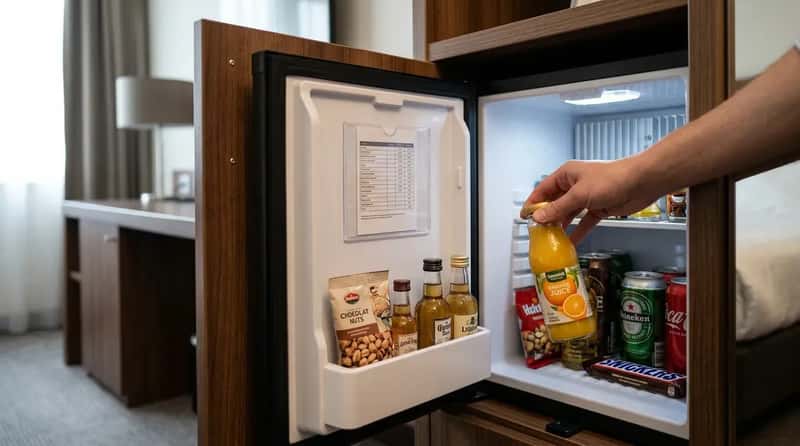
That tiny bottle of water or bag of nuts looks harmless sitting in the mini-fridge. It’s rarely priced like a convenience store item, and plenty of travelers get a genuinely unpleasant surprise on the final bill.
Front desk staff explain the pricing after the fact more often than they’d like to. The fix is almost always the same: check the little card taped inside the fridge before touching anything.
#4 – Assuming Pool Towels Are Unlimited and Free

Grabbing a fresh towel every hour feels harmless on vacation. Plenty of properties abroad actually track towel counts, charge deposits, or cap how many a guest can use per stay, especially resorts watching costs closely.
Guests get genuinely confused when asked to return a towel card or pay a small fee for a “lost” one. Staff explain the system dozens of times a week, usually to surprised, slightly embarrassed faces.
#3 – Leaving the “Do Not Disturb” Sign Up for Days
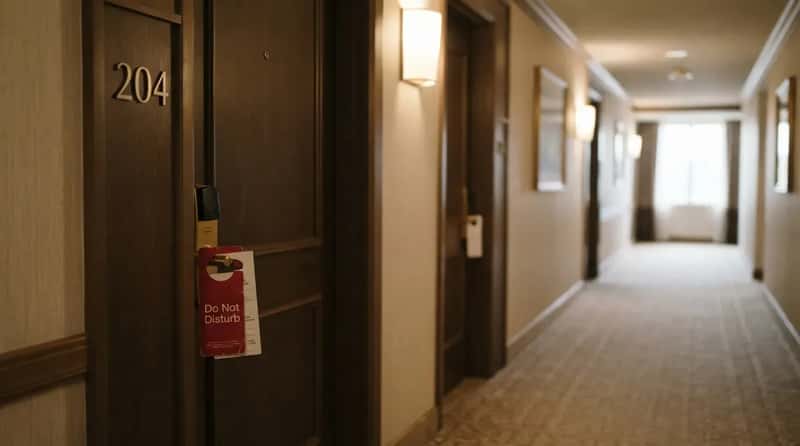
Sleeping in is one thing. Leaving the sign up for an entire stay so the room never actually gets cleaned is another, and it creates a real backlog for housekeeping schedules built around timed turnovers.
Managers eventually knock anyway to run a basic safety check after a set number of hours. It’s not personal, it’s policy, and it exists because guests push this exact boundary constantly.
#2 – Snapping at Staff the Moment Something Goes Wrong
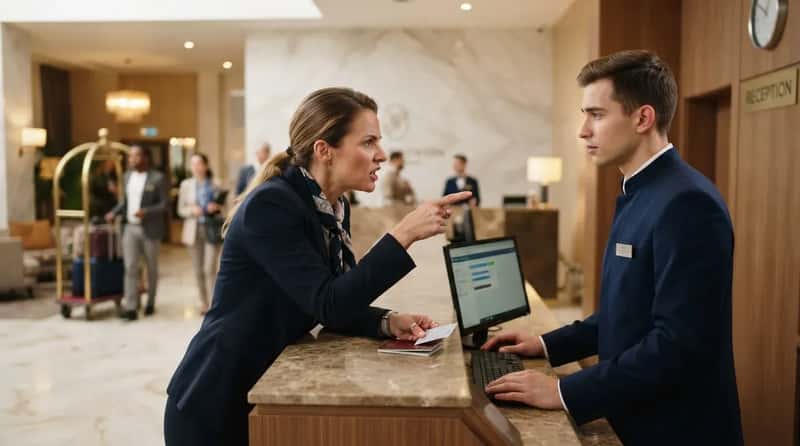
Every hotel has hiccups, a late room, a broken AC, a booking mix-up. How a guest reacts in that moment tells staff everything, and it quietly shapes how much effort goes into the fix.
Patient, direct guests tend to walk away with upgrades, comps, and genuine extra care. Guests who escalate immediately usually just get the bare minimum, delivered politely, with zero warmth behind it.
Manners will get you further than money.
George Washington
#1 – Judging a Foreign Hotel by American Star Ratings

A “four-star” hotel abroad doesn’t always match American expectations, and that gap causes more disappointment than almost anything else on this list. Star systems vary wildly by country, with completely different standards for room size, amenities, and what even counts as “luxury.”
Guests arrive expecting a US-style four-star experience and instead find something smaller, older, or simply built around different priorities entirely. Managers spend enormous energy resetting expectations that were never accurate in the first place, and it’s the single biggest quiet correction happening at front desks worldwide.
At a Glance
- Star ratings abroad are often set by local tourism boards, not one single global standard.
- A 4-star hotel in parts of Europe may skip amenities considered standard at U.S. 3-star chains, like large closets or blackout curtains.
- Room sizes abroad, especially in older city-center buildings, tend to run smaller than U.S. equivalents at the same star level.
- Some countries layer on extra “diamond” or “key” ratings alongside stars, adding another wrinkle to compare.
None of these are dramatic disasters. They’re small, human, repeatable mistakes that hotel staff have simply learned to expect and quietly fix before a guest even notices the correction happened.
The pattern across all 26 is the same: travelers pack the rules from home along with their luggage, and hotel managers spend all day gently unpacking them. What’s the one habit you didn’t realize was a mistake until staff politely set you straight?