Most people assume turndown service is just a chocolate on a pillow and a folded sheet, a nice little bonus hotels toss in to feel fancy. That’s not even close to the full picture. Behind that five-minute visit is a strict choreography, a surprisingly scandalous origin story, and a whole set of unspoken rules that most guests break without realizing it.
Turndown attendants rarely say anything when they notice these mistakes – they just quietly work around them, night after night, room after room. Here’s what the people who actually do this job every evening wish every guest understood before their next hotel stay.
#26 – Rearranging your own pillows before they arrive doesn’t help
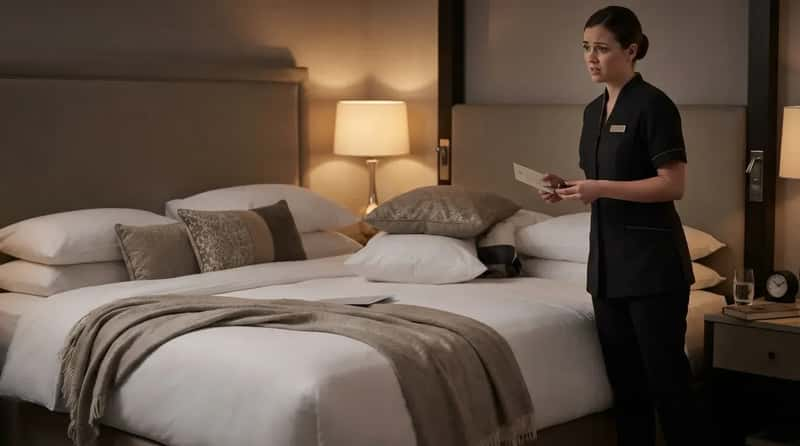
Guests who try to “tidy up” before turndown think they’re being considerate, but it usually backfires. The whole visit follows a fixed order, and guest belongings are never moved beyond the minimum, never organised, never judged by the attendant. When a guest has already shuffled the decorative pillows or bedding into a different configuration, it actually breaks the sequence the attendant is trained to run.
Turndown isn’t improvisation – it’s a routine designed to be repeatable in under five minutes. Attendants aren’t judging your mess, but they are quietly recalibrating every time something’s out of place. That five-minute window matters more than most guests realize, which is exactly why the knock itself is such a big deal.
#25 – The knock-wait-knock rule isn’t politeness, it’s protocol
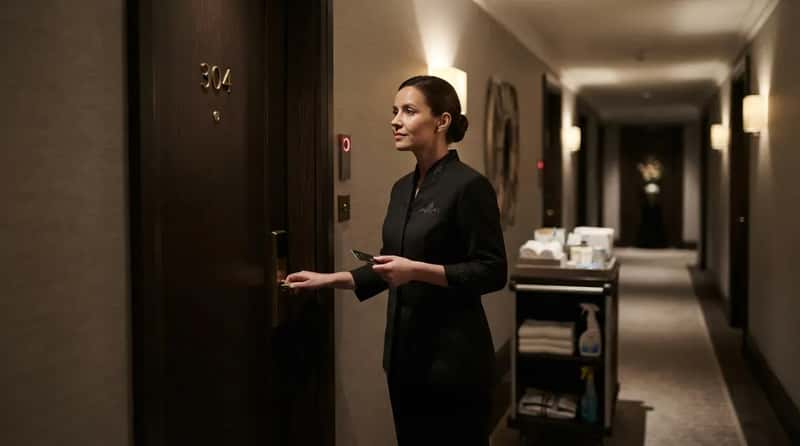
Every legitimate turndown visit follows the same entry sequence, and it’s not casual courtesy – it’s a hard rule. The attendant knocks, announces housekeeping, waits, knocks again, and enters only into silence. If there’s any response at all, the team moves on immediately.
This isn’t about being cautious for its own sake. Staff typically enter only when the guest is out, always knocking and announcing themselves, and if a “Do Not Disturb” sign is up or the guest declines, the service is skipped entirely, no exceptions made for schedule or convenience. Most guests never see this play out because it happens so smoothly, but skip the knock and you’ve skipped the entire professional standard the role is built on.
#24 – Turndown was never meant to be a second cleaning
A lot of guests expect turndown to fix whatever they left messy that afternoon, and that’s a fundamental misunderstanding of the service. A common misconception is that turndown is a cleaning task, but in reality it is a reset of atmosphere, not a full housekeeping pass – the room is tidied, but the deeper cleaning happens earlier in the day.
That distinction matters because turndown teams are working on a tight nightly schedule across dozens of rooms, not doing deep scrubbing. They’re resetting mood – lighting, linens, ambiance – not correcting a day’s worth of clutter. Guests who understand this tend to have a much smoother experience, and it sets up exactly why the timing window is so rigid.
#23 – That chocolate has a far racier backstory than the mint on your nightstand
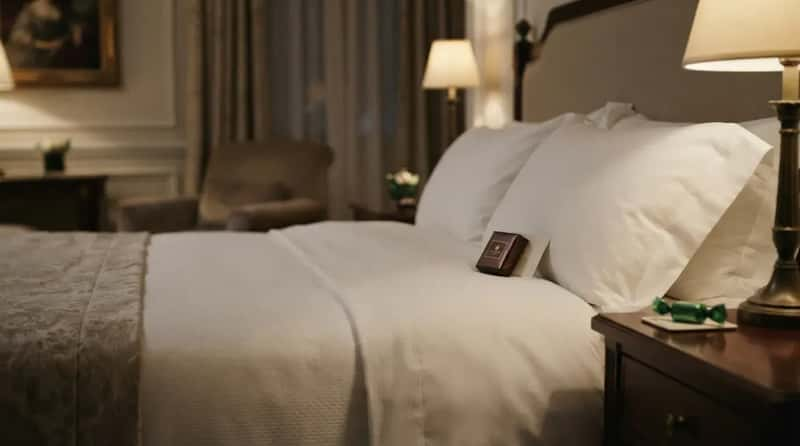
The pillow chocolate feels like a purely wholesome tradition, but the most widely repeated origin story is anything but. As the story goes, a famous actor once left a trail of chocolates through a St. Louis hotel suite for a romantic rendezvous, and the manager of the hotel, hearing of this escapade, ordered chocolates to be placed on pillows at turndown time.
Whether every detail of that tale is exactly true or slightly embellished over decades of retelling, other hotels copied his initiative, still others copied those, and the gesture spread across the entire industry. What started as a private moment between two guests became one of hospitality’s most recognizable rituals worldwide.
#22 – The duvet fold isn’t random, it’s a choreographed signal
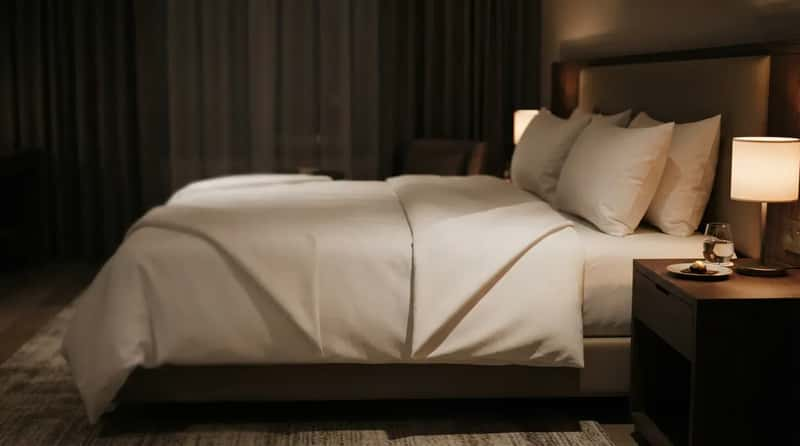
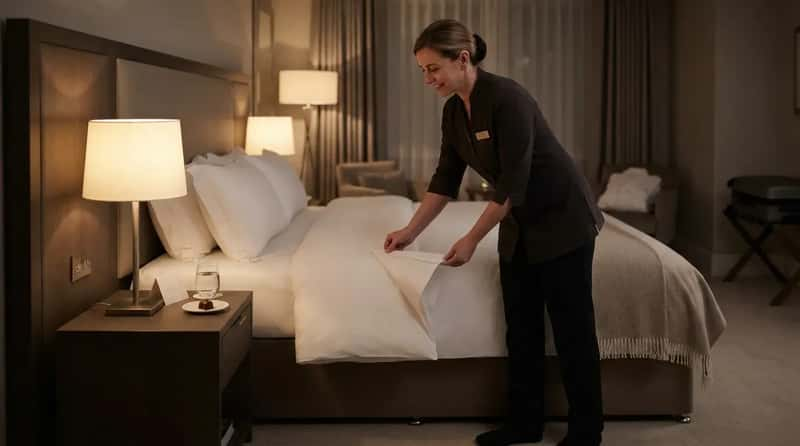
That angled fold on your bed isn’t a stylistic flourish – it’s a precise, trained motion. Attendants are taught to open the bed, folding the duvet corner back at roughly 45 degrees on the side nearest the nightstand, or both sides for two guests.
Every step in the sequence exists for a reason: the fold signals which side is ready to slide into, and doing both sides for a couple avoids any confusion at midnight. Combined with the exit check – lamps on, overheads off, curtains fully closed with no gap, door pulled to a click – the whole visit is engineered so a tired guest can walk in and immediately understand the room is ready.
#21 – Hanging up your wet towel does more than you think
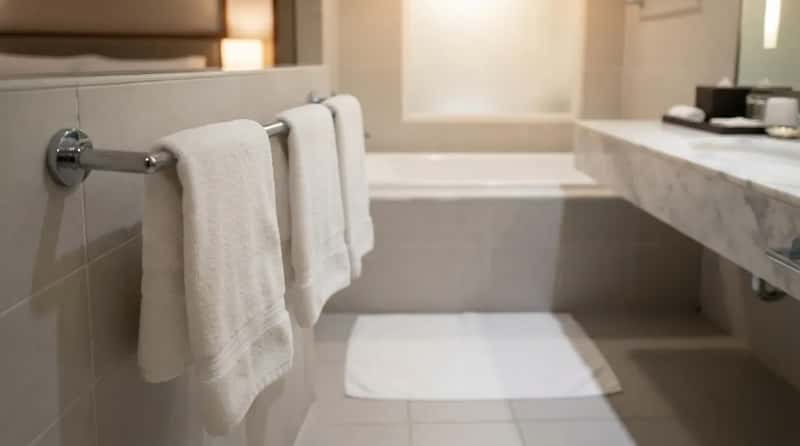
Housekeeping teams have a quiet wish list, and it starts with something almost every guest ignores. A housekeeping supervisor explained that one of the most appreciated gestures is when guests gather their beachwear or damp towels and hang them on the provided facilities, which prevents humidity from spreading and helps make turndown services quicker.
It sounds minor, but multiply that by dozens of rooms a night and it adds up to real time saved. Damp piles left on furniture or floors create extra steps attendants have to work around before they can even start the actual turndown sequence. It’s one of the simplest ways a guest can unknowingly help the whole evening run smoother.
#20 – There’s a strict evening window, and missing it can mean no turndown at all
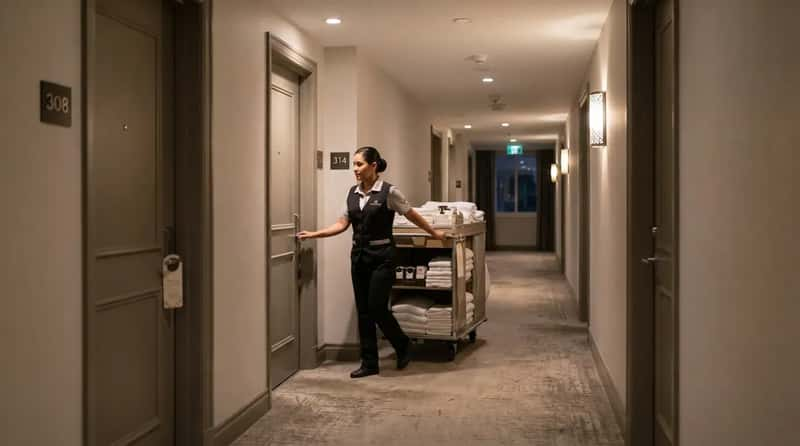
Turndown isn’t available around the clock, and most guests never realize how narrow the window actually is. Turndown service is an early-evening housekeeping visit, often between 5 p.m. and 9 p.m., that readies a room for the night.
If a guest is out late for dinner and returns after that window closes, the room may never get the treatment that night – turndown teams simply move on to the next floor on schedule. Properties that offer it treat it as a planned task, not something staff squeeze in whenever they have a free moment. Knowing that window can be the difference between coming back to a cozy room and coming back to exactly what you left.
At a Glance
- Typical turndown window: roughly 5 p.m. to 9 p.m.
- Service is usually skipped once the window closes for the night
- No make-up visit if you return late from dinner
- Teams work the schedule floor by floor, not room by room on request
#19 – Your stuff is off-limits, even the messy pile on the desk
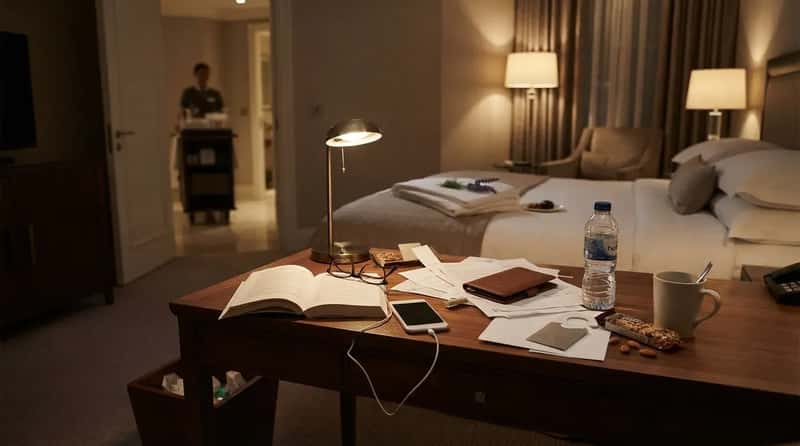
One of the biggest anxieties guests have about turndown is privacy, and the industry standard is stricter than most people assume. Belongings on display are simply worked around – nothing gets moved, sorted, or straightened without explicit request, because guest belongings are never moved beyond the minimum, never organised, never judged.
That said, teams do appreciate a bit of cooperation. As one housekeeping manager put it, guests who gather any used cups, empty bottles, or other waste and place them in the trash bin or neatly by the door make the whole visit faster without ever compromising their own privacy.
#18 – Decorative pillows go in the closet, never on the floor
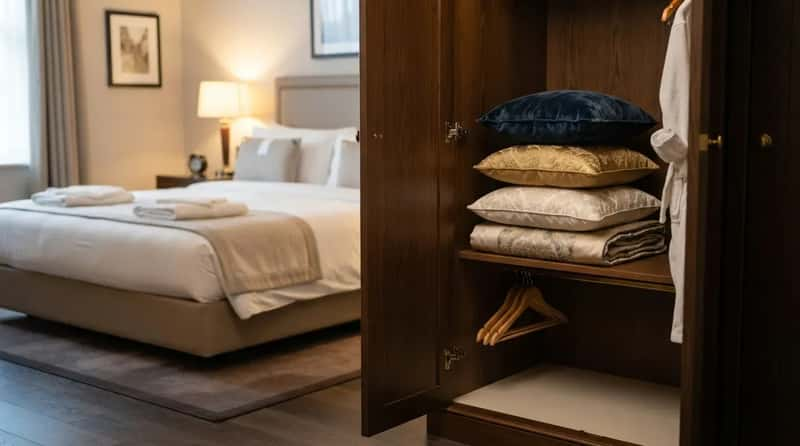
Every hotel has that pile of ornamental pillows and bed runners nobody actually sleeps with, and there’s a very specific place they’re supposed to end up. The trained first move of most turndown routines is to store the decorative cushions and runner in the wardrobe, never on the floor.
It’s a small detail, but it says a lot about how deliberate the whole process is. Nothing during turndown is left to guesswork – every single motion, down to where a decorative object gets stored, is planned so the routine works the same way in every room, every night, no matter which attendant is on shift.
#17 – The whole ritual started with royalty, not hotels

Turndown feels like a modern luxury-hotel invention, but its roots go back centuries before hotels as we know them even existed. The history of turndown service dates back to the 18th century, starting with butlers and maids preparing sleeping chambers for royalty, especially during long travels.
It wasn’t until much later that the general public got access to anything resembling it. In the 19th century, the first luxury hotels offered the service for those traveling alone, adapting a household ritual once reserved for aristocrats into something paying guests could experience too.
#16 – Turndown is quietly disappearing from mid-range hotels
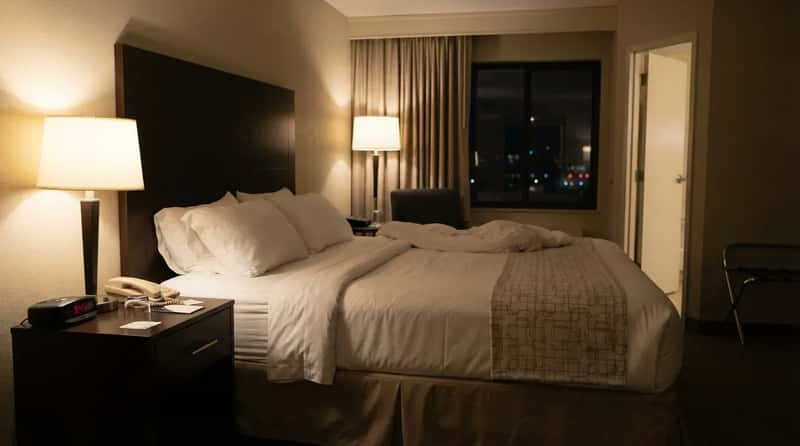
If it feels like turndown shows up less often than it used to, that’s not just nostalgia talking. Shifting guest preferences, sustainability pressures and tighter labor budgets have compelled hoteliers to rethink where turndown fits, and some properties have quietly dropped it.
It’s become a segmentation issue: turndown adds the most measurable value at luxury and upper-upscale properties where evening touchpoints reinforce premium positioning, which means it’s increasingly rare outside that tier. If you’ve noticed it vanishing from hotels you used to count on, you’re not imagining it.
#15 – The pandemic nearly killed this tradition for good

Turndown service took a hit during the pandemic years that many properties never fully recovered from. One longtime traveler noted candidly that the pandemic did not help matters, especially as the practice of automatic housekeeping services on a daily basis was significantly reduced or eliminated altogether.
Some brands brought it back selectively, others let it fade entirely as guests grew used to opting into housekeeping rather than expecting it daily. For a service built on being unannounced and automatic, that shift toward guest-initiated requests changed the entire rhythm turndown teams used to operate on.
#14 – Almost nobody tips for turndown, and the team notices
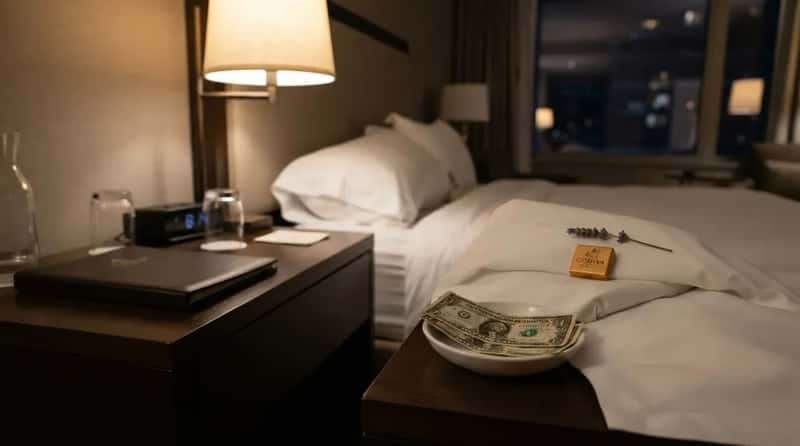
Tipping housekeeping is already inconsistent, but turndown gets stiffed even more often. According to a survey from Bankrate, only 23% of hotel guests leave a tip for housekeepers at all – and turndown, being a separate evening visit, often gets skipped entirely when it comes to gratuity.
When guests do tip, the going rate is modest but appreciated: a $2 to $5 tip left on the pillow or bedside table is standard practice in US hotels, similar to daytime housekeeping. Etiquette experts are blunt about the gap between what should happen and what does, insisting that number really should be closer to 100%.
Fast Facts
- Only 23% of hotel guests tip housekeeping at all
- Typical turndown tip: $2 to $5 left on the pillow or nightstand
- Turndown is a separate evening visit from daytime housekeeping tipping
- Etiquette experts argue the tipping rate should be far higher
#13 – Ultra-luxury hotels have replaced the classic ritual with something stranger

At the very top end of hospitality, turndown has quietly evolved into something almost unrecognizable from the chocolate-and-folded-sheet version. One five-star property runs what it calls “Magic Service,” described as thoughtful touch-ups intended to make guests feel truly cared for, from adding a bookmark to a book to placing a sleep spray on the bedside table.
Elsewhere, wellness-focused resorts have gone even further. One mountain retreat offers guests a self-care kit that introduces Ayurvedic self-care practices designed to restore harmony and aid restful sleep, replenished by the housekeeping team as needed. It’s a far cry from a mint on the pillow, and it’s reshaping what “turndown” even means at the luxury tier.
#12 – One tiny habit at the door saves attendants real time
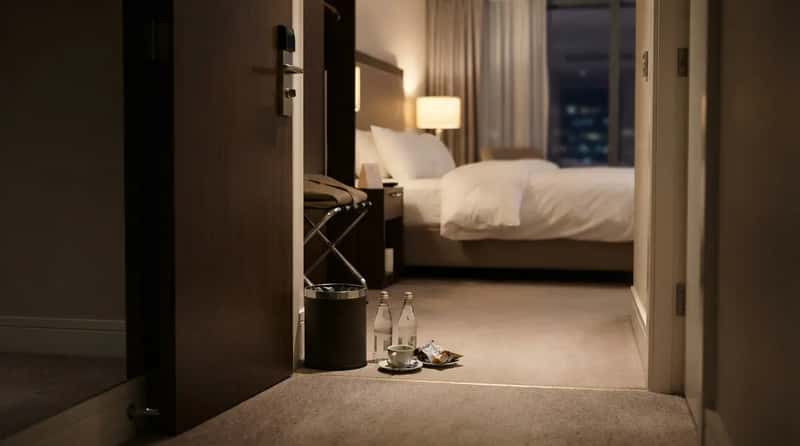
Turndown teams work fast, hitting dozens of rooms in a narrow evening window, and small habits from guests make a measurable difference. One housekeeping manager explained that when guests gather any used cups, empty bottles, or other waste and place them in the trash bin or neatly by the door, it helps minimize clutter and ensures a more thorough refresh of the room.
It’s not about tidying for the sake of appearances – it’s about giving the attendant a clear path to actually do the job well instead of navigating around obstacles. Teams notice which rooms make their job easier, even if they never say so out loud.
#11 – Turndown staff train separately from daytime housekeepers
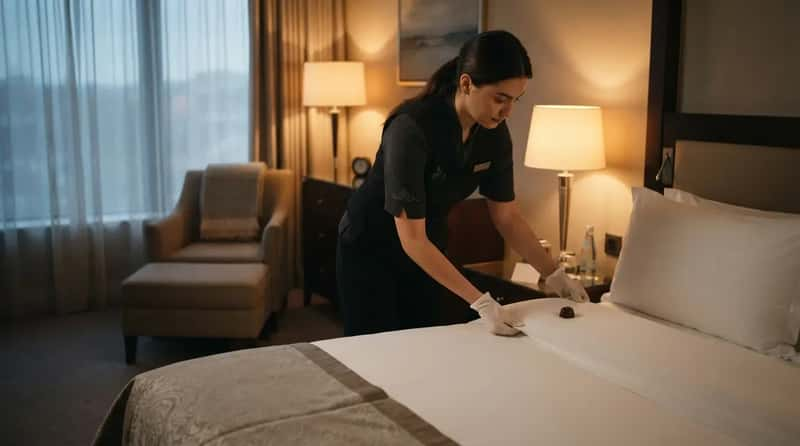
Guests often assume turndown is just an extra shift for the same morning cleaning crew, but that’s not how well-run properties structure it. The turndown attendant is responsible for preparing a guest’s room for sleep each evening, and while the role sits within housekeeping, it requires a distinct set of skills and close coordination across departments.
That distinction matters more than it sounds. Daytime housekeeping is about deep cleaning and efficiency; turndown is about mood, timing, and subtlety, which means the best attendants are trained specifically for the evening role rather than simply rotated in from the morning schedule.
#10 – A one-inch gap in the curtains is a bigger deal than you’d guess
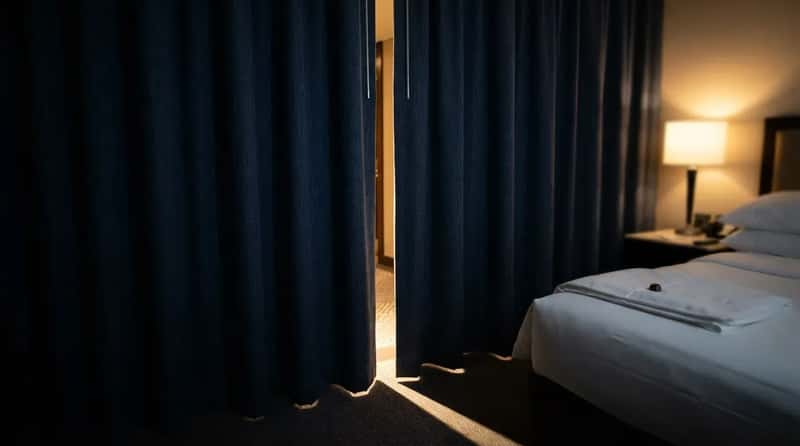
It seems like a trivial detail, but curtain placement is treated as a make-or-break part of the whole visit. The standard exit check requires curtains fully closed with no gap, along with the lighting set to bedside lamps only.
The reasoning is simple: a gap lets in hallway light or early morning sun, undoing the entire point of the atmosphere reset. Attendants are trained to double-check this specific detail before leaving, because it’s one of the few things a guest will notice immediately and blame on a rushed job – even if everything else was done perfectly.
#9 – Most hotels are failing at the personal touches guests actually want
Hotels talk a big game about personalization, but the numbers tell a different story. A 2024 Medallia study of 1,749 hotel guests found that just 23% reported experiencing high levels of personalization during a recent hotel stay, even though personalized touches are among the strongest drivers of satisfaction.
That gap is exactly where turndown has real potential to stand out – a small, well-timed gesture in the evening can do more for a guest’s impression than an entire day of generic service. Properties that treat turndown as an afterthought are leaving one of the easiest wins in hospitality on the table.
Worth Knowing
- 2024 Medallia study surveyed 1,749 hotel guests
- Only 23% reported high levels of personalization during a recent stay
- Personalized touches are among the strongest satisfaction drivers
- Turndown is one of the easiest evening touchpoints to personalize
#8 – Asking for extra blankets or a preference isn’t a bother, it’s the job
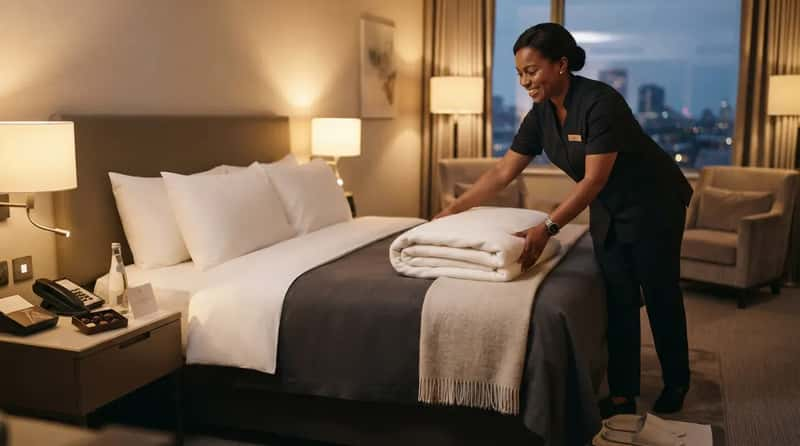
Plenty of guests hesitate to ask for anything extra during turndown, worried they’re being high-maintenance. Turndown teams actually want the opposite – travel etiquette guidance is explicit that guests should communicate their needs to hotel staff if they prefer not to have turndown service or have specific preferences, such as extra pillows or blankets.
Attendants can’t read minds, and a quick note at check-in or a call to the front desk is far easier for them to accommodate than guessing wrong every night. The teams that get this feedback in advance can actually personalize the visit instead of running the same generic routine for every room on the floor.
#7 – Some hotels only turn down rooms in their priciest categories

Turndown isn’t a blanket policy even within a single property – it’s often tiered by room class. Some properties will happily provide it even if it isn’t standard, while others will clarify that they only offer it in premium room categories.
That means two guests staying at the exact same hotel on the exact same night can have completely different evenings, simply based on which floor or suite category they booked. If turndown matters to you, it’s worth asking directly rather than assuming it’s included – the practical move is to ask the front desk at check-in before you get your hopes up.
#6 – What lands on your pillow can depend entirely on what city you’re in
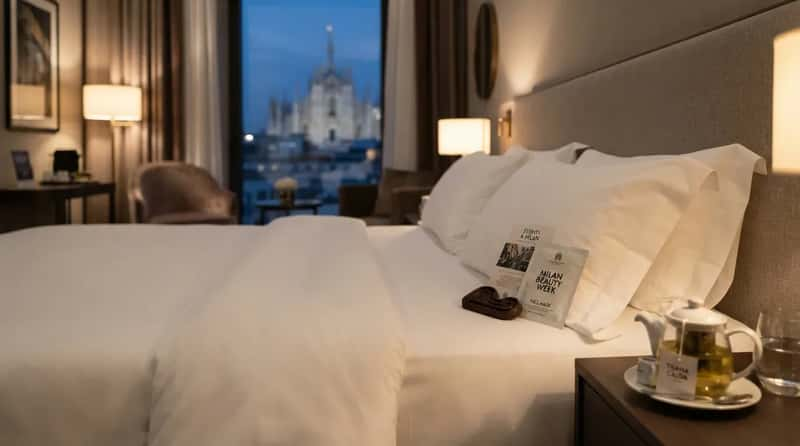
Turndown amenities aren’t standardized across the industry, and location shapes the experience more than most guests expect. At one Milan property, turndown service starts with a cup of warming herbal tea and often reflects the many events held in the design capital, with face masks and skin-care products laid out during Beauty Week, and racetrack-shaped chocolates during the Grand Prix.
That kind of hyper-local detail is becoming more common as hotels compete to make evening service memorable rather than generic. A guest checking into the same brand in two different cities might get a completely different turndown experience, shaped entirely by what’s happening outside the hotel’s front doors that week.
Quick Compare
- Milan property: herbal tea, plus seasonal extras like face masks or racetrack-shaped chocolates
- Ultra-luxury resorts: self-care kits with Ayurvedic-inspired products
- Standard hotels: classic turndown with chocolate and folded linens
- Amenities increasingly shift with local events, not just fixed brand standards
#5 – The “Do Not Disturb” sign is treated as an absolute, no exceptions
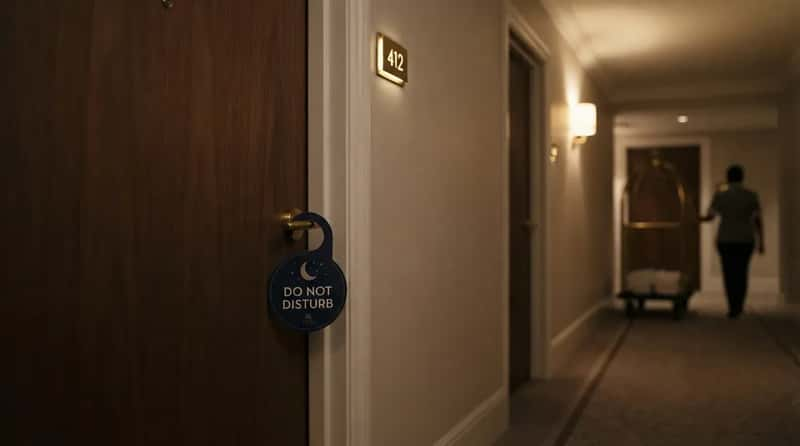
Guests sometimes assume a Do Not Disturb sign only blocks daytime cleaning, but it applies just as strictly to turndown. If a “Do Not Disturb” sign is up or the guest declines, the service is skipped – full stop, no follow-up knock, no rescheduling attempt that night.
This isn’t a soft guideline teams bend for efficiency. This etiquette protects guest privacy and personal belongings, which is a core part of the service’s professionalism, and it’s one of the clearest signals that turndown, for all its rituals, is built around respecting the guest’s space above everything else.
#4 – Guest feedback about turndown actually reaches management

Comments left about turndown – good or bad – aren’t just filed away and forgotten. Standard hospitality etiquette encourages guests to share their thoughts with hotel management to help them improve their offerings when it comes to feedback on the service.
Given how much labor and planning goes into running turndown consistently, that feedback loop genuinely shapes whether a property keeps offering it, expands it, or quietly phases it out. In an era where hotels are already cutting the service to save on labor costs, guest feedback might be one of the few things keeping it alive at properties on the fence.
#3 – Extra guests in the room mean real extra work, not just extra towels
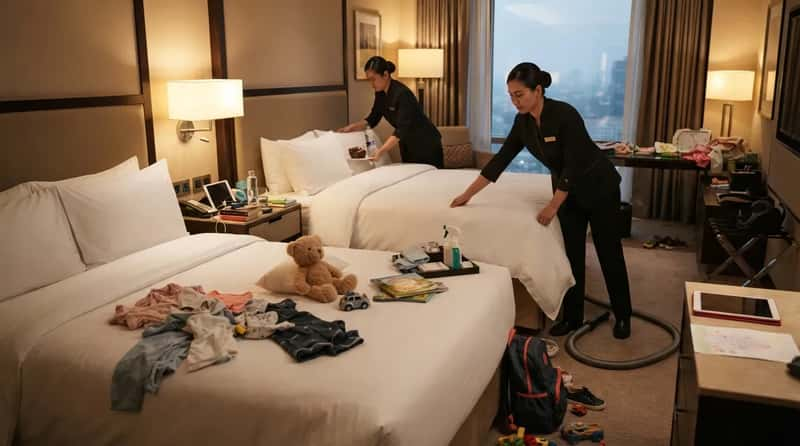
A family of four generates a genuinely different turndown workload than a solo business traveler, and the industry has quietly built that into its tipping guidance. One etiquette expert advises that if a stay involves extra cleaning due to spills or numerous occupants, guests should consider tipping more – for instance, if you have children or are hosting guests, an additional $1 per person can be appropriate.
It’s a detail most guests never think about, but attendants absolutely notice the difference between resetting a single bed and resetting a room with kids’ toys, extra linens, and multiple nightstands to prep. The workload scales even when the room rate doesn’t.
#2 – A two-line thank you note changes an entire shift
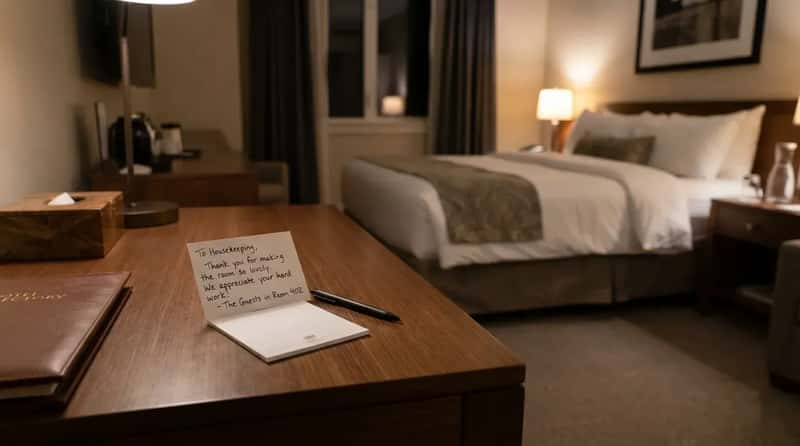
Turndown is one of the most invisible jobs in a hotel – attendants work while guests are out, and most guests never see the person responsible for their cozy room. Basic hospitality etiquette suggests guests express their gratitude to housekeeping staff for their efforts, since a simple thank you goes a long way in acknowledging their hard work.
For a role that gets almost no face time and rarely gets tipped, a short note left on the desk means more than most guests realize. It’s one of the cheapest, easiest gestures a guest can make – and one of the rarest.
#1 – The last hands to touch your room each night are the ones guests forget the most
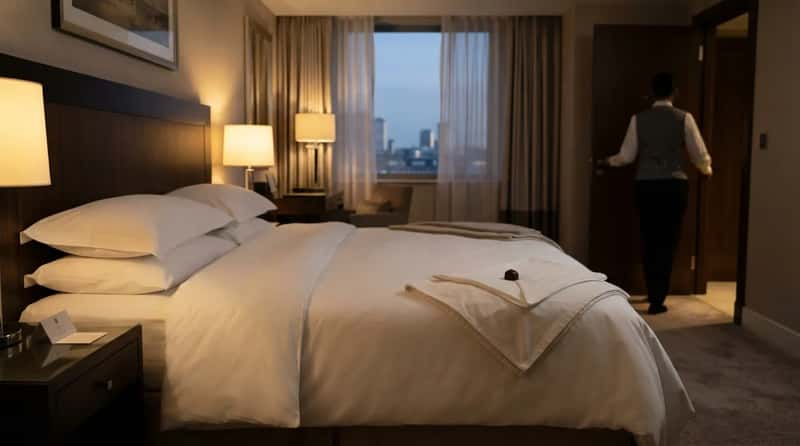
After 25 other details, this is the one turndown teams wish guests actually internalized: they are the final human touchpoint of your entire day, and almost nobody acknowledges it. You never see them work, you rarely tip them, and unless something’s visibly wrong, you probably don’t think about them at all – yet they’re the reason you walk into a dark, quiet, ready room instead of the chaos you left behind that morning.
That gap between how much care goes in and how little recognition comes out is the real story of turndown service. It’s not really about chocolate or folded sheets – it’s about a team of people who shape the very last moments of your day, working entirely out of sight, for a tip that only about a quarter of guests ever bother to leave.
Turndown service turns out to be a lot stranger, older, and more deliberate than the little bonus most travelers assume it is – a centuries-old ritual for royalty, a scandal-adjacent chocolate tradition, and a precisely trained routine that’s disappearing from more hotels than you’d think. The teams behind it don’t expect applause, but a knock answered, a towel hung up, or a two-dollar tip on the pillow means more than most guests will ever realize.
Did your favorite hotel ever quietly drop turndown service – or surprise you with something better than a chocolate on the pillow? Tell us about it in the comments.