Most people assume the worst part of a school-holiday flight is a screaming toddler or a kid kicking the seat in front of them. Flight attendants tell a different story. Survey after survey – including one from Expedia that found “inattentive parents” ranked as the single most annoying type of flier, ahead of even seat-kickers and drunk passengers – points to the adults, not the kids, as the real source of cabin chaos.
Talk to crew members who’ve worked a decade of holiday rushes and the same stories come up again and again – some funny, some genuinely stomach-turning. Here’s what actually happens in row 24 once the seatbelt sign goes off.
#27 – Cranking Cartoons Without Headphones for Six Straight Hours
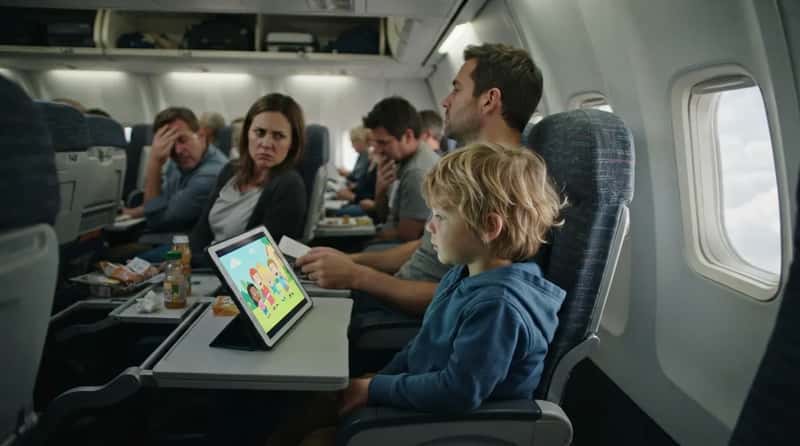
Nothing tips off a flight attendant to a rough flight faster than a tablet propped on a tray table with the volume maxed out. It seems harmless to a distracted parent, but for the 40 rows around them, it’s an instant headache. Crew members say this is one of the most preventable annoyances in the sky, and yet it happens on almost every holiday flight.
The fix costs about fifteen dollars and takes zero effort: kid-sized headphones packed the night before. Parents who skip this step often don’t realize how far tinny cartoon audio travels through a metal tube. The worst offenders are usually the ones most surprised when someone finally complains. By then, half the cabin has already sat through three episodes of the same show.
#26 – Boarding With a Stroller, Car Seat, and Four Bags at Once
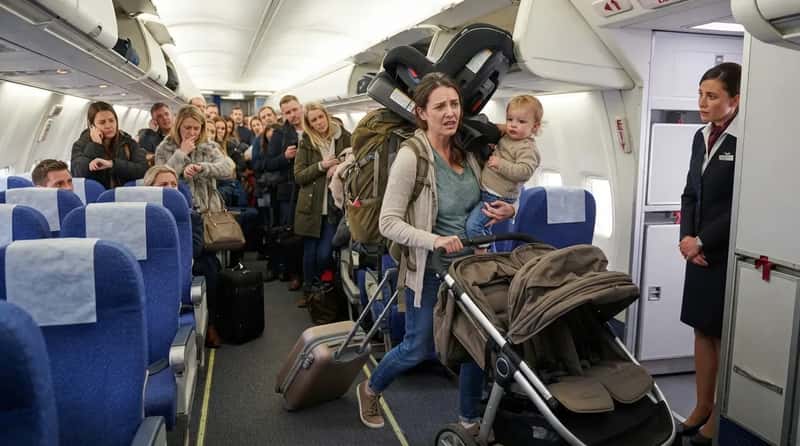
Holiday travel means families pack heavier, and that gear has to get down a narrow aisle somehow. Flight attendants describe watching parents try to fold a stroller, hold a baby, and drag a car seat all at the same time while the entire boarding line stacks up behind them.
It’s not that families are wrong to bring gear – it’s the lack of a plan that turns it into a slow-motion traffic jam. Pre-boarding exists specifically to solve this, yet plenty of parents skip it out of pride or habit. The families who ask for pre-boarding get through in under a minute; the ones who don’t can hold up boarding for five. That’s a cost measured in dozens of annoyed strangers, not just the parents’ own stress.
#25 – Letting the Tray Table Become a Drum Kit
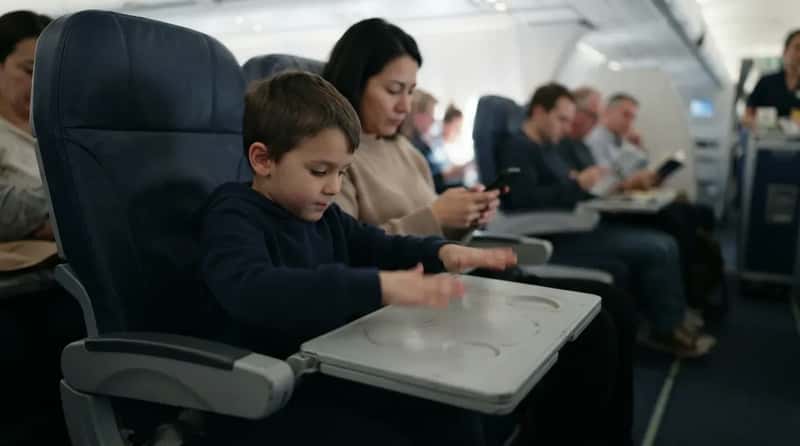
Turbulence isn’t the only thing that rattles a cabin during holiday season. Flight attendants routinely watch kids bang, flip, and slam tray tables for entire flights while parents stay buried in their phones. It sounds minor until you’re the person trying to nap two rows back.
The habit isn’t really about the kid – it’s about parents who checked out the second the plane hit cruising altitude. A five-minute activity bag handed over at takeoff prevents almost all of it. The tray-table drumming almost always traces back to boredom, not misbehavior. A coloring book or sticker set solves what a stern look never will.
#24 – Ignoring the Seatbelt Sign the Second It Turns Off
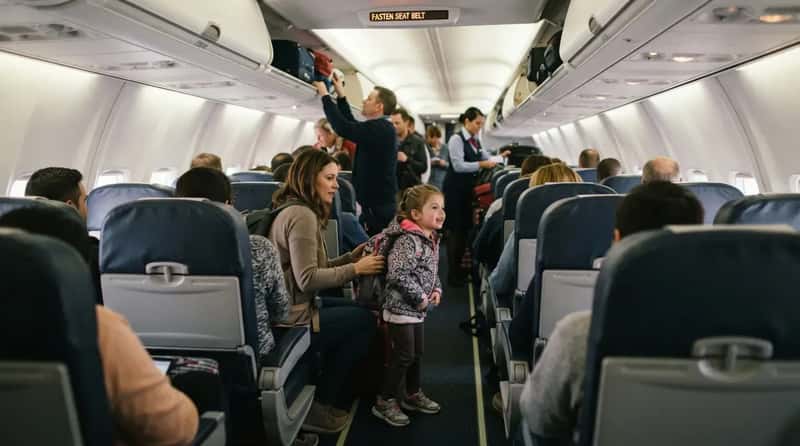
The moment the chime sounds, some parents treat it as a starting gun for kids to unbuckle, stand up, and start exploring. Flight attendants say this happens constantly during peak holiday travel, when cabins are fuller and aisles are already tight.
The bigger issue is what happens next: unexpected turbulence, the kind that isn’t forecast. Crew members have seen unrestrained toddlers thrown into aisles or seatbacks during sudden air pockets. Most turbulence injuries involve people who weren’t buckled in when it hit – including kids. Parents who keep that belt fastened “just in case” are doing the one thing that actually matters most.
Fast Facts
- The FAA recommends keeping kids buckled anytime the seatbelt sign is on, even if the ride feels smooth.
- Serious turbulence can appear with almost no warning at cruising altitude, long after the sign has been switched off.
- Children under 2 can technically fly on a lap, but a separate seat with an approved child restraint is the safer option.
- A buckled child rarely gets hurt when a plane suddenly drops – an unbuckled one almost always moves.
#23 – Changing Diapers at the Seat Instead of the Lavatory
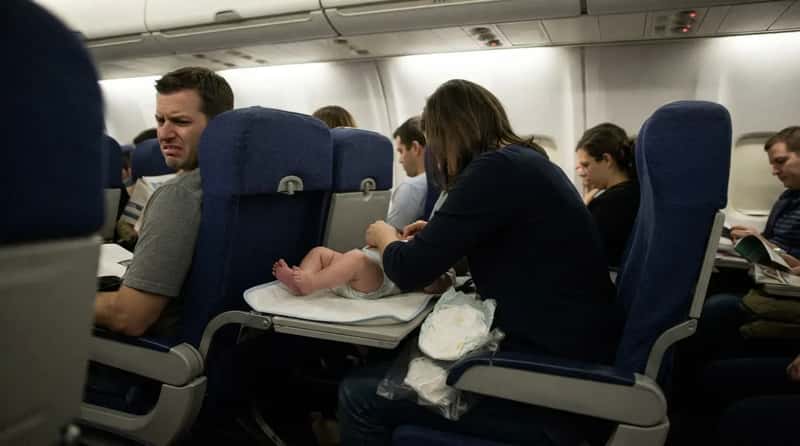
It seems faster than waiting in a bathroom line, but flight attendants say this happens on nearly every flight with babies aboard. It shows up most when the diaper is “just wet” or the lavatory line looks long, and parents decide the risk is worth skipping the walk.
The problem isn’t just etiquette – it’s hygiene for everyone within a few rows. Crew members describe the smell lingering long after the diaper is gone, with nowhere for it to circulate but recycled cabin air. What starts as a two-minute shortcut often becomes the thing every nearby passenger remembers about the flight. The lavatory line is annoying, but it exists for a reason.
#22 – Handing a Dirty Diaper Directly to the Crew
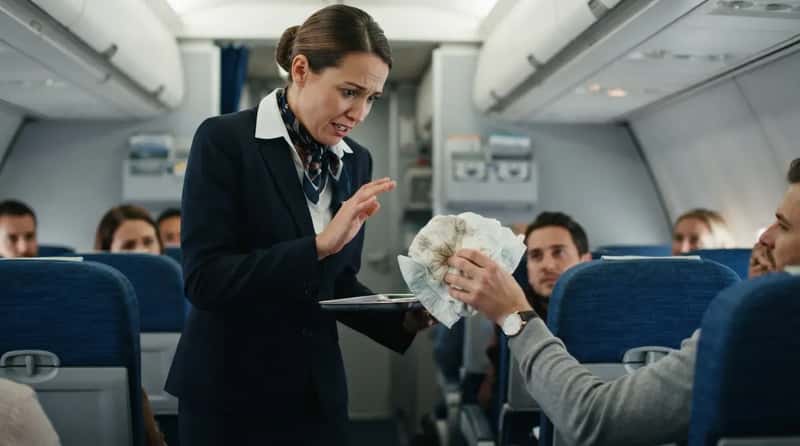
This one genuinely stuns flight attendants every single time it happens, and it happens more than most people would guess. One veteran flight attendant put it bluntly: “No dirty diapers, no bloody nose tissues, no diabetic needles and nothing else that might have bodily fluids on it – that’s all hazardous waste.”
The same flight attendant recalled being handed a used diaper straight into her hands, calling it flatly: “The worst is when people try and hand it directly to me … into my hands.” Crew members aren’t equipped or allowed to handle biohazard waste bare-handed. Every flight attendant who talks about this mentions it as one of the grossest habits they see repeat, holiday after holiday. The lavatory trash bin exists for exactly this reason.
#21 – Boarding With Zero Snacks Packed
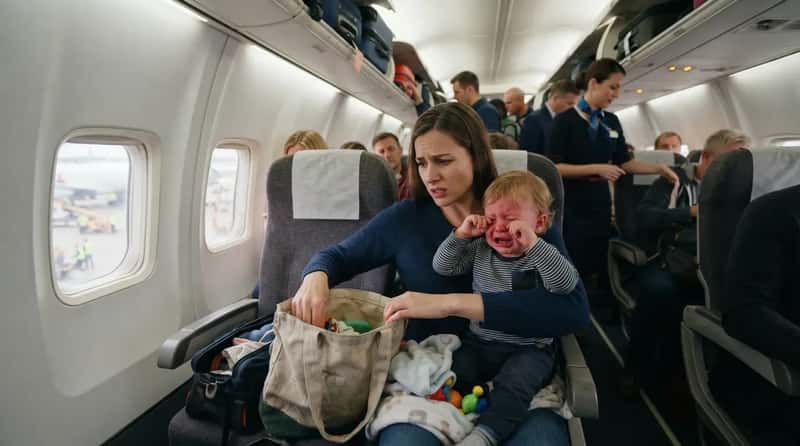
Holiday flights get delayed. Meal service gets pushed back. A hungry toddler on a three-hour delay is a recipe crew members know all too well. Flight attendants say the parents who show up with nothing to eat are almost always the ones asking crew for extra snacks an hour into the flight.
It’s an easy problem to solve on the ground and a hard one to fix mid-flight, since snack carts are limited and service is often delayed on holiday routes. A hungry kid at 30,000 feet escalates fast, and crew have far fewer tools to fix it than a parent with a granola bar in their bag. Packing snacks isn’t optional during peak season – it’s crowd control.
#20 – Letting Kids Run Laps Up and Down the Aisle
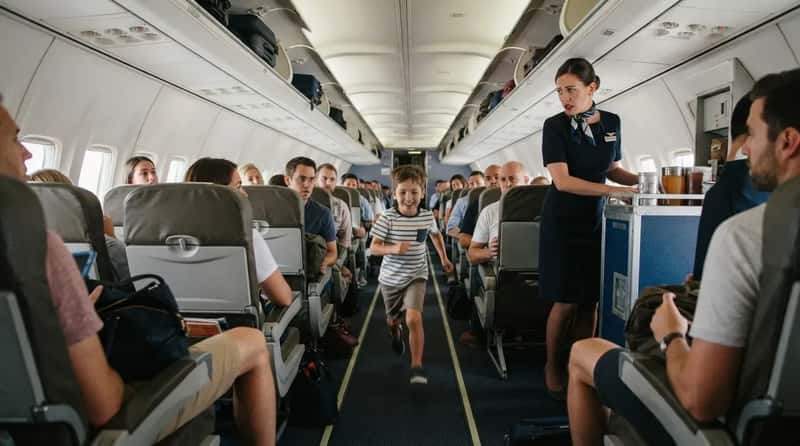
A little movement before a long flight makes sense. But flight attendants describe holiday flights where kids treat the aisle like a hallway at home, running back and forth while parents watch from their seats. It’s a safety issue as much as an annoyance one – carts, luggage, and other passengers’ legs are all obstacles.
Crew members say this habit spikes specifically during school breaks, when flights are packed with families and kids have pent-up energy from sitting still at the gate. The aisle is the one part of the plane where a sudden stop by the beverage cart can turn “cute” into “injury” in seconds. A seatbelt sign isn’t the only reason to keep kids seated.
#19 – Treating the Call Button Like a Nanny Hotline
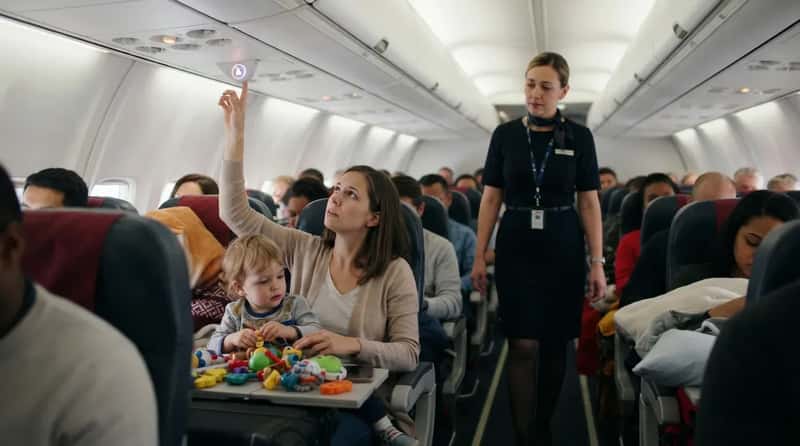
Some parents press the call button for anything and everything – a dropped toy, a spilled drink, a request to “watch” the kid while they sleep. Flight attendants say this spikes noticeably during holiday travel, when crews are already stretched thin across full cabins.
Most flight attendants genuinely want to help – many will happily hold a baby for a few minutes so an exhausted parent can eat or use the bathroom. But there’s a difference between asking for that help and expecting full-time childcare. Crew members say the parents who ask nicely almost always get more help than the ones who summon them like room service. Tone matters more than most parents realize.
#18 – Kicking the Seat Back Nonstop While Parents Scroll
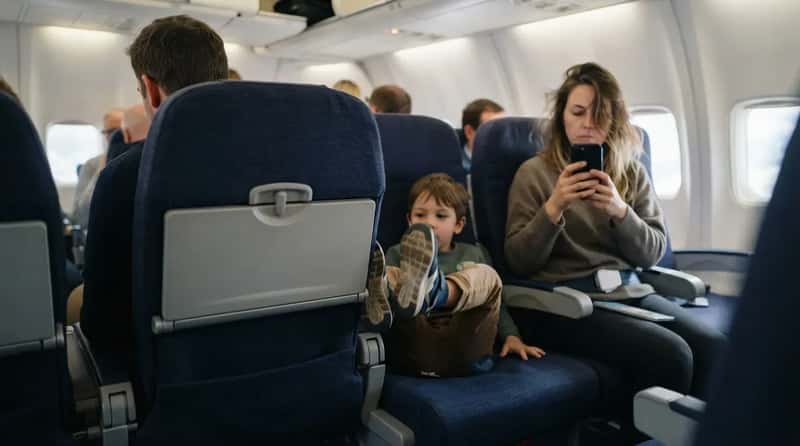
This is the complaint that shows up in nearly every passenger survey about air travel, and holiday season is when it peaks. One major etiquette survey found the “rear seat kicker” ranked as the second most annoying type of flier overall, just behind inattentive parents.
Flight attendants say the pattern is almost always the same: a bored kid, a parent absorbed in their phone or a movie, and zero acknowledgment that anything’s happening. The person in front usually complains to the flight attendant before they ever say a word to the parent. A simple “please stop kicking the seat” from mom or dad solves ninety percent of these situations before crew even gets involved.
#17 – Loading Kids Up on Sugar Right Before Boarding
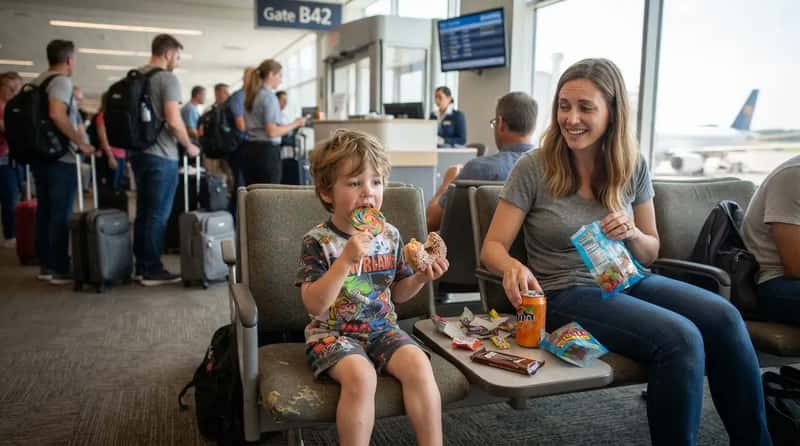
Vacation mode makes a lot of parents loosen the rules, and one of the first things to go is snack discipline. Flight attendants describe watching parents hand out candy, soda, and airport treats right before a flight, then wonder why their kid is bouncing off the seatback twenty minutes later.
It’s an understandable instinct – a treat to keep the peace at the gate – but crew members say the timing backfires almost every time. A sugar crash mid-flight is far harder to manage in a cramped seat than a sugar crash on solid ground. Holiday travel already runs on adrenaline and exhaustion; adding a sugar spike rarely ends quietly.
#16 – Skipping the Safety Briefing Because “We’ve Heard It Before”
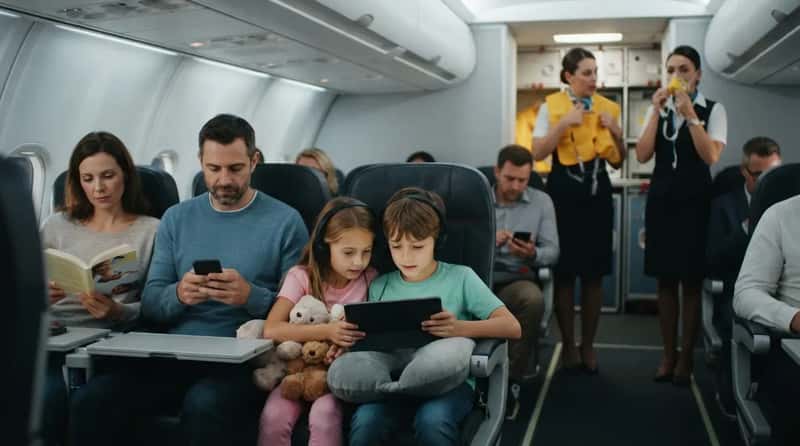
Frequent-flying families sometimes tune out the safety demo entirely, letting kids play games or watch shows straight through it. Flight attendants notice this constantly on holiday routes packed with families who fly the same trip every year.
The habit isn’t just about missing information – it models for kids that safety instructions are optional background noise. Crew members say the families who actually watch, even briefly, tend to be the ones whose kids stay calmer during real turbulence or delays later in the flight. Kids pick up on what their parents treat as important, and safety briefings are no exception. A minute of attention sets the tone for the whole trip.
#15 – Letting Kids Climb Over Seats to Greet Strangers
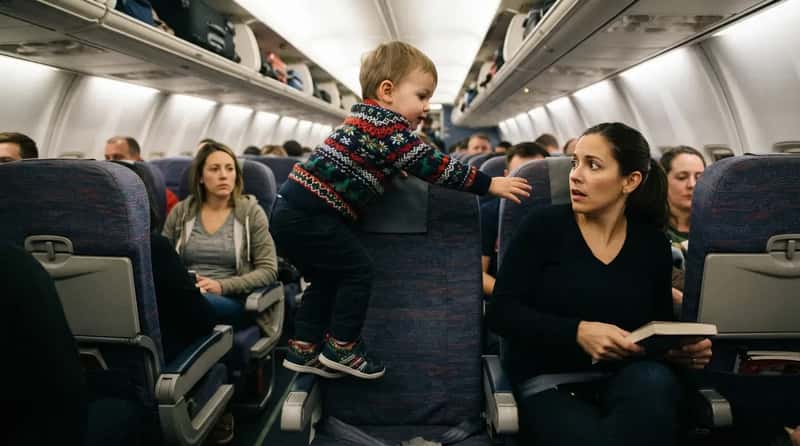
It happens more during holidays than any other time of year: a toddler spots something interesting two rows back and simply climbs over the seat to get there, parent barely reacting. Flight attendants say strangers are generally patient about a lot of things – this isn’t one of them.
Beyond the obvious personal-space issue, seatbacks aren’t built to be climbing equipment, and crew members have seen kids slip and hit armrests or tray latches. Most passengers won’t say anything the first time, but by the third seat-climb of the flight, patience runs out fast. A quick redirect from mom or dad prevents an awkward confrontation nobody wants.
#14 – Packing Every Toy in the House and Jamming the Overhead Bins
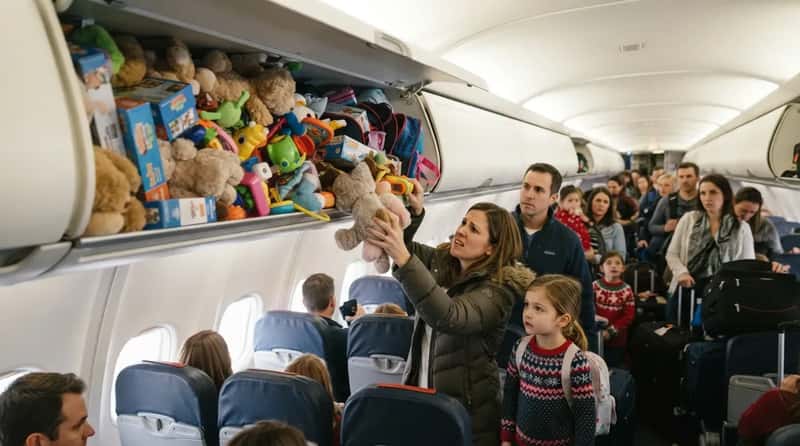
Holiday flights already run tight on bin space with everyone traveling for the same week. Flight attendants say families who overpack toys – full bins of stuffed animals, board games, and extra gadgets – often end up fighting for space that simply isn’t there.
The result is a boarding delay while parents try to Tetris everything into a bin, holding up rows of passengers behind them. A smaller, curated activity bag works better anyway, since kids get overwhelmed by too many choices at once. The families who bring less often report calmer kids than the ones who bring everything. More toys rarely means less boredom.
#13 – Fighting With Crew Over Seat Swaps for Family Togetherness
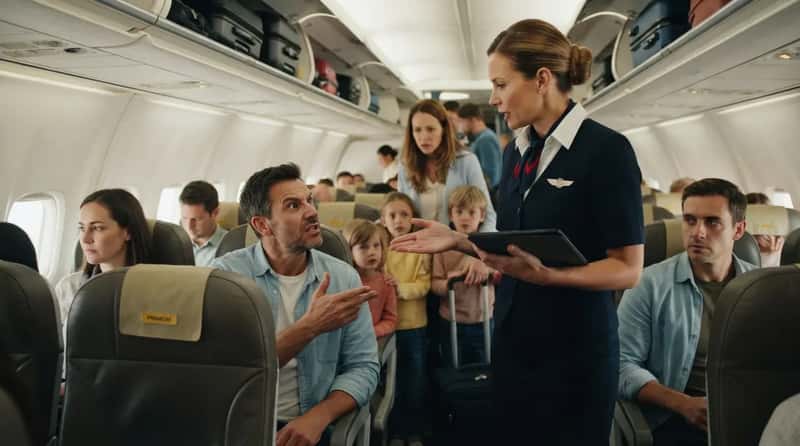
Booking separate seats to save money, then demanding strangers move so the family can sit together, is a habit flight attendants say spikes hard during school holidays when fares are highest and seats are scarcest. One widely shared story involved a passenger being asked to voluntarily downgrade to a different cabin entirely just so a family could sit together.
Crew members are sympathetic to families, but they’ve also watched plenty of passengers get guilt-tripped into giving up seats they paid extra for. Flight attendants increasingly side with the passenger who booked ahead and planned, not the family who assumed strangers would fix their seating gamble. Booking together early avoids the whole showdown.
Quick Compare
- Book seats together at purchase: guaranteed togetherness, no awkward mid-flight ask.
- Book cheapest seats separately: real risk of scattered rows, depends entirely on a stranger’s willingness to swap.
- Call or message the airline early: some carriers can adjust seating once a family is flagged, before boarding day chaos starts.
- Wait until boarding to ask row mates: the least reliable option, and the one most likely to end in a tense exchange.
#12 – Skipping Pre-Boarding, Then Holding Up the Whole Line
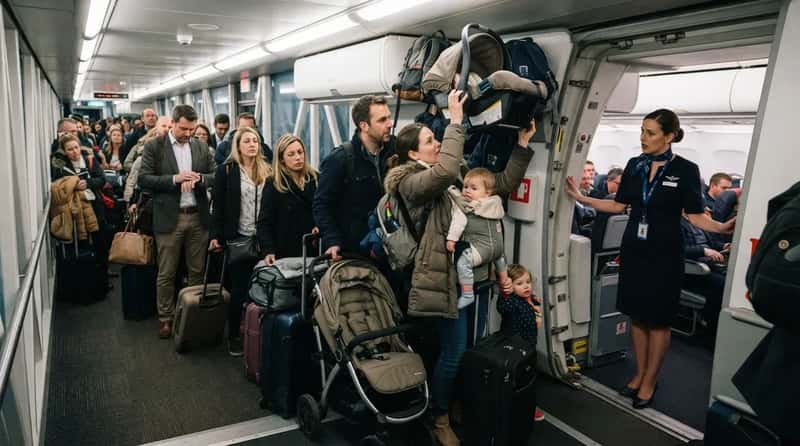
Pre-boarding exists specifically for families with small kids, yet flight attendants say plenty of parents skip it – sometimes out of pride, sometimes because they don’t realize it’s available to them. The result is the same every holiday season: a family struggling with car seats and strollers mid-boarding while the line backs up behind them.
Crew members actively want families to use this option; it’s not a hidden VIP perk, it’s built into the boarding process for exactly this reason. The single biggest boarding delay flight attendants report during school holidays traces back to families who could have pre-boarded and didn’t. Asking at the gate takes ten seconds and saves everyone time.
#11 – Letting Devices Play at Full Volume With No Headphones at All
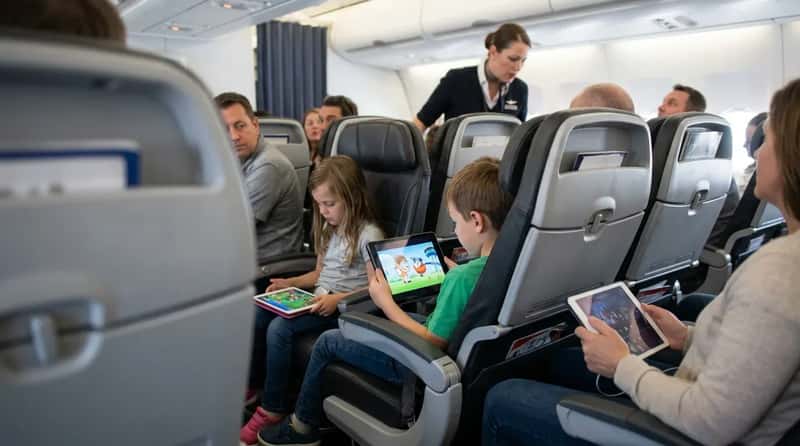
This goes a step further than forgetting headphones – some parents simply don’t bring any device sound management whatsoever, letting games, videos, and apps blare unchecked for hours. Flight attendants say holiday flights are when this shows up most, since families are more likely flying with multiple kids and multiple devices at once.
The cumulative effect of two or three unmuted tablets going at once turns a quiet cabin into chaos fast. Crew members say the complaints about noise almost always trace back to devices, not the kids’ natural volume. A single pair of headphones per child solves a problem that otherwise irritates an entire section of the plane.
#10 – Packing No Spare Outfit for Spills or Accidents
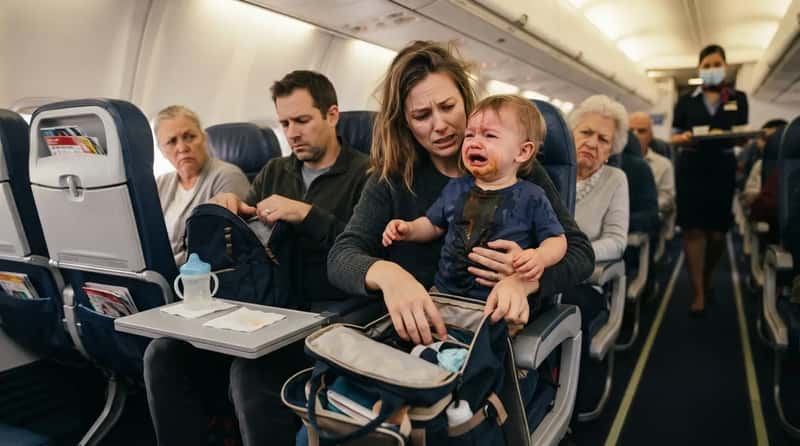
Spilled juice, motion sickness, diaper blowouts – flight attendants say it’s not a matter of if these things happen on a long holiday flight, it’s when. And yet plenty of parents board without a single backup outfit packed in their carry-on.
The result is a kid stuck in wet or soiled clothes for the rest of a multi-hour flight, which almost always leads to a meltdown that could’ve been avoided. One extra outfit in a bag prevents most of the worst in-flight meltdowns crew members witness. The parents who pack it handle these moments calmly; the ones who don’t spend the rest of the flight apologizing to nearby rows.
#9 – Getting Defensive Instead of Accepting Help
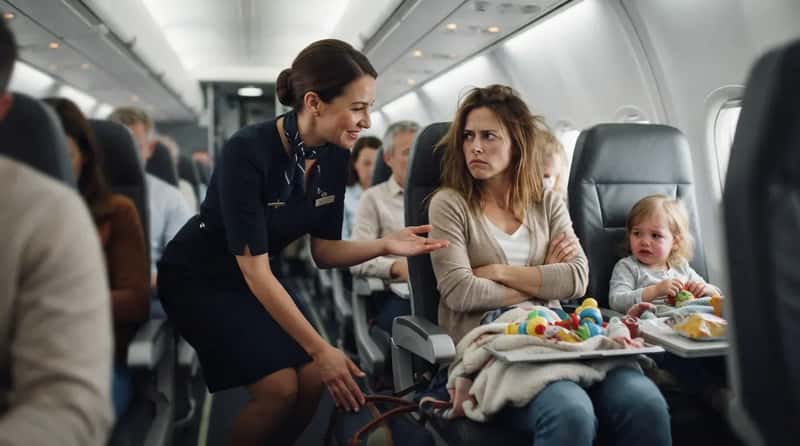
Flight attendants consistently say they want to help stressed-out parents, but pride gets in the way more than people realize. One former flight attendant explained the mindset directly: “When people purchase a ticket they know they will be traveling with the general public, so it’s not your fault if people are annoyed.”
She added that plenty of crew members are ready and willing to step in: “If you ever need help or a moment to eat, use the restroom or just take a break during flight, I know quite a few flight attendants who would be happy to help you.” The parents who accept an offered hand almost always have an easier flight than the ones who insist they’ve got it under control. Pride doesn’t survive a six-hour flight with a toddler.
#8 – Letting Toddlers Stand on the Seat Facing Backward
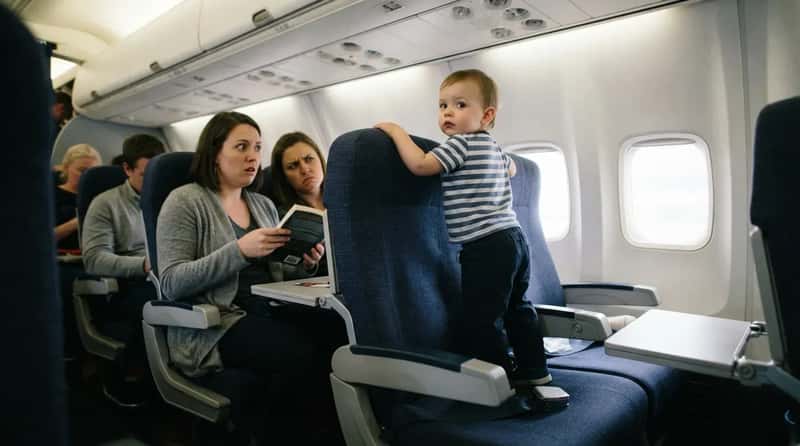
It’s a classic move to entertain a restless toddler – turning them around to face the row behind, letting them stand and stare at strangers. Flight attendants say it happens on almost every holiday flight with a toddler under three, and it usually annoys the row behind more than the parents realize.
Beyond the awkwardness for the person suddenly being stared at for an hour, standing unrestrained during turbulence is a genuine fall risk. Crew members have had to intervene mid-flight to get kids back into a seated, buckled position. What looks like harmless entertainment is one of the more common in-flight injury risks crew members actually worry about. A window seat and a book solve the same boredom more safely.
#7 – Unbuckling Kids Mid-Flight to “Calm Them Down”
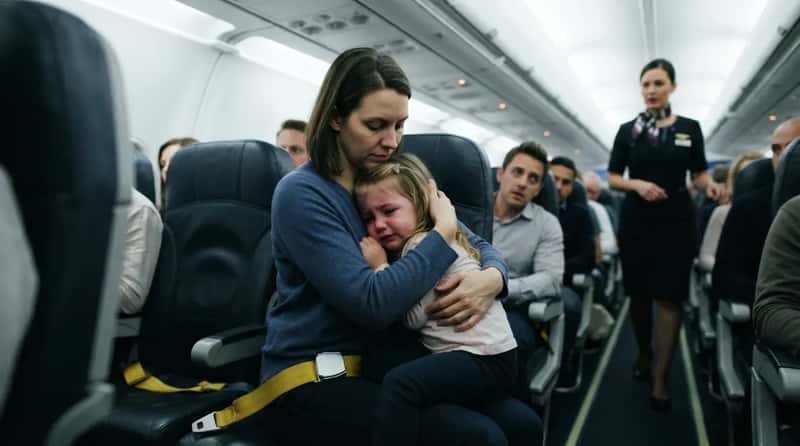
Some parents believe holding an unbuckled child soothes them faster during turbulence or takeoff anxiety. Flight attendants say this is one of the more dangerous habits they see repeated every holiday season, and it usually comes from good intentions gone wrong.
Unexpected turbulence doesn’t announce itself, and an unbuckled child in a parent’s arms has nowhere to go but into the seatback, the aisle, or the ceiling during a sudden drop. The safest place for a scared child during turbulence is buckled into their own seat or a proper child restraint, not free-floating in a parent’s lap. Comfort matters, but crew members are firm that buckled-in beats held-tight every single time turbulence hits without warning.
#6 – Blocking the Galley and Lavatory Line With Strollers and Bags
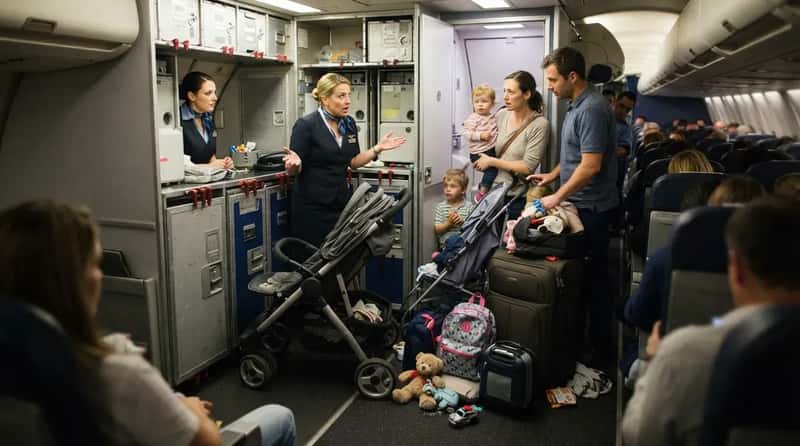
Space near the galley is tight even without extra gear, and flight attendants say holiday flights bring a predictable pile-up of strollers, diaper bags, and loose toys parked right where crew needs to move. It slows down service for the whole cabin, not just the family involved.
Most families don’t realize how much that galley space matters until they’re stuck waiting for a meal cart that can’t physically get through. A blocked galley on a full holiday flight can add several minutes to service for every single row behind it. Stowing gear properly under the seat or in the overhead bin keeps things moving for everyone.
#5 – Assuming the Crew Will Watch the Kids During a Nap or Drink
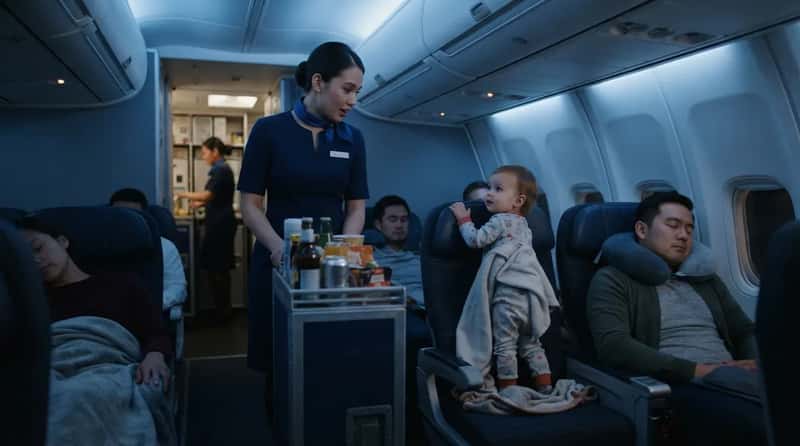
This habit ramps up specifically on overnight and long-haul holiday flights, when exhausted parents decide it’s their turn to sleep and quietly assume crew will keep an eye on their kid. Flight attendants say it happens more than passengers would guess, and it puts crew in an impossible position – they have safety duties that don’t pause for babysitting.
Most crew members will genuinely lend a hand for a few minutes if asked directly, but that’s different from being expected to monitor a wandering toddler for an hour while working service. Flight attendants aren’t licensed childcare, and holiday season is when that boundary gets tested the most. A polite ask beats a silent assumption every time.
Worth Knowing
- Flight attendants are trained first and foremost for safety and emergency response, not for supervising children.
- Federal staffing rules keep crew focused on evacuation readiness and service, with no built-in role for babysitting.
- Many crew members will still hold a baby or grab a toy for a few minutes if a parent simply asks.
- A rotating plan between two traveling adults works far better on overnight flights than hoping the crew will fill in.
#4 – Letting a Meltdown Escalate for the Whole Cabin to Absorb
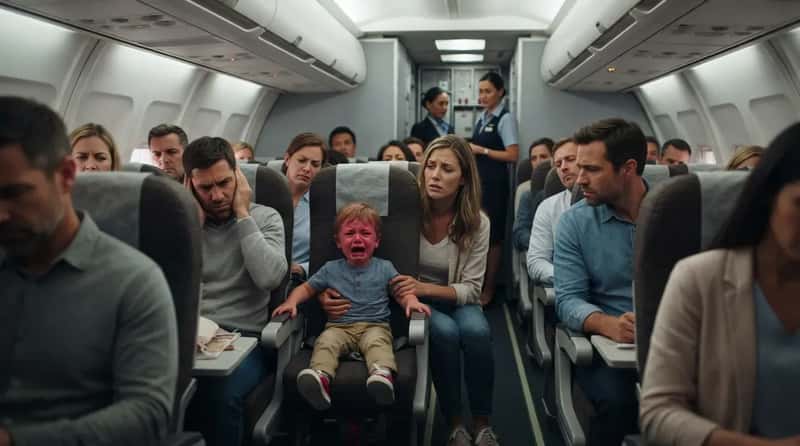
Every flight attendant has a story about a meltdown that could’ve been de-escalated in minutes but instead ran for an hour because the parent froze, gave up, or got into a battle of wills mid-flight. Holiday flights, packed and delayed more often, are when tempers – kids’ and adults’ – run shortest.
Crew members say the difference between a five-minute cry and a forty-minute one almost always comes down to how quickly a parent steps in with distraction, comfort, or a change of scenery like a short walk to the back galley. The cabin rarely blames the crying kid – they blame however long the situation is allowed to drag on. Quick action beats waiting it out.
#3 – Letting a Child Use a Drink Cup Instead of the Lavatory
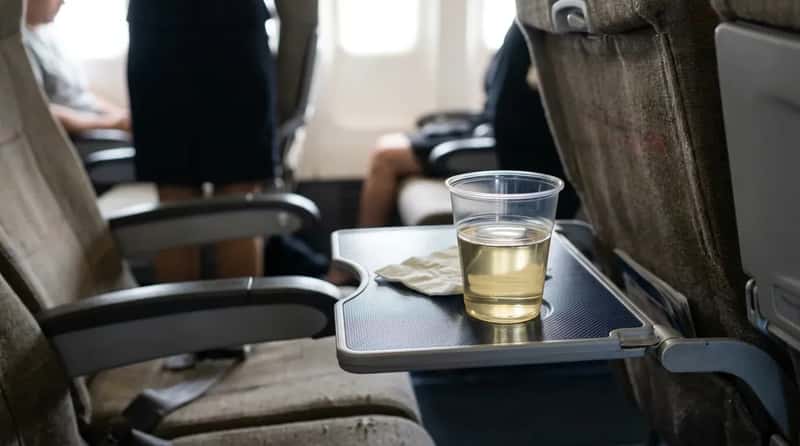
Rare, but flight attendants who’ve worked long enough have a story like this one, and it’s become something of a legend in crew circles. One flight attendant recalled: “My eyes almost popped out of my head when I saw the boy standing on the seat naked, his mother holding him as he peed into one of our plastic beverage cups.”
It gets worse: the same crew member described what happened next, when the parent tried to hand the cup back on the trash sweep – a cup that clearly “isn’t apple juice” hidden in plain sight. This is the story flight attendants tell new hires as the absolute worst-case scenario of what a lavatory line can push a desperate parent to do. The lesson is simple – the line is annoying, but it beats the alternative every single time.
#2 – Blaming Nearby Passengers Instead of Managing Their Own Kid
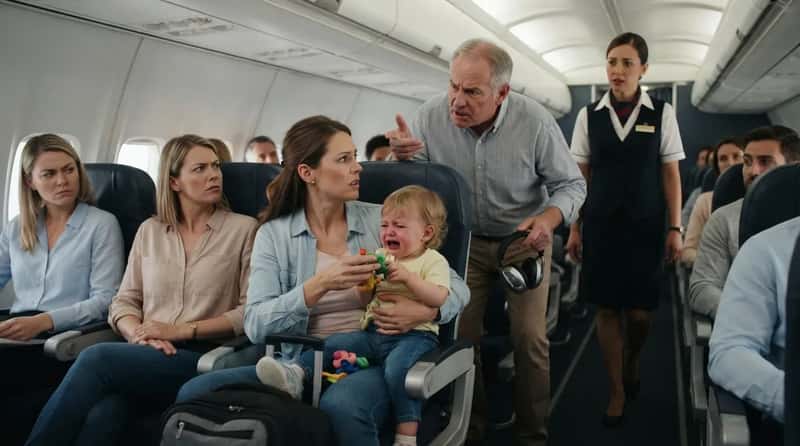
A viral moment from a former flight attendant named Kat Kamalani reframed this entire debate: her real pet peeve wasn’t crying babies at all. It’s the parents who turn a fussy moment into a public standoff with a stranger instead of just tending to their own kid.
I promise you, there’s nothing that irritates us more … than when people complain about a baby crying.
Kat Kamalani
Her advice to onlookers doubled as advice to overwhelmed parents too: bring noise-canceling headphones, or just ask the parent if they need help. Crew members overwhelmingly say the parents who ignore complainers and just tend to their kid have calmer flights than the ones who engage. Energy spent arguing is energy not spent soothing.
#1 – Apologizing Nonstop Instead of Just Handling It
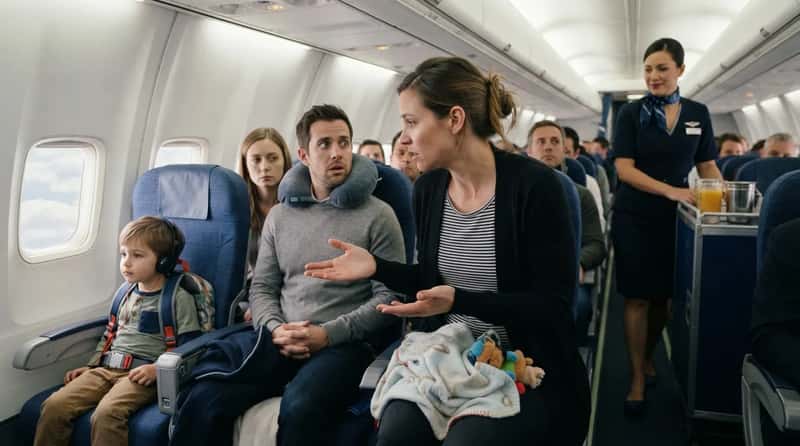
The single most common habit flight attendants report every school holiday isn’t misbehavior at all – it’s parental guilt spiraling into constant, anxious apologizing to every row within earshot. Crew members say it’s almost universal, and it rarely helps anyone, least of all the stressed-out parent doing it.
One former flight attendant put it plainly, encouraging parents to drop the guilt entirely and simply ask for help when they need it. Crew members consistently say the calmest flights aren’t the ones with the quietest kids – they’re the ones where parents stop performing an apology tour and just focus on their child. The apologies rarely change how the row behind feels, but they do drain the exact energy a parent needs most. Confidence, not constant sorry’s, is what actually gets a family through six hours in the air.
None of this means kids are the problem – flight attendants say, over and over, that the kids are rarely the issue at all. It’s the habits, the assumptions, and the small shortcuts parents take under pressure that turn a manageable flight into a memorable one for all the wrong reasons.
Every habit on this list has an easy fix, and most of them cost nothing but a little planning the night before. Which one surprised you most – and which one have you actually witnessed firsthand?