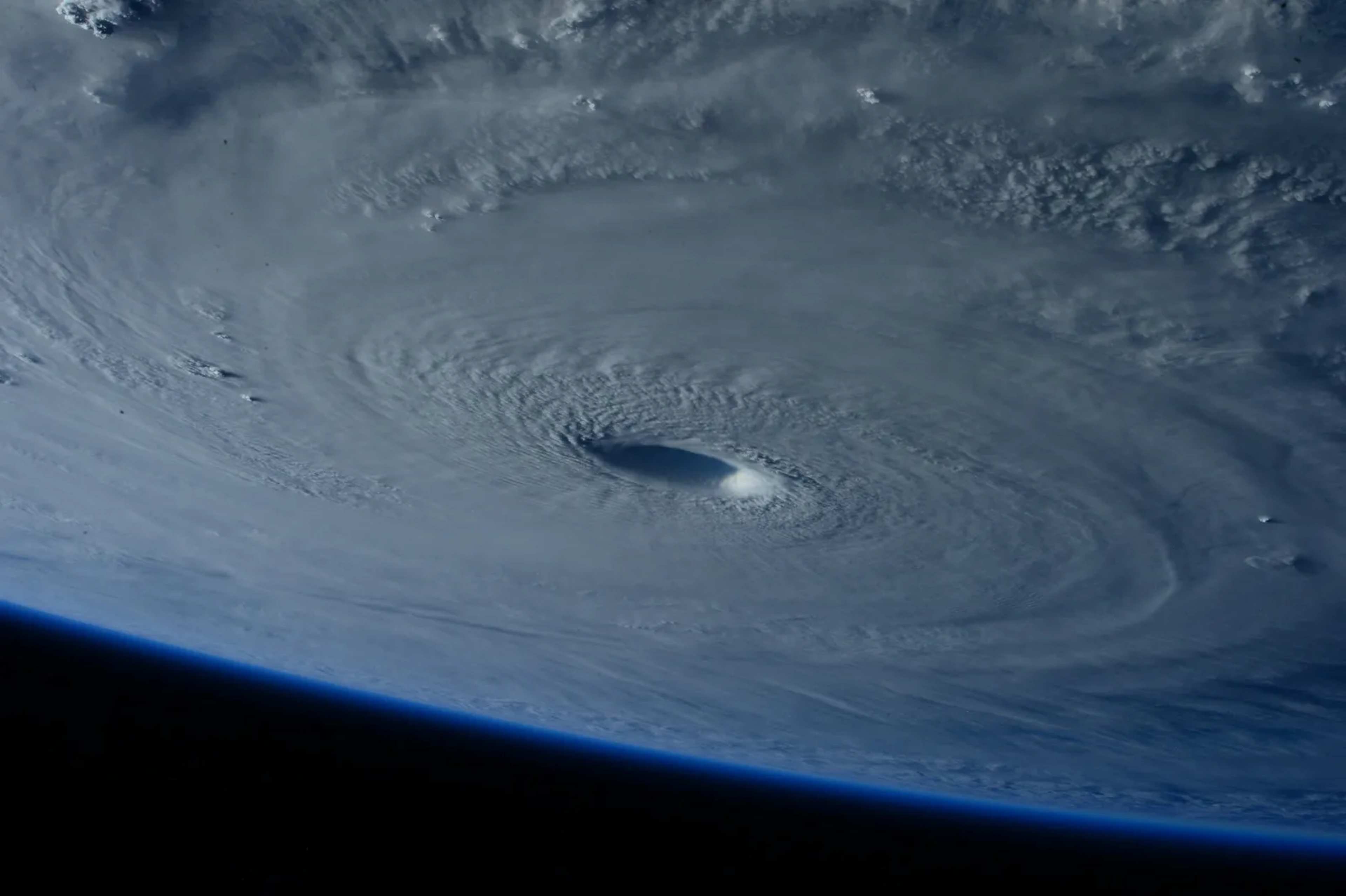
Picture a snowed-in airport and you probably picture chaos: cranky staff, dead phone chargers, gate agents who vanish the second the departure board turns red. That image isn’t wrong. But it hides something almost nobody talks about – behind the scenes, airport workers routinely do things nobody asked them to do, with no policy requiring it and no bonus waiting for them.
Some of it is small, like a blanket appearing on a cold bench at 3 a.m. Some of it is enormous, like engineers braving freezing temperatures to unload luggage by hand while a terminal quietly turns into a shelter. Here’s what actually happens when the weather turns and the rulebook runs out.
1. Blankets and pillows show up before anyone begs for them
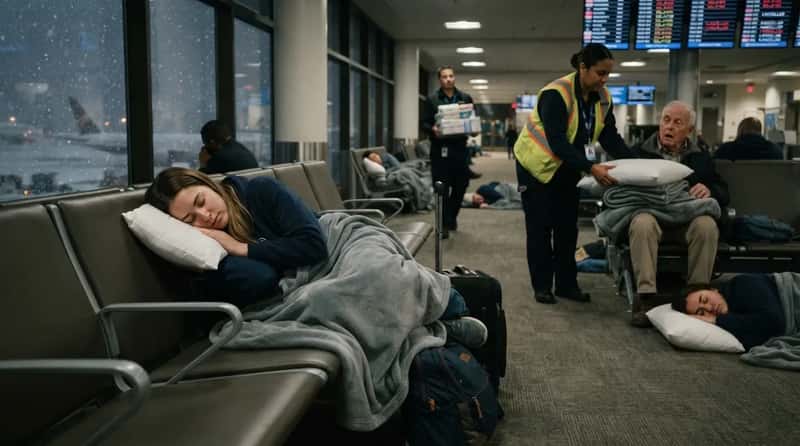
When a storm strands thousands overnight, the first courtesy people notice is the softest one. Staff quietly start distributing blankets and pillows to travelers curled up on floors and benches, often long before any official announcement is made.
During one historic diversion event, the Airports Authority worked with on-site concessionaires to hand out blankets and pillows and help stranded passengers figure out how to reach their final destinations. This pattern repeats at snowed-in airports across the country almost every winter. Nobody files a complaint form to get one – it just appears in someone’s lap.
2. Concessions stay open through the night without being told to
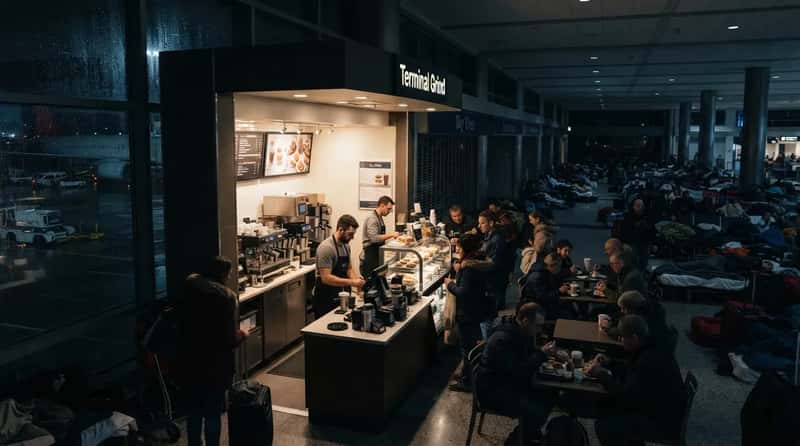
Restaurants and coffee shops inside a terminal have every right to lock up at closing time, storm or no storm. Most travelers assume they will.
During one major weather event, concessionaires staying open through the night became one of the quiet lifelines that kept thousands of stranded travelers fed and caffeinated. It’s a courtesy with real financial cost to workers who could easily have gone home, and most passengers never realize it was a choice rather than a requirement.
3. Off-duty employees come back in on their own time
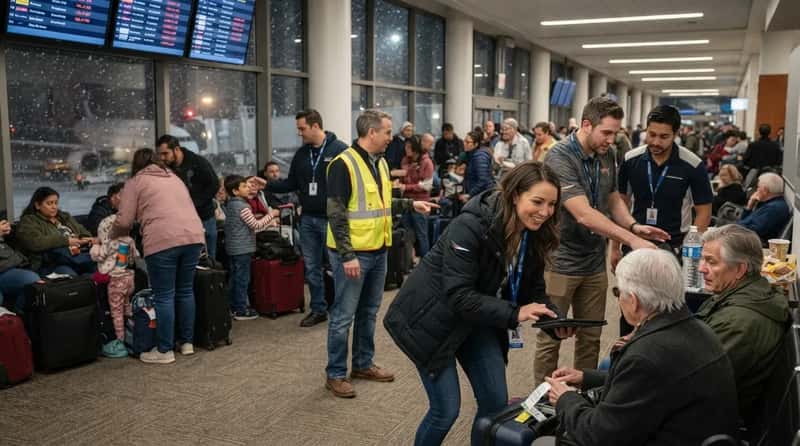
When a storm overwhelms an airport, the roster on paper is never enough. What actually saves the day, again and again, is staff who weren’t even scheduled showing up anyway.
This isn’t folklore – it’s documented behavior during severe disruptions, where ground teams went well beyond their normal job descriptions and work schedules to support the crisis created by the weather. These are unpaid hours, freely given, that never show up on any invoice.
4. Gate agents personally hunt down missing connections
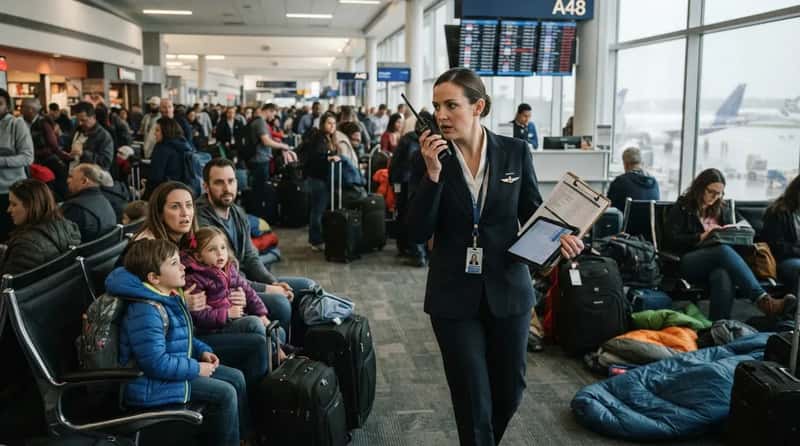
Rebooking software is clunky, and during a mass cancellation event it usually breaks entirely. That’s when human gate agents start tracking manually, radio in hand, walking the terminal to physically locate confused passengers who missed an announcement.
It’s tedious, unglamorous work that nobody sees on a receipt or confirmation email. Yet it’s the difference between a family making a connecting flight and spending an extra night on the floor. Most travelers never know an agent went looking for them instead of waiting behind a counter.
5. Ground crews keep unloading bags in bitter, punishing cold
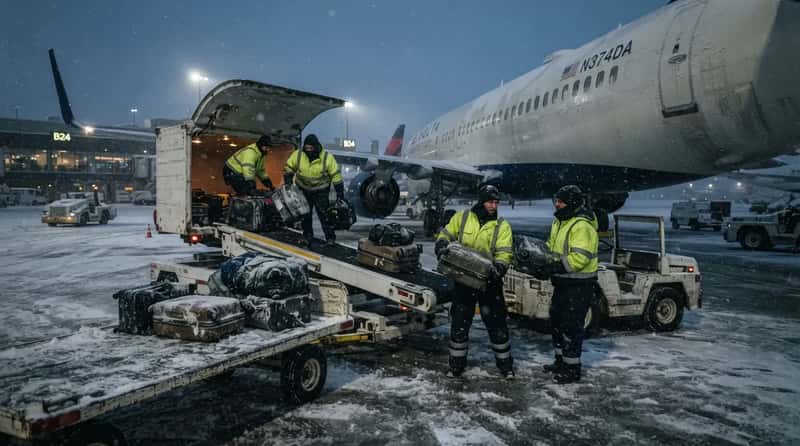
Baggage handling is physically brutal even in good weather. During extended storms it becomes genuinely dangerous, yet crews keep working anyway.
In one widely documented event, Engineering and Maintenance staff braved the bitter cold to help ground handling teams unload and transport close to 1,000 pieces of luggage from stranded aircraft. That’s not a job description. That’s a team refusing to let luggage, and the people waiting for it, sit frozen on a tarmac.
At a Glance
- Nearly 1,000 pieces of luggage were once unloaded by hand during a single severe diversion event.
- Blankets and pillows often appear before any official storm announcement is made.
- Off-duty staff frequently return on their own time, unpaid, when a storm overwhelms the schedule.
- Concessions have stayed open through entire storm nights just to keep travelers fed.
6. Overnight parking fees quietly get waived
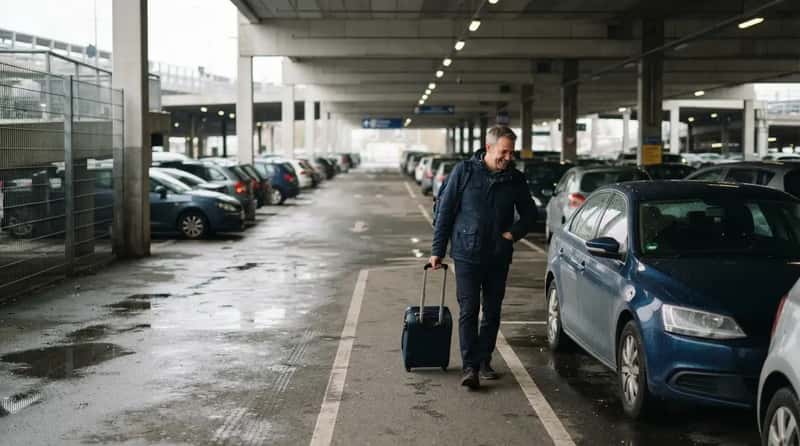
If your flight gets scrubbed and you’re stuck for days, your car sits in long-term parking racking up charges you never budgeted for. Many airports quietly waive or reduce these fees during declared weather emergencies, without a passenger ever filing a request.
It rarely makes headlines because it’s not flashy. But for a traveler already eating the cost of hotel rooms and missed work, a forgiven parking bill is real relief. It’s one of the least talked-about courtesies in the entire disruption playbook.
7. Charging stations and phone banks multiply overnight
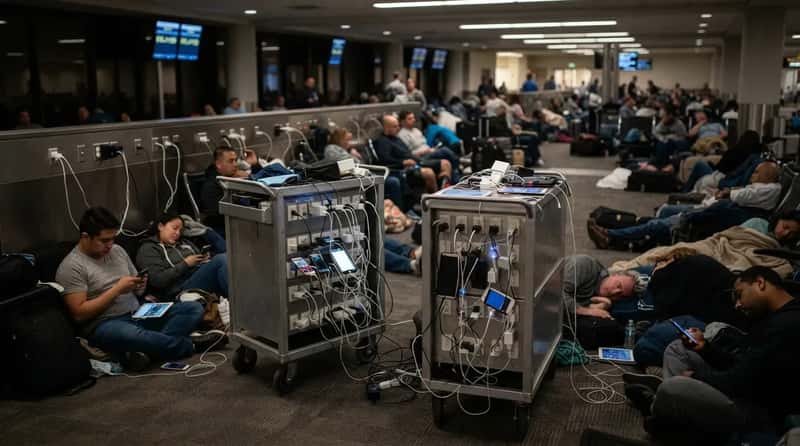
A dead phone during a multi-day delay is its own small crisis – no rebooking app, no way to reach family, no idea what’s happening. Airport operations teams notice this fast and start wheeling out extra charging carts and opening up staff-only outlets to the public.
Some terminals go further, boosting bandwidth on the fly. Airports improving their Wi-Fi and cellphone service during severe weather events has become a quiet standard rather than an exception. Nobody asked for faster Wi-Fi at 3 a.m. – it just got fixed.
8. Police and security staff personally check on stranded families
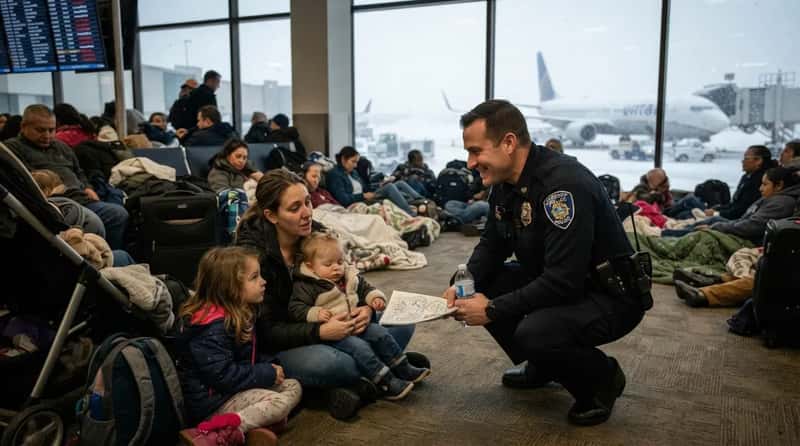
Uniformed officers stationed at a snowed-in terminal aren’t just watching for security threats. Many spend hours walking the gate areas checking on elderly travelers, families with infants, and anyone who looks like they’re struggling.
During one severe diversion, airport police and fire department personnel addressed passenger inquiries and medical needs that had nothing to do with their actual law enforcement duties. It’s a level of hands-on care most travelers assume only exists in customer service, not security.
9. Water, formula, and diapers appear at no cost
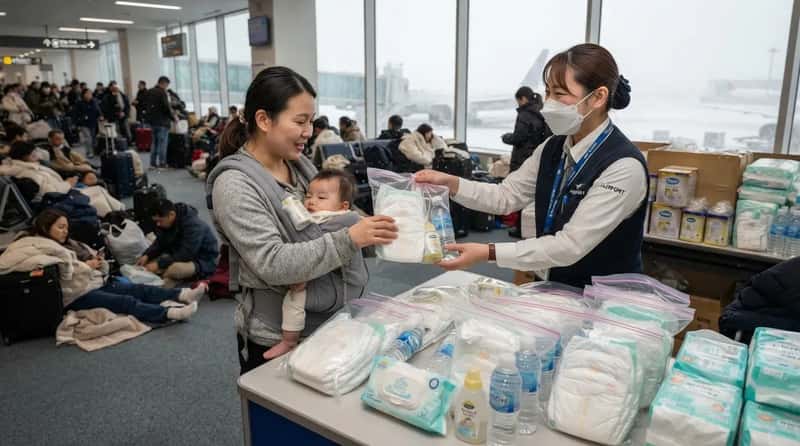
A stranded parent with an infant and no diaper bag restocked is one of the most stressful situations imaginable inside a terminal. Forward-thinking airports have started stockpiling essentials specifically for this scenario.
Providing travelers with key essentials, including water and diapers, when major delays occur is now written into some airports’ formal winter storm protocols. It didn’t used to be. Someone had to live through the alternative first.
10. Warming stations open for staff and travelers alike
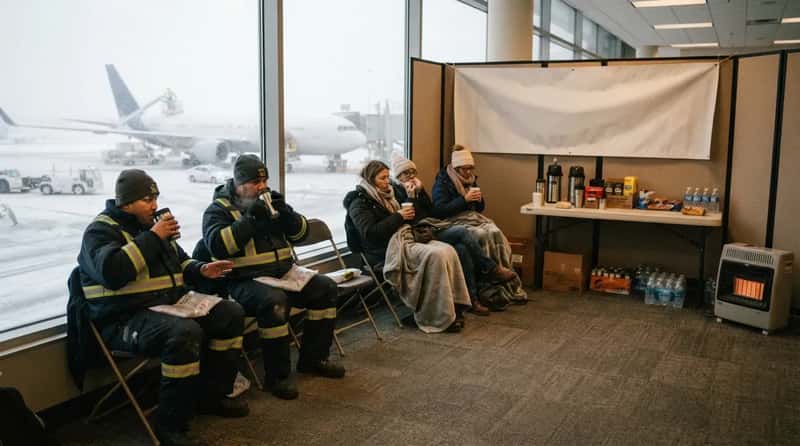
During extreme cold snaps, the danger isn’t just delayed flights – it’s frostbite for anyone working outside on the tarmac or waiting near open doors. Smart airports set up dedicated warming areas well before conditions get dangerous.
Making sure warming stations are available when extreme cold sets in protects the very staff keeping the airport running, and travelers often get pulled in too. It’s a courtesy built on lessons learned the hard way from past storms that stranded people in freezing terminals.
11. Extra snow crews get called in before the storm even lands
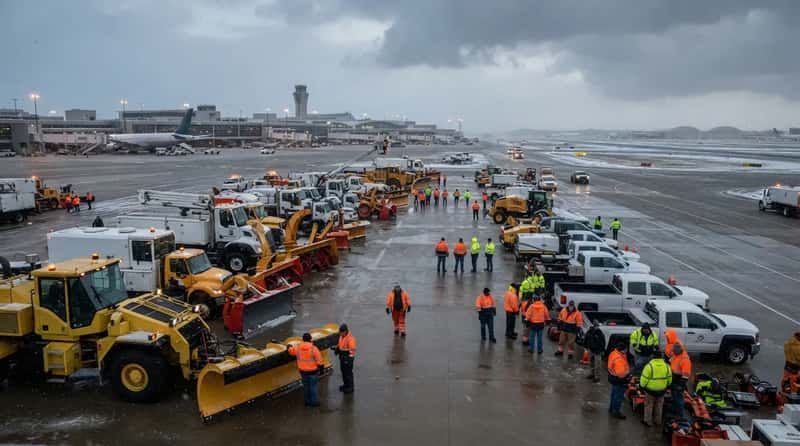
By the time snow starts falling, well-run airports have already doubled their ground crews. This isn’t reactive – it’s proactive planning that most passengers never see happening behind the scenes.
One major hub reported it had lined up extra staff and snow-removal equipment ahead of a heavy snowfall, with crews prepared to work in 12-hour shifts if necessary. That’s a full team bracing for exhaustion before a single flake has hit the runway.
12. Mobile lounge operators keep running to get people off planes
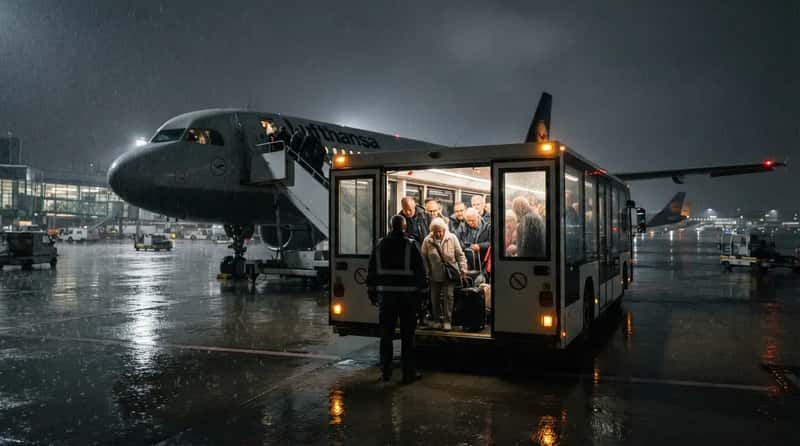
Sitting trapped on a plane for hours is one of the worst parts of any weather delay. At airports that use mobile lounge vehicles to shuttle passengers between terminals and aircraft, operators often keep running well past their shifts to get people out.
During one mass diversion event, mobile lounge operators deplaned every passenger despite an unplanned surge of arrivals overwhelming the system. It’s physically demanding work made worse by weather, done anyway because leaving people on a dark aircraft simply wasn’t an option.
13. Airlines waive change fees without a single passenger asking
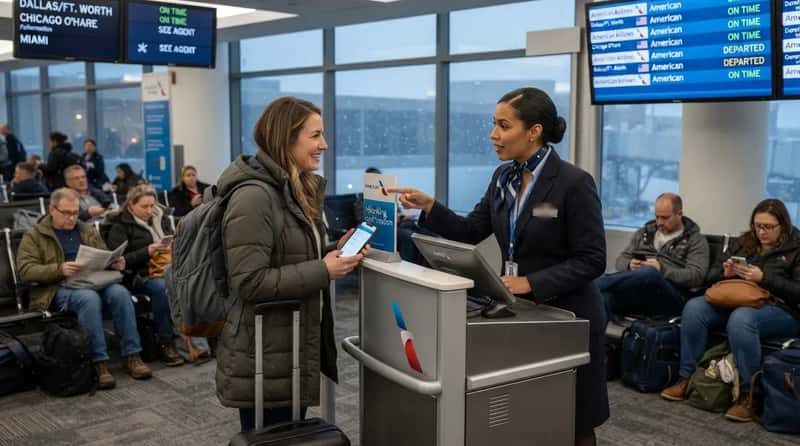
Change fees used to be one of the most hated line items in air travel. During major storms, several carriers now proactively drop them before a customer even opens a rebooking request.
American Airlines, for example, has waived change fees for passengers impacted by a storm and added extra flights around the country to help people reach their destination once the storm passes. It’s one of the few genuinely painless parts of an otherwise miserable travel week.
14. Extra flights get added to clear the backlog faster
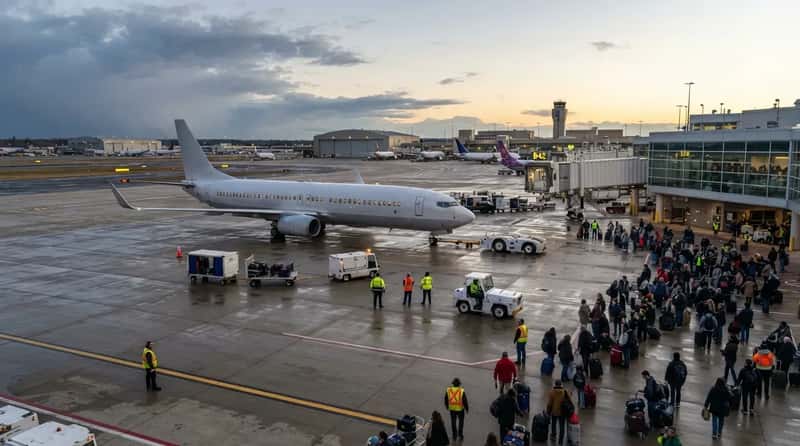
Once a storm clears, the real crisis begins: tens of thousands of rebooked passengers competing for a fraction of normal seats. Airlines that care about recovery time start adding relief flights almost immediately.
This is exactly what happens when carriers add extra flights around the country to help passengers reach their destination after a storm passes. Nobody has to request an extra flight – operations teams see the backlog and act on their own.
15. Partner airline rebooking happens quietly behind the scenes
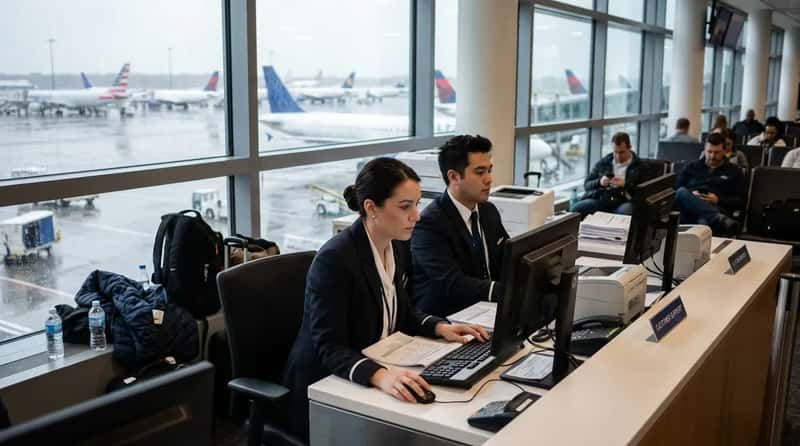
Most travelers assume they’re locked into whichever airline they booked with, storm or not. In reality, several major carriers will slide a stranded passenger onto a competitor’s flight without making a big deal of it.
Airlines including Alaska, American, Delta, JetBlue, and United can rebook passengers on a partner airline at no cost when the situation calls for it. It’s not advertised loudly, but it can shave a full day off someone’s stranded timeline.
16. Customer service reps hand out real vouchers, not just apologies
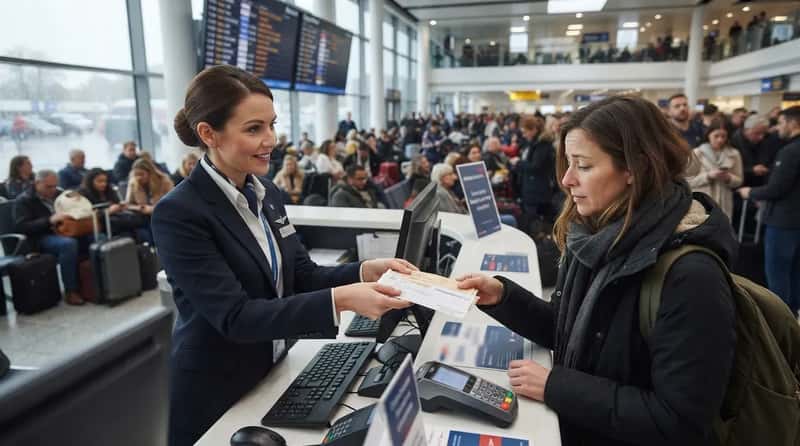
An apology doesn’t buy dinner. Airlines know this, which is why frontline staff are often authorized to distribute meal credit without waiting for corporate sign-off during a disruption.
All major airlines will offer a meal or credit toward a meal if a traveler has to wait more than three hours for the next flight. Most people don’t realize how much discretion the person behind the counter actually has in these moments.
17. Complimentary hotel stays get arranged even when it’s a gray area
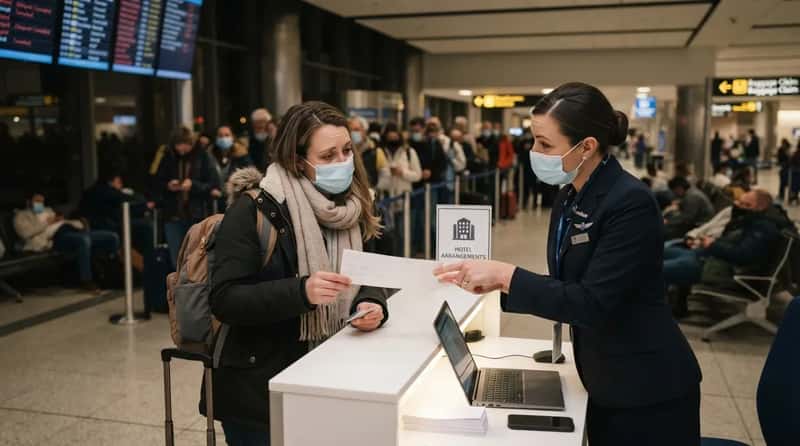
Here’s a truth most travelers don’t know: airlines technically aren’t required to cover a hotel when weather, not the airline, caused the mess. Weather delays are generally not considered controllable, which means carriers are off the hook for hotel costs by the letter of the rules.
And yet, nearly all major airlines will still offer a complimentary hotel stay and ground transportation for overnight cancellations, as a goodwill move rather than a legal obligation. That’s a courtesy dressed up as a rule most people assume exists – it often doesn’t, but the help shows up anyway.
Quick Compare
- Change fees: American Airlines has waived them proactively during storms.
- Partner rebooking: Alaska, American, Delta, JetBlue, and United can shift stranded passengers to a rival airline at no charge.
- Meal credit: Major carriers typically offer it once a wait passes three hours.
- Hotel stays: Not legally required for weather delays, yet most airlines cover them anyway.
18. Airport apps push real-time updates before anyone refreshes the screen
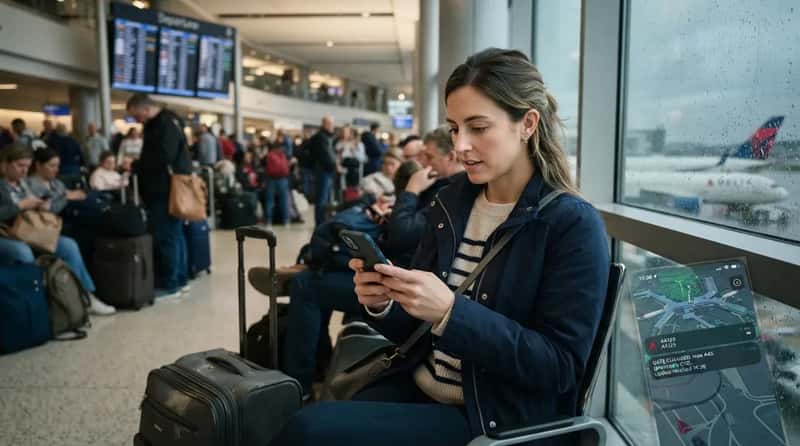
Standing under a departure board waiting for a gate change used to be the default airport experience. Now, forward-thinking airports push notifications straight to a traveler’s phone the second something shifts.
One major hub built an app specifically to give passengers better access to information about evolving weather conditions and flight schedules. It’s a small piece of software, but during a chaotic multi-day storm it can save someone hours of standing around confused.
19. Cots and rest areas get organized by staff, not left to passengers
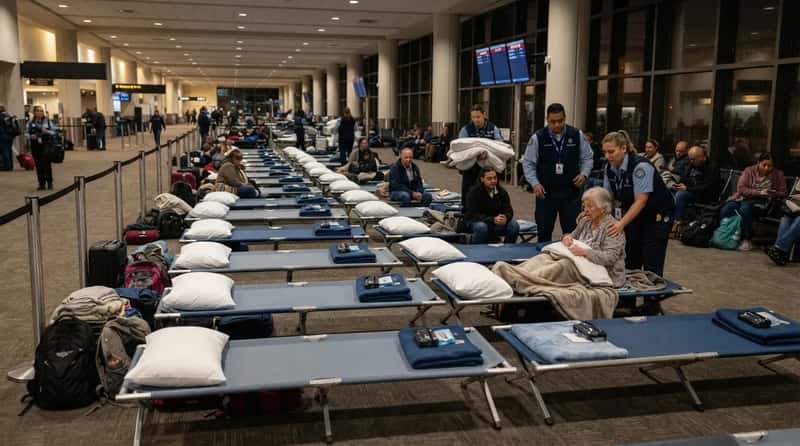
When thousands of people are stuck overnight, someone has to figure out where they’re all going to sleep. Rather than leaving travelers to fend for themselves, airport operations staff increasingly step in to organize designated rest zones.
Passengers stranded during severe events have described building makeshift shelters on their own in the past, which is exactly the outcome staff-led cot setups are now designed to prevent. It’s a quiet acknowledgment that dignity matters even during a logistical disaster.
20. Reunification areas get set up for separated groups
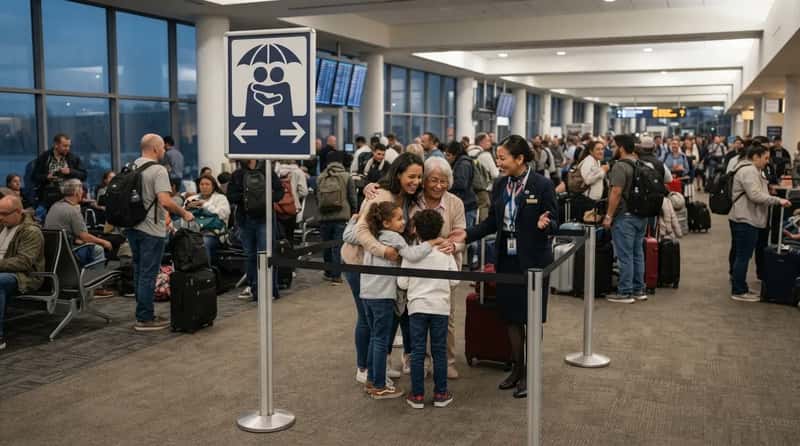
Big storms scatter families across terminals – one parent stuck at a gate, kids diverted with a different connection, grandparents rerouted through an entirely different city. Staff at busy hubs have started designating clear meeting points specifically for this scenario.
It sounds simple, but in a terminal handling tens of thousands of rebooked passengers, a single obvious meeting spot can be the only thing standing between a family reuniting quickly and a genuine panic. Nobody has to ask for it – the signage and the staff pointing the way are just there.
21. Multilingual staff appear to help international travelers
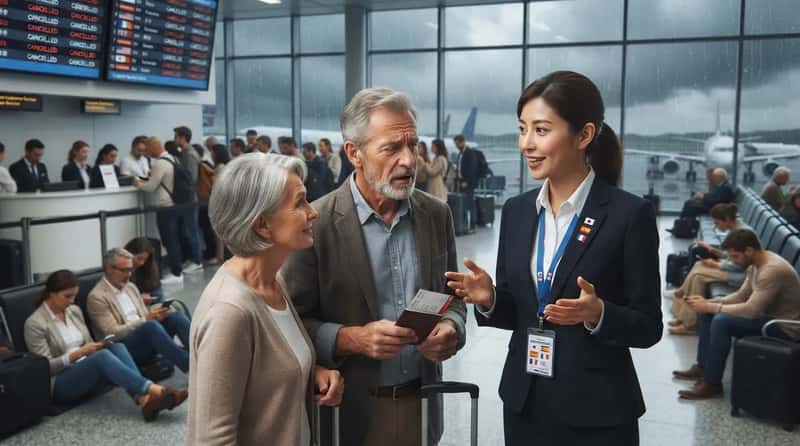
A canceled connecting flight is stressful. A canceled connecting flight when you don’t speak the local language is a different level of frightening. Airports handling international traffic during a major storm often pull in multilingual staff specifically to bridge that gap.
This kind of support rarely gets requested formally – it gets noticed and offered. Passengers who’ve experienced it describe it as the single biggest relief during an otherwise disorienting ordeal. It’s a courtesy built entirely on empathy, not policy.
22. Customs and border staff work through the night to keep lines moving
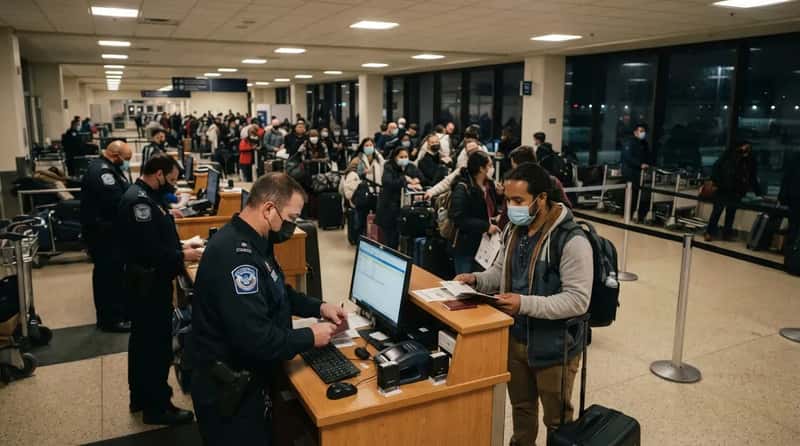
When storms divert international flights to unplanned airports, the paperwork backlog can be enormous. Federal staff on-site have been known to push through entire nights of processing rather than let the line stall until morning.
During one historic diversion, U.S. Customs and Border Protection staff processed every arriving international passenger despite the airport never having planned for that volume. It’s a federal team choosing exhaustion over letting travelers sit indefinitely.
23. Managers walk the terminal floor instead of hiding in an office
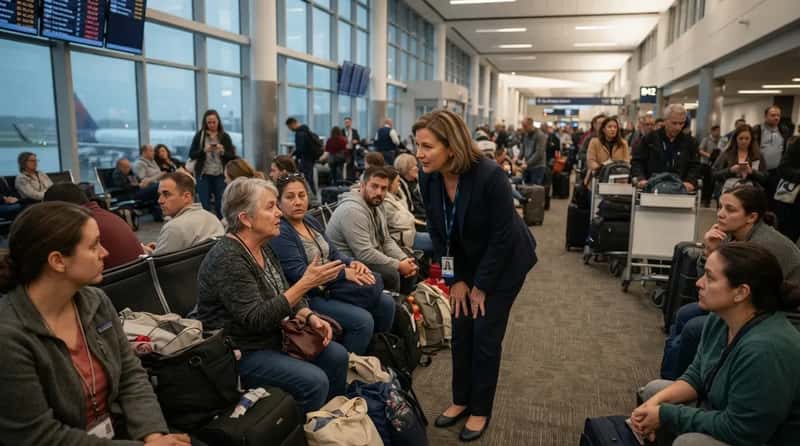
During a genuine crisis, the easiest thing for airport leadership to do is retreat to an operations room and manage from a screen. The ones who actually build loyalty do the opposite – they walk the terminal, talk to stranded travelers, and absorb the frustration in person.
It’s a small leadership choice with an outsized emotional effect. Passengers remember being spoken to like a human being far longer than they remember the technical cause of the delay. Many people in the industry now argue this single habit does more for an airport’s reputation than any refund policy ever could.
24. Wheelchair and mobility assistance staff go far past their assigned zones
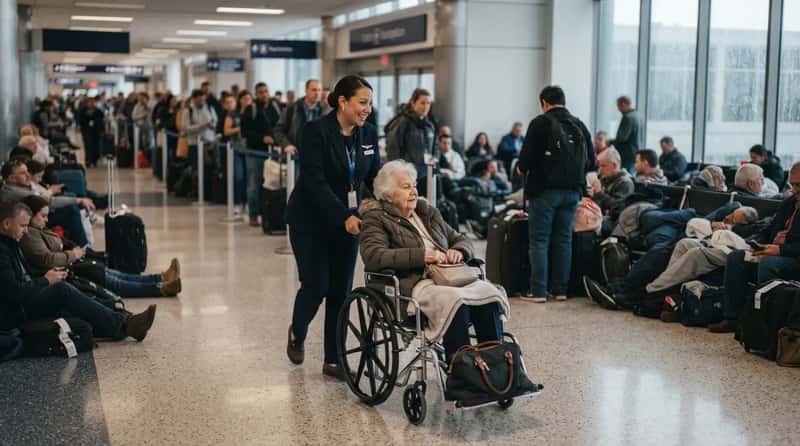
Assisting a passenger with mobility needs is already a demanding job on a normal day. During a multi-day disruption, staff in this role often end up walking travelers across entire terminals, tracking down food, and staying with someone until a family member is located.
This kind of care isn’t billed separately and isn’t in any job posting. It happens because the alternative, leaving a vulnerable traveler alone in chaos, isn’t something most staff are willing to accept. It’s one of the quietest, least-publicized courtesies in the entire airport ecosystem.
25. Off-duty employees give up their own comfort, sleep, and holidays
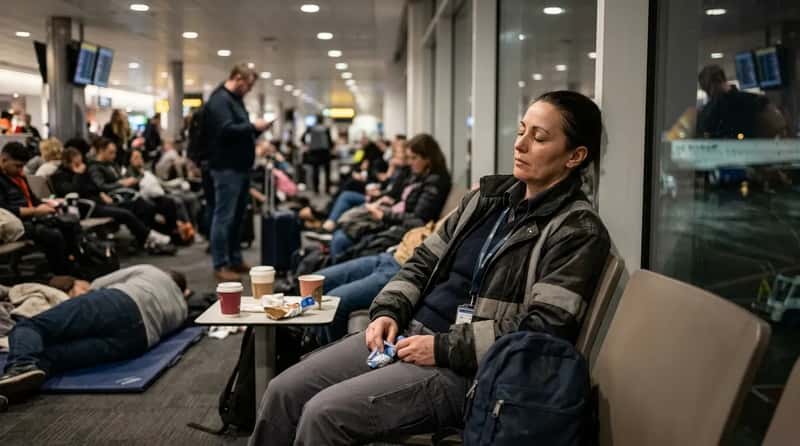
The single most consistent thread through every major weather disruption story is the same: staff who could have gone home instead stayed. Storms don’t respect holidays, night shifts, or contract hours, and neither do the people trying to hold an airport together.
Ground teams’ actions went well beyond their normal job descriptions and work schedules to support the critical situation created by the weather during one of the most severe diversion events on record. That’s not a policy line. That’s thousands of small, personal sacrifices stacked together.
Worth Knowing
- Managers who walk the terminal floor during a crisis are often remembered longer than the cause of the delay itself.
- Wheelchair and mobility staff routinely stay with a passenger until family is located, far outside their assigned zone.
- Off-duty employees giving up holidays and sleep is one of the most consistent patterns seen across major storm events.
26. Extra staff get called in even after everyone thinks the worst has passed
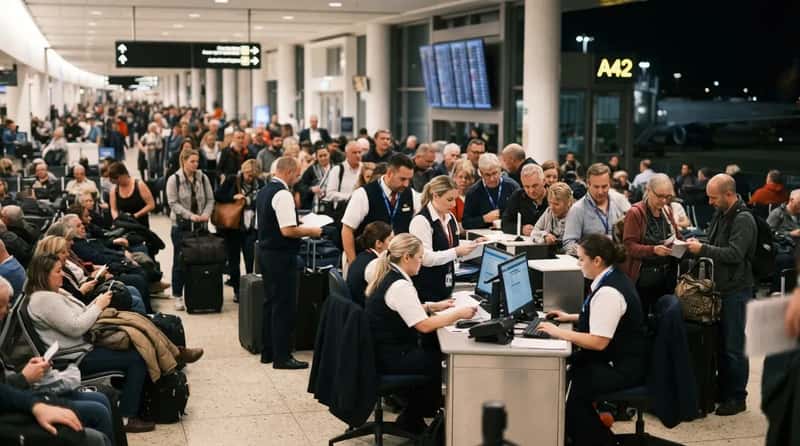
The most dangerous moment in a weather disruption isn’t the storm itself – it’s the days after, when backlog and exhaustion collide. Smart airport teams know this and reinforce staffing exactly when it would be easiest to assume the crisis is over.
During one recovery period, additional staff were called in on a Saturday night specifically to help clear a backlog that had built up over days. Turns out the hardest shift of the entire storm is often the one nobody expects.
27. Staff treat the terminal like a shelter, not just an airport
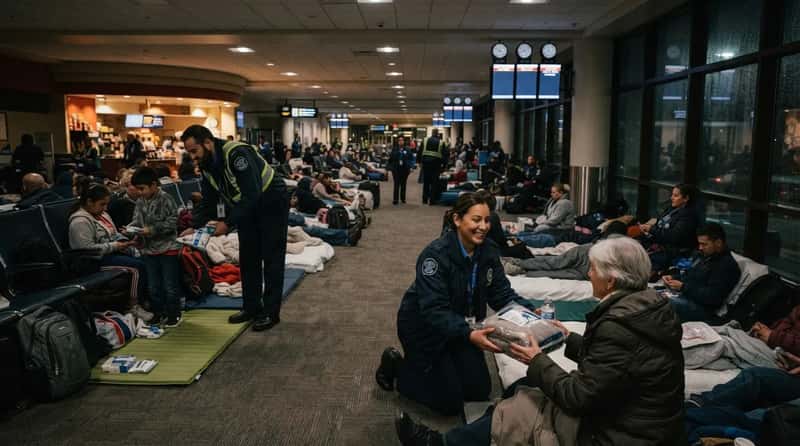
The final, and arguably most human, courtesy is a shift in mindset. During the worst disruptions, airport teams stop thinking like transportation operators and start acting like the people running an emergency shelter, because that’s effectively what the building has become.
One traveler who lived through a historic diversion put it simply afterward: the professionalism of the airport’s operations staff made a terrible situation tolerable. That’s not a review of an airline. That’s a review of people who decided, unprompted, that nobody stranded in their building would be left to fend for themselves.
None of these courtesies show up on a boarding pass, and most aren’t required by any federal rule. They exist because the people running airports during the worst weather of the year keep choosing to do more than the job technically demands. Refunds and rebookings are the law. Blankets, warming stations, and a manager who actually walks the floor are not – they’re a choice, repeated thousands of times, by people who rarely get thanked for it.