

Most people remember the 1970s for shag carpet and disco, but the real time capsule was sitting one door over from the kitchen. The suburban garage of that decade wasn’t just a place to park a car – it was a workshop, a bar, a music venue, and sometimes all three at once, depending on which parent got there first.
Strip away the nostalgia filter, though, and some of these features were downright bizarre by today’s standards. A few were genuinely dangerous, one or two were secretly brilliant, and at least one killed off an entire hobby industry almost overnight. Here’s what old photographs, family stories, and home-history records actually reveal about the American garage at its peak.
#27 – The Garage Door Opener That Turned Driveways Into Theater
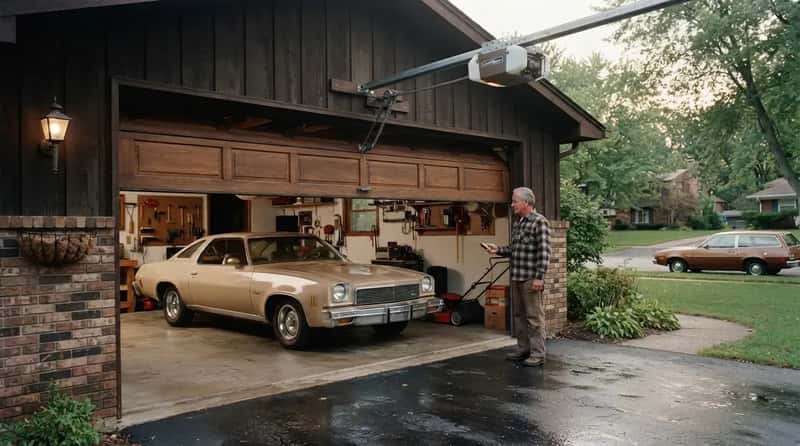
Automatic garage door openers existed before the 1970s, but this was the decade they finally became a real household fixture instead of a rich person’s toy. Openers were still a luxury item through much of the 1960s, and what changed in the 1970s was a new split-rail mounting system that made it practical to fit them into a much wider range of homes. Suddenly, pressing a button from inside the car felt like living in the future.
Here’s the part most people forget: these early units had no safety sensors at all. As openers became standard equipment in new homes, a serious problem emerged, with children being injured and killed by closing garage doors that couldn’t detect an obstruction – estimates suggest between 10 and 50 kids were hurt or killed each year. Families loved the convenience for over a decade before regulators ever stepped in.
#26 – A CB Radio Bolted Right By the Workbench
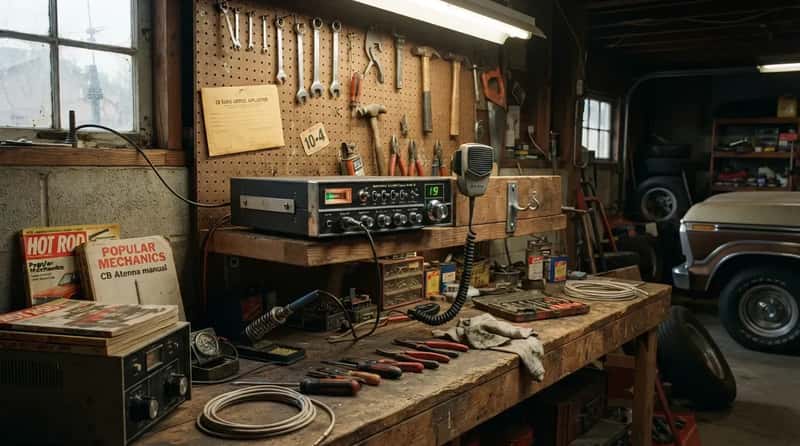
Before cell phones, the garage was command central for a genuinely strange national obsession. Americans bought 25 million CB radios between 1974 and 1977, meaning roughly one in five adults owned one. Dads didn’t just keep one in the truck – plenty ran a base unit right off the garage workbench to chat with neighbors.
The craze had a real trigger, too. The 1973 trucker strike shut down highways across the country, and truckers used CB radio to coordinate collective action against high fuel prices, which pushed the technology into the mainstream almost overnight. Most owners never got a required license – they just picked a nickname and started talking.
Fast Facts
- Roughly 25 million CB radios were sold in the U.S. between 1974 and 1977 alone.
- The boom traces directly back to truckers organizing against fuel prices during the 1973 strike.
- A federal license was technically required, but most home users simply skipped it.
- Channel 19 quickly became the unofficial trucker favorite, and plenty of garage units stayed locked on it.
#25 – An Avocado Green Chest Freezer Humming in the Corner
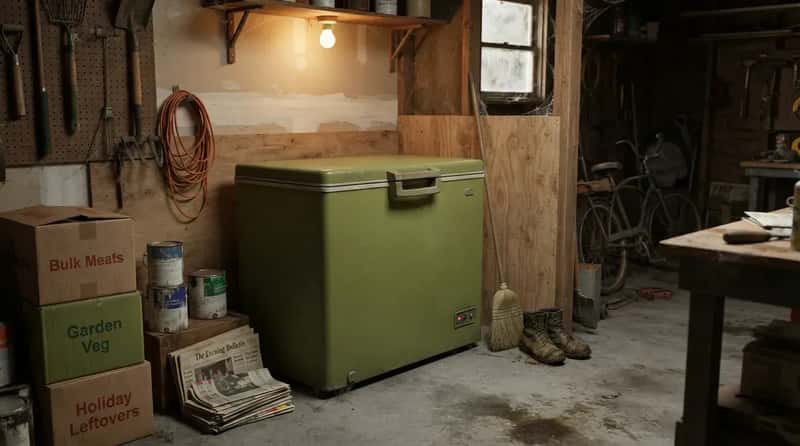
Nearly every suburban garage hid a second freezer, and it was almost never a normal color. Avocado green and harvest gold weren’t just kitchen appliance shades – they spilled straight into the garage, where families stored bulk meat, garden vegetables, and leftover casseroles from every holiday.
The chest freezer was a genuine status symbol. Buying in bulk at the grocery store felt like beating the system, and the garage freezer became the family’s private stockpile long before anyone called it “meal prepping.” Kids learned early that the good popsicles lived out there, not inside the house.
#24 – Pegboard Walls With Every Tool Outlined in Marker
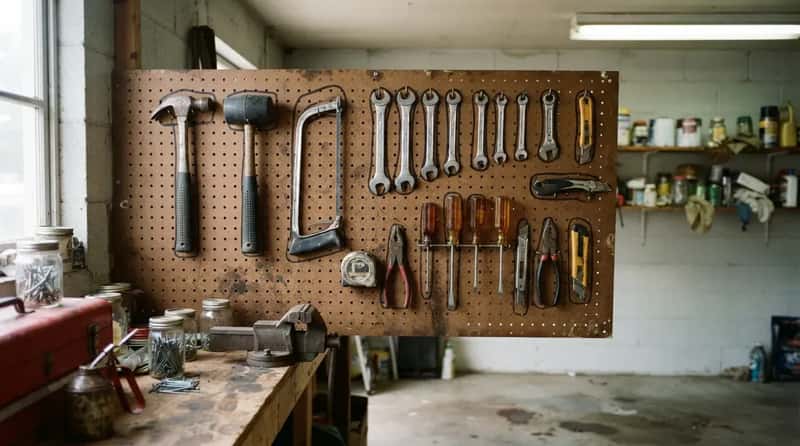
Walk into any dad’s garage in this decade and you’d find the same wall treatment: cheap pegboard, hooks everywhere, and a hand-drawn outline around each hammer, wrench, and screwdriver. It looked obsessive, but it was actually a clever inventory system decades before anyone called it “shadow boarding.”
The real payoff was social pressure disguised as organization. If a tool went missing, the empty outline told on you instantly. Borrowing dad’s tools without permission became nearly impossible to hide, which is probably exactly why so many households adopted the system in the first place.
#23 – The Red Craftsman Rolling Toolbox
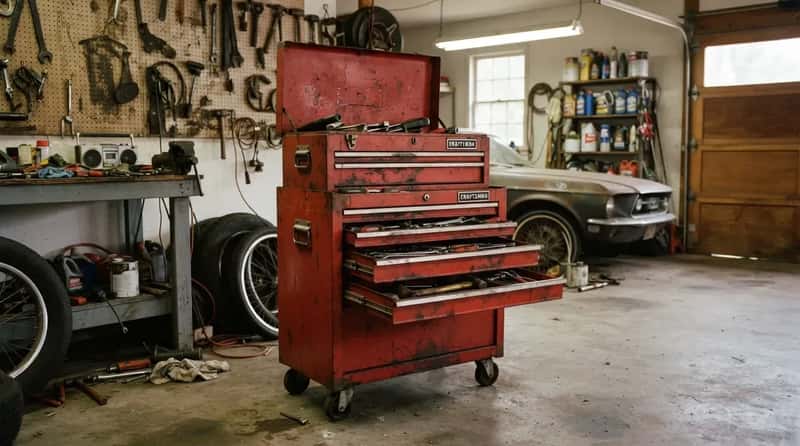
Sears dominated suburban garages in a way that’s hard to overstate, and the red Craftsman toolbox was the crown jewel. It wasn’t just storage – it was practically a rite of passage, often gifted to a new homeowner or a teenager buying their first car.
What made it special was the guarantee behind it. Craftsman tools came with a lifetime replacement promise that most people actually used, walking broken ratchets back into Sears for a free swap. That no-questions-asked warranty built more brand loyalty than any advertisement ever could, and it’s a big reason so many of those toolboxes are still in garages today.
#22 – Cheap Wood Paneling Covering Every Wall
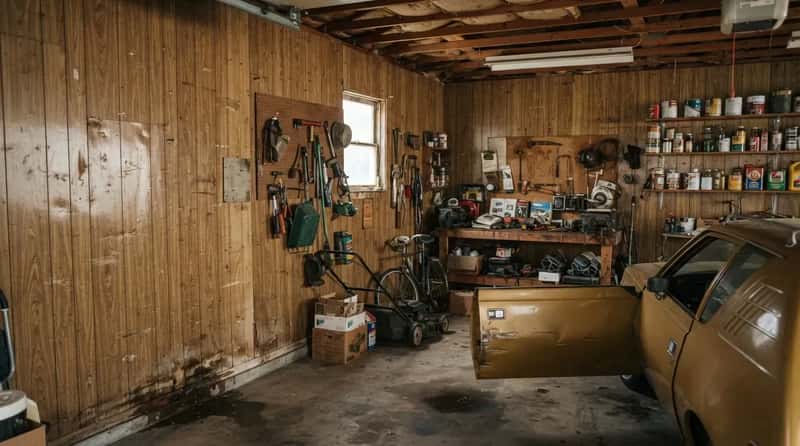
Thin, glossy wood-look paneling wasn’t reserved for basements and rec rooms – it crept into garages too, especially the ones that doubled as workshops or hangout spaces. It was inexpensive, fast to install, and instantly made an unfinished space feel “done.”
The trouble was durability. Paneling scuffed, dented, and warped fast in a space full of moisture, oil, and swinging car doors. Most families patched it instead of replacing it, which meant a lot of 1970s garages ended up with a mismatched quilt of paneling scraps by the following decade.
#21 – A Folding Ping-Pong Table Leaned Against the Wall
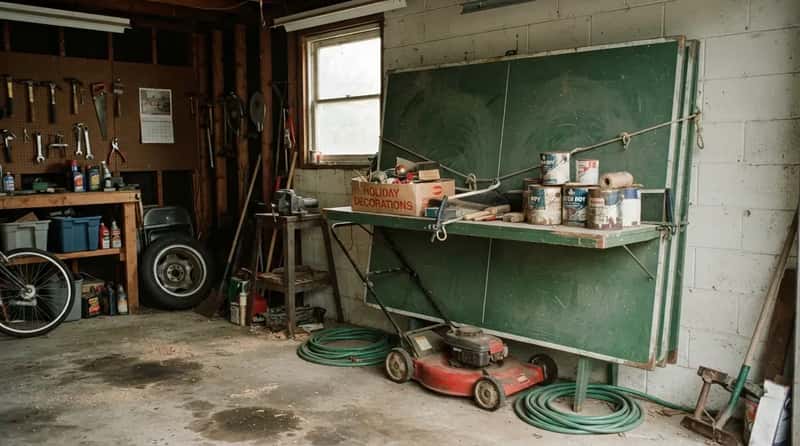
Long before home gyms and man caves became a marketing term, the garage ping-pong table was the original family entertainment center. It folded flat against the wall between uses, sliding out on rainy weekends or birthday parties when the driveway wasn’t an option.
It doubled as extra workspace more often than anyone admits. Half of these tables spent more time covered in paint cans and holiday decorations than actually hosting a game, but the promise of a match was always there, tucked behind the lawn mower.
#20 – A Single Fluorescent Shop Light on a Pull Chain
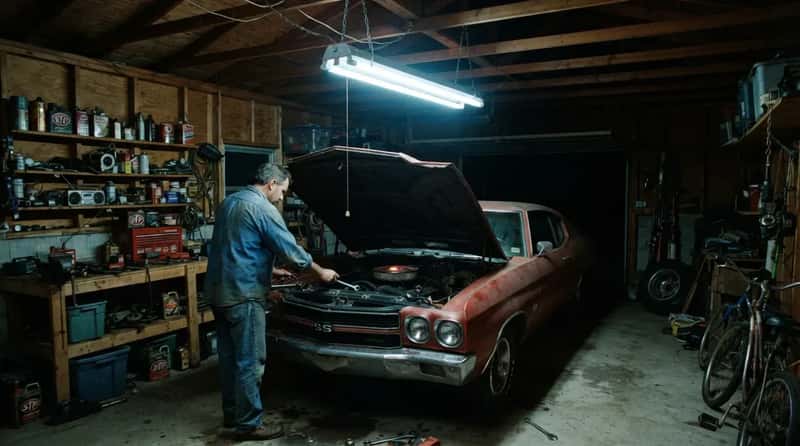
Lighting in these garages was rarely more than one long fluorescent tube fixture, hung from the rafters and switched on with a dangling pull chain. It buzzed, flickered on cold mornings, and cast a harsh blue-white glow that somehow became the defining light of every home repair memory.
Warmth wasn’t the point – visibility was. These fixtures were cheap, long-lasting, and bright enough to work under a car hood at night. Entire engine rebuilds and Christmas light repairs happened under that single humming tube, long before anyone thought to add a second fixture.
#19 – An Engine Hoist for Backyard Mechanics
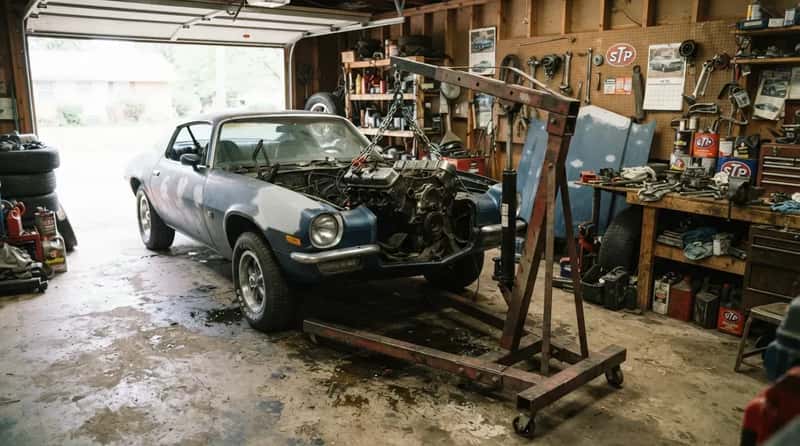
For a huge chunk of suburban dads, the garage wasn’t just for parking – it was a working auto shop. A chain-and-hoist setup, sometimes homemade from a ceiling beam, let ordinary homeowners pull entire engines for rebuilds without ever visiting a mechanic.
This wasn’t a niche hobby; it was mainstream economics. Cars broke down more often, parts were simpler, and shop labor was expensive, so doing your own engine work could save a family hundreds of dollars a year. The stained concrete underneath the hoist told the whole story on its own.
Worth Knowing
- Carbureted engines with no onboard computers made home teardowns far more approachable than modern cars allow.
- A basic chain hoist and a sturdy ceiling beam were often the only “equipment” needed to pull an engine.
- Skipping shop labor could realistically save a household hundreds of dollars over a single year.
- Passing down engine-repair know-how from parent to kid was as common as passing down the tools themselves.
#18 – The Permanent Oil Stain Nobody Could Remove
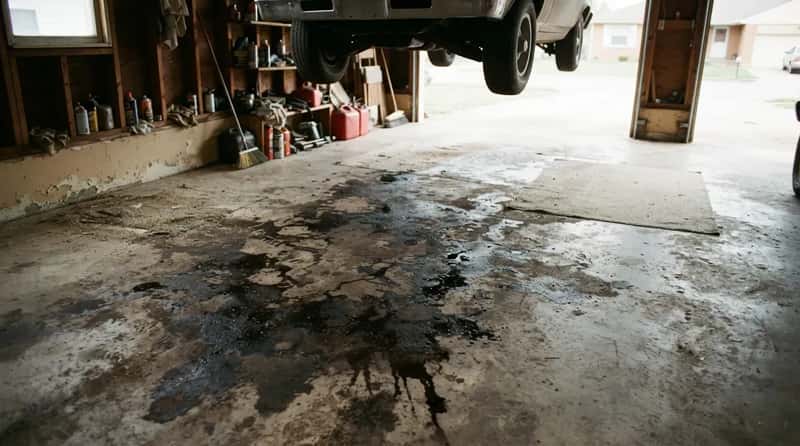
Every garage floor eventually earned its own personal map – a dark, irregular oil stain right where the car usually sat. It came from decades of minor leaks, quick oil changes, and cars that were, frankly, not built to be leak-proof.
Families tried everything to fight it: cat litter, dish soap, degreaser, even fresh concrete sealer. Almost none of it worked permanently, and the stain became such a fixture that some homeowners simply gave up and parked a rug over it instead.
#17 – One Overloaded Outlet Feeding an Octopus of Extension Cords
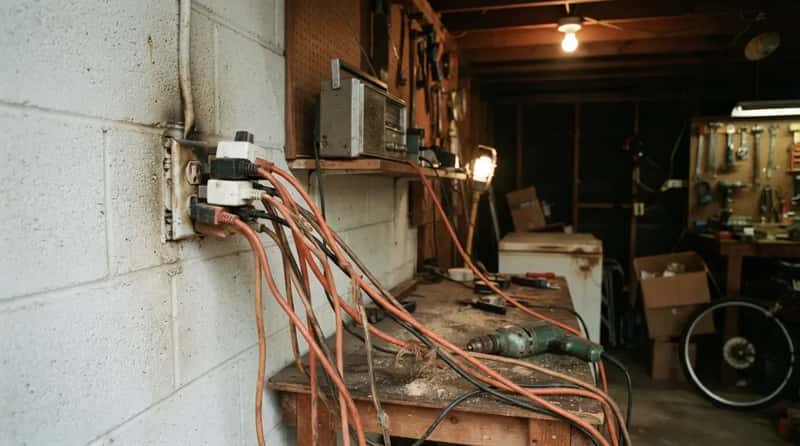
Most garages from this era were wired for a single light and maybe one outlet – nothing close to what a modern workshop needs. To compensate, families ran extension cords in every direction, powering radios, freezers, shop lights, and power tools off one overtaxed circuit.
It looked chaotic, and honestly, it often was. Tripped breakers and the occasional scorched cord were considered a normal cost of doing business, and rewiring a garage for more outlets wasn’t standard practice until much later.
#16 – An 8-Track Player Bolted to the Wall
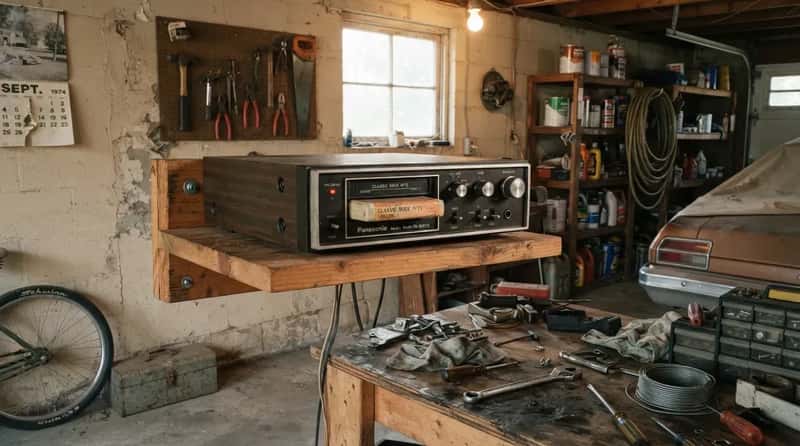
Music followed dads into the garage, and the 8-track was the format of choice. Some families mounted a dedicated player right on a shelf or wall bracket so it wouldn’t get knocked over during weekend projects.
The format had real limitations – tapes jammed, tracks switched mid-song, and the sound quality was never great. None of that stopped 8-tracks from becoming the unofficial soundtrack of garage work for most of the decade, right up until cassettes started taking over toward the end of the 70s.
#15 – The Family Beer Fridge
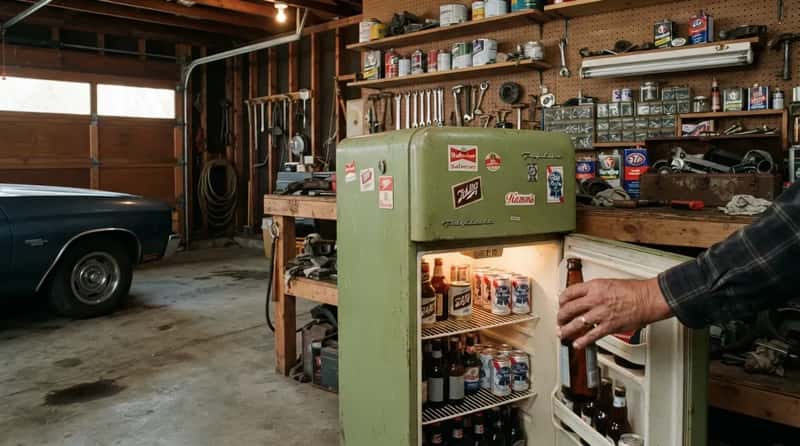
Separate from the food freezer, plenty of garages had a smaller, dedicated refrigerator whose sole job was keeping beer cold for the man of the house and his neighbors. It usually ran quietly for years without much upkeep, tucked next to the workbench.
It became a genuine neighborhood gathering point. Weekend car repairs, lawn mower fixes, and driveway hangouts almost always ended with someone reaching into that fridge. The garage fridge, more than any living room, was where a lot of neighborhood friendships actually got built.
#14 – A Dartboard Nailed Straight Into the Studs
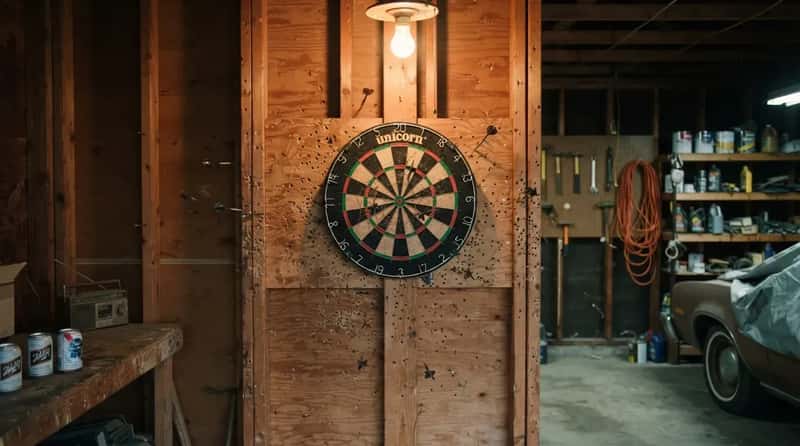
Unfinished garages meant exposed wall studs, and exposed studs meant a perfect, disposable target for a dartboard. No drywall to patch, no worries about damage – just a board, a lightbulb overhead, and whoever wanted a turn.
It became one of the few truly democratic features of the garage. Kids, parents, and visiting neighbors all played on the same board. The wall around it usually looked like Swiss cheese within a year, riddled with missed throws nobody bothered to fill in.
#13 – Macrame Plant Hangers Dangling From the Rafters
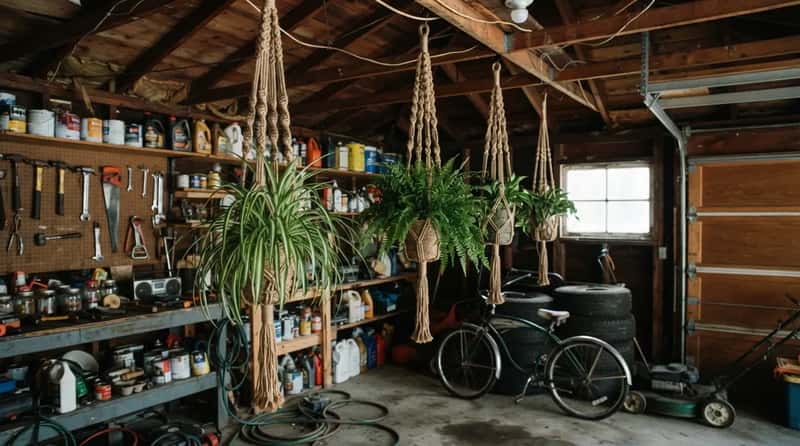
The decade’s obsession with macrame didn’t stay confined to living rooms. Plenty of garages had hand-knotted plant hangers strung from exposed rafters, holding spider plants and ferns that needed a shaded, temperature-stable spot to overwinter.
It was a strange but oddly practical pairing of hobby craft and function. A garage’s dim, steady climate turned out to be perfect for houseplants that couldn’t survive outside, and the hangers kept them safely out of reach of bikes, tools, and kids running through.
#12 – A Mini-Bike or Moped Parked by the Door
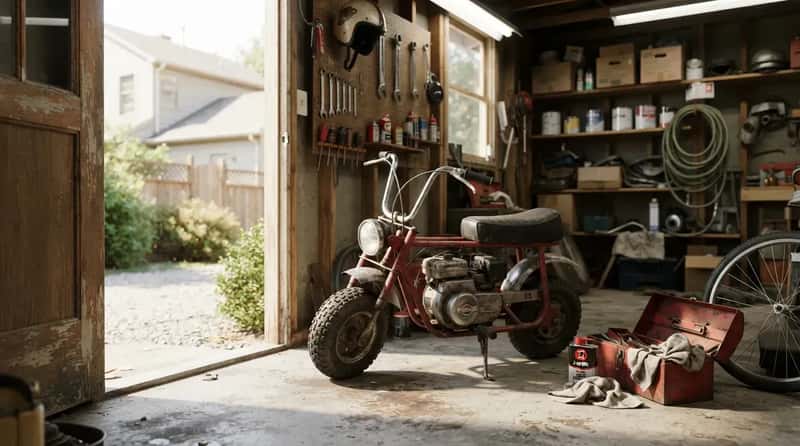
Long before dirt bikes needed helmets and insurance discussions, plenty of suburban garages stored a small mini-bike or moped for kids to ride around the block or down to a friend’s house. They were loud, a little unsafe by modern standards, and enormously popular anyway.
Maintenance happened right there on the garage floor, usually with dad supervising. Fixing a stuck throttle or flat tire on a mini-bike was often a kid’s very first hands-on mechanical lesson, one that plenty of grown adults still credit for their love of tinkering today.
#11 – A Muscle Car Sitting Under a Bedsheet
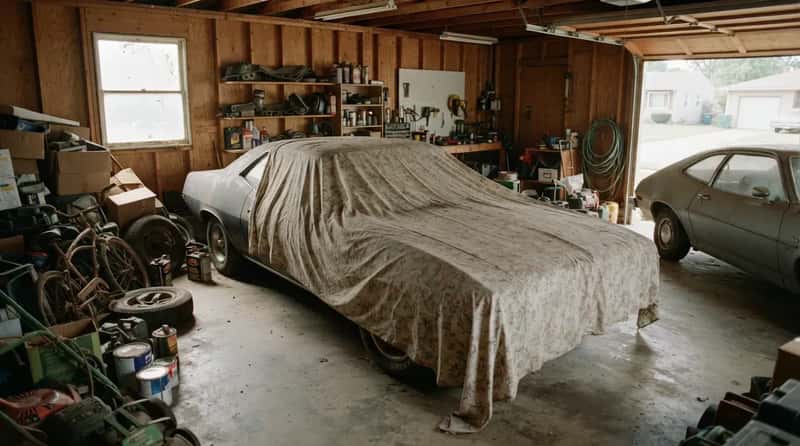
Not every car in the garage was the daily driver. Many households kept a second vehicle – often a project muscle car – parked under a simple bedsheet or tarp, waiting for a weekend that never quite had enough free hours.
These cars became a quiet source of tension in plenty of homes. The “someday I’ll finish it” project sat untouched for years at a stretch, gathering dust while taking up half the garage space that could’ve gone to literally anything else.
#10 – A Wood-Paneled Station Wagon Parked Half In, Half Out
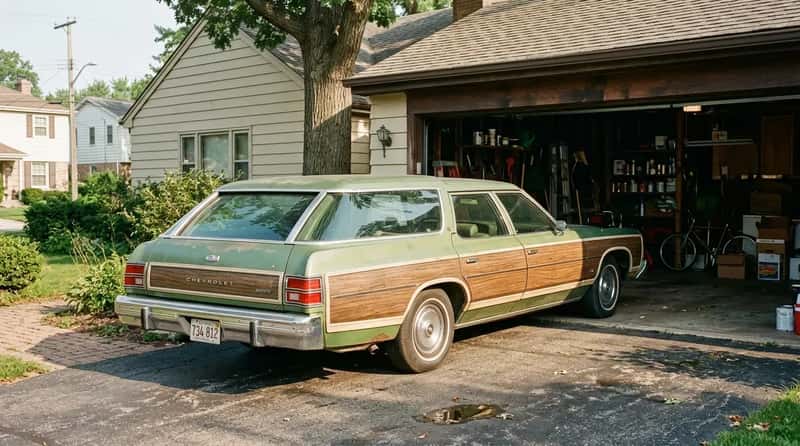
The station wagon rarely fit cleanly inside a standard single-car garage, so it often sat half-in, half-out, nose parked under cover while the tailgate baked in the driveway sun. It was less a design flaw and more a sign of how quickly car sizes outpaced garage sizes.
That wood paneling on the exterior wasn’t actual wood, either – it was a vinyl decal treatment meant to evoke older wood-bodied cars. Almost none of the “wood” on these family haulers was real, but it became instantly iconic anyway.
#9 – A Riding Lawn Mower Taking Up Prime Real Estate
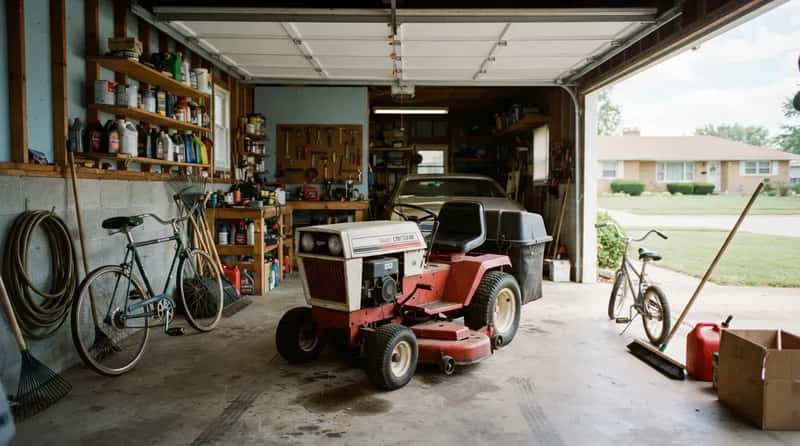
As suburban lot sizes grew, push mowers gave way to riding mowers, and these bulky machines needed serious garage real estate. They usually got parked front and center, forcing everything else – bikes, tools, sports gear – to squeeze in around them.
Owning one was a genuine point of pride on the block. A riding mower parked visibly in the open garage door was practically a suburban status symbol, right up there with a clean car and a trimmed hedge.
#8 – Stacked Coleman Coolers and Camping Gear
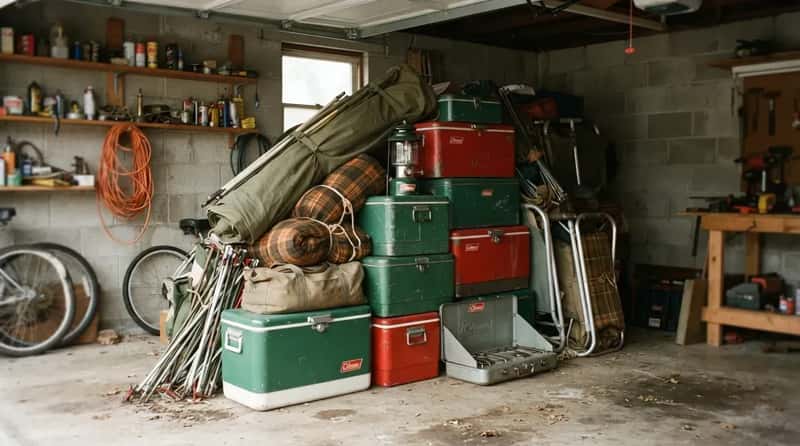
Family camping exploded in popularity during this decade, and the garage became the staging ground for every trip. Coolers, sleeping bags, canvas tents, and folding chairs stacked up in a corner, ready to load into the station wagon at a moment’s notice.
The gear rarely got put away properly between trips. Half-packed coolers and tangled tent poles became a permanent obstacle course that families simply learned to step around until the next long weekend rolled around.
#7 – A License Plate Collection Nailed to the Wall
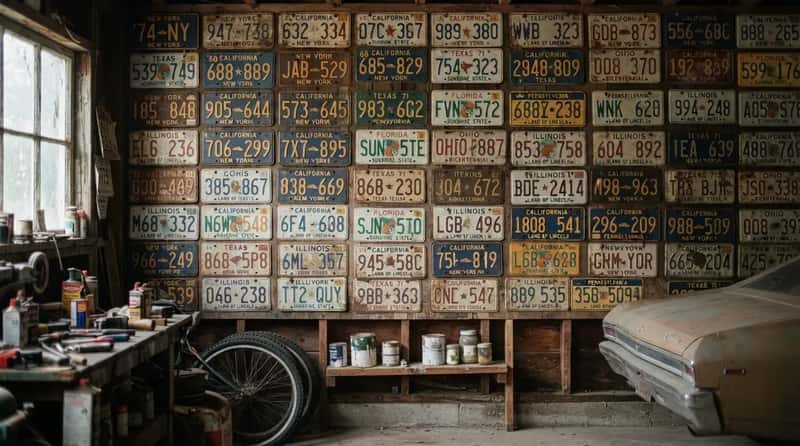
Old license plates from road trips, junked cars, and out-of-state relatives often ended up nailed directly to a garage wall, turning it into an accidental scrapbook of family travel. Nobody planned this decor choice – it just accumulated over years.
It doubled as an easy conversation starter for anyone who wandered in. A wall of mismatched plates said more about a family’s road trips than any photo album stuck in a drawer, and most families never took a single plate down once it went up.
#6 – A Pinup Calendar From the Local Auto Parts Store
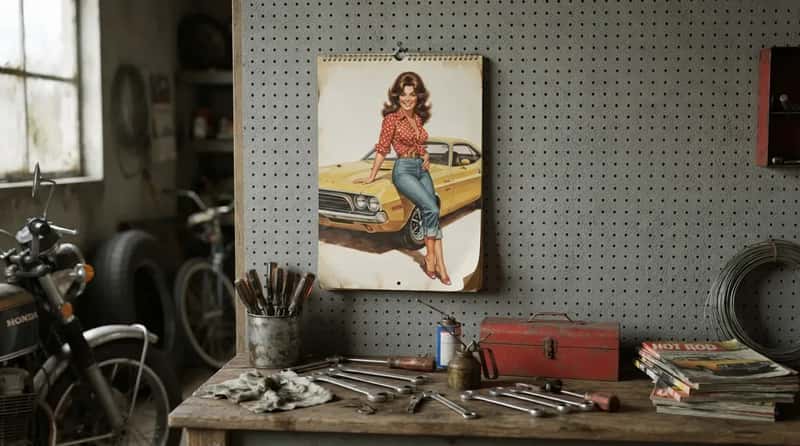
Free calendars from the local gas station or auto parts shop were a garage staple, usually featuring cars, tools, or era-typical pinup art. They were functional, free, and expected – practically every garage had one hanging near the workbench.
Nobody thought twice about it at the time, though plenty of families look back with a different perspective now. What felt completely normal decor in the 1970s reads very differently through a modern lens, making it one of the more openly debated items on any nostalgia list like this one.
#5 – A Plain Aluminum Single-Car Garage Door
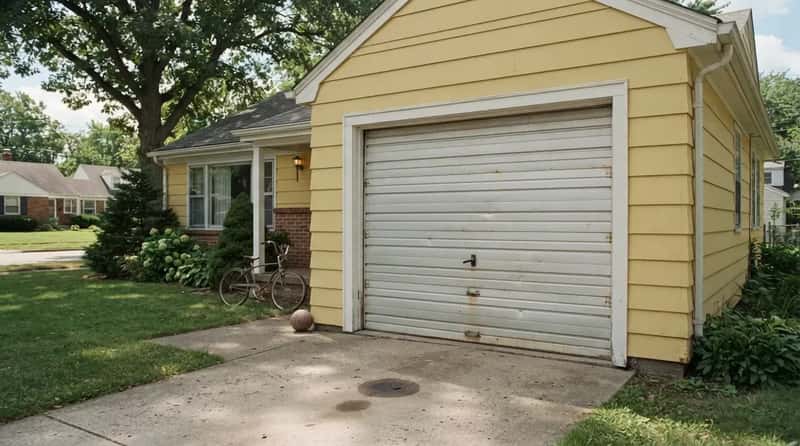
Most suburban homes still had just one garage bay, and the door covering it was almost always lightweight aluminum rather than the heavier steel or wood options that came later. It was a practical shift driven by cost and ease of manufacturing.
The material had real drawbacks families lived with daily. Despite being lightweight, aluminum doors faced structural stability issues, frequent oiling needs, and rust. Dents from a missed basketball shot or a bumped bike were nearly impossible to pop back out, so plenty of these doors carried battle scars for their entire lifespan.
Quick Compare
- 1970s aluminum door: lightweight, budget-friendly, but prone to dents, rust, and squeaky hinges.
- Later steel doors: heavier, more dent-resistant, and eventually available with foam insulation.
- Modern insulated doors: layered construction for noise control, energy savings, and far fewer cosmetic dings.
#4 – Exposed Studs and Zero Insulation
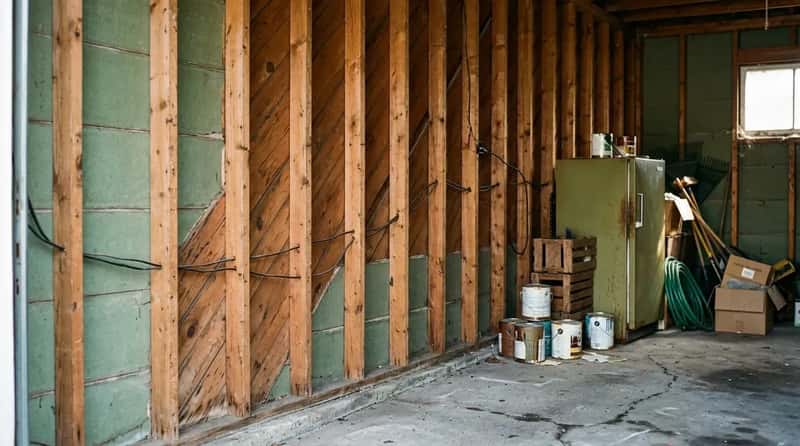
Insulating a garage simply wasn’t standard practice in most 1970s homes. Walls were left bare, showing raw studs, exposed wiring, and sometimes even the backside of the house siding, since the space was considered utility, not living area.
That meant real temperature extremes families just accepted as normal. Garages regularly swung from freezing in winter to sweltering in summer, which is exactly why so many freezers, fridges, and stored paint cans didn’t survive as long as they should have.
#3 – A Water Heater and Furnace Sharing the Same Corner
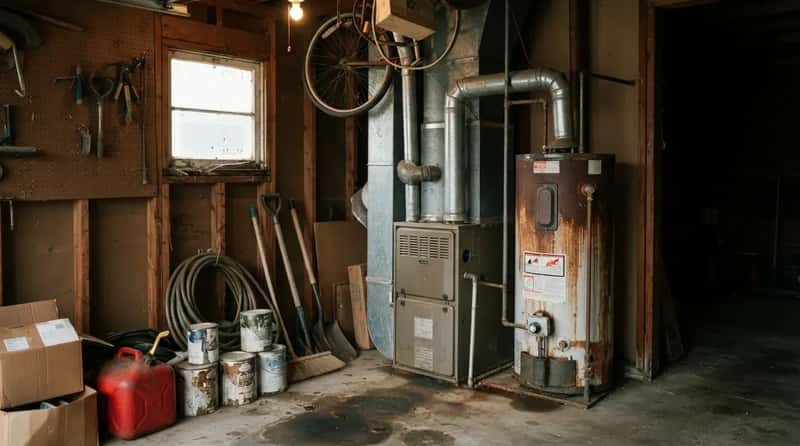
Mechanical equipment almost always lived in the garage rather than a dedicated utility closet. The water heater and furnace typically sat side by side in one corner, tucked behind whatever was leaning against them that week.
This setup came with real safety trade-offs families rarely discussed. Combustible items like gas cans and paint thinner often sat dangerously close to open pilot lights, a habit that later building codes worked hard to correct in newer construction.
#2 – Dad’s Workbench, the Unofficial Command Center
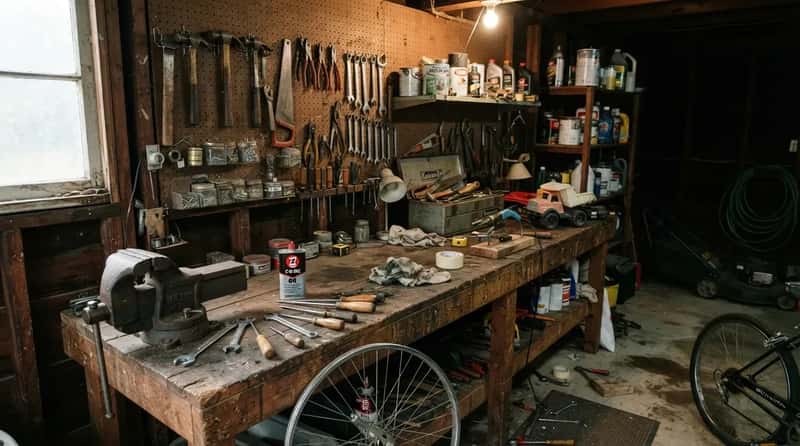
If the house had a true head-of-household headquarters, it wasn’t the den – it was the workbench. Built along one wall, usually with a vise bolted to the corner, this is where bikes got fixed, broken toys got repaired, and every household emergency got triaged first.
It also doubled as an emotional refuge more than most people admit. The workbench was often where dads went to think, not just to fix things, making it one of the most quietly important spaces in the entire house.
#1 – The Garage Band Practice Space
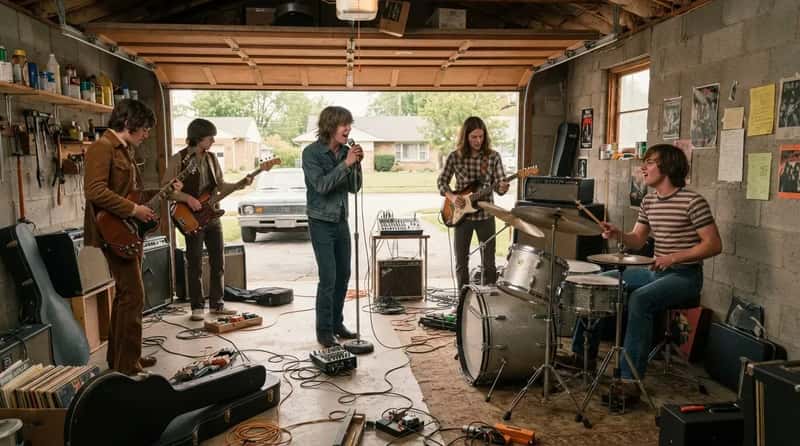
More than any other feature on this list, one thing truly defined the suburban 1970s garage: it was where teenagers actually learned to play music. Drum kits, amplifiers, and secondhand guitars turned countless two-car garages into makeshift rehearsal studios almost every weekend.
The term “garage band” wasn’t just slang – it described a very real, very loud phenomenon happening on driveways across the country. Entire neighborhoods tolerated hours of amateur noise because everyone secretly hoped the band down the street might actually make it someday, and for a lucky few, that hope wasn’t misplaced at all.
Why It Stands Out
- The phenomenon was common enough to give an entire music genre its name: garage rock.
- A concrete floor and cinderblock walls made garages surprisingly forgiving spaces for loud, amateur sound.
- Parents tolerated the noise far more than they would have indoors, simply because it stayed contained to one room.
- For countless kids, the garage was the very first stage they ever played on.
Looking back, the 1970s garage wasn’t really about cars at all. It was the one room in the house with no rules, no matching decor, and no pressure to look nice – which is exactly why it ended up holding so much of a family’s real life. Tools, freezers, bands, bikes, and a few genuinely questionable design choices all lived there together, and somehow it worked.