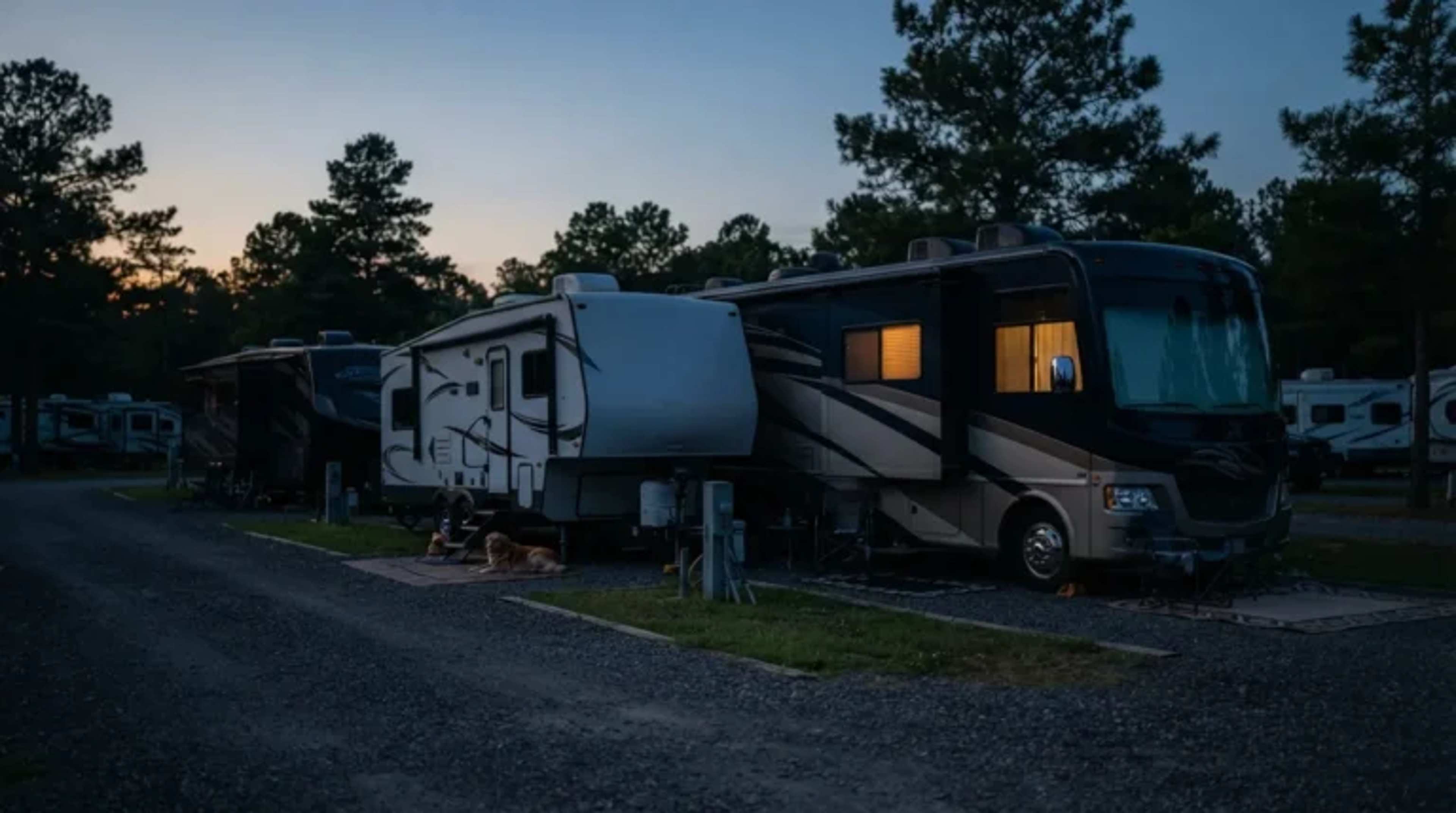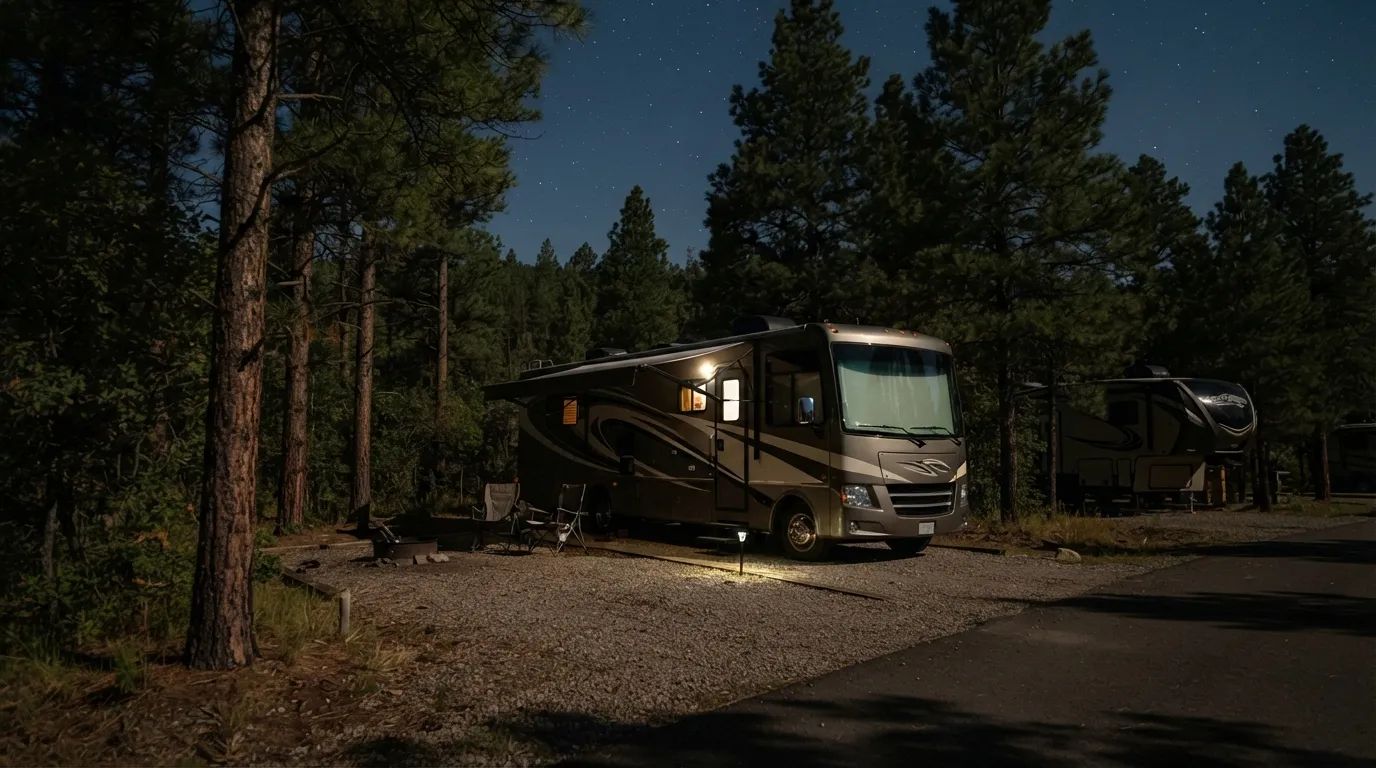
You know the 10 p.m. rule. So you figure you’re safe running the generator at 4 p.m., right? Plenty of campers have learned the hard way that quiet hours and generator hours run on two different clocks, and the second one is far tighter than most people expect.
Some campgrounds give you a few short windows a day. Some ban generators in whole loops. A few even count idling your truck as the same offense. Here are the 27 rules seasoned travellers follow, and the first one is the strictest schedule that most first-timers never see coming.
#27 – The Yosemite Rule: Three Two-Hour Windows and Nothing Else
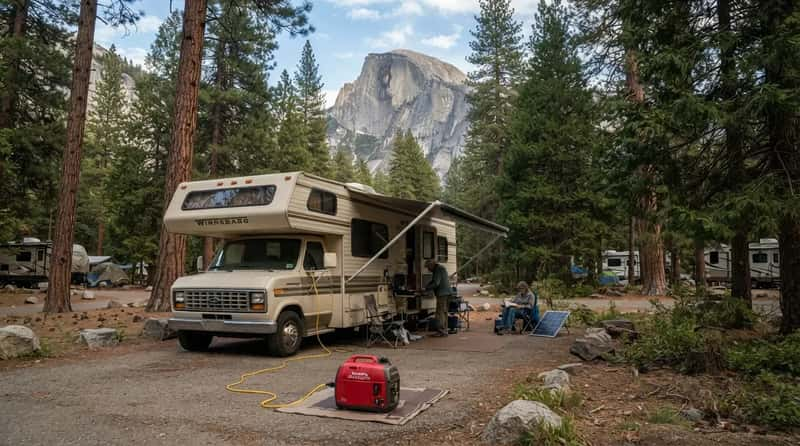
Some of America’s most famous campgrounds treat generator power like a ration. Yosemite allows generator use only from 7 to 9 a.m., noon to 2 p.m., and 5 to 7 p.m. Run one outside those windows and you’re in violation.
That adds up to six hours a day at most, split into three short bursts. Veterans plan around it. They bulk-charge batteries, run the microwave, and cook during those windows, then go quiet. And Yosemite’s clock is only one of many, because the next park uses completely different numbers…
#26 – The Grand Canyon Twist: A Whole Loop That Bans Generators in Season
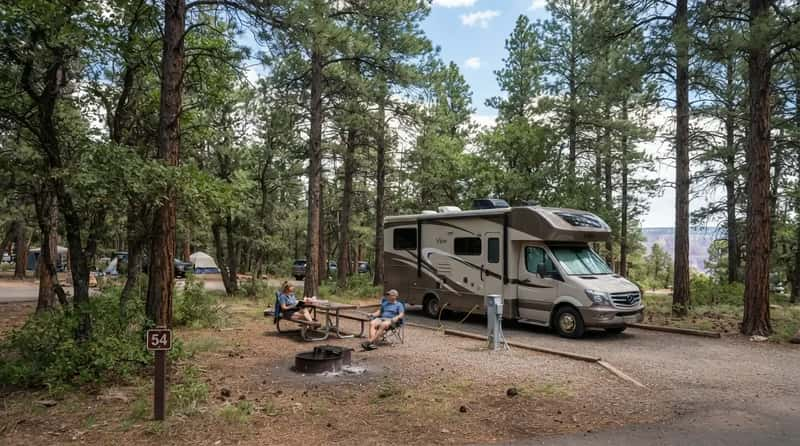
At Mather Campground, the posted generator hours have been 7:00 to 9:00 a.m. and 6:00 to 8:00 p.m. That’s the same ration idea as Yosemite, on a different schedule. Memorize the numbers for the campground you’re in, not the ones from your last trip.
There’s a bigger catch. During peak season, generators are NOT permitted in Pine Loop, which is generator-free from 3/01 through 11/30. Book the wrong loop and you can ruin a power-hungry trip before you even pull in. The next rule is about a quiet-hours mistake almost everyone makes…
#25 – Quiet Hours Don’t End at 6 a.m. Everywhere (Ask Bryce Canyon)
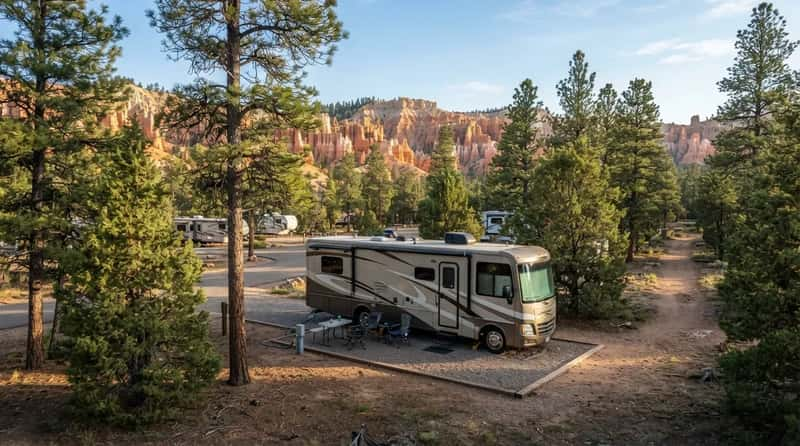
Ten to six is the common schedule, but it isn’t universal. Bryce Canyon has listed quiet hours as 10 p.m. to 8 a.m. That’s two extra hours of silence compared with the usual schedule.
Campers who fire up the engine at 6:15 a.m. out of habit are the ones rangers remember. There is no single nationwide schedule, so experienced travellers check the end time every time. Then there’s a park that blocks generators for twelve hours straight…
#24 – The Smokies Shutdown: No Generators From 8 p.m. to 8 a.m.
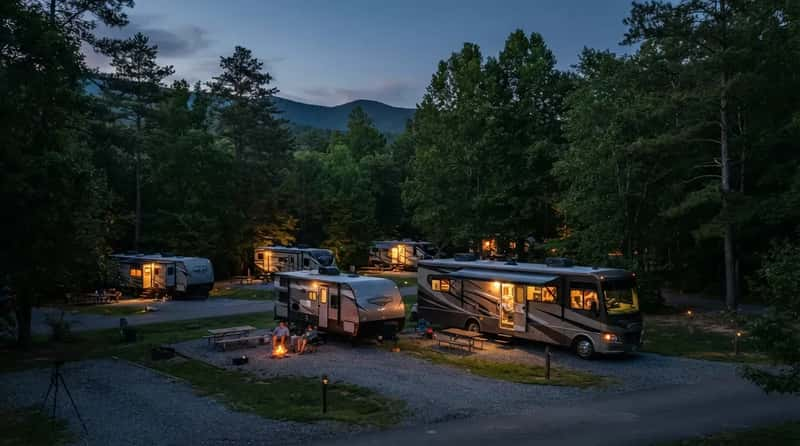
One camping guide that compares official examples says Great Smoky Mountains National Park prohibits generator use from 8 p.m. to 8 a.m. That’s a full overnight blackout, and it starts two hours before quiet hours do. Confirm the current rule with the park before you rely on it.
Quick Compare
- Yosemite: 7 to 9 a.m., noon to 2 p.m., 5 to 7 p.m.
- Glacier: 8 to 10 a.m., noon to 2 p.m., 5 to 7 p.m.
- Grand Canyon (Mather): 7 to 9 a.m. and 6 to 8 p.m.
- Great Smokies: no generators from 8 p.m. to 8 a.m.
Travellers who roll in at dusk with a nearly dead battery learn this fast. The generator curfew can begin before quiet hours do. Experienced RVers top off their batteries in the afternoon and settle in with a full charge. The next rule explains why two clocks matter so much…
#23 – Never Confuse Quiet Hours With Generator Hours
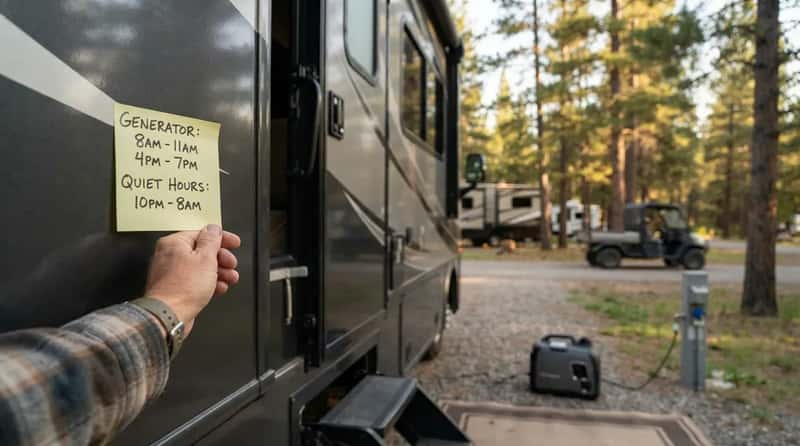
They are not the same thing, and campers mix them up constantly. Generator hours are separate from general quiet hours and may be limited to short daytime periods or prohibited in certain loops. A generator can be banned at 4 p.m. while a conversation is still perfectly fine.
Seasoned travellers write both windows on a sticky note by the door. It takes ten seconds. Skipping it is a mistake campground hosts see all the time. But the next rule trips up even careful campers…
#22 – Never Treat “Quiet Generator” as a Permission Slip
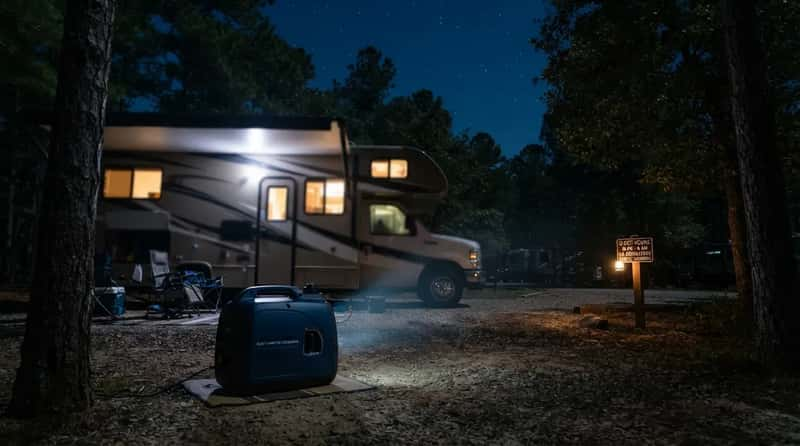
Inverter generators have a reputation as the polite option. The rules are less generous. A unit marketed as quiet is not automatically allowed outside the campground’s approved hours.
Many campgrounds ban the generator by its hours, not by its decibel rating. A quiet unit just makes the violation harder to hear, not legal. There is an official noise number worth knowing, though…
#21 – Know the 60-Decibel Benchmark Hiding in Federal Rules
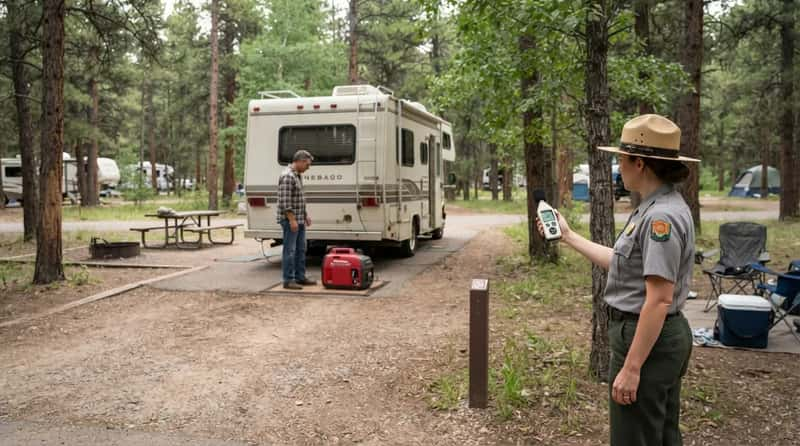
National parks don’t always spell out generator noise in the campground brochure. One camper-focused guide notes that the NPS targets generators that exceed 60 decibels on the A-weighted scale, measured at 50 feet. The takeaway is that “I can barely hear mine” is not the legal test.
That same guide points out that a generator can run during the day and still be a violation if it’s loud enough. Experienced RVers pick units and placement with that in mind. The next rule is about where you park the thing…
#20 – Never Run Your Generator in a Generator-Free Loop
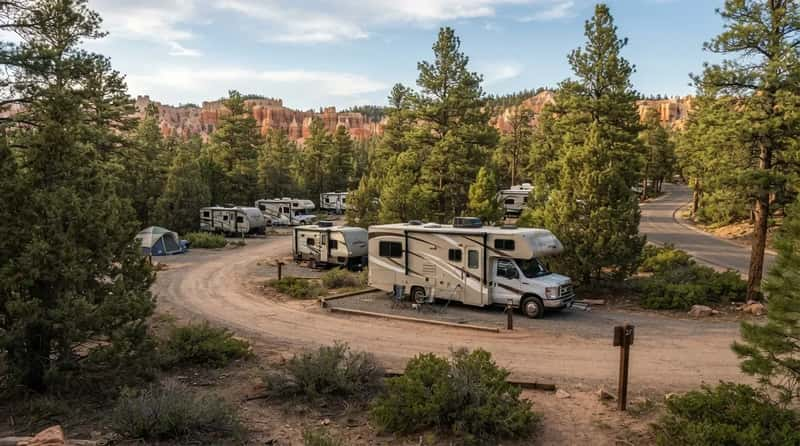
Many campgrounds split their loops on purpose. At Bryce Canyon, generators have been permitted only in Loops A and B. Book a site in another loop and the generator stays in the rig.
Those quiet loops are set aside for campers who come for the silence. If you rely on a generator, choose your loop first and your site second. Booking on view alone can leave you with no power plan at all. Another sneaky workaround is just as banned…
#19 – Never Idle the Truck to Charge Batteries Where Generators Are Banned
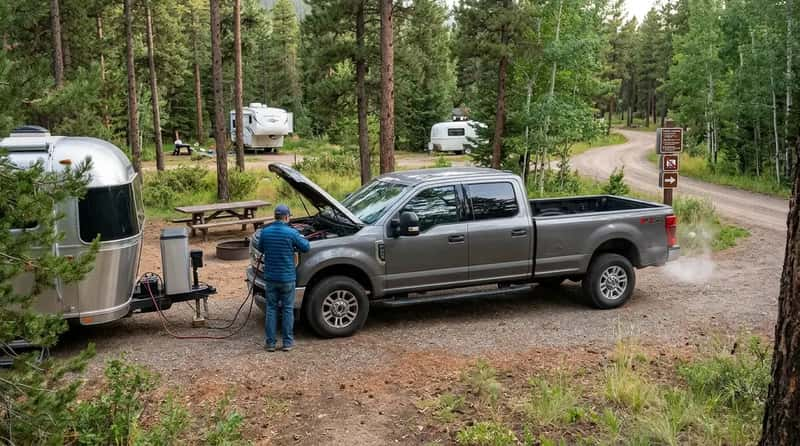
It feels like a loophole. It usually isn’t. Generator-free areas may also prohibit charging batteries by idling a vehicle.
Seasoned travellers who want quiet power skip the engine entirely. Solar panels and battery banks are popular for exactly that reason. And one rule covers a trap that catches people at the pedestal…
#18 – Never Plug Into the Campground Outlet Unless It’s Yours to Use
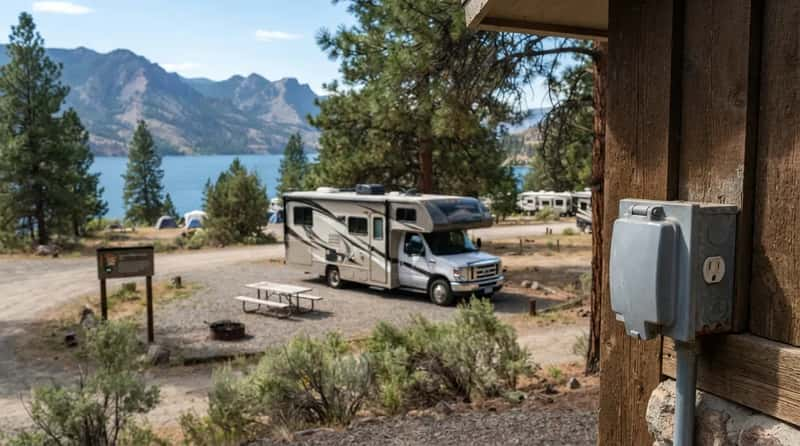
Hookups are not a given. At Lake Roosevelt, National Park Service campgrounds do not provide hookups for recreational vehicles, and connecting to a campground electrical outlet or water system is not permitted. Plugging into a restroom outlet is a quick way to meet a ranger.
The same park has published its own generator hours too. An older Lake Roosevelt brochure allowed generators from 6 a.m. to 10 p.m., which is far looser than Yosemite’s. The next rule is about how much the rulebook depends on who owns the land…
#17 – Never Assume National Forest Rules Match National Park Rules
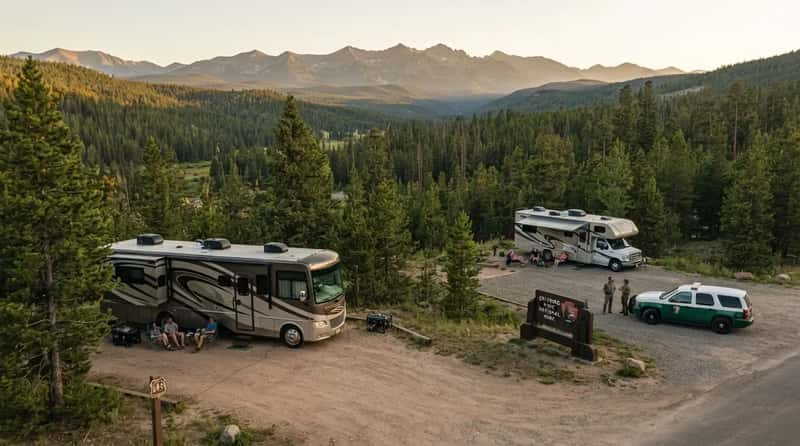
Different agencies run things differently. The USFS does not define quiet hours on a nationwide basis for its developed campgrounds. Each forest, grassland, and campground is free to set its own.
Worth Knowing
- National forests: quiet hours are set locally, not nationwide.
- National parks: one camper guide says the NPS targets generators above 60 decibels, measured at 50 feet.
- BLM sites: ask at each specific campground or LTVA what the quiet hours are.
So a rule you learned at a national park may not apply at the forest campground next door. Or it may be stricter. The same highway can lead you through three different rulebooks in a single afternoon. Dispersed camping adds one more twist…
#16 – Never Believe “Dispersed Means No Rules”
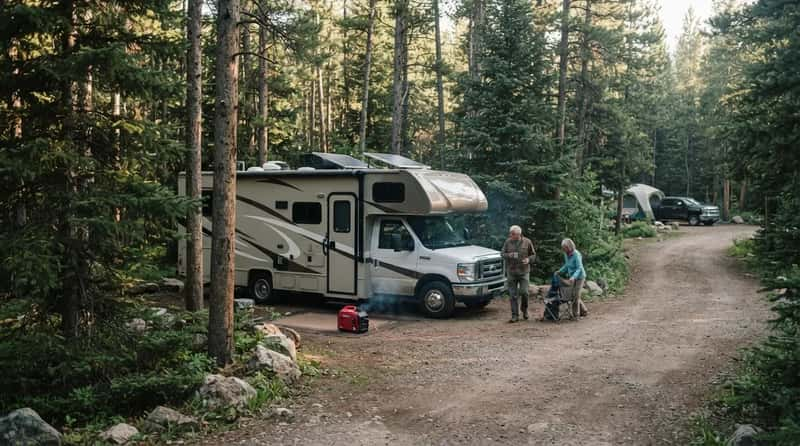
Free camping off a forest road feels lawless. It isn’t. Dispersed camping has no formal decibel limits, but you’re still expected not to disturb other campers. One camping guide adds that a loud generator at 6 a.m. in a dispersed area can still get a complaint sent to the ranger.
The trouble is the thin line between “nobody’s around” and “somebody is just out of sight.” Experienced travellers behave as if there’s a neighbor over the next hill. The next rule shows who actually knows the local rules…
#15 – Never Skip the Camp Host Conversation
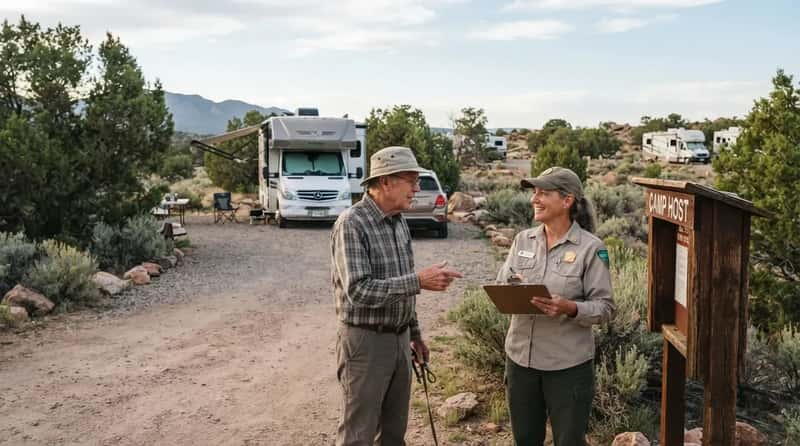
Rules change, and websites lag. For BLM sites, one guide explains that you need to ask at each specific campground or LTVA what the quiet hours are. Camp hosts at those campgrounds are often much more diligent about enforcing them.
So the host is both your best source and your biggest enforcer. A thirty-second chat at check-in beats a warning at midnight. Seasoned travellers ask three things: when generators can run, which loops are generator-free, and who to call about a problem. What comes next is where the real danger starts…
#14 – Never Point Your Exhaust Toward Anyone’s Door or Window
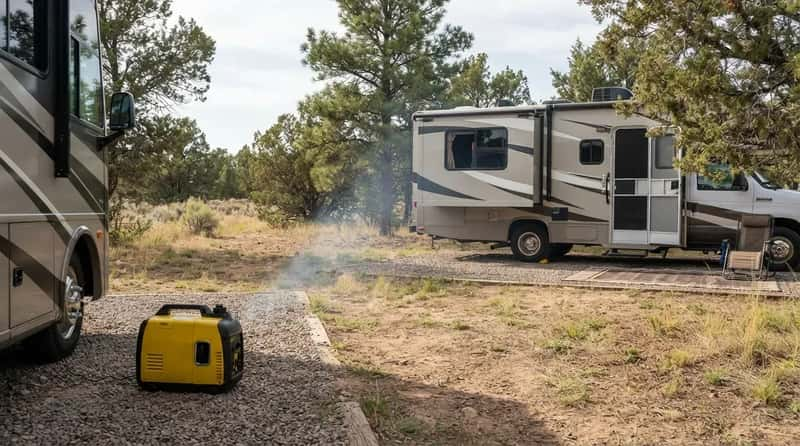
This one is about safety, not just courtesy. The CPSC says generators should run outside only, with the exhaust directed away from the home and any other buildings someone could enter. An RV is a building someone can enter.
That means your exhaust shouldn’t drift into your neighbor’s slide-out either. Seasoned travellers think about wind direction before they set the unit down. And the next rule is the one that can cost people the most…
#13 – Never Run It in a Garage, Shed, or Enclosed Space
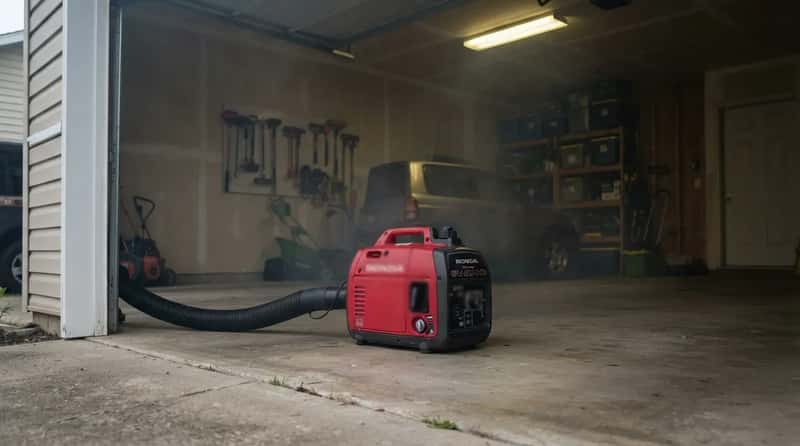
The CPSC is blunt here. Never operate a portable generator inside a home, garage, basement, crawlspace or shed. Opening doors or windows will not provide enough ventilation to prevent a buildup of lethal levels of CO.
Experienced RVers extend that logic to anywhere exhaust could gather, like under an awning or against a wall. Cracking a window is not a safety plan. The next rule is about the alarm most campers forget to pack…
#12 – Never Sleep Without a Working CO Alarm in the Rig
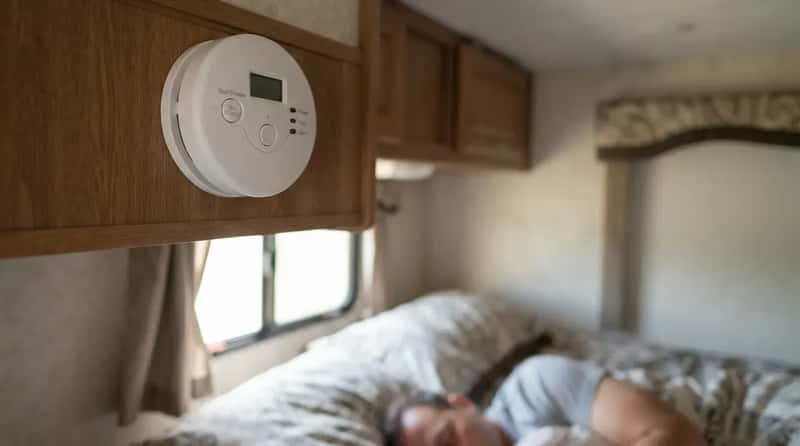
Generators and sleeping quarters make a bad mix when the wind shifts. A 2026 safety guide advises keeping battery-backed CO alarms working inside. If you feel dizzy, sick or weak while a generator runs, get to fresh air immediately and call for help.
At a Glance
- Keep a battery-backed CO alarm working inside the rig.
- Test it before each trip and check the date on it.
- Dizzy, sick or weak while a generator runs? Get to fresh air and call for help.
- Run the generator outside only, with exhaust pointed away from any building someone can enter.
The alarm matters even if you shut your own generator off at night, because other engines may be running nearby. Seasoned travellers test the alarm before each trip and check the date on it too. The next rule is one you can buy your way into…
#11 – Never Buy a Generator Without a CO Shut-Off
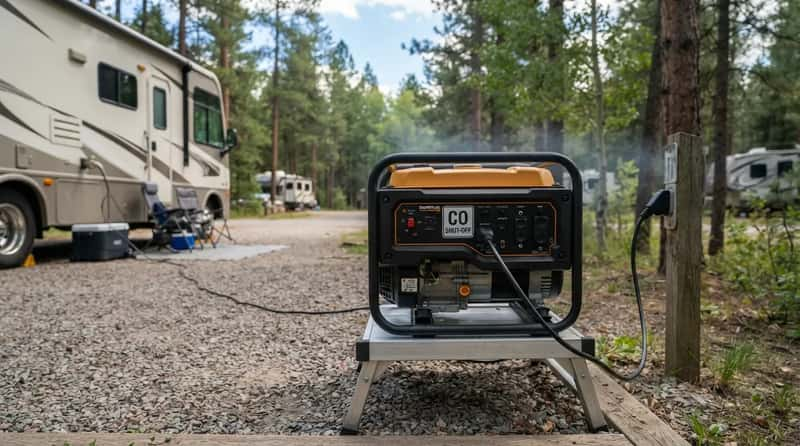
The CPSC’s advice is direct: look for portable generators that have a CO shut-off safety feature. The agency has also proposed a rule that would limit CO emissions from portable generators and require them to shut off when specific emission levels are reached.
An RVer who runs a generator every night has more reason than most to want that feature. It’s the kind of extra you only need once, and then you really need it. The next rule shows how serious the numbers are…
#10 – Never Ignore the Nearly 100 Americans Who Die Each Year From Generator CO
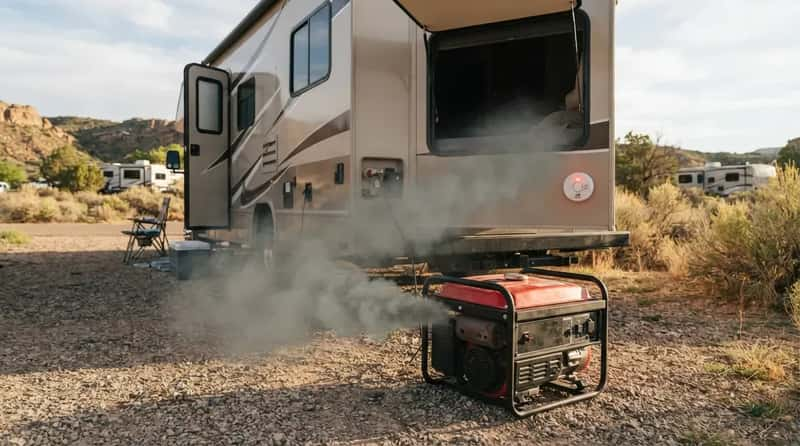
This isn’t a rare, abstract risk. According to the CPSC, nearly 100 consumers die in the U.S. in an average year from CO poisoning from portable generators. Many of those cases involve homes after storms, but the same exhaust travels from a campsite generator.
The CPSC also warns that exposed people may become unconscious before they recognize the symptoms of nausea, dizziness or weakness. You may not get a warning. That’s why the placement rules matter more than any noise rule. And the next rule is about a very human temptation…
#9 – Never Run the Generator All Night for the A/C
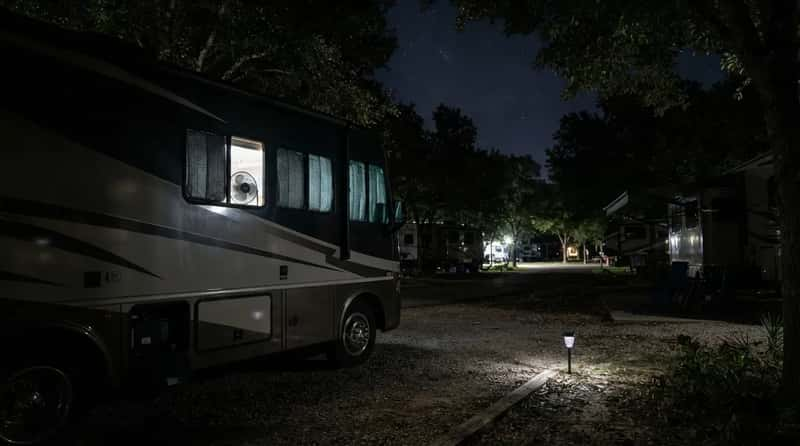
It’s the most common summer temptation in an RV park. Quiet hours exist so everyone can sleep, and one camping guide notes that most parks ban all generator use during quiet hours, even quiet ones.
Seasoned travellers cool the rig down before the window closes, then lean on fans, shade, and window covers overnight. Parking in shade helps more than most people think. The next rule is about making the most of that short window…
#8 – Never Waste Your Generator Window Without a Plan
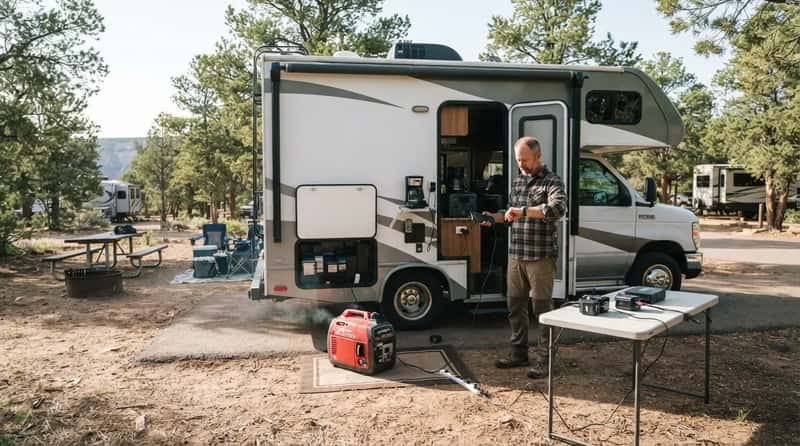
Short windows mean every minute counts. Yosemite, Glacier, and Grand Canyon’s Mather all use split schedules, and Glacier’s has been 8 to 10 a.m., noon to 2 p.m., and 5 to 7 p.m. A camper who starts late and stops early ends up with a half-charged battery.
Experienced RVers treat it like a pit stop. Get in, get the power, get out. And next comes the rule that separates polite campers from the rest…
#7 – Never Treat “Allowed” as “Required”
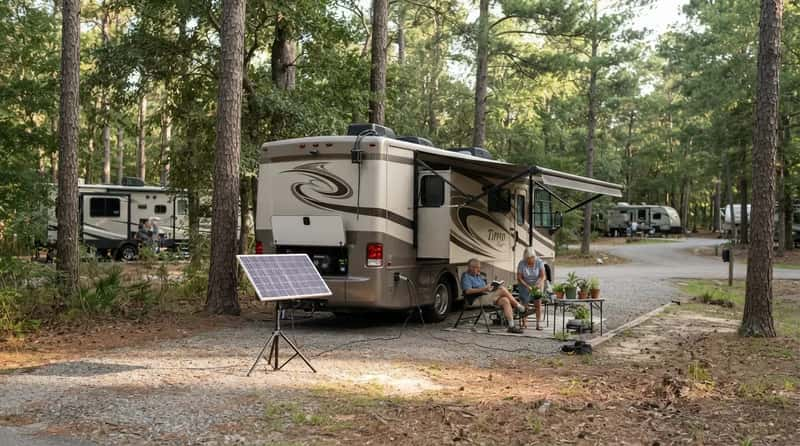
A generator window is a limit, not a schedule you have to fill. Just because the rule allows two hours doesn’t mean you need to run for all of them. Seasoned travellers often shut off early once the batteries are full.
That small habit makes a big difference in a crowded loop. The quietest campers often use the least of what’s allowed. Fewer hours means fewer chances for a neighbor to get annoyed. The next rule is about timing that most people never consider…
#6 – Never Test Your Luck on Busy Weekends
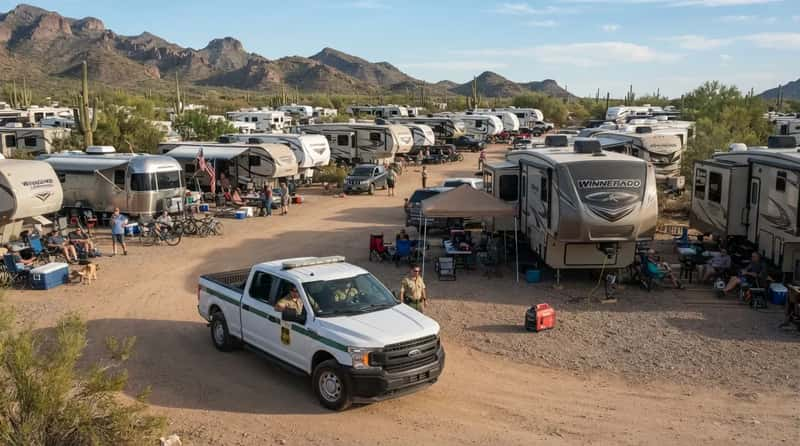
Enforcement isn’t evenly spread across the calendar. One camping guide notes that in Arizona’s Tonto National Forest, rangers patrol popular campgrounds on weekends. Full campgrounds also mean more neighbors close enough to hear you.
Holiday weekends are the same story, with more people packed into less space. A violation that goes unnoticed on a Tuesday can draw a complaint on a Saturday. The next rule is about the price of being wrong…
#5 – Never Count on a Free Pass After a Warning
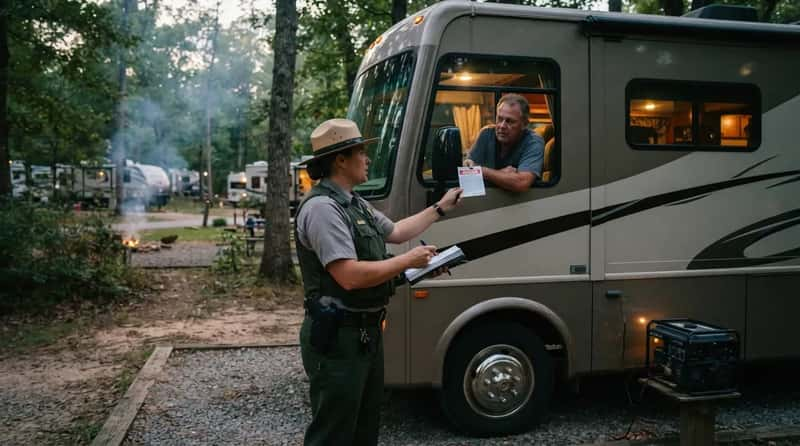
Campgrounds usually start with a warning. One guide says repeat violations can lead to a written citation ($50 to $250 fine) or an order to leave without a refund. Fines vary by agency and park, so treat that figure as a rough guide.
Fast Facts
- The first step is usually a warning.
- Repeat violations can bring a citation, roughly $50 to $250 by one guide’s estimate.
- The worst case is an order to leave, with no refund.
- Fines differ by agency and park, so check the local rule.
The bigger cost is losing your spot. Being told to leave a booked site at night is a nightmare scenario, especially in a park where every nearby campground is full. Experienced RVers don’t risk it for a few extra hours of air conditioning. And there’s a better way to handle a noisy neighbor…
#4 – Never Confront a Neighbor Over Noise When You Can Report It
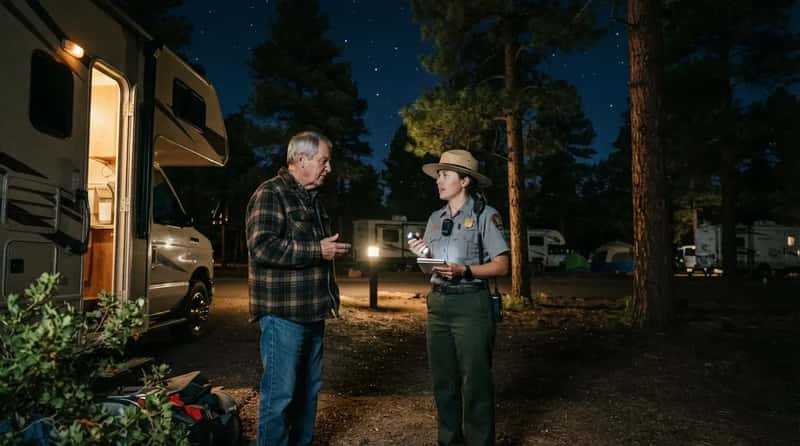
Seasoned travellers know that arguing at midnight rarely helps. Parks have a process. At Mather, noise violations should be reported to on-duty NPS rangers, volunteer campground hosts, or after-hours dispatch.
The same logic applies if someone complains about you: stay calm, apologize, and shut it off. Escalating almost never ends well for the person with the engine. The next rule shows why checking beats guessing…
#3 – Never Rely on the Rules From Your Last Trip
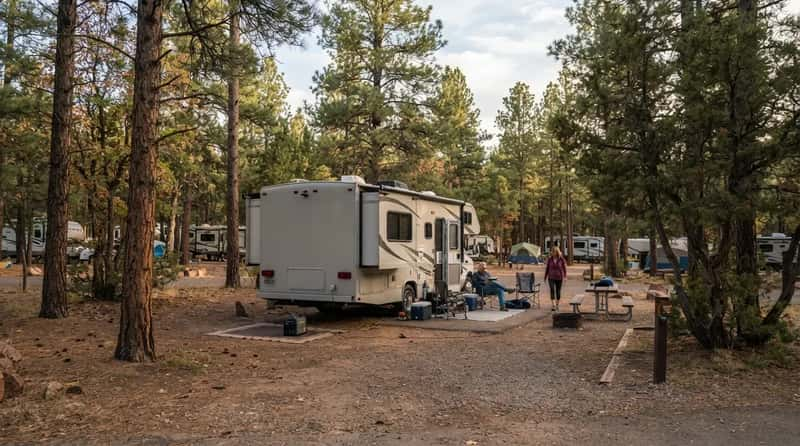
Rules change by season, loop, and sometimes year. Grand Canyon’s Pine Loop is generator-free for part of the year, and generators may be used there during winter operations, but only during generator hours. The same site can have different rules in January than in July.
Even within one park, the clocks can split. Sequoia has listed generator hours between 9 a.m. and 9 p.m., except at Lodgepole and Dorst Creek campgrounds, where generators could run from 8 to 11 a.m. and 5 to 8 p.m. Two campgrounds in one national park can run on different clocks. The next rule says where to look…
#2 – Never Skip the Official Campground Page Before You Arrive
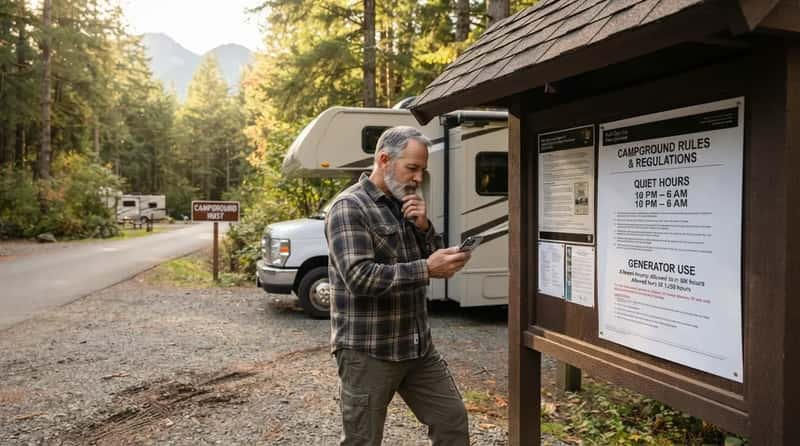
Blog posts and old forum threads go out of date. Official pages from the park or Recreation.gov are the sources campground hosts will point to. Federal parks, state parks, private RV resorts, local campgrounds, and individual loops can all set different hours, so nobody else can tell you the rule for your exact site.
Seasoned travellers do this for every stop on a long route. It takes a few minutes and removes most surprises. And the last rule is the one that really holds all the others together…
#1 – Never Forget Why Quiet Hours Exist: So Everyone Can Sleep
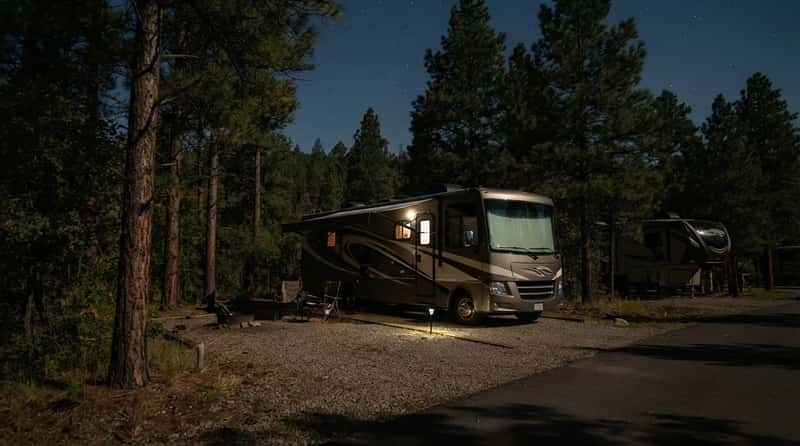
Every posted rule comes back to one point. Quiet hours exist so everyone can sleep. The generator limits, the loop bans, and the decibel benchmarks are all different ways of protecting that.
The most experienced RVers follow a simple habit: when in doubt, shut it off. The campers other people remember fondly are almost never the ones with the most power. They’re the ones whose neighbors never noticed them at all.
Some of the best nights on the road are the quietest ones, when the only sound is the wind in the trees. Nearly every rule above exists to protect that sound.