
Most people assume a cruise passenger is a cruise passenger. Then you spend 14 nights on an Atlantic crossing, and the regulars stand out within hours. They pack differently, plan differently and walk through a rolling corridor like it’s a hotel hallway.
There’s no official steward checklist, and we won’t pretend there is. But the pattern is hard to miss once you know how these one-way, sea-heavy, spring-and-fall voyages work. Some of the tells are funny, a couple might start an argument, and the one at #1 has nothing to do with luggage.
#27 – The One-Way Flight Home That Gives It Away in Minutes
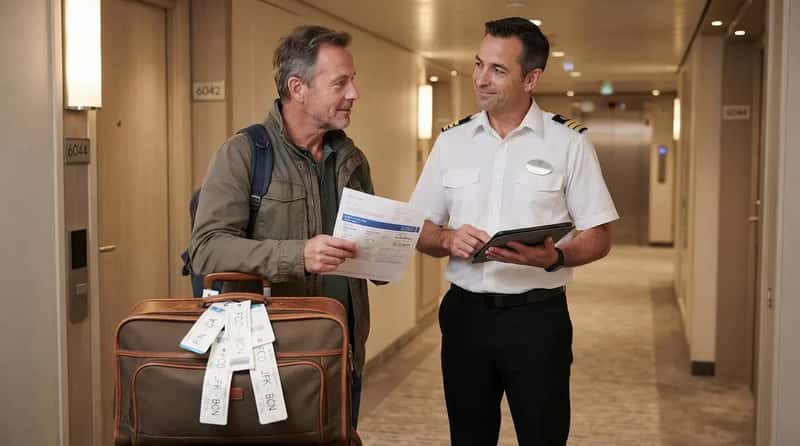
Most cruisers fly home from the port where they started. Repositioning passengers can’t, because the ship ends up somewhere else. That’s why odd airport codes and open-jaw tickets come up in the first casual chat.
A guest who says they’re flying home from a different country than they flew into is rarely on a standard cruise. Veterans sort out that return trip months ahead. The ship on a crossing never returns to where it started. But the luggage tells an even bigger story.
#26 – Suitcases Packed for Two Climates at Once
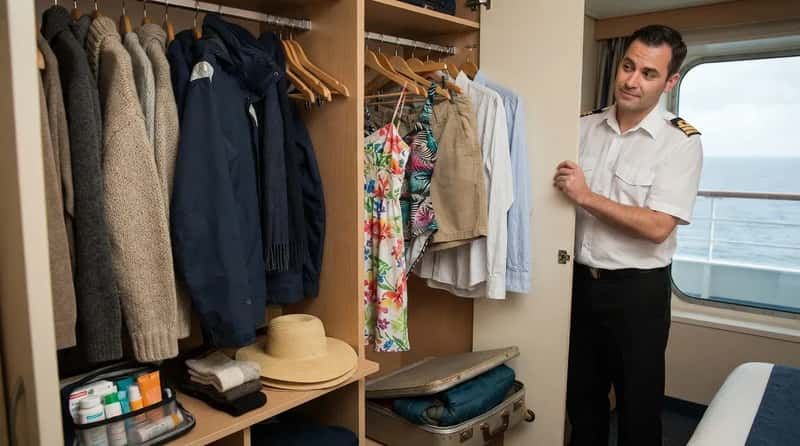
A spring crossing can leave Florida in shorts weather and arrive in Europe where you want a jacket. The fall version runs in reverse. Repeat crossers pack swimsuits next to wool sweaters and don’t apologize for it.
A steward opening the wardrobe sees layers on hangers, not a week of matching outfits. A single trip can mean a beach day and a coat day within the same fortnight. Then there’s the pharmacy habit nobody hides well.
#25 – Seasickness Patches Applied Before the Ship Even Leaves

Newcomers wait to see if they’ll feel queasy. Crossing veterans don’t gamble. Atlantic swells are real, especially on autumn crossings, and the regulars plan around them.
Wristbands, patches and ginger chews show up on nightstands on day one. Travel guides routinely advise packing motion-sickness remedies if you’re prone to it. The prepared ones often look calmer than people who felt fine in port.
Worth Knowing
- The scopolamine patch is prescription-only in the U.S., so the doctor visit happens before packing.
- It’s worn behind the ear and typically works for up to about three days.
- Wristbands and ginger chews need no prescription, so many people carry them as backup.
- Veterans start early instead of waiting for the first queasy moment.
The cabin request that follows is just as telling.
#24 – The Cabin Request That Sounds Oddly Specific

Ask a veteran where they want to sleep and they won’t say “a nice view.” They’ll ask for midship and a lower deck. That’s standard advice for anyone prone to seasickness.
Plenty of first-timers still book the high-deck balcony and regret it by day three. Experienced guests read a deck plan like a motion map. Their itinerary questions give them away even faster.
#23 – “Which Route Stops at the Azores?”

Ask a seasoned crossing passenger about their itinerary and they’ll talk about the middle of the ocean. They know which sailings add a mid-Atlantic port. A stop in the Azores or Bermuda can break up what would otherwise be a long run of sea days.
First-timers ask about shore excursions. Repeaters ask about gaps. They count sea days the way other travelers count restaurants. Their reading habits are the next clue.
#22 – The Stack of Paperbacks That Fills the Nightstand

A crossing without a book is a very long crossing. A repositioning sailing can mean several sea days in a row, and repeat passengers show up ready. Thick novels, puzzle books and loaded e-readers crowd the cabin.
A typical Caribbean week has a couple of sea days at most, so the difference is huge. A first-timer’s carry-on holds one paperback, and a veteran’s holds a small library.
Quick Compare
- Caribbean week: a couple of sea days at most, so one paperback usually does it.
- Queen Mary 2 crossing: a seven-night Southampton to New York run with no port calls.
- 14-16 night repositioning: a handful of ports spread across long sea stretches.
Their daily schedule gives them away too.
#21 – A Daily Program Already Circled in Pen
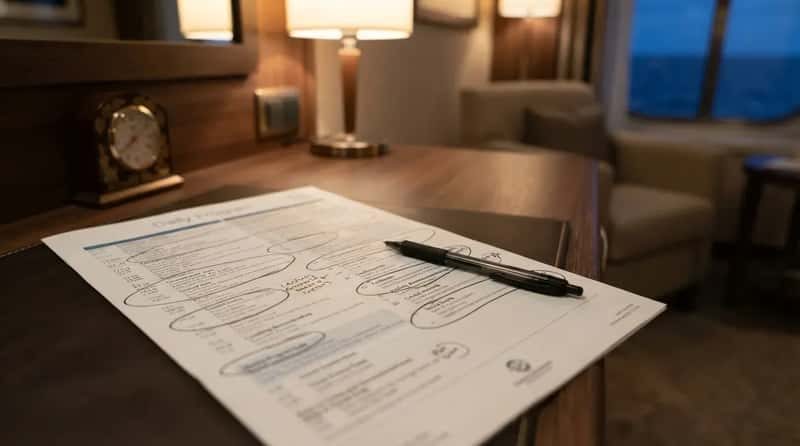
On sea days the daily schedule is the most important paper on the ship. Repeat crossers read it the night before. They mark the lecture, the cooking demo and the dance class.
The better transatlantic ships build enrichment programs like lectures and culinary demonstrations specifically for days at sea. Some guests treat the program like a college course schedule. Even the clock on the wall can’t surprise them.
#20 – Zero Surprise When the Clocks Jump
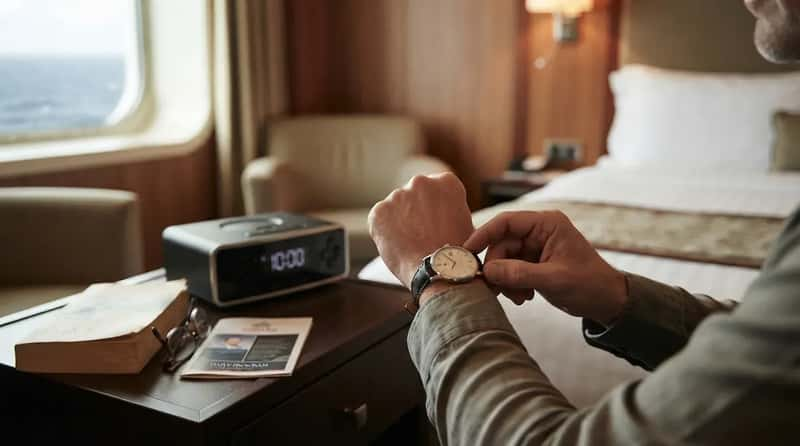
Newcomers are baffled when the ship announces yet another time change. Veterans are already adjusting their sleep. They know the clocks will move in steps across the crossing.
Direction matters here. Westbound travelers get longer days, and eastbound travelers lose time. The savvy ones switch to ship time on the first night. The next giveaway shows up once they get to their cabin.
#19 – A Cabin That Looks Lived-In by Day Two
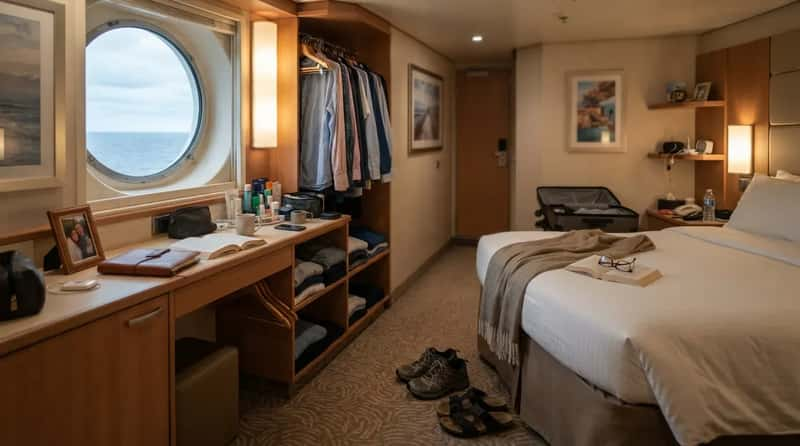
Short cruises feel like hotel stays, with suitcases half open on the bed. A crossing is different. A 14-16 night sailing is often considered ideal for the full transatlantic experience, and long-timers settle in properly.
Clothes go in drawers, shoes line up and a small framed photo might appear on the desk. Extra hangers get requested early. Some cabins look like a studio apartment by the first sea day. The port-day behavior says even more.
#18 – The Calm Shrug on Port Days

When the ship finally reaches land, first-timers charge for the gangway. Repeat crossers stroll. A 15-day transatlantic might have only four or five port stops, so they pick one thing and enjoy it slowly.
Here’s where people start arguing. Some cruisers call a crossing a waste if they want a new port every day. Experienced crossers see the sea days as the whole point. Which camp are you in?
#17 – Specialty Dinners Booked Before Boarding
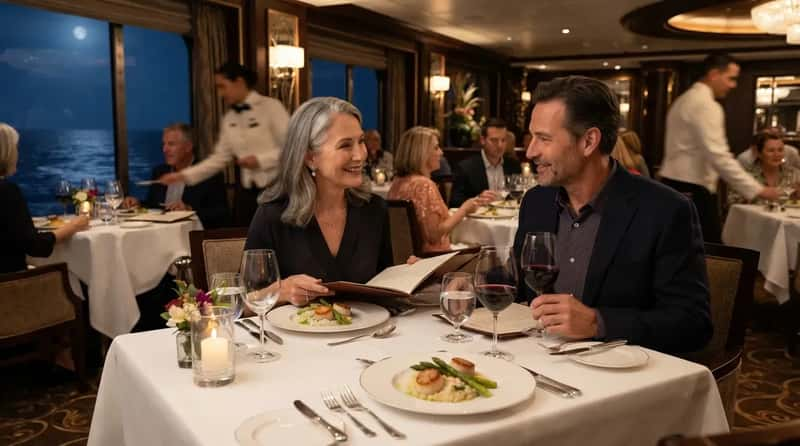
With more nights at sea, dinner becomes the main event. Repeat guests try to reserve specialty restaurants as soon as the booking window opens. Where reservations are possible, they rarely leave it to chance.
On some luxury lines, specialty dining and generous inclusions are part of the package. Veterans plan their dinners like a theater season. They’re also the ones asking about wine pairings by night three. Then there’s the laundry question.
#16 – They Packed Light and Own a Laundry Strategy
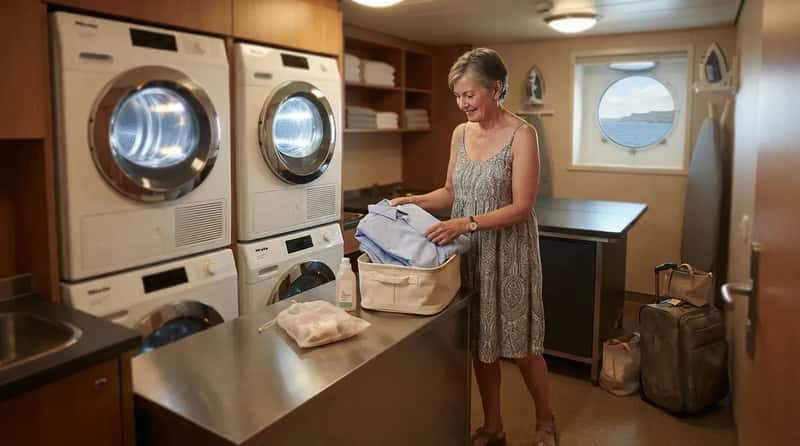
Two weeks of clothes won’t fit in one bag, so repeaters rely on laundry. They know which hours the laundry room is quiet and carry travel detergent. The result is a smaller suitcase than you’d expect for a trip this long.
A guest who happily wears the same favorite outfit twice has usually done this before. A smaller bag on a longer trip is a veteran’s signature. Formal night shows a different side.
#15 – Garment Bags on a Ship Where Formal Night Still Means Formal
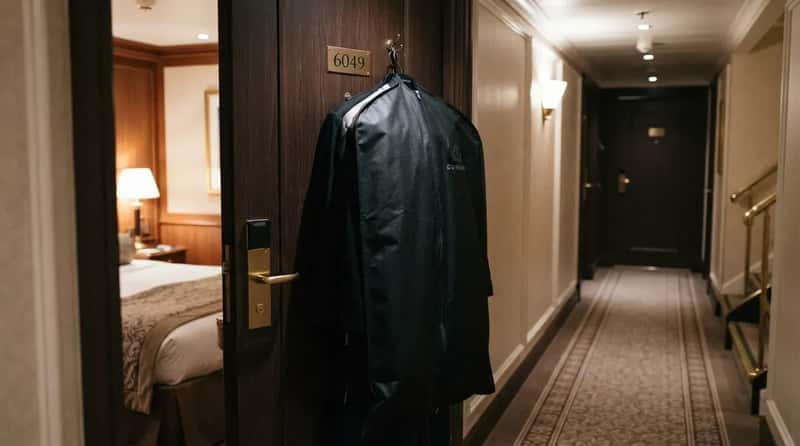
Most cruise lines have relaxed their dress codes. Not all. Cunard’s Queen Mary 2 is known for its gala evenings, and crossing regulars arrive with tuxedos and gowns.
Here’s the controversial part. Some cruisers say formal nights are outdated and a hassle to pack for. Others say they’re exactly what makes an Atlantic crossing feel like an event. A garment bag on a crossing usually means the guest is sailing the classic way.
Why It Stands Out
- Gala evenings are a long-running Queen Mary 2 tradition, not a one-off theme night.
- Many other lines have loosened their rules, so full formal wear is easy to spot.
- A garment bag in the cabin doorway is the visible clue.
- For many regulars, getting dressed up is part of the show.
The next tell is even more unusual.
#14 – A Daily Walk to the Kennel
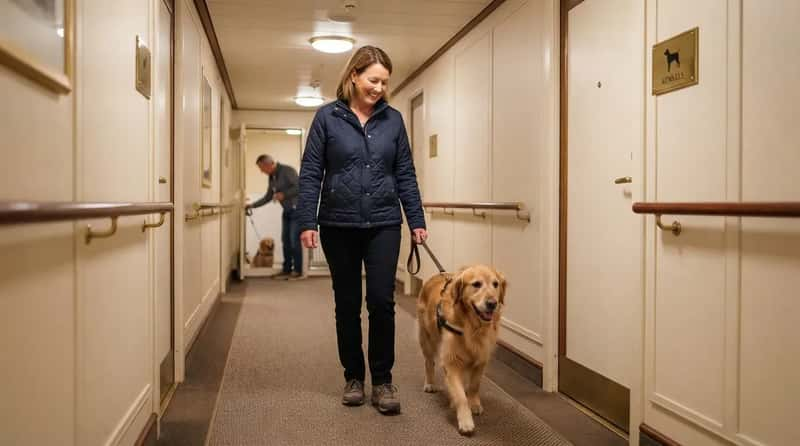
Some crossing passengers travel with pets. Cunard’s Queen Mary 2 is well known for its onboard kennels, which are rare among cruise ships. Owners visit once or twice a day, and the routine is hard to miss.
Rules and availability change, so owners usually plan far ahead. A guest heading below deck every morning to see a dog is almost certainly doing a crossing. There’s also a social tell hiding in the lounge.
#13 – The Trivia Team That Already Has a Name

On sea days, trivia and themed events become a big deal. Repeaters arrive with a team name, a rivalry and a favorite table. The programming ramps up on crossings, and they know it.
A first-timer wanders in wondering what’s going on. The veteran is already saving seats. Some friendships on these ships restart every spring and every fall. The money talk gives them away too.
#12 – Dinner Talk Turns Into Per-Night Math

Ask a repeat crossing guest how they afford it and you’ll get numbers. They quote the per-night rate and compare it to the same ship in peak season. They clearly enjoy the bragging rights.
These sailings are priced to fill. Veterans know the value hides in the calendar, not the ship. The next tell happens on a bad-weather day.
#11 – The Spa Pass Bought Early

Heated pools and thermal suites feel different on a long crossing. Repeat guests book spa time early, especially for rough-weather days. A warm thermal suite is a classic way to wait out a gray Atlantic afternoon.
Damp robes and slippers by the cabin door tell the story. Veterans treat the spa like a base camp. Their sea legs say even more.
#10 – Home-Comfort Gear That Looks Strangely Organized

Repeat crossers bring small things that make a cabin feel like home. Magnetic hooks for metal walls, a favorite pillowcase and a night light are common. Everything has a place.
Rules vary by line, especially on extension cords and power strips. Many ships only allow surge-protected ones. Veterans check the policy before they pack. Next, the way they walk gives them away.
#9 – Walking Straight When Everyone Else Grabs the Rail

On rough days, the corridor turns into a comedy sketch. First-timers lean on the walls. Veterans walk through it as if the floor were flat.
The open Atlantic can bring noticeable swells during storm systems. Regulars barely look up from their coffee. And the month they choose says plenty.
#8 – Booking November Anyway

Most people avoid the roughest month on the calendar. Crossing repeaters often book it for the price. They accept the bumpy ride as the cost of the deal.
Anyone who comes back after one bad-weather crossing is clearly hooked. Surviving a rough November crossing is a badge of honor for some. The cabin setup tells us more.
#7 – A Chair Turned Toward the Window
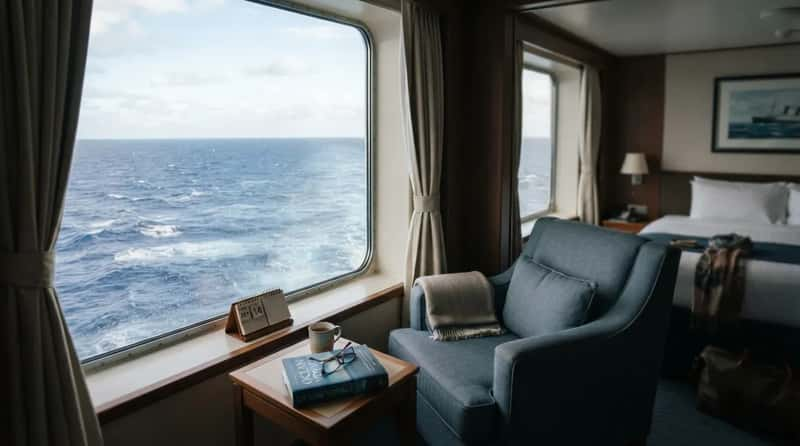
With so many sea days, the view matters. Repeat guests arrange the cabin for watching the horizon. The chair faces the glass, and the curtain stays open.
They stay in the cabin more than you’d expect, reading, napping and watching the water. Quiet time is the point for them. For some, the empty horizon is the entire attraction. Then there’s the calendar.
#6 – The Same Two Windows Every Year
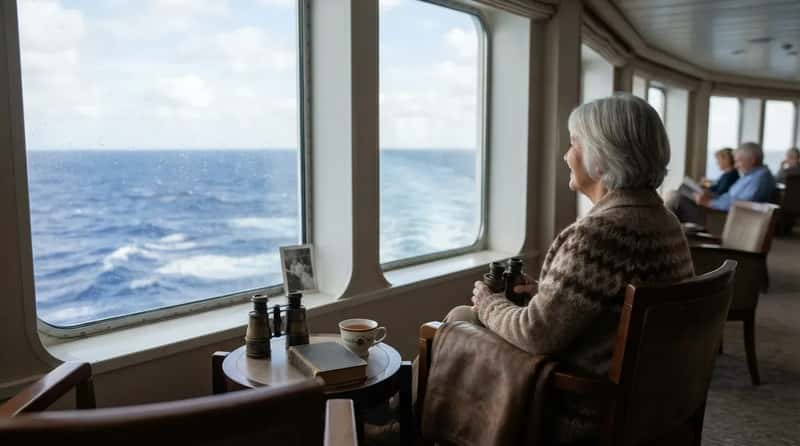
Many seasoned crossers sail twice a year, in spring and fall. Repositioning mostly runs April-May eastbound and September-November westbound. They’ve built their year around it.
The same faces tend to turn up in the same weeks. These guests migrate with the ships. Even more telling is how they spend an ordinary day.
#5 – They Never Ask, “What’s There to Do?”

It’s the question first-timers ask on day three. Repeat crossers already have a rhythm. Morning walk, lecture, lunch, library, tea.
One guide describes a typical sea day as a library visit and a good book with the ocean outside the window. Veterans don’t fill the day. They protect it.
At a Glance: A Veteran’s Sea Day
- Morning: a walk on deck before the crowds.
- Late morning: a lecture or cooking demo, already circled in the program.
- Midday: lunch, then a quiet hour in the library.
- Afternoon: tea, then trivia with the usual team.
- Evening: a planned dinner and an early night.
Some use that time very differently.
#4 – The Laptop Setup in a Cabin Built for Sleeping
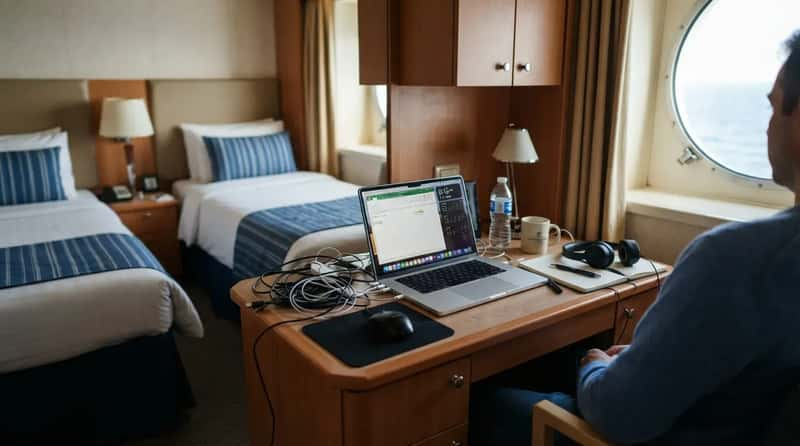
Some repeat guests work remotely during the crossing. They turn the desk into an office and arrange their schedule around the internet. They know the satellite connection has its own rhythms.
Cables, headphones and a notebook take over the desk. The cabin becomes a ten-day remote office. Their choice of ship says something too.
#3 – Picking the Line for Its Sea-Day Reputation
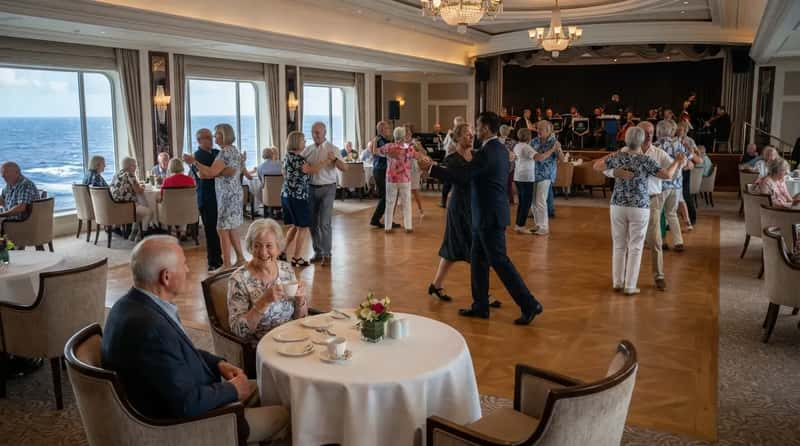
Repeat crossers don’t just pick the cheapest fare. They pick the line known for what happens on the days at sea. Cunard and Holland America are well regarded for sea-day programming.
Some veterans stay loyal to one line for years. They judge a ship by its Tuesday afternoon. The next one is a planning move.
#2 – Booking the Next Crossing Before This One Ends
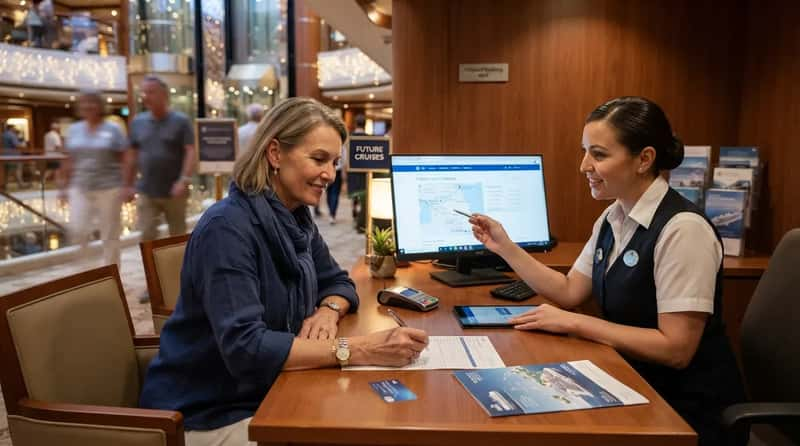
Many repeaters leave the ship with the next sailing already booked. Some lines offer onboard booking perks, though terms vary. Either way, they’re already thinking about next spring.
The plans often get made in the last few days of the voyage. The goodbye is rarely final. But the strongest tell is much more personal.
#1 – They Remember Your Name, and Ask About Your Family

This is the giveaway that beats all the others. The guest greets their steward by name on day one. They ask about a child or a hometown from the last crossing.
It turns out the repeat passenger isn’t only returning to a ship. They’re returning to people. A guest who opens with “Good to see you again” is almost always a regular. And that’s the real giveaway.
Repositioning regulars are easy to spot because the trip shapes them. One-way flights, long sea days, spring and fall calendars and a carefully built cabin all give them away. Even the few ports they visit get a calm, unhurried stroll.
But the most telling sign isn’t gear or routine. It’s a warm hello for the person who makes up their bed. Which tell would give you away on your next crossing?