You probably picture flight attendants as the people who hand out pretzels. The FAA logged 5,973 unruly passenger incidents in 2021 alone, and levels are still roughly double what they were before 2020.
Crews now say the biggest daily headaches aren’t the dramatic ones. They’re habits most of us call harmless, from a friendly tap on the arm to a power bank tucked in the wrong spot, and you’ve probably done at least one of them.
#27 – Digging Through Your Bag in the Aisle
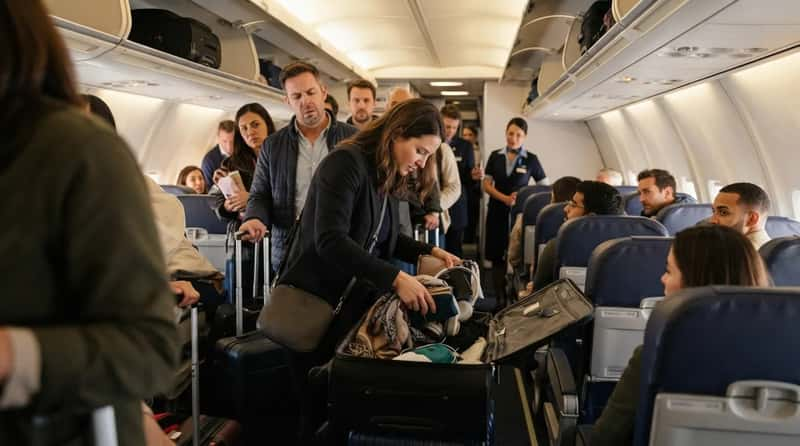
Boarding looks simple until one person stops the whole line.
Flight attendants say passengers who reorganize their belongings in the aisle make boarding harder for everyone. Veteran flight attendant Natalie Magee told Travel + Leisure that disorganized bags create unnecessary boarding delays.
Bringing belongings isn’t the problem. Waiting until you’re standing in a crowded aisle to find them is.
One search for a pair of headphones can freeze dozens of people behind you.
But the next mistake starts before you even find your seat, and it’s about where your bag ends up…
#26 – Stuffing Your Bag in the First Bin You See
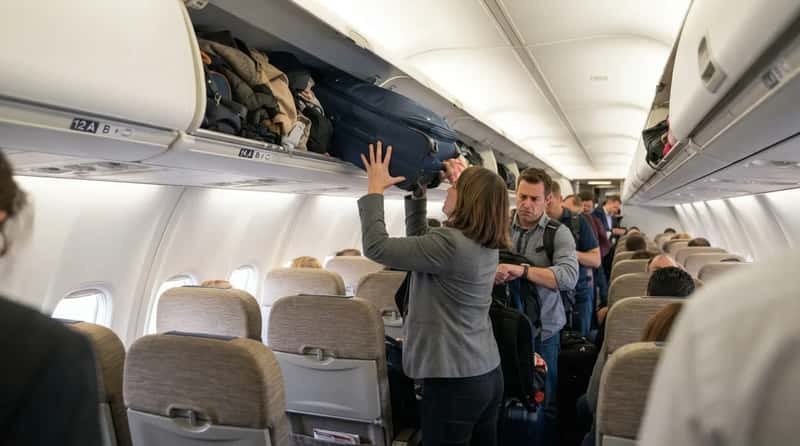
Your bag’s final resting place matters more than you think.
On a full flight, overhead space disappears fast. A bag dropped in the wrong spot sends late boarders hunting for room, and that hunt costs everyone time.
A few seconds of bin shuffling can hold up the whole boarding line. Crews generally prefer bags stowed near your own row.
Bin space is shared, and the first person to grab it isn’t always the one who needs it most.
And the next habit doesn’t just slow down boarding. Sometimes it ends it…
#25 – Boarding Already Drunk
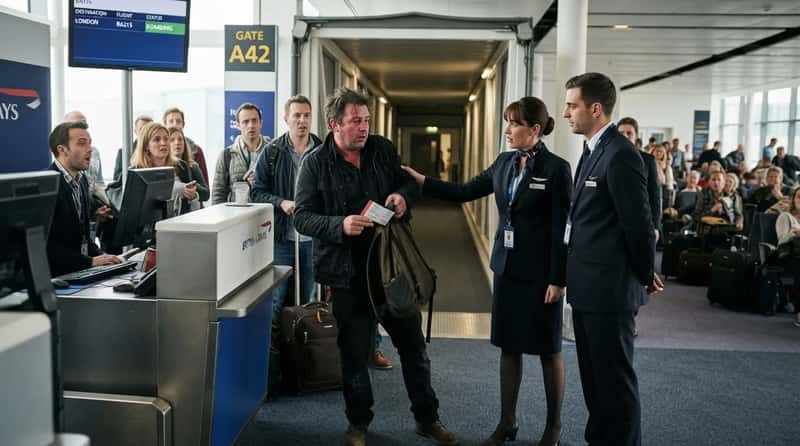
“One more drink at the gate” is a plan crews secretly dread.
Federal rules bar airlines from letting passengers who appear intoxicated board. A crew member can turn you away even with a valid ticket.1
Gate bars make this easy to get wrong. A few drinks can turn into a refusal, a missed flight or worse once the cabin door closes.
But what you carry on board can cause trouble too, and you may not smell it coming…
#24 – Wearing Heavy Fragrance or Packing Pungent Food
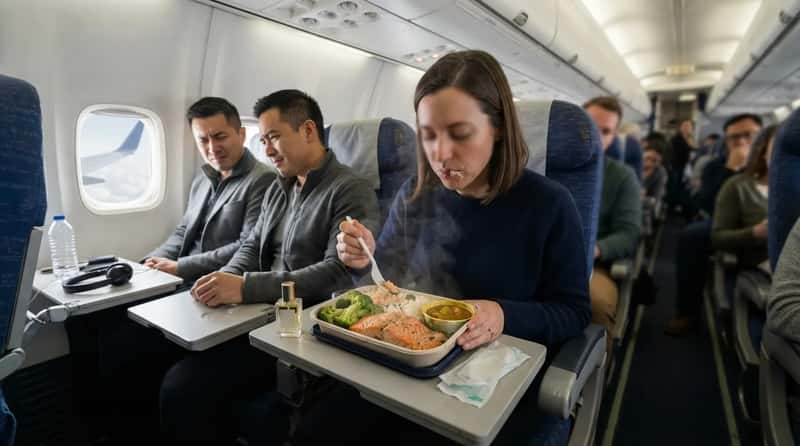
A cabin is a sealed tube, and your lunch is everyone’s problem.
Flight attendants have asked passengers to skip heavy fragrances and especially strong food. In a tight space with recycled air, one strong smell can reach several rows.
The mistake isn’t the food itself. It’s eating a strong-smelling meal inches from strangers.
Pick something mild, and save the pungent stuff for the terminal.
Quick Compare
- Cabin-friendly: plain sandwiches, nuts, granola bars, fruit
- Save for the terminal: fish, boiled eggs, heavily spiced leftovers
- Fragrance rule of thumb: if you can smell it on yourself, so can row 12
The next one is just as unavoidable, but you’ll hear it instead of smell it…
#23 – Playing Videos and Music Without Headphones
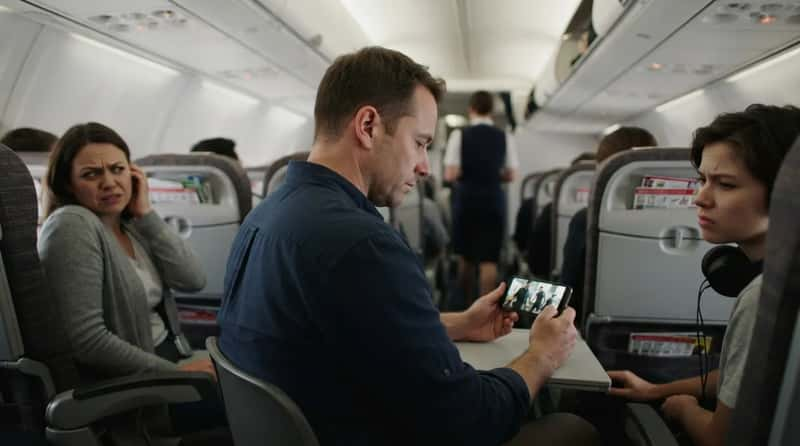
Almost everyone hates this one, crews included.
Reddit threads on flight attendant pet peeves are full of complaints about passengers blasting music and videos with no earphones. Crews and fellow travelers both call it one of the most grating habits in the cabin.
The surprise is that crews often hesitate to speak up, even though a quiet request is all it takes. Many passengers assume someone else will deal with it.
If you’re the one playing the video, you’ve just made the crew’s job harder.
And the next habit crosses a line that even relaxed crews say they won’t ignore…
#22 – Going Barefoot
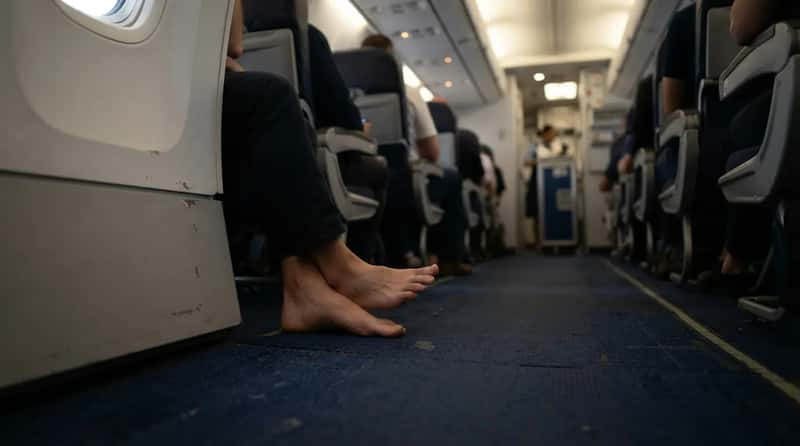
Shoes off can feel harmless, but the floor tells a different story.
Crews repeatedly cite foot odor, feet on cabin walls and passengers wandering into the lavatory without shoes. Think about what’s on that lavatory floor.
Feet on cabin walls are one of the most unpleasant recurring sights crews report. Socks are a different debate, but bare soles in the aisle are a hard no.
The next one sounds more polite, and that’s exactly why it’s a problem…
#21 – Turning the Galley Into a Hangout
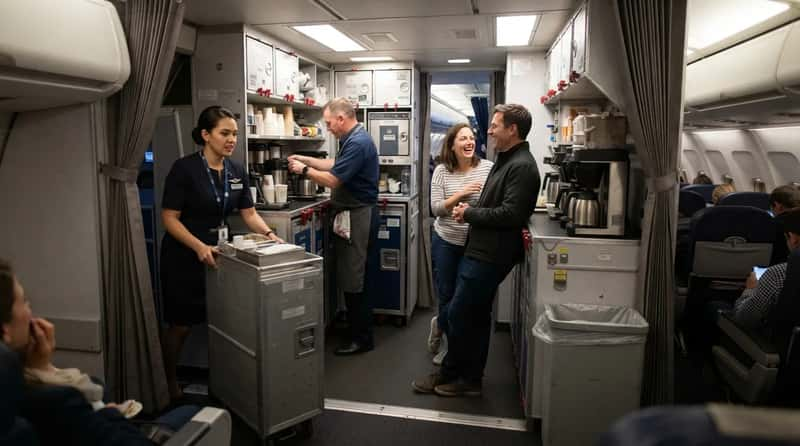
The galley isn’t a lounge, even when it feels like extra legroom.
It’s the crew’s workspace, where carts, hot liquids and supplies are prepared. Passengers who linger there to stretch or chat get in the way.
Crews often have to work around you in a space built for a few people at a time. A quick ask is fine, but camping out isn’t.
If you need to stretch, take a short walk in the aisle during a calm stretch of flight.
The next habit turns a simple seat swap into a safety question…
#20 – Swapping Seats Without Asking
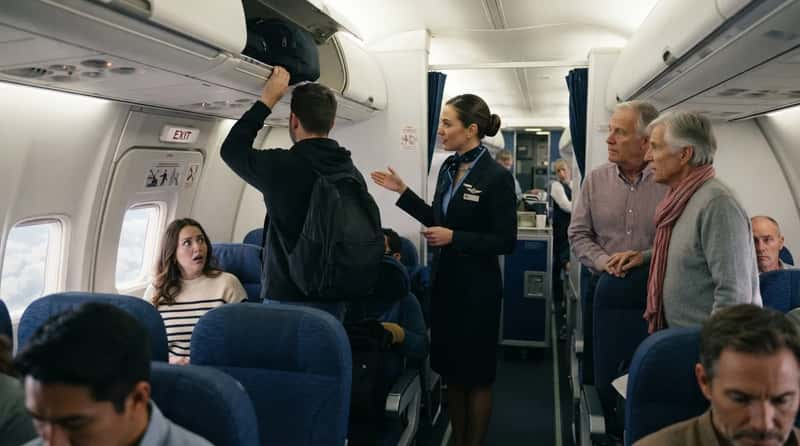
Seat swapping looks harmless until the crew finds out later.
Reddit threads from crews and passengers show real frustration over seat-change drama. Beyond the annoyance, exit-row seats come with requirements that crews must confirm.
A quiet swap into an exit row can skip that check. Crews also need to know who is sitting where during an emergency.
The simple fix is to ask first, because a swap that seems kind can still break a rule.
And the next one is about what happens when you leave your seat at the wrong moment…
#19 – Standing Up While the Plane Is Moving
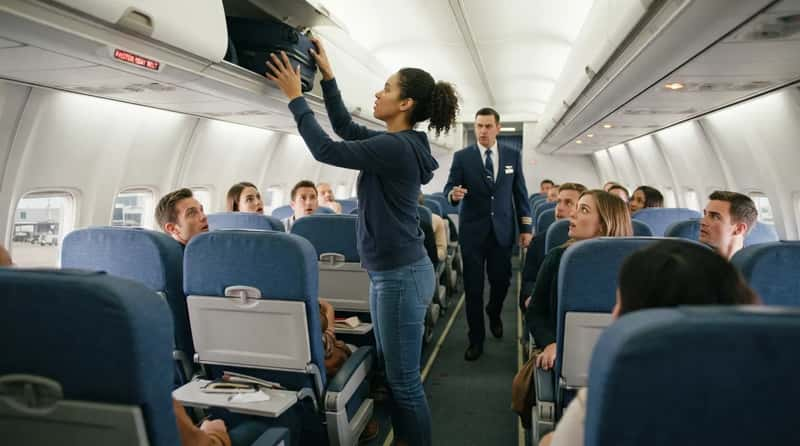
The seat belt sign isn’t a suggestion.
Crews get frustrated when passengers ignore instructions, stand during rough air or leap up while the aircraft is still moving.
Taxiing feels slow, so people assume it’s safe to grab a bag. The aircraft can still brake or turn sharply with no warning.
But the sneakiest way to break that rule involves a blanket…
#18 – Hiding Your Seat Belt Under a Blanket
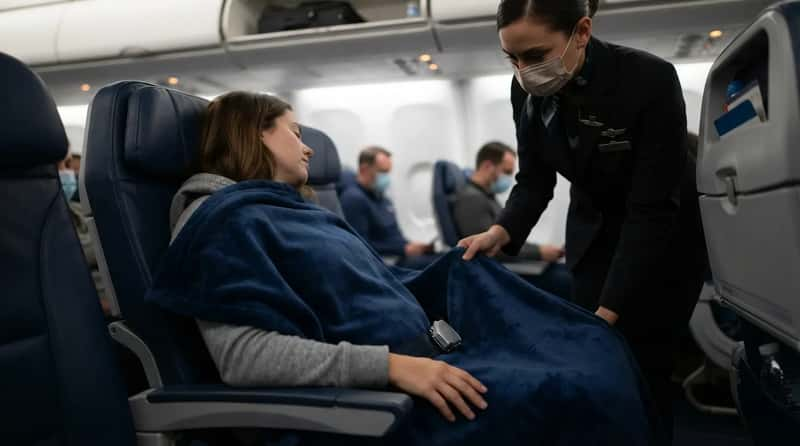
Nap time shouldn’t mean invisible safety gear.
Crews check seat belts during rough air, and they can’t tell if yours is fastened under a pile of fabric. That’s why they may wake you to check.
That quick wake-up is the crew doing the job they’re required to do. Fasten the belt over the blanket and the question never comes up.
It’s a small fix that avoids an awkward conversation.
The next habit involves a rule most travelers have never heard…
#17 – Drinking Your Own Alcohol
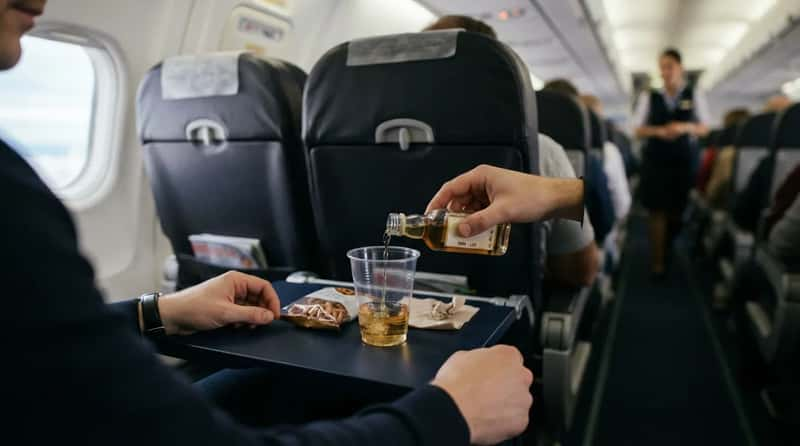
That duty-free bottle should stay sealed until you land.
Federal rules bar passengers from drinking alcohol on a flight unless the airline serves it to them.2 That includes your own mini bottles.
Crews can’t track how much you’ve had if you’re pouring your own. They also can’t judge when to stop serving you.
The next one is another bathroom-door mistake, and it’s far riskier than it looks…
#16 – Vaping in the Lavatory
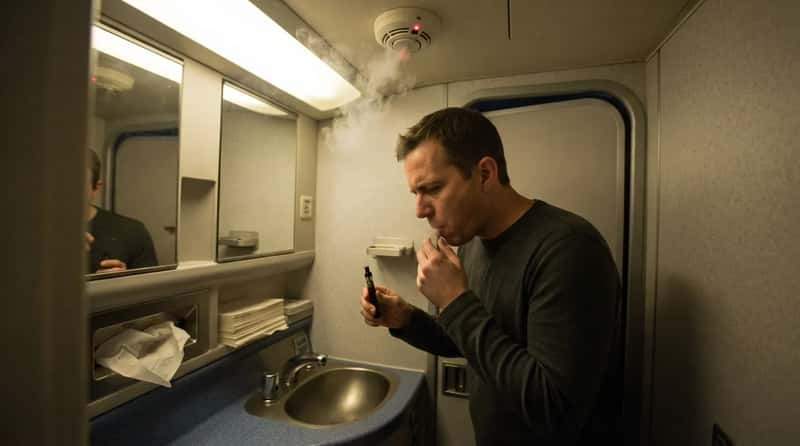
It’s tempting, it’s quick and it’s banned.
Smoking rules on U.S. flights extend to e-cigarettes, and lavatories have smoke detectors. Setting one off can land you in serious trouble.
There’s a second risk. Vapes and power banks are both among the devices most frequently involved in FAA-tracked lithium battery fire incidents.3
That means the vape itself can be a hazard before you ever use it.
And the next mistake is the one crews say they can’t repeat enough…
#15 – Tuning Out the Safety Briefing
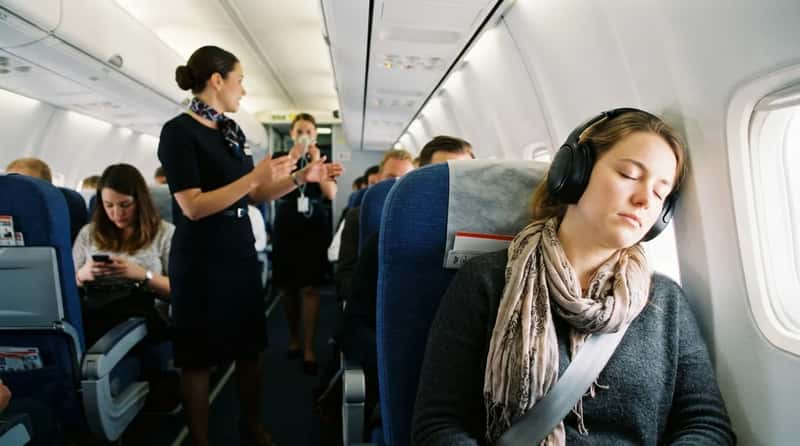
You’ve heard it a hundred times, and that’s exactly the problem.
Crews say passengers scroll, sleep or put on headphones the moment the briefing starts. Aircraft layouts and exit locations still vary.
The briefing is your only chance to learn where the nearest exit is before you need it. Looking up for two minutes costs nothing.
And the headphones that drown out the briefing cause another problem too…
#14 – Wearing Headphones and Ignoring the Crew
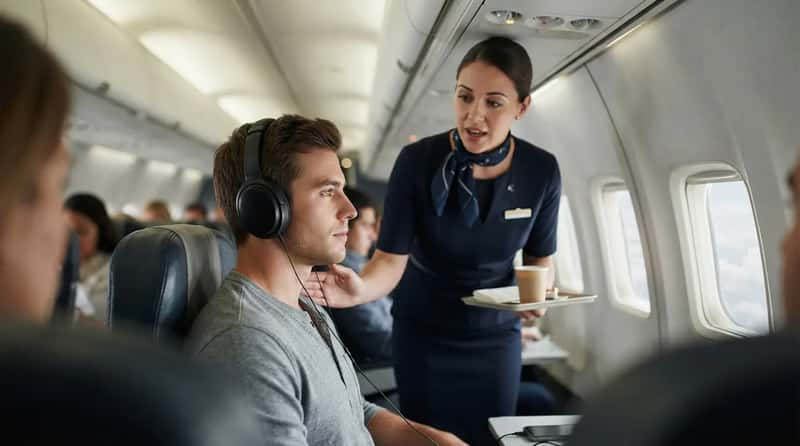
Noise-canceling is great, until the crew needs you.
Crews say they sometimes have to repeat requests several times to passengers who can’t hear them. Meals, seat belt checks and safety instructions all get delayed.
Pulling out one earbud when a crew member approaches solves it. It takes a second and spares you the tap on the shoulder.
At a Glance
- Always pause audio for: the safety briefing
- Keep one ear free during: meal and drink service
- Watch for: a crew member pausing at your row
- Easiest habit: one earbud out, eye contact, nod
Speaking of things crews secretly dodge, the next one is on their own menu…
#13 – Drinking Airplane Tea and Coffee
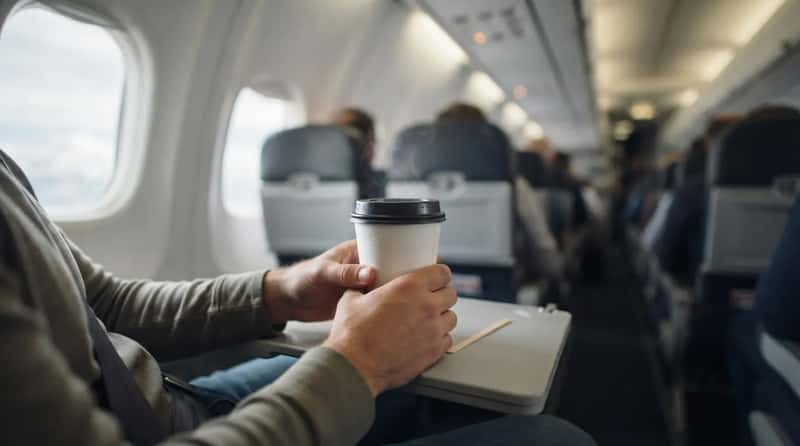
Experts disagree on this one, and that’s the truth.
One 2026 study advised against drinking coffee or tea onboard. It also found the EPA rarely fined airlines for violating the Aircraft Drinking Water Rule.
Not everyone agrees. Some flight crew say they absolutely drink the coffee, and JetBlue says it follows EPA, FDA and FAA processes for its water.
Still, one flight attendant told Inside Edition she avoids hot drinks while working.
Safe or not, the next one is a real fire risk, and it’s sitting in your bag…
#12 – Charging a Power Bank From the Seat Outlet
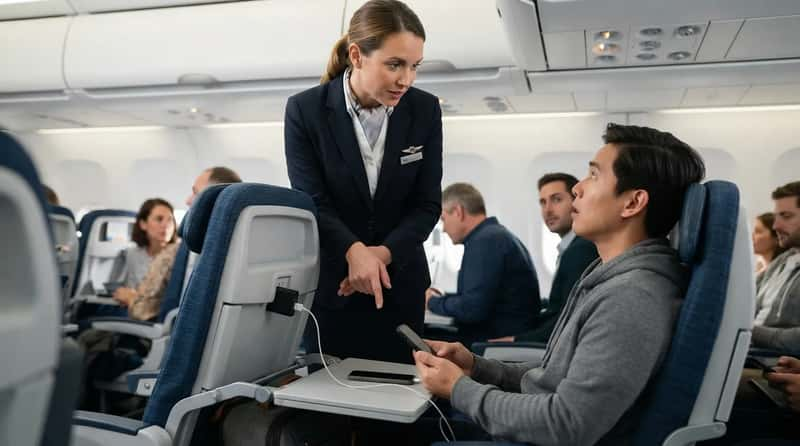
It seems logical, but airlines are now saying no.
Reporting in 2026 shows American, Delta, United, Southwest, Alaska, Hawaiian and JetBlue all bar recharging a power bank from seat power. The 2026 global rules also say two power banks per passenger, cabin only, with no recharging from the aircraft’s power once the doors close.4
Rules differ by airline, which is the part travelers trip over. Crews are the ones who have to enforce them mid-flight.
And where you put that battery matters even more than how you charge it…
#11 – Stashing a Power Bank in the Overhead Bin
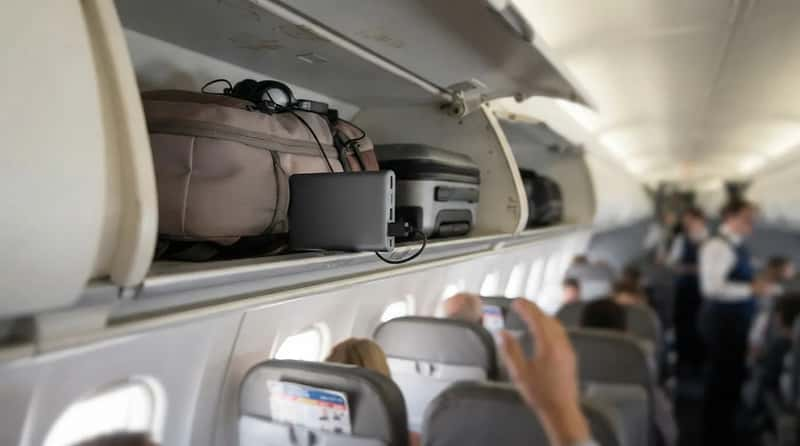
Out of sight is exactly where crews don’t want it.
Under the 2026 rules, a power bank travels where a crew member can see it and reach it. American’s policy requires chargers to stay in plain view, such as a seat pocket or tray table, while in use.
Southwest went further on April 20, 2026: one power bank of 100 watt-hours or less, stored in a personal item under the seat in front of you.4 A battery in a bin is a fire nobody can reach quickly.
But even the right storage won’t help if you do the next thing…
#10 – Hiding an Overheating Device
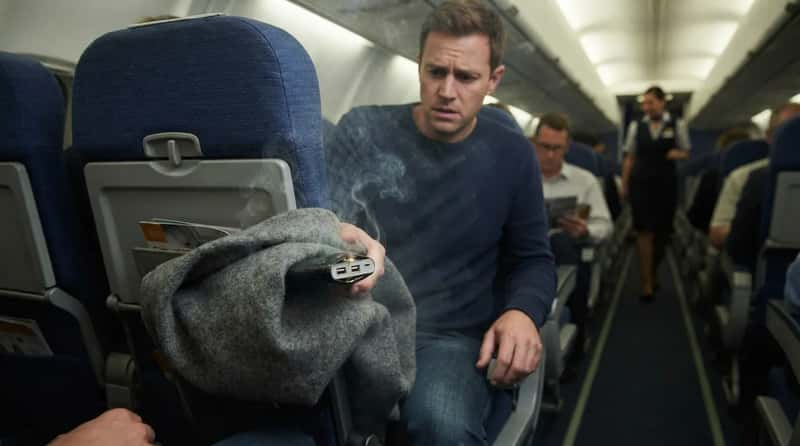
Hoping a hot battery cools off is the worst move on this list.
The FAA says passengers should notify the flight crew immediately if a lithium-ion battery or device is overheating, expanding, smoking or burning. Embarrassment is not a good reason to wait.
Nearly four in 10 of the 717 incidents since 2006 involved portable battery packs. That’s 281 events that crews had to manage at 35,000 feet.3
The next one shows what happens when passengers treat an emergency like a photo op…
#9 – Grabbing Your Bag During an Evacuation
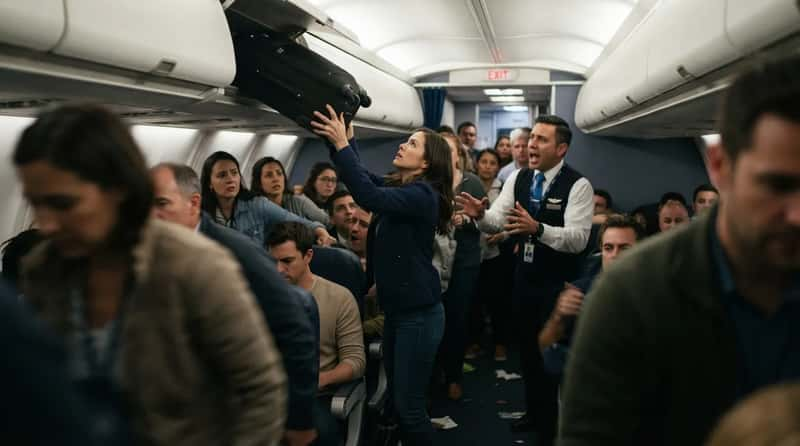
This one could cost lives, and passengers still do it.
Crews need passengers listening, moving and leaving their belongings behind. Every second spent at the overhead bin, filming or arguing is a second the people behind you lose.
It’s more common than you’d hope. The data says a lot of travelers still get it wrong.
The next one starts as an argument and can end somewhere much worse…
#8 – Arguing With a Crew Instruction
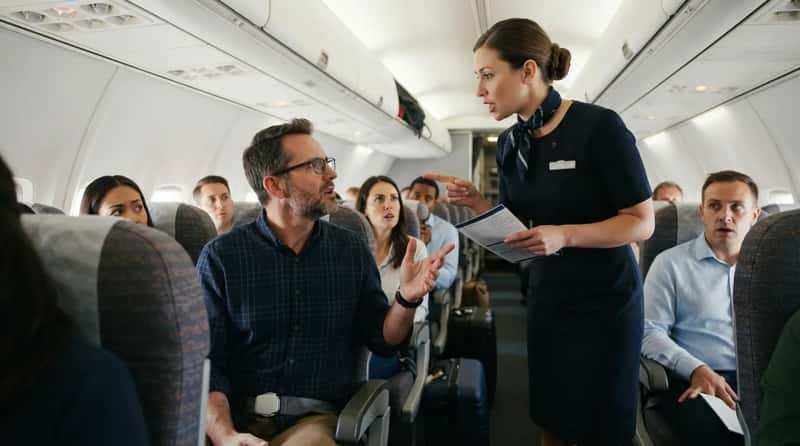
Crews aren’t asking for a debate.
The FAA has a zero-tolerance policy on unruly passenger behavior. Failing to follow crew instructions can bring consequences that include jail time and fines.5 6
What feels like a quick disagreement can become a federal matter. If a crew member asks you to stop, stopping is the cheapest option.
Worth Knowing
- Crew instructions are tied to safety, not personal preference.
- Common flashpoints include the seat belt sign, device rules and bag stowage.
- Complying first and complaining later keeps a small issue small.
- Your feedback is welcome after landing, through the airline’s customer service.
You’ll want to know exactly how expensive the alternative gets…
#7 – Assuming the Worst Case Is a Fine
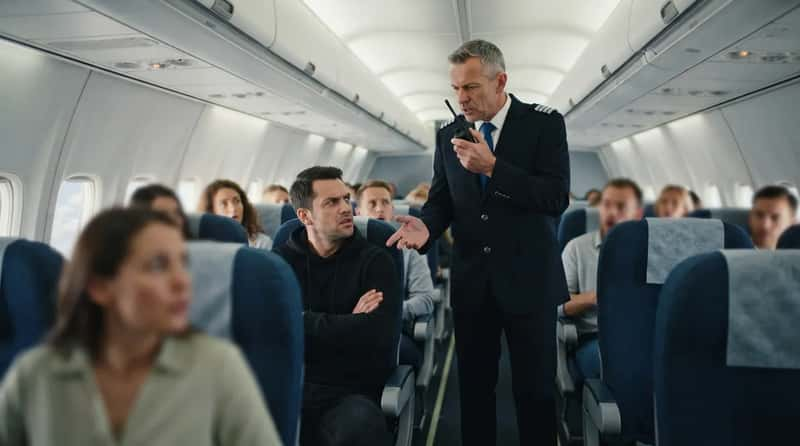
Most people think the penalty ends at a ticket.
The FAA can propose up to $43,658 per violation for unruly passenger cases.5 Incidents are referred to the FBI when warranted and can lead to a felony conviction.
That’s a felony record, not just a fine. The FAA says this is its stance, not a scare tactic.
And if you think this only happens to a handful of travelers, look at the next item…
#6 – Believing Unruly Behavior Is Rare
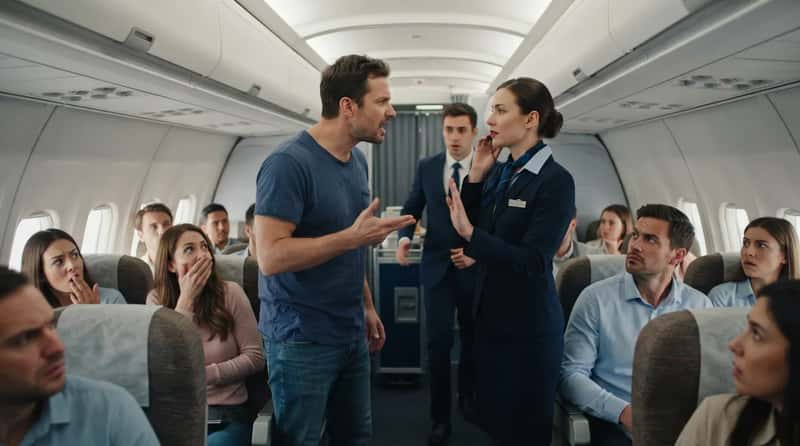
The numbers say otherwise.
The FAA received 5,973 reports in 2021, compared with 1,161 in 2019. The rate has dropped by over 80 percent since those early-2021 highs, but the FAA says recent increases show more work remains.5
There were 2,031 reports in 2023 and 2,102 in 2024. That’s nearly double 2019’s count.
Now for the habits crews say they face almost every shift, starting with a sound…
#5 – Snapping Your Fingers
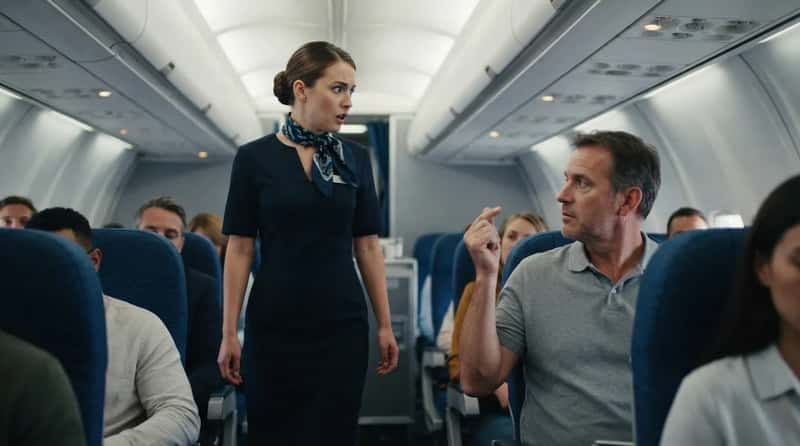
A snap is the fastest way to lose a crew member’s goodwill.
Flight attendants say to use the call button, make eye contact or politely wave instead.
Some travelers worry a quiet “excuse me” won’t carry in a loud cabin. That’s what the call light is for.
It signals the crew without anyone raising a voice or a hand.
Why It Stands Out
- The call light works even when the cabin is noisy.
- It tells the crew exactly which seat needs help.
- It’s polite, and it never puts a hand or a snap in someone’s space.
But a louder version of this is next, and it gets personal…
#4 – Shouting for Attention
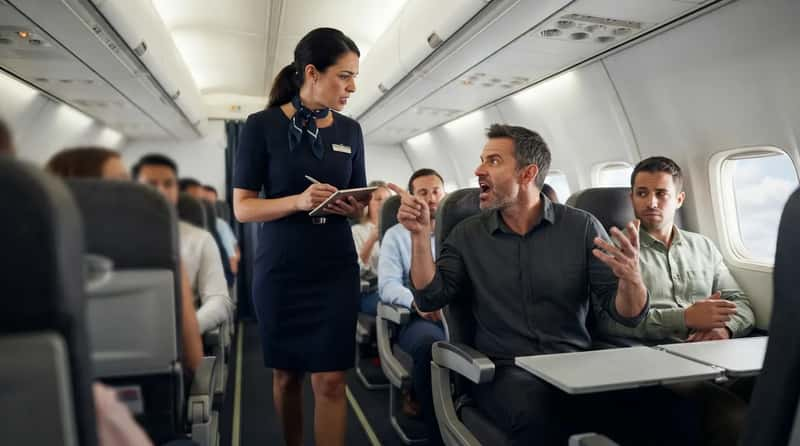
Raising your voice doesn’t make service faster.
Flight attendant Harrison said passengers shouted vulgar comments at her throughout a flight while repeatedly trying to get her attention. That isn’t impatience. It’s harassment.
Crews say it escalates when the first attempt fails and the volume goes up.
Behind all of this is one belief crews say they hear again and again…
#3 – Treating Crew Like Waiters
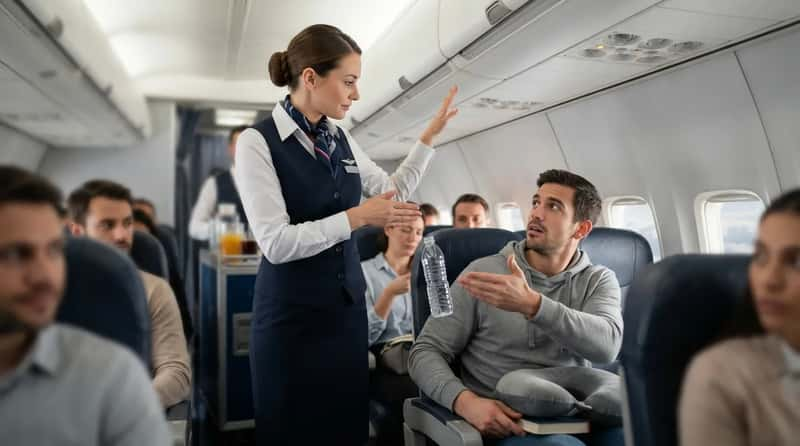
Most people don’t realize what the job actually is.
Etiquette expert Diane Gottsman noted that passengers aren’t always aware of what a flight attendant may be dealing with at a given moment. Their main focus is passenger safety.
The drinks cart is the visible part of the job, not the reason crews are certified. That reframing changes how a request lands.
The last two habits are the ones crews rank as the worst, and the first is where it goes too far…
#2 – Grabbing and Pinching
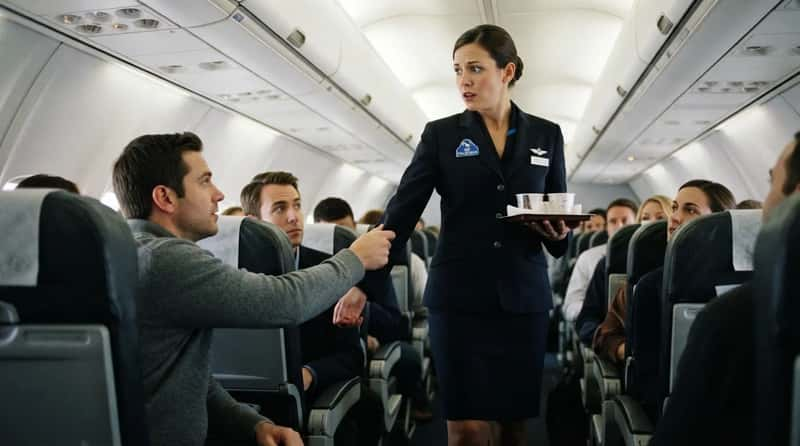
This one is worse than annoying.
Crews say travelers poke, pinch, tap and grab them mid-flight, and some attendants now wear “no touching” patches and pins. Flight attendants say boundary-crossing can spiral into something far uglier.
Some crews have felt the need to wear a patch just to ask for basic personal space. That’s the state of the cabin.
And the number one habit is the one almost everybody has done…
#1 – Touching Crew to Get Their Attention
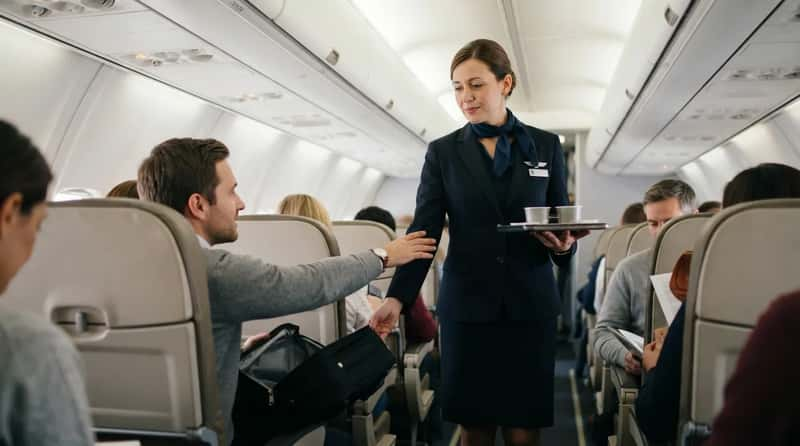
It’s the single most common complaint, and it’s the one you’ve likely done.
Flight attendants say being touched to get their attention is one of the most common frustrations they face. Podcaster Joshua Boyd said “if we got paid $1 for it, we would be millionaires.”
Fellow crew member Michelle Montez said it’s almost rare when it doesn’t happen. A harmless tap on the arm is something crews say happens on nearly every flight.
The loudest complaints aren’t about big things. A tap on the arm, a snap of the fingers and an open bag in the aisle top the list.
The scariest items are the ones that look routine: a power bank in the wrong place, a bag grabbed during an evacuation, a “quick” argument with a crew member. Unruly incidents are still well above pre-2020 levels, and the penalties are real.
Which of these did you think was harmless until now?
- 14 CFR 135.121 Alcoholic Beverages: https://www.law.cornell.edu/cfr/text/14/135.121
- FAA PackSafe Alcoholic Beverages: https://www.faa.gov/hazmat/packsafe/alcoholic-beverages
- LogAloft Battery Fire Data: https://logaloft.com/blog/lithium-battery-fires-in-the-cabin/
- Power Bank Rules By Airline: https://travel-blue.com/magazine/power-bank-rules-by-airline/
- TravelPulse FAA Unruly Fines: https://www.travelpulse.com/news/airlines-airports/through-august-here-s-how-much-the-faa-has-fined-unruly-air-travel-passengers
- FAA Zero Tolerance Policy: https://www.faa.gov/newsroom/unruly-passenger-cases-continue-rise-summer-travel-begins