Most travelers assume the “special meal” button at checkout is just a formality – pick gluten-free, hit confirm, forget about it. But galley crews and catering teams see a completely different reality: mislabeled trays, blown deadlines, sealed packages nobody’s allowed to touch, and passengers who have no idea what the three-letter code they just chose actually means.
Behind every “confirmed” special meal is a chain of caterers, loaders, and flight attendants juggling rules most flyers never learn – some of them stranger, stricter, or more surprising than you’d expect. Here’s what galley insiders actually say happens to your order before it ever reaches your tray table.
27. The Secret Alphabet Soup Galley Teams Memorize Before Every Shift
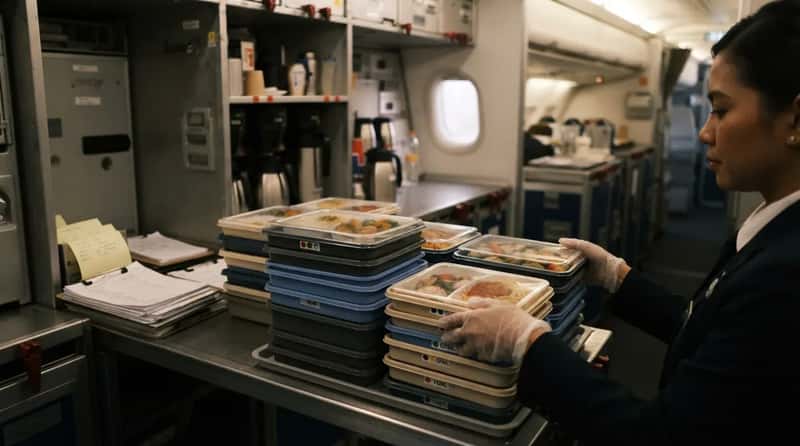
Every special meal on a plane starts as a three or four-letter code, not a plain-English request. Most airlines use standardized meal codes instead of individualized allergen requests. Galley staff are trained to recognize dozens of these on sight, from GFML to KSML to AVML, because the paperwork never spells anything out.
Common codes include GFML for gluten-free, VGML for vegan, DBML for diabetic, KSML for kosher, and AVML for Asian vegetarian. Passengers rarely see this list, which is exactly why so many people order the wrong code for what they actually need. But that’s nothing compared to what we found about #26…
Fast Facts
- GFML = Gluten-Free Meal
- VGML = Vegan Meal
- DBML = Diabetic Meal
- KSML = Kosher Meal
- AVML = Asian Vegetarian Meal
26. “Vegetarian” Secretly Means Five Different Meals
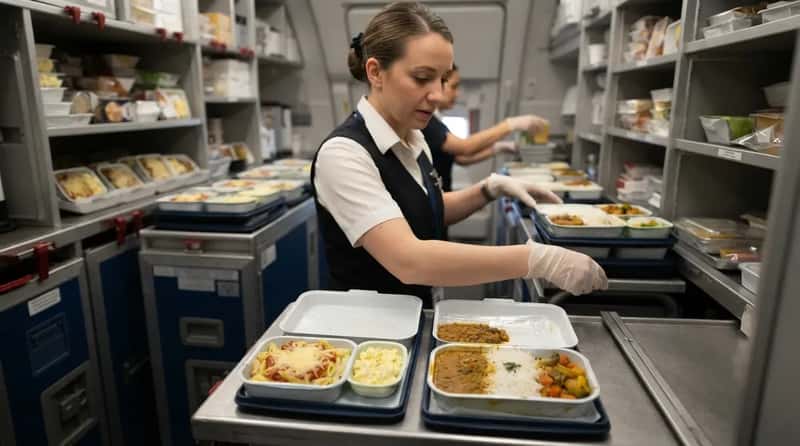
Say “vegetarian” to a gate agent and you could end up with any one of at least five distinct meal types, each with different ingredients. VLML stands for Vegetarian Lacto-Ovo Meal, which excludes meat and fish but may contain dairy products and eggs. That’s a very different tray than what a strict vegan expects.
Meanwhile an AVML is usually prepared in an Asian or Indian style and doesn’t contain meat, fish, or eggs – but it may contain dairy. Galley teams say the mix-ups happen constantly because passengers assume “vegetarian” is one universal box, when it’s really a menu of options with very different rules.
25. Your Gluten-Free Tray Was Never Actually Celiac-Safe
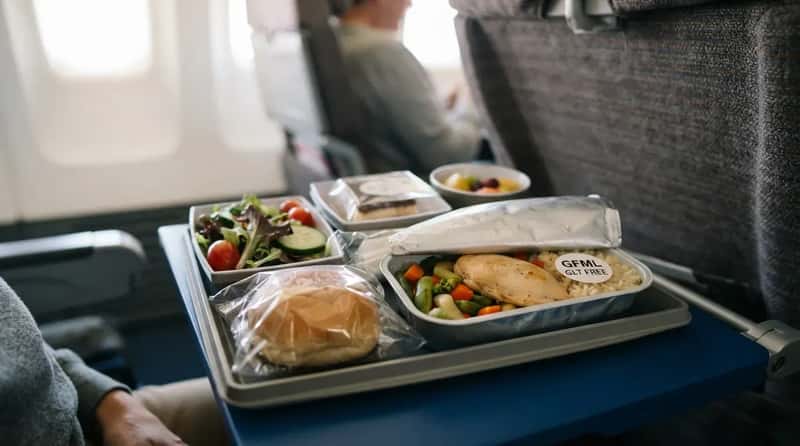
This is the one that quietly upsets galley crews the most. A gluten-free meal is not necessarily safe for someone with celiac disease, due to cross-contact risks during preparation. The tray is built to avoid gluten ingredients, but it isn’t cooked in a sealed, allergen-free kitchen.
That distinction matters enormously for anyone with a real medical condition rather than a preference. Crews wish more passengers understood that “gluten-free” on a menu and “celiac-safe” in a lab are two entirely different promises – and airlines rarely make that clear at booking.
24. Vegan Doesn’t Always Mean Vegan Once It Hits the Cart
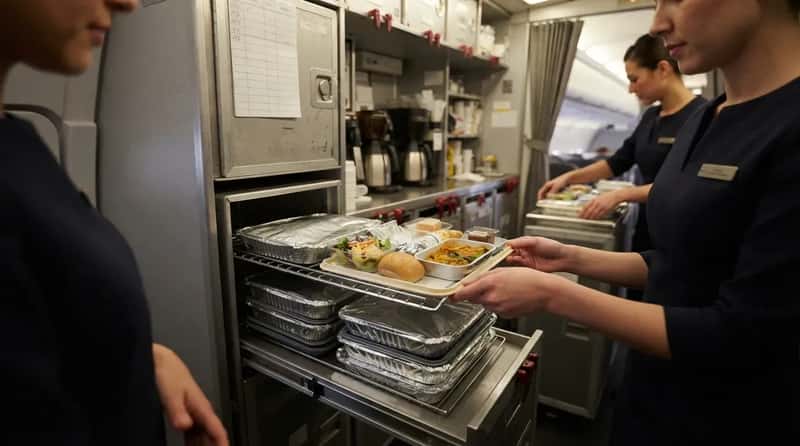
Even the strictest-sounding code can vary by carrier. Some airlines label their fully vegan meals as VVML, while others file the exact same meal under VGML. If you’re used to one airline’s system, that habit can bite you on a different carrier.
It sounds like a small inconsistency, but galley teams say it’s the source of real confusion at the catering warehouse level. Two airlines flying the same route can use two different codes for the same plate – and nobody outside the industry has any reason to know that.
23. The Order Every Galley Sees More Than Any Other
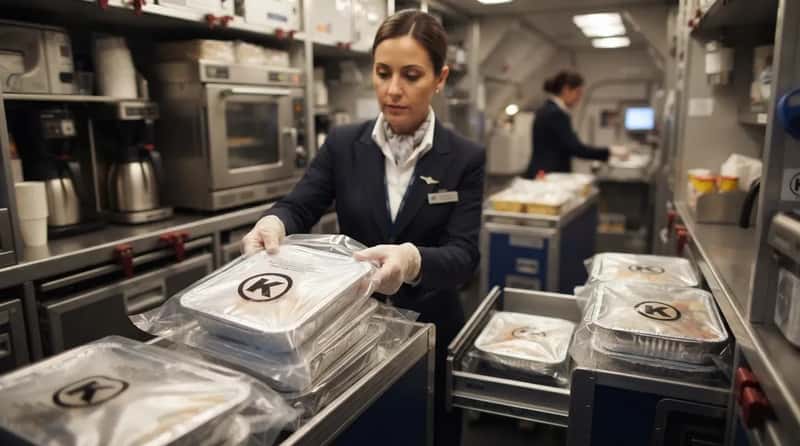
Ask any long-time caterer which special meal request shows up most, and the answer is almost always the same. On airlines, kosher meals are the most commonly requested special meal. It’s not close – kosher trays dominate the special meal manifest on most full-service carriers.
That volume means kosher catering has become its own mini-industry inside airline food service, with dedicated suppliers, separate kitchens, and entirely different packaging rules than the standard tray. Galley crews handle these differently from the moment they’re loaded.
22. Crew Isn’t Allowed to Break the Seal on Your Kosher Tray
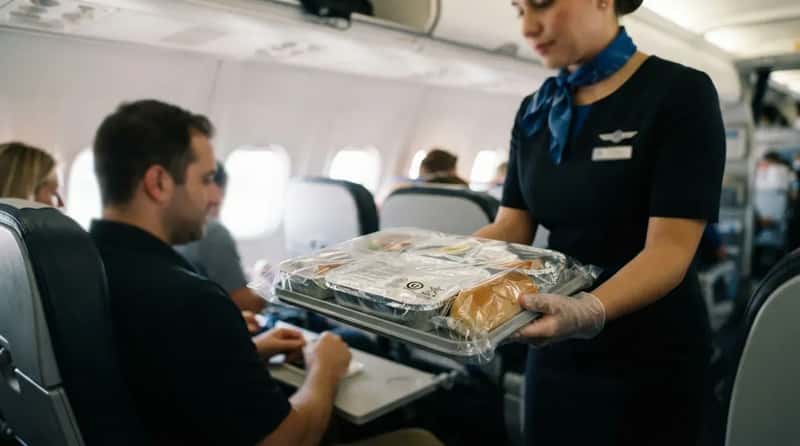
Here’s something almost no passenger realizes: flight attendants can’t just open a kosher meal like a normal tray. Crew should not open or heat the meal unless it remains double-wrapped, to prevent cross-contamination with other foods or utensils. That double wrap isn’t packaging waste – it’s a religious safeguard.
The double wrapping actually allows the meal to be heated in a non-kosher oven without compromising its status. If that seal is broken before it reaches you, crews are trained to treat the meal as compromised, not just messy.
21. Kosher Trays Secretly Cost the Airline Roughly Double
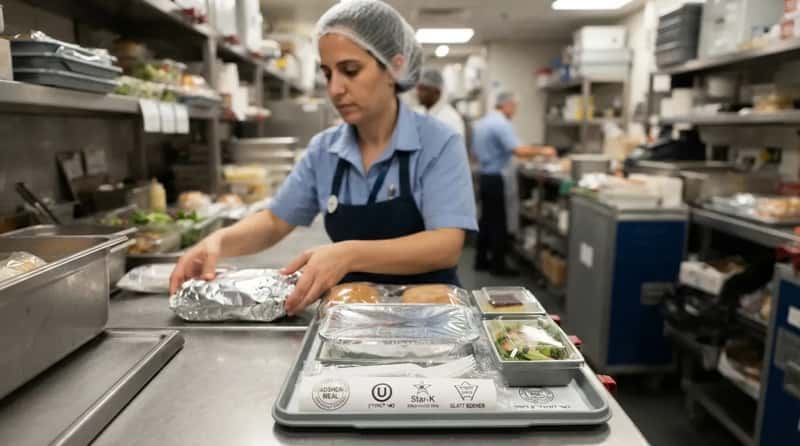
The premium extends beyond religious observance into hard dollars. Kosher meals cost approximately twice as much as standard meals, and airlines may charge more for them. That’s a meaningful markup buried in a system most passengers assume is uniformly free.
Some frequent flyers now order kosher for the perceived quality rather than any religious need, which frustrates crews who see genuinely observant passengers occasionally left without enough trays when demand spikes unexpectedly on a route.
20. The Jain Order That Makes Caterers Nervous
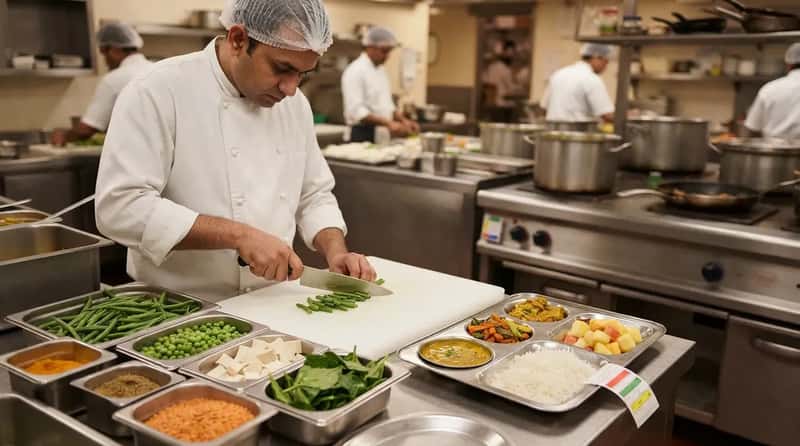
Of every special meal code, this is the one galley teams say is hardest to get exactly right. A Jain vegetarian meal must avoid not just meat and dairy concerns but also root vegetables, onion, and garlic entirely. No potatoes, no carrots, no onion base – ingredients that show up in nearly every standard sauce.
That means kitchens have to build the Jain meal almost from scratch rather than modifying an existing recipe. It’s a completely separate cooking process, not a simple substitution, which is why availability is more limited than other vegetarian codes.
19. Hindu and Muslim Meals Get Mixed Up More Than You’d Think
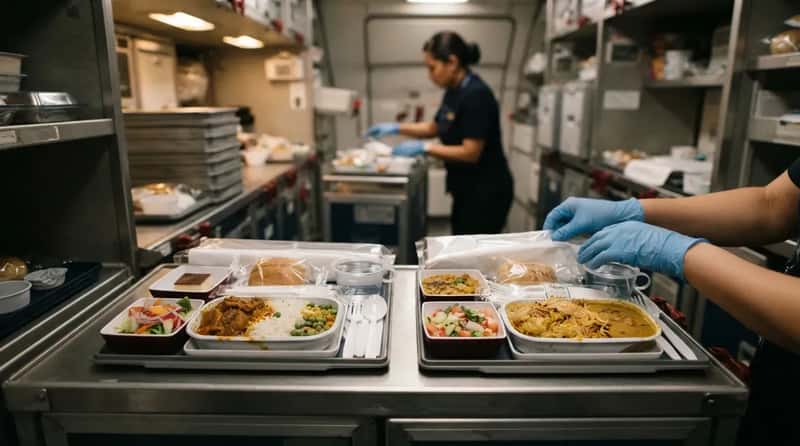
These two codes sound similar on a manifest, but they follow completely different rules. A Hindu non-vegetarian meal is typically spicy and hot-flavored, containing lamb, poultry, or fish – but never beef, veal, or pork. A Muslim meal follows halal preparation instead, an entirely separate certification.
Confusing the two isn’t a minor error – it can mean serving beef to a Hindu passenger who specifically avoids it, or non-halal meat to someone observing halal. Galley teams double-check these codes precisely because the consequences of a mix-up aren’t just a bad meal, they’re a genuine breach of trust.
18. The Seafood Meal Airlines Are Quietly Phasing Out
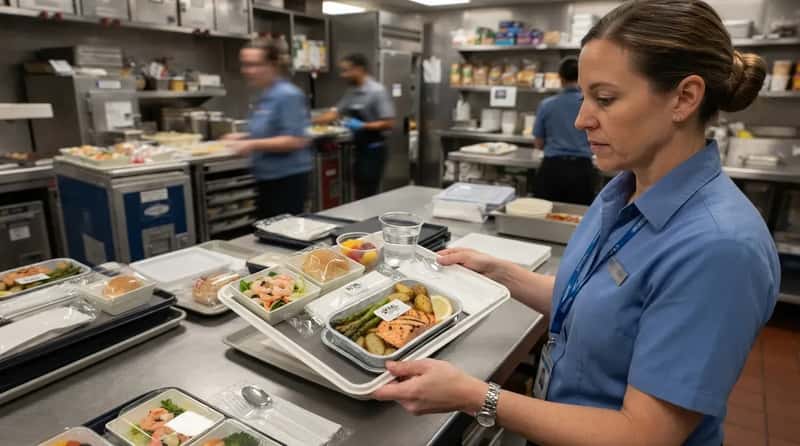
If you’ve noticed seafood meals harder to find lately, you’re not imagining it. The SFML seafood meal is a special meal for passengers who wish to eat only seafood, but these meals are becoming rarer on most airlines worldwide since they’re expensive to create and not always offered.
Fresh seafood is harder to source consistently across catering hubs than chicken or pasta, and spoilage risk is higher. Rather than fight that logistics problem, more airlines are simply trimming SFML from their special meal list altogether, quietly, without much announcement.
17. Diabetic Doesn’t Mean What Most Passengers Assume
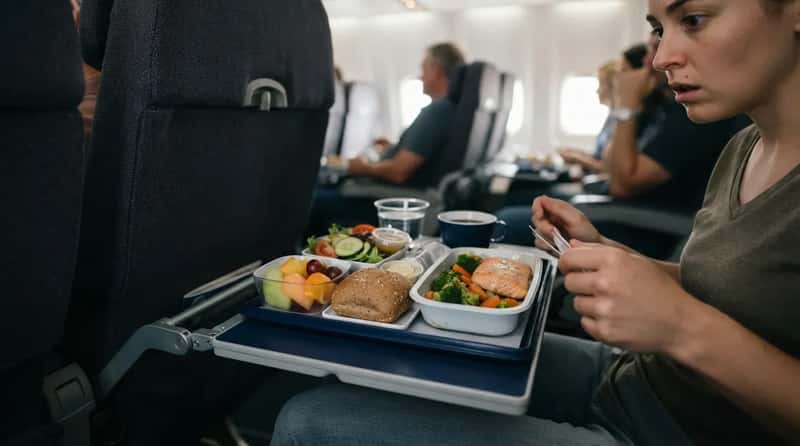
A lot of travelers order a diabetic meal expecting a low-carb tray. That’s not quite the design. A diabetic meal is generally low fat with no added sugar – the focus is on fat and sugar control, not necessarily carbohydrate counting the way a passenger with diabetes might manage at home.
That gap between expectation and reality catches people off guard mid-flight. If your diabetes management depends on strict carb tracking, galley staff genuinely recommend bringing your own backup food rather than relying entirely on the code.
16. The Bland Meal Nobody Wants to Admit They Need
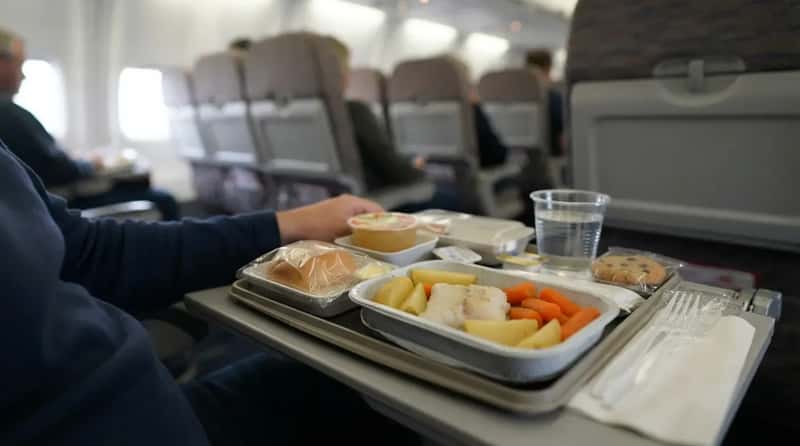
It sounds unappealing on paper, but this meal exists for a real medical reason. The bland meal is the safest option for gentle, easily digestible food, focusing on simple, stomach-friendly ingredients that won’t trigger digestive problems at altitude.
Passengers recovering from surgery, dealing with ulcers, or managing chronic GI issues rely on this code more than any curiosity-driven flyer would guess. Galley crews say it’s one of the least glamorous special meals – and one of the most genuinely necessary.
15. The Loneliest Tray in the Galley
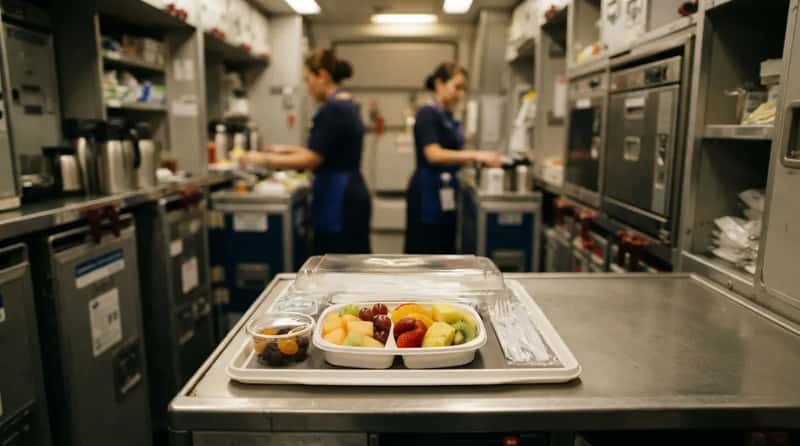
Some special meals are almost defiantly simple. The Fruit Platter meal is often ordered by passengers who are fasting or don’t have vegan or gluten-free options available, and it typically contains only fresh seasonal fruit, sometimes with dried fruit added.
There’s no protein, no starch, nothing else on the tray. Crews describe it as the meal most likely to leave a passenger still hungry an hour later – which is exactly why they quietly suggest packing a snack alongside it if you order this one.
14. The Raw Meal That Isn’t a Salad, No Matter What You Picture
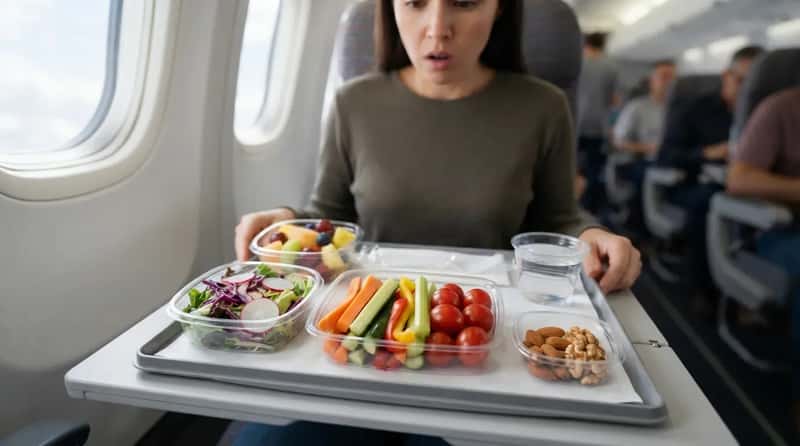
People imagine a fresh salad bowl when they hear “raw vegetable meal.” The reality is stranger. The RVML code is used for a Raw Vegetable Meal, which typically contains a selection of raw vegetables and may also include fresh fruit, salads, and other uncooked plant-based foods.
There’s no dressing station, no warm component, nothing cooked at all. It’s one of the most restrictive codes on the entire list, and galley teams say it’s frequently ordered by people who don’t fully realize just how sparse it is until the tray shows up.
13. Kid Meals Come With a Toy – But Only If Parents Order Early Enough
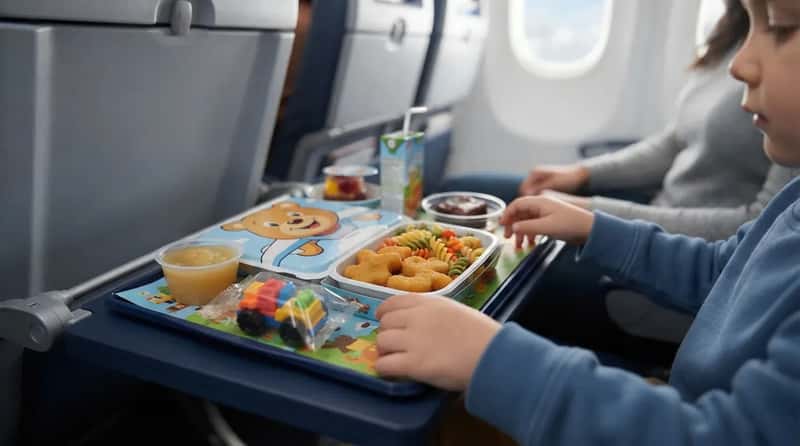
The child meal is more than chicken nuggets and pasta. Presentation often includes colorful packaging, fun utensils, or small toys to make the meal more appealing to young travelers. But that extra touch depends entirely on advance notice.
Child meals should generally be pre-ordered at least 24 to 48 hours before departure. Order it at the gate on a whim, and you’ll likely get a standard adult tray with none of the kid-friendly extras crews wish more parents knew to request early.
12. Babies Get Their Own Secret Menu Too
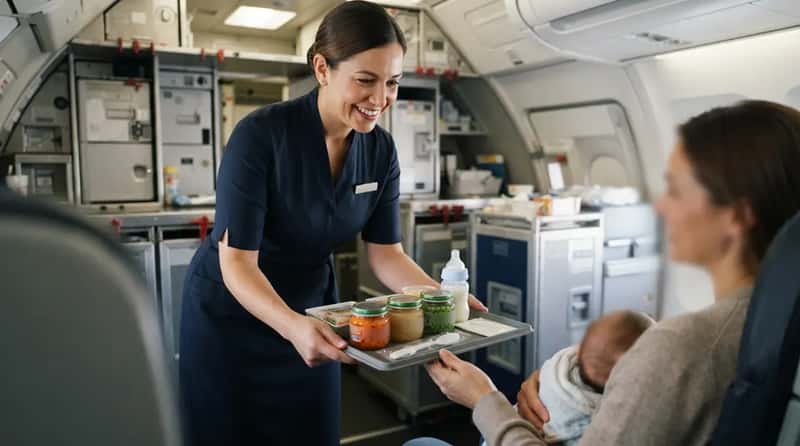
Long before a child qualifies for CHML, infants have their own dedicated code. A baby meal is recommended for infants 12 months old and younger, and typically consists of three food portions of roughly 80 to 110 grams each of baby food.
This pre-packaged meal usually consists of baby food jars along with formula or milk, letting parents traveling with babies make feeding time during the flight more convenient. Galley crews say it’s one of the most underused codes on the list, simply because parents don’t know it exists.
11. Peanut-Free Doesn’t Mean Nut-Free, and Crews Wish More People Knew
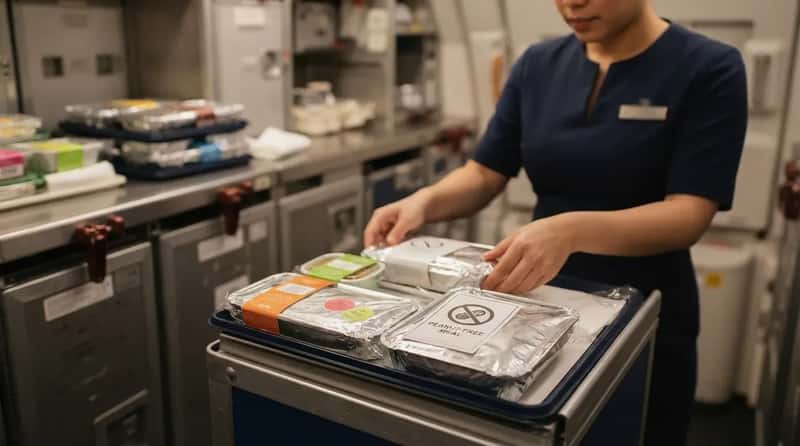
These two allergy meals sound identical but aren’t. A peanut-free meal option does not contain peanuts or peanut derivatives, specifically for individuals with a peanut allergy. Tree nuts are an entirely separate category.
Only a handful of airlines close that gap. Singapore Airlines, for instance, offers a nut-free meal that excludes both peanuts and tree nuts, including almonds, cashews, hazelnuts, and macadamias. If your allergy covers tree nuts and you only requested peanut-free, galley teams say you could still be at risk.
Quick Compare
- Peanut-free: Excludes peanuts and peanut derivatives only
- Nut-free: Excludes both peanuts and tree nuts like almonds, cashews, and hazelnuts
- Availability: Offered by only a handful of carriers, including Singapore Airlines
10. Low-Sodium Trays Can Still Sneak in Hidden Salt
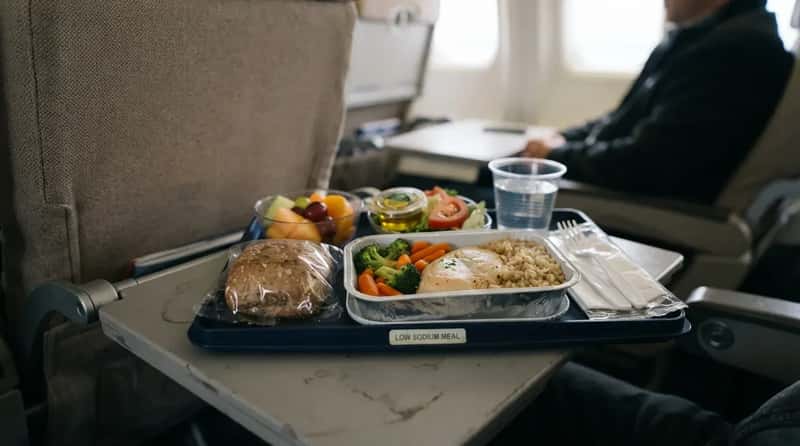
The low-sodium code sounds airtight, but read the fine print. A low-salt meal simply means no salt is added during preparation – it doesn’t strip out sodium that naturally occurs in the base ingredients themselves.
That’s a meaningful difference for anyone managing blood pressure strictly. Galley teams don’t build these meals from scratch with a sodium counter in hand; they’re following a “no added salt” recipe standard, which is a lower bar than passengers often assume.
9. Special Meals Are Loaded and Tracked Separately From Everything Else
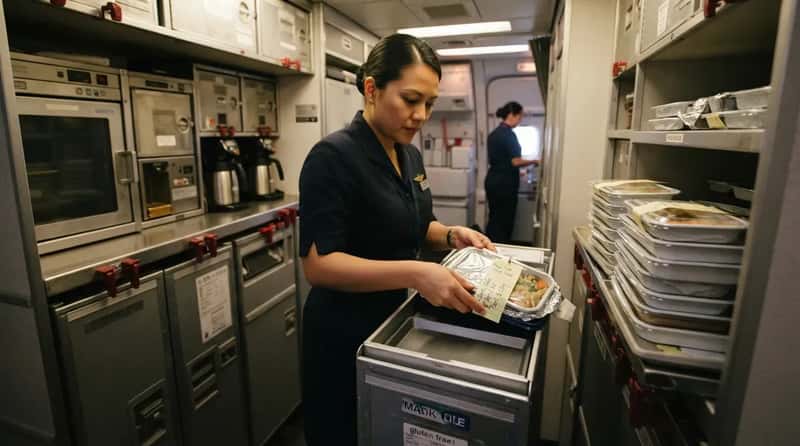
Regular trays get bulk-loaded by the hundreds. Special meals travel a completely different path from the moment they leave the caterer. Each one is individually labeled with a seat number and flight code so it doesn’t get grabbed by the wrong passenger during service.
That extra handling is exactly why cabin crews will often confirm your special meal by name before the cart even reaches your row. It’s not small talk – it’s a final check built into a system designed to prevent a mix-up nobody wants at 35,000 feet.
8. The 24-Hour Deadline Is a Floor, Not a Promise
Booking a special meal “on time” doesn’t guarantee it shows up. Most carriers require at least 48 hours’ notice for special meal requests, and missing that window can affect whether your chosen meal is even available.
Some carriers only require 24 to 72 hours depending on the airline and route – meaning the exact rule shifts from one flight to the next. Galley teams say the deadline listed on a website is really the earliest possible cutoff, not a guarantee your order made it into the system.
At a Glance
- Some airlines require just 24 hours’ notice
- Others set the minimum at 48 hours
- Certain routes and caterers push the window to 72 hours
- Missing the cutoff can mean no special meal at all, regardless of what shows as “confirmed” online
7. Booking Through a Third Party Can Silently Drop Your Meal Order
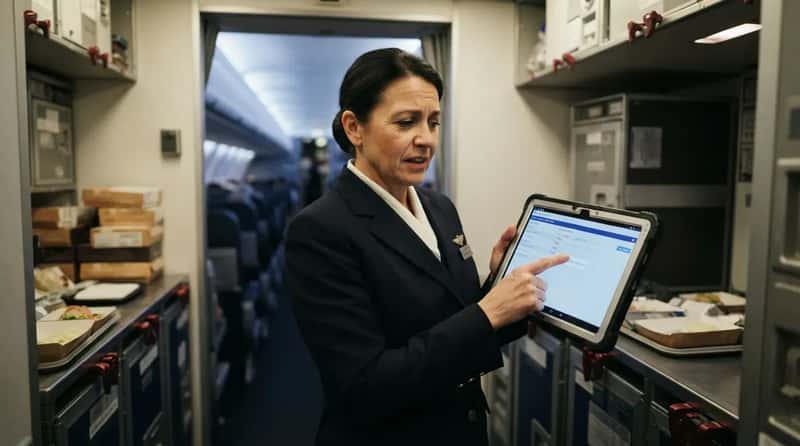
Special meal codes don’t always transfer cleanly between systems. Airline meal rules can vary by airline, route, airport, and catering company, and deadlines and ingredients can change without much warning.
Always check that your meal request has actually been confirmed before traveling – don’t just trust the confirmation email. Galley crews say the single biggest cause of a “missing” special meal isn’t the kitchen at all; it’s a request that never made it past the booking site in the first place.
6. Layovers Are Where Special Meals Go to Disappear

A confirmed meal on leg one doesn’t automatically carry to leg two. Each segment of a multi-airline or codeshare itinerary can require its own separate confirmation, and catering is arranged independently at each stop. Passengers are advised to verify meal availability on connecting flights to maintain their requested standard.
That single missed step is why a passenger can board their first flight with a perfect kosher or gluten-free tray, then get nothing at all on the connection. Galley teams treat every leg as its own request, even when the booking looks like one continuous trip.
5. Some Passengers Order Special Meals Just to Eat Sooner
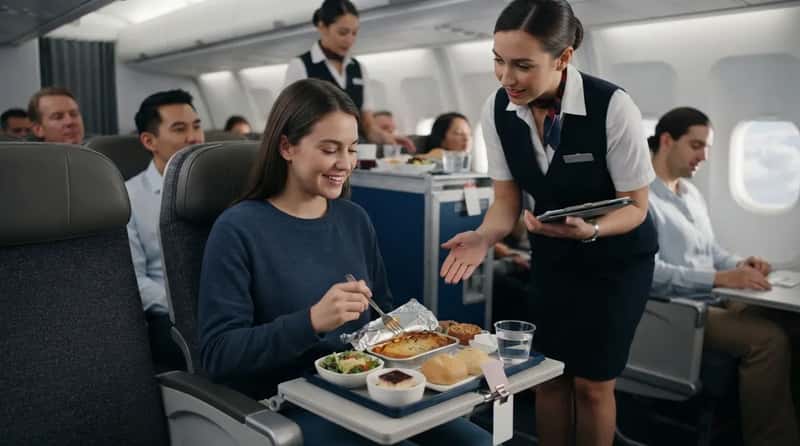
It’s an open secret among cabin crews: special meals are typically served before general meal service begins, since they need individual confirmation at each seat. A small number of travelers have caught on and started ordering a special code purely for that head start, not for any dietary reason at all.
Crews generally don’t love this workaround. It occasionally means real special meals run short when someone orders one they never actually planned to eat, leaving genuinely allergic or religious passengers with fewer backup options if something goes wrong.
4. No Airline Can Actually Promise an Allergen-Free Meal
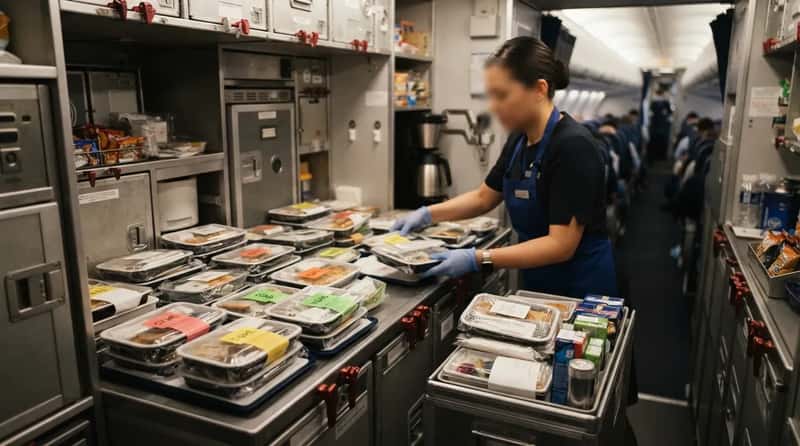
This is the line that surprises passengers most. Most airlines cannot guarantee allergen-free meals, full stop – regardless of how the menu describes the tray. Even meals labeled allergen-free are generally only free of specific items like seafood, wheat, dairy, eggs, and nuts, not a certified sterile environment.
Galley kitchens simply aren’t allergen-controlled facilities the way a specialized food manufacturer might be. Anyone with a severe, life-threatening allergy is genuinely better off treating any airline meal as a starting point, not a guarantee, and carrying safe backup food regardless of what code they ordered.
3. The One Meal That Costs Extra Even Though the Rest Are Free
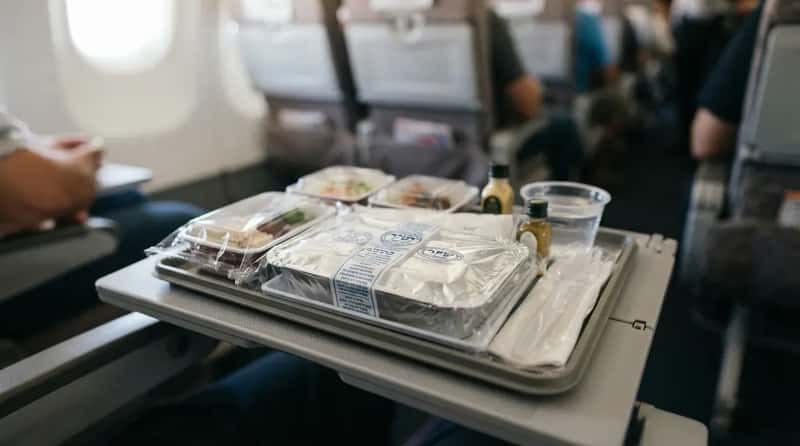
Special meals are supposed to be a courtesy, not a charge. On full-service airlines, special meals including AVML, VJML, and VGML are typically free of charge across economy, business, and first class.
Kosher is the notable exception. Because kosher meals cost roughly twice as much to produce, some airlines may charge passengers more for them. It’s a quiet inconsistency in a system otherwise built around “request it, get it free” – and one galley teams say most passengers never notice until the bill does it for them.
2. Crew Can See Your Meal Choice Long Before You Ever Sit Down
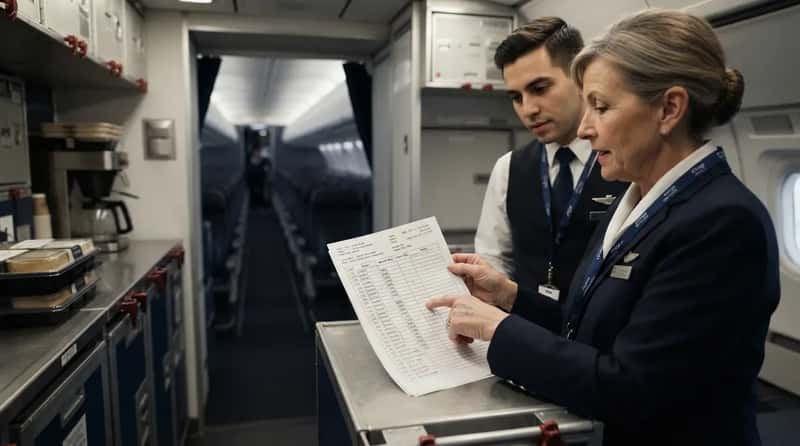
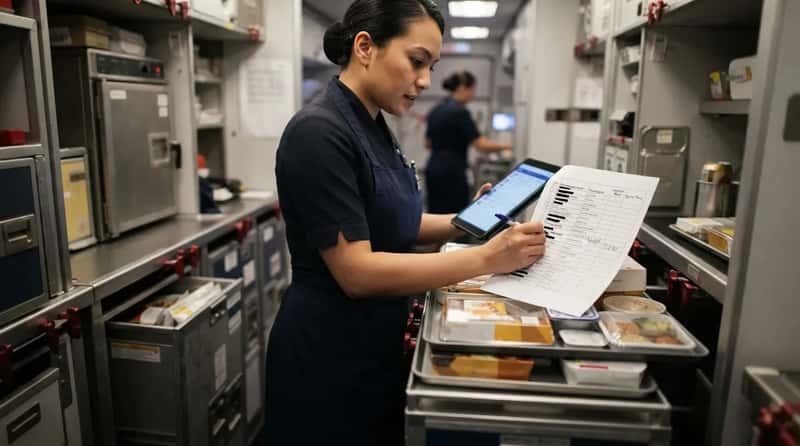
Your special meal request isn’t a surprise to the crew working your flight. It’s printed on the manifest they review during pre-flight briefing, alongside seat numbers and any other service notes for the trip. By the time boarding starts, they already know exactly which tray belongs where.
That’s part of why a flight attendant can walk straight to your row and confirm a kosher or gluten-free order by name without checking a screen first. It looks like intuition. It’s actually paperwork done well before you ever stepped on the plane.
1. Non-Jewish Travelers Are Now the Ones Driving Kosher Meal Demand
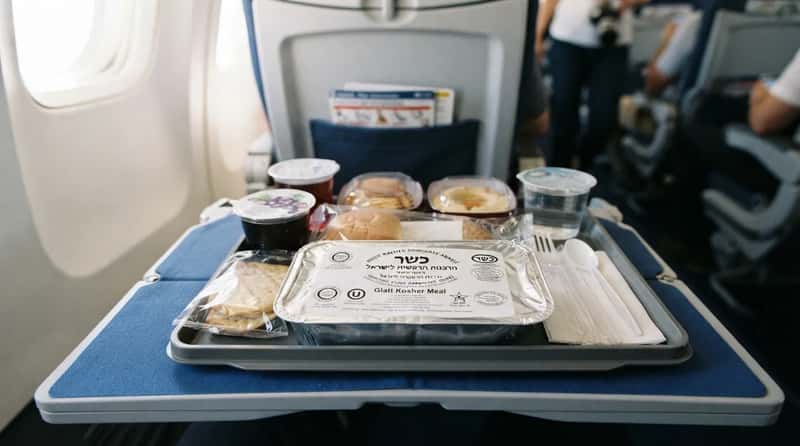
Here’s the twist galley teams find most telling of all. Kosher meals have become popular even among non-Jewish passengers, who perceive kosher food as cleaner and healthier than the standard tray. A meal built entirely around religious law has quietly become a lifestyle choice for a completely different crowd.
Whether that perception holds up is genuinely debatable – kosher status governs preparation and ingredients, not nutrition. But the demand is real, and it’s part of why kosher remains, by a wide margin, the special meal galley crews prepare more than any other on the list.
Why It Stands Out
- Remains the single most-requested special meal on most full-service airlines
- Now ordered by many non-Jewish passengers seeking a perceived cleaner option
- Arrives double-wrapped and sealed for religious certification, not just packaging
- Costs airlines roughly double the price of a standard tray
Put it all together and the pattern is clear: special meals aren’t a simple checkbox, they’re a whole separate logistics chain running quietly behind every flight. Codes get confused, deadlines get missed, connections drop requests, and even “guaranteed” allergen-free trays come with more caveats than most passengers realize.
None of that means the system is broken – it means it’s more human, and more fragile, than the clean little dropdown menu at checkout ever lets on. Which of these surprised you the most?