Picture this: a guest climbs into the tender in bare feet, phone in one hand, champagne in the other, standing up to snap a sunset photo while the driver white-knuckles the wheel. Nobody yells. Nobody says a word. But that thirty-second ride just quietly decided how the rest of the week feels for the crew – and for the tip envelope at the end of it.
Tender drivers rarely say what’s actually running through their heads while guests hop aboard like it’s an Uber. But get enough of them talking, and the same frustrations – plus a few surprisingly small gestures that win them over completely – come up again and again. A few of these will make you rethink the very next tender ride you take.
27. The “Five More Minutes” Guest Who Wrecks Everyone’s Afternoon
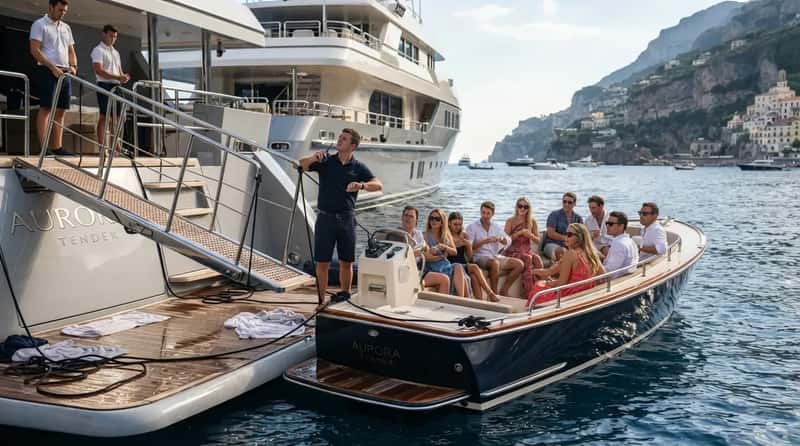
Nothing frustrates a tender crew faster than sitting at the swim platform waiting on a guest who “just needs five minutes.” A tender idling with a full boatload of impatient passengers is one of the most common irritations crew describe. There is nothing more irritating than having to wait for guests while sitting in a tender.
It sounds small, but it ripples through the whole schedule – dinner reservations, sunset excursions, other guests’ plans. The driver can’t just leave, so everyone absorbs the delay. Crew notice who’s chronically late, and it colors the whole week’s dynamic more than guests realize.
26. Flip-Flops Are the Silent Deck-Killer
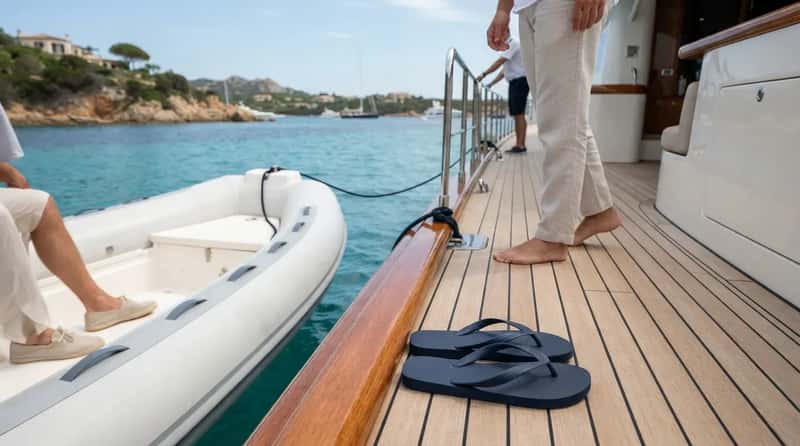
Guests assume footwear only matters once they’re on the main deck. In reality, what you wear stepping into the tender matters just as much. Bring soft boat shoes or espadrilles for the tender, and step barefoot once aboard – it’s a silent gesture of respect.
Hard soles track grit that scratches teak, and loose sandals are a tripping hazard on a bouncing rib. Every yacht has its own policy, but the guiding principle is simple: teak decks and high heels do not mix, and most vessels are strictly barefoot. It’s a tiny habit that instantly signals an experienced guest.
Fast Facts
- Soft-soled shoes or espadrilles are preferred for the tender ride itself
- Bare feet are the standard once guests step onto the main deck
- Hard soles and heels can scratch teak decking almost instantly
- Loose sandals rank among the top trip-and-fall risks on a moving tender
25. That Glass of Champagne You Wanted for the Ride Ashore

Carrying a drink onto a moving tender feels glamorous in theory and dangerous in practice. Crew are trained to treat glassware near open water as a real hazard, not a style choice.
According to etiquette guides for guests, you should not carry drinks while moving around at speed, and should not take glasses near the waterline unless invited. A broken glass on deck becomes everyone’s problem, and barefoot guests discover this lesson quickly. Save the toast for once you’re seated and steady.
24. The Tender Isn’t a Taxi With Unlimited Trips
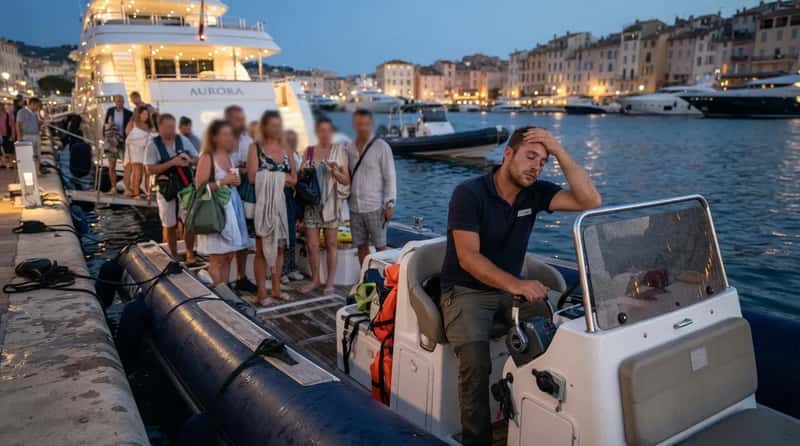
Guests sometimes treat the tender like an app-based rideshare that should show up on demand, day or night. It’s actually a small vessel that needs fuel, checks, and a rested driver behind the wheel.
Pushing for “just one more run” after a long day of shuttling can wear a crew member down fast, and fatigue on the water is a real safety issue. Most crews would rather guests batch their trips than call for constant one-off pickups.
23. Crew Supervision of the Tender Isn’t Optional – It’s the Law

Some guests assume they can hop in the tender solo once they’ve “got the hang of it.” Crews can’t legally allow that, no matter how confident a guest feels.
The crew must always supervise the use of tenders and motorized water toys like Jet Skis – this is a non-negotiable safety requirement, and guests receive a brief orientation on how to operate the equipment and where they are allowed to go. It isn’t distrust; it’s insurance, licensing, and liability all rolled into one.
22. Standing Up Mid-Transfer Is the Fastest Way to Scare a Driver

A sudden stand-up on a moving tender can throw off balance for the entire boat, not just the person doing it. Drivers watch for this constantly, especially in choppy water.
What looks like a harmless stretch or a better camera angle for a photo can force a driver to slow down or cut a turn short. Staying seated until the boat is fully stopped is one of the simplest rules that guests routinely forget.
21. Your New Beach-Bar Friends Can’t Just Hop In

Inviting someone you met an hour ago onto the tender feels generous. It’s also a request crew can’t fulfill without checking first.
Guests must obtain the captain’s permission before inviting any external guests on board, because it’s a legal and insurance requirement – every vessel has a strict passenger limit that cannot be exceeded. A tender that’s technically full doesn’t have room for one more, however friendly the new arrival.
20. The Legal Headcount Nobody Explains Until It’s a Problem
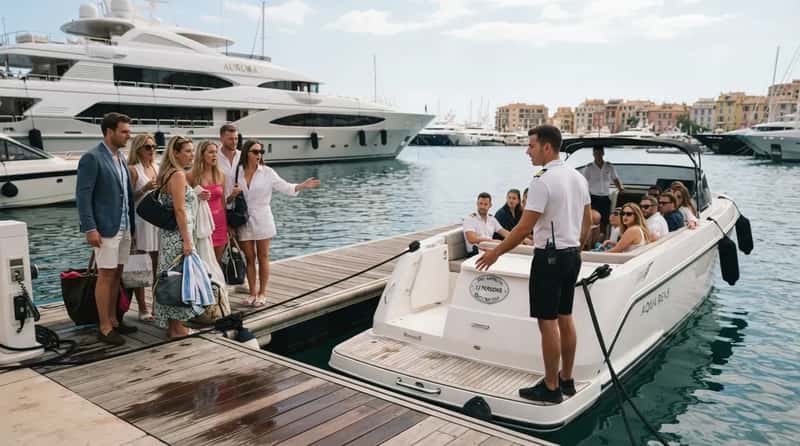
Every tender has a hard passenger cap, and it isn’t a suggestion crews can bend for a friendly group. It’s tied directly to the vessel’s certification.
All commercial yachts are certified to carry a specific number of passengers during a paid charter, and a vessel is not permitted to depart if the number of guests exceeds its licensed capacity. Guests who show up with extra day visitors are often surprised how firmly this rule gets enforced.
At a Glance
- Every tender carries a certified maximum passenger count, not a flexible guideline
- Capacity is tied to the vessel’s official safety certification
- Exceeding the limit means the tender legally cannot leave the dock
- Day visitors and last-minute additions are the most common cause of capacity conflicts
19. Hard-Sided Suitcases Are a Tender’s Worst Enemy
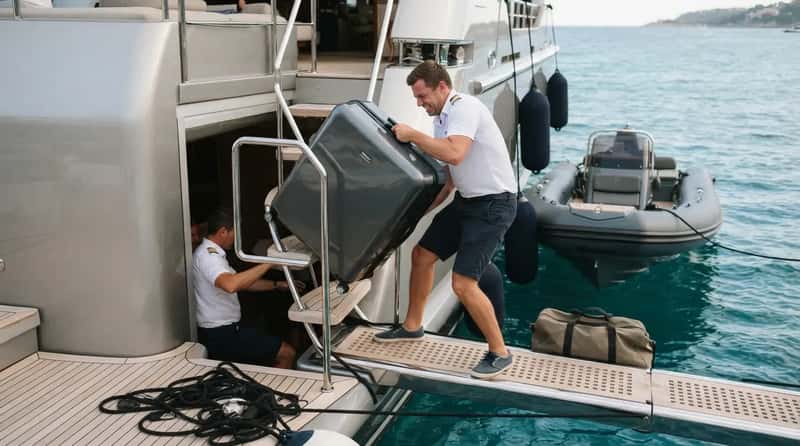
A hard-shell suitcase might look sleek on the dock, but it’s a nightmare the moment it needs to fit through a tender and down a companionway. Storage space is limited on any vessel this size.
Storage is always a big issue, so hard-sided luggage is discouraged in favour of soft luggage that can be collapsed for stowing – steamer trunks might work on ocean liners, but not on yachts. Packing light and soft isn’t a style preference; it’s a practical courtesy to the crew loading your bags.
18. The Fuel Bill Hiding Inside Your APA

Most guests never think about who pays for the diesel burning every time the tender heads to shore and back. It’s not a hidden charge – it’s built into a line item most people skim past.
The Advance Provisioning Allowance is usually around 25-30% of the charter fee and covers variable expenses, including fuel for the yacht and tender. Every extra “just one quick trip to town” is quietly drawing down that fund, and unused money is only refunded at the end.
17. Why Crew Tow the Small Boat Alongside, Never Behind
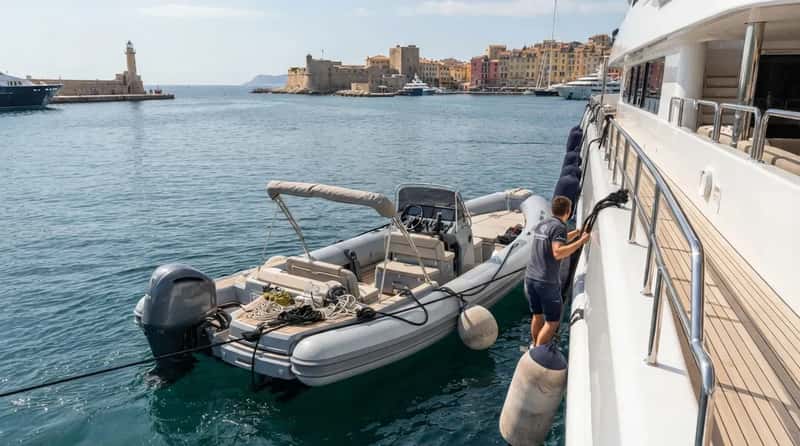
Guests rarely notice how a tender is towed into port, but experienced drivers are picky about the method. There’s a specific reason behind it, learned the hard way by plenty of crew.
When towing a smaller tender into port, it’s better to tow it alongside rather than behind, because there’s nothing more embarrassing than having the tow line tangled up around your props. It’s a small technical detail that separates a smooth arrival from an awkward one.
16. The Pre-Launch Checklist Guests Never See
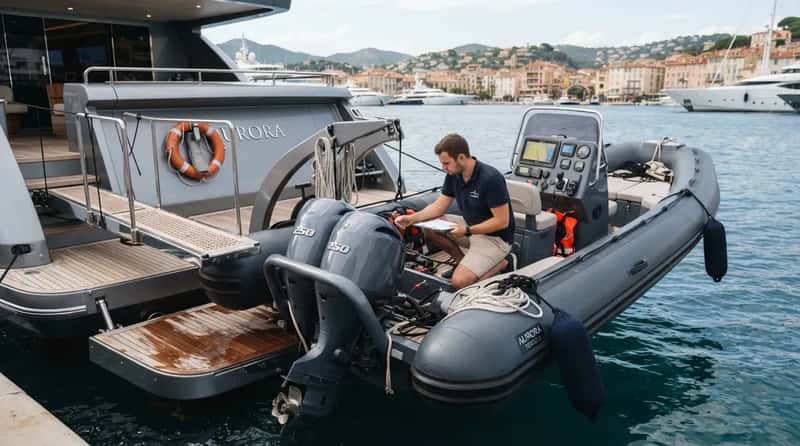
Before any tender leaves the swim platform, there’s a routine most passengers never witness or think to ask about. It happens every single time, not just occasionally.
Crew always make sure they have enough fuel for the length of the passage and remember to do pre-launch checks before departing. That extra minute of waiting isn’t laziness – it’s the reason the ride back is uneventful.
15. “Rules of the Road” Apply Even to a 12-Foot Rib
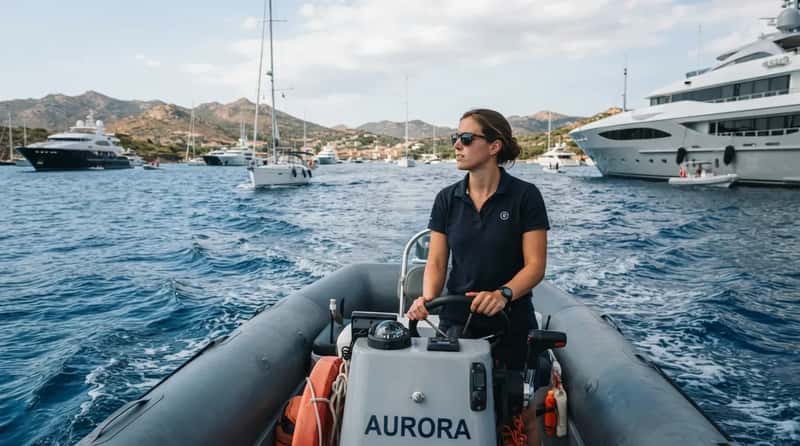
Guests assume maritime law is only relevant to the big yacht. In truth, the same rules govern the tiny inflatable ferrying them to the beach.
Whether driving a 200-ton superyacht or a 1.5-ton tender, the rules of the road are the same, and knowing them cold along with quick decision-making are essential ingredients in safe tender driving. That’s why a seemingly casual driver is often quietly tracking every other vessel in the anchorage.
14. Reef-Safe Sunscreen Isn’t a Suggestion Anymore
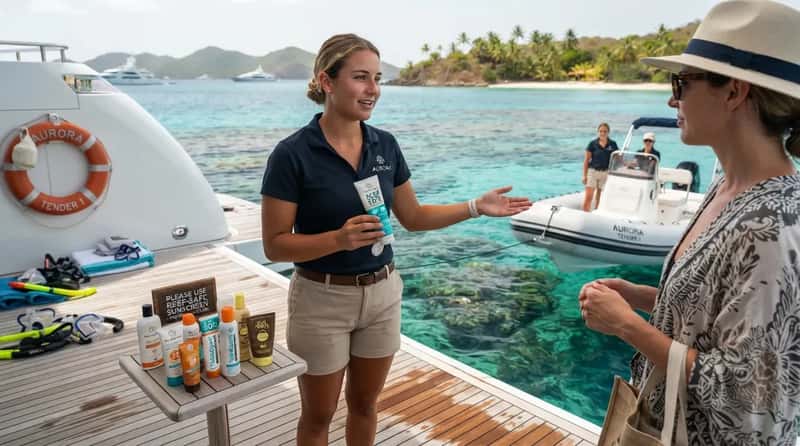
Slathering on regular sunscreen right before a tender ride feels harmless, but it isn’t neutral once you’re in the water. Crews increasingly treat it as a real environmental issue, not a preference.
In the age of climate awareness, conscientiousness is no longer a luxury, and for yacht guests this extends to small decisions like using reef-safe sunscreen and asking about recycling protocols. Many crews now gently flag this before guests even step into the tender.
Worth Knowing
- Many popular anchorages now discourage or restrict non-reef-safe sunscreen
- Crews increasingly ask about sunscreen choice before a tender even launches
- Small habits like this reflect a broader shift toward eco-conscious yachting
13. The Beach Club You’re Motoring Toward Is Someone’s Home

Guests often treat every tender drop-off as a private playground. Crew see it differently, and increasingly, so do the destinations themselves.
It begins with one key principle: you are not arriving in a destination, you are arriving in someone else’s home. Yachting offers a rare opportunity to engage with communities and ecosystems that are often fragile, remote, or recovering from mass tourism. How guests behave the moment they step off the tender says more about them than anything that happens on deck.
12. Water Toys Need a License Crew Rarely Mention Upfront
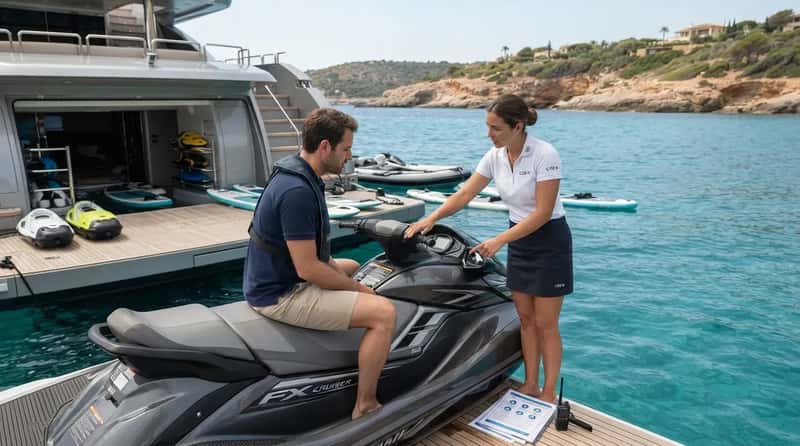
Jumping straight from the tender onto a jet ski or towable feels spontaneous and fun. Behind the scenes, there’s often paperwork nobody warned you about.
Guests should check whether they need any special training or a license to use the water toys, since depending on the yacht and location, the crew may need to organise additional paperwork or training sessions. Asking the crew to demonstrate how a toy works first isn’t overcautious – it’s expected.
11. The Group Chat You Keep Ignoring Is Costing You Time

Most charter crews now run a shared group chat for the whole trip, and guests who ignore it become the bottleneck. It’s not a formality – it’s how the whole day actually functions.
Joining the host’s group chat helps everyone find each other and know where to be at the right time, and photos can be uploaded there to share memories. Guests who skip the group chat are usually the same ones the tender ends up waiting for.
10. Kids on the Tender Aren’t the Crew’s Responsibility
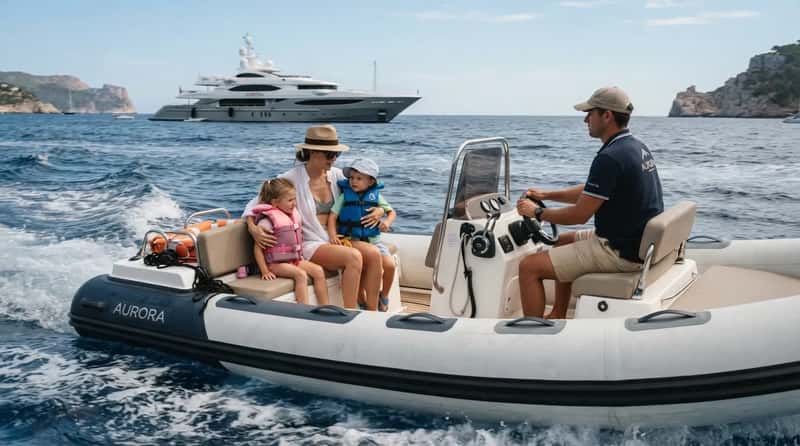
Parents sometimes assume the crew will naturally watch their kids during tender runs and beach trips, the way a resort staff might. That’s a mistaken assumption that causes real friction.
While many yachts encourage bringing children and stock water toys for youngsters, crew members are not babysitters – if you bring small children, plan to care for them yourself or bring a nanny. The tender ride itself needs an adult actively watching, not just a life jacket doing the job.
9. Coming Back Drunk With Strangers Is the Ultimate Tender Sin
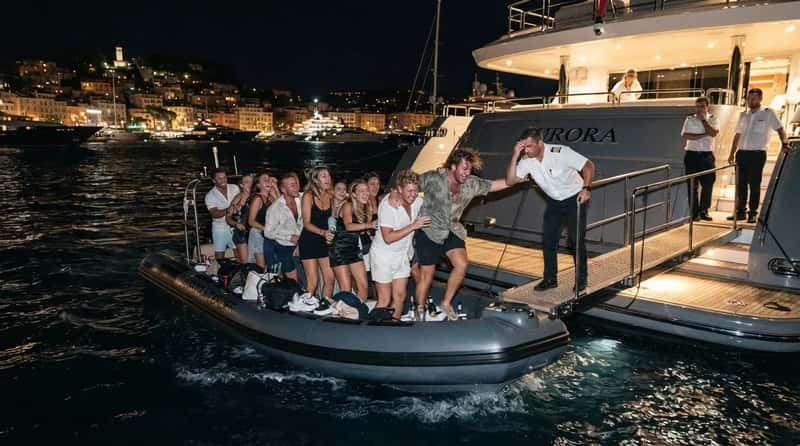
Nothing tests a crew’s patience like a guest returning from a night ashore with a group of new best friends in tow. It’s one of the most quietly dreaded scenarios in yachting.
It’s not recommended to return to the yacht after partying onshore with new friends, since the chef won’t be pleased having to prepare a late meal for everyone. Beyond the kitchen chaos, it also means an overloaded, uncleared tender run that nobody signed off on.
8. Weather Can Cancel Your Ride Faster Than You Think
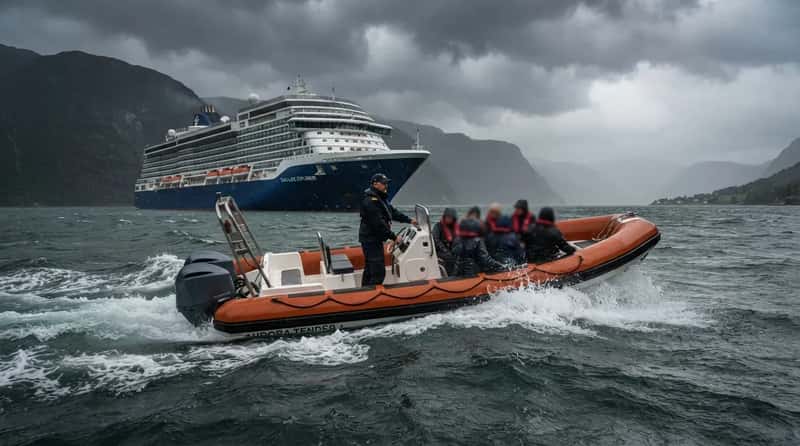
Guests often expect the tender to run on schedule no matter what the sky looks like. Conditions on open water change faster than they do on a stable main deck, and drivers take that seriously.
A tender that felt perfectly calm at breakfast can be genuinely rough by early afternoon. Crews would rather delay or reroute a trip than push through chop that puts passengers at risk, even if that means guests miss part of a planned excursion.
7. Night Runs Are Riskier Than They Look From the Deck
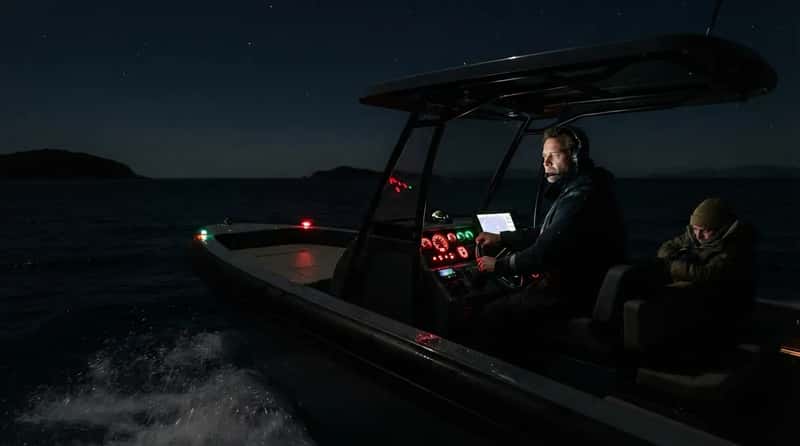
A tender ride under string lights at sunset feels romantic. The same trip an hour later, in the dark, is a completely different technical challenge for the person driving.
Reduced visibility, harder-to-spot obstacles, and fatigue all stack up after a long day of shuttling guests. Pushing for a spontaneous midnight beach run isn’t just inconvenient – it’s the kind of request that makes experienced drivers genuinely uneasy.
6. The Tip Calculation Starts the Moment You Step Off the Swim Platform

Guests often think tipping is about the meals and the cabin service alone. In reality, the tender experience factors in more than most people assume.
Safely and comfortably transporting guests in the yacht’s tender can be a key factor when they calculate the tip. As a rule of thumb, brokers advise tipping between five and 20 percent of the charter rate – and how smoothly the small boat runs often shapes where in that range guests land.
Quick Compare
- Typical charter tip range: 5% to 20% of the total charter fee
- Smooth, well-run tender transfers tend to push guests toward the higher end
- Frequent delays, complaints, or last-minute demands tend to pull tips toward the lower end
5. Crew Are Trained to Disappear, Not to Be Invisible on the Water
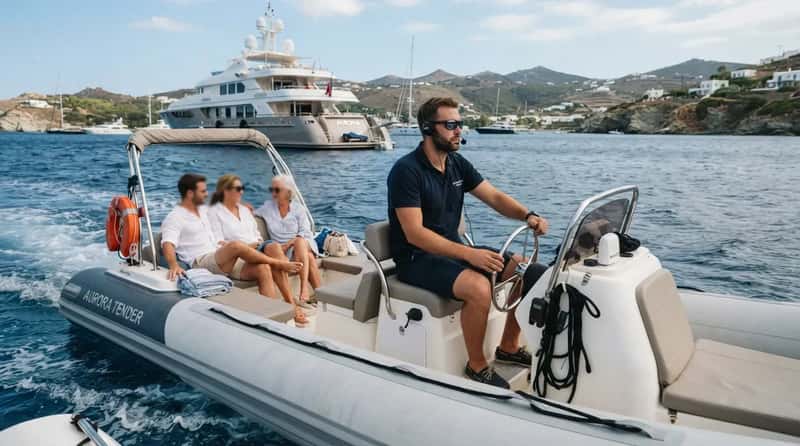
Guests sometimes assume the tender driver is just “the guy who drives the boat.” Actually, that role requires real qualifications and a fair amount of quiet professionalism.
Guests enjoy a high level of privacy because professional crews are trained to be “invisible” when not performing service, staying in crew quarters or the galley unless serving meals or navigating. The tender is one of the few places that invisibility briefly drops – and it’s worth noticing the skill behind it.
4. Phones Out Mid-Transfer Are a Bigger Problem Than You’d Guess

Reaching for a phone the second the tender hits open water is instinctive for a lot of guests. It’s also exactly the kind of distraction drivers have to watch for constantly.
A dropped phone, a sudden lean for the perfect shot, or a guest not holding on because they’re filming all add small risks to a short ride. Crews rarely say anything in the moment, but it’s one of the habits they notice most.
3. Illicit Anything Gets You Left at the Dock
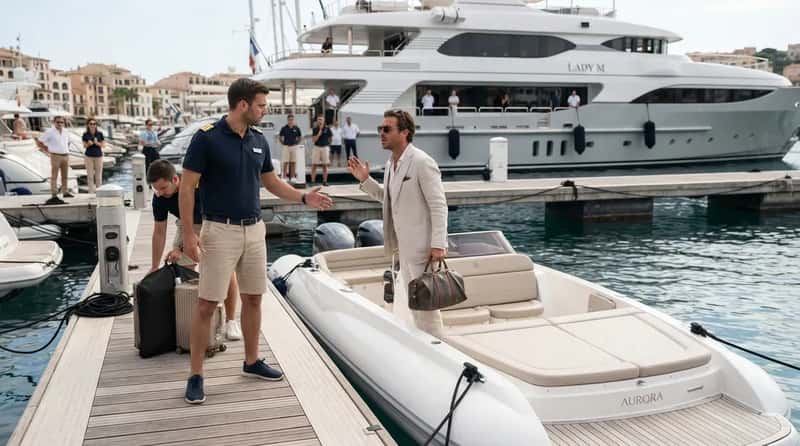
Some guests assume yacht life comes with a wink-and-nod attitude toward rule-breaking. Crews describe the opposite reality, especially once it touches the tender or the wider itinerary.
The tolerance level aboard yachts for illegal or illicit activities is absolutely zero. A single lapse in judgment ashore can end a charter early – and it’s the tender that becomes the very public, very awkward stage for that consequence.
2. Overloading the Tender Is the Mistake With the Scariest Consequence
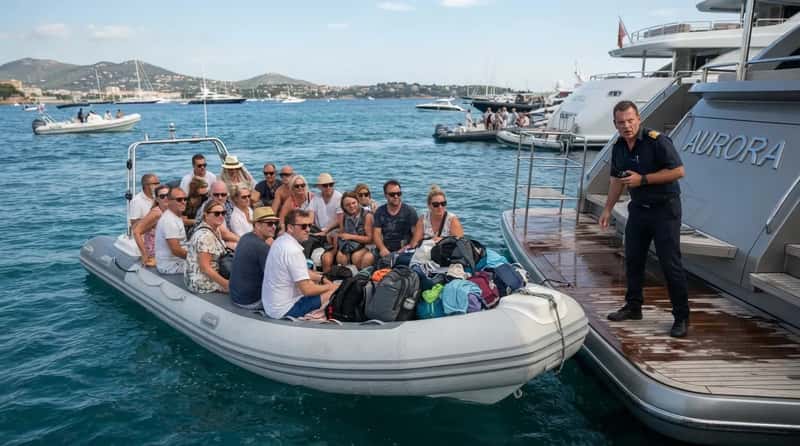
Squeezing “just one more” person or a stack of extra gear onto an already full tender feels harmless in the moment. It’s actually one of the more dangerous habits crews have to police.
A tender rated for a specific number of people and a set weight isn’t being conservative for no reason – stability and freeboard change fast once that limit is crossed. Guests who push back on this rule are, ironically, the ones putting themselves most at risk.
1. The One Thing Every Tender Crew Remembers Long After You Disembark
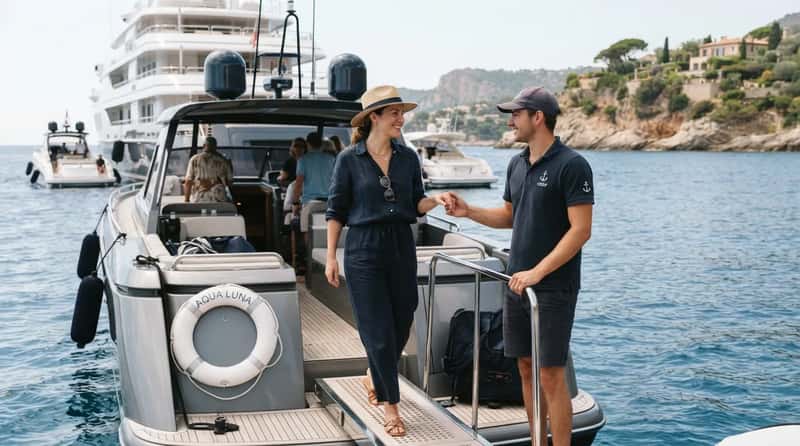
Ask any tender driver what actually sticks with them, and it’s rarely the destination or the weather. It’s whether a guest looked them in the eye, said thank you, and treated the ride like a favor instead of a service.
Chief stewardesses often speak of the guests who “get it”: those who greet the crew by name, offer feedback with kindness, and understand the quiet zones of the boat – the guests whose charters run smoothly, not because they demand it. That small, consistent respect is the thing crew talk about long after the season ends.
None of these 27 things require money, status, or yachting experience – just attention. The guests crew remember fondly aren’t the ones who tipped the most or asked for the least; they’re the ones who treated a short ride in a small boat with the same care they’d want shown to them.
What’s the one tender habit that would earn you a permanent invitation back?