Walk into the average American living room in 1985 and you’d catch it all at once: mauve carpet, velvet drapes pulled against the noon sun, brass on literally everything, and a television set so heavy it might as well have had a foundation. If you grew up there, none of it seemed strange. It was just home. To anyone born after 1990, that same room looks like a museum exhibit from a civilization that operated on completely different rules.
And honestly? The rules were different. Not just the colors and the furniture – the technology, the rituals, the daily assumptions about how you watched TV, how you found out what was on, how you made a phone call. Some of what’s on this list will hit you with pure nostalgia. Some of it will make younger readers genuinely confused. A few of them are going to make everybody a little sad that it’s gone. Start scrolling.
#29 – The Wood-Grain Console TV That Was Basically a Piece of Furniture
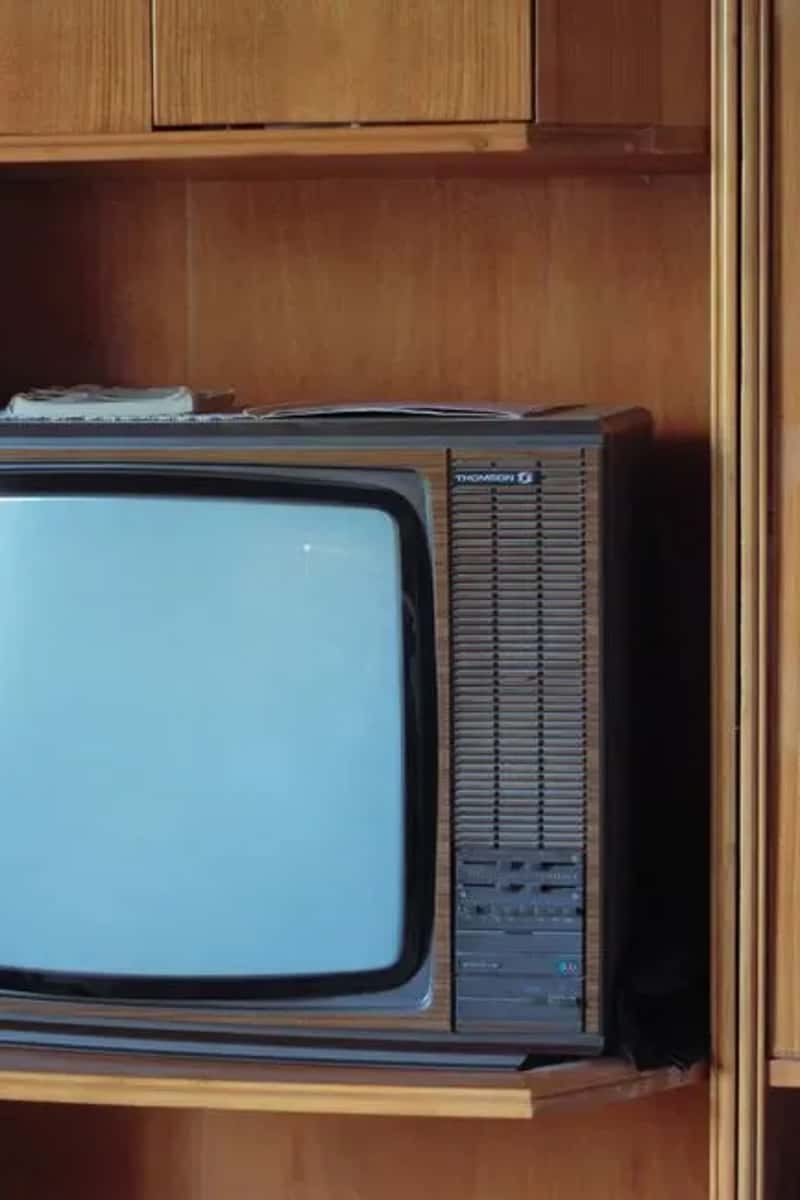
It sat against the longest wall in the room like it owned the place – because it did. The wood-grain console TV wasn’t just a television. It was a focal point, a status symbol, and a flat surface for your mom’s best ceramic owl. The screen itself was modest by today’s standards, usually 19 to 27 inches, but the cabinet housing it was enormous. These things weighed as much as a washing machine and required two strong adults and a plan to move them even six inches.
Built-in speakers, fake wood paneling, and a top surface wide enough to display an entire family photo collection. The picture tube jutted so far back that the rear of the TV practically disappeared into the next room. Younger generations who’ve only known flat screens mounted flush to walls cannot fully process this. The TV wasn’t something you hung up. It was something you arranged the entire room around. And changing what was on it? That was its own adventure.
Fast Facts
- A typical console TV cabinet measured 3 to 4 feet wide and weighed 100–200 lbs.
- The picture tube (CRT) alone accounted for most of that weight.
- Top surfaces were prime real estate: family photos, ceramic figurines, and rabbit-ear antennas all competed for the spot.
- Moving one even a few feet required full household mobilization.
#28 – Sending a Kid to Change the Channel by Hand

Remote controls existed in the 1980s, but they weren’t universal – and plenty of households relied on the old method well into the decade. That method was the youngest child in the room. There was an unspoken family hierarchy built entirely around who had to get up. Dad asked. The kid went. This was not considered remarkable. It was just how channels got changed.
The channels themselves were also limited – a few major networks and, by mid-decade, a growing list of cable options. But even with cable expanding rapidly, you still needed to know what was on at any given moment. There was no on-screen guide. No voice search. No algorithm deciding for you. If you didn’t already know the schedule, you needed something physical. You needed item #27.
#27 – The Weekly TV Guide That Determined Your Entire Schedule

There was no scrolling through an on-screen grid. No app. No “Hey, what’s on tonight?” typed into anything. If you wanted to know what was on TV this week, you bought the TV Guide – a small, pocket-sized magazine published every seven days – and you consulted it like scripture. Families kept it on the coffee table. Circles were drawn in pen around the shows worth watching. Some households kept a dedicated shelf just for the current issue and a few back ones, just in case.
Missing the week’s TV Guide meant genuine uncertainty about your week. When VCRs hit the market, the magazine became even more critical – because now you could theoretically tape something you’d miss, but only if you knew it was on. The idea that your entire television week was planned in advance using a paper booklet the size of a TV dinner box is something that takes a moment to fully absorb. But that was just warm-up for the VCR itself.
#26 – The Flashing Lights on the VCR That Nobody Ever Fixed
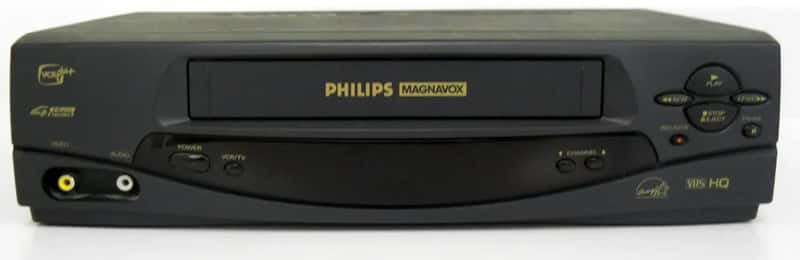
The VCR was simultaneously the most exciting and the most maddening object in the 1980s living room. VHS, introduced by JVC in 1976, became the dominant home video format of the decade. Programming the clock after a power outage was so notoriously complicated that the blinking “12:00” became a national punchline – and a genuine symbol of defeat. The manual was the size of a small paperback and felt like it had been translated from Japanese through three other languages before arriving in your junk drawer.
Most households never successfully programmed a timer recording even once. The clock on the VCR blinked 12:00 from the day it was bought until the day it was finally thrown out. Anyone under 35 has no real frame of reference for this kind of low-grade, permanent domestic frustration baked into an everyday appliance. It was just there, blinking, a small daily reminder that technology had not yet been made for regular people. But the tapes themselves were a whole separate situation.
#25 – VHS Tapes With Handwritten Labels Stacked in Towers Near the TV
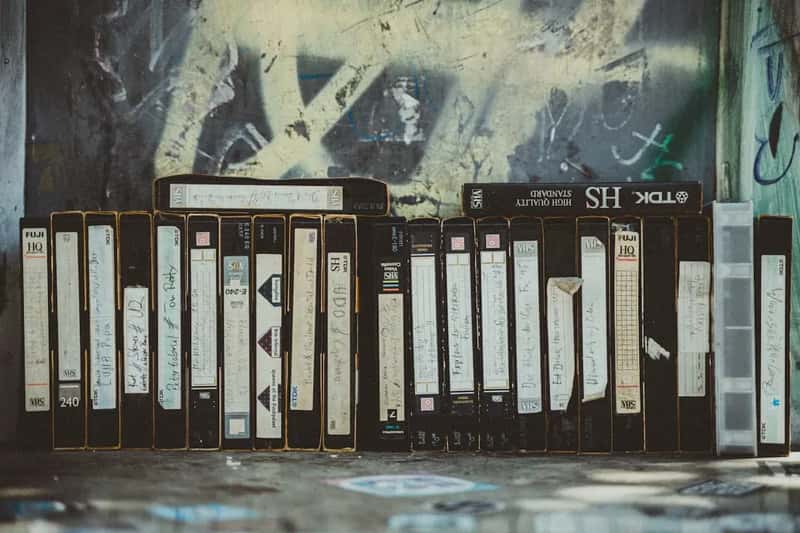
Commercial videocassettes were expensive in the mid-1980s, so renting from the video store was a weekly family ritual – pick something out, watch it over the weekend, return it before the late fee hit. But the tapes you actually owned were something else. Hand-labeled in ballpoint pen, dog-eared from being shoved in and out of the player, stacked in precarious towers on a shelf or the floor beside the entertainment center. “CHRISTMAS 87,” “COSBY SHOW EPISODES,” “DO NOT TAPE OVER.”
That last label, of course, was sometimes ignored. Accidentally taping over a beloved show – or an irreplaceable home video – was a genuine household crime, the kind that produced actual arguments. The physical stack of tapes beside the TV told the story of the family: what they watched, what they saved, what they couldn’t bear to lose. It was an analog archive of domestic life, and it lived in a wobbly tower next to the entertainment center.
#24 – The Massive Wall-Spanning Entertainment Center
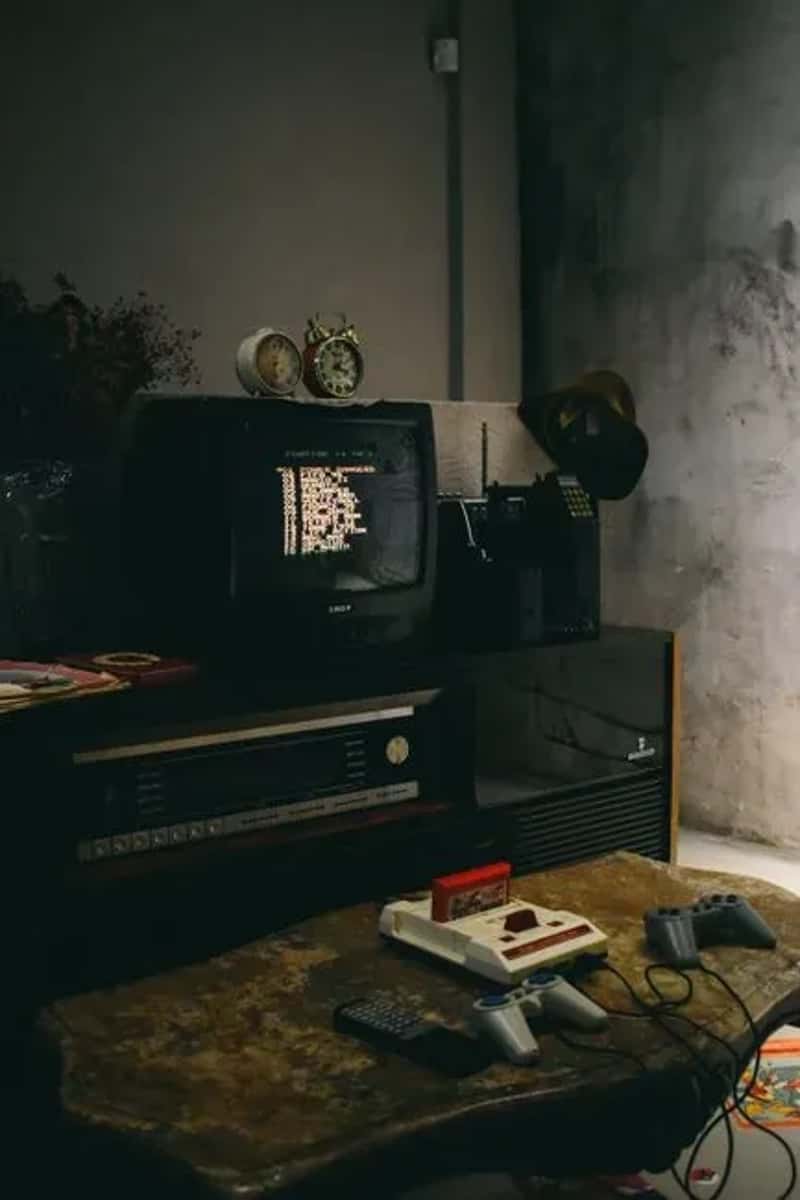
The entertainment center was a monument to optimism. It was purchased – or assembled from flat-pack pieces with a set of instructions and a prayer – to house an entire entertainment system that, in practice, turned out to be one 27-inch TV and a VCR. The remaining shelves were filled with a ceramic lighthouse, the family’s World Book Encyclopedia set, a few VHS tapes, and a brass-based lamp that had no business being on a shelf. It occupied the entire dominant wall of the room.
The center cavity was always slightly too large for the TV, leaving a gap on each side that collected dust and a baffling amount of coaxial cable. It didn’t matter. The entertainment center was the wall now. Today’s equivalent is a slim floating shelf and a screen bolted to studs. The gap between the two objects – in size, ambition, and sheer weight – is almost comical. But while the entertainment center owned one wall, the rest of the room had its own ideas.
At a Glance: What the Entertainment Center Actually Held
- One TV (always slightly too small for the cavity)
- A VCR with a front-loading mouth and a stack of labeled tapes
- The family encyclopedia set – all 26 volumes
- Ceramic decorations, a brass lamp, and school portraits
- A nest of coaxial cables nobody ever untangled
#23 – Mirrored Wall Panels That Made the Room Feel Infinite
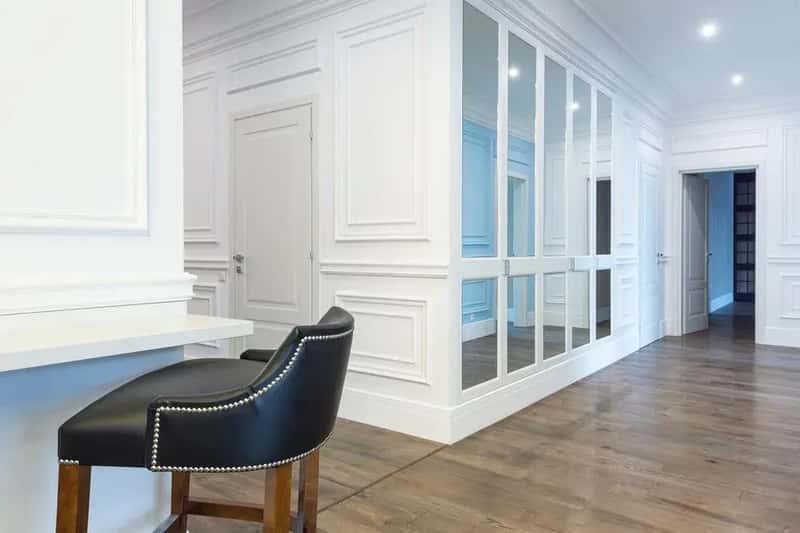
Walk into one of these rooms and your brain needed a full second to catch up. Mirrored walls – installed in panels with thin beveled seams running between them – made the 1980s living room feel simultaneously twice as large and twice as crowded. The furniture, the ficus, the chandelier: all reflected back at you in slightly amber-tinted glass. It was considered the height of glamour. Upscale homes had it floor to ceiling. Aspirational homes had it on one feature wall. Everybody wanted it.
Mirrored surfaces were a status symbol of the era – shiny, glam, influenced by the aesthetic of shows like Dallas and Dynasty. The full floor-to-ceiling mirrored wall is now considered one of the most dated design choices imaginable, the kind of thing that gets ripped out on the first day of a renovation. At the time, it was a flex. The contrast between then and now is almost philosophical. But the wall wasn’t the only thing that announced itself loudly. Look down.
#22 – Mauve Carpet Everywhere, in Every Room
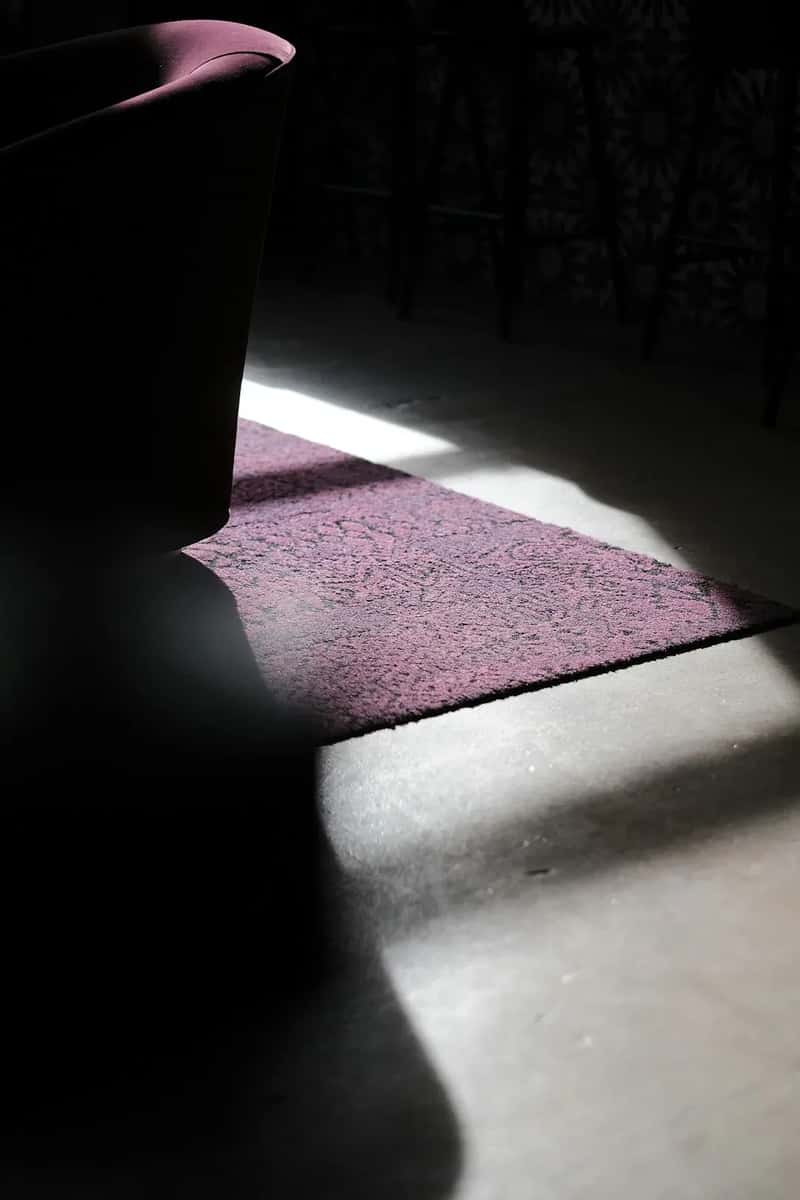
The carpet was mauve. Not beige. Not tan. Not gray. Mauve – a dusty, muted pinkish-purple – was somehow the defining color of the American 1980s interior. It showed up in carpet, upholstery, throw pillows, and bathroom tile with an almost aggressive consistency. Walk through an ’80s home and it followed you room to room like a design decision made by committee and then enforced by law.
When hardwood floors came back into fashion in the 1990s, people ripped up the mauve carpet and found perfect original wood underneath – and felt genuinely betrayed. All those years of walking on that color when gorgeous oak boards were sitting right there. That is one of the great interior design injustices of the twentieth century, and it happened in millions of homes simultaneously. The mauve era was total and it was thorough. But if the floor was committed to a color, the windows were committed to keeping it company.
#21 – Heavy Velvet Drapes That Were Never, Ever Opened

The original stated reason was TV glare. That was the practical justification for pulling the velvet drapes shut before noon on a bright Saturday in June. The real reason, after a few years, was simply that this was now how the room looked, and nobody was changing it. Sunlight was the enemy of the 1980s living room aesthetic, and the drapes were its permanent defense. Heavy velvet in wine red or hunter green, lined in cream, hanging from brass rings on a wooden rod – these weren’t window treatments so much as walls you could theoretically move but never did.
The room behind them existed in a permanent warm twilight that was somehow both cozy and slightly melancholy, the way an old movie theater feels between showings. Today’s design ethos centers entirely on flooding rooms with natural light – the more the better, the bigger the windows the better. The 1980s lived in deliberate, comfortable, carefully maintained darkness. Those two worldviews are not reconcilable. And yet somehow the darkness made the brass look better.
#20 – Brass Fixtures on Everything, Without Exception

In the 1980s, you didn’t choose to add brass as a curated accent. Brass was simply the default finish for every light switch plate, door handle, lamp base, curtain rod ring, picture frame, cabinet pull, and faucet in the house. It was not a design decision so much as an assumption. The question was never whether something would be brass – it was whether it would be shiny brass or brushed brass.
Brass fell so completely out of fashion in the 1990s that entire home renovation shows were essentially dedicated to replacing it. It has since come back in carefully chosen doses – a single faucet here, a lamp base there – and design writers describe this return as sophisticated and warm. The difference is that the original 1980s version saturated every single object in every single room. The curated modern version and the overwhelming original have almost nothing in common except the metal. What sat on the brass shelves was equally sincere.
Quick Compare: Brass Then vs. Brass Now
- 1980s: Every switch plate, door handle, lamp, faucet, curtain ring, and picture frame – all brass, no exceptions
- Today: One carefully chosen brass faucet or lamp base, treated as a “warm accent”
- 1980s: Shiny brass OR brushed brass – that was the full range of the decision
- Today: Brass competes with matte black, nickel, chrome, and unlacquered bronze for design dominance
#19 – Porcelain Figurines Displayed With Complete Seriousness

Spanish brand Lladró led the trend, and their delicate handcrafted pieces graced mantelpieces and glass-fronted display cabinets in homes across America. Elegant women in flowing gowns. Romantic couples. Serene animals with impossibly fine details. They were not ironic. They were not vintage. They were not a joke. They were evidence of refined taste, and they were purchased with real money and displayed with genuine pride. Children were explicitly warned not to touch them. Dusting them was a regular ritual.
A complete Lladró collection in a locked glass cabinet was the 1980s living room equivalent of a gallery installation. In the 1980s, the company launched the Lladró Collectors Society and opened its first gallery and museum in New York City – proof that this was a brand taken seriously at the highest levels. The idea of spending serious money on small ceramic figures and then keeping them behind glass for guests to admire is so foreign to millennial and Gen Z sensibilities that it reads almost like satire – but this was the real thing, completely earnest. And just above those figurines, on the wall, was something equally earnest.
#18 – The Olan Mills Family Portrait With the Soft-Focus Background

Almost every 1980s living room had one: a large framed family portrait, taken at a professional studio, featuring the whole family in coordinated outfits against a background of soft clouds or a hazy sunset gradient. Olan Mills was one of the dominant portrait studio chains of the era, and their aesthetic – pastel backgrounds, slightly stiff poses, matching sweaters – became so universal it defined an entire generation’s visual memory of what “family” looked like on a wall.
The portrait was hung above the sofa or over the fireplace, at eye level, where no guest could miss it. It was updated every few years as the kids aged. The idea of dedicating prime wall space to a professionally shot family photograph – framed, prominent, formal – is something most people under 35 genuinely cannot imagine doing. Today those photos live on phones, unsorted and unbacked-up. The wall stays empty. Something was lost in that trade. But the most architecturally baffling feature of the ’80s living room wasn’t on the wall. It was in the floor.
#17 – The Sunken Living Room (a.k.a. the Conversation Pit)
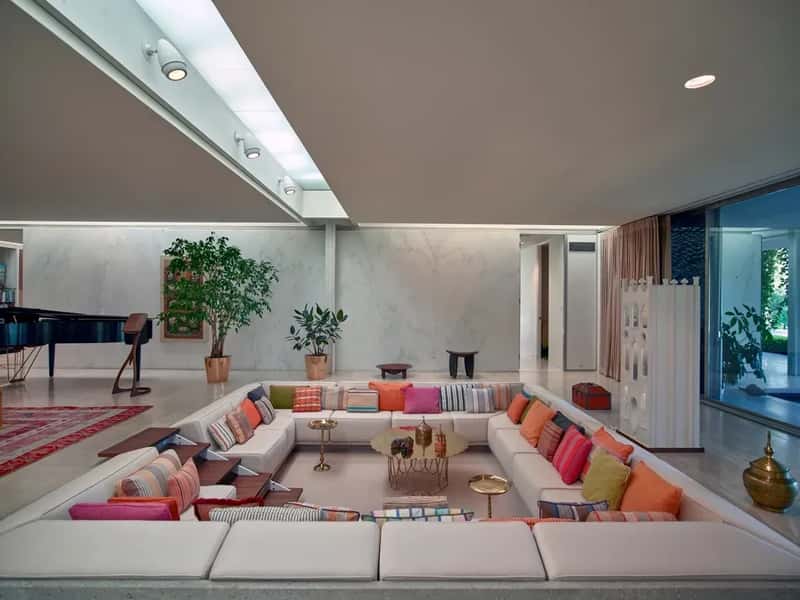
Someone in the late 1970s looked at a perfectly flat living room floor and thought: but what if it went down? And for one glorious decade, that idea was considered sophistication. The sunken conversation pit – a seating area literally recessed into the floor, usually two or three steps down – signaled that you took entertaining seriously. It said your home had a dedicated zone for conversation, set apart from the rest of the room by sheer architectural commitment. Sunken living rooms were popularized in part by Eero Saarinen’s 1960 design for the Miller House in Columbus, Indiana, and by the 1980s the idea had filtered all the way down to suburban tract homes.
The cushions were always named after geological formations: adobe, canyon, harvest wheat. The shag carpet at the bottom had its own microclimate. And yes, everyone who had one knew at least one person who missed the step coming in from the kitchen and went down hard. That was simply the price of owning a floor feature this dramatic. Conversation pits are now so rare they qualify as a selling point in a real estate listing. But while the floor made a statement, the sofa was equally committed to being noticed.
#16 – Oversized, Overstuffed Sectional Sofas in Earth Tones
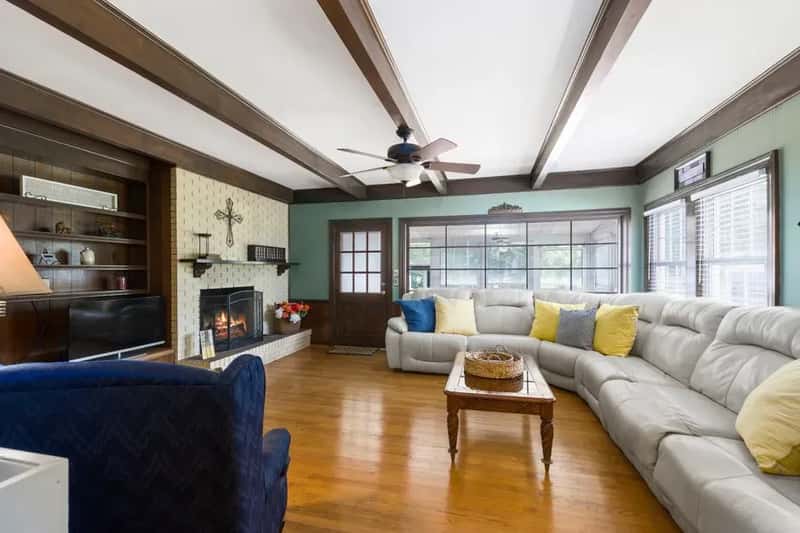
These sofas weren’t minimalist accent pieces – they were the room. Low, deep, and sprawling, the sectional sofa of the 1980s could seat the entire extended family plus a few neighbors with room left over. You sank into them and disappeared. The color palette ran through harvest gold, rusty orange, chocolate brown, and that particular shade of dusty teal that existed only between 1981 and 1989 and has never been accurately reproduced since.
Comfort and spectacle were equally important. Oversized, plush furniture was a staple of 1980s living rooms, making spaces feel both inviting and deliberately indulgent. The full sectional that wrapped around two walls of the room was considered aspirational – a sign that you had a serious living room for serious living. Today’s design leans toward smaller, lighter, movable furniture. The 1980s sofa was a commitment. You didn’t rearrange it. You arranged your life around it. Just above it, usually, hung something hand-knotted.
#15 – Macrame Wall Hangings as Serious Home Decor

Macramé – the art of decorative knotting using thick rope or cord – was not a craft fair novelty in the 1980s. It was legitimate interior design. Large macramé wall hangings, some of them three feet wide and four feet tall, hung above sofas and fireplaces in homes across America. They came in natural fibers and earthy tones, often incorporating dried flowers or wooden beads woven directly into the knots. They were not hand-me-downs. They were chosen and displayed with the same seriousness as a painting.
Macramé plant hangers dangling spider plants in every corner of the room was so standard it became invisible to anyone who grew up in it. To anyone who didn’t, it looks like a very committed craft project that ate the entire room whole. The combination of macramé wall art, hanging plant baskets, and knotted pot holders gave the ’80s living room a handmade, organic texture that today would cost a small fortune to recreate at a boutique home goods store. The wallpaper behind all of it was equally committed to making an impression.
#14 – Loud Floral Wallpaper Covering Every Square Inch
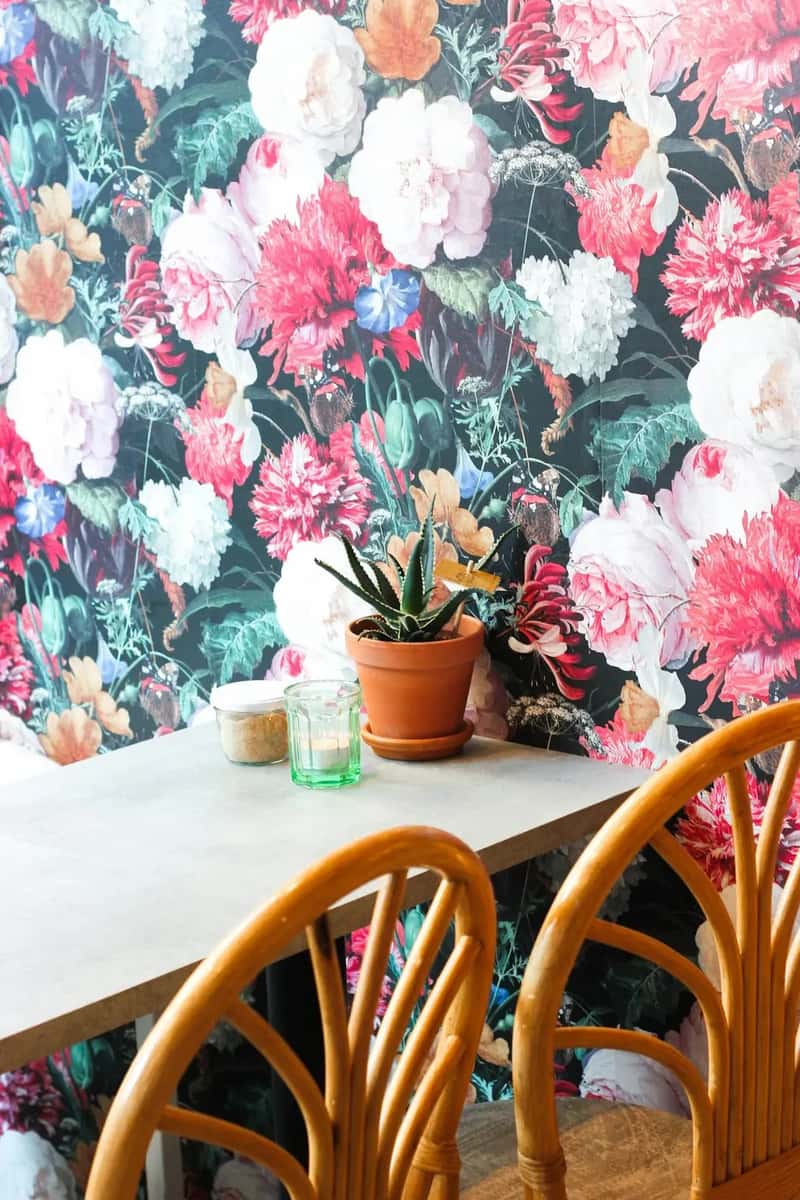
The wallpaper didn’t just cover one accent wall. It covered all four walls, from baseboard to ceiling, in a pattern busy enough to make your eyes vibrate. Big, blousy florals in strange pastel shades – roses the size of softballs, leaves in colors that don’t exist in actual nature – running continuously in every direction with no white space, no rest, no relief. Maximalism was the design philosophy of the decade, and the wallpaper was its most enthusiastic expression.
What made it truly extraordinary was the commitment to coordination. The same floral pattern often continued from the wallpaper to the curtains to the sofa cushions to the throw pillows in an unbroken, room-wide continuum. The word “too much” did not apply. Restraint was not a value. The whole room was one large, floral, immersive statement, and everyone in it had agreed to this arrangement. Getting all of that onto your television required some special hardware.
Worth Knowing: The 1980s Design Philosophy in One Room
- Maximalism wasn’t a trend – it was the default setting. More pattern meant more taste.
- Coordination was total: wallpaper, curtains, cushions, and throw pillows often shared the exact same print.
- The Memphis Design movement, launched by Ettore Sottsass in 1980, formalized the decade’s love of clashing shapes and bold color at the high-design level.
- Shows like Dynasty and Dallas made lavish, layered interiors feel aspirational for millions of viewers.
- Restraint wouldn’t return as a mainstream value until the minimalist wave of the mid-1990s.
#13 – The Cable Box With an A/B Switch and a Separate Clicker
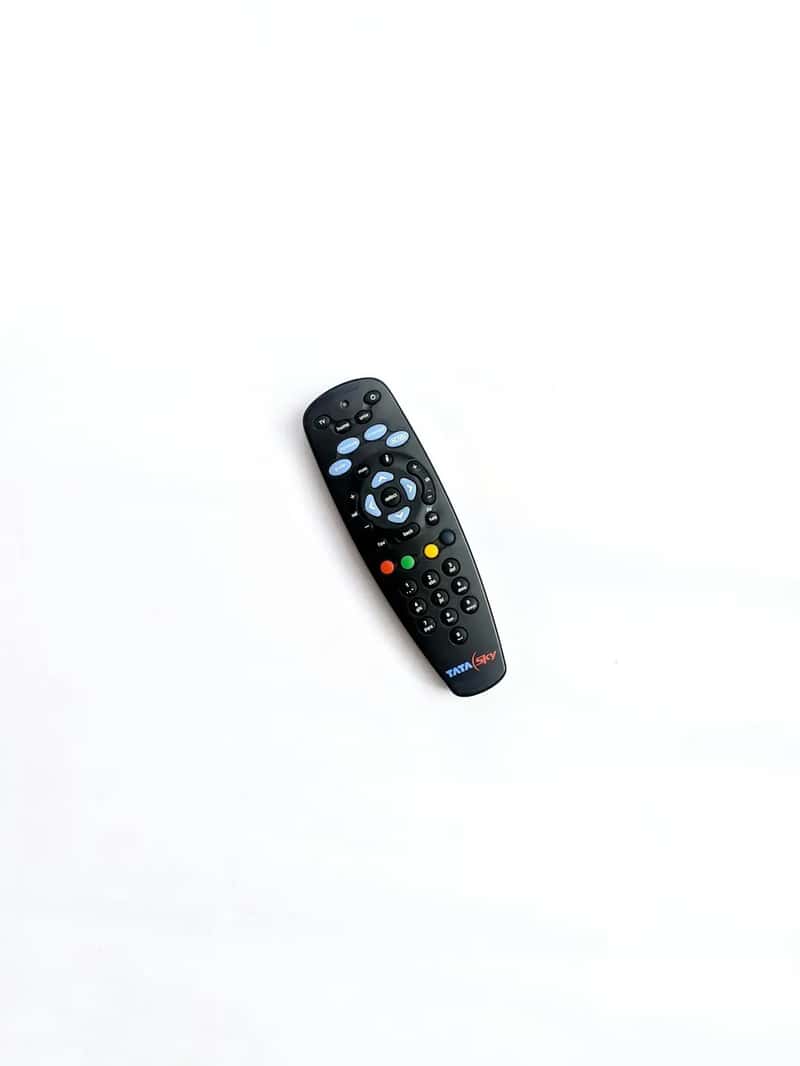
Before cable was integrated cleanly into the television, the physical cable box sat on top of the TV, attached by coaxial cable, with its own separate remote control. That gave you two remotes in the living room before you’d even accounted for the VCR. Channels like HBO, ESPN, and CNN were revolutionizing entertainment in the 1980s, but to access them you had to work through the box – scrolling through channels on a digital readout, one at a time, with a clicker that sometimes worked and sometimes required you to aim it like a dart.
The A/B switch – a small physical toggle between the cable box and the TV – determined whether you were watching broadcast or cable. Switching between them was a physical act. The tangle of coaxial cables running between the TV, the cable box, the VCR, and the antenna produced a nest behind the entertainment center that no reasonable person ever attempted to sort out. Three separate devices, three separate remotes, and wires that reproduced in the dark. Managing all of it was a skill. The phone situation nearby demanded a different kind of patience entirely.
#12 – The Answering Machine With a Cassette Tape Inside
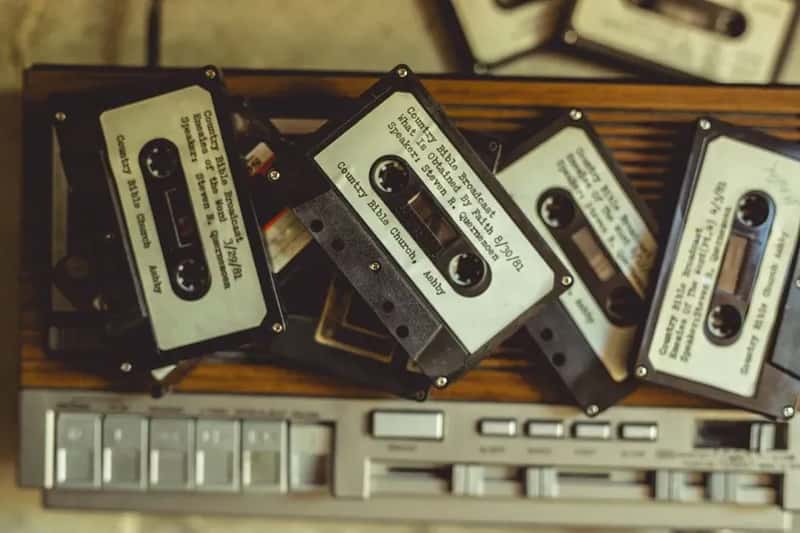
The answering machine sat next to the phone on a side table – a physical device roughly the size of a hardcover book, with a small cassette tape inside that stored both your outgoing message and every incoming one. Recording your greeting was agonized over like an audition tape. Too casual? Too stiff? Did your voice sound weird? You’d record it fifteen times, play it back, hate it, and record it again. The final version was whatever you settled for after you ran out of patience.
When someone called and left a message, a small light on the machine blinked. That blinking light was a source of genuine anticipation – the 1980s equivalent of a notification badge, except it was physical, visible from across the room, and could only be answered by pressing a button and waiting for a tape to rewind. Listening to messages in real time, in sequence, with no way to skip ahead, is a concept younger generations have genuinely never experienced. The phone itself was even more constrained.
#11 – A Corded Phone That Physically Tethered You to the Wall
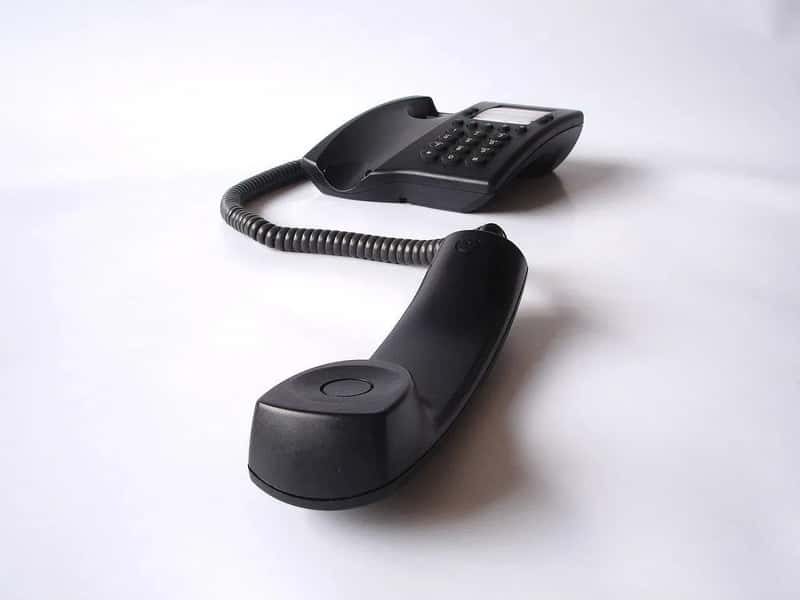
By the mid-1980s, push-button phones had largely replaced rotary dials – but the phone was still attached to the wall with a cord, and that cord was the full radius of your world during a phone call. Phone conversations happened in a fixed location. If you were on the phone in the living room, everyone in the living room heard your phone conversation. Every word, both sides, full volume. Privacy was not a feature.
Privacy on a phone call was a physical negotiation involving how far the spiral cord would stretch. Teenagers who wanted a private conversation had to beg for a phone in the bedroom, stretch the cord around a corner, or simply accept that their social life was semi-public family entertainment. The idea of a phone being a portable, personal device that lives in your pocket and travels with you everywhere would have genuinely sounded like science fiction in 1984. The room itself was lit in a way that added to the mood.
#10 – Torchiere Lamps That Pointed Straight Up at the Ceiling
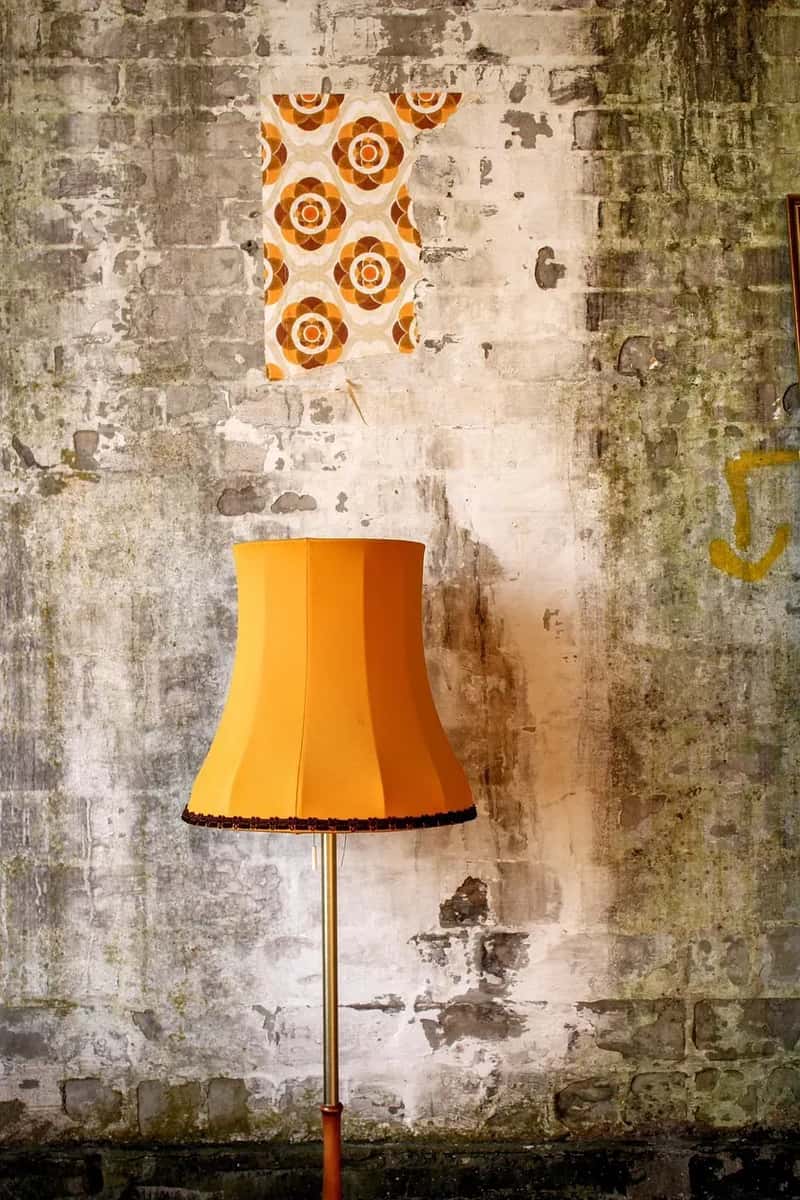
The most characteristic lamp of the 1980s living room wasn’t a chandelier or a table lamp – it was the torchiere: a tall, thin floor lamp topped with a wide bowl that directed all light straight up, bouncing it off the ceiling to create a soft, ambient glow. These lamps were everywhere, and they produced a very particular quality of warm, indirect light that today reads as deeply nostalgic. They came in brass, of course. Everything came in brass.
Many versions used halogen bulbs, which burned at extraordinary temperatures and were later linked to fire hazards – a fact that quietly killed the trend in the 1990s when consumer safety warnings started reaching critical mass. But in their heyday, they were in every living room, casting that warm upward glow across the mauve carpet and the entertainment center and the velvet drapes. Below that warm light, lined up on the shelves, sat something that represented an enormous financial commitment.
#9 – A Full Set of Encyclopedias Displayed Like Trophies

Before Google, before Wikipedia, before a home computer was common, the encyclopedia set was how you looked things up. A full matching set – World Book, Britannica, or Americana – sat on the entertainment center shelves or in a dedicated bookcase in the living room. It wasn’t decorative, exactly, but it was definitely also decorative. A complete 26-volume Britannica set in the 1980s could cost over $1,500, roughly equivalent to $5,000 today, and it was often sold door-to-door on an installment plan.
Displaying a complete set was a visible marker of a family’s investment in education. You’d pull a volume out to settle an argument, look up a country for a school report, or just read a random entry because there was nothing else to do. The idea of a 26-volume physical reference work sitting in the living room being actively consulted is so alien to anyone who grew up with search engines that it barely computes. But the visual vocabulary of the ’80s living room didn’t stop at books and figurines. It extended to the walls, the rugs, the pillows, and everything in between.
#8 – Geometric Patterns on Everything, All at Once
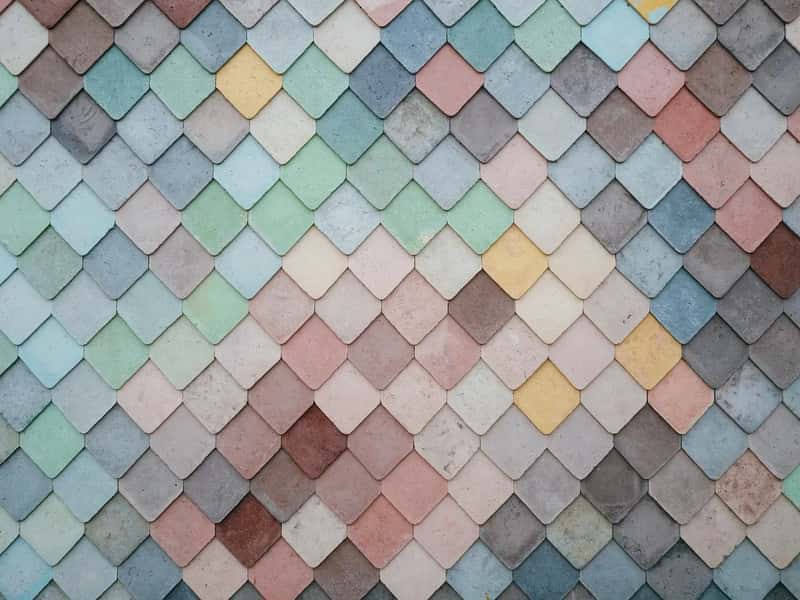
The Memphis Design movement launched in 1980 as a deliberate rebellion against minimalism, founded by Italian designer Ettore Sottsass. Bold shapes, clashing colors, graphic geometry – it filtered from high design down into mainstream home interiors and produced a decade of living rooms covered in competing patterns: triangles on throw pillows, zigzag stripes on rugs, diamond grids on wallpaper borders, checkerboard tiles framing fireplaces. Each object announced itself separately, and then they all announced themselves together.
The difference between ’80s geometric design and the “retro geometric” trend you see in home stores today is the restraint. Today’s version layers patterns carefully and stops well before it becomes overwhelming. The original 1980s version stacked patterns directly on top of other patterns with zero hesitation and called the result a decorated room. It was maximalism applied to geometry. It was a lot. And it grew alongside something equally abundant – the plants.
#7 – Spider Plants and Philodendrons Hanging From Every Corner

The 1980s living room was a jungle by design. Hanging baskets near every window, spider plants with their trailing babies reaching toward the floor, philodendrons climbing little wooden trellises, Boston ferns perched on plant stands in the corners. This was not a gardening hobby. It was a design philosophy. Every available hanging point had a plant. Every corner had a pot. Nature was being actively invited indoors and given permanent residence.
The fake silk plant – installed sometime around 1983 and never removed – was a fixture in living rooms for the rest of the decade. It fooled absolutely no one but looked cheerful from a distance and required zero watering, which was considered an acceptable trade-off. The combination of real plants, fake plants, macramé hangers, and ceramic pots in harvest gold and chocolate brown gave the room a lush, layered quality that today would cost a serious amount of money to recreate at a plant boutique. Just below all of it sat something with genuinely dangerous corners.
#6 – The Brass-and-Glass Coffee Table With Lethal Corners
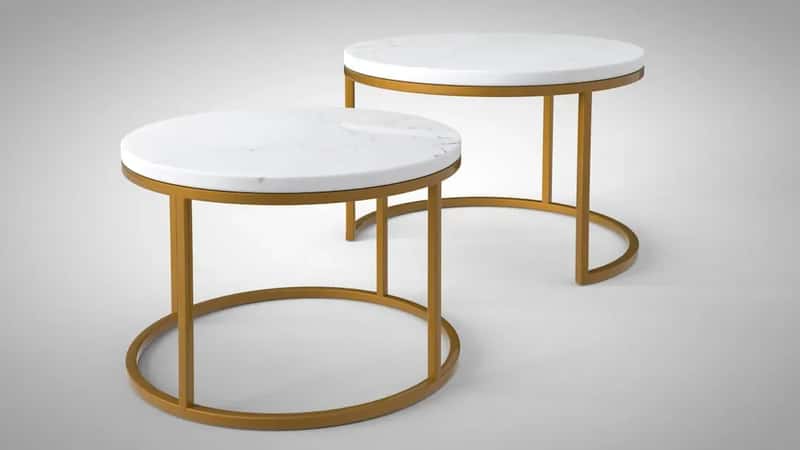
Every single corner of that table was a medical event waiting to happen. The brass-and-glass coffee table was objectively beautiful and absolutely unforgiving. A glass top – usually beveled at the edges, which added additional sharpness to the corners – supported by an ornate brass-finished frame. These tables were the centerpiece of the living room seating arrangement, positioned close enough to every sofa and chair to be both convenient and genuinely dangerous to anyone under four feet tall. Shin height. Always shin height.
The glass top also meant you could see directly through to whatever was underneath – usually some carefully arranged magazines, a bowl of decorative potpourri, or the current TV Guide. Every surface was a display surface. Every object was on stage. The table existed simultaneously as furniture, display case, and hazard. What was draped over the sofa behind it was warmer and more forgiving in every possible way.
#5 – Crocheted Afghans Draped Over Every Sofa and Chair
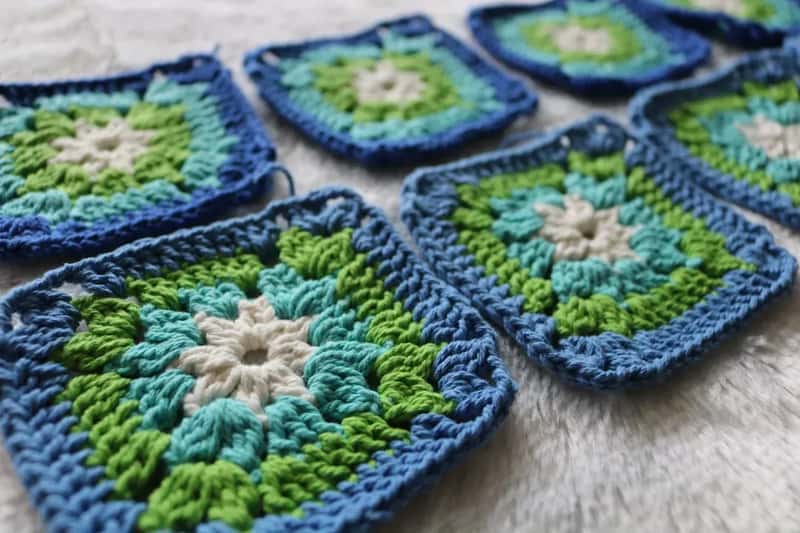
The afghan was handmade – by a grandmother, an aunt, or someone who’d been to a craft fair with ambition – and it lived draped over the back of the sofa or folded on the armchair with the permanence of an architectural feature. Zigzag patterns, granny squares, or a color scheme that accidentally matched Neapolitan ice cream. It wasn’t precious. It was simply always there, and in its permanent presence it became one of the most comforting objects in the room.
Doilies – small, circular pieces of crocheted lace – sat under every lamp base, vase, and figurine in the room, protecting surfaces with a fiber-arts dedication that has absolutely no modern equivalent. The combination of doilies, afghans, and lace curtains gave the 1980s living room a layered softness that was entirely handmade, entirely unironic, and entirely sincere. Today’s equivalent is a throw blanket from a big-box store in a “cozy neutral.” The distance between those two objects says something about what changed. And nothing in the soft furnishings department prepared you for what was built into the wall.
Why It Stands Out: The Handmade Layer
- The crocheted afghan was functional art – used daily, never just displayed
- Doilies served a practical purpose: protecting wood surfaces from lamp bases, vases, and figurine feet
- Granny-square afghans could take months to complete; they were gifts of actual time
- Today’s closest equivalent – the $60 chunky knit throw – is machine-made and bought in five minutes online
#4 – The Wet Bar Built Right Into the Living Room
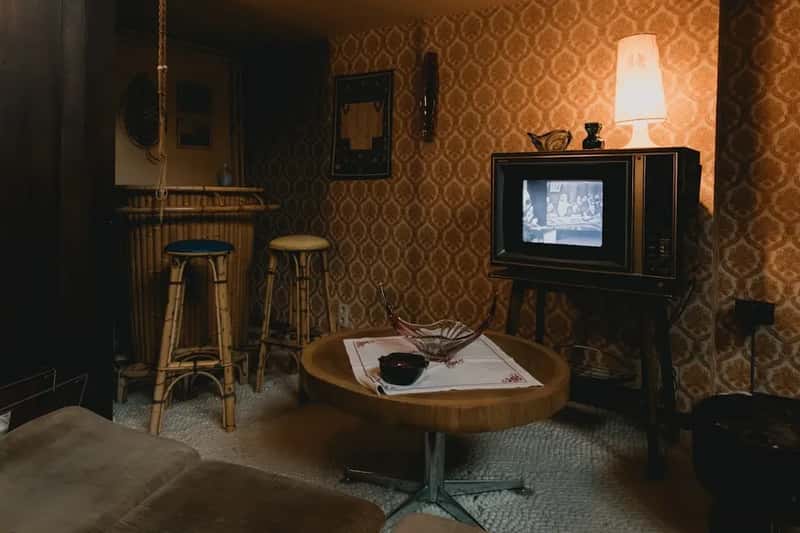
The wet bar – a small built-in or freestanding bar counter with a mini-fridge, a sink, mirrored backsplash, and shelves of glassware and liquor bottles – was not just a party accessory in the 1980s. It was a design feature, a status symbol, and a permanent architectural fixture in the aspirational living room. You didn’t roll it out for guests and put it away afterward. It was built in. It was always there. It said that this was a home where adults entertained properly.
The affluent energy of the decade – driven in part by the visual language of Dallas and Dynasty – expressed itself in cabinetry and crystal decanters. The wet bar was that energy given a permanent address in your floor plan. It signaled cocktail hour was a real institution in this household, and that you didn’t have to walk to the kitchen to participate. The under-35 generation has cocktail carts they bought online. The ’80s had the real thing built into the wall, plumbed and wired. And right behind that wall – literally on the surface of it – was one of the most divisive design choices of the decade.
#3 – Wood Paneling on the Walls as a Design Choice, Not a Flaw

Wood paneling – thin sheets of dark wood veneer or faux-wood printed material, installed in vertical strips from floor to ceiling – was a deliberate, chosen, proud interior design decision in the 1980s. It was warm. It was masculine. It said “den.” It said “serious room where serious people watch the game.” Millions of basements, dens, and family rooms were paneled by homeowners who thought they were doing something genuinely good for their homes.
Entire living rooms were covered in fake wood veneer paneling so dark that the room absorbed light like a black hole – and it was considered cozy. The great wood-paneling reckoning of the 1990s, when new homeowners began tearing it off the walls and discovering perfect drywall underneath, is one of the great recurring renovation revelations in American domestic history. Today the same look would be treated as a renovation emergency. At the time, it was the whole point. But none of this – the paneling, the brass, the drapes, the mauve carpet – compares to the corporate battle that played out directly in the living room.
#2 – Betamax vs. VHS: The Format War That Played Out in Living Rooms
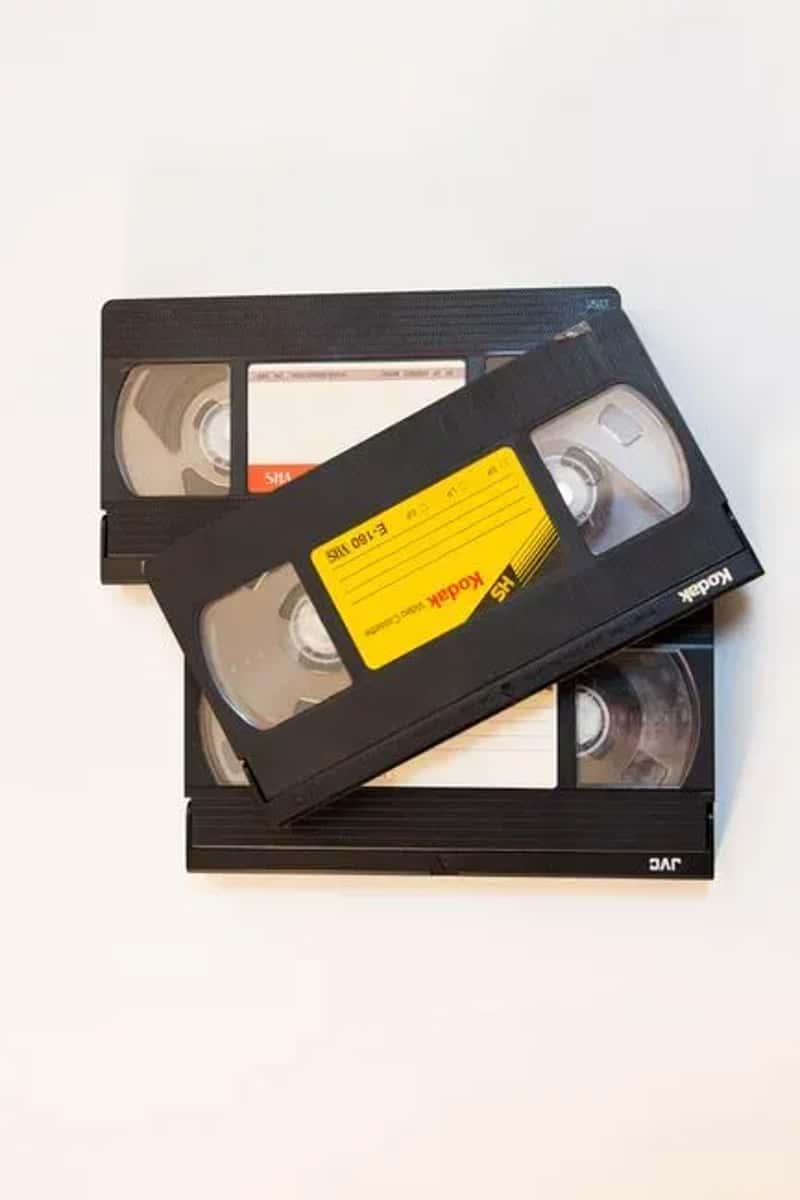
Sony introduced its Betamax videotape format in 1975. JVC released VHS the following year at a lower price point, and what followed was a full-scale format war fought in living rooms, at video rental counters, and in arguments between neighbors who had made different, now-irrevocable purchasing decisions. This wasn’t an abstract technology debate. It was personal. You had either bought a Betamax machine or a VHS machine, and that machine cost several hundred dollars, and you were now committed to a side.
The VHS-Betamax battle is the classic example of an inferior technology winning the market through better business strategy, not better engineering.
– commonly cited in technology history discussions of format wars
VHS won – capturing roughly 90% of the U.S. market by 1987, in part because of longer tape capacity and lower hardware costs. In 1980, fewer than 1% of American homes had a VCR; by 1987, that figure had climbed to 50%, and projections put ownership at 90% by 1990. A 1984 Supreme Court ruling fully legalized home VCR recording and sent sales into overdrive. The people who had bought Betamax machines ended up with expensive hardware and a rapidly shrinking selection of available tapes – one of the first and most personal lessons the American consumer ever received about the cruelty of format wars. It stung. But none of this is the single most baffling thing about the 1980s living room for anyone under 35.
#1 – Scheduling Your Life Around When TV Shows Aired
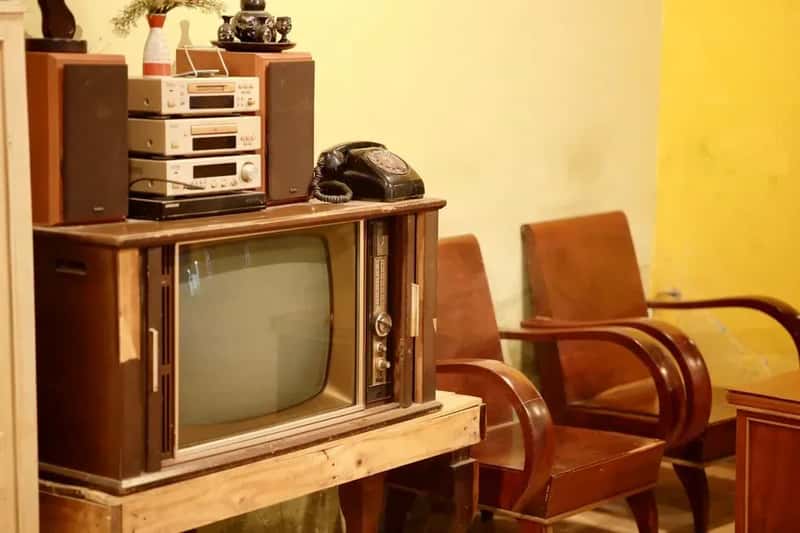
Thursday night meant one thing. Friday night meant another. You didn’t watch shows when you wanted – you watched them when they aired, or you missed them permanently. No streaming. No DVR. No “I’ll catch it later.” If you forgot to be home on Tuesday at 9pm, that episode was gone. Not delayed. Not available tomorrow. Gone. The only rescue was if a friend had happened to tape it, remembered you’d asked, and was willing to trade a tape.
The entire social ritual of gathering in the living room at a specific time – the whole household, on the mauve carpet, under the torchiere lamp, in front of the wood-grain console TV – to watch a specific program together, as a unit, because there was simply no other option: that experience is something the streaming generation has never had and genuinely struggles to imagine. It was scheduled, shared, non-negotiable, and completely communal. You didn’t choose your viewing experience. You showed up for it. That shared appointment – the whole family assembled at the appointed hour, watching the same thing in the same room because the world offered no alternative – was the actual heartbeat of the 1980s living room. And it is completely, irreversibly gone.
The brass is back in small doses. The houseplants never left. The sectional sofa is having its moment again. But the corded phone, the VCR blinking 12:00, the TV Guide circled in pen, and the whole family on that mauve carpet at the appointed hour – those aren’t coming back. If you lived through it, you already know exactly how that room smelled. If you didn’t, this list is as close as you’re going to get.