
Moving abroad for work sounds simple until you actually try to do it. Some governments have built systems that practically wave qualified applicants through the door, while others have constructed layers of quotas, points, and paperwork that can stall even the most qualified candidates for years.
The gap between these two experiences has only widened recently, as some nations compete for talent while others tighten controls in response to political pressure or labor market protection. Knowing where you land on that spectrum before you start packing can save months of frustration.
Estonia: Europe’s fastest path to a work permit

Estonia has quietly become the benchmark for how uncomplicated a European work visa process can be. According to recent immigration analysis, the easiest country to get a work visa in 2025 is Estonia, though there are plenty of other options for expats. Much of that reputation comes down to Estonia’s approach to government services in general, since the country adopted a digital governance model years ago and is the birthplace of KaZaA and Skype.
The actual mechanics are refreshingly simple. Applicants typically go through just a simple two step process, starting with a D work visa for short gigs of working abroad or applying for a residence permit for longer stays. Immigration guides also point out that Estonia is known for its high rate of accepted work visa applications while receiving a relatively small number of requests compared to other countries. That combination of high approval and low competition is rare, and it’s a big part of why so many remote workers and startup employees treat Estonia as their first stop.
Canada: A system built to move skilled workers quickly

Canada has spent years refining an immigration system that rewards preparation rather than luck. Most professionals enter through a points based system where skilled workers typically apply through the Express Entry system. That system ranks candidates on factors like age, education, language ability, and work experience, then invites the highest scorers to apply for permanent residence.
What makes Canada stand out is the number of side doors available to strengthen an application. Success often comes down to a nomination or a targeted draw, since success often requires a Provincial Nominee Program nomination or being selected in a category based draw for in demand fields like healthcare, engineering, or skilled trades. For someone with a shortage occupation, a provincial nomination can turn a multi-year wait into a matter of months, which is exactly why Canada remains a top pick for skilled migrants worldwide.
New Zealand: Straightforward approvals for skilled and working holiday applicants

New Zealand has leaned into speed as its main selling point. For younger applicants specifically, the process is about as frictionless as it gets, since New Zealand’s working holiday visa is processed fully online and approved in as little as two weeks for US citizens aged 18 to 35. That kind of turnaround is almost unheard of elsewhere in the developed world.
Skilled professionals get a similarly clear runway. Immigration resources note that New Zealand’s work visa process is straightforward, particularly for skilled workers and entrepreneurs. The country also offers accessible entry points for younger workers, since the working holiday visa is available for young people, allowing them to work for up to 12 months. Combined with an English speaking environment and a relatively small bureaucracy to navigate, New Zealand consistently ranks among the least stressful places to secure legal work authorization.
The United States: A lottery decides who gets in

The H-1B program is the most common route for skilled foreign professionals into the American labor market, and it is also one of the most unpredictable. Demand has consistently dwarfed supply, with USCIS reporting that for FY 2025, the agency received over 470,000 registrations for just 85,000 visas. Because the number of available visas is fixed by law, most qualified applicants are simply turned away by chance rather than merit.
The odds have shifted from year to year but rarely in an applicant’s favor. Data compiled from USCIS filings shows the selection rate hit an all-time low of 25% by FY 2024. More recent analysis found the rate of selection was calculated at 21.8% in the FY 2025-26 lottery, based on dividing eligible registrations by available visas. On top of the lottery itself, new policy has raised the stakes further, since a presidential proclamation requires certain H-1B petitions filed at or after September 21, 2025 to be accompanied by an additional $100,000 payment as a condition of eligibility. Add in a newly weighted selection system that favors higher paid roles, and the path into the US labor market has become one of chance, cost, and salary level all at once.
Switzerland: Quotas that run out long before the year does

Switzerland offers an excellent quality of life, but access to its labor market is deliberately narrow for anyone outside the EU or EFTA bloc. The country caps the number of permits issued each year, and once that ceiling is hit, applications simply stop moving. As one immigration guide puts it, the country has established quotas for each type of permit to limit the number of foreigners taking local jobs, and once the quotas are filled, no other applicants can be considered.
The numbers involved are surprisingly small for a wealthy, globally connected economy. For the most recent allocation cycle, the Swiss Federal Council decided to maintain the same quota allocation as in 2024, with 4,000 L permits and 4,500 B permits available for non-EU nationals. Employers also carry a heavy burden before a non-EU hire is even considered, since Swiss rules require a strict quota system for non EU or EFTA nationals, requiring employers to prove no local or EU candidate was available, along with cantonal authority approval before federal sign off. For a country with such a strong economy, that mix of hard caps and proof-of-need requirements makes Switzerland one of the toughest developed nations to break into legally.
China: Strict requirements keep the door narrow
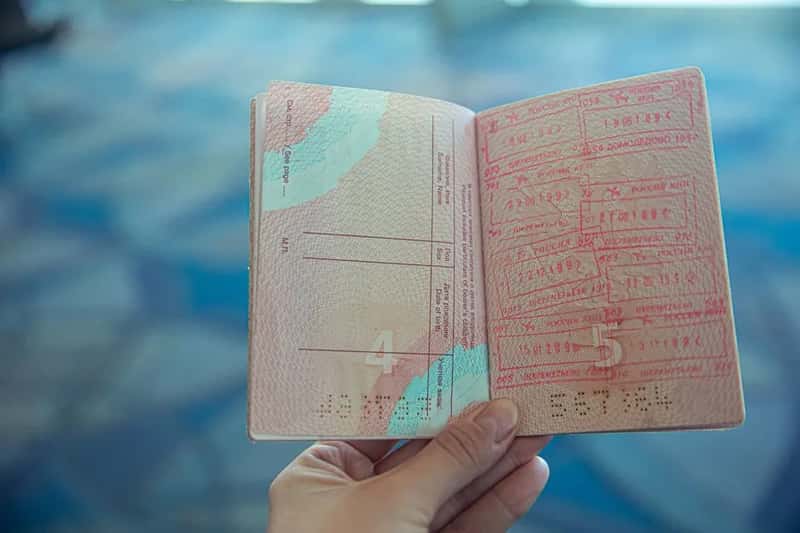
China’s Z visa system looks straightforward on paper but proves demanding in practice. The country sorts foreign workers into tiers, and for most applicants, the Category Z Visa is the standard work visa for most foreign employees, requiring a confirmed job offer from a licensed Chinese employer, a bachelor’s degree or higher, and at least two years of relevant professional experience. One recent guide summarized the reality bluntly, noting it is very difficult, since Category B requires a bachelor’s degree plus two years of experience as the standard qualification.
There is also no shortcut for people without a formal employer lined up in advance. Unlike countries that offer job seeker visas, China’s system is strictly employer based, meaning applicants cannot apply for a work visa as an individual freelancer or a tourist hoping to find work later. Recent policy changes have tightened things further, with enforcement of salary based thresholds for Category A set at six times the local average wage and Category B at four times, resumed in February 2026. Between the degree and experience requirements, the employer sponsorship rule, and the newly enforced salary bar, China remains one of the most bureaucratically demanding countries for a foreign worker to legally enter.
The contrast between these two groups says less about which countries are “better” and more about what each government is trying to protect or attract. Estonia, Canada, and New Zealand have built systems around solving labor shortages and courting global talent, which shows up in faster processing and clearer criteria. The United States, Switzerland, and China are each guarding something different, whether that’s a capped visa program shaped by decades old law, a small labor market protecting local wages, or a points based system designed to filter for very specific skills.
For anyone actually planning a move, the practical takeaway is straightforward. Research the specific visa category tied to your profession rather than the country’s general reputation, since even “easy” countries have harder categories and even “difficult” ones have faster lanes for the right qualifications.