
Before travelling to Chiloé, I heard wonderful things about its charm and mystical vibe. It’s an island archipelago off Chile’s southern coast, popular among both Chilean and foreign tourists. For my brother and me, it became one of the highlights of our trip to southern Chile.
Our route around Chiloé was straightforward: from Puerto Montt, we’d drive our rental car to Ancud, then to Castro, and back up to Puerto Montt. As soon as we crossed into Chiloé, the atmosphere shifted from the industrial port-city energy to something else entirely. Chiloé met us with gently rolling hills, misty horizons, and a rich history that thoroughly piqued our interest. In just a few short days, cramming as much as we could into our Chiloé trip, we embraced this quirky island’s charm and left wishing we could stay longer.
Ancud & Chiloé’s Western Coast
Upon our arrival in Ancud, which is about a 2.5-hour drive from Puerto Montt, we were starving and quickly found a local restaurant with an abundance of seafood dishes on the menu. We shared a restaurant-style curanto, a dish full of shellfish, pork, other meats, and potatoes, with broth and pebre on the side. We discovered that Chiloé is huge on potato production, which made sense given how many potatoes we’d eat during this trip.
Satisfied with our meal, we headed out to Fuerte Ahui, along the western coast. It was an overcast day, and the view of the Pacific Ocean stretching out before the fort was quite breathtaking. It was September, not quite springtime in Chile, and we had to bundle up with thick jackets to protect ourselves from the cold wind on the coast. Touring this historic fort, we learned about Chiloé’s military history; it was a strategic military site long before it became a travel destination.

The fort was full of criss-crossing, nearly hidden trails, some of which led down to the beach. My brother and I took the opportunity to admire the wide array of washed-up seashells and odd pieces of driftwood. From one lookout point, we even saw two crabs crawling on rocks in the shallow water, and we saw an otter dive into the ocean from some boulders on the shore. Besides getting lucky with wildlife sightings, we were amazed at the variety of plant life: thick grass, leafy bushes, and wildflowers grew right along the sandy shoreline. The mix of vegetation was unlike anything we’d seen before.

We completely lost track of time exploring the fort, its cannons and dugouts, and the surrounding beach. As the sun was setting, we soaked in the last moments in this curious place, then headed back to the city, about a 30-40-minute drive away. Our dinner was pichanga, a massive shared plate of fries topped with meat, olives, pickles, cheese, tomato, and avocado.
Back at our accommodation, we flipped through a small booklet on Chilote language and culture. It explained how the sea has shaped Chiloé’s traditions, from fishing and wooden architecture to Catholic and Indigenous influences and local myths. And tomorrow’s journey to Castro would show us more about these aspects of Chiloé.
Castro: Palafitos & Waterfront
Ancud had a rugged, exposed feel, but as we drove the 1.5 hours to Castro, the atmosphere changed. Castro, the capital of Chiloé, felt more vibrant, more grand, and more alive. Its streets were busier and more colorful; we saw many more tourists and more advertised tour activities. After quickly checking into our accommodation, we headed straight to the first item on our agenda: kayaking through the famous palafitos.

These palafitos are one of the most iconic parts of Chiloé. They add such character to the city of Castro, and seeing them rise out of the water along the coastline felt like something out of a dream. And seeing them from land was one thing; kayaking underneath and alongside them was quite another. We rented our kayaks from a kind local with a boutique business just off the main street. Under his and his loyal dog’s supervision, we tightened our life vests, walked our kayaks to the water’s edge on a concrete boat ramp, and hobbled into our kayaks.
Drifting past large boats and smaller fishing vessels in the bay, the pace of hustling through traffic and walking through touristy streets slowed down, and I felt like I finally had a moment to relax. The bay waters were calm, and we had absolutely no rush to float around and enjoy the views. It was an intimate way to experience the palafitos of Castro, one that I’d recommend to visitors. We paddled across the bay alongside the row of stilted houses, then pulled ashore on the opposite side of the bay for a brief stop before the tide started coming in and forced us back onto our kayaks.
After returning our kayaks to the friendly tour business owner, we strolled around the city and popped inside a couple of artisanal markets. It was fascinating to see the spread of handcrafted items, woolen clothing, local preserves, and wooden trinkets. In the afternoon, we had a boat tour planned, which was another beautiful highlight of our time in Castro. Captained by a friendly Chilote, we toured around as the guide pointed out some of the small islands and peninsulas around the bay.
Churches, Markets, & Our Rustic Stay in Castro
Our second day exploring Castro was a day of land tourism only. We had time to explore more of the culture in this mystical city. Castro is well-known for its old wooden churches, so we picked a few to see and started with the most iconic one: Iglesia de San Francisco de Castro. This UNESCO-listed church is nothing short of spectacularly intriguing. The wooden facade is painted yellow and purple, faded from sun exposure. Inside the church, the interior was strikingly different from that of any other church I’d been in, thanks to its unique all-wood design.

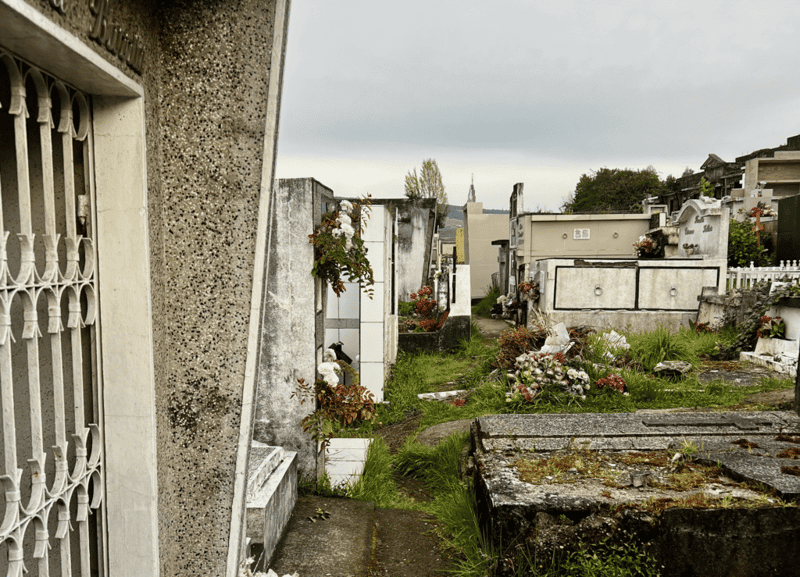
Nearby, we visited an old graveyard. It was at once elegant and weathered, with graves dating back to the 1800s. Some parts were completely overgrown with tall green grass and unruly wildflowers; other sections had clearly been tended to recently. It was an offbeat way to experience Chiloé’s history, a solemn way to finish off our day of colorful tourist activities. Cementario Castro was also perched on a gently sloping hill, offering sweeping views of the bay and the residential areas below.
Chiloé: A Unique Island Destination Within Chile
Overall, Chiloé wasn’t a loud place or an extravagant trip by any means. Rather, it was a chance to slow down and explore a unique cultural world within Chile that many foreigners in this expansive country often bypass. From the crave-worthy seafood to the rolling hills overcast by gray clouds, to the colorful vibe of Castro and the chill coast-to-coast drives, I can safely say that our trip to Chiloé was well worth it.