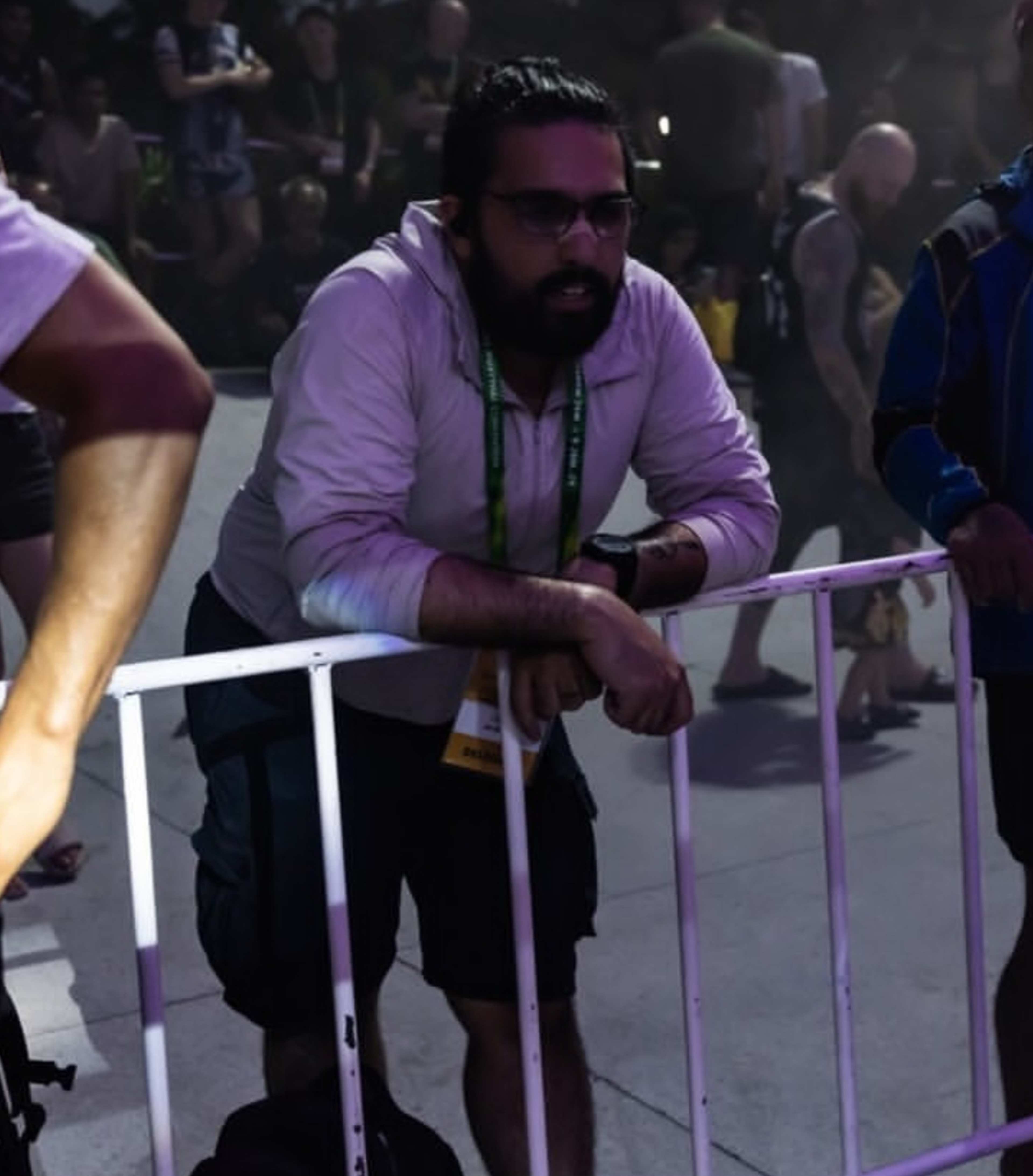

I didn’t move to Bangkok to have my own little Eat, Pray, Love experience.
What I mean is, I didn’t come to the Land of Smiles to “find myself.” After serving seven years in the U.S. Military, I was already pretty well acquainted with who I was. Rather, I came to Bangkok to return to a space that felt natural. More specifically, I came for Muay Thai.
I’d been training boxing and Muay Thai throughout my military career, and it was always a grounding force for me. After being medically separated earlier than expected, I wanted to reconnect with myself—and no place felt more comfortable than inside a ring. Despite that familiarity, Bangkok still had a few important lessons to teach me.
Here are three of them.
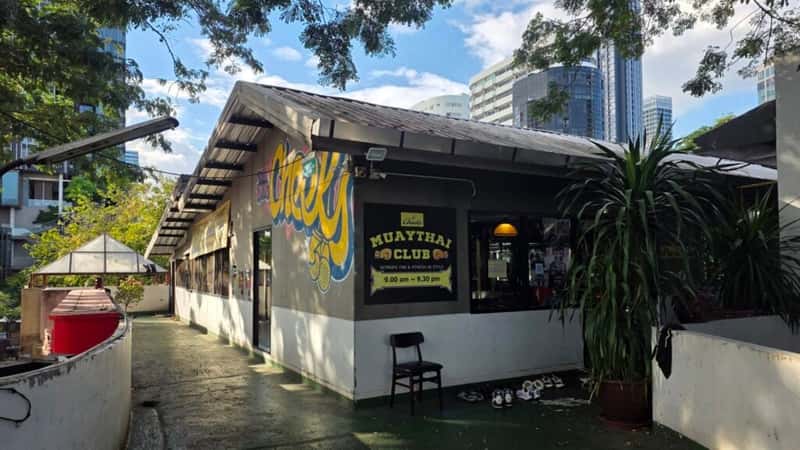
Lesson 1: Laughter Kills Ego. Use It Relentlessly
Lately, I’ve been training at a gym in Ekkamai called Cheeks. Because of a head injury, I can’t fight anymore, so I rely almost entirely on padwork. That doesn’t mean it’s easy. The coaches are sharp and attentive, and they’re excellent at finding weaknesses and exploiting them.
In my case, it’s slow kicks. Nearly every session includes a leg grab that turns into a clean sweep, dumping me flat on my ass. It happens without fail, though I’m starting to see the escape now.
What matters is the response. I never get angry. Instead, both my kru and I laugh. Padwork here is treated like play, not labor. When I get swept, it’s funny, and that laughter kills ego instantly.
Failure isn’t something to be ashamed of in this context, it’s a teacher. But to learn from it, you have to let go of who you think you are. Laughter does that better than intensity ever could.

Lesson 2: Muay Thai Is Communal, Not Solitary
This one surprised me less, but it still deserves to be said.
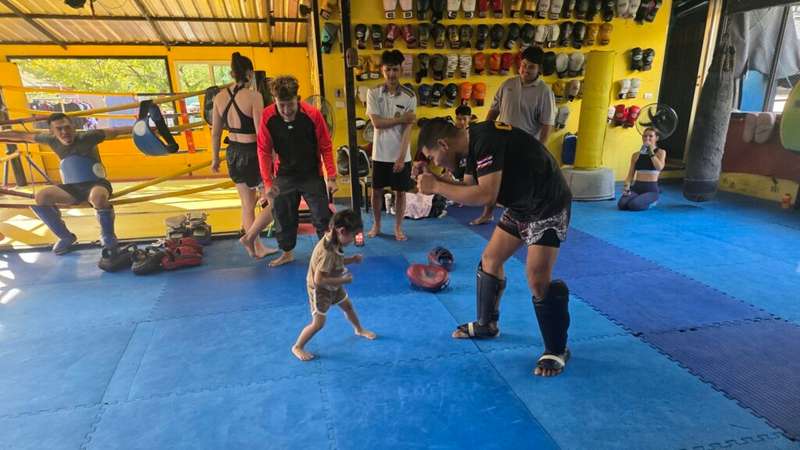
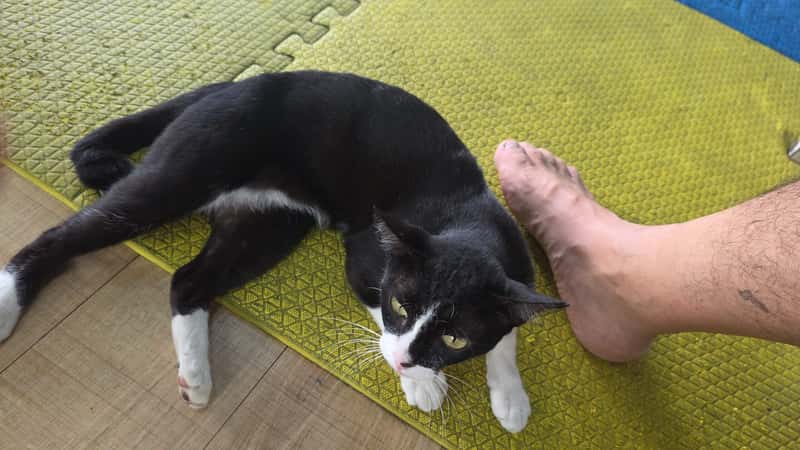
Good gyms aren’t sacred or isolated spaces—they’re lived in. Stray cats wander through without ceremony. Small children imitate punches and kicks beside the ring, copying their parents with mixed success. Spouses pass through to train, drop off food, or simply watch.
It feels less like a gym and more like a neighborhood. People recognize you, give you nicknames, and notice when you’re gone. That sense of being seen does more to ensure consistency than motivation ever could. Showing up feels like visiting friends, not just getting a workout.
At times, it feels like a home away from home—and that matters more than most people realize.
Lesson 3: Sparring Is a Conversation, Not a Contest
I’m thirty-four years old now, and I feel it in my hips and back. Still, I love light, technical sparring after class. It’s one of the best ways I know to meet people and learn who they are—faster than talking ever could.
Recently, I sparred with a former soldier from another country who’d been training about six months. He was tough, clearly capable of taking a hit, but his technique was raw. Poor positioning, overextension, lots of effort. I could have overwhelmed him with cleaner technique, but that wasn’t the point.
A couple weeks earlier, I sparred with a young Frenchman who had barely trained at all. He’d played rugby for years, and it showed. Excellent balance, spatial awareness, and control. No formal combat background, yet he made me work.
The contrast fascinated me. Sparring reveals how someone relates to force, restraint, and control. It’s a conversation, not a contest—and if you listen, it tells you everything.
Cooling Down
Boot camp varies by branch, but one constant remains: strip away an old identity and replace it with a new one. While the military prepares you for separation on paper, it’s up to the individual to reconnect with who they were before.
For me, Muay Thai has been one of the best tools for that—quietly reinforcing humility, patience, and openness. If you ever find yourself in the neighborhood, I recommend you see Cheeks for yourself and maybe take a class or two.
You might walk away with no better souvenir from Bangkok.