Global obesity numbers tend to dominate headlines, and for good reason. Worldwide adult obesity has more than doubled since 1990, and the trend keeps climbing in nearly every region on the planet. But tucked into that grim trajectory are a handful of outliers, places where obesity barely registers as a public health concern, sitting right alongside nations where it has become an all consuming crisis.
The gap between these extremes says a lot about diet, geography, income, and the strange ways modern food systems reshape human bodies. Some of the lowest rates come with their own complications, and some of the highest reveal just how quickly a population can shift from lean to overweight in a single generation.
1. Vietnam

Vietnam currently holds the title for the lowest adult obesity rate on Earth. CEOWORLD magazine’s 2026 data set shows a small cluster of countries still report adult obesity rates below 5%, with Vietnam at just 1.72%, the lowest globally. That figure is almost hard to imagine for anyone living in a country where obesity rates sit in the double digits.
The explanation isn’t mysterious. The countries with the lowest obesity rates fall into a common pattern of low average caloric intake, high levels of physical labor, and traditional diets centered on rice, vegetables, fish, and modest use of animal fats. Still, the picture is shifting fast. Vietnam still posts one of the lowest obesity rates in the world, but recent national data show that nearly 20% of the population is now overweight or obese, with prevalence rising faster than in many neighboring markets. Urban migration and the spread of Western fast food chains appear to be behind that acceleration.
2. Timor-Leste

Just north of Australia, the small nation of Timor-Leste posts the second lowest obesity rate in the world. Timor-Leste follows at 2.45%, alongside Ethiopia, Rwanda, Cambodia, Madagascar, Eritrea, Bangladesh, DR Congo, and Niger, each clustered between roughly 3.7% and 4.7%. It’s a striking number for a country still rebuilding much of its infrastructure after decades of conflict.
But a low obesity rate here isn’t necessarily a health triumph. Timor-Leste sits in a pattern where it records low obesity prevalence but faces fragile food systems, infrastructure constraints, and healthcare capacity that struggle to manage dual burdens of undernutrition and rising non communicable diseases. In other words, the absence of obesity is tied closely to scarcity rather than balanced nutrition, which is a very different story than the one often told about “healthy” countries.
3. Ethiopia
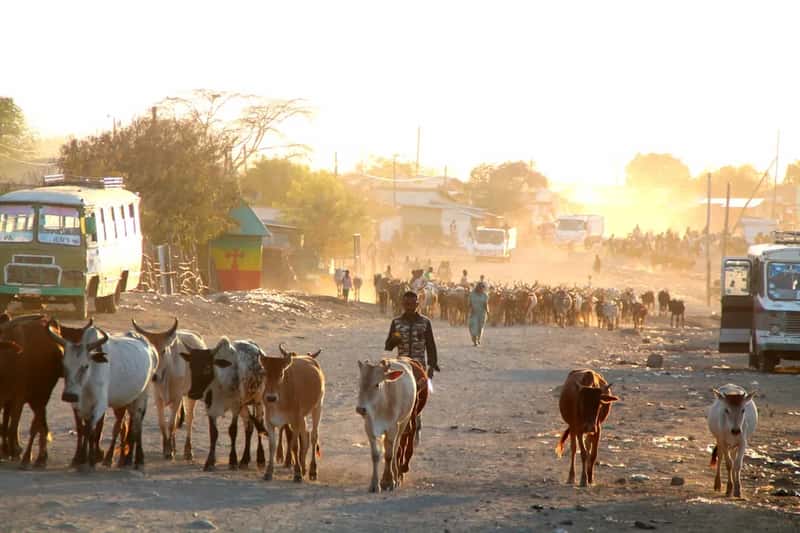
Ethiopia rounds out the group of nations with adult obesity rates barely above the margin of error. Ethiopia sits at 3.14%, placing it among the handful of countries worldwide with rates below five percent. With a population heavily reliant on subsistence agriculture, the physical demands of daily life leave little room for the kind of caloric surplus that drives weight gain elsewhere.
Again, context matters here. Low obesity rates in countries like Ethiopia are not necessarily a sign of better health, since many also struggle with undernutrition, stunting, and weak healthcare capacity. Health experts increasingly describe this as a double burden, where a country can simultaneously report almost no obesity while still facing serious nutritional deficits among children and adults alike. As urban centers grow and processed food becomes more accessible, that balance is expected to tilt, slowly but steadily, in the coming years.
4. American Samoa and the Pacific Islands

On the opposite end of the spectrum, no region on the planet struggles with obesity the way the Pacific Islands do. American Samoa holds the highest obesity rate globally at 68.50% as of 2025 data, followed by Nauru at 61.00%, with Pacific Island nations dominating the top 10 largely due to genetic predisposition, dietary westernization, and limited access to fresh produce. These aren’t marginal statistics. They describe a majority of the adult population living with obesity.
The roots of the crisis trace back decades. The high obesity rates in Pacific Island countries are linked to the importation of processed, high calorie foods, sedentary lifestyles, and a cultural shift away from traditional diets and physical labour. Remote geography compounds the problem, since importing fresh produce is often far more expensive than shipping in shelf stable processed goods, leaving many households with few affordable alternatives.
5. The United States

The United States remains the most obese large developed economy in the world, and the trend line is not encouraging. The United States has an obesity rate of 42.4% as of 2025, showing a 1.8% increase from 2024, making it the most obese developed nation, with rates continuing to rise despite public health interventions. That places roughly two in five American adults in the obese category, a figure that would have seemed almost unthinkable a few decades ago.
The geographic spread within the country is uneven but troubling. The CDC reports that 23 states now have adult obesity rates exceeding 35%, with Southern states experiencing particularly severe impacts. Ultra-processed food availability, car dependent infrastructure, and food marketing all get cited repeatedly as contributing factors, though none of them fully explain why the United States has outpaced most peer nations despite similar wealth and food abundance.
Set side by side, these five places tell a story less about willpower or culture and more about food systems, income, geography, and infrastructure. Vietnam, Timor-Leste, and Ethiopia show what near-zero obesity looks like when caloric scarcity and physical labor still shape daily life, though each is edging toward change as urbanization spreads. American Samoa, the wider Pacific Islands, and the United States show the other extreme, where processed food abundance and sedentary routines have pushed obesity rates past levels once considered a crisis. The distance between these extremes may be narrowing over time, but for now it remains one of the starkest divides in global public health.