
Nobody announced the end. There was no farewell to the milkman, no eulogy for the rotary phone, no memorial service for the carpet rake. The 1970s were built on dozens of small, deeply satisfying everyday rituals – the thwack of a TV dial, the smell of a freshly licked S&H Green Stamp, the tinkle of an ice cream truck two streets over – and they made ordinary Tuesday afternoons feel genuinely human. Tactile. Communal. Rooted.
Then they slipped away, one by one, replaced or quietly retired before anyone thought to say goodbye. Some of what’s on this list will make you smile. A few will sting. And at least one will make you realize something was lost that nobody has figured out how to get back. Counting down from 33 to the one that hits hardest.
#33 – The Encyclopedia Salesman at the Front Door
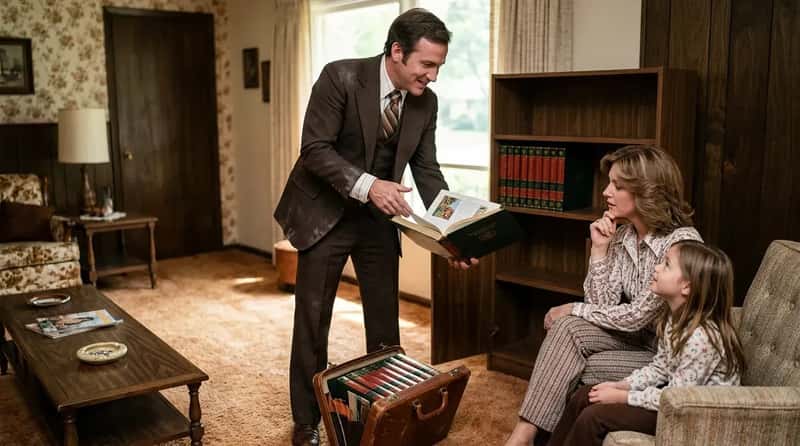
A knock mid-afternoon, a man in a crisp suit holding gleaming bound volumes, and a pitch so simple it worked on nearly everyone: give your children the world’s knowledge, right there on the living room shelf. Families invited him in, signed payment plans on the spot, and arranged those encyclopedias on a dedicated shelf like trophies. That pristine row of spines said something about who you were – the kind of household that took education seriously enough to pay for it in installments.
By 1976, the FTC had begun cracking down on deceptive sales tactics – some salesmen posed as survey takers or contest agents – and the hard sell eventually tarnished the tradition. But for a decade, that knock at the door carried something genuinely hopeful: the idea that knowledge was worth buying in person, from a stranger who believed in it enough to haul it up your front steps.
#32 – Fondue Night as a Social Event
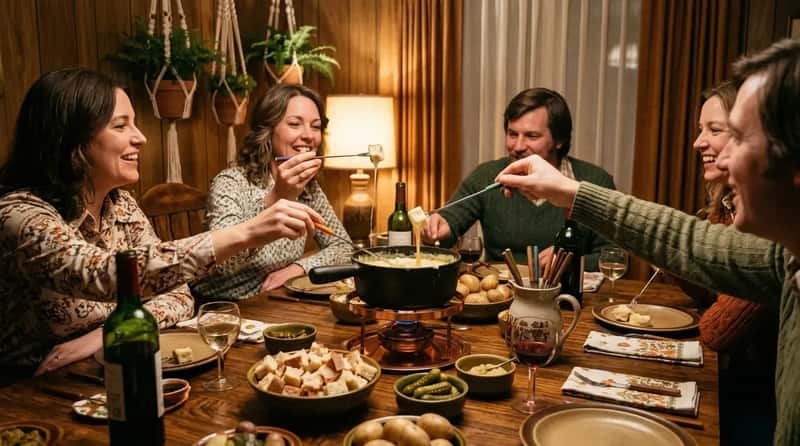
The fondue set wasn’t just a kitchen appliance – it was a social statement. Bubbling pots of melted cheese or hot oil sat at the center of dinner tables while adults laughed, refilled wine glasses, and speared bread cubes with long forks. At its peak, a fondue set was considered a standard wedding gift and a signal that you were the kind of couple who entertained properly. You couldn’t rush fondue, and that was entirely the point.
The ritual demanded that everyone sit together for a long time – enforced togetherness built around an open flame. The combination of shared dipping, easy conversation, and nowhere to be created something that modern dinner parties, optimized for efficiency and Instagram, rarely replicate. Fondue sets quietly migrated to garage sales sometime in the early 1980s. Dinner parties were never quite the same.
#31 – S&H Green Stamps and the Redemption Catalog
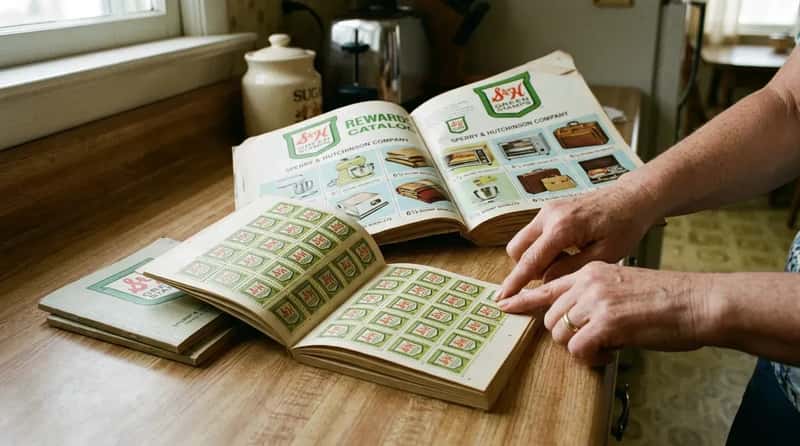
Every time your mother paid for groceries, gas, or dry cleaning, she got stamps – little green ones. She’d lick them and press them into booklets, page by neat page, saving up for months toward something in a catalog. At the height of their popularity, nearly 80 percent of American households collected Green Stamps. That’s not a niche hobby. That’s the entire country licking stamps together.
S&H was printing three times as many stamps as the U.S. Postal Service at their peak, and the rewards catalog ranked among the leading publications in the country. The recessions of the 1970s eroded the value of the rewards, and the whole system slowly collapsed under its own diminishing returns. But the joy was never really about the toaster at the end. It was about the slow, satisfying accumulation of something – the pleasure of a small ritual repeated until it added up to something real.
#30 – Full-Service Gas Stations
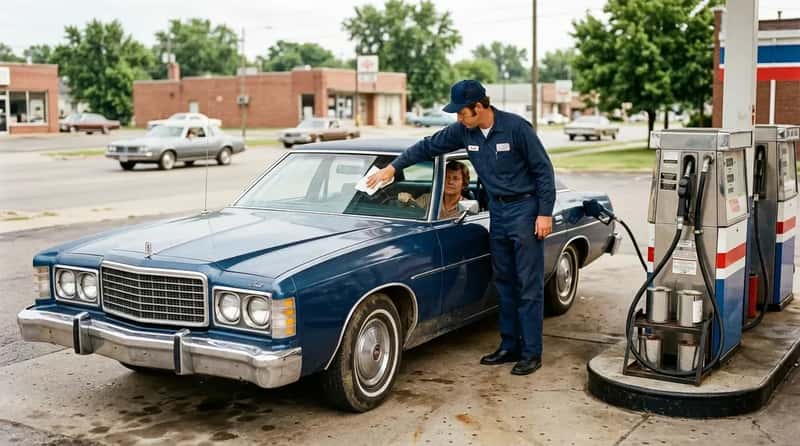
You pulled in, cut the engine, and a uniformed attendant materialized. He pumped the gas, cleaned your windshield, checked the oil, and sometimes checked the tire pressure – all without you stepping out of the car. Full-service stations were the American default well into the 1970s, and self-service pumps were actually illegal in some states. It felt less like a transaction and more like being looked after.
You got your windshield cleaned, oil checked, and gas pumped without asking – all for free, every time – and you often got trading stamps on top of it. The oil crisis of 1973 accelerated the shift toward self-service as stations scrambled to cut costs. By 1980, most of America was pumping its own gas, standing in wind and rain, and calling it progress. New Jersey and Oregon held out – Oregon only went self-service in 2023 – which tells you something about how good the old way actually was.
#29 – The Milkman and His Morning Delivery
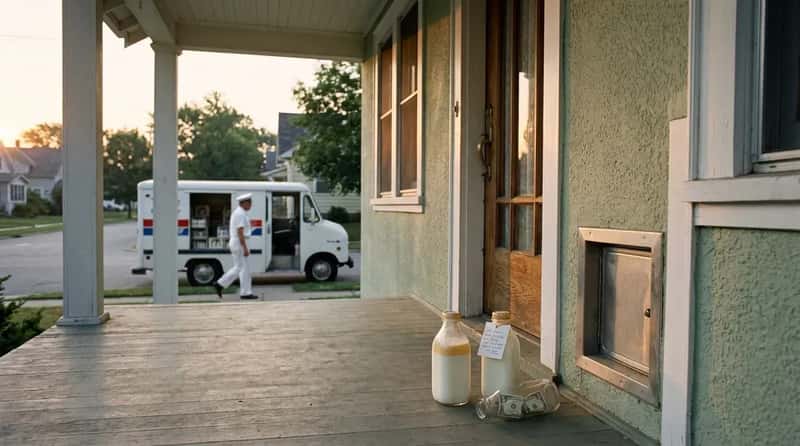
Cold glass bottles appeared on the porch before the household woke up, left by a man in white who drove his truck standing up and made change from money left inside the empties. Kids loved discovering the cream risen to the top of non-homogenized milk. Mothers appreciated never running out. It was commerce built entirely on neighborly faith – no app, no confirmation text, no delivery window.
As supermarkets expanded their hours and refrigeration improved, home delivery quietly faded. Some older homes still have the small insulated milk door cut into the exterior wall – a ghost opening that leads nowhere now. That little door is the perfect monument to the whole arrangement: a practical feature that outlasted its purpose, sealed shut, but still there if you know where to look.
#28 – The Console Television as Living Room Furniture
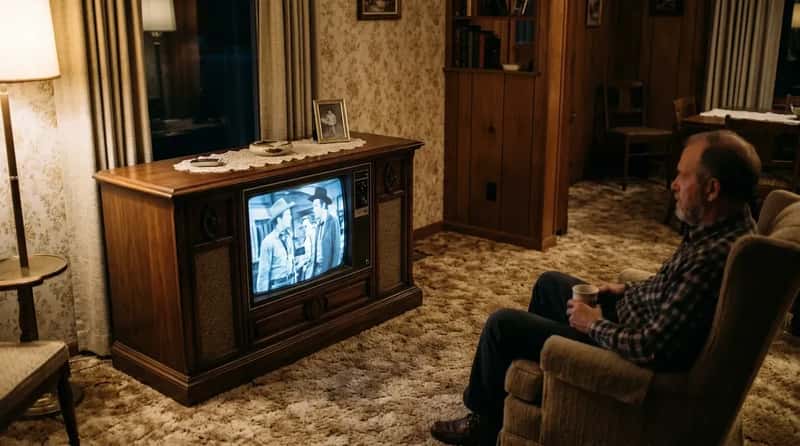
Console televisions were massive wooden cabinets designed to house bulky cathode-ray tubes and powerful internal speakers. They were styled as living room furniture rather than electronics – as substantial as a sideboard, as permanent as a bookcase. Nobody apologized for the television in the corner because it looked like it belonged. It showed Gunsmoke, but it looked like it could just as easily hold the good china.
Early 1970s homes still relied on black-and-white screens for many families, as color sets remained expensive. Channels were changed using heavy manual dials, and most families owned exactly one. Evenings revolved around scheduled programming. When lightweight plastic televisions became affordable in the 1980s, console sets vanished almost entirely. Something irreplaceable went with them: the idea that a television was an heirloom – something worth repairing rather than replacing.
#27 – Shag Carpet and the Weekly Carpet Rake
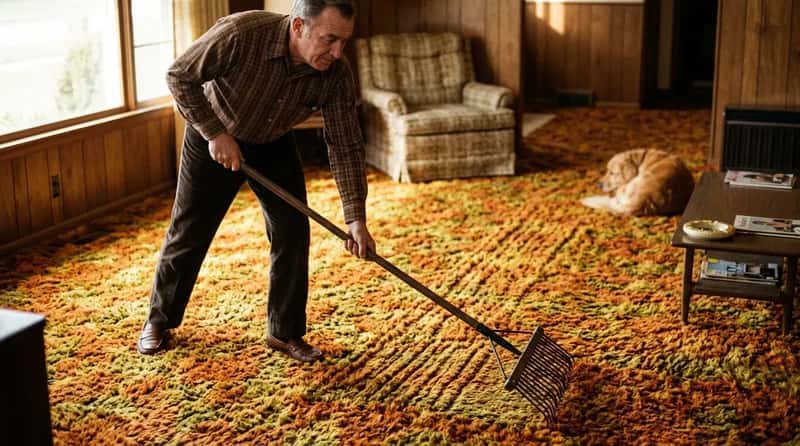
Thick, deep-pile rugs in burnt orange, harvest gold, and avocado green covered nearly every room in the American middle-class home, and they required a dedicated tool: the carpet rake. Not a novelty item – a standard home accessory, sold at Kmart alongside the lawn mower oil and the light bulbs. Saturday mornings meant pulling it across the entire living room in long, meditative strokes. The result was something between a freshly mowed lawn and a brushed velvet couch.
Carpet felt warm underfoot, looked soft from across the room, and dampened sound in a way bare floors never could. Children sat on it, families sprawled across it on Sunday mornings, and dogs claimed permanent spots that everyone acknowledged and worked around. The hardwood floor revival of the 1990s tore out millions of square feet of living room carpet, often revealing perfectly good oak beneath. Today, wall-to-wall carpet in a living room reads as dated. The rooms it made feel cozy don’t have an obvious replacement.
#26 – TV Test Patterns at Sign-Off Time
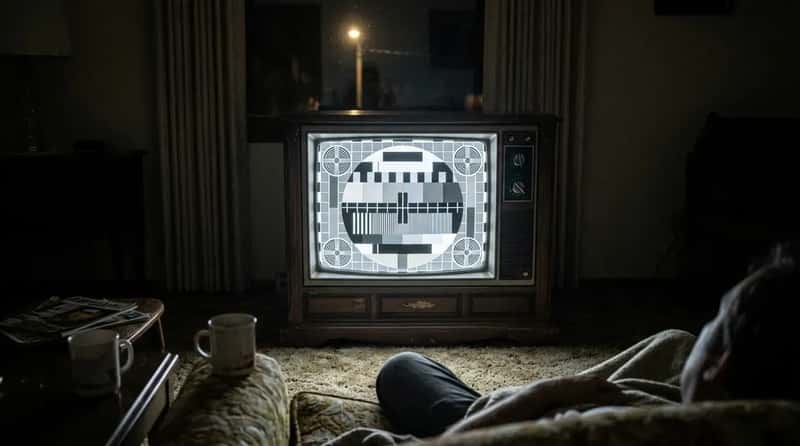
Television actually stopped at night. Stations signed off – sometimes with the national anthem, sometimes with a brief spoken farewell – and then a geometric test pattern filled the screen with a high-pitched tone. If you fell asleep on the couch, you woke up to that eerie, frozen image, which meant you had definitively missed your bedtime and the whole world had moved on without you. Kids today cannot imagine television just ending.
There was something genuinely reassuring about a world that went quiet at 1 a.m. The test pattern was a daily reminder that content was finite, that even broadcasting needed sleep. That structure gave the day a shape – a real ending rather than an endless scroll into the next episode, the next clip, the next autoplay. The sign-off wasn’t just a technical limitation. It was, without anyone planning it that way, a kind of permission to stop.
#25 – Wood Paneling in Every Room of the House
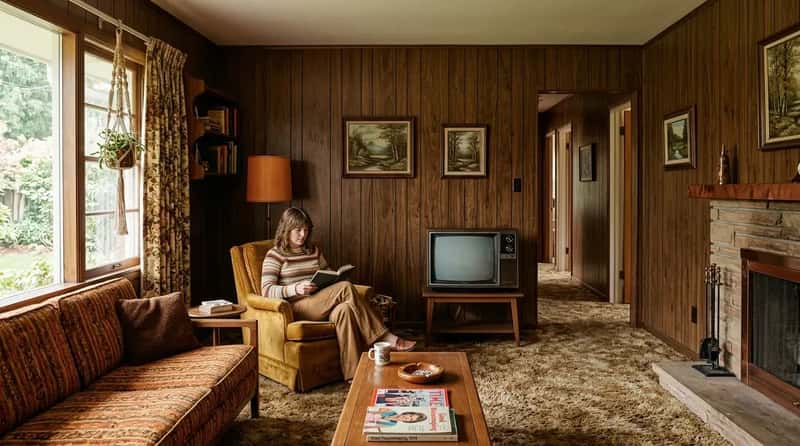
Walk into any 1970s ranch house and the walls were brown. Not painted brown – paneled in pressed wood printed to look like walnut or mahogany, covering every surface from the living room to the basement to the hallway nobody could explain. It made every room feel like the interior of a ship’s cabin, which seemed to be the point. Pre-finished wood paneling hit its cultural peak between 1968 and 1979, marketed as a low-maintenance alternative to plaster and paint – and for a decade, the American public enthusiastically agreed.
The warmth it created was real, even if the wood grain was fake. Those dark, close rooms were cozy in a way that white-painted drywall and open-concept floor plans simply aren’t. You felt held by the house. The 1990s renovation wave ripped most of it out in favor of neutral tones and more light, and objectively the rooms got brighter. But something about the old darkness – the sense of enclosure, of being inside something solid – is genuinely harder to find now.
#24 – The Party Line Telephone
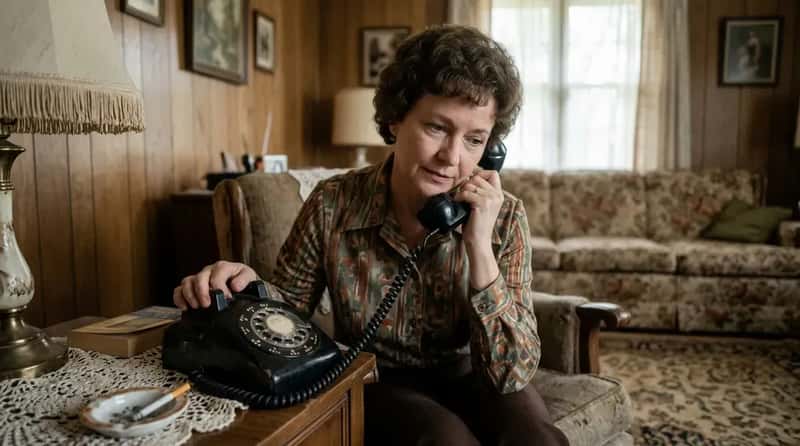
Sharing a telephone line with two or three neighboring families was called a party line. If you picked up and people were already talking, you were supposed to put the receiver back down – at least, that’s what you were supposed to do. Many people learned a great deal about the neighborhood by not quite following that instruction. It was, in its way, the original social network: intimate, unfiltered, and completely unmoderated.
Party lines were still common in rural America well into the 1970s. The idea that a phone call was a semi-public event shaped how carefully – and how briefly – people actually talked. There was a social awareness baked into every conversation that private lines and private screens have since erased entirely. You chose your words knowing, at least in the back of your mind, that someone might be listening from three houses down.
#23 – The Rotary Phone Dial’s Satisfying Spin
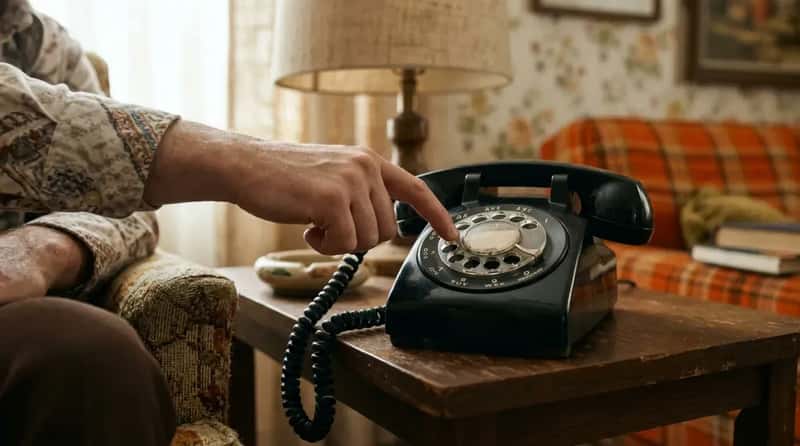
You didn’t press a number – you hooked your finger in a hole and pulled the dial around to a metal stop, then let it spin back with a mechanical whirr. Every digit had weight and sound and resistance. Dialing a long phone number was a small physical commitment, which meant you thought twice before calling anyone unnecessarily. Accidental pocket-dialing was a literal impossibility. Deliberately calling someone was a minor act of intention.
Wrong numbers happened often. Long-distance calls added serious costs, and parents enforced short conversations to save money. There’s a reason people still remember their childhood phone numbers decades later – the muscle memory of dialing them by hand burned those seven digits permanently into the body. The number wasn’t stored in a contact list. It lived in your fingers.
#22 – Drive-In Movie Theaters
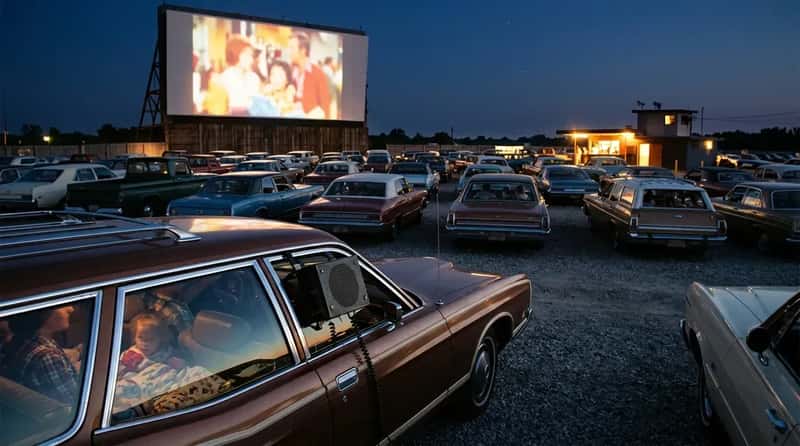
Families brought kids in pajamas for late-night screenings. Audio played through tinny window speakers that you’d roll the glass up around, trying to get the sound just right while the screen glowed against the open night sky. The parking lot smelled like popcorn and cut grass and exhaust fumes in the best possible combination. The whole family in one car, blankets in the back seat, a double feature that nobody stayed fully awake for – it was a specific kind of perfect.
At their peak in 1958, there were more than 4,000 drive-in theaters in the United States. By the late 1970s, the real estate beneath them had become too valuable to keep showing movies. Land developers moved in, and the projector bulbs went dark one by one. A few hundred survive today as novelty destinations. But the original experience – unhurried, low-tech, the whole family in one car going nowhere for two hours – is genuinely gone in a way that a revival screening can’t fully recover.
#21 – The TV Guide as Weekly Entertainment Bible
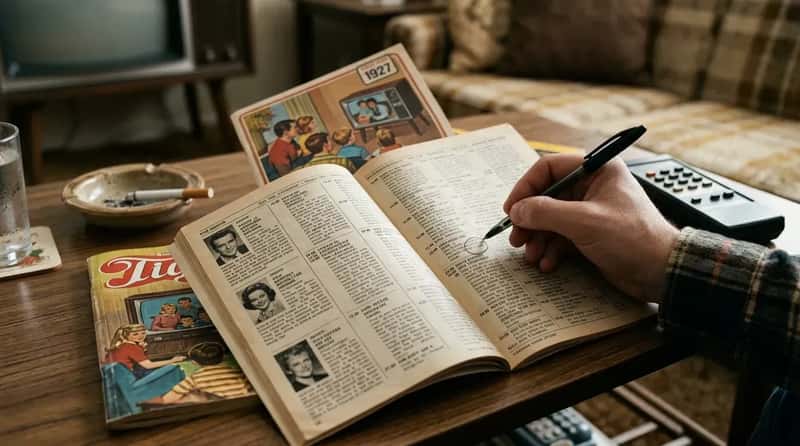
That digest-sized magazine was the command center of American entertainment. You’d circle shows with a pen and plan your entire week around them. Missing your show meant waiting months for summer reruns. The fall preview issue arrived in September like a gift – thick with grids and photos and the thrilling sense that a new television season was a cultural event worth anticipating.
At its peak, TV Guide was the best-selling magazine in the United States, outselling Time and Newsweek combined. It was the pre-internet algorithm, telling 100 million Americans what to watch simultaneously. Families negotiated viewing schedules like treaty talks. That little magazine created shared cultural moments that streaming has permanently dismantled – not just the shared viewing, but the shared anticipation that made watching feel like an event rather than a default.
#20 – Avocado Green and Harvest Gold Appliances
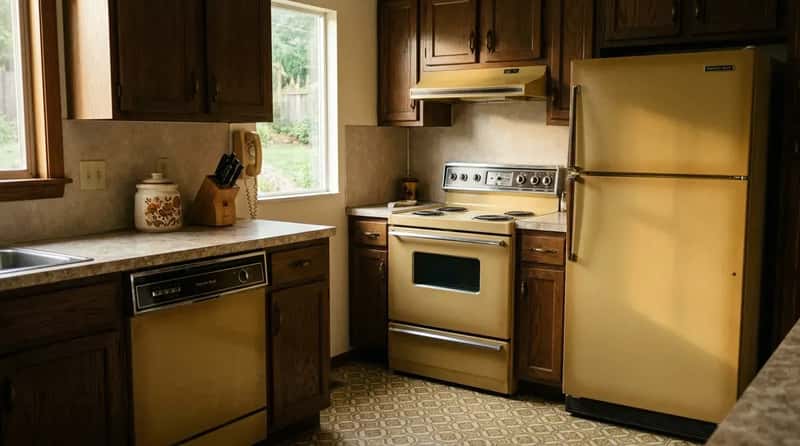
Open any middle-class kitchen in 1974 and you’d likely find it: a refrigerator, stove, and dishwasher all in the same shade of avocado green or harvest gold. These weren’t individual choices – they were coordinated sets, and the color commitment was total. The colors felt warm and earthy rather than clinical. They said something about who you were: someone who had a complete kitchen, someone who had planned ahead, someone whose house had a palette.
When white and then stainless steel took over in the 1980s and ’90s, those kitchens were gutted and repainted as if the old colors were embarrassing. But plenty of people quietly miss the warmth of those rooms – the way a harvest gold stove made even a weeknight dinner feel like it was happening somewhere intentional. Today, original avocado appliances in working condition are genuine collector’s items. What felt dated long enough eventually circles back to charming.
#19 – Sunday Dinner as a Non-Negotiable Weekly Ritual
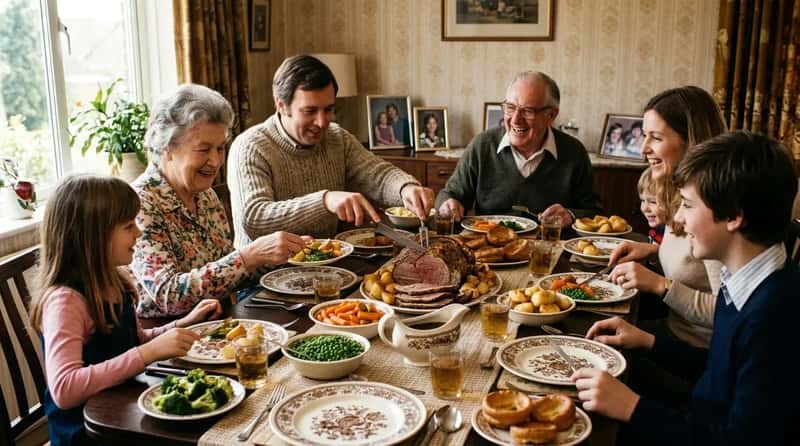
Sunday dinner wasn’t a suggestion – it was a standing appointment. Extended family showed up. The good dishes came out. Something roasted in the oven for hours, filling every room with a smell that worked its way under doors and into curtains and stayed there until Monday. The meal itself could last two or three hours, and nobody was looking at a phone because there was no phone to look at.
It was one of the few moments in the week where the whole family – grandparents included – sat in the same room doing the same thing with nowhere else to be. The Sunday roast didn’t disappear because people stopped caring about family. It disappeared because the week stopped having a shape, and without that shape, the rituals that fit inside it had nowhere to anchor. The meal was never really about the food. It was about the structure the food created around it.
#18 – Handwritten Letters and Waiting for a Reply
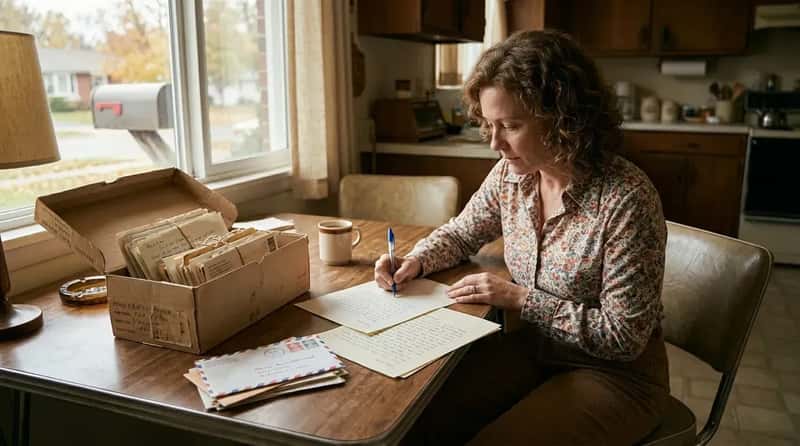
Staying in touch with a friend who had moved away meant sitting down with paper and a pen and actually composing your thoughts into full sentences. The letter took days to arrive. The reply took days to come back. The whole exchange stretched across weeks – which meant every word carried more weight than a text message ever could. People kept those letters in shoeboxes for decades. Nobody keeps a shoebox of old texts.
There was a specific anxiety – half dread, half excitement – in checking the mailbox every day when you were waiting for a reply. That anticipation, that suspended emotion between sending and receiving, is something the instant gratification of digital communication permanently erased. The wait wasn’t a flaw in the system. It was where the feeling lived.
#17 – The Transistor Radio in Every Back Pocket

Before the Walkman, before earbuds, before streaming, there was the transistor radio – a small, tinny-sounding rectangle that brought AM radio to little league games and backyards and the back seats of station wagons. The sound quality was modest at best, but the freedom felt enormous. You were carrying music. In your pocket. In 1973, that was still something close to a miracle.
The ritual of scanning the dial – static, static, a voice, more static, a song – was itself a kind of entertainment. You were hunting for something good, and when you found it, it felt earned. The DJ’s voice connecting millions of anonymous listeners across the airwaves created a sense of shared experience that algorithmic playlists, for all their precision, can’t replicate. The transistor radio didn’t just play music. It made you feel part of something happening right now, out there, in the wider world.
#16 – Tupperware Parties as Neighborhood Social Events
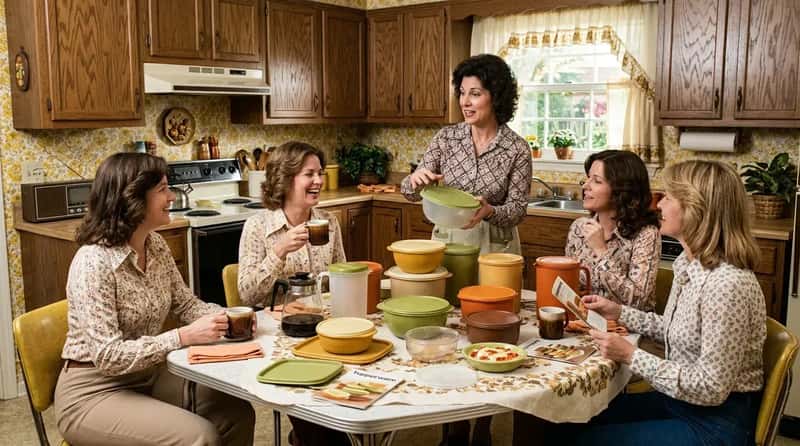
A neighbor hosted, you brought a dish to pass, and a Tupperware representative laid pastel containers on the kitchen table and demonstrated the famous “burp” seal. The containers were genuinely revolutionary – airtight, durable, backed by a lifetime guarantee, and designed to outlast the administration of several presidents. But the real product being sold wasn’t the food storage. It was a few hours of adult socializing in someone’s kitchen, with coffee and genuine conversation.
Unlike disposable modern plastic containers, Tupperware was designed to last decades without warping or losing its seal. Some pieces from the 1970s are still in use today. But the party format – the built-in excuse to gather, to sit down, to actually talk to the women on your street – that didn’t survive the shift to online ordering. You can still buy Tupperware. You just have to do it alone.
#15 – The Sears Catalog as the Family Wish Book
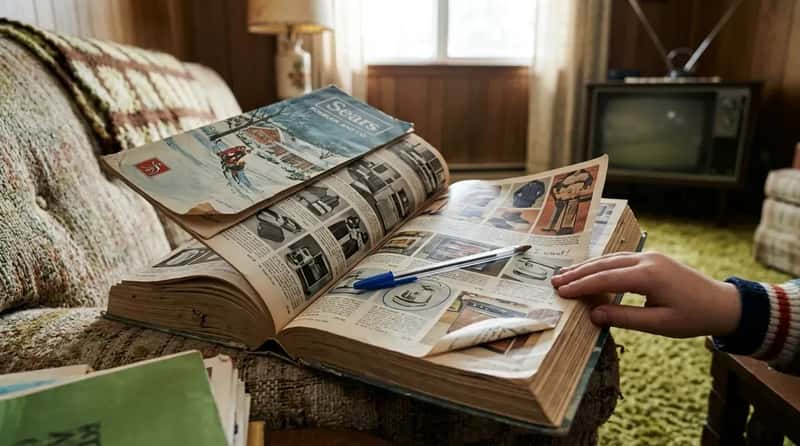
Twice a year – spring/summer and fall/winter – the Sears catalog arrived in the mailbox like an event. It was enormous, dense with photographs of everything from power tools to prom dresses, and children would dog-ear pages for weeks before Christmas. At its peak in the 1970s, it was the largest publication printed in North America, and nearly every American household had one. It was Amazon before there was an internet to put it on – but heavier, and better for falling asleep on the couch.
The physical act of flipping pages, circling items with a pen, and presenting your carefully argued Christmas list to a parent was a whole season’s ritual compressed into a single catalog. For families in small towns and rural areas, it was also access – to products their local stores didn’t carry, at prices they could actually afford. When Sears discontinued the catalog in 1993, something more than a publication ended. The universal shared fantasy of the wish book quietly closed its covers for the last time.
#14 – Smoking Indoors Without a Second Thought

In the 1970s, cigarette smoke was simply part of the atmosphere of indoor life. Restaurants, offices, airplanes, living rooms, waiting rooms – everywhere had an ashtray, and most of them were in use. The amber light of a living room through a thin haze, the decorative ashtrays on every end table, the specific ritual of lighting up after dinner: these details are so thoroughly erased that younger generations find them almost fictional when they appear in old photographs.
This isn’t nostalgia for smoking itself – the health consequences were real and devastating. But for a generation, the smell of a particular brand of cigarette was inseparable from the memory of a grandparent or a favorite aunt. The omnipresence of smoking shaped the sensory world of 1970s life in ways that are now completely gone – not gradually phased out, but scrubbed so clean that the rooms themselves look different in the absence of it.
#13 – The Library Card Catalog’s Wooden Drawers

To find a book, you went to the card catalog – a large piece of wooden furniture filled with hundreds of small drawers, each one stuffed with index cards typed on actual typewriters. You pulled a drawer, flipped through cards with your fingers, and wrote the call number on a slip of paper. The search required you to think in categories before you could find anything, which meant the looking itself was a form of learning.
The smell of those old index cards – slightly musty, slightly woody, specific to libraries and nowhere else – was part of the experience in a way that a search bar simply isn’t. Most libraries replaced their catalogs with computer terminals in the late 1980s and early ’90s, and the big wooden cabinets were sold off or destroyed. Libraries today are better resourced and easier to navigate. But they lost a certain physical intimacy when those drawers closed for the last time – the sense that finding something required you to touch the building.
#12 – The Ice Cream Truck’s Neighborhood Route
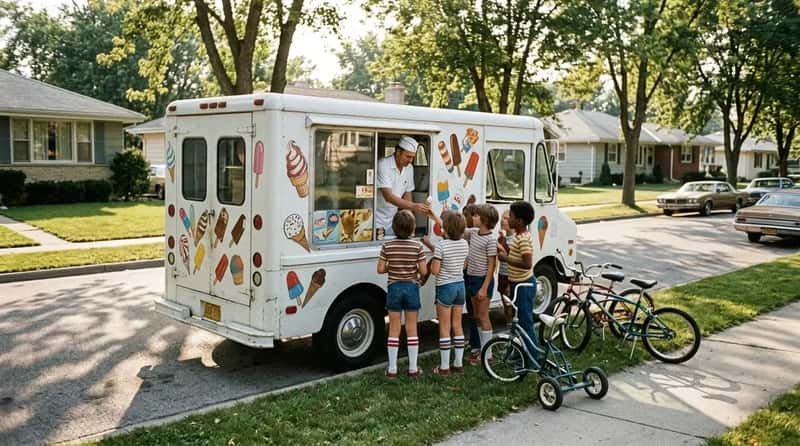
The distant tinkle of a musical jingle meant one thing in any 1970s neighborhood: drop whatever you’re doing and find a quarter. Kids materialized from yards and alleys as if summoned, flagging down the white truck with the urgency of people flagging down a lifeboat. The Creamsicle, the Drumstick, the Fudgsicle – these were not just frozen desserts. They were social currency, and the ice cream truck was the bank.
The truck operated on reliable weekly routes, and children tracked its schedule the way adults tracked deadlines. It represented something specific about 1970s childhood: the reasonable expectation that small pleasures would arrive on schedule, without a parent having to arrange anything. You just listened for the music. Ice cream trucks still exist in some areas today, but the routed, reliable neighborhood rounds are largely gone – replaced by food trucks at curated weekend events, which is a fundamentally different experience wearing the same nostalgic clothing.
#11 – Sending Kids Outside Until Dark
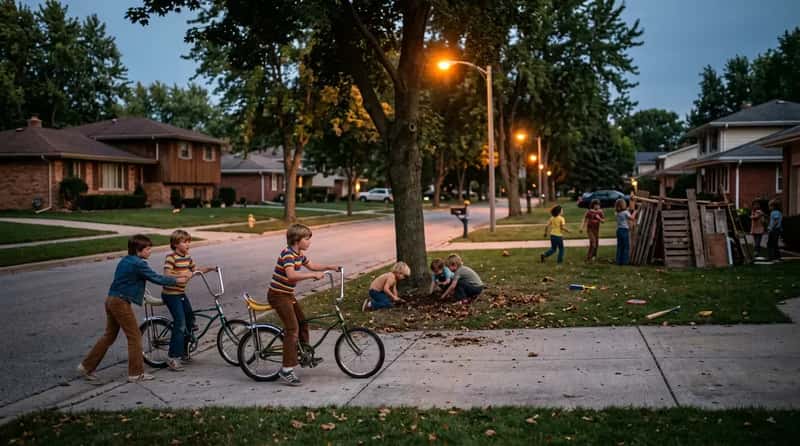
The instruction was simple and universal: go outside and come back when the streetlights come on. In the 1970s, unsupervised outdoor play wasn’t a parenting philosophy – it was just Tuesday. Before “helicopter parenting” had been named, plywood ramps and questionable life choices had already been invented. Children built forts, rode bikes for miles, settled disputes without referees, and came home dirty enough that the bath was non-negotiable.
Studies have documented that children’s independent outdoor range – how far from home they roam unsupervised – has shrunk to a fraction of what it was in the 1970s. The causes are complex: fear of traffic, overscheduled childhoods, smaller yards, screens that make inside genuinely competitive with outside. But what disappeared with that freedom wasn’t just the scraped knees. It was the ability to be genuinely bored, to solve problems without adult input, and to own a piece of the afternoon that belonged entirely to you.
#10 – The Typewriter’s Mechanical Ritual
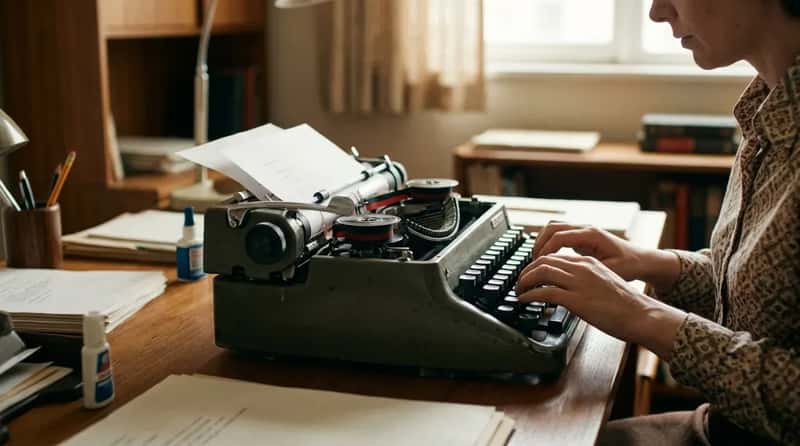
Every keystroke was an event. The mechanical resistance of the keys, the rising clatter as you built up speed, the bell that rang at the end of each line, and the satisfying crack of the carriage return – the typewriter made writing a physical, audible, fully committed act. Errors required retyping entire pages until Wite-Out changed everything. The iconic ding at the end of a line became one of the most recognizable sounds of the era, and the rhythm of a skilled typist was genuinely musical.
What vanished with the typewriter wasn’t just the sound – it was the commitment. On a typewriter, you thought before you typed because correction was expensive. Every sentence was a small act of intention. The cursor blinking on a white screen has never quite matched the warmth of a page that came out of a machine you could feel working beneath your hands – a machine that pushed back.
#9 – The Neighborhood Barbershop as Community Hub
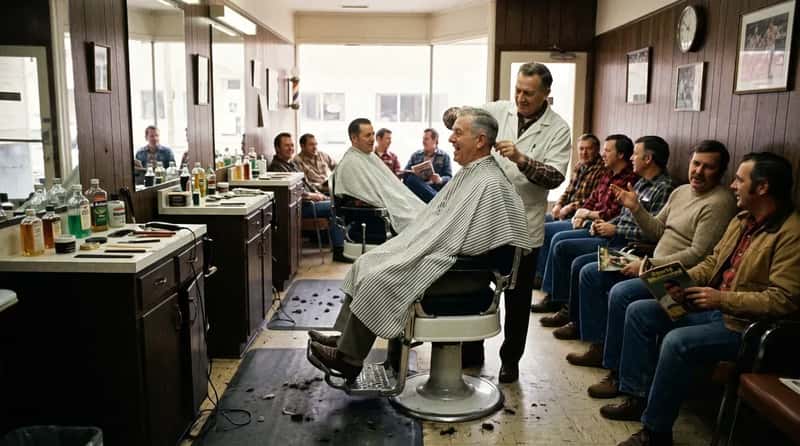
The red, white, and blue pole outside meant more than a haircut. The barbershop was where men gathered, caught up on local news, argued about sports, and sat in chairs for 45 minutes with nowhere to be and nothing to do but talk. In most American towns of the 1970s, it was as central to community life as any church or diner. The same barber might cut three generations of the same family’s hair over the course of decades, which made him something between a service provider and a minor historian.
You waited your turn in a row of chrome-and-vinyl chairs, read a magazine from 1971, and listened to whoever was in the chair finish their story. Franchise salons and fast-cut chains eventually replaced most of these one-chair operations with efficiency and standardization. The haircut got faster and cheaper. The conversation – the part that took the longest and cost nothing – mostly didn’t survive the transition.
#8 – Printed Photo Albums Built in Real Time
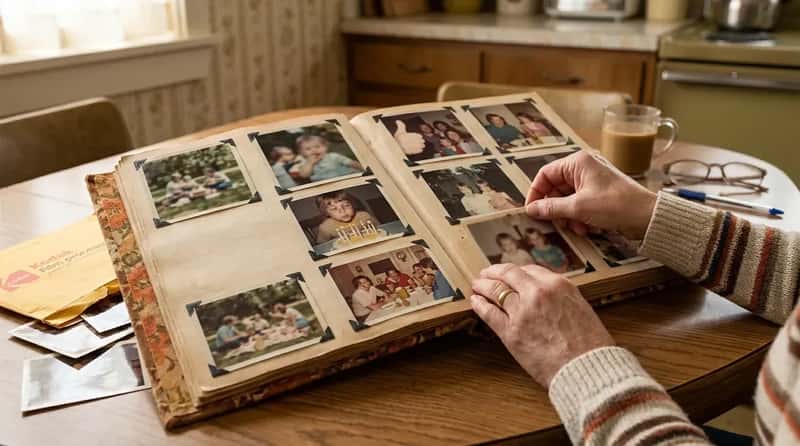
Every roll of film had 24 or 36 exposures, and you used all of them before you could see what you’d captured. Then you dropped the canister at the drugstore and waited a week. When the envelope of prints came back, the whole family gathered around the kitchen table to go through them – and whatever came out was what you got. Blurry, eyes closed, someone’s thumb in the corner: those imperfect photos went in the album anyway, and they were often the best ones.
Physical photo albums from the 1970s survive today in boxes and closets, still touchable, still real. The billions of digital photos taken since have largely not been printed, which means in 50 years there may be almost no physical record of the decades that followed – just files on drives no one can open anymore. The waiting was part of what made those images matter. The memory had time to age a little before the picture confirmed it.
#7 – The Sunken Living Room (Conversation Pit)
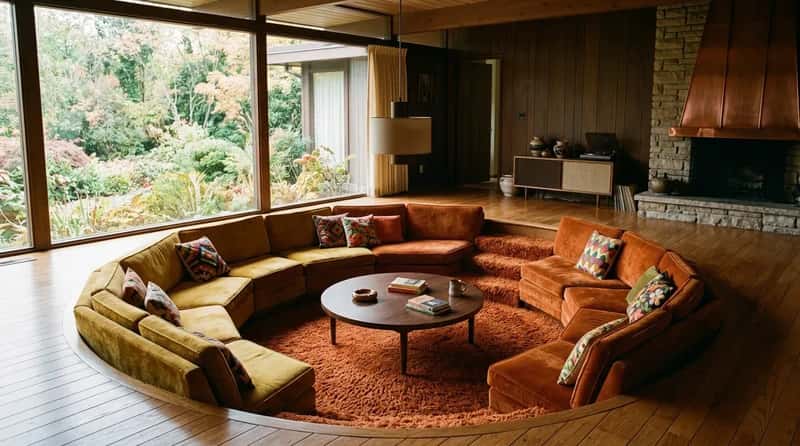
A few steps down from the main floor, the sunken living room – the conversation pit – was the architectural statement of 1970s home design. Low sectional sofas wrapped around the perimeter, a shag rug covered the floor, and the sunken design created an intimate enclosure that said: this space is for staying a while. It wasn’t just a design trend. It was an architectural argument that socializing deserved its own dedicated, immersive environment – a room with literal gravity pulling you in.
Architects who championed these spaces believed that lowering the seating area would encourage people to linger and talk, separated from the busy flow of the rest of the house. They were right, at least functionally. But the style fell hard out of fashion in the 1980s, partly because open floor plans became the new status signal. Today, real estate agents flag sunken living rooms as a liability. The rooms designed specifically for long conversation have been filled in and leveled off.
#6 – Knowing Your Neighbors by Name – and Business
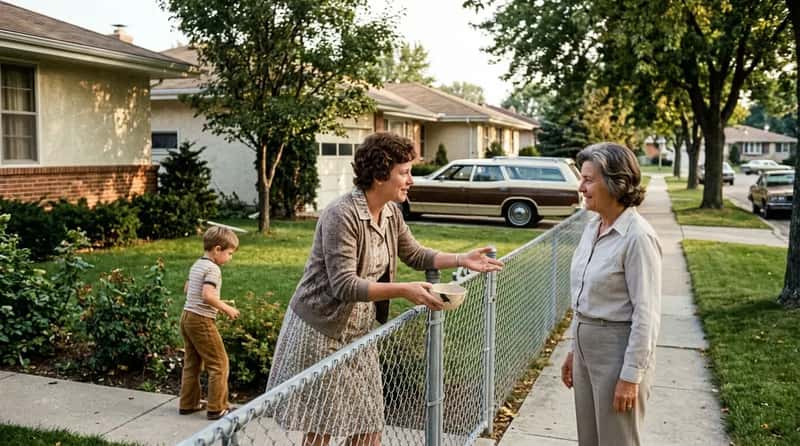
Mrs. Smith two doors down always had cookies. Mr. Jones across the street had opinions about your lawn. You knew these things because you were there – present, physical, unavoidable. In the 1970s, the neighbor wasn’t a background character in your life. They were a recurring cast member. Borrowing a cup of sugar, watching each other’s kids, arguing over the property line: all of it meant sustained, involuntary, honest human contact that nobody had to schedule.
This wasn’t always comfortable, and it wasn’t always welcome. But it created a safety net that nobody had to formally organize. If something was wrong at the house down the street, someone noticed – because someone was always watching, always present, always home. What replaced that daily proximity was privacy, autonomy, and a loneliness that took years for anyone to name out loud.
#5 – Baking From Scratch as the Default
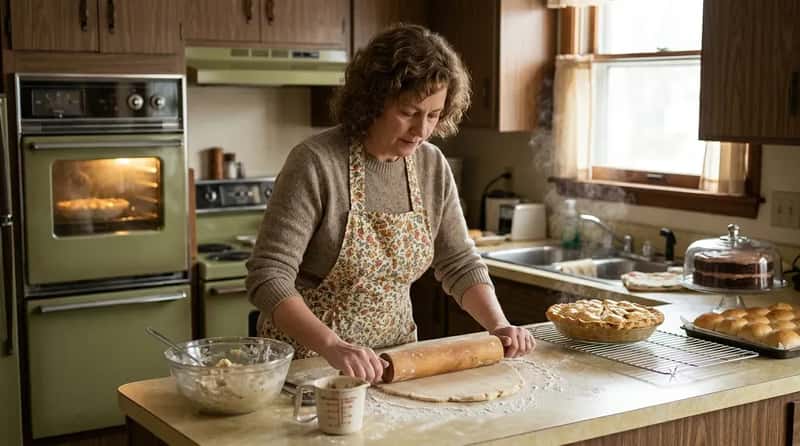
On a random Wednesday afternoon, a 1970s kitchen might produce a pie, a batch of dinner rolls, or a layer cake – not for a special occasion, but because that’s what was for dessert. Baking from scratch wasn’t a hobby or a weekend project or a lifestyle brand. It was the ordinary baseline expectation of a functional household. The smell of something in the oven was simply a feature of home life, the way running water was a feature of home life.
The skills that came with that baking – patience, precision, the ability to read a recipe and adapt when something went wrong – were passed down through direct observation, one recipe at a time. When that daily practice faded, the transfer of knowledge largely faded with it. Today’s surge of interest in home baking, driven by cooking shows and pandemic kitchens, is real and genuine. But there’s a difference between baking as a chosen hobby and baking as the thing you just do because it’s Tuesday and someone needs something sweet.
#4 – The Single-Channel Family Television Night
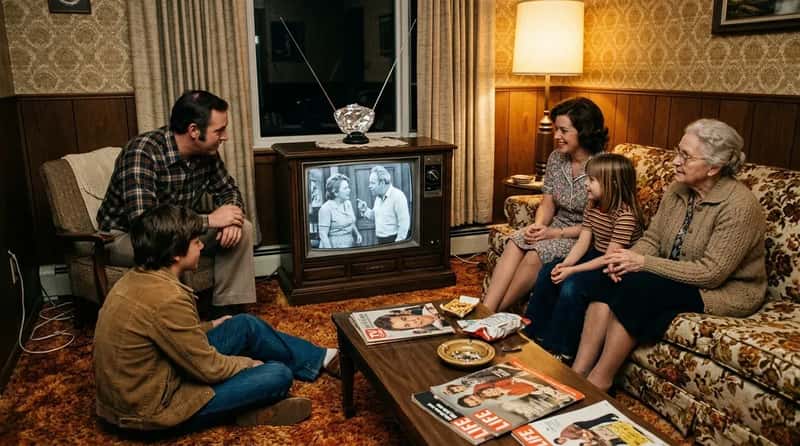
With only a handful of channels, the entire family watched the same show – not because everyone agreed, but because the alternative was silence and a room full of people with nothing to do. You clicked through the round dial, past all six channels on VHF and UHF, and if nothing worked, you watched what everyone else was watching. The constraint was absolute and, as it turned out, quietly powerful.
That limitation created a shared cultural vocabulary. Everyone at school had seen the same episode of All in the Family or The Waltons the night before. Conversations began mid-sentence because the reference was assumed. Today’s entertainment landscape offers more choice than any person could consume in a lifetime – and it has dismantled the common ground in the process. The narrow dial of the 1970s television was a limitation that also happened to knit communities together in a way that infinite content quietly unwove.
#3 – The Unhurried Family Road Trip
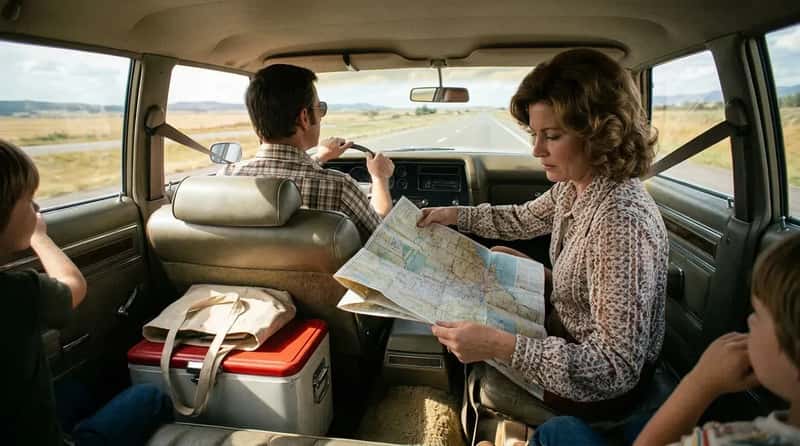
No GPS, no backseat screens, no podcast queued up – just a paper road map folded badly, a cooler of sandwiches, and six or eight hours of open highway. The 1970s family road trip was genuinely unstructured time trapped in a moving vehicle, and most people who lived through it remember it with vivid, irrational fondness. Before tablets and movies in the car, families filled the miles with songs, license plate games, and arguments that resolved themselves somewhere around the state line.
The unplanned stops were the whole point – a roadside attraction, a diner that looked interesting, a rest stop vending machine that became a minor ceremony. Nobody was optimizing the route in real time. You could get genuinely lost, and getting lost led to things you’d never have found otherwise. Today’s road trips are faster, more comfortable, and far more efficient. They are also, in a measurable way, less memorable – because the friction and the wandering were precisely what made the journey stick.
#2 – The Fully Present Dinner Table
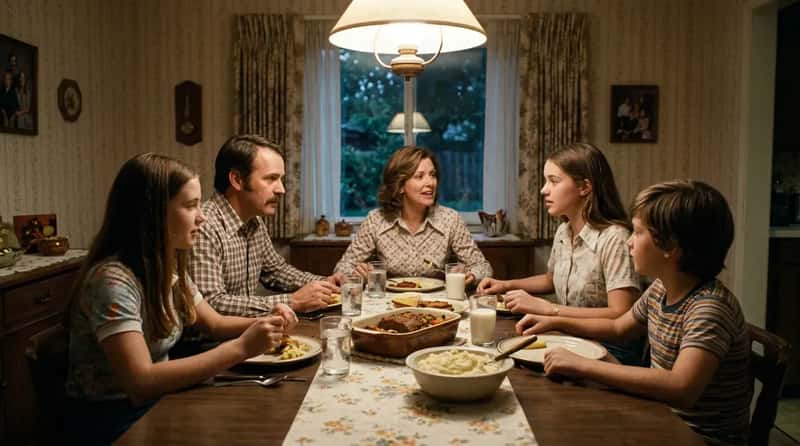
Every evening, at a predictable time, the family sat down and ate together – and there was nothing else competing for anyone’s attention. No phones face-up beside the plates, no notifications, no half-finished texts. The 1970s family dinner table was, by modern standards, a remarkable act of collective focus: multiple people in the same room, doing the same thing, talking to each other, without any digital exit available. Arguments happened. Silences happened. Real things were said out loud and couldn’t be unsaid.
Research consistently shows that regular family meals are among the strongest predictors of children’s academic performance, emotional health, and resistance to substance abuse. The 1970s family didn’t know the data – they just did it because that’s when dinner was. What disappeared from that table wasn’t the food. It was the container the food created – a daily moment with nowhere else to be and no screen to retreat into when the conversation got uncomfortable.
#1 – The Comfortable Certainty That the Neighborhood Was Home
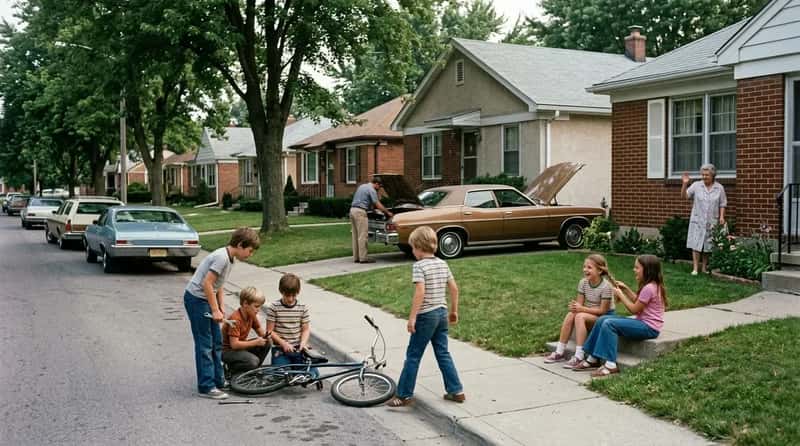
More than any object, any appliance, or any television schedule, the deepest comfort of 1970s everyday life was spatial: the conviction that the block you lived on was a real place that knew your name. The hardware store owner remembered your father. The pharmacist asked about your mother’s knee. The kids three doors down were your kids’ built-in social life, available without a playdate or a calendar invite. The neighborhood wasn’t just a geographic location – it was a social infrastructure that required almost no effort to maintain because everyone was simply there, present, and rooted.
What disappeared wasn’t a single item or habit. It was the accumulated weight of all of them together – the milkman and the fondue pot and the carpet rake and the card catalog and the party line – creating a world that felt, at its best, like it was built to human scale. Not gone through catastrophe. Just quietly, gradually replaced, one convenience at a time, until the day you looked up and realized the neighborhood you grew up in existed only in the specific, irreplaceable memory of the people who had been there to live it.
Which one hit you hardest? Drop it in the comments – and tag someone who still remembers the carpet rake.