There are 63 official national parks spread across the United States, and every year millions of Americans flock to a handful of the same famous destinations. Yellowstone, the Grand Canyon, Zion – they pull the crowds in by the millions. Yet buried beneath the headlines and Instagram reels is a completely different reality: a long list of extraordinary parks that most people will never set foot in.
In 2024, the National Park Service logged a record-high 331.9 million recreation visits. That beat the previous record set in 2016. Yet underneath those staggering totals is a very different story, one of parks so overlooked, so remote, or so logistically demanding that most Americans never even consider visiting them. What does it say about us as travelers when these wild, staggering places sit essentially empty while others require timed entry reservations?
A park’s popularity can depend on many things, including ease of access, perceived natural beauty, social popularity, and recreational opportunities. Some parks simply lost the social media lottery. Others are genuinely hard to reach. A few are jaw-droppingly spectacular and somehow still get passed over. Here are 34 national parks that . Be surprised by what you find.
—
1. Gates of the Arctic National Park and Preserve, Alaska – 11,907 Visits in 2024
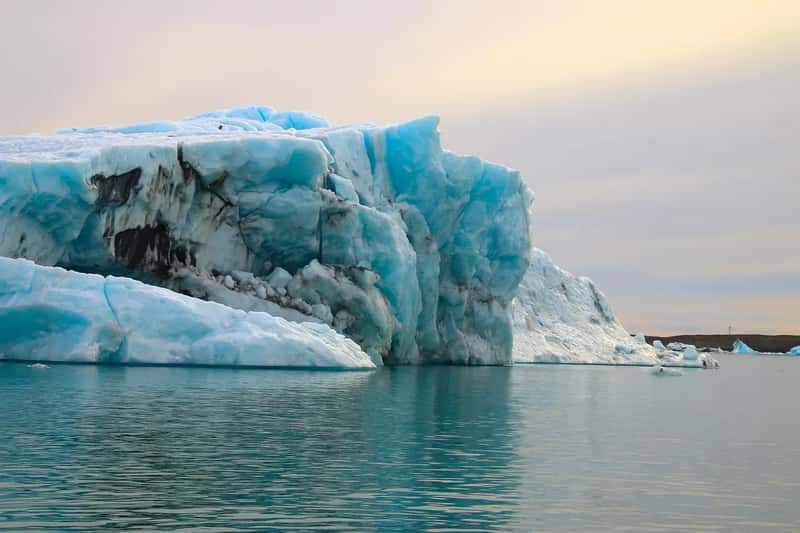
This is the one that makes you stop and do a double-take. The least visited national park within the 50 U.S. states is Gates of the Arctic National Park in Alaska, and it had just 11,907 visitors during the entire year. To put that in perspective, a busy Walmart store sees more foot traffic in a single weekend.
Located entirely north of the Arctic Circle, this vast wilderness area has no roads or trails, offering true backcountry adventure for those willing to charter a bush plane to reach its boundaries. Gates of the Arctic spans 8.4 million acres, so there are thousands of miles of scenery to explore, should you have the resources to do so. The sheer cost and effort required to get here puts it firmly out of reach for most travelers.
There are no paved roads, visitor centers, or established campgrounds in Gates of the Arctic. Visitation peaked at 12,669 in 2014, fell to just 2,872 in 2020, and climbed back up to 11,907 in 2024. Given that the park hosts neither official trails nor roads, the only ways in are by air taxi from Fairbanks or an off-trail hike through unkempt terrain.
—
2. North Cascades National Park, Washington – 16,485 Visits in 2024
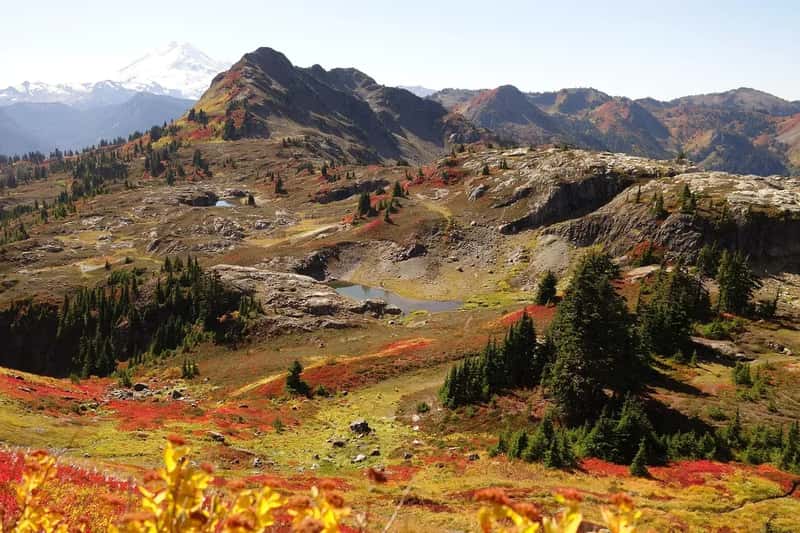
One of the most underrated national parks out west, North Cascades saw only 16,485 visitors in 2024. This destination hasn’t always seen such low traffic, though. According to NPS Visitor Use Statistics, the park recorded 917,581 visitors in 1978. The collapse in numbers is extraordinary, and worth understanding.
North Cascades’ pre-1990 numbers got a boost because the park’s visitorship was grouped in with that of Lake Chelan and Ross Lake national recreation areas. The shift in how visitors are counted dramatically changed how the park appears in the data. Honest accounting actually hurt this park’s visibility.
The rugged and hard-to-access North Cascades reached a new low, with 24,000 fewer visitors in 2024 than in 2023. North Cascades is the least visited, the most difficult to access all around, and perhaps the most rewarding for those who dare. After wilderness designation, North Cascades was eliminated from any hope of having roads. That wildness is exactly what makes it so special.
—
3. Kobuk Valley National Park, Alaska – 17,233 Visits in 2024
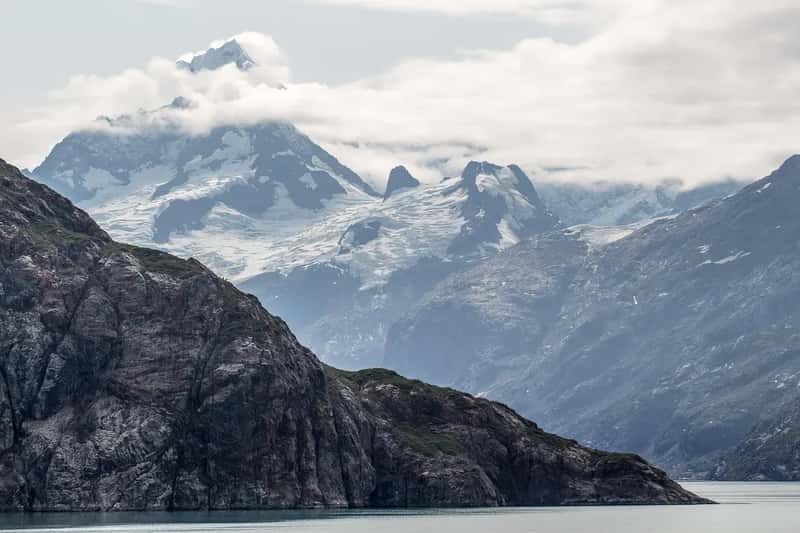
Kobuk Valley National Park in Alaska is a 1.8 million-acre expanse with no roads, campgrounds, or entrance gates for human visitors. Honestly, just reading that sentence should tell you everything about why Americans skip this one. There is simply no easy on-ramp into this place.
Half a million caribou migrate through this park, crossing the Kobuk River and Onion Portage, according to the National Park Service. An 8,000-year tradition of hunting caribou here continues today. That level of living, breathing history and wildlife drama is almost impossible to find anywhere else on Earth.
Kobuk Valley is part of one of the largest protected parkland areas in the world if you count the neighboring Gates of the Arctic and Noatak National Preserve, making its total area already vast at 8,472,505 acres. This connected wilderness is one of the planet’s true remaining wild places, and nearly no one goes.
—
4. Lake Clark National Park and Preserve, Alaska – 18,505 Visits in 2024
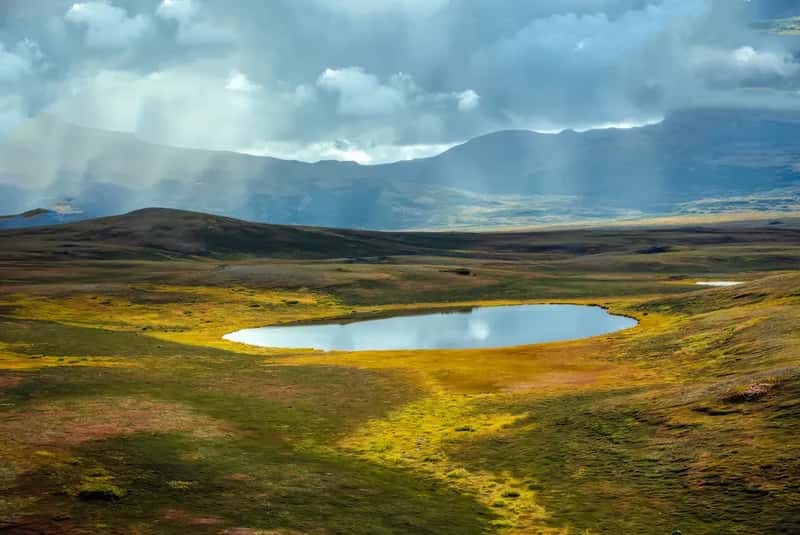
Lake Clark National Park and Preserve stretches across more than 4 million acres and is home to three designated Wild Rivers and abundant wildlife. Four million acres, and barely 18,000 people showed up in a full year. That’s breathtaking in every sense of the word.
The land holds 10,000 years of human history and preserves the ancestral homelands of the Dena’ina people, and it is home to two National Natural Landmark volcanoes. Volcanoes, ancient cultures, wild rivers – and yet somehow this park remains almost entirely invisible to the traveling public.
Access remains the main hurdle. Like several other Alaska parks on this list, Lake Clark has no road connection to the outside world. Getting in requires a small plane or floatplane from Anchorage or Kenai. A park’s popularity depends heavily on ease of access, and Lake Clark simply doesn’t have it, no matter how spectacular it is.
—
5. National Park of American Samoa – 22,500 Visits in 2024
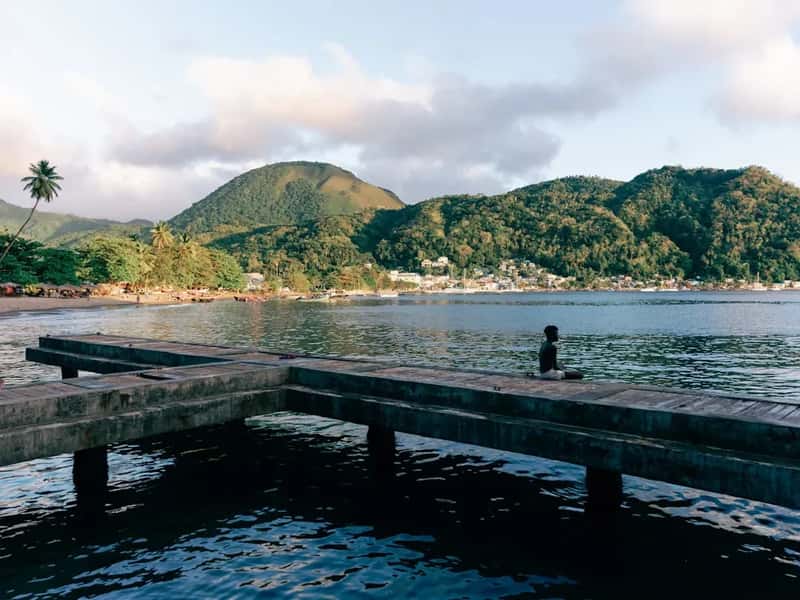
The National Park of American Samoa logged roughly 22,500 visitors in 2024, ranking fifth among the least-visited parks in the country. Most Americans don’t even realize this is a U.S. national park. Let’s be real, most couldn’t find American Samoa on a map.
The 8,256-acre National Park of American Samoa is a unique and remote destination located across three islands in the South Pacific. It is one of the few U.S. national parks that protect tropical rainforest. The islands are also home to some of the most pristine coral reefs in the Pacific, providing excellent opportunities for snorkeling and observing marine life in its natural habitat.
Most parkgoers will need a passport to visit this spot in a remote part of the South Pacific. Hawaiian Airlines offers direct flights to American Samoa from Honolulu. The park has units on three islands and stretches across 13,500 acres, some 4,000 of which are marine acres that are mostly coral reefs. It’s a logistical stretch, but imagine having that kind of reef almost entirely to yourself.
—
6. Isle Royale National Park, Michigan – 28,806 Visits in 2024
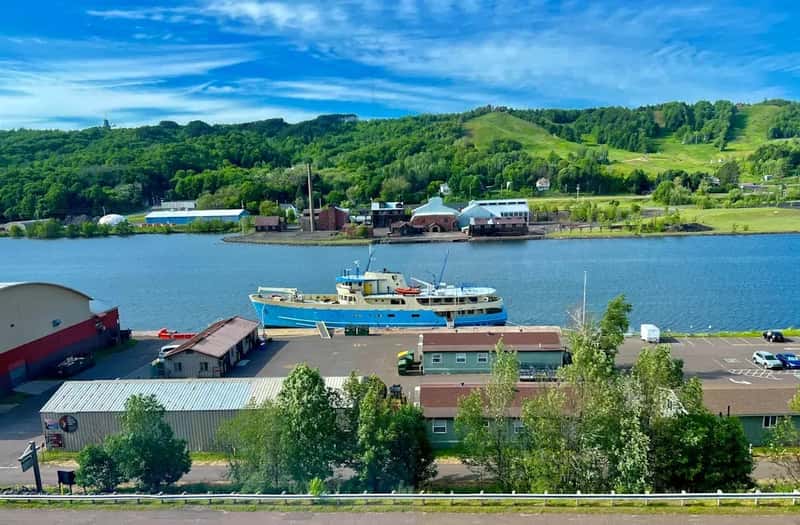
Isle Royale National Park in Michigan ranks as the sixth least-visited national park, welcoming just under 30,000 visitors in 2024. For a park that sits in the continental United States, that’s an astonishing number to wrap your head around.
Situated in Lake Superior, Isle Royale offers wilderness adventures and is known for its solitude, deep forests, and population of wolves and moose. It is the largest island on the lake, surrounded by 400 small islands. Wolves and moose sharing an island wilderness, just hours from major Midwestern cities. Few people know this exists.
An isolated archipelago in Lake Superior, Isle Royale boasts 165 miles of trails and more than 30 campgrounds. It is open only from mid-April through the end of October. Ferry and seaplane service typically runs from mid-May through the end of September. There are fewer mammal species here than on the mainland because animals must cross at least 14 miles of Lake Superior. Wolves and moose are among the notable animal residents.
—
7. Katmai National Park and Preserve, Alaska – 36,230 Visits in 2024
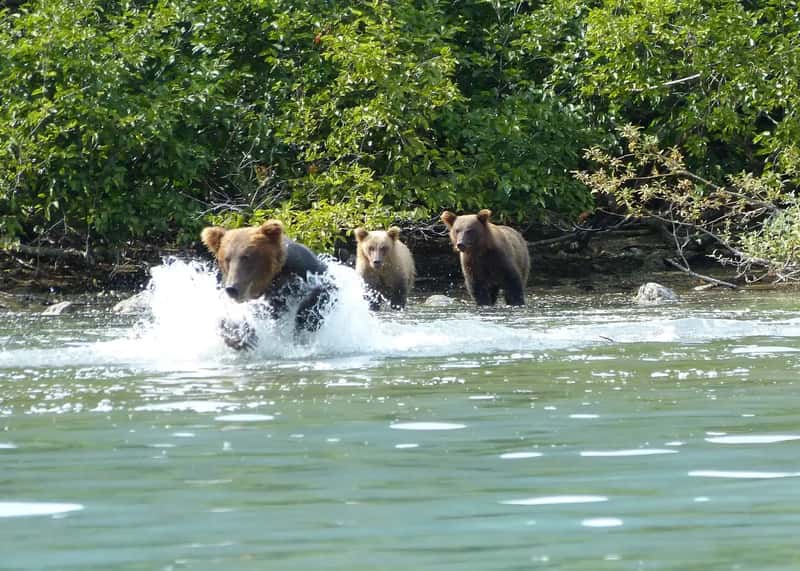
Known for the world-famous Brooks Falls, where bears gather to catch salmon, Katmai received 36,230 visitors in 2024. Despite its popularity on wildlife documentaries, Katmai’s remote location keeps visitor numbers low. Beyond bear viewing, the park preserves the Valley of Ten Thousand Smokes, a dramatic ash-filled valley created by the 1912 Novarupta volcanic eruption.
The park is legitimately one of the most spectacular wildlife-watching destinations on the planet, yet barely anyone goes. Getting to Katmai requires flying into King Salmon, Alaska, and then taking a small floatplane into the park, a journey that adds considerable cost and planning to any trip.
I think this might be the single most underserved park on this entire list in terms of what it offers versus how few people experience it. Brown bears catching sockeye salmon mid-leap at Brooks Falls is the kind of scene that lands on magazine covers. There’s something deeply alluring about watching bears fish at Brooks Falls in Katmai with just a handful of other visitors.
—
8. Wrangell-St. Elias National Park and Preserve, Alaska – 81,670 Visits in 2024
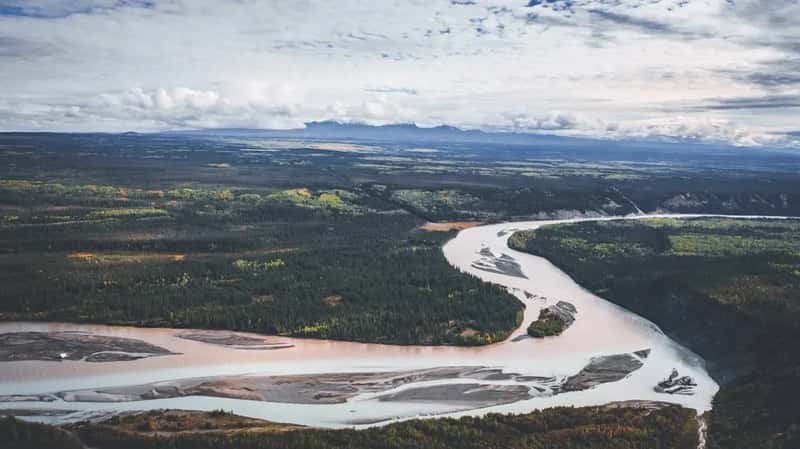
America’s largest national park, Wrangell-St. Elias encompasses 13.2 million acres, roughly the size of Yellowstone National Park, Yosemite National Park, and Switzerland combined, according to the Park Service. Most of the park is backcountry, and visitor services are limited. There are some maintained trails in the frontcountry Nabesna and McCarthy areas.
Wrangell-St. Elias logged 81,670 visits in 2024, placing it among the ten least-visited national parks in the country. That’s 13 million acres being explored by fewer visitors than a mid-sized concert venue holds on a Saturday night.
The scale here is simply incomprehensible. Switzerland. All of it. That’s the comparison the Park Service itself makes. Yet most Americans couldn’t tell you it exists, let alone pronounce it correctly. Some parks are what you might call “hidden treasures,” taking a bit more planning to get to, and perhaps smaller than their popular counterparts – though in this case, Wrangell-St. Elias is very much the opposite of small.
—
9. Dry Tortugas National Park, Florida – 84,873 Visits in 2024
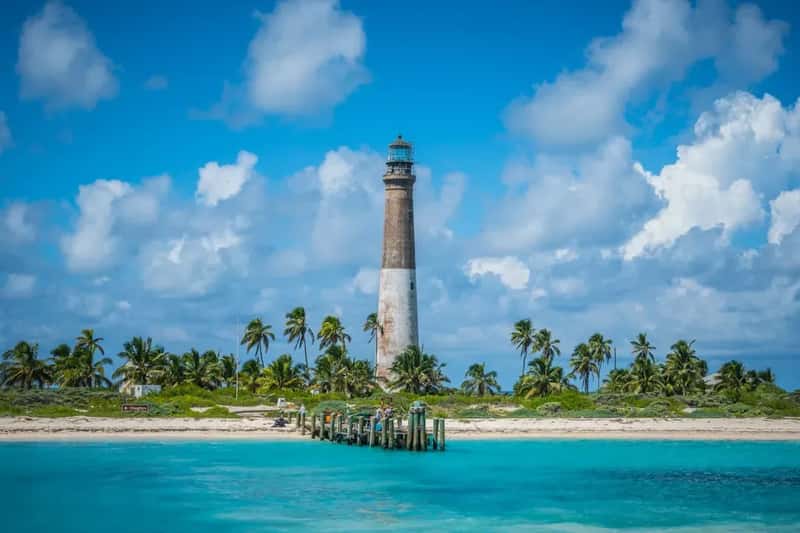
About 70 miles west of Key West, Dry Tortugas is mostly open water with seven small islands. Garden Key is home to one of the nation’s largest 19th-century forts, Fort Jefferson. The park is accessible by boat or plane and is host to nearly 300 species of birds. Bush Key closes every year from February to September so that sooty terns and brown noddies can breed there undisturbed.
This Florida national park can only be reached by boat or airplane, which keeps the visitation numbers low. If you put in the effort to get to Dry Tortugas, you will not be disappointed by the vibrant turquoise water that is perfect for snorkeling and the historic fort that has a fascinating story.
It’s worth noting that those boats and ferries from Key West are often booked months in advance. The barrier here isn’t awareness so much as effort and cost. Ferries to Dry Tortugas aren’t running with 10 people on them. They’re packed and booked months in advance. Still, roughly 85,000 people a year is a tiny number for a park this remarkable.
—
10. Great Basin National Park, Nevada – 152,068 Visits in 2024
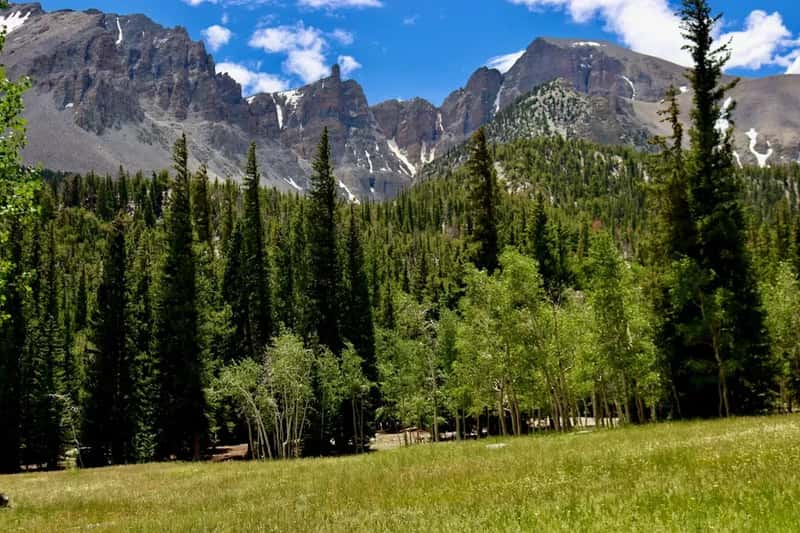
Great Basin National Park ranked tenth in the list of least-visited national parks, welcoming just over 152,000 visitors in 2024. For a park in the lower 48 states, that’s a strikingly low number. Nevada gets tens of millions of visitors a year, mostly to Las Vegas. Very few venture east to the basin.
Mountain peaks meet hot desert valleys here. Great Basin National Park is home to 13,063-foot Wheeler Peak, ancient bristlecone pines, about 40 caves, and a wide array of plants and animals. Forty caves. Ancient trees that are among the oldest living organisms on Earth. Wheeler Peak rising nearly two and a half miles into the sky.
Nobody expects there to be an amazing national park tucked into the Nevada desert, but Great Basin is one of the most underrated parks in America. That perception problem – the assumption that Nevada is just desert and casinos – might be the most fixable marketing challenge in the entire park system.
—
11. Voyageurs National Park, Minnesota – 220,825 Visits in 2024
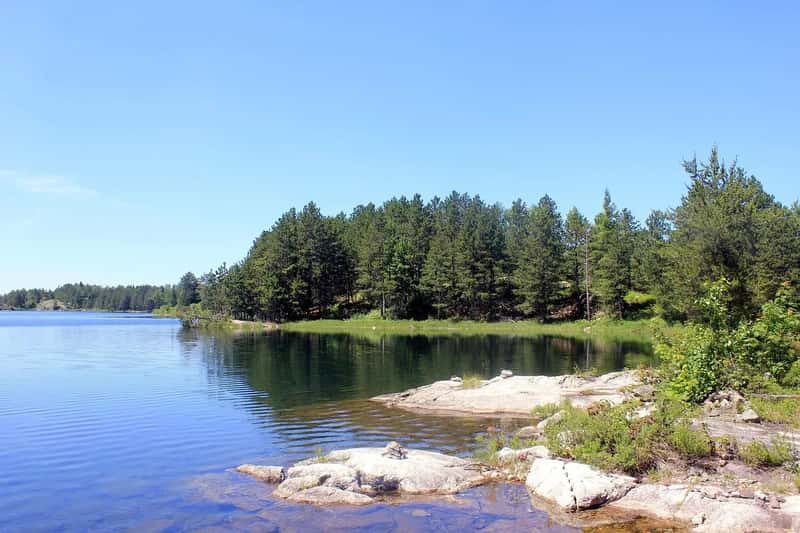
Billed as a park of “water, islands and horizons,” Voyageurs covers 218,055 acres, 84,000 of which is water. There are more than 500 islands and four large lakes, plus more than two dozen smaller lakes in the park, which is best experienced by boat. Voyageurs shares its northern boundary with Canada, and lucky visitors may even see the northern lights.
Those into boating and bald eagle-watching should consider visiting Voyageurs, a national park in northern Minnesota along the Canadian border. There’s some hiking and camping here, but much of the park is not accessible by car. That car-inaccessibility is what keeps the crowds away.
A whopping 1,300 eagle pairs live in the park. Think about that number for a moment. Over a thousand bald eagle pairs in one place, and fewer than a quarter of a million Americans showed up to see them in all of 2024. That feels almost impossible to believe.
—
12. Guadalupe Mountains National Park, Texas – 226,134 Visits in 2024
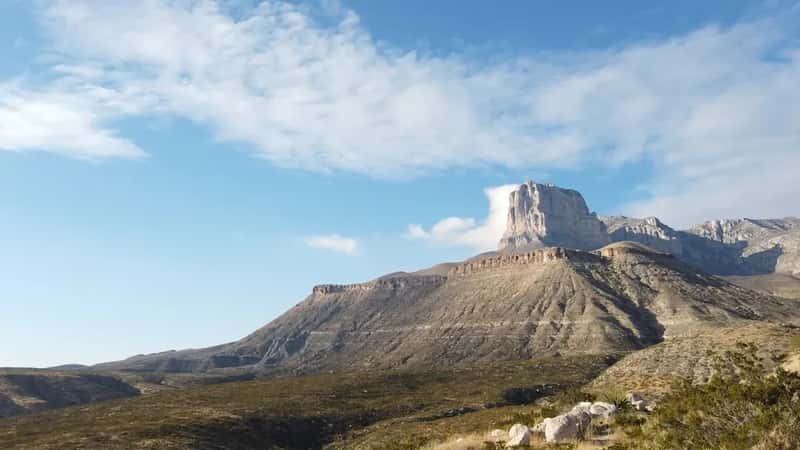
Guadalupe Mountains National Park recorded just 226,134 visitors in 2024, representing less than a quarter of one percent of all national park visits that year. This is Texas’s best-kept secret, and honestly, it deserves better.
This park boasts the four highest peaks in Texas and the world’s most extensive Permian fossil reef. Guadalupe Mountains Wilderness has more than 80 miles of trail, including a hike in the Salt Basin Dunes that rise 100 feet from the desert floor. The world’s most extensive Permian fossil reef. That’s a geologist’s dream buried in West Texas.
Guadalupe Mountains National Park actually set an all-time record in attendance in 2021 with 243,000 visitors, before declining slightly in the years since. It’s going in the wrong direction, which is a shame. The park sits near its much-more-visited neighbor Carlsbad Caverns, so combining them makes geographic and logistical sense for any visitor willing to make the trip west.
—
13. Congaree National Park, South Carolina – 242,049 Visits in 2024
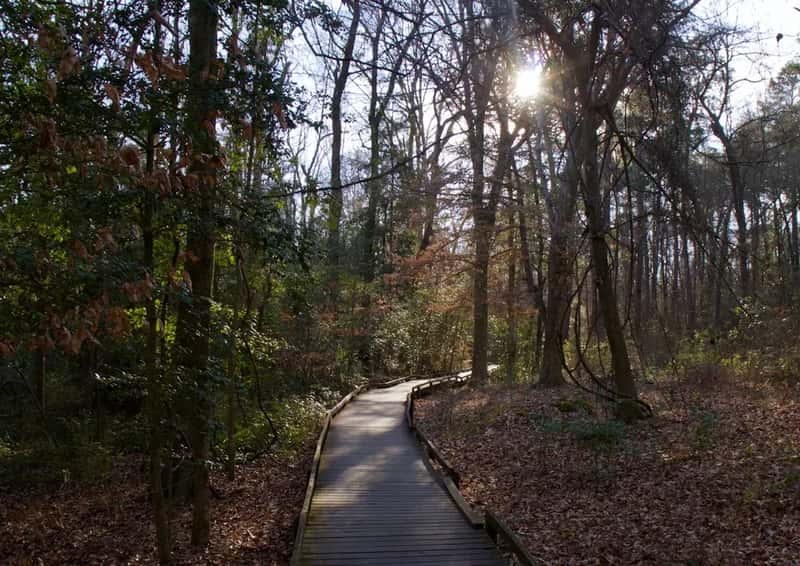
Congaree National Park recorded 242,049 visitors in 2024, placing it among the least-visited parks in the eastern United States. It’s especially striking because Congaree is near Columbia, a major South Carolina city, meaning the access problem other parks face doesn’t really apply here.
Congaree National Park’s landscape is defined by the presence of both flood and flame, as the Park Service describes it. Floodwaters from the Congaree and Wateree rivers regularly cover the park’s old-growth bottomland hardwood forest, and the upland pine forest depends on wildfires to clear out competing vegetation. It’s a dynamic, living, flooding, burning ecosystem that most people mistake for a swamp and drive right past.
The Congaree National Park is home to champion trees, primeval forest landscapes, and diverse plant and animal life. Located on the outskirts of the popular city of Columbia, South Carolina, the park hosts forested wetlands, swampy-style lakes, and some of the tallest deciduous trees in the world. Tallest deciduous trees in the world, people. Right there in South Carolina.
—
14. Channel Islands National Park, California – 262,581 Visits in 2024
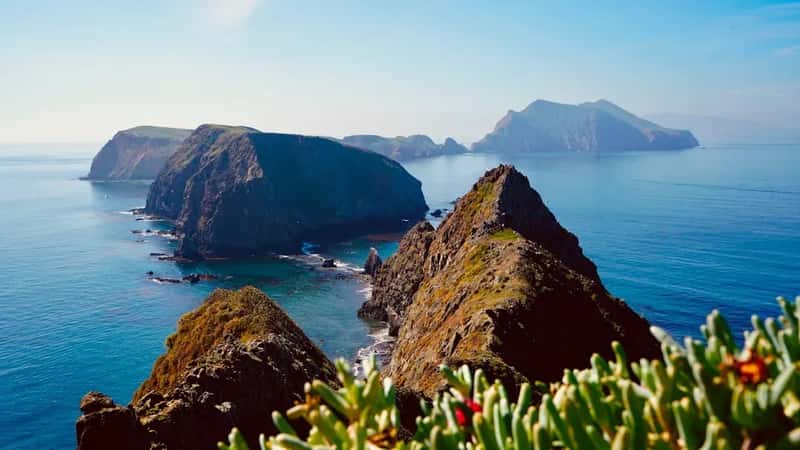
Channel Islands National Park drew just 262,581 visitors in 2024, representing less than a third of one percent of all national park visits. For a park off the coast of California, one of the most densely populated states in the nation, that is a genuinely shocking number.
Channel Islands National Park stretches over five islands and the surrounding ocean. The islands sit just off the coast of Santa Barbara, yet they feel like another world entirely. Rare island fox species roam here, species that exist nowhere else on Earth.
The boat ride is what scares people off. It takes about an hour to reach the nearest island, and the seas aren’t always cooperative. But here’s the thing – that same boat ride is what keeps the islands pristine. You get a wilderness experience that coastal California simply cannot offer anywhere else. Channel Islands moved back into the top 15 least-visited parks in 2024, meaning visitation is actually declining. That trend should concern everyone who cares about these places.
—
15. Black Canyon of the Gunnison National Park, Colorado – 335,862 Visits in 2024
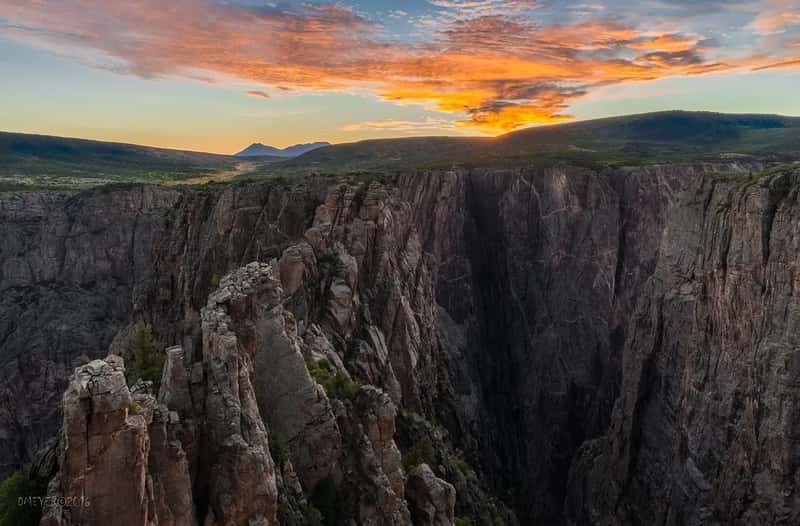
Black Canyon of the Gunnison National Park logged just 335,862 visitors in 2024. Colorado is home to Rocky Mountain National Park, one of the most visited parks in the country, so it might come as a shock that another Colorado park barely registers on the national radar.
Black Canyon of the Gunnison is a canyon sculpted over two million years by the Gunnison River and other natural forces, measuring 2,722 feet at its greatest depth. For comparison, that’s deeper than many points of the Grand Canyon’s inner gorge. The walls are so steep and close together that parts of the canyon floor receive only 33 minutes of sunlight a day.
In 2025, Black Canyon of the Gunnison in Montrose saw about 86,000 fewer visitors, a decrease that showed up in the summer months when the South Rim Fire burned through the most visited area of the park. Wildfire is becoming an increasingly serious factor in park visitation numbers across the American West.
—
16. Pinnacles National Park, California – 354,076 Visits in 2024
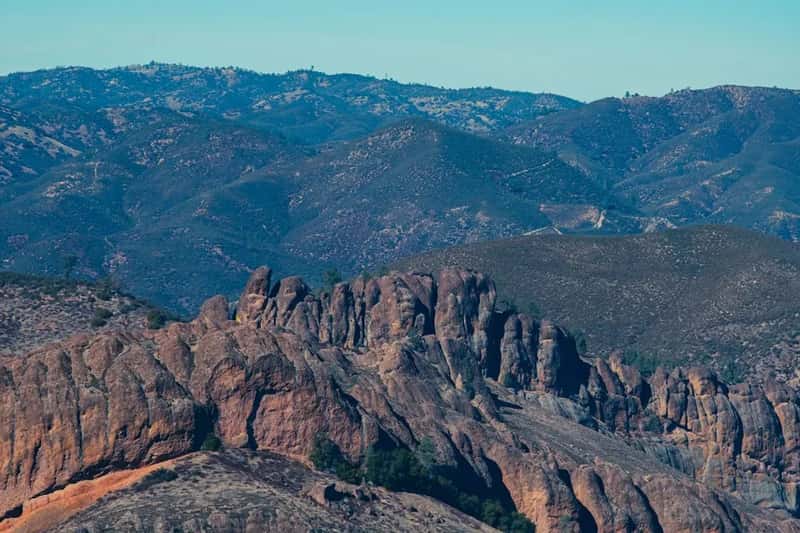
Pinnacles National Park in California drew just 354,076 visitors in 2024. It’s one of the newer national parks, upgraded from national monument status in 2013, and it still hasn’t found its audience. Sitting between the Bay Area and Los Angeles, it theoretically has access to tens of millions of potential visitors.
Pinnacles was formed when volcanoes erupted some 23 million years ago. Talus caves and towering rock spires draw hikers and climbers. The talus caves here are a genuinely unique geological feature. You squeeze through narrow passages between massive boulders while bats roost above you in the dark. It’s eerie and extraordinary.
The best time to visit Pinnacles National Park is in the spring, as temperatures remain mild and you get to appreciate the park’s beautiful natural wildflowers. The night sky at this time of year is also amazing. California condors, one of the world’s rarest birds, soar overhead here as part of a critical recovery program. That alone should be drawing visitors by the hundreds of thousands more than it does.
—
17. Lassen Volcanic National Park, California – 357,651 Visits in 2024
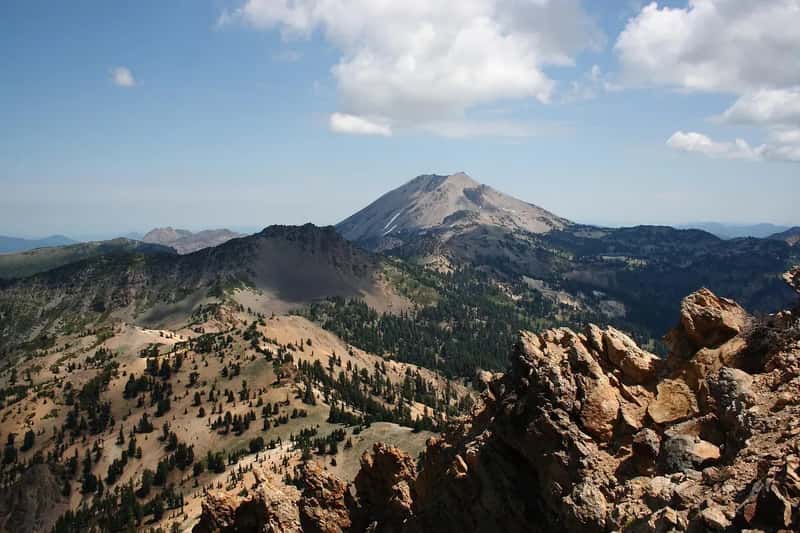
Lassen Volcanic National Park drew just 357,651 visitors in 2024. Another California park flying completely under the radar, despite offering one of the most geologically dramatic landscapes in the American West.
Lassen is one of the few places in the continental United States where you can observe all four types of volcanoes: plug dome, shield, cinder cone, and stratovolcano. The park’s hydrothermal features – boiling mud pots, steaming fumaroles, and sulfur vents – rival anything Yellowstone can offer, minus the crowds and the three-hour drive from the nearest city.
It sits roughly 50 miles from Redding, California, and just a few hours from both Sacramento and the Bay Area. There is no logical reason this park should be pulling fewer than 360,000 visitors a year. It’s an accessibility mystery wrapped in volcanic rock, and I think it comes down almost entirely to marketing and awareness.
—
18. Kenai Fjords National Park, Alaska – 419,468 Visits in 2024
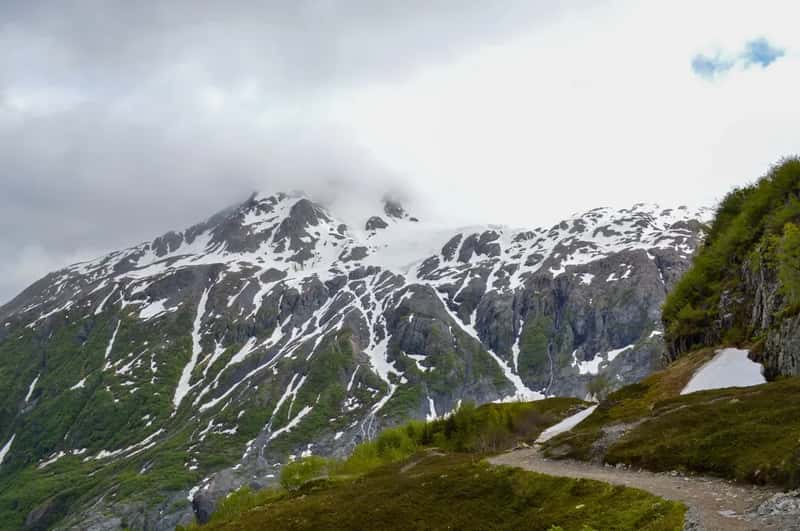
Kenai Fjords National Park in Alaska drew 419,468 visitors in 2024. Given that it’s one of the most accessible Alaska parks – sitting just two hours from Anchorage by car – that number seems low. Though compared to several others on this list, it practically looks like a blockbuster.
Kenai Fjords is named for the glacially carved coastal valleys, or fjords, that define its landscape. Exit Glacier is the only part of the park accessible by road, and it’s a sobering reminder of climate change – signs along the trail mark where the glacier’s edge was in past decades, and the retreat is dramatic and measurable.
The coastline here is alive with sea otters, orca pods, humpback whales, Steller sea lions, and tufted puffins. Boat tours departing from Seward offer jaw-dropping wildlife encounters within a genuinely wild glacial seascape. It’s hard to say exactly why more people don’t make this a must-visit, but Alaska’s distance from the lower 48 remains the most persistent barrier.
—
19. Virgin Islands National Park, U.S. Virgin Islands – 423,029 Visits in 2024

Virgin Islands National Park drew 423,029 visitors in 2024. That might sound reasonable until you realize the park sits on an island that sees over a million cruise ship passengers a year. The island’s national park, covering much of St. John, is being systematically overlooked by the very visitors who are already there.
About two thirds of the U.S. Virgin Island of St. John is national park, with sandy beaches, rich marine life, petroglyphs from the indigenous Taino people, and sites related to the island’s troubled history of enslaved labor. There are more than 20 trails in the park, which is typically busiest from November to April.
Think about what this park holds: petroglyphs, plantation ruins, pristine coral reefs, miles of trails, and powder-white beaches. The park is home to the Annaberg Plantation Ruins, which are remains of when St. John was colonized by Danish settlers. History, ecology, snorkeling, and solitude all wrapped up in one Caribbean island. Most of the cruise ship crowd never leaves the dock area.
—
20. Great Sand Dunes National Park and Preserve, Colorado – 437,661 Visits in 2024
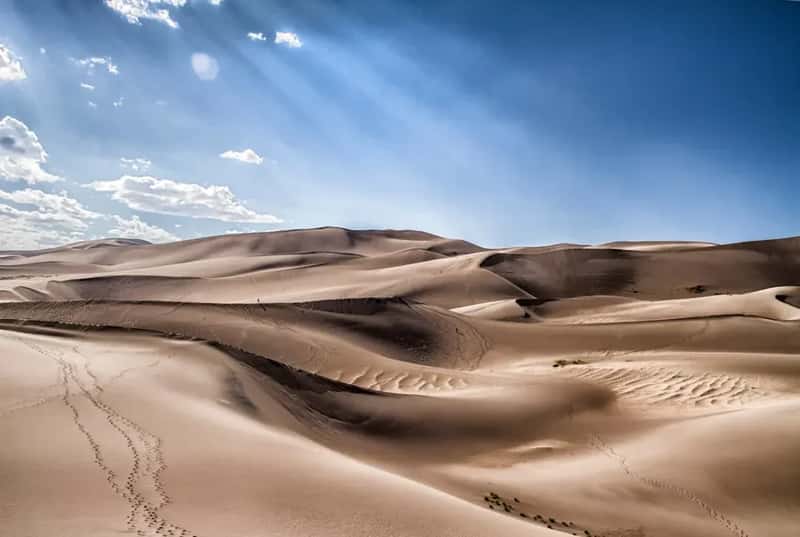
Great Sand Dunes National Park and Preserve pulled in just 437,661 visitors in 2024. Given that Colorado is one of the most popular outdoor destinations in the country, that number reveals how invisible this park remains to most travelers planning Rocky Mountain adventures.
Great Sand Dunes is genuinely one of the most surreal landscapes in North America. North America’s tallest sand dunes rise over 750 feet from the San Luis Valley floor, with the jagged Sangre de Cristo Mountains as a backdrop. A shallow, seasonal creek flows across the base of the dunes, creating a scene that looks more like a film set than a real place.
The park also encompasses alpine lakes and old-growth forests at higher elevations, so the diversity of ecosystems is extraordinary. Sandboarding down the dunes on rented boards is a legitimate thrill. The park sits a few hours from both Denver and Albuquerque, so the access argument doesn’t quite hold here. It’s simply overlooked.
—
21. Carlsbad Caverns National Park, New Mexico – 460,474 Visits in 2024
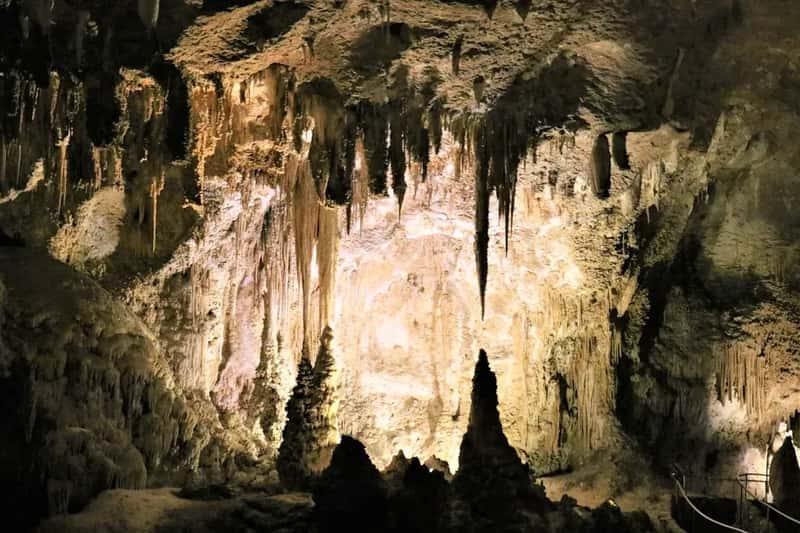
Carlsbad Caverns National Park drew 460,474 visitors in 2024. Below-ground national parks face a unique challenge: if you don’t already know what’s down there, there’s nothing on the surface that hints at the magic beneath your feet.
Carlsbad Caverns contains one of the world’s most complex cave systems. The Big Room is the largest cave chamber in North America, covering roughly 8.2 acres at a depth of 750 feet. You walk through it on a paved path under an enormous underground cathedral of stalactites and stalagmites, some of which have been growing for hundreds of thousands of years.
Every evening from spring through fall, nearly half a million Brazilian free-tailed bats spiral out of the natural entrance at dusk in one of nature’s great spectacles. It draws a crowd of its own, but not nearly the crowds this park deserves. The cave system offers something truly unlike anything above ground, and its remoteness in the Chihuahuan Desert keeps most visitors from ever making the effort.
—
22. Denali National Park and Preserve, Alaska – 466,227 Visits in 2024
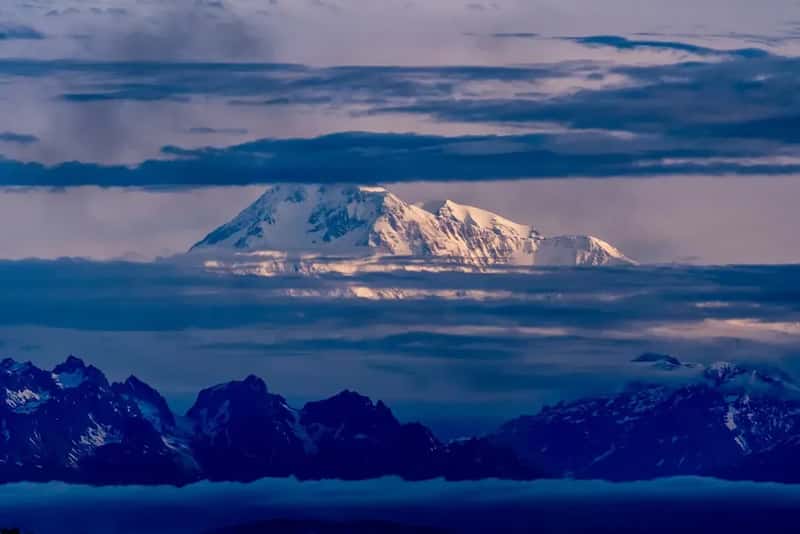
Denali National Park and Preserve logged 466,227 visitors in 2024. Denali is home to North America’s tallest peak, a 20,310-foot giant that dominates the Alaskan interior sky. Yet even with that headline attraction, fewer than half a million people visited in a full year.
The catch with Denali is that the mountain is notoriously cloud-covered. Many visitors make the long journey and never actually see the summit clearly. But “the mountain is out” is a genuine local phrase Alaskans use to celebrate the rare days when Denali reveals itself fully. On those days, the view is simply otherworldly.
Only one road penetrates the park’s interior, and beyond the first 15 miles, private vehicles are not allowed. Visitors board park buses, which means the experience is slower, more communal, and less familiar than a typical road trip park visit. Wildlife encounters along the road – grizzly bears, caribou, wolves, moose – are common and often spectacular. The logistics simply scare people off.
—
23. Wind Cave National Park, South Dakota – 489,399 Visits in 2024
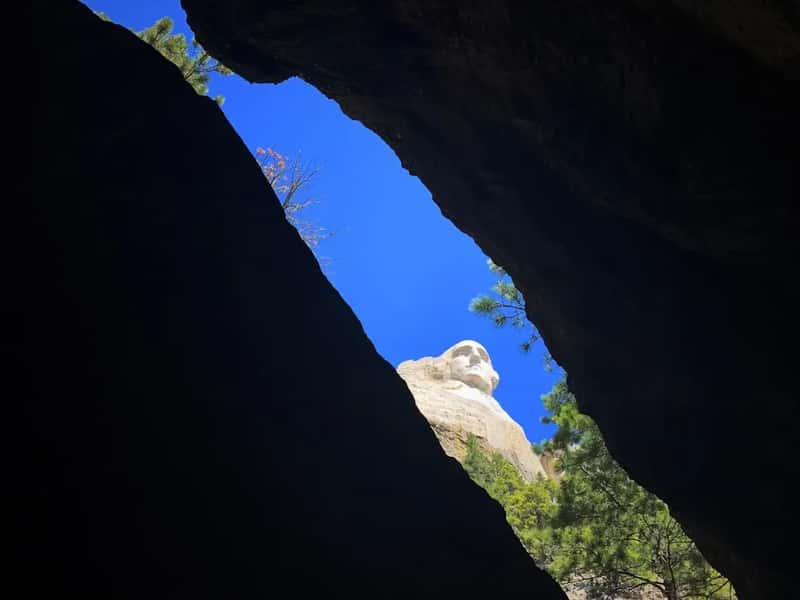
Wind Cave National Park drew just 489,399 visitors in 2024. It sits in the same corner of South Dakota as Mount Rushmore and the Badlands, both of which pull millions of visitors every year. And yet somehow, Wind Cave remains largely off the radar.
Wind Cave is one of the world’s longest known caves, featuring a rare type of cave formation called boxwork, a honeycomb-like calcite structure found in few places on Earth. The surface prairie above the cave hosts one of the few remaining free-roaming bison herds in the United States, along with prairie dogs, elk, and pronghorn antelope.
The combination of a world-class cave system and a thriving above-ground wildlife ecosystem in a single park is remarkably rare. Mount Rushmore, an hour away, gets nearly three million visitors a year. Wind Cave gets under half a million. The visitor has to actively decide to seek it out, and most simply don’t make that choice.
—
24. Mesa Verde National Park, Colorado – 480,065 Visits in 2024
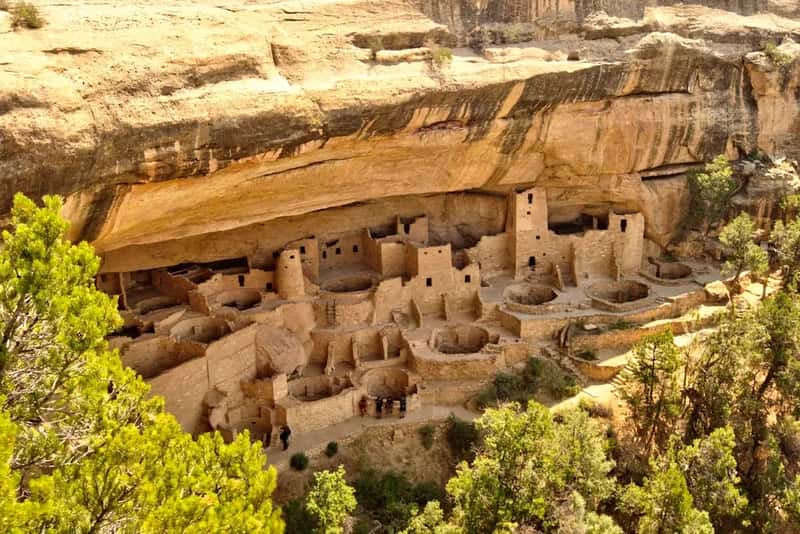
Mesa Verde National Park drew 480,065 visitors in 2024. This is perhaps the most historically significant park on this entire list. Mesa Verde preserves the most notable and best-preserved Ancestral Puebloan cliff dwellings in North America, some dating back nearly 1,400 years.
The cliff palaces here are literally ancient cities carved into the sandstone canyon walls, multi-story stone buildings where an entire civilization lived, worked, and worshipped. Cliff Palace, the largest cliff dwelling in North America, contains 150 rooms and 23 kivas. Walking through it is as close to a time machine experience as most people will ever get.
The park sits in the Four Corners region of southwest Colorado, a genuinely remote corner of the country. That remoteness is the main deterrent. But for anyone passing through the region on the way to other parks, skipping Mesa Verde is a genuine cultural and historical mistake. Nowhere else in the country can you walk directly through a 700-year-old city at the scale that Mesa Verde allows.
—
25. Mammoth Cave National Park, Kentucky – 747,042 Visits in 2024
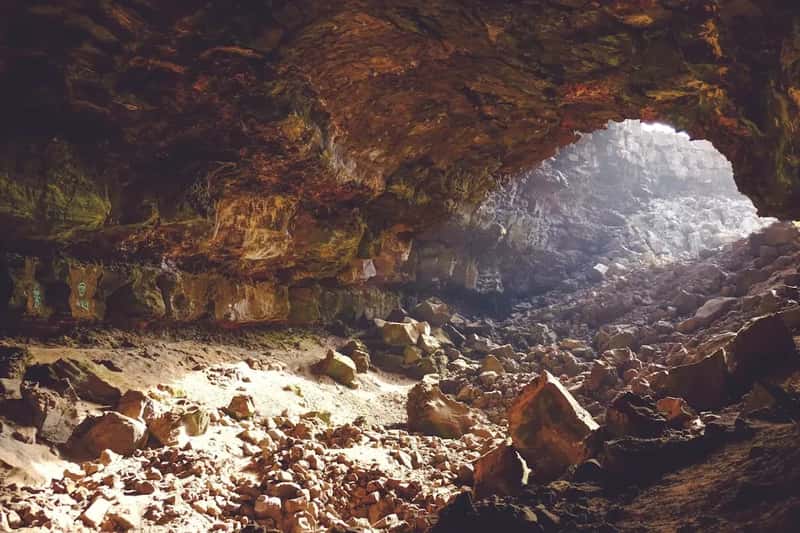
Mammoth Cave National Park drew 747,042 visitors in 2024. Mammoth Cave holds the title of the world’s longest known cave system, with over 400 explored miles and more discovered regularly. The fact that fewer than a million people visited it last year is, to put it mildly, surprising.
The cave cuts beneath the Green River valley in central Kentucky, and its sheer scale is almost incomprehensible. You can walk for hours in passages that stretch 50 feet high, past formations of gypsum, selenite crystals, and ancient flowstone deposits. Tour options range from casual lit pathways to intense wild cave crawling expeditions.
Mammoth Cave sits within a few hours of Louisville, Nashville, and Cincinnati. It has a UNESCO World Heritage designation and is an International Biosphere Reserve. And yet it draws less than a million visitors, placing it well outside the top 20 most visited parks. Awareness is the only barrier here, and it’s a solvable one.
—
26. Everglades National Park, Florida – 741,983 Visits in 2024
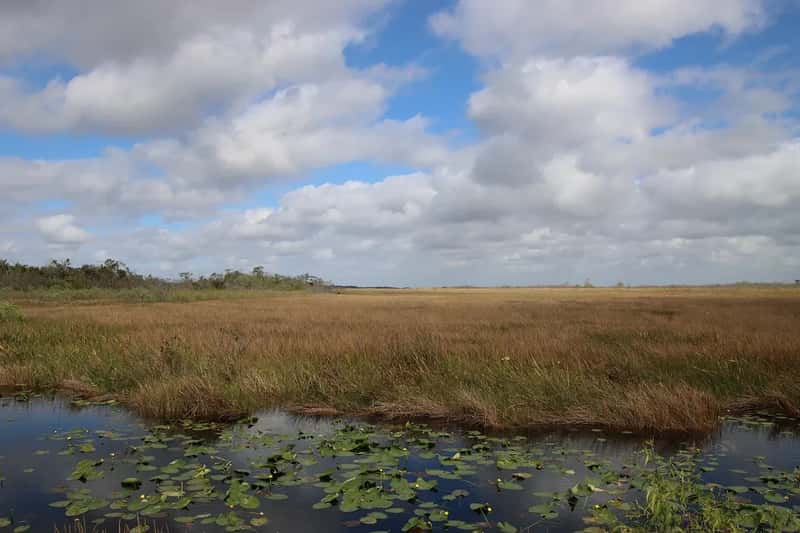
Everglades National Park drew 741,983 visitors in 2024. Florida hosts an enormous number of tourists every year, many of them visiting Miami, Orlando, and the Keys. The Everglades sit right at the tip of the state, accessible from Miami in roughly an hour, and still struggle to pull in a million annual visitors.
The Everglades is the largest tropical wilderness in the United States and one of the planet’s most important wetland ecosystems. It’s home to American crocodiles, Florida panthers, West Indian manatees, and over 350 species of birds. It’s the only place in the world where alligators and crocodiles coexist naturally.
The perception problem here is real. “Swamp” is the word most people use, and it carries all the wrong connotations. The reality is a vast, slow-moving river of grass, a complex mosaic of freshwater and saltwater habitats that supports one of the richest concentrations of wildlife in North America. The Everglades is one of the most ecologically irreplaceable places in the country, and fewer than 750,000 people visited it last year.
—
27. Glacier Bay National Park and Preserve, Alaska – 736,282 Visits in 2024
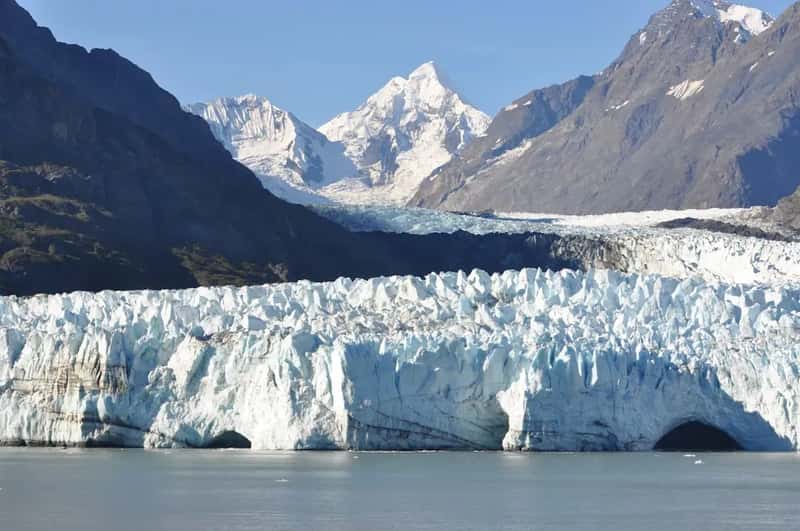
Glacier Bay National Park and Preserve drew 736,282 visitors in 2024. Glacier Bay is one of those places that inspires genuine awe in everyone who sees it. Sixteen tidewater glaciers calve into the bay, sending massive ice chunks crashing into the water with a thunderous boom.
The park is a UNESCO World Heritage Site and an International Biosphere Reserve, recognized globally for its outstanding ecological importance. Brown bears, mountain goats, harbor seals, orcas, and humpback whales all call this bay home. The landscape is still actively recovering from the Little Ice Age, and the speed of ecological succession here is studied by scientists worldwide.
Most visitors arrive by cruise ship rather than independent travel, which limits the kind of deep, immersive experience the park truly deserves. Getting there under your own power requires flying into Gustavus, a tiny town served by small aircraft. The effort is significant, but so is the reward. Very few places on Earth let you watch glaciers actively sculpting a landscape in real time.
—
28. Theodore Roosevelt National Park, North Dakota – 732,951 Visits in 2024
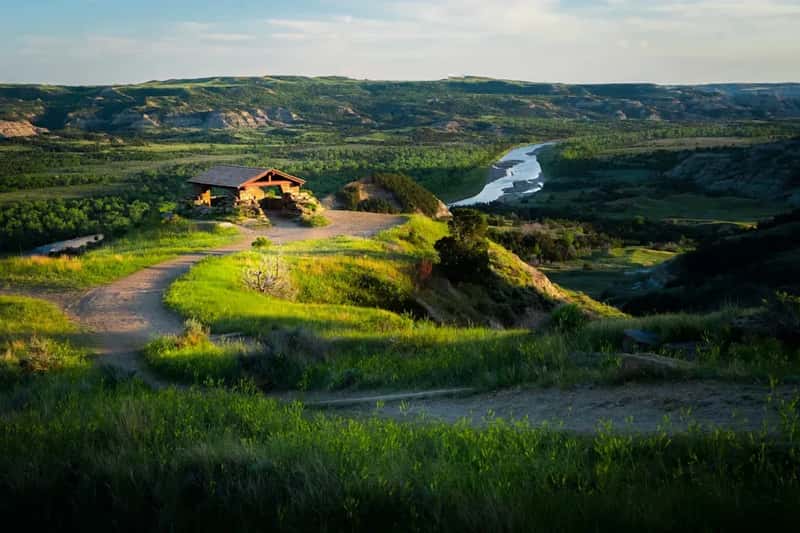
Theodore Roosevelt National Park drew 732,951 visitors in 2024. North Dakota is one of the least-visited states in the country, and its national park reflects that reality. Yet this park holds the colorful badlands where a young Theodore Roosevelt came to grieve, heal, and ultimately find his conservation purpose.
The landscape here is otherworldly. Eroded buttes, petrified wood, and bison herds roaming the painted canyon create a scene that genuinely looks prehistoric. Wild horses, prairie dogs, elk, and bighorn sheep all inhabit the park in significant numbers. Wildlife viewing is consistently excellent.
The park is divided into three units, the North, South, and Elkhorn Ranch, spread along the Little Missouri River. The South Unit sits adjacent to the town of Medora, a charming small town that makes a great base for exploration. North Dakota’s reputation for cold and remoteness keeps visitors away, but the park’s badlands scenery would look right at home on the cover of any major travel magazine.
—
29. Haleakala National Park, Hawaii – 732,477 Visits in 2024
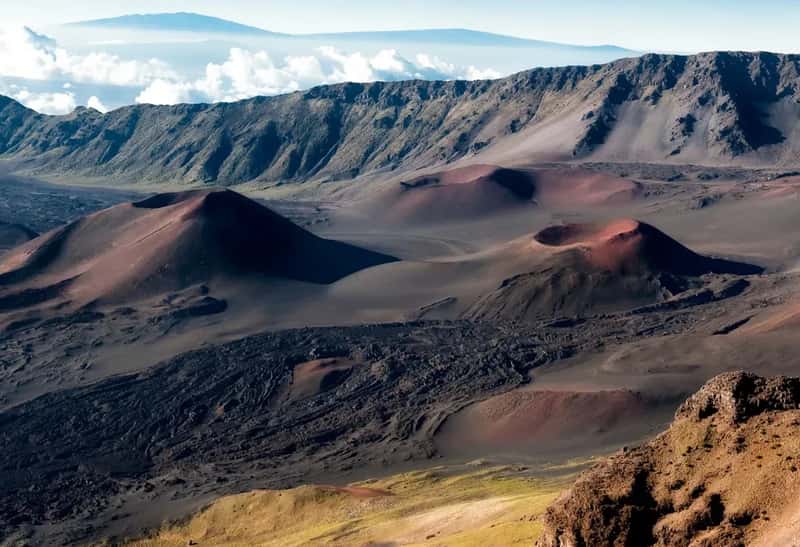
Haleakala National Park drew 732,477 visitors in 2024. For a park on Maui, one of the most visited Hawaiian islands, that number shows how effectively the park’s altitude and access requirements filter out casual visitors.
Haleakala is a dormant shield volcano, and its summit crater at nearly 10,000 feet sits above the clouds. Watching the sunrise from the summit is one of the most transcendent natural experiences available on American soil. Mark Twain reportedly called it “the sublimest spectacle he had ever witnessed.” The landscape inside the crater looks genuinely Martian, all cinder cones and lava flows and silence.
A reservation system is required for the summit sunrise experience, and getting there means driving a winding road in the dark in cool temperatures that Maui beach tourists are not prepared for. The lower Kipahulu district contains bamboo forests, freshwater pools, and the Pipiwai Trail, one of Hawaii’s great hikes. Many Maui visitors spend their entire trip at sea level and miss everything Haleakala has to offer.
—
30. White Sands National Park, New Mexico – 702,236 Visits in 2024
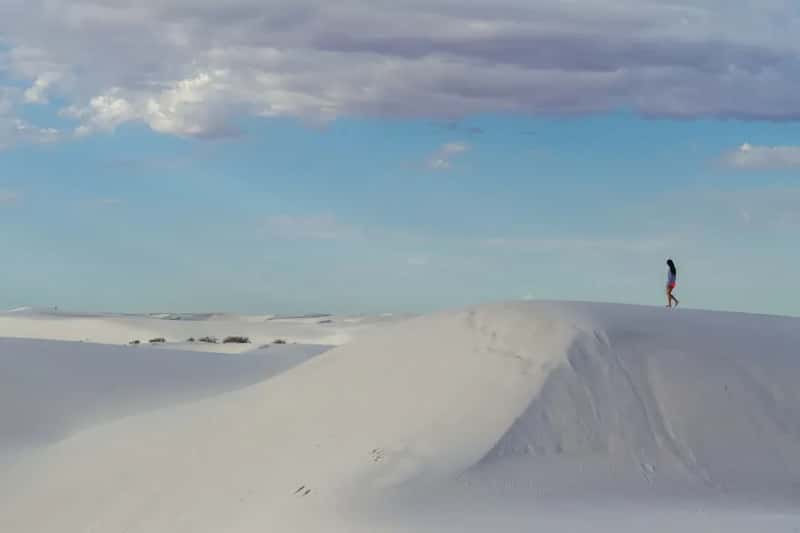
White Sands National Park in New Mexico drew 702,236 visitors in 2024. White gypsum dunes stretching across 275 square miles create one of the most visually stunning landscapes in North America. Yet barely 700,000 people showed up to see it in an entire year.
The dunes are the largest gypsum dune field on Earth. They glow white in the sunlight and turn soft pink and orange at sunset. Sledding down the dunes on rented plastic discs is a legitimate family activity that children absolutely love. The clarity and strangeness of the landscape make it unforgettable for anyone who makes the trip.
The park sits in southern New Mexico between El Paso and Albuquerque, about four and a half hours from either city. Its remote location is the primary barrier. It occasionally closes for missile testing from the adjacent White Sands Missile Range, a quirk that has no equivalent in any other American national park. Those temporary closures add an unpredictable element that may deter some planners.
—
31. Crater Lake National Park, Oregon – 504,942 Visits in 2024
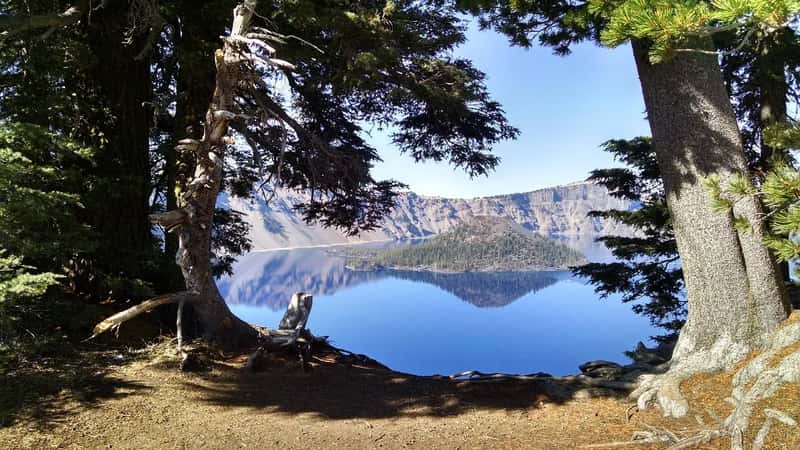
Crater Lake National Park drew 504,942 visitors in 2024. Crater Lake holds the deepest lake in the United States, reaching 1,943 feet at its greatest depth. The water is so pure and the blue so intense that photographs of it look digitally enhanced. They are not.
The lake formed roughly 7,700 years ago when the volcano Mount Mazama collapsed in on itself following a massive eruption. It has no inlet or outlet streams. Rainwater and snowmelt are its only sources. Its clarity and color come entirely from its depth and purity, and it’s the stuff of genuine natural wonder.
Oregon is a popular outdoor destination, and Crater Lake sits in the southern part of the state, roughly 80 miles from Bend. It’s not exactly hidden. Heavy snowfall closes the rim road for much of the year, limiting visitation to a relatively short summer season. That seasonal restriction, combined with Oregon’s generally understated tourism culture, keeps numbers lower than you’d expect for a lake this extraordinary.
—
32. Big Bend National Park, Texas – 561,458 Visits in 2024
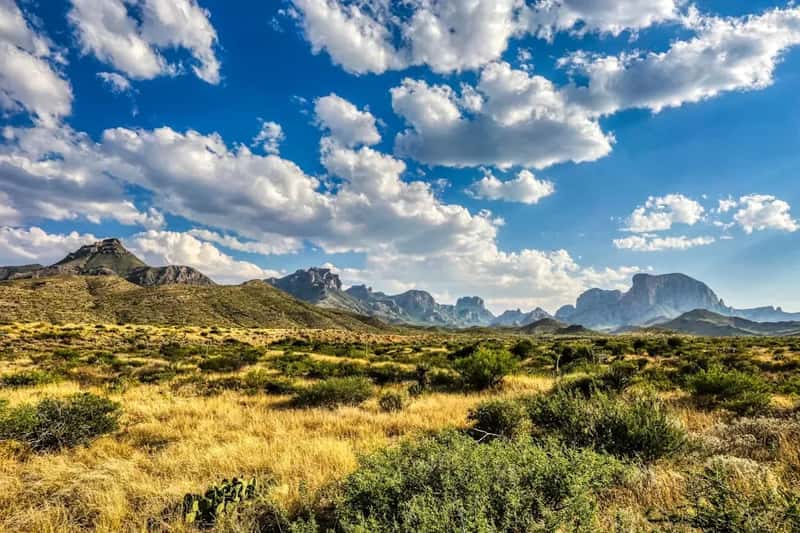
Big Bend National Park drew 561,458 visitors in 2024. Big Bend is one of the most remote national parks in the lower 48 states. The nearest major city, San Antonio, is over 300 miles away. El Paso is over 300 miles in the other direction. You have to really want to go to Big Bend.
The park spans over 800,000 acres along the Rio Grande at the U.S.-Mexico border, containing Chihuahuan Desert, the Chisos Mountains, and river canyons that cut hundreds of feet into the limestone. The night sky here is one of the darkest in the eastern half of the country, and Big Bend is a certified International Dark Sky Park. Stargazing here is a profound experience.
The park hosts over 450 species of birds, more than any other national park in the country. Hikers can trek through spectacular canyon gorges, soak in a natural hot spring on the banks of the Rio Grande, or climb into the Chisos Mountains for cool air and sweeping desert views. Big Bend rewards the effort it demands, deeply and memorably, but most Americans will never make that drive.
—
33. Petrified Forest National Park, Arizona – 559,254 Visits in 2024
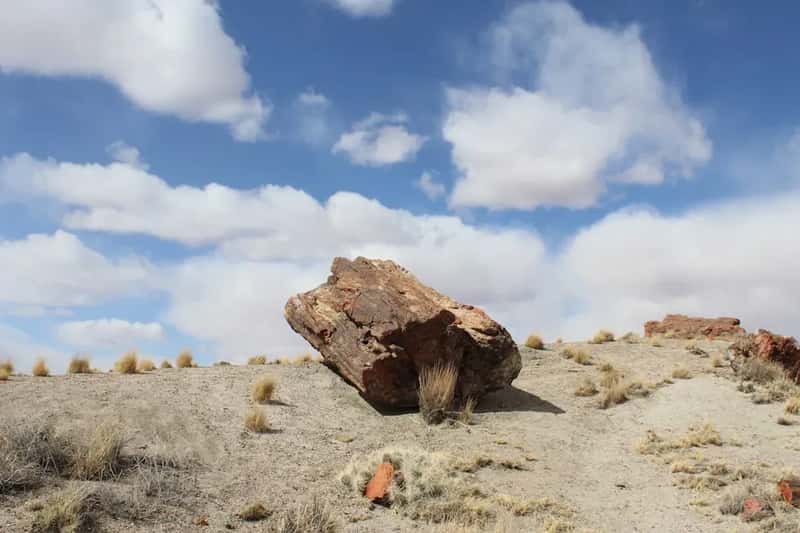
Petrified Forest National Park in Arizona drew 559,254 visitors in 2024. Most people encounter Petrified Forest as a rest stop on Interstate 40 and don’t venture beyond the roadside exhibits. That’s a significant mistake.
The park contains one of the world’s largest and most colorful concentrations of petrified wood, ancient logs from 225-million-year-old trees that have been slowly replaced by quartz crystal, preserving their form in extraordinary detail. The Painted Desert, which makes up the northern portion of the park, blazes in shades of red, orange, pink, and purple, especially at sunrise and sunset.
The park also contains over 600 archaeological sites, including petroglyphs and the ruins of Pueblo Indian communities that occupied this landscape centuries ago. Driving the 28-mile park road is free with admission and requires no hiking. Despite that ease of access, most drivers on nearby I-40 wave their hands vaguely in the park’s direction and keep moving. It’s one of the more baffling cases of visitor indifference on this list.
—
34. Biscayne National Park, Florida – 512,213 Visits in 2024
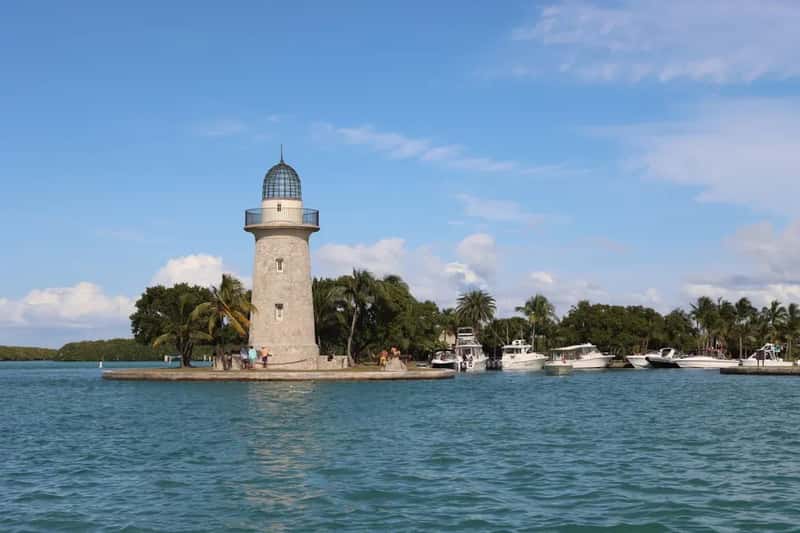
Biscayne National Park in Florida drew 512,213 visitors in 2024. Biscayne is unique in that 95 percent of the park is water. It sits just south of Miami, protecting the northernmost section of the Florida Reef, the third-largest barrier reef in the world.
Because most of the park is underwater or accessible only by boat, it gets missed by the typical land-based tourist. The mainland visitor center sits at Convoy Point, and from there, the park looks like little more than a bay view. Most visitors never get out on the water, and without doing that, you’re missing nearly everything the park has to offer.
Snorkeling over the reef reveals a world of sea turtles, nurse sharks, spiny lobsters, and hundreds of species of tropical fish. The park also includes mangrove shoreline, small keys, and the ruins of a now-submerged prehistoric campsite on Elliott Key. Visitation numbers range widely for the national parks, with some being visited by millions and others only in the thousands – and Biscayne, sitting in the shadow of Miami, is one of the most dramatic examples of a spectacular park hiding in plain sight.
—
The data from the National Park Service is unambiguous. In 2024, the National Park Service notched a record-high 331.9 million recreation visits at more than 400 sites across the country. That number beats the previous record of 330.9 million recreation visits set in 2016. Yet the distribution of those visits is wildly uneven. The most visited national parks in 2024 accounted for nearly a third of all national park recreational attendance, while dozens of parks on this list struggle to register even a fraction of a percent. The crowds at the top of the list are real. So is the emptiness at the bottom. What would you choose?