Access to a fast, reliable internet connection has quietly become as essential as electricity or clean water for many households around the world. While most nations still treat broadband as a paid commodity handled by private providers, a small handful of countries have taken a very different approach, treating connectivity as something closer to a public utility or even a legal entitlement.
These four places didn’t stumble into their reputation by accident. Each one built its policy through years of legislation, infrastructure investment, and, in some cases, painful trial and error. Here’s a closer look at how they got there and what “free” actually means once you dig into the details.
Finland’s legal right to a broadband connection
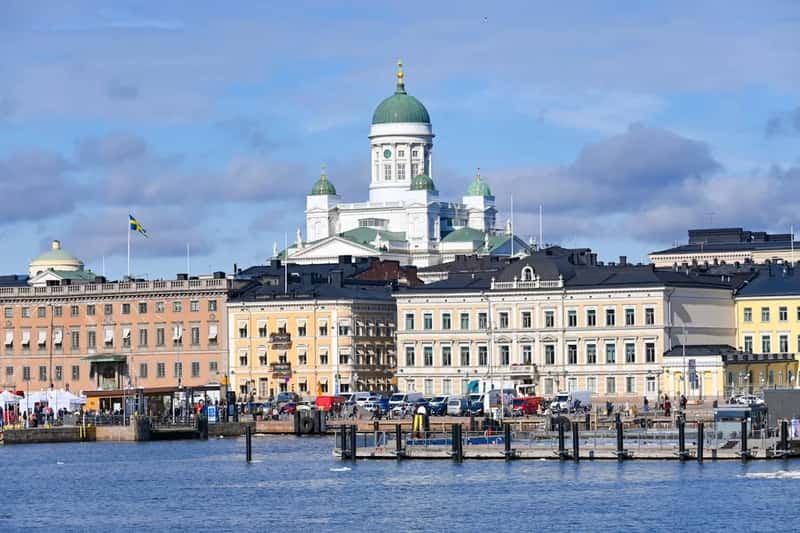
Finland made global headlines in 2010 when it became the first country in the world to legally guarantee broadband access to every resident. On July 1, 2010, all Finnish citizens gained a legal right to access a 1 Mbps broadband connection, making Finland the first country to accord such a right. The government didn’t stop there, either. Officials also pledged to raise the minimum guaranteed speed to 100 Mbps by 2015.
What makes Finland’s model interesting is how it treats connectivity the same way it treats water or postal service. Broadband access was folded into basic communications services like telephone or postal service, thanks to an amendment of the Communications Market Act. It’s worth noting that residents still pay a provider for the connection itself; the “right” guarantees availability and a baseline speed rather than a government-issued freebie. Still, the law forced telecom companies to reach even the most remote rural households, closing gaps that market forces alone were never going to fix.
Estonia’s nationwide network of free public wifi
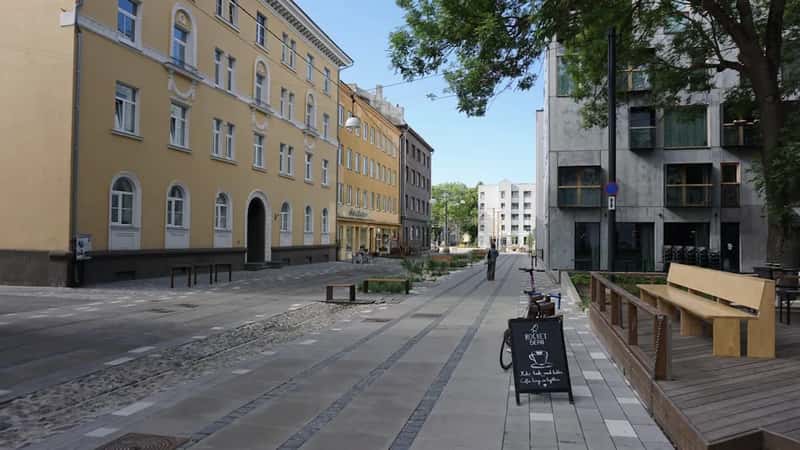
Estonia has spent more than two decades building a reputation as one of the most digitally connected societies on the planet. Back in February 2000, the Estonian Parliament enacted a new Telecommunications Act that added internet access to its universal service list. That early legal groundwork paved the way for something more tangible: thousands of genuinely free wifi access points scattered across gas stations, libraries, cafes, parks, and public buildings nationwide.
Today, Estonia’s approach to connectivity is baked into its constitution and its everyday civic life. All citizens hold constitutional rights to freely obtain information and disseminate ideas, beliefs, and facts, with no obstacles to exercising freedom of expression online. Internet freedom remains generally robust in this consolidated democracy and EU member state, known for its pioneering approach to e-government, where protections for user rights are strong and the government typically places few limits on content. That combination of open policy and dense free wifi coverage is a big reason Estonia consistently ranks near the very top of global internet freedom indexes, placing second worldwide with 91 index points, just behind Iceland.
Niue, the tiny Pacific island that started it all
Long before anyone else was talking about nationwide free internet, this small Polynesian island beat everybody to it. In 2003, the Internet Users Society of Niue launched what it called the world’s first free nationwide WiFi internet access service, available to all residents, tourists, and government offices at no cost to the public or local government. The achievement earned Niue recognition as the first country to offer free wifi to all inhabitants. For a nation of roughly two thousand people scattered across a single volcanic island, it was a remarkable technical feat given the harsh tropical weather that regularly damages underground cabling.
The full story turned out to be more complicated than the headlines suggested. Years after the initial rollout, Niue’s own government acknowledged that coverage never reached every village, that installation could cost residents thousands of dollars in some cases, and that reliability remained a persistent complaint. Modern travel guides confirm that visitors today still need to jump through a few hoops if hoping to have access to good wifi, despite the island’s enduring reputation. Niue’s story is really a lesson in ambition outpacing infrastructure, though its symbolic status as the pioneer of the concept remains intact.
Costa Rica’s constitutional right to connectivity
Costa Rica took a legal route rather than a purely technical one, and its courts have been remarkably consistent on the issue. The country’s Supreme Court has declared that access to the internet is a fundamental right, similar to the rights to information and communication. Law No. 8660, passed in 2008, requires telecommunication operators to provide open access to networks and services while observing non-discrimination between public and private users. That legal foundation gave Costa Rica an early head start on treating connectivity as a public good rather than a luxury.
More recently, the country has been expanding free public wifi initiatives to reach communities that private providers have historically overlooked. Coverage tends to concentrate around schools, community centers, and public plazas rather than blanketing every rural household, so it functions more like a growing patchwork than a single unified national network. Even so, Costa Rica’s combination of constitutional backing and steady public investment has made it a regular reference point whenever universal internet access comes up in Latin American policy discussions.
None of these four countries hand every household a free fiber line with no strings attached, and it’s worth being upfront about that. What they share instead is a genuine, government-backed commitment to treating connectivity as something closer to a right than a privilege, whether that means a legal speed guarantee in Finland, dense free wifi coverage in Estonia, a pioneering if imperfect experiment in Niue, or constitutional protection in Costa Rica. Each approach has its gaps, but together they offer a useful blueprint for what treating the internet as a public utility can actually look like in practice.