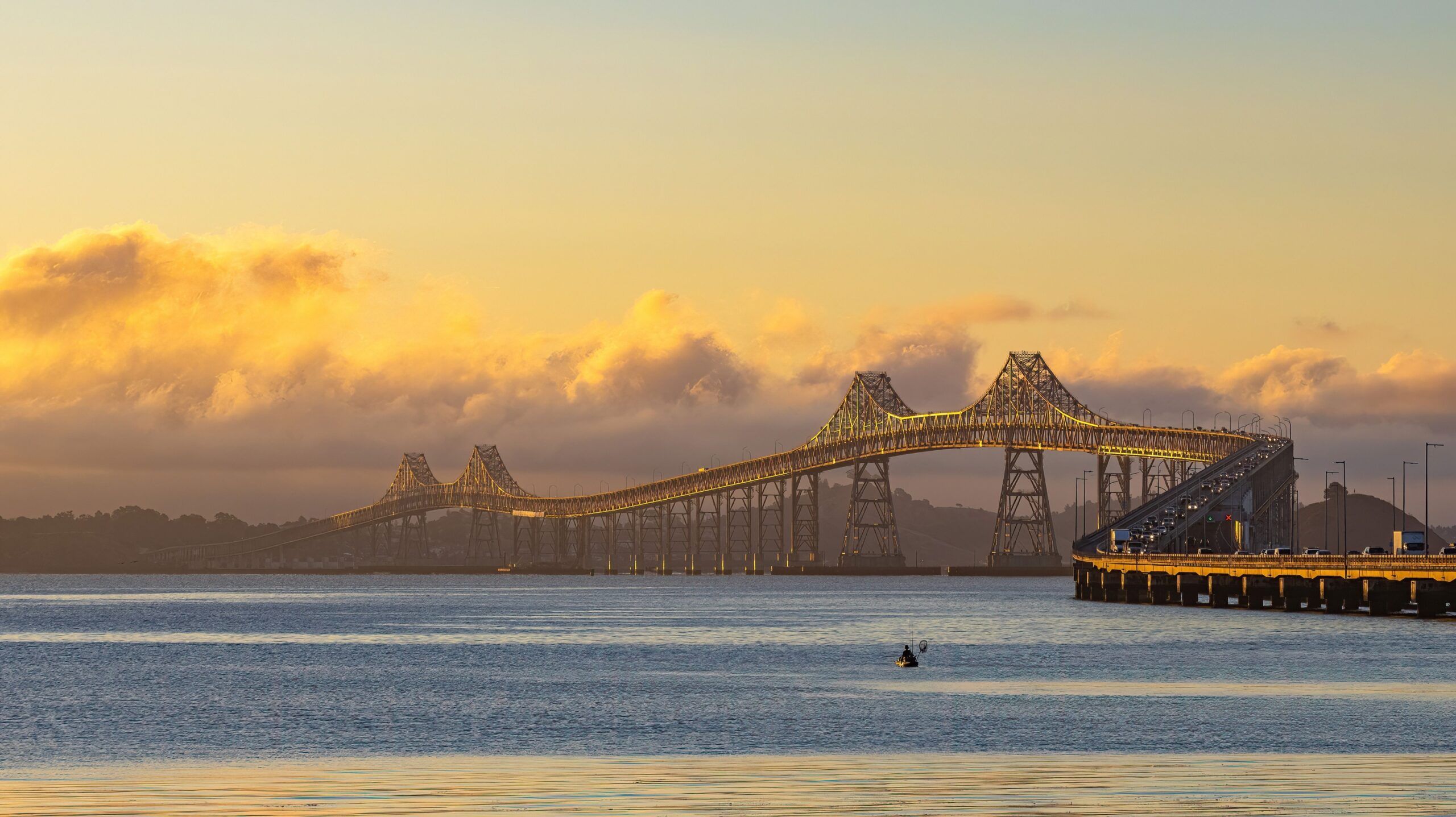
Millions of drivers cross bridges every day without giving much thought to what’s underneath them. Yet across the country, a surprising number of well known crossings, some of them landmarks recognized around the world, carry a federal classification that signals real wear on their decks, beams, or supports. The following four bridges illustrate just how far that designation reaches, touching everything from quiet regional causeways to some of the most photographed structures in the nation.
Brooklyn Bridge, New York City
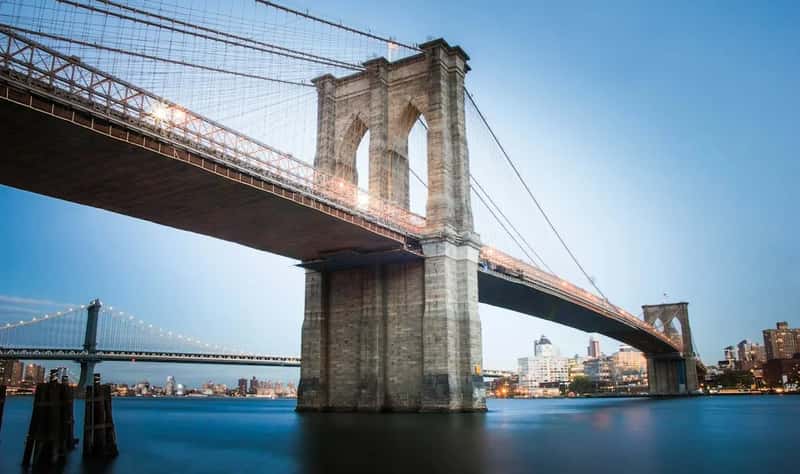
The Brooklyn Bridge has carried traffic between Manhattan and Brooklyn since 1883, and its stone towers and cable stays remain one of the most recognizable images of American engineering. Despite that status, it has repeatedly appeared on federal lists of bridges rated in poor condition. Notable bridges that are structurally deficient include the Brooklyn Bridge in New York City, the Arlington Memorial Bridge, and the San Mateo-Hayward Bridge in California.[1]
The classification does not mean the bridge is unsafe for the roughly one hundred thousand vehicles that use it daily, but it does point to components needing repair or close monitoring. FHWA classifies a bridge as poor when its deck, superstructure, substructure, or culvert is rated 4 or lower on the 0-9 inspection scale, meaning advanced deterioration needing repair, not that the bridge is unsafe to cross.[2] The city has run ongoing rehabilitation work on the span over the years, though its age and the sheer volume of daily wear keep it a recurring name on national bridge condition reports.
Arlington Memorial Bridge, Washington, D.C.

Few bridges carry as much symbolic weight as the Arlington Memorial Bridge, which links the Lincoln Memorial to Arlington National Cemetery across the Potomac River. It is a historic structure listed in the National Register of Historic Places, carrying approximately 68,000 to 70,000 vehicles across the Potomac River daily.[3] Built in the early 1930s, the bridge went decades with delayed maintenance before its condition became impossible to ignore.
The 84-year-old bridge needed to be completely rehabilitated or face closure by 2021.[3] A major rehabilitation project addressed the deck, piers, and the aging bascule span, but the structure remains in the spotlight for other reasons too. In January 2025, a pickup truck crashed through the bridge’s railing and into the Potomac, killing two brothers, and as of early 2026 the damaged section had still not been permanently repaired. A National Park Service spokesperson said repairs to the bridge are scheduled for June 2026 now that a contract for the repairs has been approved.[4]
San Mateo-Hayward Bridge, California
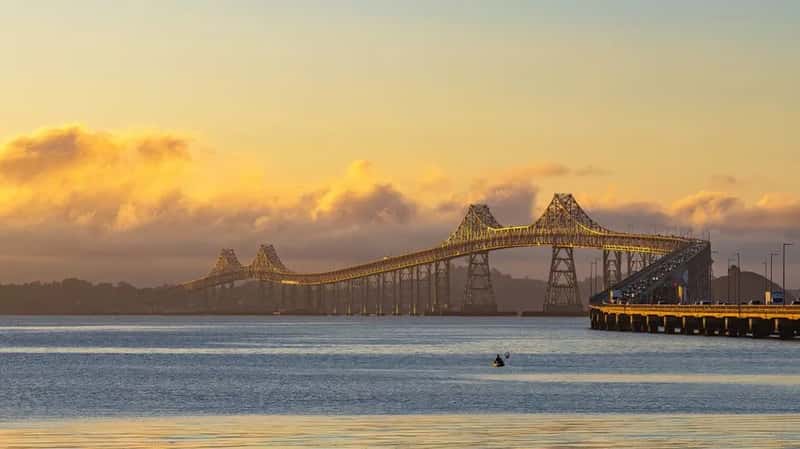
Stretching across San Francisco Bay, the San Mateo-Hayward Bridge is one of the longest bridges in the country and a critical link between the Peninsula and the East Bay. It is the longest fixed-link bridge in California and the 25th longest in the world.[5] That length, combined with decades of salt air exposure and heavy commuter traffic, has made it a frequent entry on federal condition reports for years.
The San Mateo-Hayward bridge crossing California’s San Francisco Bay has repeatedly appeared among the notable structurally deficient bridges tracked in national reports.[6] The span carries six lanes of State Route 92 and remains under the joint oversight of Caltrans and regional toll authorities, who continue to fund inspection and repair cycles. Its scale alone, nearly seven miles of causeway and highrise sections, makes any large scale rehabilitation a lengthy and costly undertaking.
Verrazzano-Narrows Bridge, New York
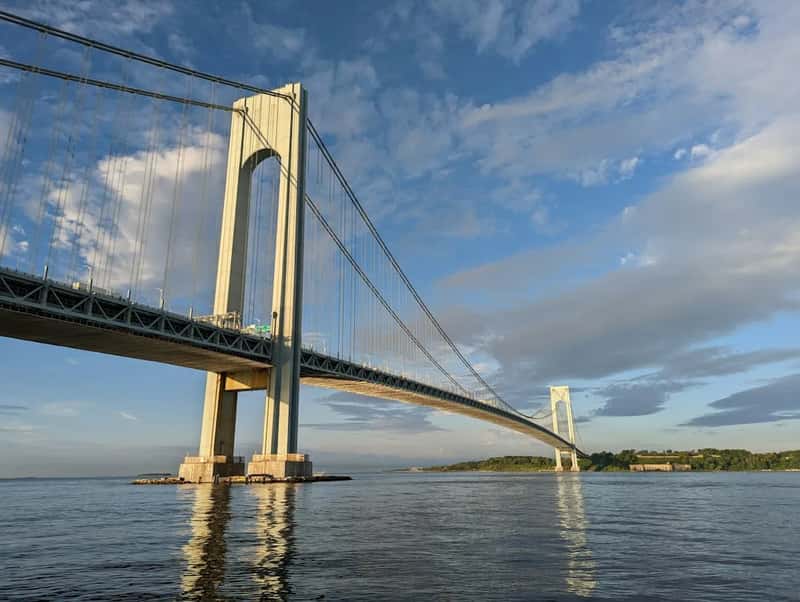
Connecting Staten Island to Brooklyn across the Narrows, the Verrazzano-Narrows Bridge is one of the busiest crossings to carry a poor condition rating anywhere in the country. It is the busiest bridge in New York State that is rated structurally deficient, completed in 1961 and carrying, on average, more than 175,000 vehicles every day.[7] That combination of age and traffic volume puts unusual pressure on its cables, towers, and deck sections.
New York’s transportation agencies have run staged rehabilitation programs on the bridge for years, including deck replacement and cable maintenance projects meant to extend its service life. Even with that ongoing work, the bridge’s scale and traffic load mean it continues to show up in state and federal condition surveys as a structure requiring sustained attention rather than a quick fix.
Each of these bridges shows a different side of the same underlying issue. Some, like the Brooklyn Bridge and the Verrazzano-Narrows Bridge, face the strain of extraordinary daily traffic on structures built decades ago. Others, like the Arlington Memorial Bridge, sit at the intersection of historic preservation and urgent structural need, where repairs must balance speed against respect for a monument’s original design. The San Mateo-Hayward Bridge shows how sheer length and environmental exposure can wear down even a relatively newer crossing over time.
None of these classifications mean collapse is imminent. Poor condition means advanced deterioration needing repair, not that the bridge is unsafe to cross, and bridges judged unsafe are closed or load-restricted by their owners.[2] Still, the persistence of these four names on national bridge reports year after year is a reminder that fixing America’s most heavily used crossings takes sustained funding and time, not a single round of repairs.