Global life expectancy has mostly been climbing back toward pre-pandemic levels. In the United States, for instance, the number hit an all-time high in 2024. Yet a handful of specific places are moving in exactly the opposite direction, and the drop has been steep enough that public health researchers are struggling to find historical comparisons.
These are not gradual declines tied to aging populations or slow-moving chronic disease trends. They are abrupt collapses driven by war, healthcare breakdown, and, in one American case, a stubborn opioid crisis that refuses to loosen its grip. Here is a closer look at four places where the numbers have genuinely fallen off a cliff.
Gaza Strip
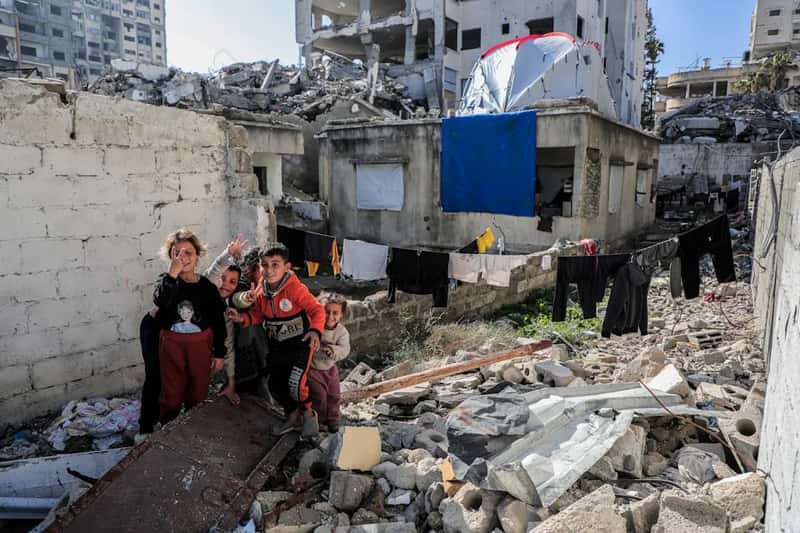
No place on the list has seen a collapse as extreme, or as well documented, as Gaza. Before the current war began, researchers estimated life expectancy there at 75.5 years, a figure roughly in line with much of the developed world. Life expectancy in the Gaza Strip has been nearly cut in half since the current war began in October 2023, with a Lancet study finding it dropped from a pre-war average of 75.5 years to 40.5 years for the period between October 2023 and September 2024. The decline was even sharper for men than for women.
Newer figures suggest the situation has not stabilized. Life expectancy in Gaza fell by 44 percent in 2023 and by 47 percent in 2024 compared with what it would have been without the war, equivalent to losses of 34.4 and 36.4 years respectively. The death toll behind those numbers keeps climbing too. An update of the analysis, produced after the study’s publication, revealed that the violent death toll likely exceeds 100,000. Researchers involved have noted that even these figures probably understate the real toll, since they exclude indirect deaths from malnutrition and the collapse of medical care.
Sudan
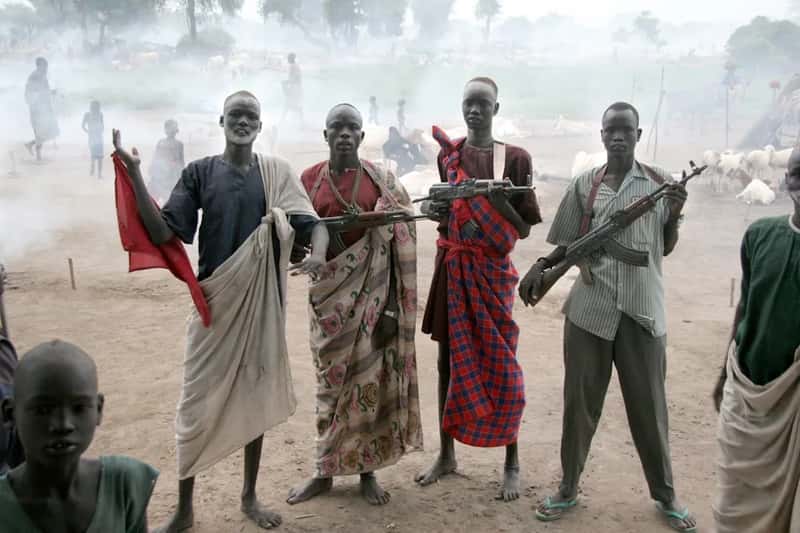
Sudan’s crisis gets far less international attention than Gaza’s, but the underlying mechanism is similar: a health system in freefall. The ongoing conflict in Sudan, which began in April 2023, has created a humanitarian crisis with far-reaching consequences for the general population. Hospitals have been bombed, looted, or simply abandoned as medical staff flee for their own safety, leaving entire regions without functioning care.
One of the most severe issues faced by older adults in conflict zones is the collapse of health-care infrastructure, and in Khartoum alone over a quarter of older adults do not have access to their regular medications, putting them at greater risk of complications, higher mortality, and a reduction in life expectancy. The broader picture is grim as well. Healthcare facilities are being attacked, there is a shortage of medicines and supplies, and a lack of financial and human resources to operate health services, meaning the system is on the verge of collapse. Add in mass displacement and a food crisis affecting tens of millions, and the ingredients for a lasting demographic shock are all in place.
South Sudan
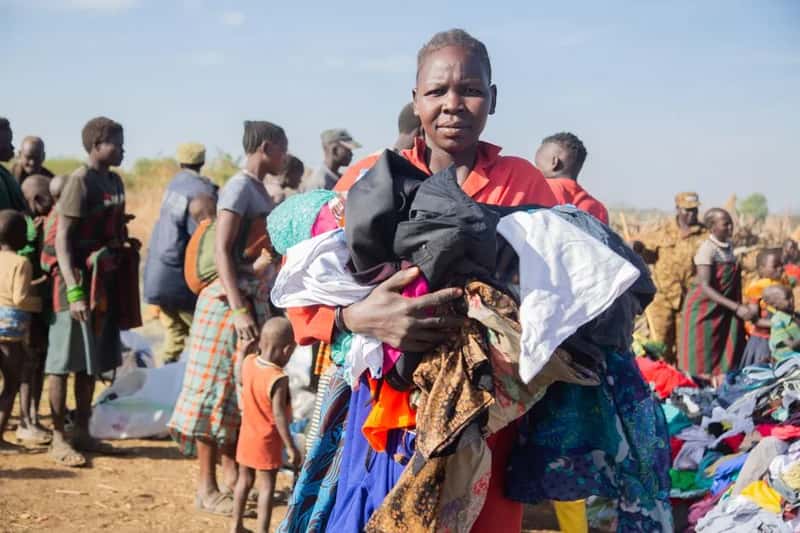
South Sudan tells a slightly different, arguably sadder, story. This is not a country that had healthy gains and then lost them overnight. It is a country that never really got the gains in the first place, and now faces the prospect of losing even more ground. Life expectancy is 58, according to the World Bank, unimproved since independence in 2011.
What makes the situation newly alarming is the direction of travel elsewhere on the continent compared with South Sudan’s trajectory. While much of east Africa has seen improving health outcomes, South Sudan is going the other way despite receiving 1.4 billion dollars in foreign aid in 2024, the largest amount globally as a share of GDP. Renewed fighting has only deepened the strain, with the United Nations reporting that thousands of civilians have already been killed and warning the country is edging toward another full-blown civil war. For a population that has already endured one brutal conflict in the 2010s, the fear now is a second collapse layered on top of a health system that barely recovered from the first.
Appalachian United States, led by West Virginia

The fourth entry looks nothing like the others on paper, yet the human toll has been just as real. West Virginia sits at the center of a regional pattern where life expectancy has either stalled or reversed for decades, largely because of drug overdoses and chronic disease. Broadly speaking, lifespan increased significantly in the last century, but Southern states like West Virginia, Oklahoma, and Kentucky barely saw the number grow at all. That stagnation turned into an outright drop during the pandemic years, when overdose deaths spiked on top of COVID mortality.
Nationally, the setback was steep and swift. Life expectancy in the US had been trending up for decades before dropping by nearly a year and a half between 2019 and 2021, but it has been on the rise again since 2022. The recovery, however, has not been evenly shared. The national average sits around 77.5 years, but more than half of states fall below that mark, and the gap between the highest and lowest ranked states is 7.8 years. States across Appalachia and much of the South continue to anchor the bottom of that ranking, a sign that the region’s mortality crisis never fully let go even as the country’s headline number climbed to a record high.
What ties these four places together is not geography or politics but the speed of the fall. In Gaza and Sudan, war tore through health systems built up over generations in a matter of months. In South Sudan, a fragile status quo is now teetering on the edge of a second collapse. In Appalachia, a slower-moving crisis of addiction and chronic illness produced its own sudden drop when the pandemic hit hardest. Each case is a reminder that life expectancy, for all its statistical polish, ultimately tracks something much simpler: whether people can get the care, food, and safety they need to see another year.