Ask anyone who rides trains for six, ten, or even twenty hours at a stretch, and you’ll notice a pattern in what ends up in their bag. It’s rarely the same stuff casual travelers pack for a quick hop between cities. Rail is having a moment right now, with Amtrak reporting an all-time record high for annual ridership, providing 34.5 million rides nationwide from October 2024 through September 2025, up 5% from the previous year[1], and Europe’s overnight network expanding at a similar pace. That surge means more people are discovering the small kit of items that make a long haul on rails feel manageable instead of grueling.
A power bank that can survive the whole trip

Outlets exist on most long-distance trains, but regulars know they can’t always be trusted. Seats fill up fast on popular routes, and if someone else claims the plug near your row, you’re out of luck for hours. This matters more now than ever, since Amtrak’s long-distance network has been running at higher capacity, with added coach and sleeper cars on routes like Chicago to Los Angeles as demand keeps climbing.
A power bank with enough capacity for a full charge cycle or two removes that uncertainty entirely. Frequent riders tend to carry one rated for at least 20,000 milliamp hours, paired with a short cable that won’t stretch awkwardly across an aisle. It’s the kind of unglamorous item that never makes a packing list photo, yet it’s the first thing seasoned travelers replace when it dies.
Noise-blocking headphones or earplugs

Trains are noisier than people expect. Between the rhythmic clatter of the tracks, announcements at every stop, and fellow passengers on speakerphone, a quiet car is rare on any route that runs more than a few hours. Regulars solve this early, usually before they even board, because trying to nap without some kind of sound barrier rarely works.
Over-ear noise-canceling headphones are popular for a reason, but plenty of veteran riders stick with simple foam earplugs tucked in a jacket pocket. Either option turns a chaotic car into something closer to a private space. It’s a small investment that pays off across every future trip, not just the one you’re currently on.
A reusable water bottle, filled before departure
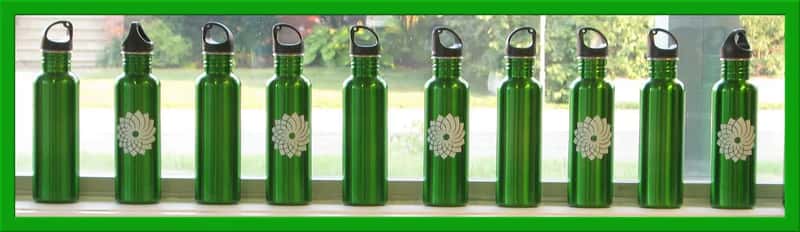
Long-distance trains vary wildly in what they offer onboard. Some have a café car stocked with snacks and drinks, while others run bare bones with nothing more than a vending machine, if that. Regulars don’t leave hydration to chance, especially on trips that stretch past the eight or ten hour mark.
A bottle filled at the station, before the doors close, avoids the scramble later when the café car has a line or has already sold out of water. It also cuts down on plastic waste, which adds up quickly on a system moving over 34 million riders a year. Many stations now have refill stations near the gates, making this an easy habit to build.
A light blanket, eye mask, or compact pillow

Climate control on trains is inconsistent at best. Cars can swing from stuffy to freezing within the same journey, depending on which door opens at which stop and how the crew has set the system that day. Regulars carry something soft and warm that packs down small, rather than relying on the train to get the temperature right.
An eye mask does double duty on trains that run overnight or pass through bright afternoon light with no way to dim the windows fully. Sleeper trains across Europe have seen renewed demand recently, with operators adding routes and capacity to meet interest from travelers who want an overnight alternative to flying. Even on standard daytime long-distance trains, a few minutes of real rest can make the difference between arriving refreshed or arriving exhausted.