Ask any flight attendant off the clock what they actually think about the gadgets sold in airport shops and travel aisles, and the answers rarely match the marketing. Years of watching passengers struggle, panic, or occasionally set off alarms with certain items has given cabin crews a private list of things they quietly tell friends and family to skip. Some of it comes down to comfort and wasted money, but a growing chunk of it is about genuine safety concerns that have only gotten more serious in the past two years.
1. Cheap, uncertified power banks and portable chargers
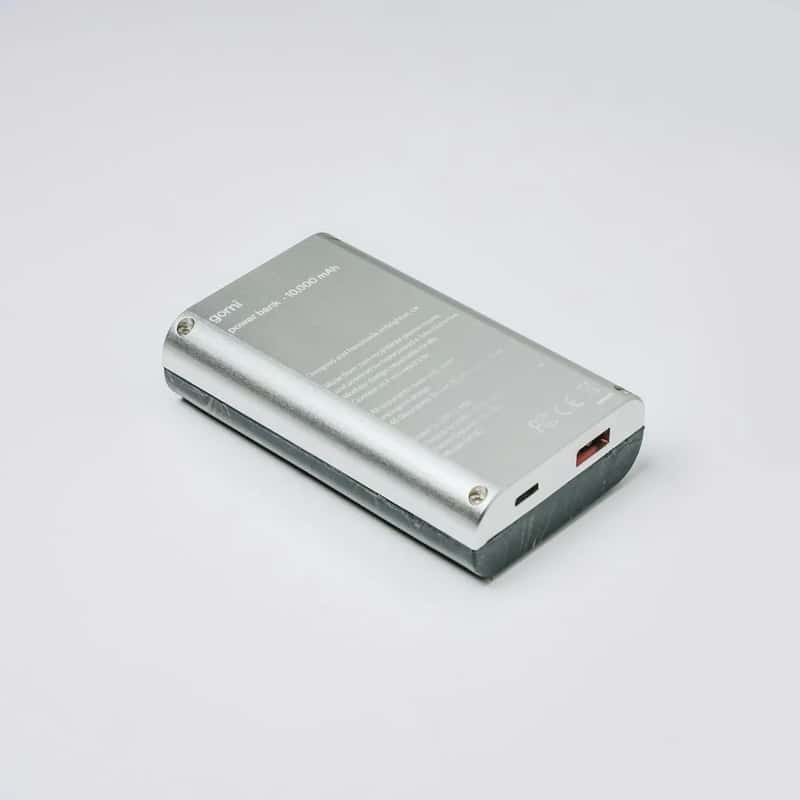
Portable chargers feel like an obvious travel essential, but flight attendants have grown increasingly wary of the bargain-bin versions sold online without proper safety certification. Portable power banks are powered by lithium-ion batteries and more than 600 in-flight lithium battery incidents involving smoke, fire, or extreme heat have been recorded by the FAA in the past two decades, and they’re also a potential fire risk.[1] The numbers have not been slowing down either. FAA data also says there have been 22 verified incidents so far in 2025.[1]
The concern became impossible to ignore after a specific incident overseas. A portable power bank with a lithium battery was found to be a possible source of a fire that engulfed an Air Busan plane in January, with investigators finding multiple electrical melting marks from the remains of a power bank.[1] That single event triggered a wave of policy changes, and South Korea subsequently introduced nationwide restrictions, banning passengers from storing power banks and e-cigarettes in overhead cabins on all of the country’s airlines.[1] Crews who have watched these devices smolder in real time are far less relaxed about them than the average traveler shopping for a three-dollar charger on a marketplace app.
2. Disposable vapes and e-cigarettes packed for convenience
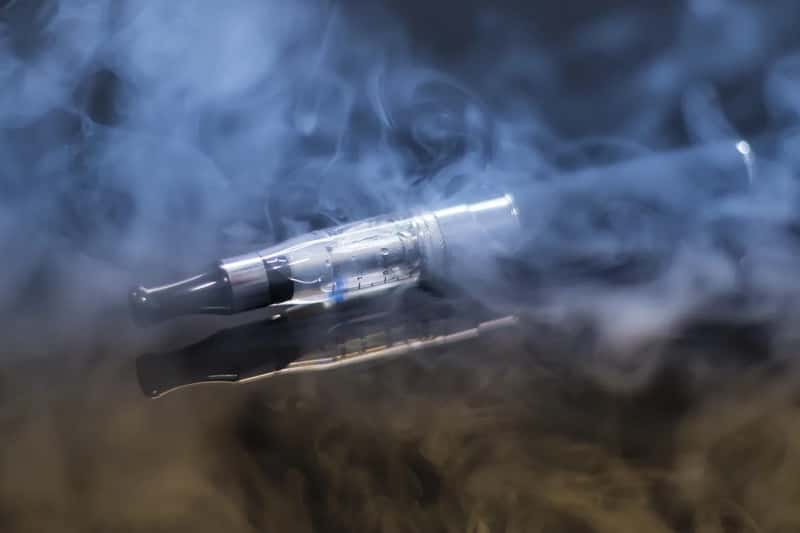
Vapes and e-cigarettes get lumped into the same danger category as power banks for a simple reason: they run on the same volatile battery chemistry. When South Korea moved to tighten cabin rules after the Air Busan fire, regulators did not stop at chargers. The restrictions banned passengers from storing power banks and e-cigarettes in overhead cabins on all of the country’s airlines,[1] a clear signal that aviation authorities view these small devices as carrying similar risk profiles.
Flight attendants who have dealt with overheating electronics know that a vape tucked into a jacket pocket or forgotten in a bag is just as capable of triggering thermal runaway as a laptop battery. Regulators globally have reinforced this thinking, and airlines including Thai Airways, Singapore Airlines, Cathay Pacific, and China Airlines have imposed similar restrictions, with some banning the use or charging of power banks on flights entirely.[2] The quiet advice among crew members tends to be blunt: if it has a rechargeable battery you cannot remove or inspect, keep it out of your carry-on unless you absolutely need it in flight.
3. Bargain inflatable neck pillows
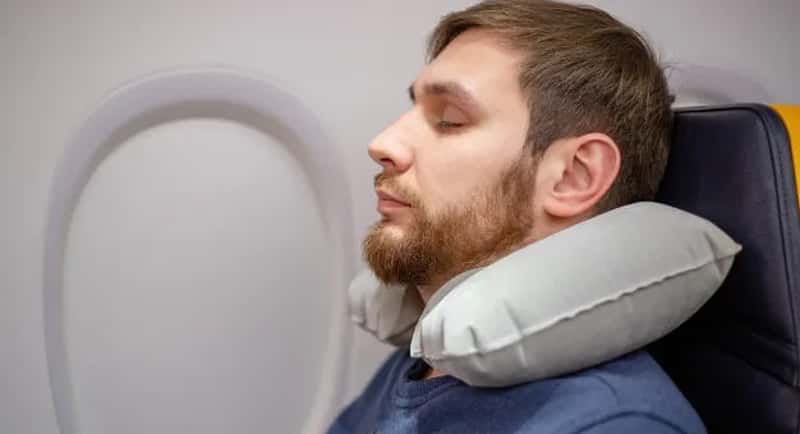
Inflatable neck pillows are everywhere in airport shops, marketed as a compact fix for long-haul discomfort. Frequent travelers and forum regulars who have logged serious flight hours tend to push back on that promise, noting that given a long flight, it is better to stay away from the inflatable ones as they tend to stay in one shape and not adjust to your neck at all.[3] That rigidity is exactly what makes them frustrating for anyone actually trying to sleep upright in a cramped economy seat.
Medical experts who study travel comfort point out that support quality varies enormously between pillow types, and the value really depends on the person. Whether inflatable or stuffed, wanting one at all comes down to comfort, and while many like them, it is individualized, so the advice is simply to try one and see.[4] Crew members who watch passengers fumble with these pillows mid-flight, only to abandon them a few minutes later, often steer friends toward bead-filled or contoured alternatives instead of the cheapest inflatable option on the shelf.
4. Handheld neck fans with loose spare batteries

Personal neck fans have become a popular carry-on item for anyone anxious about stuffy cabin air, and the fans themselves are generally fine. The problem crews flag is how people carry the spare batteries that come packaged with them. Most neck fans rely on lithium-ion batteries, which pose a fire risk if damaged, and TSA rules state that lithium batteries cannot be checked in luggage and must be stored in a carry-on bag.[5]
The detail that trips people up most is loose battery storage. Spare batteries should be carried in a hard-shell case to prevent short circuits, since loose batteries rattling around in a bag are a no-go.[5] Flight attendants who have seen batteries roll around at the bottom of a backpack, rubbing against keys or coins, tend to warn friends that the fan itself is not the issue. It is the unprotected spare battery tossed in alongside everything else that turns a comfort gadget into an avoidable risk.