

Something has shifted in the way Americans think about property. What used to be a retirement fantasy – owning a slice of Caribbean paradise – has become a serious and increasingly mainstream financial move. The Caribbean is undergoing a quiet transformation, moving from a vacationer’s paradise into one of the world’s most in-demand second-home markets, with a surge of affluent buyers seeking turnkey luxury, branded living, and eco-conscious design reshaping the region’s real estate landscape. Favorable tax environments, proximity to the U.S. mainland, strong rental yields, and the lingering appeal of lifestyle migration have all combined to make the timing feel urgent for many buyers.
The region has been resilient and is trending upwards, proven by Statista’s projected growth rate of 4.49 percent between 2024 and 2029 and a valuation of $2.69 billion by 2029. Whether buyers are chasing rental income, a second passport, a retirement base, or simply a place to escape, five Caribbean islands are seeing particularly fast-moving demand from American buyers right now.
1. The Bahamas
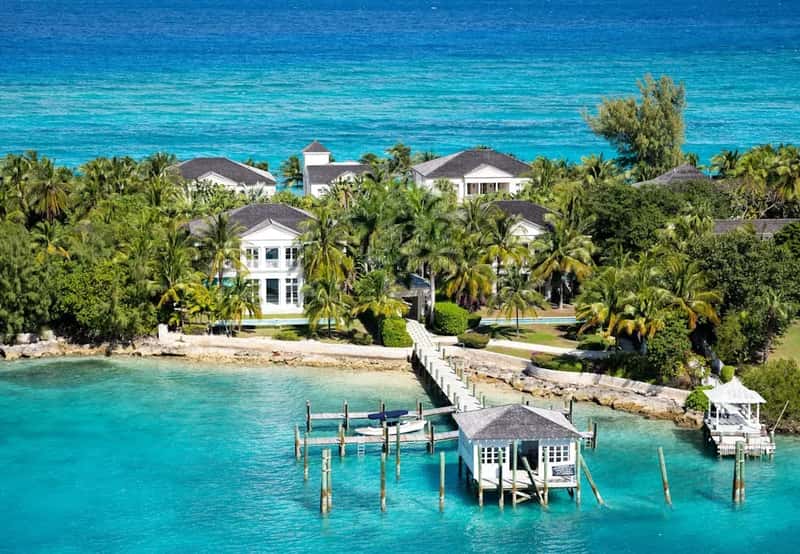
The Bahamas is one of the top choices for Americans, thanks to its proximity – just a short flight from Florida – and its English-speaking, U.S.-friendly culture. That closeness is a genuine differentiator. Americans alone account for roughly 35 percent of foreign real estate purchases in the Bahamas, drawn by proximity to Florida, a favorable tax climate, and the Bahamian dollar’s 1:1 parity with the USD. The Bahamas also levies no income, capital gains, or inheritance taxes on residents, which makes it especially attractive for those seeking to preserve wealth.
In Nassau and Paradise Island, new home listings fell about 31 percent year-over-year in early 2025, as many owners held properties off-market. Yet contracted sales rose and closings jumped 33 percent that month, reflecting persistent demand. Year-to-date closings were 17.5 percent higher than the prior year, and median sale prices were climbing. High-end properties in Nassau and Paradise Island saw price increases of approximately 8 percent compared to 2024, with luxury villas featuring private beach access reaching prices ranging from $5 million to $20 million.
2. Turks and Caicos

Few Caribbean real estate markets have accelerated as dramatically as Turks and Caicos in recent years. The real estate market in the Turks and Caicos Islands has shifted into another category since the early 2020s. Total sales increased from an annual average of $282 million between 2017 and 2020 to $710 million between 2021 and 2024, a rise of 151 percent. For the year 2024 alone, sales volume reached $693.5 million, and 2025 started with a dynamic described as “very strong” by industry players. The Grace Bay area remains the center of the Turks and Caicos luxury real estate market, where strong demand from North American and European buyers, the absence of annual property taxes, and a steady pipeline of high-end villa and branded-residence development have continued to draw international investor interest.
The dollar volume of villa sales rose 113 percent in 2023, and the median price jumped from just over $1 million to $3 million. Transactions beyond $10 million became common, and deals exceeding $30 million have occurred each year since 2023. For investors focused on rental income, the numbers are compelling. An analysis of over 1,400 active listings over a 12-month period in 2024 and 2025 reveals an average annual revenue of about $97,000 per property, with a median occupancy rate around 63 percent and an average daily rate of about $433.
3. Barbados
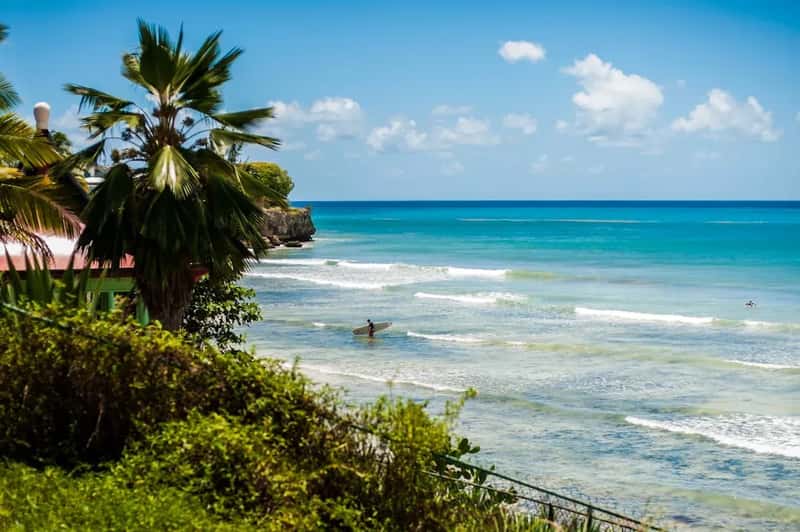
Barbados has long been a favorite of British buyers, but that is changing fast. For the first time in three decades, it’s Americans, not Brits, who are fueling demand. Between January and September of last year alone, more than 175,000 travelers from the United States arrived in Barbados – a milestone that not only reshaped the island’s tourism market but also sparked a 25 percent jump in luxury real estate sales. The United States is now Barbados’ number one source market, and that momentum is rippling into property investment. It’s a notable cultural shift, and the real estate data is following the travel trend closely.
Barbados draws many wealthy tourists, which pushes demand for luxury short-term rentals. The island’s well-developed infrastructure, stable governance, English-speaking population, and internationally recognized legal system give American buyers a sense of familiarity and security that many other Caribbean destinations simply can’t match. Thanks to increased tourism, annual rental yields in the region can reach 10 percent, and Barbados, with its high tourist footfall from the U.S., sits at the upper end of that range for well-positioned properties.
4. The Dominican Republic
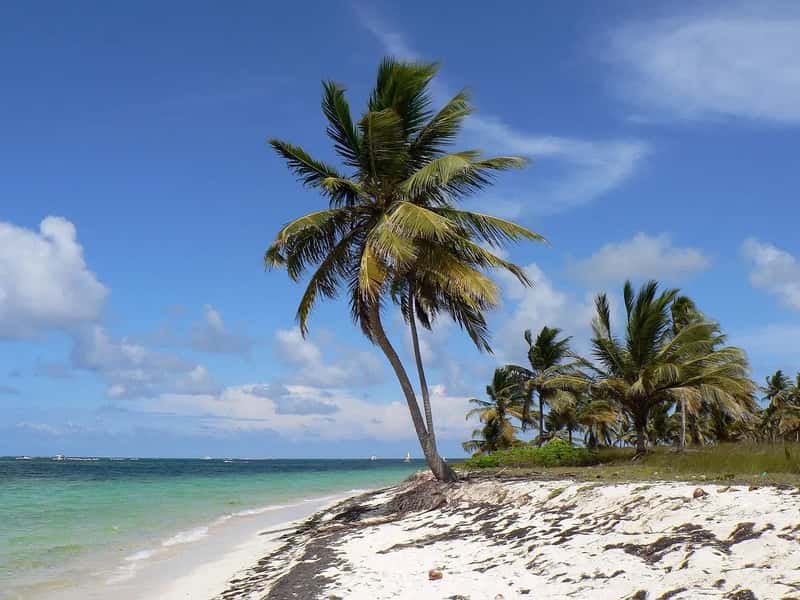
For Americans who want value without sacrificing beauty or returns, the Dominican Republic stands apart. The Dominican Republic offers some of the most affordable real estate opportunities in the Caribbean. With its stable economy, gorgeous beaches, and growing tourism industry, investing in property here can provide solid returns.
The Dominican Republic is incredibly open to foreign investment. As a foreigner, you have the exact same property rights as a Dominican citizen, with no special restrictions holding you back. Buyers seeking a residency path will also find the process accessible. A real estate investment of $200,000 USD or more qualifies buyers for a residency application, which facilitates everything from opening local bank accounts to truly establishing a life there. Markets like Las Terrenas on the Samaná Peninsula and Cap Cana in the east have seen particularly strong interest from North American buyers looking for value and growth potential combined.
5. St. Kitts and Nevis

St. Kitts and Nevis was the first to implement a citizenship by investment program, is making huge strides towards resiliency, and stands as one of the fastest-growing economies in the Caribbean. That pioneering status still carries weight. St. Kitts and Nevis has one of the Caribbean’s most robust property markets, largely due to foreign property buyers qualifying for Caribbean citizenship by investment. American buyers in particular are drawn by the dual-citizenship angle. All four major Caribbean CBI jurisdictions permit dual citizenship, and the United States recognizes dual nationality. American citizens may obtain Caribbean citizenship without relinquishing their U.S. citizenship, and many pursue Caribbean citizenship for global mobility, asset diversification, and contingency planning.
St. Kitts and Nevis has a higher annual rental yield than Antigua and Barbuda, Grenada, Dominica, or St. Lucia – about 4 to 5 percent – and real estate prices in St. Kitts and Nevis grow on average by 4 to 5 percent per year. Entry points are accessible by Caribbean standards. A beach-view apartment can cost as little as $400,000, automatically qualifying the buyer for citizenship by investment, while two-story duplexes can be found at approximately $450,000. For buyers who want a legitimate second passport, strong appreciation potential, and a genuinely beautiful island to return to, St. Kitts and Nevis keeps rising to the top of the shortlist.
What ties all five of these islands together is a broader shift in how Americans are approaching financial security, lifestyle, and long-term planning. In 2026, growth across the Caribbean is driven by emerging trends such as digital nomads flocking to the region for its ideal blend of work-life balance and stunning landscapes. Whether the motivation is rental income, a second passport, a retirement plan, or simply the desire to own something tangible in a beautiful place, the Caribbean is no longer a distant dream. For a growing number of Americans, it’s becoming a very deliberate next move.