There’s a strange kind of arithmetic happening in a handful of wealthy countries right now. A number that once signaled arrival, a six-figure income, now barely covers rent, groceries, and a modest retirement contribution in certain cities. It’s not that the salary shrank. It’s that everything around it grew faster.
1. United States

In America, the six-figure salary has quietly slid from aspirational to ordinary in its most expensive metro areas. After accounting for federal taxes, particularly high local taxes, and a cost of living 130.6% higher than the national average, a $100k salary goes least far in New York City, with Manhattan residents left with only about $30,362 in real spending power. That’s not a typo. A six-figure paycheck in Manhattan behaves like a fraction of that once local taxes and prices are factored in.
San Francisco tells a similar story. You could almost break even on a $100,000 salary in San Francisco with average expenditures, but once taxes are factored in, the roughly $72,000 would leave you just short. Meanwhile, broader research shows just how far the goalposts have shifted nationally. In 2025, a $100,000 salary, once a marker of affluence, falls squarely within the middle-class range in high-cost states like Massachusetts and New Jersey. Family-focused analysis pushes the number even higher in the priciest coastal markets. To live comfortably, covering essentials, discretionary spending, and savings, a family of four needs $306,093 in NYC and $366,829 in San Francisco.
2. Switzerland

Switzerland presents an odd paradox: some of the highest average pay in Europe, paired with a cost of living that eats it alive. Residents enjoy the highest salaries in Europe, earning an average of CHF 80,000 annually in 2024, according to international consultancy firm Willis Towers Watson. That figure sounds generous until you look at what it actually buys in Zurich or Geneva. After tax, the average person receives a monthly net salary of about $5,900, yet Switzerland remains the most expensive country to live in Europe, with prices two to three times higher than in Italy or France.
Housing absorbs a huge share of that income before anything else gets touched. Rent is the largest household expense, and in cities like Geneva or Zurich, a modest three-room apartment can easily cost CHF 2,500 to 3,500 per month. Skilled professionals in fields like IT, medicine, and finance routinely clear six figures in dollar terms, with IT managers and software architects earning CHF 130k to 180k, roughly USD 145k to 200k, yet that income mostly covers rent, mandatory health insurance, and everyday costs rather than funding a lavish lifestyle. In Switzerland, six figures doesn’t buy status. It buys stability, and even that requires careful budgeting.
3. Australia
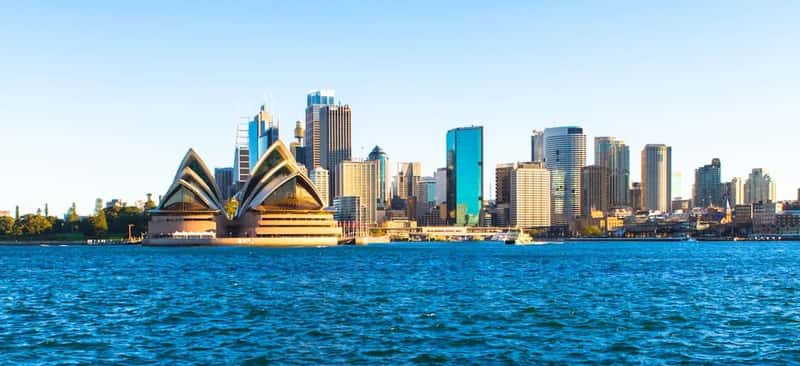
Australia has crossed into six-figure territory as its statistical norm, but the feeling of comfort hasn’t necessarily followed. The average full-time salary in Australia crossed $106,000 per year in early 2026, a symbolic six-figure milestone that immediately prompted the obvious question of why payday doesn’t feel that way. The gap between headline numbers and lived experience comes down to where that average is pulled from.
Sydney makes the disconnect especially clear. A single person needs approximately $95,000 to $120,000 gross to live comfortably in Sydney with savings capacity, while a couple needs approximately $160,000 to $220,000 combined to buy property and save. Even after clearing six figures, take-home pay doesn’t stretch as far as the raw number suggests. Earning $100,000 in Sydney puts you at approximately the 65th to 70th percentile of NSW earners, with after-tax income of roughly $74,000 a year covering costs at the lower end with only moderate savings. Housing has widened that gap over time, since younger buyers face a market that has decoupled sharply from wage growth.
4. Singapore

Singapore’s tax system is famously light, which makes its housing and daily costs sting more by comparison. The city-state has very low income tax rates, and someone earning S$100,000 per year pays approximately S$5,650 in income tax, an effective rate of about 5.7%. On paper, that should leave enormous disposable income. In practice, rent and everyday essentials quickly close the gap.
Residents describe the squeeze in very concrete terms. A S$9,000 monthly salary may sound wealthy internationally, but in Singapore, it can still feel middle-class depending on family responsibilities. The cost pressures are structural rather than seasonal, too. Singapore’s status as one of the world’s most expensive cities creates a unique middle-class squeeze, where even a one-bedroom rental can consume 30 to 40 percent of median income. A six-figure salary in Singapore dollars sounds impressive from abroad, but locally it often just covers a shared or modest apartment, transport, and the rising cost of hawker food that used to be the city’s great equalizer.
5. Canada

Canada’s version of this story centers heavily on housing, particularly in Toronto and Vancouver. As reported by Spring Financial, the line between the middle class and Canada’s top earners is surprisingly thin, with the income threshold for the top 10% of earners at $125,945, just slightly above the upper middle-class ceiling of $106,717. That means a six-figure salary sits closer to the upper edge of “ordinary” than to genuine affluence.
In the two most expensive metro areas, the number needed to feel comfortable climbs even higher for families. Toronto and Vancouver have some of the highest living costs in Canada, particularly in housing, and a middle-class lifestyle there often requires at least $100,000 to $150,000 after-tax for a family. Individual earners face their own version of the squeeze. A single professional in Toronto earning $85,000 before tax lands in the middle-class range but spends nearly 40% of her income on rent and commuting. Add a six-figure salary to that equation, and the math improves, but it still rarely feels like the financial cushion the number implies.
These five countries share a common thread: high average wages colliding with even higher costs of housing, taxes, or both. A six-figure income remains a meaningful marker of skill and opportunity in each of them. It simply doesn’t buy the sense of security it once promised, and that gap between number and feeling is likely to stay part of daily life in these markets for the foreseeable future.